


Hair transplant clinics ChatGPT Ads India — capture patient intent inside the conversational search that pre-consultation happens on
Cost per graft, FUE versus DHI, and whether a beard transplant is even realistic for a given growth pattern — these are the exact questions prospective hair transplant patients now ask ChatGPT before they ever call a clinic. ICG runs a healthcare-only ChatGPT Ads practice built specifically for hair restoration economics — technique-specific research behaviour, high price sensitivity, and a compliance overlay hair transplant advertising in India cannot afford to get wrong.
Conversational-search behaviour specific to hair transplant patients in 2026
Hair loss decisions move slowly, and hair transplant clinic owners have known this for years — a patient notices a receding hairline or thinning crown, spends months in denial or trying topical treatments, and only then starts actively researching surgical options. What has changed in 2026 is where that research happens. A growing share of it now unfolds inside a single continuous ChatGPT conversation rather than across a dozen scattered Google searches and Instagram before/after posts, and a hair transplant clinic with no presence in that conversation is invisible for the entire window in which the patient is actually forming a decision.
The pattern ICG sees across hair restoration accounts follows a consistent arc. It typically opens with a self-diagnosis question — "is my hairline receding or is this normal shedding at my age" — moves into technique education — "what's the actual difference between FUE and FUT, not the marketing version" — then into cost-anchoring — "how much does a 3000 graft FUE transplant cost in India" — and only in the final stage does it become location-specific — "best hair transplant clinic near me with real results." By the time a patient reaches that last stage, they've usually already settled on a technique and a rough budget band, and a clinic entering the conversation only at that final search is competing for a shortlist slot that's largely already been decided.
Hair transplant carries a particular intensity to this research pattern because the decision blends genuine medical consideration with heavy image-conscious, often anxiety-driven motivation. Patients don't just want to know if a procedure works — they want reassurance that a specific technique won't leave visible scarring, that graft survival rates are realistic and not inflated, and that the "after" photos clinics show online reflect typical outcomes rather than best-case selections. ChatGPT has become a preferred first stop for exactly this kind of reassurance-seeking research because it can walk through FUE-versus-DHI trade-offs, explain what graft survival percentage actually means in practice, and answer a nervous follow-up question without the patient having to reveal that anxiety to a salesperson on a phone call.
A second dynamic specific to this vertical: unlike most elective procedures, hair transplant patients frequently compare across price tiers that vary enormously — a budget FUE package and a premium DHI package in the same city can differ by three to four times in total cost for a similar graft count. That price spread means cost-per-graft questions dominate the mid-funnel conversation far more than in most other cosmetic categories, and ICG's bucket structure for hair restoration accounts is built around that reality from the outset rather than treating cost as an afterthought handled only on the booking-stage landing page.
Intent bucket map for hair transplant clinics
ICG structures every hair transplant account around five to six named intent buckets rather than one blended "hair transplant" campaign, because FUE, FUT, DHI and beard transplant queries behave differently in the auction and convert against different landing pages, credentials and cost framings.
| Intent bucket | Example query | Typical CPC band (₹) |
|---|---|---|
| Early exploration / self-diagnosis | "is my hairline receding or is this normal shedding" | 15–35 |
| FUE vs DHI comparison | "FUE vs DHI, which has less downtime and better density" | 55–140 |
| Cost per graft research | "realistic cost per graft for FUE in India, not the ads" | 70–160 |
| Beard transplant exploration | "beard transplant clinic near me, cost and graft count" | 90–200 |
| Provider shortlisting (local) | "hair transplant surgeon with genuine before-after results" | 150–320 |
| Consultation / booking-ready | "book hair transplant consultation, want graft-count estimate" | 100–220 |
Provider-shortlisting and booking-ready buckets run the highest CPC because the auction prices conversation-stage first — a patient asking about a specific surgeon's real results or requesting a graft-count estimate is close to converting, and bids reflect that proximity. Cost-per-graft queries sit in a wide band because they range from casual price-checking to genuine, near-booking research; ICG segments this bucket further by whether the query mentions a specific graft count, which tends to signal a materially more serious prospect.
ICG's default allocation for a general hair restoration clinic offering all three techniques weights spend roughly 10% to early exploration, 25% to FUE-vs-DHI comparison, 25% to cost-per-graft research, 15% to beard transplant exploration, 15% to provider shortlisting, and 10% to booking-ready — rebalanced monthly once conversation-completion data shows which buckets are actually producing consultation bookings rather than casual enquiries. A beard-transplant-focused practice runs a narrower two-to-three-bucket version concentrated entirely on beard-specific technique, density expectations and cost per graft, letting ICG bid more aggressively within that tighter set rather than diluting spend across scalp-focused buckets that don't apply to that patient.
A structural advantage specific to hair restoration: because FUE-versus-DHI and cost-per-graft research both tend to span multiple ChatGPT sessions as a patient gathers confidence before booking, ICG's conversation-attribution setup credits a clinic across that full multi-session research arc where the platform's attribution window allows, rather than only crediting the single session in which a form was submitted. This consistently shows a lower true cost-per-lead than a click-only view would suggest, particularly for the higher-consideration DHI and beard transplant buckets.
Compliance overlays for hair transplant advertising
Hair restoration advertising in India sits in one of the highest-risk zones for outcome-guarantee language, because "guaranteed regrowth," "100% permanent," and "no visible scarring, guaranteed" are precisely the phrases that convert an anxious, image-conscious patient — and precisely the phrases NMC Section 6 and ASCI Chapter III restrict. Every bucket's ad copy and every landing page ICG builds for a hair transplant clinic is reviewed against three frameworks before a single rupee is spent.
NMC Section 6 prohibits guaranteed-outcome claims, comparative superiority language ("best hair transplant surgeon in the city"), and implied before/after results without proper disclaimers about individual variation. Graft-survival-rate claims specifically cannot promise a fixed percentage without a documented clinical basis, and density or final-look claims cannot promise a guaranteed cosmetic outcome. ICG's copy templates default to typical-range language and clinically-supported survival rate figures rather than absolute promises.
ASCI Chapter III requires clear sponsored-content disclosure inside the conversational response and prohibits misleading efficacy claims — this applies directly to FUE-versus-DHI comparison content, where one technique cannot be disparaged relative to the other in absolute terms, and to before/after imagery referenced in ad copy, which cannot be presented as a typical or guaranteed outcome. ICG pre-clears every ad-copy template against this chapter before launch, not after a complaint.
DPDP 2023 governs every hair transplant landing page's lead form and graft-cost estimate tool — explicit consent language, a stated purpose for collecting hair-loss-pattern and contact data, and no pre-ticked marketing-consent boxes. Because hair loss self-diagnosis details and scalp photographs uploaded for a graft-count estimate constitute health-adjacent data, ICG treats this consent layer with the same rigor as a clinical intake form, not generic marketing boilerplate. AYUSH advertising norms apply an additional overlay for any clinic marketing ayurvedic hair-regrowth treatments alongside surgical options, and ICG's compliance log is included in every monthly report so the clinic owner can see exactly what was checked.
Landing-page pattern that converts for hair transplant clinics
A patient arriving from a ChatGPT Ads citation for a hair transplant clinic has usually already compared FUE against DHI or formed a rough cost expectation inside the conversation itself — they don't need the basics re-explained, they need their specific question confirmed with credible, clinic-specific detail. ICG builds hair transplant landing pages short, factual and machine-scannable, both because that converts a patient who's already most of the way to a decision, and because ChatGPT's own citation mechanics favour pages it can parse and quote accurately when the patient asks a follow-up question later in the same thread.
The pattern keeps five elements above the fold: the specific technique the page addresses (FUE, FUT, DHI or beard transplant — never a generic "hair restoration" heading), the operating surgeon's credentials and approximate case volume, an honest cost-per-graft range where compliance allows it, the clinic's exact location, and a single clear next action. Extended before/after galleries, full technique explainers and broader service menus sit below the fold, available but not competing with the primary decision point.
For cost-per-graft and FUE-vs-DHI buckets specifically, ICG has found that stating a defensible cost-per-graft range — even a wide one, clearly caveated as depending on graft count and technique — outperforms landing pages that hide pricing behind a "get a free consultation" wall. Hair transplant patients researching a high-ticket, high-anxiety procedure treat pricing opacity as a credibility red flag, associating it with the low-quality, high-pressure clinics they've been warned about in the same ChatGPT research thread. A page that answers the cost question honestly, alongside a realistic graft-survival figure, converts a materially higher share of the cost-research and booking-ready buckets. The single next-action stays narrow — one graft-count estimate form and one WhatsApp option, not a form, a phone number and a "download our brochure" link competing for the same click.
Because FUE-versus-DHI and cost-per-graft decisions often span multiple ChatGPT sessions before a patient books, the landing page also needs to function as a standalone reference the patient might return to directly, not only as a one-time click destination. ICG writes each bucket's landing page to answer its bucket's specific question in the first two lines — cost-per-graft for the cost bucket, technique trade-offs for the comparison bucket, surgeon credentials for the shortlisting bucket — so a patient re-visiting the page days later from a bookmark or a repeated ChatGPT citation still gets an immediate, relevant answer rather than a generic clinic homepage.
Pricing
Retainers from ₹20,000/month · Custom-scoped per engagement.
The first 90 days for a hair transplant clinic
Weeks one and two are compliance and setup — bucket definition against the clinic's actual technique mix (FUE, FUT, DHI, beard transplant), ad copy drafted and cleared against NMC Section 6 and ASCI Chapter III with particular attention to guaranteed-regrowth and graft-survival-rate language, DPDP-compliant landing pages and graft-cost estimate forms built per bucket with honest cost-per-graft ranges, and the AI Assistant channel wired correctly in GA4 so conversation-completions are captured from day one.
Weeks three through six are where the first qualified, conversation-attributed leads typically start arriving. ICG holds bids deliberately conservative in the higher-CPC provider-shortlisting and booking-ready buckets during this window while comparison and cost-research buckets build recall, since cost-per-conversation is volatile early and shouldn't be judged against a steady-state number yet.
By week eight to twelve, bucket-level bid data has matured enough for ICG to rebalance spend toward whichever buckets are actually producing consultation bookings at an acceptable cost, and the clinic gets its first full-cycle report showing cost-per-consultation and booking-conversion rate against each bucket — FUE, FUT, DHI, beard transplant — not just against the campaign as a whole. This is also the point at which ICG makes a tier recommendation based on data rather than a renewal-date default.

Get your hair transplant clinic into the ChatGPT Ads whitespace before it closes
No agency in India runs a dedicated, compliance-checked ChatGPT Ads practice for hair transplant clinics yet. ICG does, and the 90–180 day first-mover window is already narrowing.
ICG's healthcare ChatGPT Ads practice operates within NMC Section 6, ASCI Chapter III, DPDP 2023 and AYUSH advertising norms. See the full ChatGPT Ads for Healthcare pillar, or the clinics variant for multi-specialty practices.
ChatGPT Ads and LLM marketing in the nine-stage patient journey
- 0Foundations
- 1Demand gen
- 2Capture
- 3Lead quality
- 4Lead mgmt
- 5Scheduling
- 6Show-up
- 7Conversion
- 8Retention
It works in demand generation, inside the AI assistants patients now ask before they search. SIE tracks the sessions and enquiries those AI engines send. Our own software runs the work, and every stage is reported against a monthly target on Ichelon Agency OS.
See all nine stages and the tool behind each one →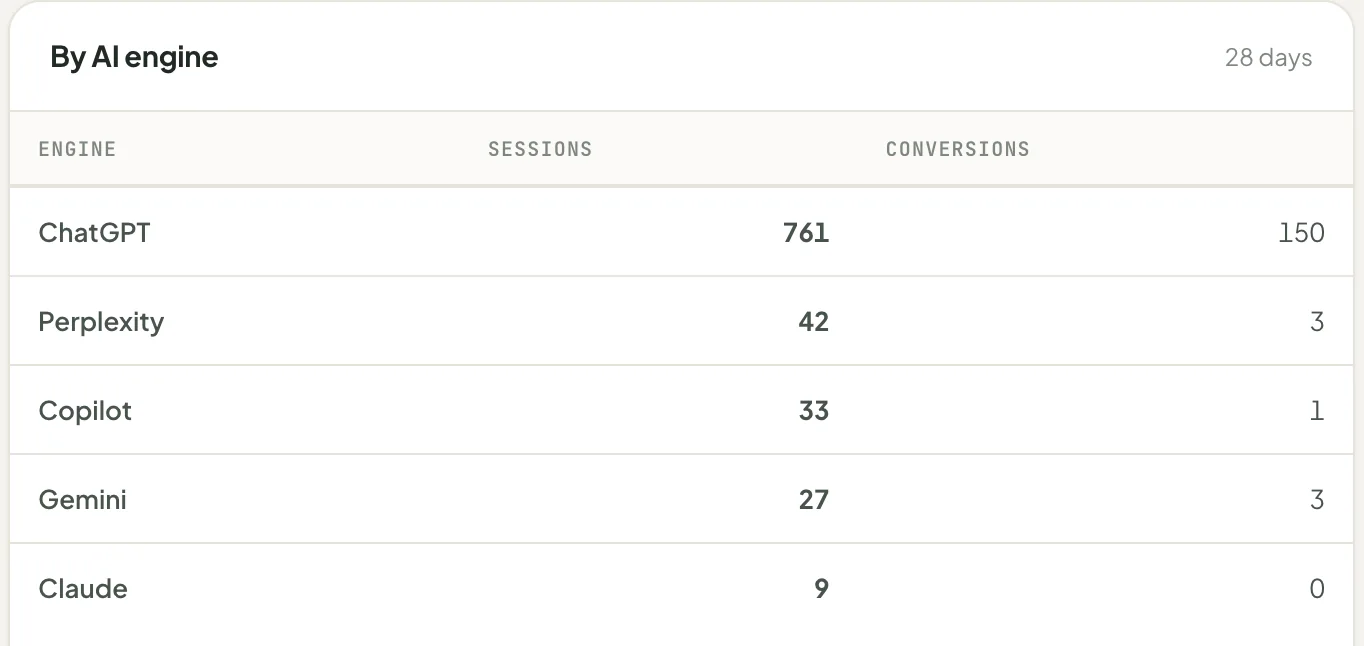
Frequently asked questions
What is ChatGPT Ads for hair transplant clinics and how is it different from Google Ads?
ChatGPT Ads places a sponsored response or citation inside a live ChatGPT conversation while a user is actively researching hair restoration, rather than matching a typed keyword on a results page. For hair transplant clinics, this means the ad surfaces while someone is asking 'is FUE or DHI better for a receding hairline' or 'what should I actually expect to pay per graft in India,' not as a link competing against ten other clinics on a search page. Google Ads still owns high-volume, bottom-funnel keyword intent like 'hair transplant cost near me'; ChatGPT Ads owns the earlier, multi-turn research conversation that increasingly precedes that Google search.
Is ChatGPT Ads available for hair transplant clinics in India right now?
Yes. ChatGPT Ads rolled out to India in mid-2026 through OpenAI's ad partner network, and hair restoration is one of the least-contested healthcare sub-verticals on the channel today. Almost no India-based agency runs a dedicated, compliance-checked hair transplant ChatGPT Ads practice, which is the exact window ICG's hair transplant practice is built to use.
How much does ChatGPT Ads management cost for a single hair transplant clinic?
ICG's engagement for a single-location hair transplant clinic begins at ₹20,000/month starting (inclusive of 18% GST), covering one to two intent buckets, compliance-reviewed ad copy, a conversational landing page and monthly conversation-attribution reporting. Ad spend is separate and is set based on city, technique mix (FUE, FUT, DHI) and existing case volume.
What is the difference between FUE, FUT and DHI intent, and does it matter for ad targeting?
It matters significantly. A patient asking 'FUE vs DHI, which has less downtime' is in a technique-comparison stage of research and responds to educational, comparison-framed ad copy. A patient asking 'cost per graft for 3000 grafts FUT' is closer to booking and responds to a cost-anchored, provider-credibility-led landing page. ICG treats FUE, FUT and DHI as separate intent buckets with separate bid strategies rather than blending them into one generic 'hair transplant' campaign, because the auction prices conversation-stage first and merging techniques dilutes bid efficiency on the highest-intent bucket.
Which hair restoration procedures perform best on ChatGPT Ads?
Cost-per-graft and FUE-vs-DHI comparison buckets consistently produce the highest volume of conversation-attributed leads because these are the two questions almost every prospective patient asks before booking a consultation. Beard transplant queries convert at a smaller volume but a meaningfully higher average order value once a patient reaches the provider-shortlisting stage, because beard transplant patients tend to have already ruled out cheaper, lower-credibility clinics by the time they're comparing named providers.
How is a hair transplant lead attributed and reported on ChatGPT Ads?
ChatGPT Ads attributes on conversation-completion events, not clicks — a lead is credited when a user completes an intent journey such as requesting a graft-cost estimate or booking a consultation. In Google Analytics 4 this surfaces under the 'AI Assistant' channel; across ICG's healthcare accounts this channel shows a 10.49% key-event rate, roughly twice organic search and seventeen times direct traffic.
What compliance rules apply to hair transplant ad copy on ChatGPT Ads?
Every line of ad copy and every landing page ICG builds for a hair transplant clinic is checked against NMC Section 6 (no guaranteed-density or guaranteed-regrowth claims, no comparative superiority such as 'best hair transplant surgeon in the city,' no implied before/after result without disclaimers), and ASCI Chapter III (mandatory sponsored-content disclosure, no misleading graft-survival or density-percentage claims). Hair restoration marketing specifically cannot promise a fixed graft-survival rate or a guaranteed final look without a documented clinical basis, and DPDP 2023 governs consent language on every graft-cost estimate form.
How long before a hair transplant clinic sees consultation leads from ChatGPT Ads?
Most hair transplant clinics on ICG's Starter and engagements see qualified conversation-attributed leads within the first two to three weeks of a compliance-cleared campaign going live, with cost-per-conversation stabilising by week six once technique-bucket-level bid data matures.
Can a beard transplant specialist run ChatGPT Ads separately from a general hair transplant clinic?
Yes. ICG structures beard-transplant-focused practices as a narrower, dedicated bucket set — typically two to three buckets covering beard-specific technique, density expectations and cost per graft — rather than folding beard transplant into the same broad bucket as scalp restoration. This concentrates spend on the exact conversational moments a beard transplant patient actually has, which differ from scalp-focused research.
Do ChatGPT Ads replace Google Ads or Meta Ads for a hair transplant clinic?
No. ICG runs ChatGPT Ads as an addition inside the paid stack alongside Google Ads and Meta Ads, not a replacement. Google Ads still captures high-volume, bottom-funnel keyword searches like 'hair transplant cost Delhi'; Meta Ads still builds top-of-funnel before/after awareness; ChatGPT Ads captures the growing share of research-stage conversational intent — comparing FUE to DHI, understanding graft survival rates — that the other two channels cannot reach.
What does a hair transplant clinic landing page for ChatGPT Ads need to look like?
It needs to be machine-scannable — short, factual, clearly structured with the operating surgeon's credentials and case volume, the specific technique addressed (FUE, FUT or DHI), an honest cost-per-graft range where compliance allows, and a single obvious next step — because ChatGPT's own citation and follow-up mechanics favour pages it can parse and quote accurately rather than long marketing copy padded with generic before/after galleries.
Who runs ICG's ChatGPT Ads practice for hair transplant clinics?
ICG's hair transplant and cosmetic surgery paid-search practice, including ChatGPT Ads, is led on the growth and business side by Rohit Gupta. Every campaign for a hair transplant clinic is compliance-reviewed before it goes live and reported monthly against conversation-attribution data, not just click volume.
