


Ayurvedic clinics ChatGPT Ads India — AYUSH-clean conversational-search advertising for the wellness buyer who asks GPT more than Google
A wellness buyer researching ayurveda rarely trusts a single search result. They ask ChatGPT whether a traditional system of medicine can genuinely help a chronic condition, whether a clinic is a real AYUSH-registered practice or a spa dressed up in ayurvedic language, and what a panchakarma-adjacent programme actually involves — often across several sessions before they call anyone. ChatGPT Ads puts your out-patient ayurvedic clinic inside that skeptical, trust-seeking conversation, at the exact moment the buyer is deciding whether to believe you, not after it, as one listing among many on a directory page.

How ayurvedic clinic buyers ask questions in conversational search versus Google
Ayurveda occupies an unusual trust position in Indian healthcare marketing. The buyer typically already believes ayurveda has value in principle — that belief is often inherited, cultural, and not in question — but is deeply uncertain whether a specific clinic, a specific programme, or a specific claim for their specific condition is credible. Google's results page, dominated by directory listings and SEO-optimised clinic websites making similar claims in similar language, does almost nothing to resolve that uncertainty. A ranked list of ten similar-looking ayurveda clinics does not tell a buyer which one is actually AYUSH-registered, physician-led, and evidence-informed rather than a wellness spa borrowing the vocabulary.
ChatGPT resolves a fundamentally different kind of question. A buyer with chronic joint pain, persistent digestive issues, or stress-related sleep disruption opens a conversation and asks something closer to "can ayurveda actually help my specific condition, or is this just placebo and marketing" — a question no directory listing answers, but that a well-cited conversational response can. The buyer often returns to the same thread across several days, asking follow-up questions as new doubts surface: how is panchakarma different from a spa detox package, what does a real ayurvedic physician's consultation involve, how long does a programme actually take to show results. This is comparison-and-credibility-seeking behaviour stretched across a long research arc, not the single-query pattern Google Ads was built to capture.
A second pattern specific to this category is condition-anchored research that starts generically and narrows over the conversation. A buyer rarely opens by asking about a named clinic; they open by asking whether ayurveda helps their condition at all, and only several exchanges later ask which clinic to consider. This means the earliest, highest-volume part of the conversational funnel in ayurveda is condition-education intent rather than brand-comparison intent, and a clinic that only bids on branded or appointment-ready queries misses the stage where trust is actually being built.
Attribution for this behaviour sits under GA4's AI Assistant channel, which across ICG's healthcare-and-wellness portfolio converts at a 10.49% key-event rate — roughly double organic search and seventeen times direct traffic. For ayurveda specifically, where the buyer's decision hinges on resolving credibility doubt before anything else, a well-built conversational presence with clear AYUSH-registration proof captures a disproportionate share of an unusually skeptical funnel.
Intent buckets specific to ayurvedic clinics — five stages
Ayurveda buyer intent moves through a distinct arc from general belief in the system to a specific, appointment-ready decision, and ICG splits it into five conversational-search stages, each bid and creative-managed differently.
| Stage | Example conversational query | Relative CPC band |
|---|---|---|
| Early exploration | "can ayurveda help chronic conditions", "is panchakarma legitimate or just placebo" | 1x (baseline, lowest cost) |
| Condition-specific research | "ayurvedic treatment for arthritis", "panchakarma for chronic back pain and stress" | 2x–3.5x |
| Credibility and registration verification | "is this ayurvedic clinic AYUSH-registered", "difference between wellness spa and clinical ayurveda centre" | 2.5x–4x |
| Programme and cost research | "panchakarma programme cost and duration in India" | 4x–7x |
| Appointment-ready | "book ayurvedic consultation near me", "panchakarma centre near me with doctor consultation" | 6x–12x (highest cost) |
The economics only work when spend is weighted deliberately: broad, lower-cost coverage at early exploration to build a retargetable conversation pool, and disciplined higher bids reserved for credibility verification, programme research, and appointment-ready buckets, where completed-conversation rates justify 2.5 to 12 times the baseline cost. A clinic that bids flat across all five typically overpays for generic belief-confirmation curiosity and underbids the credibility-verification stage that, in ICG's experience running this vertical, is where a genuinely AYUSH-registered practice has the clearest structural advantage over unregistered wellness competitors and should be spending accordingly.
Credibility verification deserves particular weight because it is the stage where most ayurvedic clinics simply have nothing to say. A generic clinic website rarely states its AYUSH registration number or its physicians' BAMS credentials prominently enough for a conversational-search citation to surface it, which means a clinic that does state these plainly wins a disproportionate share of this bucket almost by default — the compliance discipline itself becomes a competitive advantage rather than merely a legal requirement.
AYUSH ministry and ASCI claim discipline for ayurvedic clinics in paid conversational advertising
Ayurvedic advertising sits at a specific compliance intersection that most other healthcare specialties do not: it must satisfy Ministry of AYUSH guidance on permissible claims for a traditional system of medicine, ASCI Chapter III's general bar on misleading advertising, and — wherever a named BAMS physician appears in creative — the same self-promotion discipline that governs any registered medical practitioner's advertising. Every sponsored response and every linked landing page for an ayurvedic clinic is reviewed against these layers before it goes live.
- Ministry of AYUSH advertising guidance — restricts disease-cure claims and requires that ayurvedic treatment for a medically recognised condition be framed as management or complementary support rather than an outright cure, particularly for conditions with established allopathic treatment protocols. "Ayurvedic treatment for arthritis" framed as pain and mobility management is compliant; framed as "cures arthritis permanently" is not.
- ASCI Chapter III — prohibits misleading, absolute, or unsubstantiated claims generally. "Guaranteed relief," "cures diabetes," or "better than allopathy" comparative language are all non-compliant, regardless of how a platform's automated creative-review tooling scores them.
- AYUSH clinic registration as the primary trust asset — the clinic's registration number, its BAMS-qualified physician roster, and its Ministry of AYUSH compliance status are treated as lead creative elements, not footnotes, precisely because this is the single fact conversational-search buyers are most often trying to verify before they trust anything else the clinic says.
- DPDP Act 2023 — governs consent for health-data capture on the landing page a conversation routes to. A dosha-assessment form or condition-history intake that asks for symptom detail, chronic-condition status, or current medication must carry explicit, specific consent language, not a buried general privacy checkbox.
ICG's compliance-clean creative library for ayurvedic clinics is built once per client around verified AYUSH registration documentation, mapped against these four layers, and reused across all five intent stages with only the conversation-stage messaging changed — condition-management framing rather than cure framing at every stage, and registration proof surfaced earliest at the credibility-verification stage where it does the most competitive work.
Landing-page pattern for AYUSH-clean conversion
A buyer who has just finished a conversation asking whether a clinic is genuinely AYUSH-registered does not want a spa-style wellness homepage with soft lighting and generic serenity imagery. They want the specific answer their conversation ended on, confirmed in writing, immediately. ICG builds a dedicated landing pattern for each of the five intent stages rather than routing all ChatGPT Ads traffic to a single generic clinic page.
The pattern itself stays consistent: a short, factual, cited answer block that mirrors the exact question the conversation resolved on — AYUSH registration number and BAMS physician credentials stated plainly near the top for the credibility-verification stage, a panchakarma programme structure and duration table with condition-management framing for the programme-research stage, or a condition-specific approach page that describes what ayurvedic treatment for that condition actually involves without curative promises. This is followed by credibility signals scoped to genuine clinical ayurveda specifically — physician qualifications, therapy-room and infrastructure detail, and patient-safety protocols — and then a single, low-friction next action.
That next action is deliberately narrow and matched to the intent stage. For condition-specific research, a short doctor-consultation booking framed around the named condition outperforms a generic "book now" button. For credibility verification, simply linking directly to the AYUSH registration certificate or Ministry of AYUSH listing, visibly and without friction, converts skepticism into trust faster than any amount of persuasive copy. For appointment-ready conversations, a direct scheduling widget with visible next-available physician-consultation slots removes the last friction point.
Pricing
Retainers from ₹20,000/month · Custom-scoped per engagement.
90-day expected outcomes
Days 1–30 focus on foundation: AYUSH-compliant creative built and approved across the five intent stages, landing-page patterns live for credibility verification and condition-specific research specifically, and conversation-attribution tracking wired into GA4's AI Assistant channel so every completed conversation is visible from week one.
Days 31–60 shift to tuning: bid weighting across the five stages adjusted against real cost-per-completed-conversation data, underperforming creative variants replaced, and the credibility-verification landing path optimised specifically, since it is typically the stage where a genuinely AYUSH-registered clinic holds the clearest structural advantage over unregistered wellness-spa competition.
By day 90, ICG reports a stabilised cost-per-completed-conversation by intent stage, a measurable AI Assistant channel contribution to booked ayurvedic consultations, and a documented AYUSH-clean creative library that the clinic's own compliance or management team can review at any time, positioning the programme inside the 90–180 day first-mover window before more agencies build a healthcare-and-wellness-specific ChatGPT Ads practice for ayurveda.
ChatGPT Ads and LLM marketing in the nine-stage patient journey
- 0Foundations
- 1Demand gen
- 2Capture
- 3Lead quality
- 4Lead mgmt
- 5Scheduling
- 6Show-up
- 7Conversion
- 8Retention
It works in demand generation, inside the AI assistants patients now ask before they search. SIE tracks the sessions and enquiries those AI engines send. Our own software runs the work, and every stage is reported against a monthly target on Ichelon Agency OS.
See all nine stages and the tool behind each one →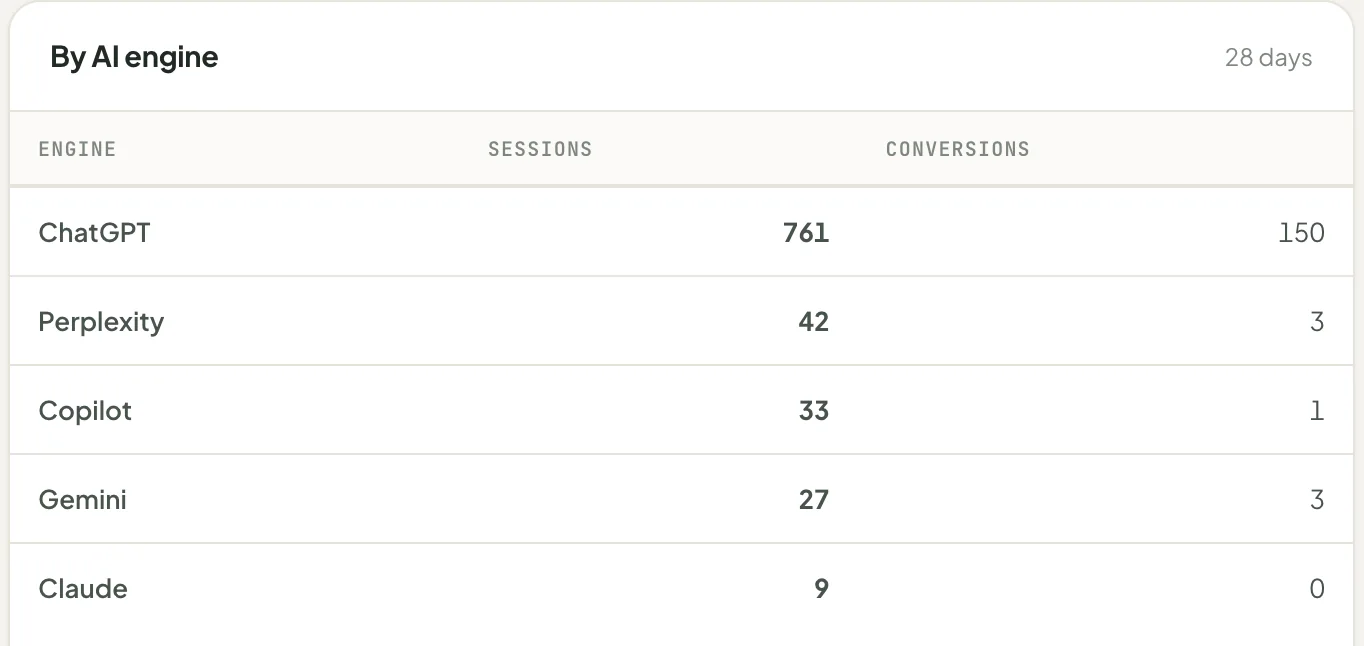
More questions answered
What is ChatGPT Ads for Ayurvedic clinics?
ChatGPT Ads places a sponsored response and follow-up citation directly inside a conversational answer at the moment a wellness buyer is asking ChatGPT about ayurvedic treatment for a chronic condition, whether panchakarma actually helps a specific problem, or which ayurvedic clinic near them is genuinely AYUSH-registered. Instead of competing as one listing among many on a Google results page or a directory, an ayurvedic clinic's programme becomes the answer inside the research conversation the patient is already having.
Is ChatGPT Ads live in India for Ayurvedic clinic advertisers in 2026?
Yes. ChatGPT Ads rolled out to India in mid-2026 through OpenAI's ad partner network, and healthcare and wellness advertisers including AYUSH-registered ayurvedic clinics can now run compliant sponsored responses. No agency yet owns a dedicated healthcare-and-wellness practice for this channel in the ayurveda category specifically, which makes the realistic first-mover window 90 to 180 days before category competition intensifies.
Why do ayurvedic clinic buyers ask ChatGPT rather than search Google?
Ayurveda decisions are unusually skeptical and comparison-heavy — the buyer is typically weighing whether a traditional system of medicine can genuinely help a modern chronic condition, and Google's directory-and-listing format does not resolve that doubt. ChatGPT lets the buyer ask a long, specific, multi-turn question — does panchakarma help my specific joint condition, is this legitimate or placebo, how is it different from a spa wellness package — and get a synthesised answer, which matches how ayurveda research actually happens far better than a ranked list of clinic websites.
What patient queries does ChatGPT Ads for ayurvedic clinics actually capture?
The highest-value queries cluster into five stages: early exploration (can ayurveda help my condition, is panchakarma legitimate), condition-specific research (ayurvedic treatment for arthritis or IBS or stress, panchakarma for chronic back pain), credibility and registration verification (is this ayurvedic clinic AYUSH-registered, difference between a wellness spa and a clinical ayurveda centre), programme and cost research (panchakarma programme cost and duration in India), and appointment-ready intent (book ayurvedic consultation near me, panchakarma centre near me with doctor consultation).
Why is AYUSH registration so central to ayurvedic ChatGPT Ads campaigns?
The single biggest trust gap ChatGPT surfaces in ayurveda conversations is the buyer's own uncertainty about whether a clinic is a genuine, doctor-led AYUSH-registered practice or an unregistered wellness-spa operation using ayurvedic language loosely. ICG builds AYUSH registration number, BAMS-qualified physician credentials, and Ministry of AYUSH compliance status into the sponsored response and the landing page as primary trust signals, because it is frequently the deciding factor in whether a conversation converts.
How much does ChatGPT Ads cost for an ayurvedic clinic in India?
Early-stage exploratory conversation bids for ayurveda queries run several times cheaper than late-stage, appointment-ready bids, which can cost 6 to 12 times more per completed conversation. ICG's managed retainers for ayurvedic and panchakarma-adjacent wellness clinics start from Rs 20,000 per month, custom-scoped, with Goals-Driven engagements and Performance-Linked Payout Models available — larger engagements cover multi-centre ayurveda groups running Enterprise-scale conversation volume.
How is a ChatGPT Ads lead attributed for an ayurvedic clinic?
Attribution runs on conversation-completion events rather than clicks. A lead is credited when a buyer completes their intent journey inside the conversational thread — for example, resolving their condition-specific question and then engaging with the sponsored response's next step. ICG reports this inside GA4 under the AI Assistant channel, which across the healthcare-and-wellness portfolio shows a 10.49% key-event rate, roughly twice organic search and seventeen times direct traffic.
What compliance rules govern ChatGPT Ads creative for ayurvedic clinics?
Every sponsored response and landing page must respect Ministry of AYUSH advertising guidance against disease-cure claims for unregistered or unproven indications, ASCI Chapter III's bar on misleading or absolute claims (no 'cures diabetes', 'guaranteed relief', or 'better than allopathy' language), NMC-adjacent restrictions where a BAMS physician is named, and DPDP Act 2023 consent requirements for any health-data capture on the landing page, including condition history or dosha-assessment fields. Ayurveda-specific overlays require care around chronic-disease-management framing so it reads as complementary and doctor-supervised rather than curative.
What does the landing page for an ayurvedic ChatGPT Ads campaign need to look like?
It needs to be machine-scannable: short, factual, cited sections that answer the exact question the conversation ended on — AYUSH registration and physician credentials stated plainly, a panchakarma programme structure and duration table, or condition-management approach described without curative promises — followed by a single low-friction next step such as a doctor-consultation booking or a dosha-and-condition intake call, not a generic spa-style wellness homepage.
How does ayurvedic clinic ChatGPT Ads differ from a general wellness-spa campaign?
A wellness spa selling relaxation and lifestyle experiences sits outside medical-advertising compliance restrictions almost entirely. A genuine AYUSH-registered ayurvedic clinic making any condition-management claim is closer to a healthcare advertiser and must clear Ministry of AYUSH and ASCI compliance bars on outcome claims. ICG builds and reviews ayurvedic clinic campaigns as healthcare-adjacent advertising, not repurposed spa or lifestyle-wellness creative, which is also the distinction most buyers are themselves trying to make when they ask ChatGPT whether a clinic is legitimate.
Which ayurvedic clinic formats does ChatGPT Ads intent typically cover?
The bulk of conversational search volume concentrates on out-patient, panchakarma-adjacent clinics offering therapy programmes alongside physician consultation — not residential panchakarma retreat centres, which attract a different, more leisure-and-travel-oriented query pattern. ICG's ayurvedic clinic campaigns are built specifically around the out-patient, doctor-led, condition-management buyer, since that is where the highest-intent conversational volume and the clearest compliance path both sit.
How long before an ayurvedic clinic sees results from ChatGPT Ads?
ICG's typical 90-day arc shows AYUSH-compliant creative built and approved across the five intent stages in the first 30 days, cost-per-completed-conversation trending down as intent-stage bidding is tuned in days 31 to 60, and a measurable AI Assistant channel contribution to booked ayurvedic consultations by day 90, reported monthly against GA4 conversation-attribution data.
Can an ayurvedic clinic run ChatGPT Ads alongside Google and Meta Ads?
Yes, and most ayurvedic clinics see the best results running all three in parallel. Google Ads captures typed keyword searches, Meta Ads reaches wellness-minded audiences through interest and lifestyle signals, and ChatGPT Ads captures the skeptical, comparison-heavy, multi-turn research journey an ayurveda decision typically involves — the three channels rarely cannibalise each other because they intercept the buyer at different points in an unusually trust-sensitive decision cycle.
