


Doctor Directory Management India — Profile Optimisation Across Healthcare Listings
Patients shortlist doctors on directory listings before they ever open a clinic website. If a profile is unclaimed, thin, miscategorised, or carrying a stale phone number, that comparison is lost before it starts. ICG claims, optimises, and defends doctor and clinic profiles across India's healthcare directory listings — with compliant review acquisition and NAP consistency built into the retainer, not sold as an add-on.
TL;DR
- Directory profiles are where most locality-based doctor comparison actually happens — not on a clinic's own website — and an unmanaged profile loses that comparison silently.
- This service is one leg of the Search Intelligence Trifecta: directory presence rolls into SIE alongside GBP intelligence (Angryturtle) and YouTube/brand-search intelligence (YODA) for one account-level view.
- Deliverables cover profile claiming, priority category correction, cross-directory NAP consistency, and a compliant post-visit review-request workflow — never fake or incentivised reviews.
- Every claim, review-request message, and category description is checked against NMC Section 6, ASCI Chapter III, and DPDP 2023 before it goes live.
- Retainers from Rs 20,000/month · Custom-scoped per engagement — priced on doctor count, locations, and directories in scope.

What This Service Is, and Why Healthcare Needs It in 2026
Doctor directory management is the ongoing discipline of claiming, completing, and defending a doctor's or clinic's profile across every healthcare directory listing that matters to their specialty and city. It is not a one-time task. A profile that is claimed and perfect today drifts within months — a clinic relocates and three of five listings still show the old address, a doctor changes their primary specialty focus and the category never gets updated, a competitor's review volume overtakes a static profile that stopped collecting new reviews eighteen months ago. Directory management is the process that keeps a profile current, complete, and competitive, continuously.
The reason this matters more in 2026 than it did five years ago is straightforward: the healthcare-search journey has fragmented. A patient searching for a dermatologist in their locality no longer lands on one search results page and clicks through to individual clinic websites one at a time. They land on a directory listing, see four or five doctors ranked by specialty match, proximity, and star rating, and compare them right there — reading reviews, checking consultation fees, and booking an appointment slot without ever visiting a clinic's own site. The directory has become the storefront. A clinic can have an excellent website, a strong Google Business Profile, and a well-run SEO programme, and still lose every patient who compares options on a directory where their own listing sits unclaimed, thin, or buried under an outdated category.
This is also where a large share of trust signalling now happens for healthcare specifically. Patients researching a doctor before a consultation — especially for anything beyond a routine visit — actively seek out independent-feeling review platforms rather than relying on a clinic's own testimonials page, which they correctly assume is curated. A directory listing with genuine, recent, specific reviews reads as more credible than the exact same praise printed on a clinic's own homepage. That credibility gap is precisely why directory presence deserves dedicated management rather than being treated as a footnote inside a broader SEO or GBP retainer.
What makes this work genuinely difficult at scale is volume and drift, not any single task being hard. A solo practitioner might have five or six directory profiles to manage. A multi-specialty hospital with forty doctors on staff has forty times that surface area, each profile independently editable, each vulnerable to becoming outdated the moment a doctor's schedule, qualification listing, or consultation fee changes and nobody updates the directory copy. Left unmanaged, directory presence doesn't stay neutral — it decays. This service exists to make sure it doesn't.
The Search Intelligence Trifecta Behind This Service
Doctor directory management does not run in isolation at ICG. It is one input into the Search Intelligence Trifecta — the three of our in-house platforms ICG runs on every healthcare account: SIE (organic and AI-search intelligence), Angryturtle (Google Business Profile intelligence), and YODA (YouTube and brand-search intelligence). Directory footprint and review velocity feed into SIE's authority and engagement signals, so a client sees directory performance sitting alongside every other search-visibility metric in one account view, not in a separate spreadsheet nobody checks.
Directory footprint tracked inside SIE — claim status, NAP consistency, category flags, and review velocity in one view.
Review velocity itself is tracked using the same discipline Angryturtle applies to Google Business Profile review growth. The pattern is proven: post-visit request timing, low-friction ask, and consistent follow-through outperform any incentive-based scheme, and it never risks a platform penalty for manufactured reviews.
Compliant post-visit review requests, not incentivised or fabricated volume — velocity built the same way Angryturtle grows GBP review counts.
Service-Specific Deliverables
Every doctor directory management retainer covers four core work streams, scoped to the specific directories relevant to a client's specialty and city rather than a blanket claim-everything approach.
Profile claiming and completion
- Search, claim, or verify ownership of every relevant directory profile for each doctor and facility in scope
- Complete every available profile field — qualifications, years of experience, languages spoken, consultation timings, fee ranges, accepted insurance where applicable
- Upload compliant, professionally shot photography rather than leaving default placeholder images live
- Write specialty-accurate profile descriptions that pass NMC claim-language review before publishing
Priority category correction
- Audit primary and secondary category assignment against what a doctor actually practises
- Correct mismatched or outdated categories that are actively suppressing locality-search visibility
- Add every relevant secondary category a directory allows, without stuffing categories a doctor doesn't genuinely serve
NAP consistency across every listing
- Build a single source-of-truth record for every doctor's name spelling, clinic address, and phone number
- Audit every claimed listing against that record and correct discrepancies
- Re-audit on a fixed monthly cadence to catch drift before it compounds
Compliant review acquisition workflow
- Build a post-visit SMS or WhatsApp review-request sequence timed to peak patient satisfaction
- Route requests to the specific directory where review volume most needs building, rather than a generic multi-platform blast
- Monitor incoming reviews daily and flag anything requiring a compliant, non-defensive response
Directories in scope
India's major healthcare directory listings relevant to the client's specialty, plus general local-business directories carrying a healthcare category — never a blanket claim of every listing that exists.
Reporting cadence
Monthly NAP audit, weekly review-velocity check, and a full profile refresh whenever a doctor's schedule, qualifications, or location changes.
Escalation path
Negative reviews are flagged within 24 hours with a compliant, non-defensive draft response routed for client sign-off before it goes live.
Compliance Overlays
Directory profiles and reviews sit closer to direct patient interaction than most SEO content, which makes compliance discipline non-negotiable rather than a nice-to-have. Every piece of copy that goes onto a directory profile — descriptions, category labels, promotional callouts where a directory allows them — is checked against NMC Section 6 guidelines on physician advertising before publishing. That means no outcome guarantees, no unverified before/after claims, no comparative superiority language against other named or unnamed doctors, and no patient testimonials published without explicit, documented consent.
Review-request workflows are built DPDP 2023-compliant from the ground up: patient contact data used to send a review request is handled under the same consent and data-minimisation standard as any other patient communication, never sold, shared, or repurposed for unrelated marketing without separate consent. Where a directory profile carries any promotional or comparative language, ASCI Chapter III standards for healthcare advertising apply — substantiation requirements, no misleading claims, and no language designed to create false urgency around a medical decision.
Compliance checklist applied to every profile
NMC Section 6 claim-language review on every description and category label · no outcome guarantees or unconsented before/after content · DPDP 2023-compliant handling of patient contact data in every review request · ASCI Chapter III substantiation standard on any promotional copy a directory permits · documented consent on file for every published patient testimonial.
This overlay is not a periodic audit bolted onto the retainer — it is built into the workflow itself. New profile copy is checked before it is submitted for publishing, not after a directory flags it. That upfront discipline is slower on day one and considerably faster over the life of an engagement, because it avoids the rework and platform friction that comes from having a profile flagged, suspended, or forced into revision after the fact.
The 90-Day Engagement Plan
Every engagement runs on the same disciplined 90-day arc, adjusted for the number of doctors and locations in scope.
Weeks 1-2 — Discovery and audit
Full inventory of every existing directory profile, claimed or not, for each doctor and facility in scope. NAP audit against a single source-of-truth record. Category mismatch flagging. Compliance review of any existing profile copy.
Weeks 3-4 — Claiming and correction
Claim or verify ownership of every priority directory profile. Correct NAP discrepancies. Fix category assignment. Complete every missing profile field with compliant copy.
Weeks 5-6 — Review workflow build
Design and deploy the post-visit review-request sequence with front-desk and clinical-team buy-in. Set up daily monitoring for new reviews and response drafting.
Weeks 7-9 — Optimisation and monitoring
Review-velocity tuning based on early response rates. Photography and description refresh where profiles are under-performing comparable listings. First month-over-month NAP re-audit.
Weeks 10-12 — Reporting and forecast lock
Full 90-day report against baseline: profiles claimed, NAP consistency score, category corrections made, review count and rating movement. Targets for the next 90 days set and locked inside SIE.
By day 90, a client should be able to see, in one dashboard, exactly how many directory profiles are claimed and compliant, what the NAP consistency score is, how review count and average rating have moved, and which categories were corrected — the same discipline SIE applies to organic search, translated to directory presence.
What You Own After the Engagement
Every claimed profile, every login credential, and the documented review-request workflow belong to the client, in full, from day one. Nothing in this service is built to be withheld if a retainer ends. That is a deliberate ICG position, not a marketing line: a clinic that walks away from an engagement keeps every profile claimed, optimised, and under its own control.
What naturally lapses without an active retainer is the ongoing monitoring layer — the monthly NAP re-audit that catches drift before it compounds, the daily review monitoring that flags a negative review within 24 hours, and the continuous category and profile-field maintenance that keeps pace with a directory's own changing rules. Directory listings are not static; the platforms themselves update category structures, field requirements, and ranking factors periodically, and someone needs to be watching for that. A client can absolutely run this in-house after ICG hands over full access and documentation — it just requires a designated person with the time to do it consistently, which is precisely the gap this retainer fills for most practices.
Pricing
Doctor directory management is priced the same way every ICG healthcare retainer is priced — scoped to the actual work, not sold off a rate card. The variables that move the number are the count of doctors in scope, the number of physical locations each doctor's profile needs replicated across, and the number of directories genuinely relevant to the specialty and city.
Retainers from Rs 20,000/month · Custom-scoped per engagement
A solo practitioner with one location and a handful of relevant directories sits at the lower end of that range. A multi-specialty hospital with dozens of doctors listed across multiple cities is scoped considerably higher — the pricing conversation happens after the discovery audit in weeks 1-2, once the actual profile count and NAP-cleanup workload is known.
This service is also frequently bundled with Google Business Profile management under Angryturtle, since both draw on the same review-request infrastructure and the combined scope is priced together rather than as two separate line items. Retainers from Rs 20,000/month · Custom-scoped per engagement covers either service standalone or the bundle, depending on what a client's directory footprint actually needs.
Case Scenarios
A solo dermatologist buried under the wrong category
A dermatologist's directory profile had been listed for years under a generic "skin clinic" category instead of the specialty-specific cosmetology category most patients were actually searching. Correcting the primary category and completing the previously-empty procedure list moved the profile from page three of locality search results into the top-five comparison set within six weeks — no new content, no ad spend, just a category fix that had been sitting wrong since the profile was first created.
A multi-specialty hospital with NAP chaos across 40 doctors
A hospital chain had relocated one branch eighteen months earlier, but eleven of forty doctor profiles across various directories still showed the old address, and phone numbers were inconsistent across another sixteen. A single source-of-truth NAP record and a systematic re-claim-and-correct pass resolved every discrepancy inside the first month, and inbound call volume attributable to directory referrals rose materially once patients stopped reaching dead numbers.
A fertility clinic with strong reviews on one directory and none on three others
A fertility clinic had genuinely excellent reviews concentrated entirely on a single directory, while three equally relevant listings sat with almost no reviews at all — an imbalance that made the clinic look far less established on any directory a patient happened to check first. A rotated, post-visit review-request workflow spread compliant review volume across all four listings over one quarter, without any change in the clinic's actual patient satisfaction — the reviews were always there to be asked for.
Who This Is For, and Who It Isn't
This service fits a solo doctor, a multi-doctor clinic, or a hospital chain that already has patients coming through the door and wants those patients' comparison-stage search — on directories, not just Google — to reflect the practice accurately and favourably. It particularly fits any practice that has never formally claimed its directory profiles, or that suspects its NAP data has drifted after a relocation, rebrand, or staff change.
It is not a fit for a practice looking for fabricated reviews, aggressive category-stuffing that misrepresents what a doctor treats, or a one-time cleanup with no appetite for ongoing monitoring — directory profiles drift again within months without upkeep, and a single pass without a retainer behind it is a short-lived fix. It also isn't the right starting point for a clinic with no functioning intake or booking process at all; directory traffic needs somewhere compliant and responsive to land once it arrives, and that groundwork should come first.
Related ORM & Trifecta Pages
Frequently Asked Questions
What is doctor directory management?
It is the ongoing work of claiming, optimising, and defending a doctor's or clinic's profile across India's healthcare directory listings — the sites patients use to shortlist a doctor by specialty and locality before ever visiting a clinic website.
Why does this matter in 2026 if a clinic already has a website?
Because a large share of doctor-discovery searches never reach a clinic's own website at all — the patient compares options and books directly from a directory listing.
What does NAP consistency mean and why is it worth fixing?
Name, Address, Phone number consistency across every listing. Inconsistency reads as unreliable to search engines and loses patients calling dead numbers.
How do you get more reviews without buying fake ones?
A compliant, timed post-visit review-request workflow — never incentivised or fabricated reviews.
What are priority categories on a directory listing?
The primary and secondary specialty categories a profile sits under — one of the highest-leverage, lowest-cost fixes in directory management.
Does this replace Google Business Profile management?
No — GBP (Angryturtle) governs Google Maps and the local pack; directory listings are separate destinations, and ICG typically runs both together.
What compliance rules apply?
NMC Section 6 on physician advertising, DPDP 2023 on patient data handling, and ASCI Chapter III on any promotional claims.
How long until results show?
Profile fixes typically land within 30 days; visible directory-traffic lift by day 90.
How much does this cost?
Retainers from Rs 20,000/month · Custom-scoped per engagement.
Which directories does ICG manage?
India's major healthcare directory listings relevant to a client's specialty and city, scoped rather than blanket-claimed.
What happens to profiles after the engagement ends?
The client owns every profile and credential outright; only ongoing monitoring lapses without an active retainer.
Who is this not a fit for?
Practices wanting fabricated reviews, misrepresentative categories, or a one-time cleanup with no ongoing upkeep.
We cover every stage, from first search to repeat visit
- 0Foundations
- 1Demand gen
- 2Capture
- 3Lead quality
- 4Lead mgmt
- 5Scheduling
- 6Show-up
- 7Conversion
- 8Retention
We work across all nine stages, from foundations to past patients, and fix the stage that leaks first. Our own software runs the work, and every stage is reported against a monthly target on Ichelon Agency OS.
See all nine stages and the tool behind each one →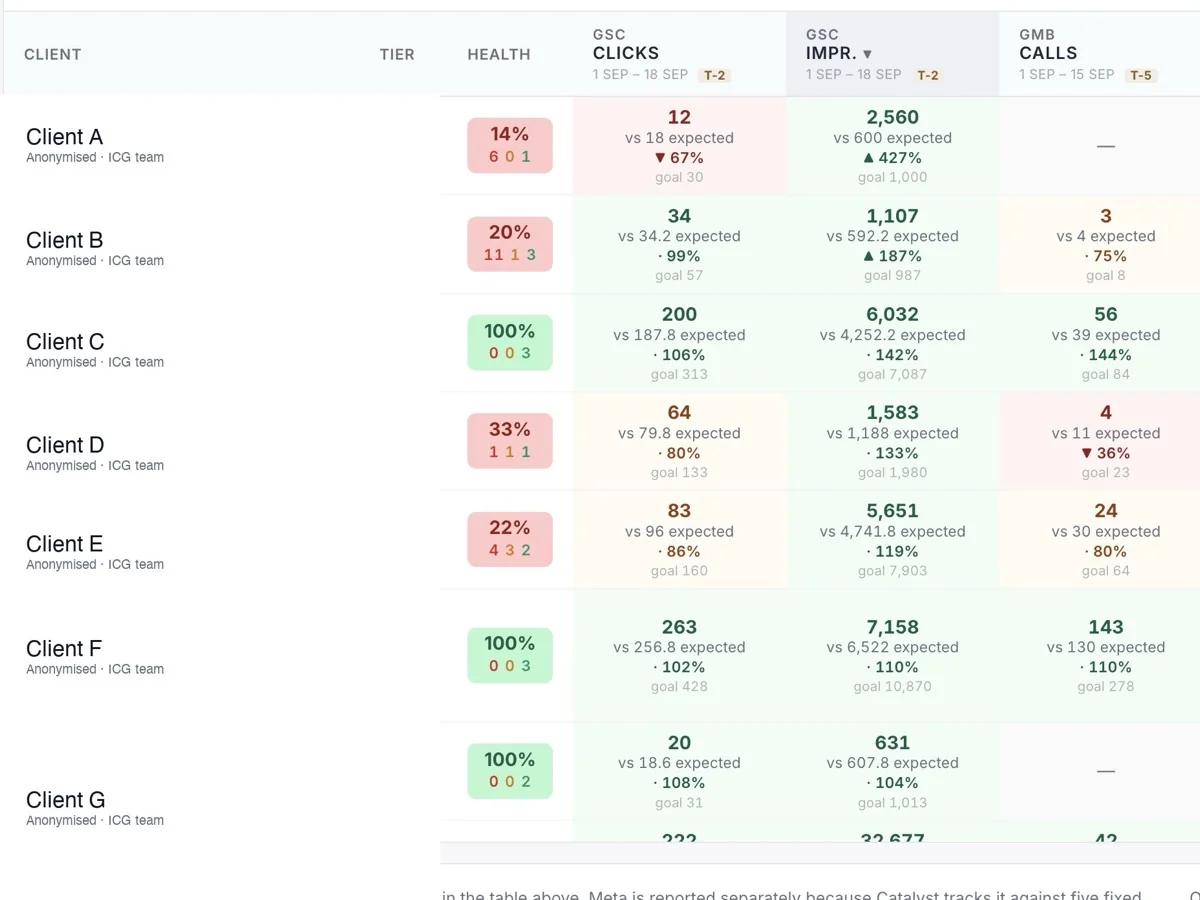
More questions answered
How do you get more reviews on healthcare directories without buying fake ones?
ICG never buys, incentivises, or fabricates reviews — that is an NMC and platform-policy violation and it collapses the moment a directory audits an account. Instead, we build a compliant post-visit review-request workflow (SMS or WhatsApp, timed to when a patient's experience is freshest), make the request friction-free, and route the response to the correct directory listing. Volume grows because the ask is consistent and well-timed, not because reviews are manufactured.
Does this replace the need for Google Business Profile management?
No — they are complementary, not overlapping. Google Business Profile (managed under Angryturtle) governs how a clinic appears on Google Maps and the local pack. Healthcare directory listings are separate destinations patients visit directly to compare doctors by specialty. A clinic serious about local discovery needs both covered, and ICG typically runs them together so review requests and NAP data stay synced across both.
What compliance rules apply to directory profiles and reviews?
Every claim on a directory profile — qualifications, years of experience, procedure outcomes, patient counts — is checked against NMC Section 6 guidelines on physician advertising before it goes live. Review-request messaging is checked against DPDP 2023 for how patient contact data is stored and used, and any promotional language on a profile is screened against ASCI Chapter III standards for healthcare claims. We do not publish outcome guarantees, before/after claims without consent, or comparative superiority language anywhere on a directory profile.
How long does it take to see results?
Profile completeness, category correction, and NAP fixes are usually resolved inside the first 30 days. Review velocity builds over the following 60 days as the request workflow beds in with front-desk and clinical staff. Full 90-day engagements typically show a visible lift in profile views, category ranking, and inbound calls attributable to directory traffic by day 90, tracked inside SIE alongside every other search-intelligence signal.
How much does doctor directory management cost?
Retainers from Rs 20,000/month, custom-scoped per engagement based on the number of doctors, listed locations, and directories in scope. A solo practitioner with one location is priced very differently to a multi-specialty hospital chain with dozens of doctors listed across multiple cities.
Which directories does ICG manage profiles on?
ICG manages profiles across India's major healthcare directory listings — the specialty-search platforms patients use to find and book doctors by locality, along with general local-business directories that carry healthcare categories. The exact set is scoped to what is genuinely relevant to a client's specialty and city rather than blanket-claiming every listing that exists.
What happens to the profiles after the engagement ends?
The client owns every claimed profile, every login credential, and the full review-request workflow ICG builds. Nothing is held hostage to a retainer. If an engagement ends, the profiles stay claimed, optimised, and under the client's own control — though ongoing monitoring for NAP drift and new-review response naturally lapses without an active retainer.
Is this only for solo doctors, or does it work for hospitals too?
Both, with different scopes. A solo practitioner typically needs one clean, well-categorised profile per directory. A hospital or chain needs profile management multiplied across every doctor on staff plus a master facility listing — which is where NAP consistency becomes exponentially harder to hold without a dedicated process, and exactly where this service earns its retainer.
Who is this service not a fit for?
It is not a fit for a practice that wants fabricated reviews, keyword-stuffed categories that misrepresent what a doctor actually treats, or a one-time cleanup with no ongoing monitoring — directory profiles drift again within months without upkeep. It is also not the right starting point for a clinic with no online booking or intake process at all; directory traffic needs somewhere compliant to land first.
