


FUE hair transplant ChatGPT Ads India — capture the specific sub-specialty intent that ChatGPT Ads surfaces
FUE patients don't ask general hair-loss questions — they ask graft-count math questions, mega-session versus multi-day scheduling questions, donor-density limit questions, and cost-per-graft comparison questions once they've already ruled out non-surgical options. ICG runs a dedicated, healthcare-only hair transplant ChatGPT Ads sub-practice built specifically for FUE-focused clinics, concentrated entirely on the conversational moments graft-count and session-format decisions actually turn on.
Conversational-search behaviour specific to FUE patients
A patient researching FUE asks a materially more technical set of questions than a general hair-loss patient, and asks them in a specific order that ICG's FUE accounts see repeat across almost every case. It starts with a candidacy question — "am I a good candidate for FUE at Norwood grade 4, or do I need something else first" — moves into graft-count math — "how many grafts do I actually need to cover my crown" — and then into session-format and cost questions before finally, for higher-graft-count cases, a mega-session-versus-multi-day scheduling question that often decides which clinic gets the booking.
This sequence matters because it's fundamentally different from how a general hair-loss patient behaves, and treating FUE intent as one bucket inside a broad hair-loss campaign wastes the sharpest, highest-value part of that conversation. A patient asking about a 3,000-graft mega-session is not the same buying journey as a patient asking whether minoxidil or FUE is the better first step — the mega-session patient has already committed to surgery and is evaluating specific clinics on capability, while the earlier-stage patient is still deciding between surgical and non-surgical paths entirely. ICG's FUE-specific bucket structure treats these as separate conversations because they are.
The mega-session pattern is one general hair-loss campaigns miss almost entirely. A patient asking ChatGPT "can a clinic actually do 4,000 grafts in one day without compromising quality" is evaluating surgeon capability and technique claims as much as price, and this query sits close to a booking decision because the patient has already accepted the surgical route and total cost range — the remaining question is which clinic can execute the volume in the timeframe they want. This is consistently one of the highest-converting query patterns ICG sees in FUE accounts, and it only shows up when a clinic's campaign is built with mega-session capability as its own named intent bucket rather than folded into generic "FUE cost" copy.
Cost-per-graft questions form the third distinct pattern — "what's a fair cost per graft for FUE in a metro city," "why do quotes vary so much between clinics for the same graft count" — and these queries sit in the middle of the funnel, after a patient has understood their graft-count need but before they've committed to a specific provider. A clinic that answers these questions with a transparent per-graft price band, rather than deflecting to "book a consultation for a quote," builds the kind of trust that carries through to the booking decision several conversation turns later.
Intent bucket map for FUE clinics
ICG structures FUE-focused accounts around five named buckets — narrower than a general hair-loss account, deliberately, because concentrating spend on graft-count and session-format intent specifically outperforms spreading it across non-surgical treatments the clinic doesn't emphasise.
| Intent bucket | Example query | Typical CPC band (₹) |
|---|---|---|
| Norwood-grade candidacy | "am I a candidate for FUE at Norwood 4, or do I need a combination approach" | 35–80 |
| Graft-count math | "how many grafts do I need to cover a receding hairline and crown" | 50–110 |
| Cost-per-graft comparison | "fair cost per graft for FUE in a metro city, why do quotes vary" | 70–150 |
| Mega-session vs multi-day | "can a clinic do 4000 grafts in one day without compromising density" | 130–280 |
| Donor-area density limit | "how many grafts can my donor area realistically support" | 40–95 |
Mega-session versus multi-day queries run the highest CPC band of any bucket in an FUE account by a wide margin, and ICG treats this as the single most valuable bucket a high-graft-count-focused clinic can win, because a patient in this bucket has already committed to surgery and total budget and is evaluating a live provider decision rather than doing early research. Cost-per-graft comparison queries run second-highest, since these patients already understand the graft-count framing and are comparing specific numbers across clinics.
Norwood-grade candidacy and donor-density-limit buckets sit lower in CPC because they capture patients earlier in the journey — some will never proceed once they learn they need a combination approach or have limited donor supply — but ICG still funds these buckets meaningfully because they're where a clinic earns the trust that carries a patient through to the higher-intent buckets later in the same or a follow-up conversation.
ICG's default allocation for a mega-session-capable FUE clinic weights spend roughly 15% to Norwood-grade candidacy, 20% to graft-count math, 25% to cost-per-graft comparison, 25% to mega-session versus multi-day, and 15% to donor-area density limit — rebalanced monthly as conversation-completion data shows which buckets convert to booked consultations rather than just enquiries. A clinic without mega-session capability shifts that weighting toward multi-day scheduling framing instead, since claiming mega-session volume without the surgical team to deliver it invites both compliance and reputational risk.
Compliance overlays for FUE advertising
FUE marketing carries a sharper compliance edge than general hair-loss advertising because the language that sells transplants — "permanent solution," "guaranteed density," "100% natural growth" — is precisely the language ASCI Chapter III and NMC Section 6 restrict. ICG treats every FUE-specific ad and landing page as higher compliance risk by default and reviews it against three overlapping frameworks before spend goes live.
NMC Section 6 prohibits guaranteed-permanence and guaranteed-density claims ("hair that lasts a lifetime, 100% guaranteed") and fixed graft-survival-rate statistics presented as universal outcomes rather than clinically sourced ranges. Mega-session copy specifically cannot claim a fixed graft-survival percentage without qualifying that outcomes depend on donor quality, technique and individual healing. ICG's copy templates default to "typically" and "in most cases" framing backed by a documented clinical basis, never absolute promises.
ASCI Chapter III requires clear sponsored-content disclosure inside every conversational response and prohibits misleading before-after representations — directly relevant to before-after imagery referenced in cost-per-graft and mega-session bucket copy, where results must be captioned as individual cases rather than typical or assured outcomes. ICG pre-clears any before-after language with particular care given how heavily this category relies on visual outcome claims in general market advertising.
DPDP 2023 governs every FUE landing page's consultation-request form, and because FUE enquiries frequently include health-adjacent detail — donor-area history, prior transplant attempts, medications affecting healing — ICG treats this consent layer as clinically sensitive data handling rather than generic marketing intake, with explicit purpose language and no pre-ticked consent boxes. Mega-session bucket landing pages, which often collect scalp photos for pre-assessment, carry an additional explicit consent step for image handling.
Landing-page pattern for FUE clinics
A patient clicking through from a ChatGPT Ads citation into an FUE landing page has usually already had a technical conversation about graft count or session format inside ChatGPT itself — the page's job is to confirm what they've already learned and answer the one question the conversation couldn't fully resolve, not to re-explain what FUE is from first principles. ICG builds FUE landing pages short, specific and machine-scannable, with each bucket's page opening on that bucket's exact question.
The pattern keeps four elements above the fold for every FUE landing page: the specific query addressed (graft-count range, mega-session capability, cost-per-graft band — never a generic "hair transplant" heading), the treating surgeon's relevant credentials and case volume, an honest cost-per-graft range with a clear complexity caveat, and one narrow next action. For the mega-session bucket specifically, ICG adds a fifth element — surgical-team capacity detail (number of technicians, typical session duration for the graft count in question), which directly answers the capability question this bucket's patients are actually asking.
Cost-per-graft bucket pages perform best when they show a transparent per-graft price band tied to graft count tiers rather than a single flat number, because ICG has found that specificity here, properly caveated, builds more trust with comparison-shopping patients than either an inflated headline number or a vague "contact for pricing" deflection. Norwood-grade candidacy pages lead with a short, honest self-assessment framework (typical grade ranges FUE suits well versus where a combination approach is usually recommended) rather than pushing straight to a booking form, because a patient who isn't yet a clear candidate needs a consultation-first next step rather than a booking CTA.
Because mega-session and cost-per-graft comparison patients are close to a decision, those two buckets' pages carry a more direct booking call-to-action than the earlier-stage candidacy and donor-density pages, which instead offer a lower-friction "ask us directly" WhatsApp option as the primary next step, reserving the full consultation-booking form for patients who've indicated they're ready.
Pricing
Retainers from ₹20,000/month · Custom-scoped per engagement.
The first 90 days for an FUE clinic
Weeks one and two are compliance and setup — bucket definition against the clinic's actual case mix (mega-session capable or multi-day only), ad copy drafted and cleared against NMC Section 6 and ASCI Chapter III with specific attention to permanence, density-guarantee and before-after language, DPDP-compliant landing pages built per bucket with honest cost-per-graft bands and surgical-team capacity detail, and the AI Assistant channel wired correctly in GA4 so conversation-completions are captured from day one, including multi-session credit where the cost-per-graft comparison bucket's longer research arc requires it.
Weeks three through six are where the first qualified, conversation-attributed consultation requests typically start arriving, usually from the Norwood-grade candidacy and donor-density buckets first since these carry lower CPC and higher volume, with cost-per-graft comparison and mega-session leads following as bid data matures. ICG holds bids deliberately conservative in the highest-CPC mega-session bucket during this window while the clinic's landing page and capacity claims prove out, since an underperforming mega-session page at a ₹130-280 CPC is the costliest mistake to leave uncorrected.
By week eight to twelve, bucket-level data has matured enough for ICG to rebalance spend toward whichever buckets are producing the highest share of case-accepted treatment plans, not just enquiries, and the clinic gets its first full-cycle report broken out by bucket — candidacy, graft-count, cost-per-graft, mega-session, donor-density — with cost-per-accepted-case as the headline number clinic owners actually care about. This is also the point at which ICG makes a tier recommendation based on real bucket performance rather than a renewal-date default.

Win the mega-session decision before another clinic does
FUE decisions turn on a handful of specific, technical conversations — candidacy, graft-count math, mega-session capability, and cost-per-graft comparison. ICG runs a dedicated ChatGPT Ads structure built around exactly those moments.
ICG's healthcare ChatGPT Ads practice operates within NMC Section 6, ASCI Chapter III and DPDP 2023. See the full ChatGPT Ads for Healthcare pillar, or the hair transplant specialty variant for clinics offering both FUE and non-surgical hair-loss treatments.
ChatGPT Ads and LLM marketing in the nine-stage patient journey
- 0Foundations
- 1Demand gen
- 2Capture
- 3Lead quality
- 4Lead mgmt
- 5Scheduling
- 6Show-up
- 7Conversion
- 8Retention
It works in demand generation, inside the AI assistants patients now ask before they search. SIE tracks the sessions and enquiries those AI engines send. Our own software runs the work, and every stage is reported against a monthly target on Ichelon Agency OS.
See all nine stages and the tool behind each one →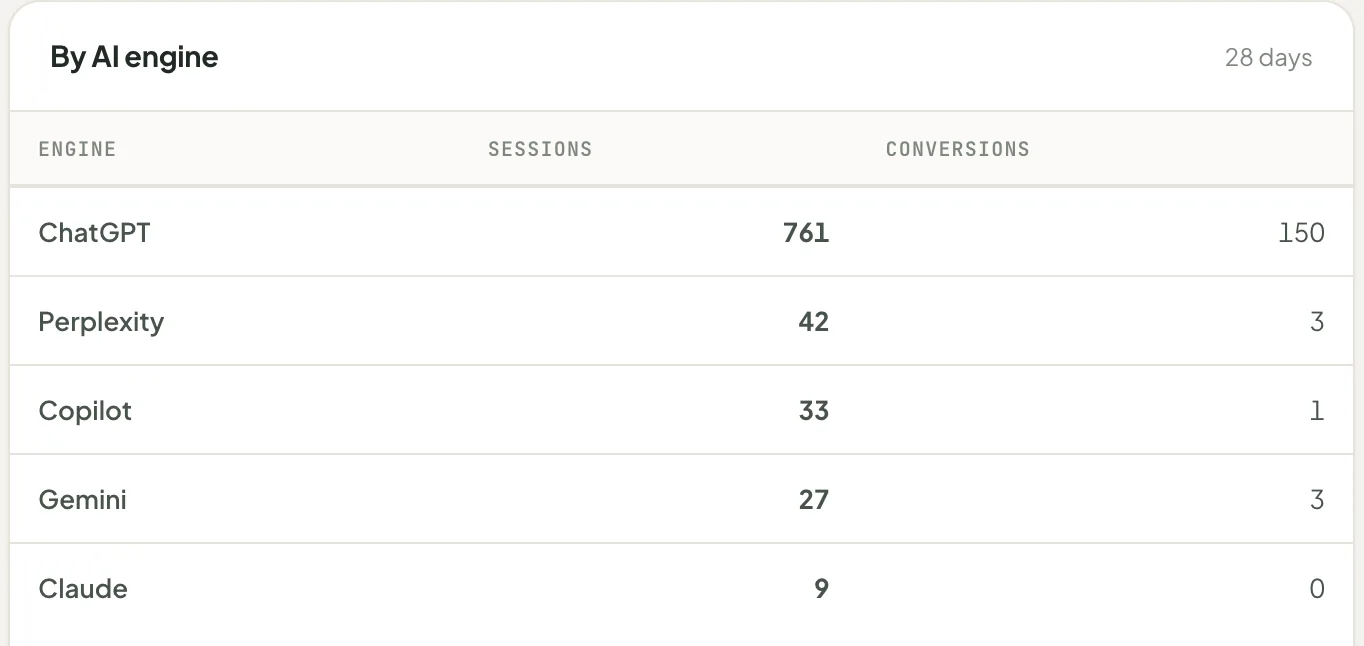
Frequently asked questions
Why does an FUE-focused clinic need a dedicated ChatGPT Ads page instead of a general hair transplant one?
FUE patients ask a narrower, more technical set of questions than hair-loss patients in general — graft-count math, cost-per-graft, mega-session versus multi-day scheduling, donor-area density limits — and a broad hair-loss campaign dilutes bids and copy across non-surgical treatments an FUE-only clinic doesn't offer. ICG runs FUE clinics on a dedicated bucket structure concentrated entirely on graft-count and session-format intent, which keeps bidding sharper and copy technically precise rather than generically about hair loss.
What is a mega-session and why does it change how ChatGPT Ads bids on this intent?
A mega-session is a single-day FUE procedure covering a high graft count — often 3,000 to 5,000+ grafts — in one sitting, versus splitting the same total across two or more days. Patients asking about mega-sessions are usually comparing clinics on capability and surgeon stamina claims as much as price, and this query pattern converts at a materially higher rate than general cost queries because it signals the patient has already ruled out non-surgical options and is evaluating specific clinics. ICG treats mega-session queries as a distinct, higher-CPC bucket rather than folding them into generic 'FUE cost' copy.
How much does ChatGPT Ads cost for a single FUE-focused clinic?
ICG's engagement for a single-location FUE clinic begins at ₹20,000/month starting (inclusive of 18% GST), covering one to two graft-count and session-format intent buckets, ASCI-reviewed copy addressing candidacy and cost-per-graft questions, one landing-page variant and monthly conversation-attribution reporting. Ad spend is planned separately based on city and case-complexity mix.
How does cost-per-graft query intent differ from a flat 'hair transplant cost' query?
A patient asking 'hair transplant cost in India' is often early-stage and price-shopping broadly, while a patient asking 'cost per graft for FUE, 3000 grafts' has already done enough research to think in graft-count terms and is closer to comparing specific clinics on a like-for-like basis. ICG treats cost-per-graft queries as a mid-to-late funnel bucket with a higher CPC than flat cost queries, and builds landing pages that show a transparent per-graft price band rather than a single package number, because that is the exact framing the patient is already using.
What compliance rules specifically affect FUE hair transplant advertising?
FUE marketing is exposed to NMC Section 6 and ASCI Chapter III risk wherever 'permanent,' 'guaranteed density,' or fixed before-after outcome claims appear, all of which are common in hair transplant sales conversations but restricted in regulated advertising. Every FUE ad and landing page ICG builds avoids guaranteed-density and guaranteed-permanence claims in favour of clinically supported ranges, and before-after framing is written with individual-variation caveats rather than presented as a typical or assured result.
Does Norwood-grade candidacy research convert differently from graft-count or cost queries?
Norwood-grade candidacy queries — 'am I a candidate for FUE at Norwood 4' — sit earlier in the funnel than cost-per-graft or mega-session queries and carry a lower CPC, because a meaningful share of these patients will learn they need a combination approach or aren't yet candidates. ICG still funds this bucket because it is where a clinic earns the trust that carries a patient through to the higher-intent, higher-CPC buckets in the same or a later conversation.
How does ICG frame donor-area and density-limit questions in FUE ad copy?
Donor-area and density-limit queries — 'how many grafts can my donor area realistically support' — are answered with typical ranges tied to donor density assessment rather than a fixed graft number, and every landing page addressing this bucket carries a caveat that individual donor supply varies. This keeps the clinic inside NMC Section 6 while still giving ChatGPT enough specific, quotable information to cite the page accurately in follow-up conversation turns.
Can a general hair-loss clinic that also offers FUE use this page instead of a broader hair-loss page?
A clinic offering FUE alongside non-surgical hair-loss treatments, PRP, or medication management is usually better served by a broader hair-loss ChatGPT Ads structure covering FUE intent as one of several buckets. This dedicated FUE page and its bucket structure are built for clinics where surgical hair transplant is the primary or sole procedure line, where concentrating the entire budget on graft-count and session-format intent produces materially better cost-per-case than spreading it across non-surgical services.
Who runs ICG's ChatGPT Ads practice for FUE-focused clinics?
ICG's aesthetic and hair-restoration paid-search practice, including ChatGPT Ads, is led on the growth and business side by Rohit Gupta. Every FUE-specific campaign is compliance-reviewed against NMC Section 6 and ASCI Chapter III before it goes live and reported monthly against conversation-attribution data by bucket.
