


Single Doctor ORM vs Hospital ORM Strategy in India: A Feature-Based Buyer Guide
A neutral, feature-based comparison of ORM approaches for Indian solo doctors and multi-doctor hospitals. Compare category tiers on review generation, attribution, DPDP and NMC handling, crisis response, and tech stack fit, with buyer-archetype recommendations.
No pitch. Written root-cause diagnosis. AI-powered, healthcare only.
Direct answer
A neutral, feature-based comparison of ORM approaches for Indian solo doctors and multi-doctor hospitals. Compare category tiers on review generation, attribution, DPDP and NMC handling, crisis response, and tech stack fit, with buyer-archetype recommendations.
TL;DR
TL;DR
- Single-doctor ORM is a personal brand engine: one Google Business Profile, one name in NMC records, one reputation to defend. Hospital ORM is a distributed reputation system: many doctors, many departments, many touchpoints, one master brand.
- The two are not the same product bought at different sizes. They differ on attribution granularity, consent workflow, crisis blast radius, platform mix and response ownership — six axes any Indian healthcare buyer should evaluate before choosing a tier.
- Solo practitioners usually get value from a DIY-plus-managed stack in the Rs 999 to Rs 25,000/mo band. Hospitals almost always need a managed multi-location ORM tier starting around Rs 49,999/mo, with enterprise chains often crossing Rs 1.5 lakh/mo when review volumes exceed 400/month.
- DPDP Act 2023 and NMC 2023 advertising norms have quietly changed what "good ORM" looks like — testimonial consent, before-after handling and negative-review responses now carry statutory risk, not just brand risk.
- The right question is not "which vendor is best" but "which category tier matches my review volume, department count, crisis exposure and consent maturity". This guide walks through the tiers, axes and archetypes.
Table of Contents
- Why this comparison matters for Indian healthcare buyers
- The six axes to compare ORM approaches on
- Main comparison table: single-doctor tier vs multi-doctor clinic tier vs hospital tier vs enterprise chain tier
- Per-axis deep dives
- Which tier fits which buyer archetype
- How ICG helps as a neutral advisor
- The 70-30 model when ORM extends into paid services
- FAQ
Why This Comparison Matters for Indian Healthcare Buyers
Walk into any healthcare marketing meeting in India in 2026 and you will hear the same complaint from two very different people. A solo dermatologist in Indore says her three-star Google rating is scaring off consult bookings. A group CMO at a 400-bed multispeciality chain in Bengaluru says his cardiology department's reviews are being drowned out by orthopaedics, and one bad-experience thread on a regional forum is now the second organic result for the hospital name. Same word — ORM. Very different problem.
The Indian context makes this comparison sharper than it would be in any other market. Three forces sit on top of every ORM decision today. First, the National Medical Commission's 2023 professional conduct regulations tightened what doctors can and cannot say in public — self-promotion, guaranteed-outcome language and even certain kinds of before-after content sit in a grey zone that shifts the design of any review-solicitation workflow. Second, the Digital Personal Data Protection Act 2023 makes patient testimonials, review-request messages and even the storage of feedback consent a compliance surface, not just a marketing one. Third, ABDM's growing footprint means patient identity, appointment history and consent artefacts are increasingly linkable across systems, which changes how review-generation and review-response can be automated.
Add to this the India-specific buying reality: a solo dentist in a Tier-2 city may run her practice on a WhatsApp Business number and a single practice-management SaaS, while a 300-bed hospital chain in a metro may be juggling an EHR, a queue management system, an in-house call centre and a franchise of consultant-doctors who each want their own reputation looked after. The tooling, cadence, staffing and pricing bands that work for one are actively harmful for the other. Buying "hospital-grade ORM" for a solo practice buries the doctor in dashboards nobody uses. Buying "solo doctor ORM" for a hospital creates twelve disconnected reputations and no consolidated brand story.
This guide is written for the buyer who is trying to figure out which tier of ORM approach they actually need — before they start comparing quotes.
The Six Axes to Compare ORM Approaches On
Instead of comparing named vendors, we compare ORM category tiers on the axes that materially change outcomes for Indian healthcare organisations. There are more than six worth thinking about, but these are the ones that most often decide whether an ORM programme succeeds or quietly fails.
- Axis 1 — Attribution granularity: can reviews be tied to a specific doctor, department, procedure and location, or only to a single brand name?
- Axis 2 — Review-generation cadence and volume: what steady-state volume can the workflow produce and sustain, and how is it protected from platform throttling or filter-outs?
- Axis 3 — Response ownership and escalation path: who drafts the reply, who approves it, and how fast can a clinically-sensitive response reach a doctor or medical superintendent?
- Axis 4 — Platform mix and channel weighting: which platforms carry the reputation load — Google Business Profile, healthcare directories, YouTube comments, Instagram DMs, Reddit and regional forums?
- Axis 5 — Regulatory and consent handling: how does the workflow accommodate NMC 2023 advertising norms, DPDP Act 2023 consent capture and ABDM-linked patient identity?
- Axis 6 — Crisis blast radius and recovery: when a single negative event happens, how far does it spread, how quickly is it detected, and what is the containment playbook?
Two supporting axes — tech stack integration (does ORM plug into CRM, EHR and call-centre systems?) and measurement discipline (are you tracking star delta, review velocity, response time SLA and share-of-voice, or just star average?) — sit underneath these six and shape long-term programme maturity.
Main Comparison Table: ORM Category Tiers
| Axis | Solo Doctor DIY-Plus tier | Multi-Doctor Clinic Managed tier | Hospital ORM tier | Enterprise Multi-Location tier |
|---|---|---|---|---|
| Attribution granularity | Single profile, single doctor. Reviews attach to the doctor and the clinic address. | Clinic-level with soft doctor tagging via consult-note prompts and reply-copy patterns. | Location-level with department-level tagging; individual doctor attribution optional and workflow-dependent. | Multi-location, multi-department, multi-doctor. Requires structured taxonomy and mapping tables. |
| Review-generation cadence | 10 to 40 reviews/month achievable with a disciplined post-consult WhatsApp nudge. | 40 to 150 reviews/month across the clinic if front-desk workflow is enforced. | 150 to 500 reviews/month for a single 100 to 200-bed facility with in-patient plus out-patient triggers. | 500 to 3,000+ reviews/month across the group; requires deduplication, sentiment routing and department-wise pacing. |
| Response ownership | Doctor or spouse or clinic manager replies personally; tone is intimate. | Clinic manager replies from a template library; escalations reach the lead doctor. | Dedicated ORM executive; medical superintendent involved for clinical complaints; PR involved for viral ones. | Central ORM cell with regional supervisors; SLA-driven; legal and PR pre-approved response templates. |
| Primary platforms | Google Business Profile, one healthcare directory, WhatsApp status. | GBP, two to three healthcare directories, Instagram DMs and reels comments. | GBP for every location, five to eight healthcare directories, YouTube comments, Instagram, Twitter/X, regional forums. | All of the above plus Reddit monitoring, LinkedIn, national news comments and hospital-name Wikipedia hygiene. |
| NMC and DPDP handling | Manual consent, doctor-authored language, low volume keeps risk manageable. | Templated consent capture at check-out; before-after posting policy required. | Written consent workflow, DPDP notice at the point of feedback capture, purpose-limited storage of testimonials. | Consent management system integrated with EHR or CRM; DPDP data-fiduciary obligations documented and audited. |
| Crisis blast radius | Small — one review, one thread, one WhatsApp forward. Fast to contain. | Medium — clinic name spreads on local groups and society WhatsApp chains. | Large — city-level media, regional TV pickup, competitor amplification. | National — trending threads, business-media coverage, share-price impact for listed groups. |
| Tech stack fit | Practice-management SaaS plus GBP OS tools plus WhatsApp Business. | Add-on: light CRM, appointment-linked feedback triggers, review-monitoring dashboard. | Healthcare CRM plus RCM/EHR overlay plus ORM console plus social listening tool. | Enterprise CRM plus data warehouse plus BI layer plus command-centre view across all locations. |
| Typical monthly outlay (India) | Rs 999 to Rs 25,000/mo | Rs 25,000 to Rs 75,000/mo | Rs 75,000 to Rs 1,50,000/mo per location | Rs 1,50,000 to Rs 6,00,000+/mo for the group |
Per-Axis Deep Dives
Axis 1 — Attribution Granularity
The single biggest structural difference between single-doctor ORM and hospital ORM is who owns the review. When a patient writes "Dr. Mehta was patient and explained everything clearly", the solo practitioner captures 100 percent of that goodwill. Inside a 200-bed hospital, the same sentence has to be routed: is this Dr. Mehta the paediatrician in the OPD block or the visiting orthopaedic surgeon on Wednesdays? Without a doctor-department taxonomy, reviews collapse into a hospital-brand average and individual clinicians get no reputation lift for the work they did. Hospitals that skip attribution end up with the same phenomenon department heads complain about privately — "my department drives the revenue, but the star rating is dragged down by another vertical". A hospital-tier ORM approach solves this with structured tagging at the point of review, standardised reply patterns that surface the doctor's name in the response, and a periodic attribution audit.
Axis 2 — Review-Generation Cadence and Volume
Volume is not a vanity metric — it is the primary defence against a single negative review. A solo doctor with 30 reviews takes a real hit when one one-star lands. A hospital location with 800 reviews absorbs the same event without visible star movement. Cadence targets therefore change by tier. Solo practices should aim for two to three fresh reviews per week, driven by a scripted post-consult WhatsApp message sent from a personal number, not an automation blast. Multi-doctor clinics can target ten to twenty a week if the front-desk owns the ask. Hospitals need location-level pacing: too many reviews in one week from the same IP range or the same template will trigger platform filters and reduce visible count. Enterprise chains have to plan pacing by department and location so that a burst in one facility does not cannibalise another's index visibility.
Axis 3 — Response Ownership and Escalation Path
The single most under-designed part of most Indian ORM programmes is the escalation path. For a solo doctor it is trivial — the doctor herself replies within 24 hours. For a hospital, a two-line reply to a clinical complaint may need input from the treating consultant, the medical superintendent, medico-legal counsel and the PR head — and it needs to happen within four to six hours before the review starts moving up the sorted list. A mature hospital ORM tier ships with a documented SLA (first response under six hours, resolution note under 72 hours), pre-approved language for the most common clinical objections, and a named owner at every escalation step. Solo-doctor ORM tools do not include any of this because they do not need to.
Axis 4 — Platform Mix and Channel Weighting
For a solo dentist, 85 percent of reputational weight sits on Google Business Profile. For a 250-bed multispeciality hospital, GBP might carry 40 percent, healthcare-specific directories another 25 percent, YouTube patient-story comments another 10 percent, Instagram and regional forums another 20 percent, and the remainder scattered across LinkedIn, national news comment threads and long-tail sites. A hospital-tier ORM programme has to monitor all of these, not just the loudest. Enterprise chains should add Reddit and Wikipedia monitoring — both are increasingly cited in AI Overviews and can shape zero-click impressions that never show up in traditional dashboards. A GBP-first product like Angryturtle handles the biggest slice for solo and small-clinic buyers, but hospital-tier and enterprise-tier buyers layer a broader social listening and forum-monitoring capability on top of it.
Axis 5 — Regulatory and Consent Handling
NMC 2023 conduct rules and DPDP Act 2023 have quietly changed the risk profile of ORM in India. Testimonials are personal data; before-after photos combined with a name or clinic tag are sensitive personal data; guaranteed-outcome language in a doctor's response to a review can be read as promotional communication. Solo doctors, because of low volume and direct patient relationships, can manage this with written consent forms at consult end. Multi-doctor clinics need a templated consent capture at check-out and a documented before-after posting policy. Hospitals must operate a full consent-management workflow — DPDP notice at the point of feedback request, purpose limitation on how the testimonial can be reused, deletion pipeline on request. Enterprise chains, as designated data fiduciaries under the Act, need this workflow integrated into their EHR or CRM and audited. This is not optional. In 2026, ORM is a compliance-adjacent function, not a purely marketing function.
Axis 6 — Crisis Blast Radius and Recovery
The last axis is often the one that decides tier at final purchase. A solo doctor's crisis lives for two to three days on one WhatsApp group. A hospital's crisis, particularly one involving mortality, mis-diagnosis or billing dispute, can be picked up by local news within hours and national news within 24 hours. A hospital-tier ORM programme includes a written crisis playbook: detection thresholds, first-15-minute holding statement, medical superintendent alignment, PR-media briefing, GBP and Google Knowledge Panel triage, patient family outreach, and a two-week reputation-rebuild content plan. Enterprise chains require all of the above plus board-level reporting and, for listed entities, an assessment against securities-disclosure timelines. If a solo-doctor product is sold to a hospital, the crisis playbook simply does not exist — and the buyer discovers this on the wrong day.
Which Tier Fits Which Buyer Archetype
Archetype 1 — Solo dental clinic in a Tier-2 city, one chair, 400 patients/month
Recommended tier: Solo Doctor DIY-Plus. Budget: Rs 999 to Rs 15,000/mo. What to buy: a lean GBP OS to run the review-request workflow and reply reminders, a WhatsApp Business number scripted for post-consult nudges, and one afternoon a month with an agency ORM lead to review sentiment. What not to buy: an enterprise ORM console. The dashboard will sit unused, the fee will eat into a small monthly marketing budget, and the doctor's personal reply voice — which is her biggest asset — will be diluted by templated language.
Archetype 2 — Mid-tier IVF chain, five centres across two states
Recommended tier: Hospital ORM tier at each location, with a central review dashboard. Budget: Rs 60,000 to Rs 1,20,000/mo per centre plus a group-level co-ordination fee. Why: IVF has a high-emotion, high-cost, high-comparison buying journey. Success-story reviews carry disproportionate weight, and a single mishandled negative review can influence six-figure treatment decisions. The chain needs location-level attribution, centre-wise consent workflow (crucial for embryology-related content), a named ORM owner at each centre and a group-level playbook. This is also where a healthcare-native CRM in the Rs 14,999/mo band starts paying for itself by linking feedback to specific cycle stages.
Archetype 3 — 100-bed multispeciality hospital, cardiology-heavy, one Tier-1 city
Recommended tier: Hospital ORM tier, single location. Budget: Rs 75,000 to Rs 1,50,000/mo. Priorities: department-level attribution (cardiology must be visible separately from general medicine), a documented six-hour first-response SLA, YouTube comment monitoring for patient stories, and a written crisis playbook because cardiology-heavy facilities carry higher event-severity risk. An RCM/EHR overlay like HealthPro 360 at Rs 14,999/mo helps because it links reputation signals to billing and follow-up data, which most standalone ORM consoles cannot see.
Archetype 4 — Enterprise hospital group, 800 beds across four cities
Recommended tier: Enterprise Multi-Location. Budget: Rs 3,00,000 to Rs 6,00,000+/mo including central command centre. Non-negotiables: central ORM cell with regional supervisors, structured taxonomy across every doctor, department and location, DPDP-compliant consent management integrated into the EHR, quarterly board-level ORM reporting, Reddit and Wikipedia hygiene, and an AI-assisted sentiment router that pre-classifies incoming reviews before a human ORM executive touches them. Solo-doctor or clinic-tier tools bought at this scale create false confidence and hidden risk.
How ICG Helps as a Neutral Advisor
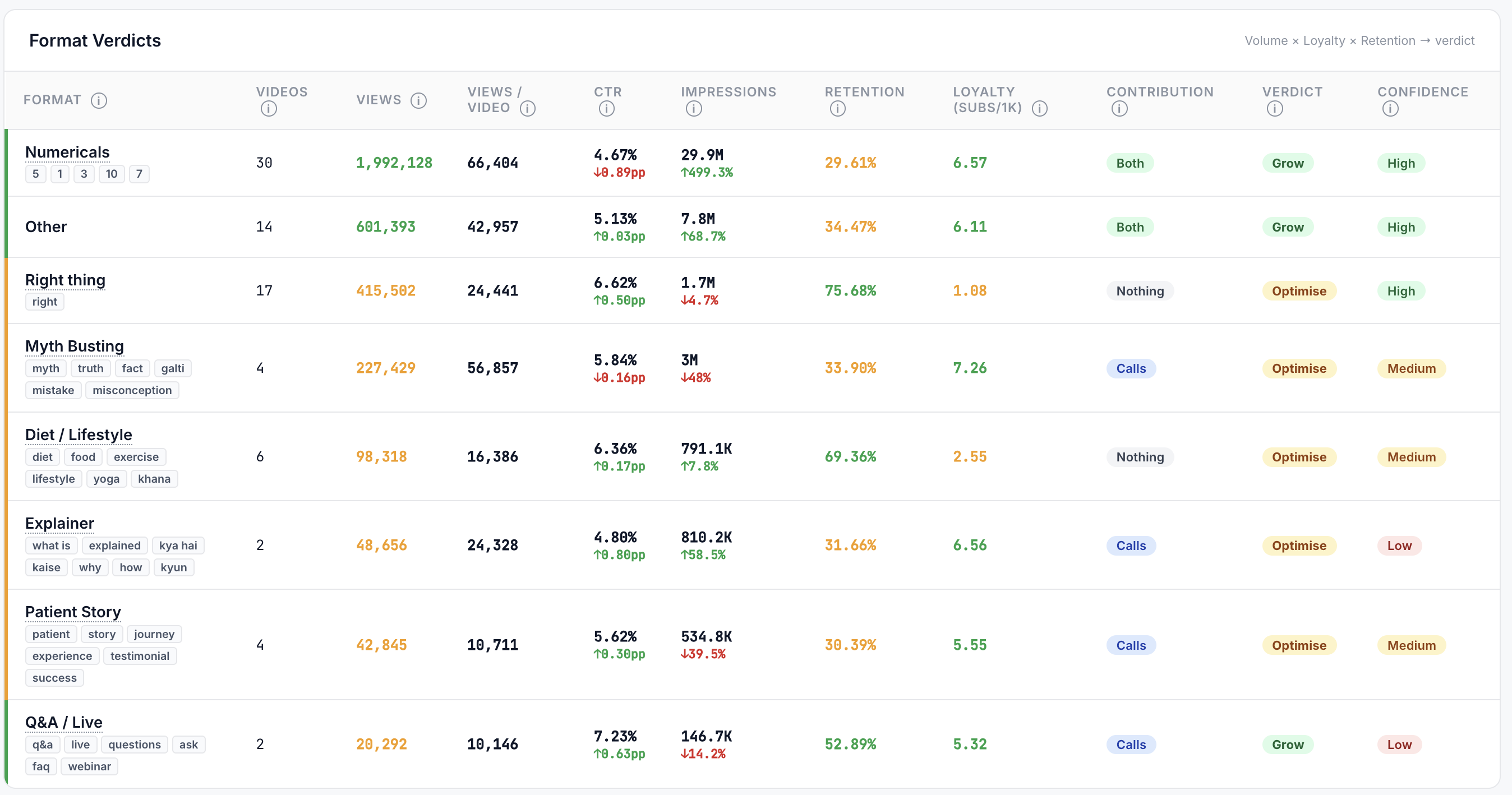
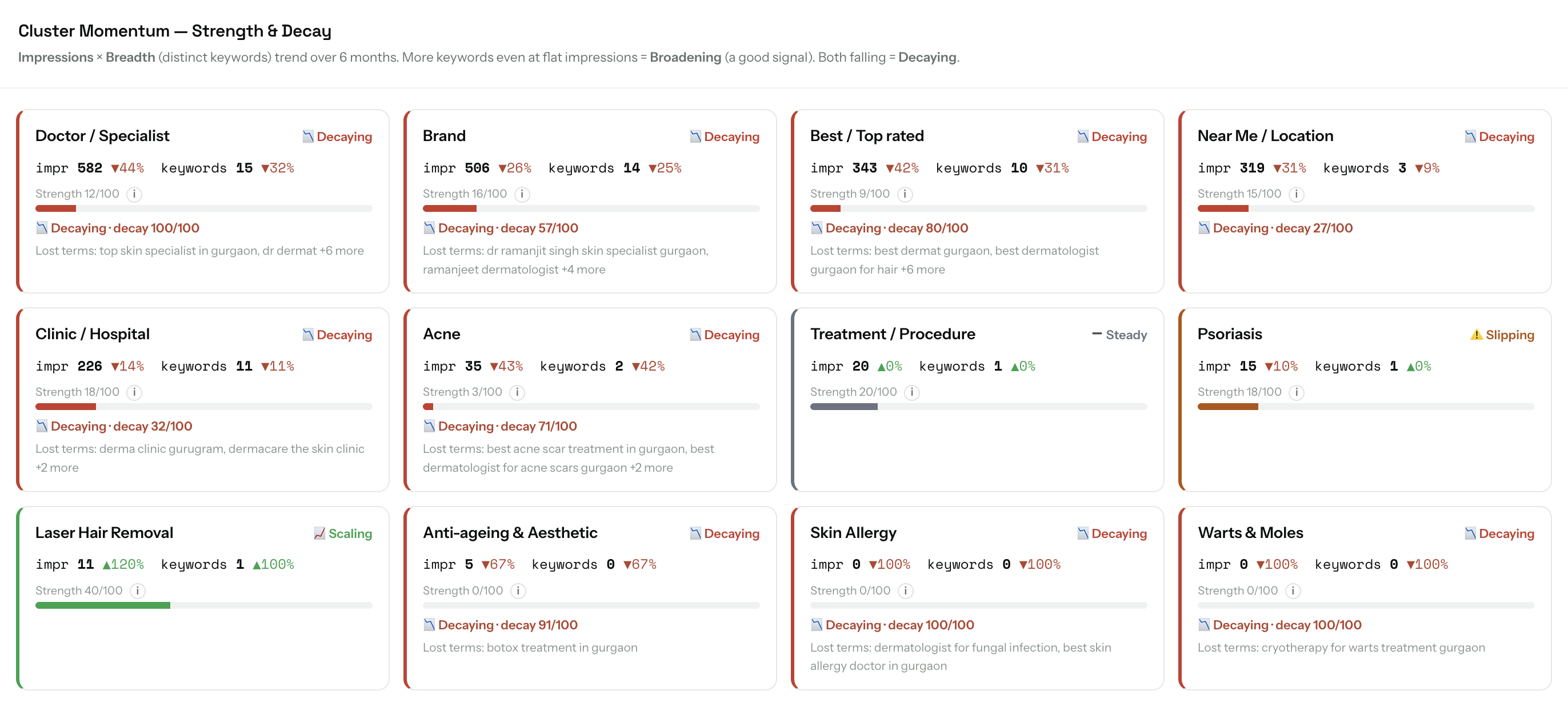
ICG works with 150+ clinics and 300+ live healthcare clients across India, from solo Tier-2 city practitioners to multi-city hospital groups, which means the same team that runs a Rs 999/mo GBP-first workflow for a dentist also runs a six-figure central ORM programme for an enterprise chain. That range is deliberate. It lets our advisors match a buyer to the tier they actually need rather than the tier that maximises invoice. When a solo doctor comes to us wanting "hospital-grade ORM" because it sounds serious, we usually talk them down to a leaner stack. When a 200-bed hospital comes to us using a solo-doctor toolkit stretched across departments, we help them structure the taxonomy, consent workflow and crisis playbook that they were quietly missing. The comparison in this guide is the same conversation we have with prospective clients before we quote anything — because if the tier is wrong, no amount of execution recovers it.
The 70-30 Model When ORM Extends Into Paid Services
ORM rarely lives alone. Most hospital-tier and enterprise-tier programmes eventually pair reputation work with paid amplification — Google Ads for high-intent branded and non-branded terms, YouTube for patient-story distribution, Instagram for founder-led doctor content. ICG's 70-30 pricing model applies here: 70 percent of the retainer is committed to production and platform work (review generation, response operations, content, ads set-up and optimisation), and 30 percent is reserved for strategy, measurement and iteration. Our SEO tiers — Foundation at Rs 49,999/mo, Growth at Rs 74,999/mo and Scale at Rs 99,999/mo — set the reference band, with Google Ads engagements typically starting from Rs 5 lakh/mo of ad spend under management, and YouTube/AIO engagements from Rs 50,000/mo. When a hospital's ORM programme grows into a full digital retainer, the 70-30 split keeps execution properly resourced while protecting time for the strategic reviews that decide whether the programme is actually improving star delta, review velocity and share-of-voice.
FAQ
Answers below reflect general Indian healthcare marketing practice as of 2026. Nothing here is medico-legal advice; consult qualified counsel for NMC and DPDP interpretation specific to your practice.
Book a free Brand & Growth Diagnostic.
60 minutes with a Co-Founder. You leave with a written root-cause analysis of where growth is stalling and what to fix first — whether or not you engage ICG.
Questions readers ask
about this topic.
The three platforms
behind every ICG engagement.
Beacon
CAPI middleware that fixes Event Match Quality, translates CRM statuses to Meta-standard events, dedups across channels.
Agency OS
Live client dashboard. GSC, GA4, Google Ads, Meta Ads, IVR calls in one view. Login anytime, not monthly.
Phoenix
Clinic revenue intelligence over your PMS. Daily action queue: Prevent Loss, Maintain & Engage, Grow Revenue. Multi-centre rollout.
Or book a free 30-min audit to see all three in action on your account.
Healthcare brands
that already run on ICG.
A representative slice of the 150+ healthcare brands ICG has delivered for across India. Most engagements remain under NDA.


What ICG clients say · on video.
"Mental health marketing requires a different sensitivity. ICG built compliance-aware campaigns that respect both patients and our..."
"Bariatric surgery patients need a long consideration cycle. ICG built a content + paid system that respects that timeline."
"Working with ICG felt like working with an in-house growth team that happens to specialise in healthcare."
The intelligence stack behind this playbook.
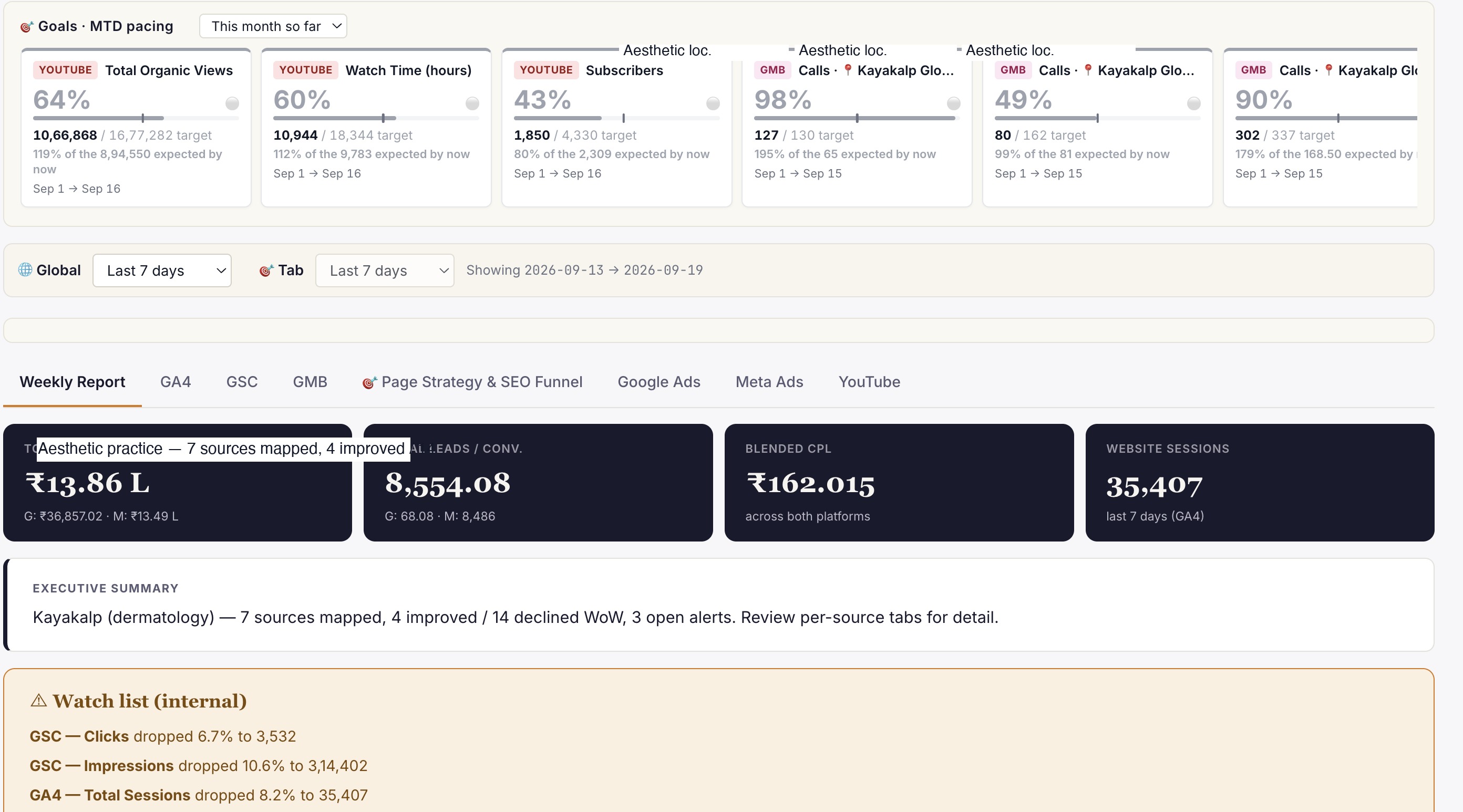
Every ICG engagement runs on the Search Intelligence Trifecta — Angryturtle for GMB, SIE for search and AI Overview, YODA for YouTube. Live product screens below.
Need help operationalising this?
Every ICG service is healthcare-only, NMC + DPDP-aware, and built around the patient-research patterns that drive Indian healthcare growth in 2026.
Every practice welcome — packages from ₹20,000/mo.
Goals-Driven engagements · Performance-Linked Payout Models available


More from
ICG.
Five trends shaping Indian healthcare marketing through 2027: AI-first patient research, Conversions API adoption, ABDM discovery, the AEO w...
Healthcare AIO is the discipline of getting your clinic or hospital cited inside Google AI Overviews, ChatGPT and Perplexity answers — not j...
Conversational-search advertising places brand messages inside AI chat answers — ChatGPT, Perplexity, Copilot — rather than beside a results...
Stop guessing.
Book a Diagnostic.
30 minutes. Free. With the AI-powered healthcare-only marketing agency 150+ brands already run on. No slides, no pitch, no hard close.


