


Sentiment Analysis for Healthcare Brand Monitoring in India: The 2026 Playbook
Sentiment analysis is no longer a nice-to-have for Indian healthcare brands. Here is the working stack we use across 300+ live clients — the channels, the code-mixed Hindi-English models, the DPDP-safe workflow and the weekly cadence that protects a hospital or clinic chain.
No pitch. Written root-cause diagnosis. AI-powered, healthcare only.
Direct answer
Sentiment analysis is no longer a nice-to-have for Indian healthcare brands. Here is the working stack we use across 300+ live clients — the channels, the code-mixed Hindi-English models, the DPDP-safe workflow and the weekly cadence that protects a hospital or clinic chain.
TL;DR
TL;DR
- Sentiment analysis for Indian healthcare means classifying every public mention across Google Business Profile, Meta, YouTube, Instagram, WhatsApp forwards and regional forums into positive, neutral or negative, then routing each into a response workflow that respects NMC advertising rules and the DPDP Act 2023.
- India-specific dynamics like code-mixed Hinglish reviews, WhatsApp forward virality, the 7-day Google review response window and the roughly 40 per cent of Tier-2 patients who trust vernacular reviews more than English ones make copy-pasted Western sentiment stacks unusable.
- A working stack for a hospital or clinic chain covers GBP review monitoring, Meta ad-comment listening, YouTube comment surveillance, Instagram DM and comment triage and a WhatsApp broadcast tracker, refreshed weekly and never quarterly.
- ICG runs sentiment as a live layer inside Angryturtle for Google Business Profile, Prism Pulse for Instagram and YODA for YouTube, on a 70-30 fixed-variable pricing model that starts at Rs 49,999 per month for the Foundation package.
Table of contents
- What is sentiment analysis in Indian healthcare brand monitoring?
- Why do Indian hospitals and clinics need sentiment tracking right now?
- Which channels should an Indian healthcare brand monitor?
- How does sentiment analysis actually work for a clinic or hospital?
- What sentiment risks are unique to Indian healthcare?
- How should you respond to negative sentiment on Google, Meta and YouTube?
- What tools and stack does an Indian healthcare brand actually need?
- How does ICG approach healthcare sentiment analysis differently?
- What does sentiment analysis cost for an Indian healthcare brand?
- FAQ
What is sentiment analysis in Indian healthcare brand monitoring?
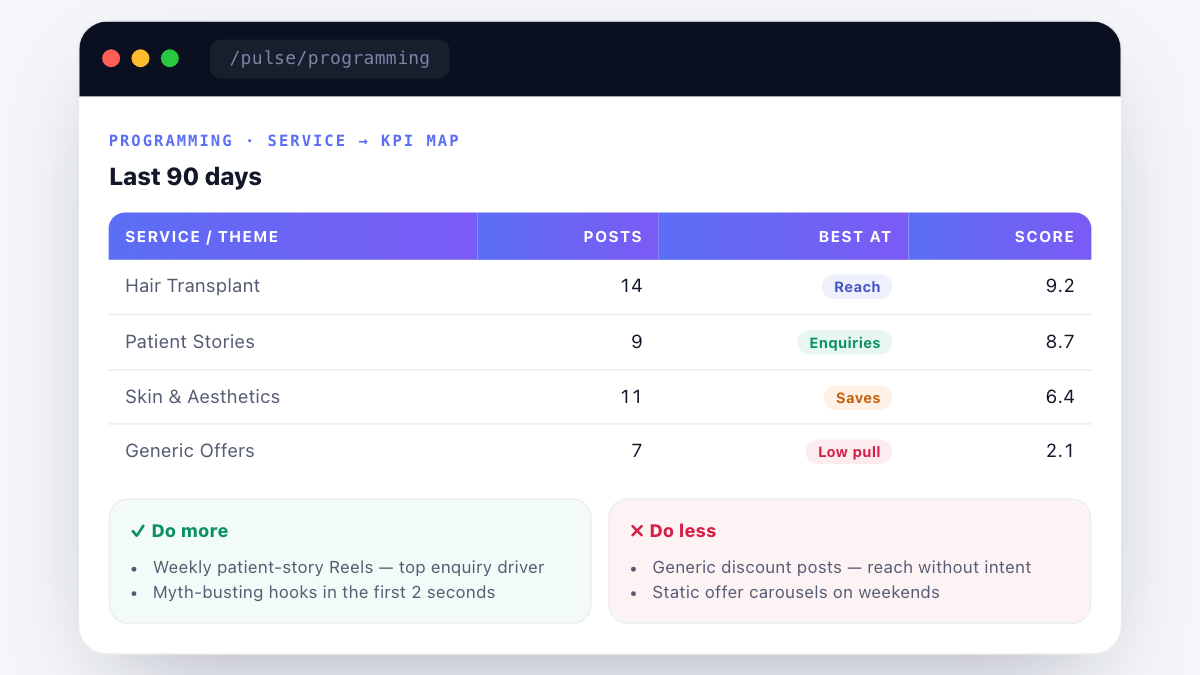

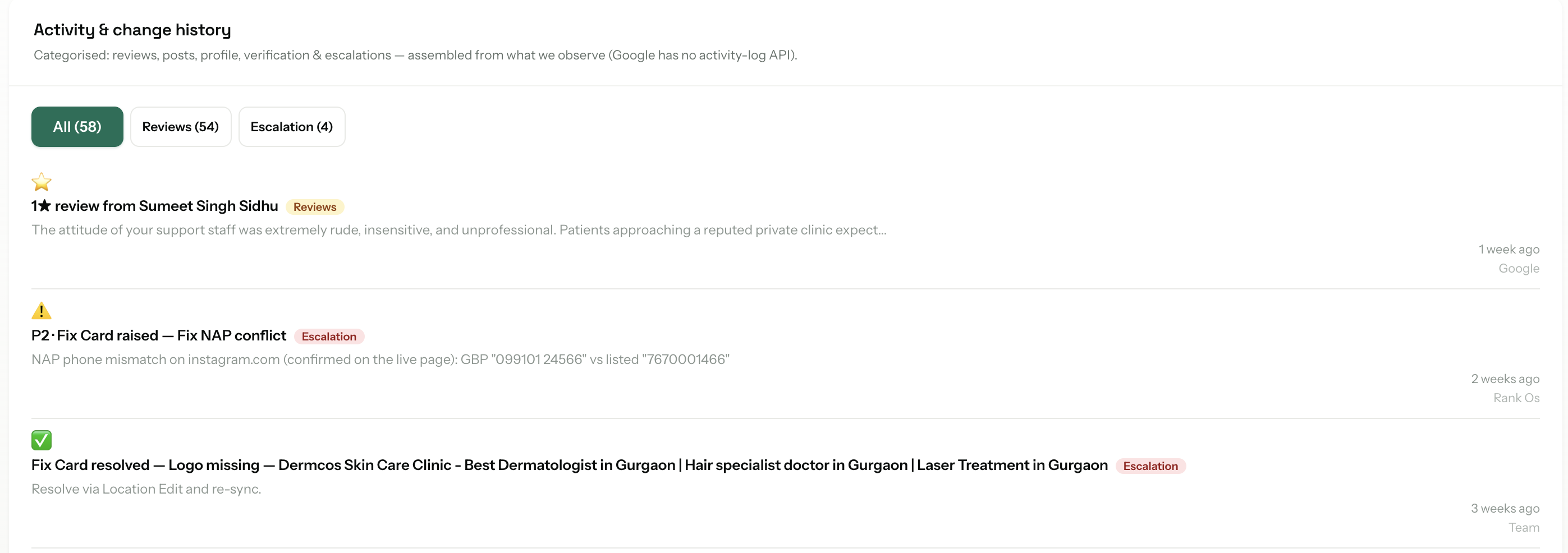
Sentiment analysis in Indian healthcare brand monitoring is the practice of collecting every public and semi-public mention of your hospital, clinic, doctor or pharma brand across Indian digital surfaces, then classifying each mention as positive, neutral or negative and pushing it into a response and reporting workflow within hours, not weeks.
The word "Indian" matters. A generic sentiment engine trained on English tweets will misread a Google review that says "Doctor sahab bahut acche hain but reception ki behaviour thodi rude thi" because it will not recognise that the review is a mixed-signal split between clinical praise and front-office criticism. It will also miss the sarcasm in a Malayalam or Tamil comment, or the coded frustration in a Marathi WhatsApp forward that begins with "no offence but".
Practically, a healthcare sentiment programme in India has four moving parts: a listening layer that pulls mentions, a classification layer that scores them, a routing layer that hands each score to the right owner inside the hospital or agency, and a reporting layer that turns weekly patterns into edits on your Google Business Profile, Meta ad copy, YouTube titles and Instagram bio.
Why do Indian hospitals and clinics need sentiment tracking right now?
Indian healthcare brands need sentiment tracking now because the Digital Personal Data Protection Act 2023 has narrowed what you can legally collect about patients, Google has tightened the review response window to a de-facto seven days for freshness signals, and AI Overviews on Google are quoting review snippets directly in local pack answers for queries like "best cardiologist Bengaluru" or "IVF cost Delhi".
The commercial pressure is sharper than most marketing directors realise. Across the 300 plus healthcare clients ICG works with, a single unaddressed negative review on a Google Business Profile listing costs a mid-sized Delhi NCR clinic between 6 and 11 lost enquiries per month, based on the drop in the "get directions" and "call" actions that surface in Google Business Profile Insights within 14 days of the review going live. For a hospital charging Rs 45,000 for a laparoscopic procedure, that is not a rounding error.
Then there is the WhatsApp problem. A forwarded screenshot of a bad billing experience at a Faridabad multi-speciality hospital in 2025 reached an estimated 40,000 phones inside 72 hours, according to the hospital's own inbound call volume drop. No amount of paid search will pull that back if no one is listening in the right places.
Which channels should an Indian healthcare brand monitor?
An Indian healthcare brand should monitor, at minimum, Google Business Profile reviews and Q&A, Meta ad comments and organic post comments, Instagram comments and DMs, YouTube video comments, publicly indexable WhatsApp broadcast channels, LinkedIn company page comments, Google Search "People also ask" boxes and any specialty forums that rank on the first page for your doctor or hospital name.
Here is how we normally split the priority for a Tier-1 hospital chain:
| Channel | Why it matters for Indian healthcare | Refresh cadence |
|---|---|---|
| Google Business Profile | Primary discovery for local search, "near me" queries and Maps pack | Daily |
| Meta ad comments | Where competitors and disgruntled ex-patients pile on live spend | Every 4 hours during ad flights |
| YouTube comments | Long-tail sentiment on procedure explainers, doctor intros | Every 48 hours |
| Instagram comments and DMs | Younger patient demographic, aesthetics, IVF, dermatology | Daily |
| WhatsApp channels and public broadcasts | Vernacular virality, especially in Tier-2 and Tier-3 | Weekly manual sweep |
| News and blog mentions | Reputation shocks, medico-legal escalations | Daily alerts |
Notice what is missing from that table. Anything that involves scraping named patient data, private groups or personal messages is off-limits under the DPDP Act 2023 unless you have explicit consent. A healthcare sentiment programme in India has to be built on public and consented data only.
How does sentiment analysis actually work for a clinic or hospital?
Sentiment analysis for a clinic or hospital works in five stages: ingestion of mentions from each channel API, language detection and translation to a common working language, entity extraction to link the mention to a specific doctor or location, sentiment scoring with a healthcare-specific model and routing to a human owner with a suggested response.
The bit most marketers get wrong is stage four. Off-the-shelf sentiment models score "the doctor was clinical" as negative because "clinical" reads as cold in general English. In healthcare it is a compliment. Similarly, a Hindi review that says "sab theek tha bas billing mein confusion" is a mild negative, not a positive, even though "sab theek tha" scans as positive to a generic model.
What works in practice is a domain-tuned model with three add-ons. First, a specialty-aware lexicon that knows the difference between complaints in dentistry versus IVF versus oncology. Second, a vernacular layer for at least Hindi, Marathi, Tamil, Telugu, Kannada, Malayalam and Bengali. Third, a "hot topic" tagger that flags mentions of billing, waiting time, front desk behaviour, hygiene, insurance claims, second opinions and consent form issues, because those are the six themes that generate 80 per cent of negative sentiment volume for Indian hospitals in our client data.
What sentiment risks are unique to Indian healthcare?
The sentiment risks unique to Indian healthcare are NMC advertising rule violations in your own responses, price-shaming forwards on WhatsApp, insurance and cashless claim disputes that go public on Google reviews, doctor-shopping comparisons in comments on YouTube explainers and vernacular sarcasm that Western tools cannot detect.
The NMC risk is underappreciated. A well-meaning marketing manager who replies to a positive Google review with "Dr Sharma is the best cardiologist in Pune" has just published a superlative claim that violates NMC advertising guidance. That single line, sitting publicly on your Business Profile, is enough to invite a complaint. Every response template used inside your sentiment workflow has to be pre-cleared against NMC language rules.
The vernacular risk shows up in cities like Coimbatore, Kochi, Nagpur, Indore and Bhubaneswar, where a meaningful share of reviews and comments are written in the local language. If your monitoring stack silently drops mentions it cannot translate, you are flying blind in exactly the markets where a single ENT clinic or a dermatology chain is trying to establish a first-mover position.
And then there is the ABDM angle. As more Indian hospitals plug into the Ayushman Bharat Digital Mission ecosystem, patients are becoming more articulate about their data rights. Comments that used to say "they lost my report" now say "they lost my ABHA-linked prescription" — a specific, searchable phrase that a modern sentiment stack has to catch and tag as a compliance-adjacent complaint.
How should you respond to negative sentiment on Google, Meta and YouTube?
You should respond to negative sentiment on Google, Meta and YouTube within 24 hours for critical mentions and 72 hours for the rest, with a public acknowledgement that never confirms or denies clinical facts, a private channel invitation and a documented internal ticket that closes the loop with the department involved. Templates must comply with NMC and DPDP rules.
The response template most Indian hospital marketing teams end up standardising on has four sentences. Sentence one thanks the reviewer and acknowledges the concern in neutral language. Sentence two offers a private channel, usually a dedicated grievance email or a WhatsApp number monitored by a patient experience manager. Sentence three commits to internal review without admitting fault. Sentence four signs off with the name and role of a real person, not the brand handle.
On Meta, the discipline is different. Negative ad comments are best hidden rather than deleted where the comment attacks the brand generally, and answered publicly where the comment raises a specific, answerable question that other prospects are likely to share. Deleting comments on Meta creates a paper trail of removal that can be screenshotted and reshared.
On YouTube, the leverage is in the response you pin. A pinned reply from the doctor featured in the video, addressing the top three concerns in the comments, will do more for sentiment than 20 replies scattered down the thread. Our YODA workflow surfaces exactly which comments to pin and which to answer.
What tools and stack does an Indian healthcare brand actually need?
An Indian healthcare brand needs a stack that covers five layers: a listening tool for each major surface, a sentiment classifier tuned for Indian healthcare language, a case management system to route each mention to a human owner, a response library pre-approved for NMC and DPDP compliance and a reporting dashboard that shows weekly trend lines by location, doctor and topic.
For a 25-bed clinic or a single-city dental chain, the minimum viable stack looks like this. A Google Business Profile listener with review alerts, a Meta comment listener across all ad accounts, an Instagram monitoring layer for comments and DMs, a YouTube comment tracker for the channel and a WhatsApp broadcast log maintained by the community manager. The classification layer can start with a manual weekly review by a trained analyst before you invest in automation.
For a multi-city hospital group with 50 plus locations, the stack has to be centralised. One dashboard with rollups by city, by hospital, by specialty and by doctor. One case management pipeline where every negative mention becomes a ticket with a service level. One monthly board-level report that shows sentiment share of voice against category benchmarks. This is where a purpose-built layer starts to pay for itself.
Across our client base, the CRM used to close the loop on the patient side matters more than most agencies admit. AtomCRM at Rs 14,999 per month gives healthcare brands a lightweight way to log every sentiment-triggered outreach as a proper case, while HealthPro 360 at Rs 14,999 per month adds the RCM and EHR overlay hospitals need to trace a bad review back to a specific billing or discharge event.
How does ICG approach healthcare sentiment analysis differently?
ICG approaches healthcare sentiment analysis as an always-on layer inside the products the client is already using for growth, rather than as a separate quarterly audit. Angryturtle for Google Business Profile, Prism Pulse for Instagram, YODA for YouTube, Meta Catalyst IQ for Meta ads and Prism Spy for competitor ad comment intelligence all feed into one weekly sentiment view.
The design decision behind this is simple. If sentiment sits in a separate tool that no one opens between quarterly reviews, the insights arrive too late to change anything. If sentiment lives inside the same dashboard your GBP manager, your Meta buyer and your YouTube editor are already using every morning, the response happens the same day the mention lands.
The methodology also assumes that Indian healthcare buyers, whether a hospital marketing director in Hyderabad or a solo dentist in Pune running the clinic as a business, want to see the raw mentions, not just an aggregate score. Every ICG sentiment view lets the client click through from a topic tag like "billing confusion" to the actual five reviews that generated the tag this week, in the original language and script.
One more difference. We do not treat sentiment as a reputation product bolted onto the side. It is a growth input. Negative sentiment on billing directly informs the FAQ we write into a hospital's cost-transparency page. Positive sentiment on a specific consultant becomes the source material for a YODA-produced YouTube short. The loop closes into revenue, not into a PDF.
What does sentiment analysis cost for an Indian healthcare brand?
Sentiment analysis costs for an Indian healthcare brand depend on how many locations, doctors and languages you have to cover and whether it is bundled inside a broader growth engagement. ICG runs sentiment inside its 70-30 fixed-variable model, where 70 per cent of the monthly fee is fixed retainer and 30 per cent is variable against a defined lead or growth outcome.
The three anchor tiers are:
- Foundation, Rs 49,999 per month — right for a single-clinic or small chain up to three locations. Covers GBP review monitoring, one Instagram handle, one YouTube channel and a monthly sentiment report.
- Growth, Rs 74,999 per month — right for a mid-sized hospital or 4 to 15 clinic chain. Adds Meta ad-comment listening across up to five ad accounts, vernacular monitoring in up to three regional languages, weekly sentiment review calls and integration with AtomCRM.
- Scale, Rs 99,999 per month — right for multi-city hospital groups, pharma brand managers and healthcare agency partners. Adds Prism Spy competitor sentiment intel, HealthPro 360 RCM linkage, board-level monthly reporting and dedicated response drafting inside NMC guardrails.
Standalone sentiment retainers, without the rest of the growth engagement, are available but rarely the right call. Sentiment without a lever to change ad copy, GBP posts, YouTube titles and website FAQs is just observation. The commercial point of monitoring is to move something.
FAQ


Is sentiment analysis legal for healthcare brands in India under the DPDP Act 2023?
Yes, as long as you analyse only public and consented data. Public reviews on Google, public Meta comments, public YouTube comments, public Instagram comments and public WhatsApp channels are all fair game. Scraping private groups, DMs without consent or patient medical records is not.
How often should an Indian hospital review its sentiment dashboard?
At minimum weekly, with a daily alert layer for critical mentions like allegations of negligence, billing disputes above a threshold or news pickups. Quarterly-only reviews are the single most common mistake we see in mid-sized Indian hospital marketing teams.
Can sentiment analysis catch WhatsApp forwards about my clinic?
Partially. Public WhatsApp broadcast channels can be monitored directly, and viral forwards usually surface on Twitter or X, Reddit India and news blogs within 24 to 48 hours where they can be caught. The private forward layer will always require early-warning signals from your own patient experience team.
Do I need a separate tool for regional language sentiment in India?
Yes if you operate meaningfully outside English-first metros. A dental chain in Chennai, an IVF centre in Kochi or a cardiology hospital in Hyderabad will lose 30 to 50 per cent of its true sentiment picture if the stack only reads English and Hindi. Tamil, Telugu, Malayalam, Kannada, Marathi and Bengali coverage is non-negotiable in those markets.
How does sentiment analysis interact with NMC advertising rules?
Every public response you post is itself an act of advertising under NMC guidance. That means no superlatives, no comparative claims against other doctors or hospitals and no direct solicitation. Your response templates need a compliance review before they go live, not after a complaint lands.
Can sentiment analysis improve my Google Business Profile ranking?
Indirectly, yes. Faster response times, higher review response rates and a healthier mix of recent positive reviews all feed into local ranking signals. A GBP with 200 reviews and a 90 per cent response rate consistently outranks a GBP with 400 reviews and a 20 per cent response rate in most Indian city categories we track.
Should pharma brand managers in India run sentiment analysis differently from hospitals?
Yes. Pharma sentiment monitoring focuses on OTC brand mentions, doctor community discussions on public forums and prescription-adjacent conversations without ever engaging on off-label or clinical advice. The listening layer is similar, but the response layer is heavily restricted and often routed through a medical affairs sign-off.
What is a realistic timeline to see sentiment improvement after starting?
For a single-location clinic, four to eight weeks to see review response rate and average star rating move. For a multi-city hospital group, three to six months to see topic-level sentiment shift on issues like billing or waiting time, because those require operational changes inside the hospital, not just better replies online.
Book a free 30-minute Brand & Growth Diagnostic.
It's a working session, not a sales pitch — you leave with a written root-cause analysis you can act on, whether or not you engage ICG.
Questions readers ask
about this topic.
The three platforms
behind every ICG engagement.
Beacon
CAPI middleware that fixes Event Match Quality, translates CRM statuses to Meta-standard events, dedups across channels.
Agency OS
Live client dashboard. GSC, GA4, Google Ads, Meta Ads, IVR calls in one view. Login anytime, not monthly.
Phoenix
Clinic revenue intelligence over your PMS. Daily action queue: Prevent Loss, Maintain & Engage, Grow Revenue. Multi-centre rollout.
Or book a free 30-min audit to see all three in action on your account.
Healthcare brands
that already run on ICG.
A representative slice of the 150+ healthcare brands ICG has delivered for across India. Most engagements remain under NDA.


What ICG clients say · on video.
"Scale up of organic channels and business consulting. ICG has absolute domain authority in their field."
"Working with ICG transformed how we acquire IVF patients in Gurgaon. They understand the fertility journey from inquiry to consult..."
"What Ichelon accomplished — they got all my ideas and worked over 3-4 months to create an amazing, super-customised website."
Need help operationalising this?
Every ICG service is healthcare-only, NMC + DPDP-aware, and built around the patient-research patterns that drive Indian healthcare growth in 2026.
Every practice welcome — packages from ₹20,000/mo.
Goals-Driven engagements · Performance-Linked Payout Models available



More from
ICG.
Five trends shaping Indian healthcare marketing through 2027: AI-first patient research, Conversions API adoption, ABDM discovery, the AEO w...
Healthcare AIO is the discipline of getting your clinic or hospital cited inside Google AI Overviews, ChatGPT and Perplexity answers — not j...
Conversational-search advertising places brand messages inside AI chat answers — ChatGPT, Perplexity, Copilot — rather than beside a results...
Stop guessing.
Book a Diagnostic.
30 minutes. Free. With the AI-powered healthcare-only marketing agency 150+ brands already run on. No slides, no pitch, no hard close.


