


Cardiac hospital setup cost in India: ₹15 Cr - ₹150 Cr, and what moves you along that line
Cardiac hospital projects in India run from ₹15 Cr to ₹150 Cr, based on ICG's own engagement base across cardiac clients. The number that determines which end you land on isn't city, it's cath lab count and CTVS capability. ₹15 Cr buys a single-cath-lab unit bolted onto an existi
No pitch. Written root-cause diagnosis. AI-powered, healthcare only.
Direct answer
Cardiac hospital projects in India run from ₹15 Cr to ₹150 Cr, based on ICG's own engagement base across cardiac clients. The number that determines which end you land on isn't city, it's cath lab count and CTVS capability. ₹15 Cr buys a single-cath-lab unit bolted onto an existi
TL;DR

Cardiac hospital projects in India run from ₹15 Cr to ₹150 Cr, based on ICG's own engagement base across cardiac clients. The number that determines which end you land on isn't city, it's cath lab count and CTVS capability. ₹15 Cr buys a single-cath-lab unit bolted onto an existing hospital. ₹150 Cr buys a standalone tertiary cardiac centre with its own CTVS wing, ICU stack and imaging. Working out the cost to start a cardiac hospital in India means working out where your project sits on that line, not chasing a single average figure.
Contents
- What a cardiac hospital actually costs in India, and where the number comes from
- City and tier breakdown: what moves with location, and what doesn't
- Cost drivers: the licensing layer investors underprice, and the CTVS fork
- Revenue drivers: cash-pay, insurance, and what PM-JAY actually changes
- Break-even timeline: procedure volume, not footfall
- Common mistakes first-time cardiac investors make
- FAQ
What a cardiac hospital actually costs in India, and where the number comes from
A tenfold spread is unusual for a specialty capital estimate, and it isn't imprecision — it's two genuinely different businesses sharing a name. This is the cardiac hospital setup cost India range as ICG has seen it across cardiology engagements, not a figure pulled from a market survey, and the cost to start a cardiac hospital in India depends almost entirely on which of those two businesses you are building. At the low end, ₹15 Cr covers a single-cath-lab interventional unit added to an existing multi-specialty hospital: one cath lab, a small dedicated ICU bay, and the imaging the unit already shares with the host facility. At the high end, ₹150 Cr covers a standalone tertiary cardiac centre — multiple cath labs, full CTVS (cardiothoracic and vascular surgery) capability, its own ICU stack, and imaging that doesn't depend on a parent hospital.
The same add-versus-build logic drives a general clinic's capital plan, laid out at the cost-to-start-a-clinic breakdown — cardiac simply applies it at a scale where getting it wrong costs crores rather than lakhs.
City and tier breakdown: what moves with location, and what doesn't
Picture a founder holding two term sheets side by side. One is for a plot in a Tier 1 metro, at a rent premium that eats into year-one cash flow before the first patient walks in. The other is a Tier 2 city where the land is a third of the price, but the referral network that would fill the cath lab doesn't exist yet and has to be built from nothing. Cardiac hospital investment in India routes through exactly this fork more often than through any pure cost comparison.
What moves between the two isn't the licensing bill. AERB, NABH and CEA requirements apply regardless of where the facility sits — a Tier 2 hospital clears the same regulatory bar as a Tier 1 one. What actually shifts is land and rent on one side, and staffing and referral-network build time on the other.
| Tier | Typical capital band, relative to the ₹15 Cr-₹150 Cr range | Dominant cost driver |
|---|---|---|
| Tier 1 metro (Delhi NCR, Mumbai, Bangalore) | Skews toward the upper half | Land and commercial rent premium |
| Tier 2 city | Skews toward the lower-to-mid range | Staffing availability — cardiac-trained nurses and technicians are harder to retain outside metros |
| Tier 3 city | Lower band, but slower to reach full utilisation | Referral-network build time — cardiologists and family physicians in the catchment need time to trust and refer to a new unit |
Anyone weighing a multi-specialty setting for the unit against a standalone cardiac facility will find that broader positioning question framed at ICG's hospitals industry page.
Cost drivers: the licensing layer investors underprice, and the CTVS fork
Before a single stent is ordered, the cath lab needs an AERB radiological safety clearance — and AERB's own guidance requires an on-site radiological safety officer and a shielded, direct-viewing control room before the equipment is even consented. Cath lab setup cost in India starts here, not with the angiography table. AERB's published guidance is explicit about the physical and staffing requirements: "Interventional Radiology equipment room shall have an adjoining control room with appropriate facilities for shielding, direct viewing and oral communication," per the AERB regulatory requirements for upcoming radiology facilities. What AERB does not publish is a fee schedule — there's no rupee figure attached to RSO empanelment or equipment consenting on the regulator's own pages.
NABH accreditation is the one part of this layer with a real, current fee table. The NABH entry-level hospitals certification programme publishes a two-year certification fee running from ₹21,000 for facilities up to 5 beds through ₹2,50,000 for 501-plus beds, with a discounted window quoted through 30 September 2026 — worth confirming that window hasn't lapsed by the time this is read.
Clinical Establishments Act registration sits underneath both of the above, and here the finding is the state-dependence itself: the central CEA portal confirms the Act has been adopted unevenly across states and union territories, with registration fees set at the state level rather than published centrally. There's no single number to quote. Budgeting for "CEA registration: varies by state, confirm locally" is the honest version of this line item.
Separately from licensing, cardiac has a structural fork that most specialties don't: interventional-only versus full CTVS capability. An interventional-only cath lab handles angioplasty, stenting and diagnostic catheterisation, with a smaller equipment stack, a leaner staffing model, and no dedicated cardiac OT. Full CTVS capability adds open-heart surgery — bypass, valve replacement, congenital repair — which means a cardiac OT, a perfusion team, a deeper ICU bench, and typically a second or third cath lab to keep both interventional and surgical volume moving. This fork, more than city or tier, is what pushes a project from the ₹15 Cr end of the range toward the ₹150 Cr end. Most first-time cardiac investors underestimate how much staffing depth CTVS adds relative to the equipment line item, which is the cheaper half of that decision.
Revenue drivers: cash-pay, insurance, and what PM-JAY actually changes
PM-JAY changes the revenue model for cardiac care more than it changes the price list. Cardiology hospital revenue in India increasingly has to account for Ayushman Bharat PM-JAY patients as a structurally different payer, not an incremental add-on. The scheme's Health Benefit Package 2.2 manual sets per-bed-day rates by ward tier — ₹1,800 for a routine ward, ₹2,700 for a high-dependency unit, ₹3,600 for intensive care without ventilator support — and caps most unlisted procedures through an "unspecified package" ceiling of ₹1,00,000, within an overall limit of ₹5,00,000 per beneficiary, per the HBP 2.2 manual. The manual references cardiac catheterisation as part of the treatment package for congenital heart defects specifically, but it doesn't publish a standalone per-procedure cardiac rate — extrapolating one from the ward-day figures would be guessing, so this guide doesn't.
What that means for a single-cath-lab unit's monthly revenue stack: cash-pay and private-insurance procedures sit at, blended against a modelled share of PM-JAY patients billed at the per-bed-day rates above rather than a per-procedure rate. A unit running, say, 40 procedures a month with a third under PM-JAY isn't collecting a third less revenue proportionally — it's collecting under an entirely different rate structure for that third, which is why the blended math matters more than the headline procedure count. Getting that blend wrong at the planning stage is one of the more common ways a cardiac unit's revenue projection turns out to be optimistic.
Break-even timeline: procedure volume, not footfall
Most break-even models for a cardiac unit are built on footfall — and that's the assumption that breaks first. Break-even here tracks procedure volume per cath lab, not people walking through the door, because most footfall into a cardiac OPD is consultation traffic, not procedure-eligible patients.
Take a hypothetical single-cath-lab unit opening this year. Its OPD footfall is steady from the first month; procedure volume lags well behind, because a new unit hasn't yet earned the trust of the referring cardiologists and family physicians whose patients actually need a cath lab — and that trust takes longer to build than a campaign takes to run. Once referrals do start arriving, the ramp steepens faster than footfall ever did, because each successfully treated referral becomes its own source of the next one. Cardiac hospital break-even decouples from consult volume almost entirely past the first two quarters, which means the owner still watching the waiting room instead of the procedure log is watching the wrong number.
Common mistakes first-time cardiac investors make
Nearly every capital mistake in cardiac traces back to one mechanism: sizing the facility to referral optimism instead of modelled procedure throughput. What follows are the forms that single error takes.
- Underpricing the AERB and RSO clearance timeline against equipment lead time — the cath lab table can sit uninstalled for months waiting on a shielded control room that wasn't budgeted early enough.
- Sizing bed count to referral optimism rather than modelled procedure volume, which produces exactly the footfall-versus-procedure mismatch covered above.
- Committing to full CTVS capability before interventional-only volume is proven, which front-loads staffing and OT costs a project isn't yet generating procedure volume to support.
- Treating PM-JAY package rates as incremental revenue on top of a private-pay base, rather than as a structurally different payer mix that needs its own line in the model.
- Skipping or delaying state-level CEA registration because the national portal shows no fee, when the actual timeline and requirement sit with the state health department, not Delhi.
Related reading
- Once the hospital is running, cardiac patients increasingly meet it through Google's AI answers; see AI Overview optimization for cardiology hospitals.
FAQ
What does an AERB licence actually add to my project timeline? AERB requires an on-site radiological safety officer and a shielded, direct-viewing control room to be in place before the cath lab equipment can be consented — this typically adds months to the fit-out sequence, though AERB does not publish a fixed fee or timeline for RSO empanelment itself.
Is a single-cath-lab unit a viable standalone investment, or does it need to sit inside an existing hospital? Most single-cath-lab units in the ₹15 Cr range are structured as an add-on to an existing hospital, sharing its imaging, blood bank and general ICU rather than building all of that from scratch.
How much more does full CTVS capability cost over an interventional-only cath lab? CTVS adds a cardiac OT, a perfusion team and a deeper ICU bench on top of the interventional stack, which is a large part of what moves a project from the ₹15 Cr end of the range toward the ₹150 Cr end —.
Does taking PM-JAY patients hurt or help my revenue model? Neither by default — it depends on how the blended cash-pay/PM-JAY mix is modelled. PM-JAY pays fixed per-bed-day and package rates rather than market rates, so it changes the revenue structure rather than simply adding or subtracting from it.
How many procedures per month does a single cath lab need to break even? This depends on the unit's cost base and payer mix, and ICG has not published a universal figure for this guide —.
What's the real difference in capital required between a Tier 1 and Tier 2 city setup? Licensing cost is largely tier-independent. What differs is land and rent, which skew higher in Tier 1 metros, against staffing availability and referral-network build time, which are the harder cost to solve in Tier 2 and Tier 3 cities.
What NABH certification tier should I target at launch, and what does it cost? NABH's entry-level certification is the standard starting point, priced by bed count from ₹21,000 up to 5 beds through ₹2,50,000 for 501-plus beds over a two-year cycle, per NABH's own published fee table.
Do I need a separate blood bank tie-up before I can run cardiac procedures, or can I outsource it? Cardiac procedures generally require assured blood availability, and many single-cath-lab units meet this through a tie-up with an existing blood bank rather than building one in-house — the specific licensing route depends on state rules and is worth confirming locally before committing capital.
What's the biggest line item first-time cardiac investors underestimate? The AERB and RSO clearance timeline, more often than the equipment cost itself — the clearance sequence can hold up an otherwise-ready facility for months if it isn't started early in the project plan.
ICG's marketing engagement typically accounts for engagement-specific and clinic-model-dependent; see CPQL benchmarks for methodology of this clinic type's opex, benchmarked to a cardiology CPQL of ₹520 against a market average of ₹1,100 — see ICG's CPQL benchmarks. That figure is drawn from 46 active healthcare client engagements, a rolling 12-month window from July 2025 to July 2026, across Delhi NCR, Mumbai, Bangalore, Chennai, Hyderabad and Kolkata, last verified 26 July 2026.
ICG has run marketing and growth strategy for a Mumbai-based interventional cardiologist's practice as a fractional CGO engagement, taking the practice from no digital presence to a consistent monthly consultation pipeline — the anonymised detail of that engagement is at ICG's cardiac specialist fractional CGO case study. For hospitals and cardiac units evaluating a marketing partner ahead of launch, the specialty-specific service breakdown is at ICG's cardiology marketing agency page. Any pre-launch campaign for a cardiac unit is also bound by the NMC's 2026 advertising guidelines, which governs how a facility and its consultants may advertise — outcome claims, comparative superiority and testimonial use are the three areas where cardiac launches most often overstep, and the boundary is set out in ICG's NMC Section 6 compliance guide.
Written by Rohit Gupta, Co-Founder, Business & Growth Reviewed by Abhash Kumar, Co-Founder, Strategy
Neither the author nor the reviewer is a clinician; this is a capital-planning and marketing-economics analysis, not clinical or medico-legal advice.
Book a free 60-minute business-model review.
Rohit Gupta walks through your capex plan, city mix, breakeven assumptions and what marketing spend will actually cost against your revenue projections.
The three platforms
behind every ICG engagement.
Beacon
CAPI middleware that fixes Event Match Quality, translates CRM statuses to Meta-standard events, dedups across channels.
Agency OS
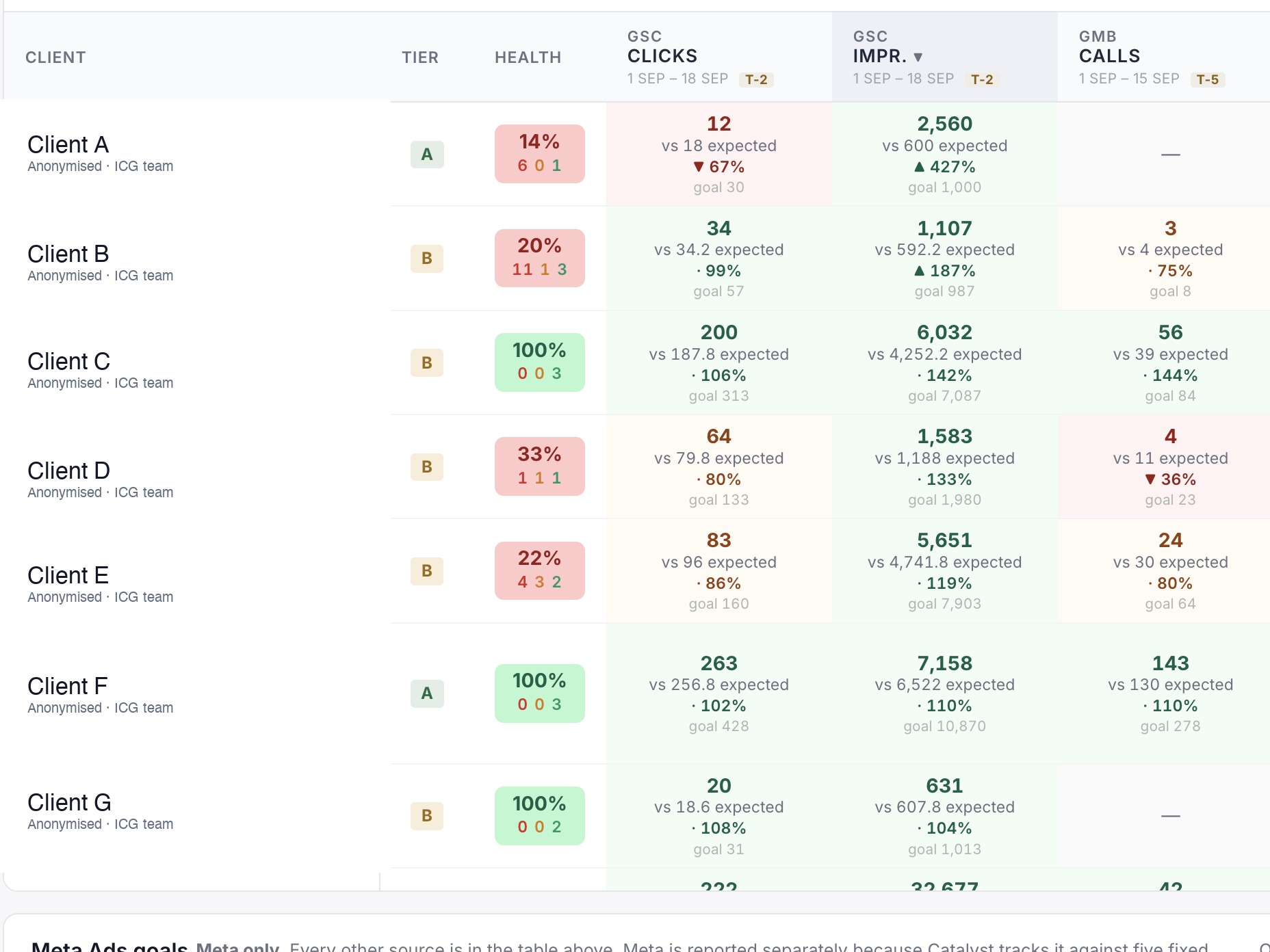
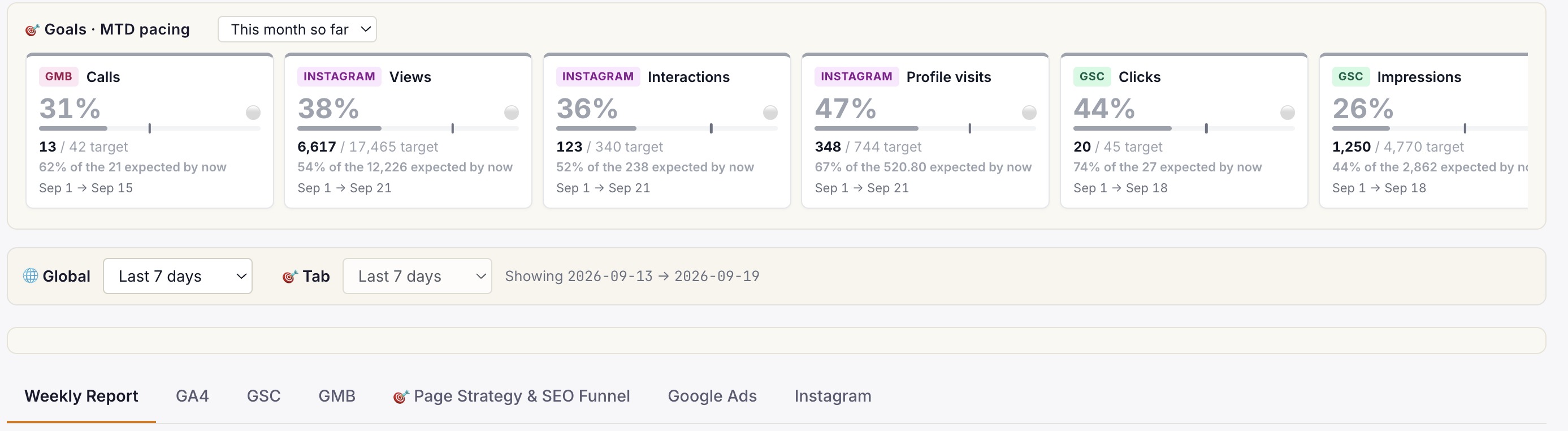
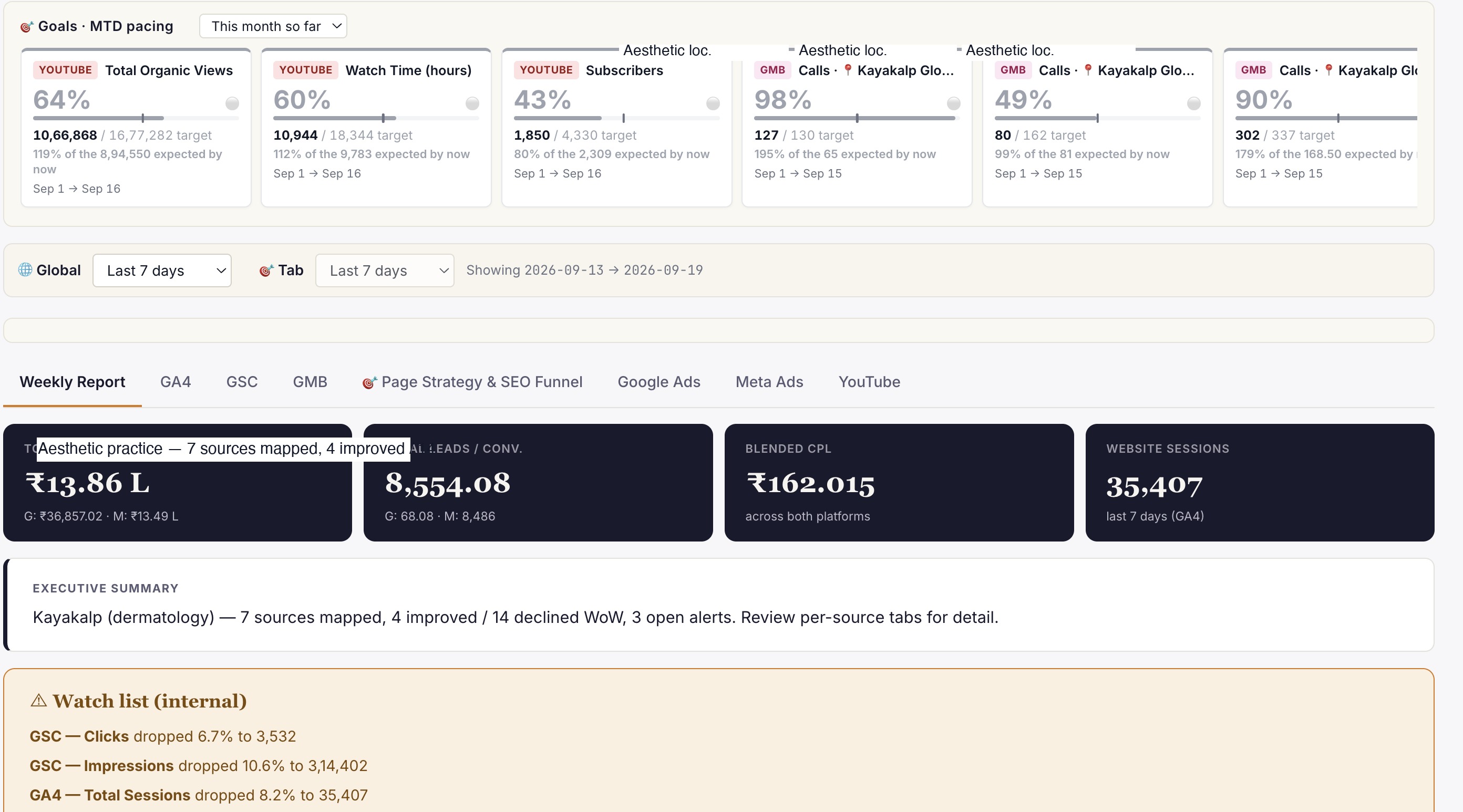
Live client dashboard. GSC, GA4, Google Ads, Meta Ads, IVR calls in one view. Login anytime, not monthly.
Phoenix
Clinic revenue intelligence over your PMS. Daily action queue: Prevent Loss, Maintain & Engage, Grow Revenue. Multi-centre rollout.
Or book a free 30-min audit to see all three in action on your account.
Healthcare brands
that already run on ICG.
A representative slice of the 150+ healthcare brands ICG has delivered for across India. Most engagements remain under NDA.


What ICG clients say · on video.
"Mental health marketing requires a different sensitivity. ICG built compliance-aware campaigns that respect both patients and our..."
"Bariatric surgery patients need a long consideration cycle. ICG built a content + paid system that respects that timeline."
"Working with ICG felt like working with an in-house growth team that happens to specialise in healthcare."
Need help operationalising this?
Every ICG service is healthcare-only, NMC + DPDP-aware, and built around the patient-research patterns that drive Indian healthcare growth in 2026.
Every practice welcome — packages from ₹20,000/mo.
Goals-Driven engagements · Performance-Linked Payout Models available
More from
ICG.
Five trends shaping Indian healthcare marketing through 2027: AI-first patient research, Conversions API adoption, ABDM discovery, the AEO w...
Healthcare AIO is the discipline of getting your clinic or hospital cited inside Google AI Overviews, ChatGPT and Perplexity answers — not j...
Conversational-search advertising places brand messages inside AI chat answers — ChatGPT, Perplexity, Copilot — rather than beside a results...
Stop guessing.
Book a Diagnostic.
30 minutes. Free. With the AI-powered healthcare-only marketing agency 150+ brands already run on. No slides, no pitch, no hard close.


