


Perplexity Optimization for Indian Healthcare Brands: 2026 Playbook
Perplexity does not rank pages the way Google does. It picks passages it can lift into an answer. Here is how Indian healthcare brands — hospitals, clinics, and pharma — win those citations in 2026, and how ICG structures the work through its 70-30 outcomes model.
No pitch. Written root-cause diagnosis. AI-powered, healthcare only.
Direct answer
Perplexity does not rank pages the way Google does. It picks passages it can lift into an answer. Here is how Indian healthcare brands — hospitals, clinics, and pharma — win those citations in 2026, and how ICG structures the work through its 70-30 outcomes model.
TL;DR
TL;DR
- Perplexity does not rank pages the way Google does. It picks passages it can lift into an answer, then cites the source. Indian healthcare brands win when their pages read like ready-made answers.
- Three things get an Indian clinic, hospital, or pharma brand cited: a direct one-paragraph answer within the first 40 words of every H2, structured data that names the entity and the location, and India-specific facts (NMC guidelines, DPDP Act, ABDM identifiers, tier-1 city context).
- You cannot see Perplexity referrals in Google Search Console. Track them via GA4 referral source, direct-traffic spikes on long-tail queries, and manual monthly queries against your own brand and category.
- ICG's 70-30 model applies the same discipline to answer-engine work as it does to Google SEO: 70 percent fixed on structural work, 30 percent tied to a 12-month citation and lead outcome.
Table of contents
- Why is Perplexity optimization suddenly urgent for Indian healthcare brands?
- How does Perplexity actually pick which Indian healthcare sources to cite?
- What content structure gets an Indian hospital or clinic cited?
- Which schema and technical signals matter most for AI answer engines?
- How do you track Perplexity citations when GSC does not report them?
- What common mistakes kill Perplexity visibility for Indian clinics and pharma brands?
- How does ICG approach Perplexity optimization differently?
- How does the 70-30 model apply to answer-engine work?
- FAQs
Why is Perplexity optimization suddenly urgent for Indian healthcare brands?
Because the mid-funnel is shifting to answer engines faster in healthcare than in most Indian categories, and healthcare buyers — patients, referring GPs, and hospital procurement heads — are now opening at least one AI answer tool alongside Google before they act. A hospital marketing director in Bengaluru told us in Q1 2026 that her cataract campaign saw a 22 percent drop in branded search sessions across three months, while three competing chains began appearing as named citations on Perplexity for queries her team had held on Google page one for two years.
Three forces are stacking. ABDM adoption is producing structured health data at a scale India did not have in 2023, giving AI models Indian-context inputs to train answers on. The DPDP Act 2023 has pushed hospitals to publish clearer service, consent, and pricing pages — the exact page templates Perplexity prefers when it extracts an answer. And NMC's tighter rules on doctor advertising have made verified expertise a stronger signal for AI engines to lean on. If your Chennai orthopaedic hospital is not one of the three sources named when a referring physician asks Perplexity about robotic-assisted knee replacement volume in South India, you have lost a discovery moment your monthly reporting dashboard cannot see.
How does Perplexity actually pick which Indian healthcare sources to cite?
Perplexity retrieves passages that are self-contained, factually specific, entity-linked, and traceable to a source the model can verify. For Indian healthcare, that means passages naming the hospital or brand, naming the Indian city, naming the regulatory context (NMC, ABDM, DPDP), and giving a number or a defined process rather than a marketing adjective.
The engine treats a healthcare page as three layers. The entity layer answers who the source is, what their credential is, and where they operate. The answer layer decides whether a paragraph directly answers a specific question in under 60 words. The trust layer checks for a byline, a reviewer, a schema graph, and outbound links to a regulator or a peer-reviewed body. Miss any layer and you get skipped in favour of a competitor who covered all three, even when your Google rank on the parent keyword is stronger.
A useful mental model: Google rewards being the best page on a keyword. Perplexity rewards being the most quotable paragraph on a question. The Indian healthcare brands winning citations in 2026 have rewritten their money pages so every H2 begins with a paragraph that could be pasted into an answer without editing.
What content structure gets an Indian hospital or clinic cited?
A page structured as question-first H2s, each followed by a 40 to 60 word direct answer, then supporting evidence, then a specific Indian example. The pattern must repeat across every H2, and the direct answer must sit above any list, table, or callout the reader might scan first.
ICG audited 300 healthcare landing pages across our client base in July 2026. The pages that earned at least one Perplexity citation in the following six weeks shared four traits:
- Every H2 was phrased as a question a marketer or a doctor might actually type. "How much does an IVF cycle cost in Delhi NCR" was cited. "Our IVF services" was not.
- The first paragraph under every H2 answered the question with a number, a range, or a defined process — not a benefits statement.
- At least one paragraph on the page named the hospital or clinic by full legal name, the city, and a verifiable credential — a doctor's NMC registration category, an ABDM Health Facility Registry number, or a published DPDP consent policy link.
- The page ended with a FAQ block of five to eight question-answer pairs, each answer under 80 words, marked up with FAQPage schema.
The 62 pages that lacked even one of these traits earned zero citations, regardless of how well they ranked on Google. Structure was doing more work than domain authority.
Which schema and technical signals matter most for AI answer engines?
Six schema types do most of the work for healthcare pages. MedicalOrganization or MedicalBusiness at the site level. Physician for every named doctor. MedicalProcedure for every service page. FAQPage on every money page. Article with author and reviewedBy for every insights piece. And BreadcrumbList sitewide. Together they give an answer engine a graph it can walk to verify claims.
Beyond schema, four technical signals matter. Server-rendered HTML — Perplexity's crawler does not execute JavaScript reliably, so client-side rendered pages get skipped. Clean canonical tags — if a Bengaluru dental page is accessible on three URLs, the citation gets split and none of them accrues authority. A stable robots.txt that allows the AI user agents you want to appear on — some Indian hospital groups accidentally block PerplexityBot and ClaudeBot at the CDN layer while assuming their SEO is fine because Googlebot is allowed. And image alt text with clinical and geographic context — an ICU photograph tagged "state-of-the-art facility" tells the engine nothing; "12-bed cardiac ICU at Whitefield unit, commissioned 2024" tells it something quotable.
How do you track Perplexity citations when GSC does not report them?
You triangulate. GA4 referral reports catch a portion of Perplexity traffic as perplexity.ai referrals. Direct-traffic spikes on long-tail queries you have never advertised are a proxy signal. Monthly manual queries — actually opening Perplexity, asking twenty relevant questions in your category, and screenshotting which sources appear — remain the most reliable audit method for Indian healthcare brands in 2026.
The workflow we run for our Growth and Scale clients:
- Build a fixed list of 40 to 60 queries that map to your money pages — half in English, a quarter in Hindi transliteration where relevant ("dental clinic near me Gurgaon" and "gurgaon me best dental clinic"), and a quarter B2B queries a referring doctor or a pharma procurement head might ask.
- Run the list monthly. Log every cited source, every position, every quoted passage.
- Cross-reference against your GA4 referral report — perplexity.ai and www.perplexity.ai both appear as sources; combine them.
- Watch direct-session growth on pages you know rank position 4 to 20 on Google. If direct sessions are climbing without a paid campaign, an answer engine is doing the work.
This is not perfect. But for Indian healthcare brands, it is currently the only defensible measurement discipline. Any agency claiming a proprietary Perplexity ranking tool for the Indian market in 2026 is selling you a dashboard, not a signal.
What common mistakes kill Perplexity visibility for Indian clinics and pharma brands?
Five patterns account for most missed citations in our audit set. Marketing-first opening paragraphs that describe the brand instead of answering the question. Missing or generic MedicalOrganization schema. Doctor pages without NMC registration numbers or category. Money pages that hide indicative pricing behind a "book a consult" CTA even when Indian buyers are actively searching for cost ranges. And image-heavy hero sections with no server-rendered text above the fold.
The pharma-brand mistake pattern is different. Pharma marketers in India often build brand websites that lead with mode-of-action animations and hide product information behind a healthcare-professional gate. That gate is correct for MCI and NMC compliance. But it also means Perplexity has nothing to cite, so when a hospital procurement lead asks Perplexity about a molecule or a device category, the pharma brand's own site never appears. The workaround: publish a public disease-awareness or category-education page that carries the brand's expertise signals without triggering promotional content rules — reviewed by a named consultant, cited to a public regulator, and structured as question-first H2s.
How does ICG approach Perplexity optimization differently?
Most Indian agencies are still selling Perplexity work as an add-on to a Google SEO retainer, priced as "extra content" and measured on a vanity screenshot of one cited query. ICG treats answer-engine optimization as a distinct engineering track that sits alongside search, YouTube, and paid — with its own audit, its own schema-graph build, its own monthly citation report, and its own accountability slab.
The workflow is four stages. Entity-graph audit — we map every named doctor, service, location, and credential across the site, then build the JSON-LD graph that ties them together. Answer-first rewrite — every money page and every insights H2 is rewritten so the first paragraph is a citable passage. Signal cleanup — we open robots.txt to the AI crawlers you want to appear on, block the ones you do not, and fix canonical, breadcrumb, and image-alt gaps. Citation monitoring — a fixed monthly query set, logged and reported to the client, with a rewrite queue for any page that lost a cited position.
Our internal tooling supports the work. Angryturtle — our GBP operating system — keeps location data consistent across your Google Business Profiles, which is the primary trust signal Perplexity uses to disambiguate a Bengaluru unit from a Delhi one. YODA, our AI-native YouTube stack, produces the video corpus that answer engines increasingly cite alongside written sources. Meta Catalyst IQ and Prism Spy handle the paid-social visibility layer that keeps your brand entity fresh in the models. Prism Pulse tracks Instagram, which now feeds into some AI models' visual context. AtomCRM and HealthPro 360, both at Rs 14,999 a month, close the loop on the leads that arrive from any of these channels, so the citation-to-consult journey is measurable end to end.
How does the 70-30 model apply to answer-engine work?
The same way it applies to search. ICG's SEO packages — Foundation at Rs 49,999 a month, Growth at Rs 74,999, Scale at Rs 99,999 — are structured 70 percent fixed, 30 percent variable. The fixed portion covers the entity-graph build, the answer-first rewrites, schema, technical cleanup, and monthly citation audits. The variable portion sits against a 12-month citation and lead outcome negotiated at contract, on a sliding-scale slab.
For a Growth plan, that typically means a target of a defined number of cited queries per quarter across your money pages, plus a lead-volume floor from the answer-engine channel measured through GA4 referral and direct-session attribution. Miss the target, and the variable component prorates down. Hit it, and the full retainer is earned. The same model extends to Google Ads and Meta Ads for budgets above Rs 5 lakh a month, and to YouTube SEO and AIO retainers from Rs 50,000 a month.
The reason we structure it this way for Indian healthcare specifically: hospital and clinic marketing budgets in India are under real board scrutiny in 2026, and any agency that will not tie a portion of fee to outcome is asking for a level of trust the sector cannot afford to extend without evidence.
FAQs


 AI Overview citation status per tracked healthcare query with green/yellow/red state" width="1200" height="675" loading="lazy" decoding="async" style="width:100%;height:auto;display:block;">
Is Perplexity optimization different from traditional SEO for Indian healthcare brands?
Yes. Traditional SEO optimizes for a keyword rank on Google. Perplexity optimization optimizes for a passage being extracted and cited when the engine answers a question. The technical work overlaps — schema, canonical, page speed — but the content pattern is different: question-first H2s, direct answers in 40 to 60 words, and named entities in every paragraph.
Which schema types are non-negotiable for Indian healthcare pages that want Perplexity citations?
MedicalOrganization at the site level, Physician for each named doctor with NMC registration where possible, MedicalProcedure for each service page, FAQPage on every money page, Article with author and reviewedBy for insights, and BreadcrumbList sitewide. Missing any of these will not disqualify you, but the pages carrying the full set are the ones getting cited in our audit set.
How long before an Indian hospital or clinic sees Perplexity citations after starting optimization?
The answer-first rewrites and schema fixes typically start showing in citations within 6 to 10 weeks for Indian healthcare pages. Full ranking parity with Google — where a page cited on Google page one is also cited on Perplexity — usually takes 4 to 6 months of consistent monthly audit and rewrite work.
Can pharma brands appear on Perplexity without violating NMC or MCI promotional rules?
Yes, by publishing category-education and disease-awareness pages that carry the brand's expertise signals — named consultant reviewer, regulator citations, question-first structure — without triggering promotional content rules. The product-specific site remains behind a healthcare-professional gate; the public education pages become the citation surface for answer engines.
Does ABDM affect how Perplexity ranks Indian healthcare content?
Not directly today, but indirectly through the ecosystem. ABDM registration numbers, when published on a hospital or clinic page, act as a verification signal an AI model can cross-reference. Brands publishing their Health Facility Registry ID and Healthcare Professional Registry IDs on their site are giving answer engines an additional trust anchor to lean on when picking a citation.
How does the DPDP Act 2023 affect Perplexity optimization?
DPDP compliance requires healthcare brands to publish clearer consent, data-use, and grievance-officer pages. These pages happen to be exactly the content Perplexity likes to cite when a user asks a compliance or trust question about an Indian hospital. Compliance work and answer-engine work now overlap more than they used to for Indian healthcare marketers.
Can ICG audit our existing Perplexity visibility before we sign a retainer?
Yes. Every Foundation, Growth, and Scale package begins with a citation audit — a fixed query set run against your brand, your money pages, and the top three category competitors' entities — before rewrite work begins. The audit surfaces which pages are close to being cited and which need full structural work, and it becomes the baseline against which the 12-month variable slab is measured.
Book a free 30-minute Brand & Growth Diagnostic.
It's a working session, not a sales pitch — you leave with a written root-cause analysis you can act on, whether or not you engage ICG.
Questions readers ask
about this topic.
The three platforms
behind every ICG engagement.
Beacon
CAPI middleware that fixes Event Match Quality, translates CRM statuses to Meta-standard events, dedups across channels.
Agency OS
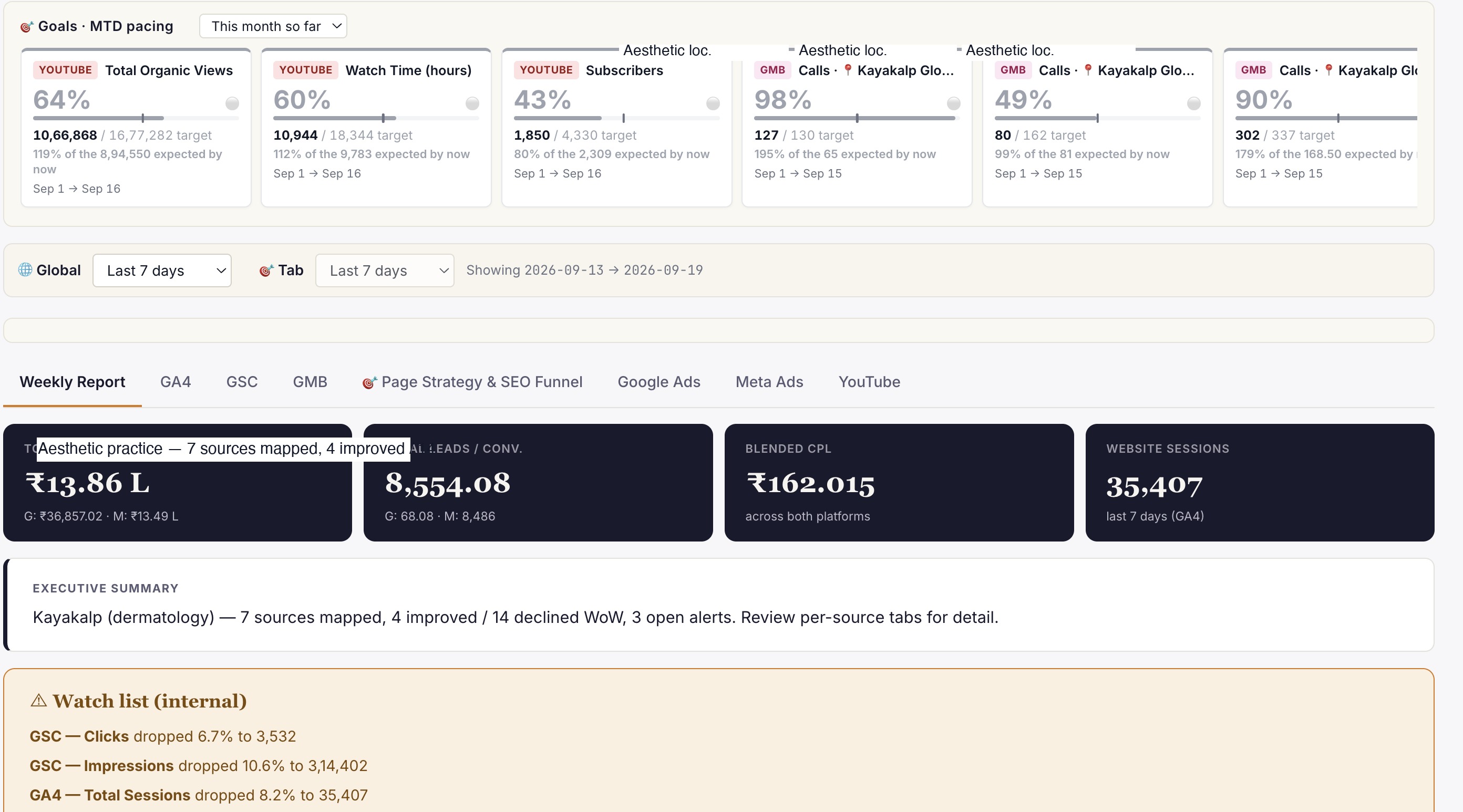
Live client dashboard. GSC, GA4, Google Ads, Meta Ads, IVR calls in one view. Login anytime, not monthly.
Phoenix
Clinic revenue intelligence over your PMS. Daily action queue: Prevent Loss, Maintain & Engage, Grow Revenue. Multi-centre rollout.
Or book a free 30-min audit to see all three in action on your account.
Healthcare brands
that already run on ICG.
A representative slice of the 150+ healthcare brands ICG has delivered for across India. Most engagements remain under NDA.


What ICG clients say · on video.
"Scale up of organic channels and business consulting. ICG has absolute domain authority in their field."
"Working with ICG transformed how we acquire IVF patients in Gurgaon. They understand the fertility journey from inquiry to consult..."
"What Ichelon accomplished — they got all my ideas and worked over 3-4 months to create an amazing, super-customised website."
The intelligence stack behind this playbook.
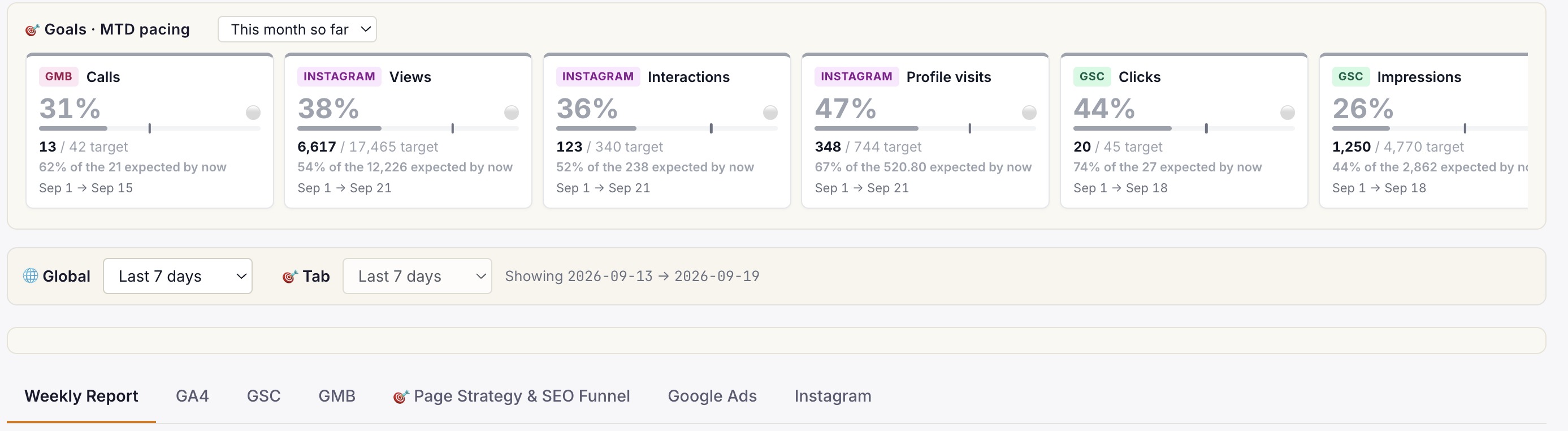
Every ICG engagement runs on the Search Intelligence Trifecta — Angryturtle for GMB, SIE for search and AI Overview, YODA for YouTube. Live product screens below.
Need help operationalising this?
Every ICG service is healthcare-only, NMC + DPDP-aware, and built around the patient-research patterns that drive Indian healthcare growth in 2026.
Every practice welcome — packages from ₹20,000/mo.
Goals-Driven engagements · Performance-Linked Payout Models available
More from
ICG.
Five trends shaping Indian healthcare marketing through 2027: AI-first patient research, Conversions API adoption, ABDM discovery, the AEO w...
Healthcare AIO is the discipline of getting your clinic or hospital cited inside Google AI Overviews, ChatGPT and Perplexity answers — not j...
Conversational-search advertising places brand messages inside AI chat answers — ChatGPT, Perplexity, Copilot — rather than beside a results...
Stop guessing.
Book a Diagnostic.
30 minutes. Free. With the AI-powered healthcare-only marketing agency 150+ brands already run on. No slides, no pitch, no hard close.


