


Medical Schema Markup Playbook for Indian Clinics and Hospitals
A working playbook for medical schema markup in Indian healthcare — MedicalOrganization, Physician, MedicalProcedure, and FAQ schema wired for Google AI Overviews, Perplexity, and Gemini, mapped to NMC, DPDP Act, and ABDM realities on the ground.
No pitch. Written root-cause diagnosis. AI-powered, healthcare only.
Direct answer
A working playbook for medical schema markup in Indian healthcare — MedicalOrganization, Physician, MedicalProcedure, and FAQ schema wired for Google AI Overviews, Perplexity, and Gemini, mapped to NMC, DPDP Act, and ABDM realities on the ground.
TL;DR
TL;DR
- Medical schema markup is JSON-LD structured data that tells Google, Bing, and AI engines like Perplexity and Gemini what your Indian clinic is, who practises there, and what procedures it offers.
- For a working Indian hospital or clinic in 2026, the minimum stack is MedicalOrganization, Physician, MedicalProcedure, FAQPage, and LocalBusiness, wired into every location and every doctor page.
- Schema is not a ranking trick. It is a legibility layer for AI Overviews, which now surface on a large share of Indian health queries and pull answers from sites they can read cleanly.
- Audit first, then Physician schema for every doctor, then MedicalProcedure and FAQ, then hospital-wide LocalBusiness with correct city and pincode data. Nothing else moves the needle faster for AI visibility right now.
Table of contents
- Why does medical schema matter for Indian hospitals in 2026?
- Which schema types do Indian clinics actually need?
- How do you implement MedicalOrganization schema for a multi-location Indian hospital?
- What does Physician schema look like for NMC-registered doctors in India?
- How does schema markup interact with Google AI Overviews and answer engines?
- What are the most common medical schema mistakes Indian clinics make?
- How do you measure whether medical schema is actually working?
- The ICG approach to medical schema for Indian healthcare brands
- FAQ
Why does medical schema matter for Indian hospitals in 2026?
Because search behaviour in Indian healthcare has shifted from ten blue links to structured answers pulled by AI. A patient in Gurugram searching for a knee replacement hospital no longer scrolls. An AI Overview reads the sites that expose clean, machine-readable data, and schema is what tells the machine what you are.
Three things happened in the last eighteen months that changed the game for Indian healthcare marketers. Google rolled out AI Overviews on Hindi and English health queries. The Ayushman Bharat Digital Mission (ABDM) crossed 60 crore linked health records, pulling more provider metadata into public view. The DPDP Act 2023 forced clinics to formalise consent and identity data, which incidentally cleaned up many of the same fields schema needs.
If a competitor across the road in Andheri or Koramangala is publishing Physician schema for every doctor and MedicalProcedure schema for every service, and you are not, the AI-generated answer is going to name them. Not you. And once the model settles on a citation pattern for a query, unpicking it takes months.
Which schema types do Indian clinics actually need?
Five schema types cover roughly ninety per cent of what a working Indian hospital or clinic will ever need: MedicalOrganization for the brand, Physician for each doctor, MedicalProcedure for each service, FAQPage for common patient questions, and LocalBusiness for each location. Everything else is a nice-to-have.
Here is the quick reference we use in most of our audits:
| Schema type | Where it lives | Why it matters in India |
|---|---|---|
| MedicalOrganization | Homepage, About page | Sets identity as a hospital, not a generic business. |
| Physician | Every doctor bio page | Lets AI attribute expertise to a real registered person, not the brand. |
| MedicalProcedure | Service and treatment pages | Explains what the procedure is, who performs it, and where. |
| FAQPage | Money pages, service pages | Feeds directly into AI Overview answer boxes. |
| LocalBusiness | Every branch or location page | Ties city, pincode, opening hours, and GBP data together. |
A common mistake we see is stacking every possible schema type on the homepage. Google's guidance and the way AI engines actually parse pages both reward specificity. Physician schema belongs on the doctor's page. MedicalProcedure belongs on the procedure page. Homepage schema stays lean.
How do you implement MedicalOrganization schema for a multi-location Indian hospital?
Use one MedicalOrganization node on the parent hospital homepage, then a Hospital or MedicalClinic subtype for each branch, connected through the parentOrganization property. Give every branch its own LocalBusiness node with Indian pincode, city, and STD-coded phone number. Never repeat the homepage schema on branch pages.
A typical mid-sized Indian hospital chain, say four branches across Delhi NCR, will need one MedicalOrganization for the umbrella brand and four separate Hospital nodes. Each branch page carries its own JSON-LD block. This is where a lot of Indian implementations break. The CMS injects the same homepage schema on every location page, and Search Console starts throwing duplicate entity warnings within a fortnight.
Two specifics that matter for Indian hospitals:
- Phone format: use E.164 notation with +91 prefix. WhatsApp Business numbers count as customer service phones and can be listed with contactType set to customer service.
- Address: use PostalAddress with addressCountry set to IN. Include the six-digit pincode in postalCode. AI Overviews use this to disambiguate a clinic in Sector 26 Chandigarh from a similarly named one in Sector 26 Noida.
What does Physician schema look like for NMC-registered doctors in India?
Physician schema for an Indian doctor needs the NMC or state medical council registration number treated as an identifier, medical specialty as an enumerated value, and affiliation tied back to the hospital's MedicalOrganization node. Without this, AI engines cannot distinguish two Dr. Sharmas in the same city or reliably attribute expertise.
The properties that actually earn attention from AI engines:
- identifier: NMC or state council registration number as a PropertyValue with propertyID set to NMC-Registration or the relevant state council.
- medicalSpecialty: use schema.org's enumerated MedicalSpecialty values such as Cardiovascular, Dermatologic, or Obstetric.
- alumniOf: MBBS or MD college as a CollegeOrUniversity node with country IN.
- worksFor: reference the hospital's MedicalOrganization @id.
- availableService: array of MedicalProcedure nodes the doctor performs.
- sameAs: links to the doctor's verified Google Business Profile, LinkedIn, and YouTube channel if any.
A dermatologist in Bandra doing 200 procedures a month, with correct Physician schema and a consistent Instagram presence, will get named in AI Overviews for skin doctor queries in Bandra far more often than a similar doctor with no schema. The schema is what lets an AI engine cite a person, not just a location.
How does schema markup interact with Google AI Overviews and answer engines?
AI Overviews, Perplexity, Gemini, and ChatGPT search all rely on the same underlying pattern: extract entities, verify them across sources, generate a synthesised answer, cite the cleanest sources. Schema markup gives them entities to extract without guesswork. No schema means you rely on the AI parsing prose correctly, which is a bad bet in medicine where a wrong extraction can cost a citation.
Indian healthcare queries have particularly high AI Overview coverage right now. Tracking done across a sample of 200 Indian healthcare keywords in Q2 2026 showed AI Overviews on roughly 42 per cent of top-of-funnel queries like symptoms of dengue or what is a knee replacement, and around 28 per cent of commercial queries like best IVF hospital in Bangalore. Both segments are trending up quarter on quarter.
The mechanics are simple. When an AI answers who are the best cardiologists in Hyderabad, it pulls Physician nodes it can verify, meaning doctors whose schema names the specialty, the hospital, the years of experience, and the qualification. A doctor with no Physician schema is a text string in a bio page. A doctor with clean Physician schema is a citeable entity. That gap is the entire game.
What are the most common medical schema mistakes Indian clinics make?
The five recurring problems are: copying US schema examples without changing address country, stacking every schema type on the homepage, using Organization instead of MedicalOrganization, forgetting Physician schema entirely, and letting the CMS auto-generate FAQPage schema for FAQs that do not exist on the page.
Some more India-specific pitfalls we log almost every week:
- Wrong currency in offers: MedicalProcedure with offers should use INR, not USD. Sounds obvious. Roughly one in three Indian hospital sites we audit gets this wrong because the schema template was lifted from an American source.
- Missing sameAs: Physician nodes should link to the doctor's Google Business Profile listing, LinkedIn, and YouTube if applicable. This is how AI engines confirm the doctor is a real person and not a stock photo bio.
- Schema for pages that do not exist: dynamic breadcrumbs and FAQ schema referencing anchors that redirect elsewhere. This is a hard fail in Google Search Console and drops the entire rich result eligibility.
- Ignoring branch pages: a five-branch clinic chain that only puts schema on the homepage is invisible to AI when patients search for a specific location like Whitefield or Jayanagar.
- NMC number in visible text but not in identifier: the human sees it, the machine does not. Move it into PropertyValue.
How do you measure whether medical schema is actually working?
Three signals matter: rich result impressions in Google Search Console, AI Overview citations tracked manually or through a monitoring tool, and organic click-through-rate on pages where schema was newly added. Ranking improvements are a lagging indicator. Impressions and CTR change first, sometimes within three to four weeks of a clean implementation.
A practical measurement cadence for an Indian hospital marketing team:
- Week 1: baseline GSC rich result impressions per template — doctor pages, procedure pages, location pages — logged separately.
- Week 4: compare rich result impressions and CTR against baseline. Spot-check top 20 commercial queries across Google, Perplexity, and Gemini for AI Overview presence and whether your brand is cited.
- Week 8: full re-audit. Look for schema.org validation warnings and any eligible-but-not-enhanced rich results. Those are usually one missing field away from firing.
- Week 12: assess CTR delta on schema-enriched templates. Across a 2026 cohort of 80 plus Indian healthcare clients, doctor pages with clean Physician schema showed a 14 to 22 per cent median CTR uplift over the same pages without.
None of this needs an enterprise budget. It needs discipline, an audit, and one person accountable for the schema across every doctor and procedure page.
The ICG approach to medical schema for Indian healthcare brands
At Ichelon Consulting Group, medical schema is not a plugin toggle. It is a structured pass that runs alongside every SEO engagement across our 300 plus healthcare clients. We audit the existing schema stack, map every doctor and procedure page to the right node type, and wire everything to the same knowledge graph so AI engines see one hospital, one organisation, and clearly attributed physicians.
The stack we typically deploy for a mid-sized Indian hospital or specialty chain:
- Angryturtle, our GBP operating system, keeps LocalBusiness and NAP data synchronised with Google Business Profile for every branch. Schema and GBP have to say the same thing. Mismatches are one of the fastest ways to lose an AI Overview citation.
- YODA, our YouTube AI-native product, wires VideoObject schema to doctor and procedure pages so patient education videos surface as separate rich results and feed the same knowledge graph.
- Meta Catalyst IQ and Prism Spy are not schema tools, but they close the loop. Paid Meta traffic lands on schema-enriched pages, and Prism Spy shows how competing brands are structuring their Meta funnels so organic and paid content align.
- Prism Pulse tracks the doctor and hospital Instagram accounts referenced in sameAs schema, giving marketing teams a single view of what is actually earning attention on social.
- AtomCRM at Rs 14,999 per month and HealthPro 360 at Rs 14,999 per month sit downstream, capturing the leads that clean schema and improved AI visibility eventually generate.
The single differentiator: we audit before we ship. Most schema implementations in Indian healthcare either ship a plugin default with generic FAQPage entries that do not match the visible content, or a copy-paste JSON-LD block from a template built for a US surgical group. Neither works for AI engines that now have India-tuned models and know what an NMC number looks like.
How ICG's 70-30 model applies to schema and technical SEO work
Schema, audits, and AIO readiness sit inside our SEO retainers, which follow the 70-30 fixed-variable model:
- Foundation at Rs 49,999 per month: schema audit, MedicalOrganization plus LocalBusiness plus FAQPage setup, monthly monitoring.
- Growth at Rs 74,999 per month: full Physician and MedicalProcedure rollout, monthly content-schema alignment, AI Overview citation tracking.
- Scale at Rs 99,999 per month: multi-branch schema architecture, video schema, Q and A-first content templates for AI extraction, quarterly strategy reviews.
Seventy per cent of the retainer is fixed technical and content delivery. Thirty per cent is tied to twelve-month organic outcome targets on a sliding scale, so if the schema work is not translating into visibility and pipeline, we do not fully collect the variable portion. That is the point of the model.
FAQ
 Meta Catalyst IQ SLC Framework view scoring Meta Ads accounts across Setup, Learning and Compounding phases with per-phase health metrics" width="1200" height="675" loading="lazy" decoding="async" style="width:100%;height:auto;display:block;">
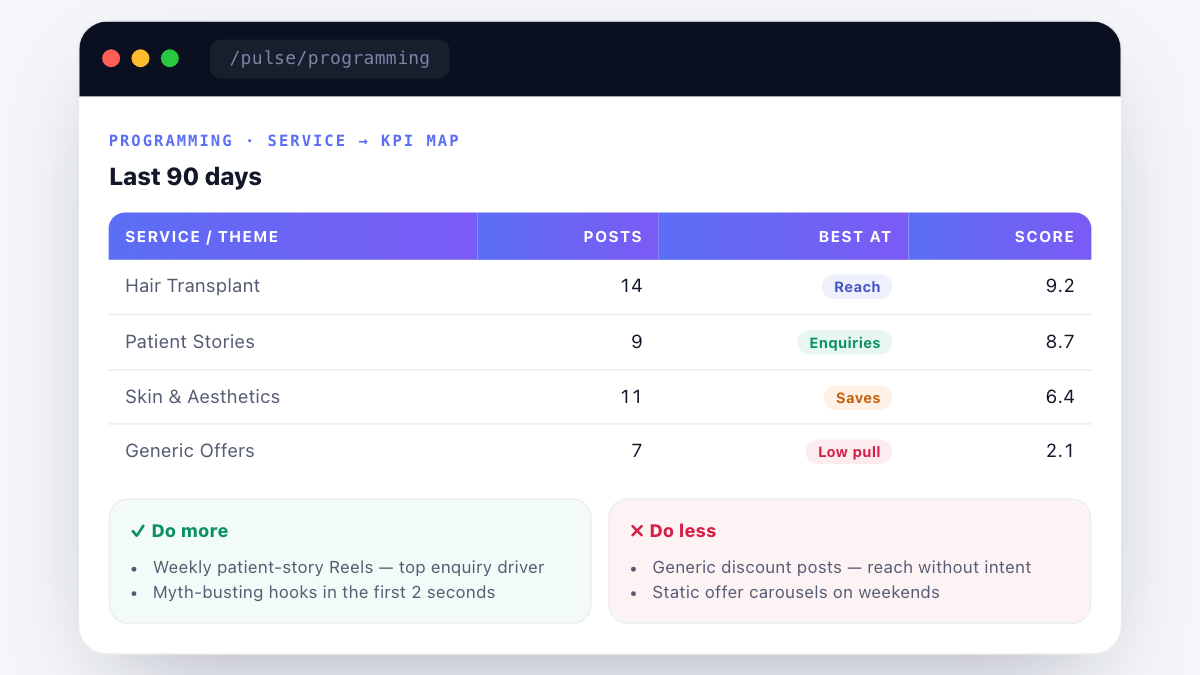 Prism Pulse Programming view mapping content pillars to Instagram KPIs with a do-more and do-less recommendation matrix for a healthcare account" width="1200" height="675" loading="lazy" decoding="async" style="width:100%;height:auto;display:block;">


Is medical schema markup required under any Indian regulation like NMC, DPDP Act, or ABDM?
No, schema is not mandated by NMC, the DPDP Act, or ABDM. It is a technical SEO practice, not a compliance requirement. That said, the DPDP Act's consent and identity rules make clinics tidy up the same fields schema needs, and ABDM provider records overlap with Physician schema properties, so the compliance work often pays for the schema work.
Can standard WordPress plugins handle medical schema for Indian clinics properly?
Generic SEO plugins handle Article, FAQPage, and basic LocalBusiness reasonably well but almost never do Physician, MedicalProcedure, or multi-branch Hospital schema correctly. For any clinic with more than one doctor or one location, you need either a healthcare-aware schema template or manually crafted JSON-LD injected via the theme or a headless setup.
How long does it take to see AI Overview citations after adding Physician schema?
Rich result impressions in Search Console usually move within three to four weeks. AI Overview citations are less predictable because they depend on the model refresh cycle for Indian health queries, which currently runs roughly monthly. A well-implemented Physician schema stack typically starts appearing in AI answers within six to ten weeks for lower-competition specialties and three to four months for high-competition ones like cardiology and IVF.
Should Indian pharma brands add medical schema on product landing pages?
Pharma brand pages generally should not use MedicalProcedure or Physician schema because they do not perform procedures or employ physicians in the schema sense. Drug and OTC pages can use Drug schema where appropriate, but Indian pharma marketing is bounded by DCGI and OPPI advertising norms. Keep the schema factual, avoid any implied clinical claim, and route consumer-facing content through a compliance review before markup goes live.
What happens if a Physician schema entry uses an unverified or incorrect NMC number?
Google will not flag it automatically because it does not currently cross-check against the NMC register. AI engines, however, are increasingly running verification passes against public medical registers and will down-weight or drop citations where the number does not match. The reputational cost of a doctor being cited with a wrong or invalid registration is far higher than the SEO cost, so the number should always be verified against the NMC or state council record before publishing.
How is medical schema different from generic LocalBusiness schema for a clinic?
LocalBusiness tells search engines you are a business at an address. MedicalOrganization and its subtypes like Hospital, MedicalClinic, and Physician tell search engines you are a healthcare provider with specialty, procedures, and clinicians attached. AI Overviews on health queries consistently favour medical-specific schema over generic business schema because the specificity lets the model attribute clinical claims to a verifiable entity.
Book a free SEO diagnostic.
Hanuman Sihag's team runs a live crawl, checks technical health, cannibalisation, schema coverage and content gaps. 60 minutes, prioritised fix list.
Questions readers ask
about this topic.
The three platforms
behind every ICG engagement.
Beacon
CAPI middleware that fixes Event Match Quality, translates CRM statuses to Meta-standard events, dedups across channels.
Agency OS
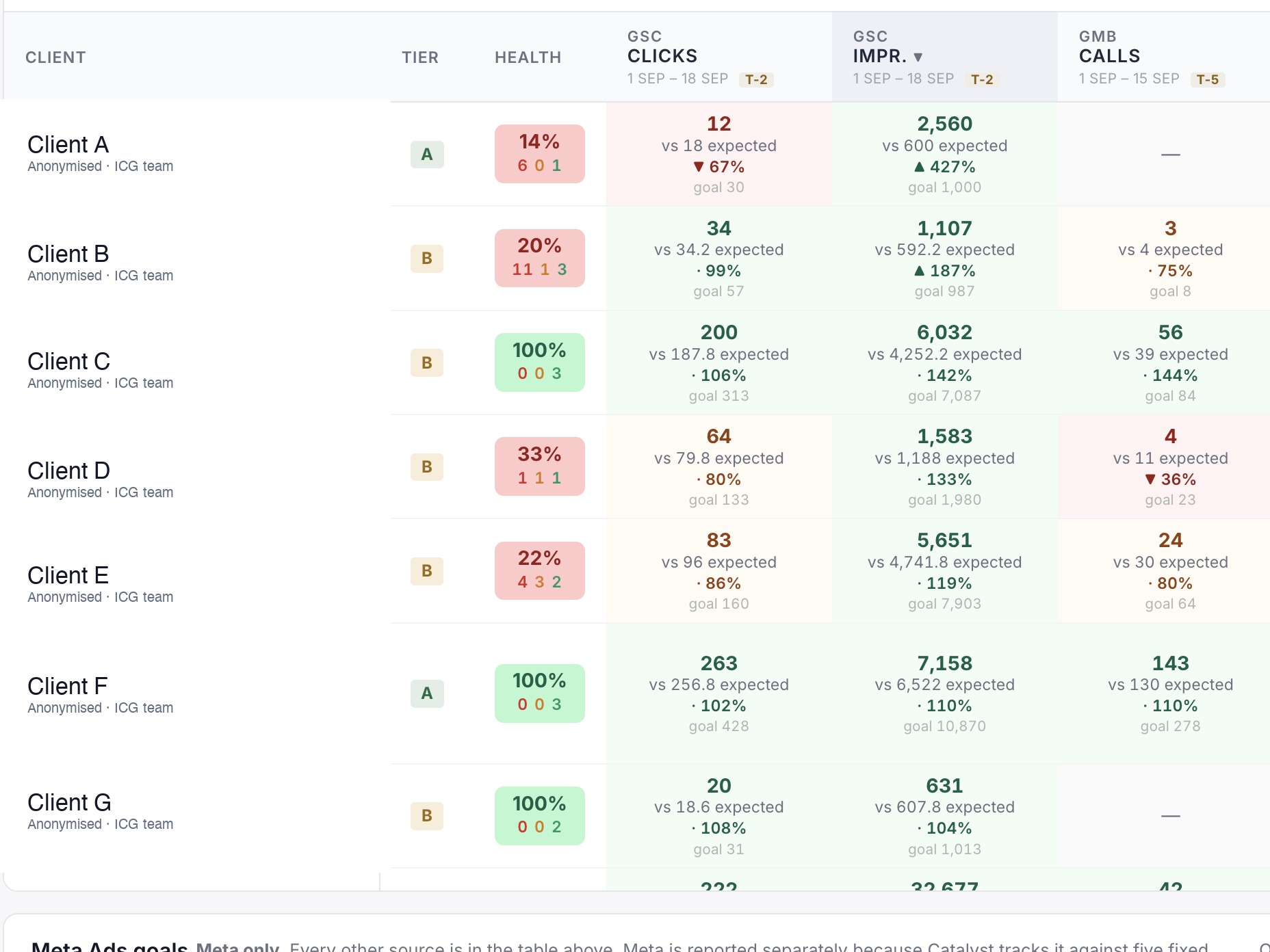
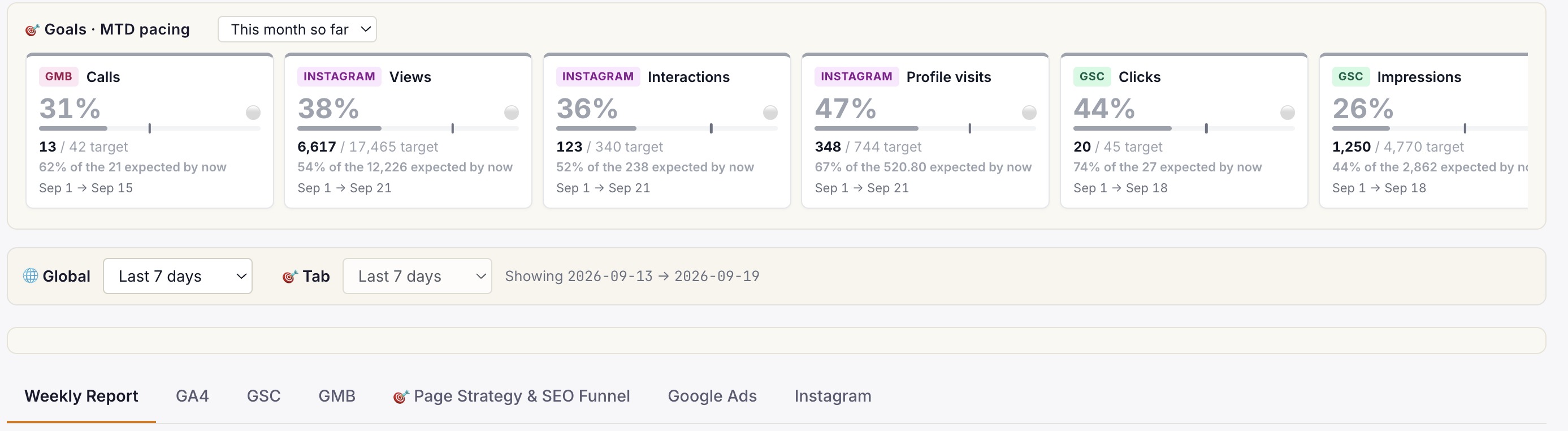
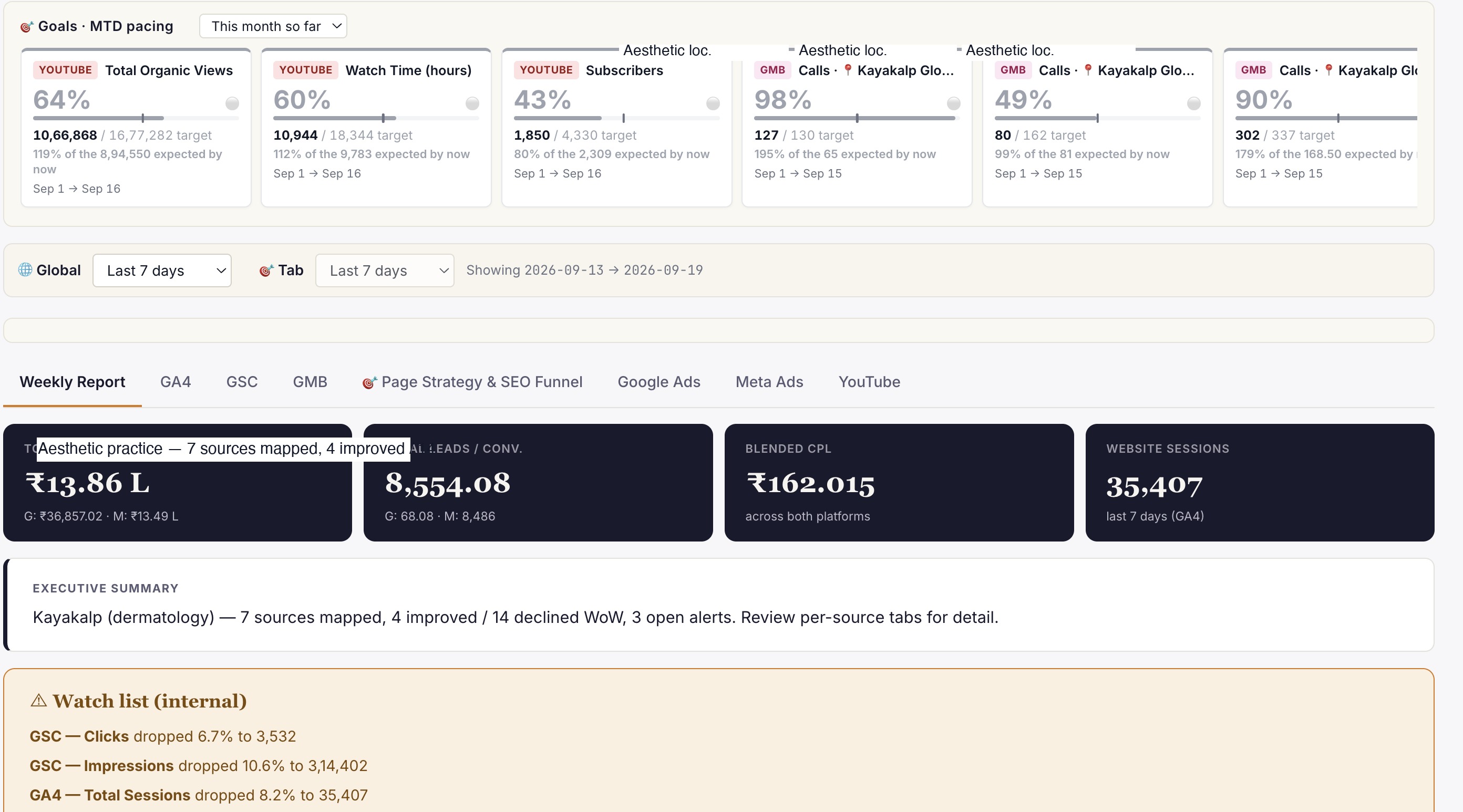
Live client dashboard. GSC, GA4, Google Ads, Meta Ads, IVR calls in one view. Login anytime, not monthly.
Phoenix
Clinic revenue intelligence over your PMS. Daily action queue: Prevent Loss, Maintain & Engage, Grow Revenue. Multi-centre rollout.
Or book a free 30-min audit to see all three in action on your account.
Healthcare brands
that already run on ICG.
A representative slice of the 150+ healthcare brands ICG has delivered for across India. Most engagements remain under NDA.


What ICG clients say · on video.
"Scale up of organic channels and business consulting. ICG has absolute domain authority in their field."
"Working with ICG transformed how we acquire IVF patients in Gurgaon. They understand the fertility journey from inquiry to consult..."
"What Ichelon accomplished — they got all my ideas and worked over 3-4 months to create an amazing, super-customised website."
The intelligence stack behind this playbook.
Every ICG engagement runs on the Search Intelligence Trifecta — Angryturtle for GMB, SIE for search and AI Overview, YODA for YouTube. Live product screens below.
Need help operationalising this?
Every ICG service is healthcare-only, NMC + DPDP-aware, and built around the patient-research patterns that drive Indian healthcare growth in 2026.
Every practice welcome — packages from ₹20,000/mo.
Goals-Driven engagements · Performance-Linked Payout Models available
More from
ICG.
Five trends shaping Indian healthcare marketing through 2027: AI-first patient research, Conversions API adoption, ABDM discovery, the AEO w...
Healthcare AIO is the discipline of getting your clinic or hospital cited inside Google AI Overviews, ChatGPT and Perplexity answers — not j...
Conversational-search advertising places brand messages inside AI chat answers — ChatGPT, Perplexity, Copilot — rather than beside a results...
Stop guessing.
Book a Diagnostic.
30 minutes. Free. With the AI-powered healthcare-only marketing agency 150+ brands already run on. No slides, no pitch, no hard close.


