


Medical Video Schema in India: Structured Data for Healthcare Videos
A working playbook for marking up healthcare videos with medical video schema in India — the VideoObject, Physician, and MedicalProcedure combinations that put your clinic's YouTube content into Google AI Overviews, Gemini health cards, and ChatGPT answers, without tripping over NMC or DPDP rules.
No pitch. Written root-cause diagnosis. AI-powered, healthcare only.
Direct answer
A working playbook for marking up healthcare videos with medical video schema in India — the VideoObject, Physician, and MedicalProcedure combinations that put your clinic's YouTube content into Google AI Overviews, Gemini health cards, and ChatGPT answers, without tripping over...
TL;DR
TL;DR
- Medical video schema is JSON-LD markup that tells Google, YouTube, and AI Overviews what your healthcare video actually contains: the clinician on camera, the procedure discussed, the medical entity, duration, transcript, and upload date. Indian hospitals that mark up video content correctly show up in AI answers three to four times more often than those that skip it.
- For most Indian clinics and hospitals, the base combo is
VideoObjectplusMedicalWebPage. AddPhysician,MedicalProcedure, orMedicalConditiondepending on the video topic. Skip HowTo schema for anything with clinical steps — NMC promotion rules and DPDP Act 2023 make it risky. - Structured data leaks are one of the fastest ways to trigger a regulatory notice in Indian healthcare. Any transcript, thumbnail, or description field that carries patient identifiers becomes personal data under DPDP the moment it goes into JSON-LD.
- ICG builds medical video schema into every YouTube-first client engagement through YODA, our AI-native healthcare YouTube stack. Foundation SEO retainers at Rs 49,999 per month include a video schema audit and rollout across a client's existing library.
Table of contents

- Why medical video schema matters for Indian healthcare marketers
- What is medical video schema, and how is it different from regular VideoObject?
- Which schema types should Indian hospitals use for healthcare videos?
- How do you actually implement medical video schema on a hospital website?
- What Indian regulations affect medical video structured data?
- How does medical video schema influence AI Overviews and ChatGPT answers?
- Where should the schema live — YouTube, your website, or both?
- What are the most common medical video schema mistakes Indian marketers make?
- How much does medical video schema implementation cost in India?
- The ICG approach to healthcare video schema
- FAQs
Why medical video schema matters for Indian healthcare marketers
YouTube is now the second search engine most Indian patients use when they research a doctor, a procedure, or a clinic. More than 500 million Indians open YouTube every month, and a growing share of that traffic passes through Google AI Overviews, Gemini's health cards, and ChatGPT's browsing answers before it ever reaches your channel.
The problem is simple. If a video is not marked up with schema Google can actually parse, it does not enter the pool of sources those AI answers pull from. You can have the best interventional cardiologist in Bandra with a forty-video library on YouTube, and none of it will surface in an AI answer to "best heart specialist in Mumbai for angioplasty" if the schema is missing.
Our team audited 200-plus Indian hospital and clinic websites across FY25-26. About 87 percent had zero VideoObject schema on their video landing pages. Another 8 percent had it filled out incorrectly, usually with the wrong ISO-8601 duration format, a broken thumbnail URL, or no upload date. Only around 5 percent had any medical-specific extensions such as Physician or MedicalProcedure. That is the gap you are competing inside.
What is medical video schema, and how is it different from regular VideoObject?
Medical video schema is a layered JSON-LD structure that combines a standard VideoObject with medical-specific types from Schema.org's health extension. It tells search engines not just that your page has a video, but that the video is about a specific doctor, procedure, condition, or hospital service, delivered by a qualified professional in a defined location.
A regular VideoObject answers four questions: what is the video, how long is it, who uploaded it, and where can it be watched. Medical video schema adds four more: which clinician is speaking, what procedure or condition the video covers, which medical specialty it belongs to, and which hospital or clinic delivers the treatment. This second layer is what the AI answer engines use to decide whether your video is a credible source on a medical query.
A Chennai fertility clinic we work with runs a fourteen-video IVF explainer series. Once we layered Physician and MedicalProcedure markup on top of the video pages, six of those videos began appearing as citation sources in Perplexity answers for queries like "IVF success rate second cycle India" within roughly nine weeks. Before the schema rollout, none of them were.
Which schema types should Indian hospitals use for healthcare videos?
For most Indian clinics and hospitals, the working set is five types. Use VideoObject and MedicalWebPage on every video page. Then add one or more of Physician, MedicalProcedure, and MedicalCondition based on the video content. Wrap the whole thing inside an @graph block so the entities reference each other cleanly.
A quick decision guide:
| Video type | Recommended schema stack |
|---|---|
| Doctor introduction or credentials | VideoObject + Physician + MedicalWebPage |
| Procedure explainer (angioplasty, LASIK, IVF, dental implant) | VideoObject + MedicalProcedure + Physician + MedicalWebPage |
| Condition awareness (diabetes, PCOS, hypertension) | VideoObject + MedicalCondition + MedicalWebPage |
| Patient testimonial video | VideoObject + MedicalWebPage only (avoid Review schema for medical outcomes) |
| Hospital tour or facility walkthrough | VideoObject + Hospital + MedicalWebPage |
Do not use HowTo schema for anything involving clinical steps a viewer might attempt at home. This is a common mistake in Indian dental and dermatology content. HowTo markup for a "how to whiten teeth" or "how to treat a mole" video reads as an instruction to the patient, which sits uncomfortably against the NMC's professional conduct rules.
How do you actually implement medical video schema on a hospital website?
Implementation is a three-step job: build the JSON-LD block, place it on the correct page, and validate it in Search Console and Schema.org's validator. Most Indian hospital sites we take over from other agencies have the schema either hardcoded once into a template header (useless, because every video ends up with the same markup) or dumped into the Yoast box on WordPress without the medical fields.
The right pattern is to render the JSON-LD dynamically from the video's own data. On a Laravel or WordPress site, that means pulling the doctor's name, specialty, and NMC registration number, the video's YouTube ID, duration, thumbnail, and upload date, and the procedure or condition taxonomy for that page.
Here is the minimum viable structure for a procedure video page in a Bangalore orthopaedic hospital:
@context: schema.org@type: MedicalWebPage, withaboutpointing to the MedicalProcedure entity- Embedded
VideoObjectwithname,description,thumbnailUrl,uploadDate,durationin ISO 8601 (for example PT4M32S),contentUrl, andembedUrl - Embedded
Physicianwithname,medicalSpecialty,identifier(NMC number), andworksForpointing to the Hospital - Embedded
MedicalProcedurewithname,procedureType, andbodyLocation
Validate the block in the Schema.org validator first, then run the URL through the Rich Results Test. Google's live-page fetch is the final check. If the validator passes but Rich Results fails, the most likely cause is a blocked thumbnail URL or a video hosted on a domain the crawler can't reach.
What Indian regulations affect medical video structured data?
Three Indian frameworks touch medical video schema directly. The NMC Professional Conduct Regulations restrict what a registered doctor can claim in promotional content. The DPDP Act 2023 governs any personal data that ends up in the schema block. The ABDM Health Data Management Policy applies the moment your video content is linked to a patient's ABHA-linked record.
NMC's practical impact is that Physician schema fields must reflect verifiable credentials — the doctor's real name, actual medical council registration number, and true specialty. Inflated specialties like "world's best gynaecologist" in the description field are exactly the kind of language a state medical council can act on.
DPDP has a subtler effect. The moment a patient's face, name, or voice appears in a thumbnail image, video description, or transcript, that content becomes personal data under Section 2(t). If your JSON-LD embeds a transcript field or a thumbnail URL that shows a real patient, you need documented consent under the current rules, and you have to be able to honour a deletion request. A hospital in Hyderabad we advised had 40 testimonial videos indexed with patient-face thumbnails. When one patient asked for erasure last November, they had to strip the thumbnail from the JSON-LD, the OG tag, the sitemap, and re-request re-crawl on all four surfaces.
ABDM matters mostly if your hospital or clinic pushes video content into a patient's linked health record. That flow requires additional consent artefacts and is outside the scope of most marketing schema work — but keep the two workflows firewalled.
How does medical video schema influence AI Overviews and ChatGPT answers?
AI Overviews, Gemini's health cards, ChatGPT Search, Perplexity, and Claude's web tool all lean heavily on structured data when they decide which sources to cite for medical queries. A page with clean MedicalWebPage plus Physician markup is read as more authoritative than a page with the same content but no schema.
This matters more for medical queries than for almost any other category. AI answer engines apply a stricter source filter for health content because the reputational cost of hallucinating a medical claim is much higher than getting a movie recommendation wrong. Structured data is one of the cheapest ways to signal that your video is written and voiced by a real, qualified Indian doctor at a real hospital.
We track this through ICG's internal AIO tracking dashboard. Across a sample of 47 healthcare clients, the median lift in AI Overview citations after a video schema rollout is 240 percent over 60 to 90 days. Perplexity citations move faster, usually within four to six weeks, because Perplexity re-indexes more aggressively than Google.
Where should the schema live — YouTube, your website, or both?
Both, but the strategic weight goes to your own website. YouTube reads its own metadata (title, description, chapters, closed captions) and does not honour third-party JSON-LD. Google, however, honours the JSON-LD on the page where the video is embedded, and that is where AI Overview citations get earned.
Every video should have three surfaces: a YouTube watch page, an embed on a dedicated page on your hospital or clinic website, and a mention in your sitemap. The dedicated website page is where the medical video schema lives. Do not embed the same video on twelve different service pages with the same JSON-LD — Google will pick one canonical page for citation, and if that page is not the one you optimised, you lose the equity.
What are the most common medical video schema mistakes Indian marketers make?
Five mistakes account for the vast majority of failed medical video schema rollouts in Indian healthcare.
One: using MedicalOrganization as the top-level type when the actual entity is a hospital or a clinic. Use Hospital or MedicalClinic. These are more specific and win the entity match more often.
Two: filling the duration field with plain text like "4 minutes 30 seconds" instead of ISO 8601 PT4M30S. Google silently drops the whole VideoObject when this happens. You will not get an error in Search Console — you will simply get zero video rich results.
Three: pointing contentUrl at a YouTube page URL instead of a direct video file, and forgetting to add embedUrl for the YouTube embed. You need both fields correctly populated. On YouTube-hosted content, set embedUrl to the /embed/ variant and leave contentUrl pointing to the standard watch URL.
Four: hardcoding the same Physician block into every video on the site. If Dr Mehta uploaded a video but the JSON-LD says Dr Sharma, you have created an authorship mismatch that both Google and the state medical council may notice.
Five: ignoring the transcript. AI answer engines cite videos with published transcripts far more than those without. Add a transcript field with a real, cleaned transcript for every video that clears three minutes. This single change moved one Delhi cosmetic surgery clinic from zero AI Overview citations to seventeen in a quarter.
How much does medical video schema implementation cost in India?
A one-off video schema audit and rollout across a mid-size Indian hospital website (30 to 60 videos) typically runs between Rs 60,000 and Rs 1,50,000 depending on the CMS, the depth of the doctor and procedure taxonomy, and whether you also need transcript generation.
Retainer-based work is more common in the Indian market because video schema is not a set-it-and-forget-it job. Every new video needs its own schema block, doctor entity, and transcript. ICG folds this into our standard SEO retainer under the 70-30 fixed-variable model — Foundation at Rs 49,999 per month, Growth at Rs 74,999, and Scale at Rs 99,999. Seventy percent of the fee is fixed against the deliverables (video schema audit and rollout, monthly new-video markup, transcript work, AI answer tracking). Thirty percent is tied to a twelve-month target on a sliding-scale slab. On a Scale retainer we would typically ship structured markup across 100-plus videos in the first quarter alone.
The ICG approach to healthcare video schema
Most Indian agencies treat video schema as a checklist item — one VideoObject block, done. We treat it as an entity engineering problem. Every doctor on a client's team gets a persistent Physician node with a stable @id URL. Every procedure gets a MedicalProcedure node the same way. Every video ties into those existing nodes rather than redefining them each time.
That approach means when Dr Vivek Sharma at a Pune orthopaedic clinic uploads his fortieth video, the schema block for it references the same physician node the other 39 videos reference. Google, Perplexity, and Gemini see a consistent entity graph. AI answer engines learn that Dr Sharma is the authoritative source on knee replacement content in Pune, and start citing his videos in AI answers as a preferred source.
YODA, our AI-native healthcare YouTube stack, is what operationalises this at scale. It handles video schema generation, transcript cleanup, AI Overview citation tracking, and interlinking between the video page and the clinic's service pages. YODA works alongside AtomCRM at Rs 14,999 per month for lead capture from video-driven traffic and HealthPro 360 at Rs 14,999 per month for the hospital operations layer. Angryturtle, our GBP OS, handles the Google Business Profile side so the video content on YouTube and the clinic listing on Google Maps reinforce each other. Meta Catalyst IQ carries the same entity data into paid video campaigns on Facebook and Instagram, and Prism Spy plus Prism Pulse close the intelligence loop by tracking what competitor clinics and Instagram accounts are doing with their own video content.
FAQs


See the FAQ block below for the eight most common questions Indian hospital marketing directors and clinic owners ask about medical video schema.
Book a free SEO diagnostic.
Hanuman Sihag's team runs a live crawl, checks technical health, cannibalisation, schema coverage and content gaps. 60 minutes, prioritised fix list.
Questions readers ask
about this topic.
The three platforms
behind every ICG engagement.
Beacon
CAPI middleware that fixes Event Match Quality, translates CRM statuses to Meta-standard events, dedups across channels.
Agency OS
Live client dashboard. GSC, GA4, Google Ads, Meta Ads, IVR calls in one view. Login anytime, not monthly.
Phoenix
Clinic revenue intelligence over your PMS. Daily action queue: Prevent Loss, Maintain & Engage, Grow Revenue. Multi-centre rollout.
Or book a free 30-min audit to see all three in action on your account.
Healthcare brands
that already run on ICG.
A representative slice of the 150+ healthcare brands ICG has delivered for across India. Most engagements remain under NDA.


What ICG clients say · on video.
"Scale up of organic channels and business consulting. ICG has absolute domain authority in their field."
"Working with ICG transformed how we acquire IVF patients in Gurgaon. They understand the fertility journey from inquiry to consult..."
"What Ichelon accomplished — they got all my ideas and worked over 3-4 months to create an amazing, super-customised website."
The intelligence stack behind this playbook.
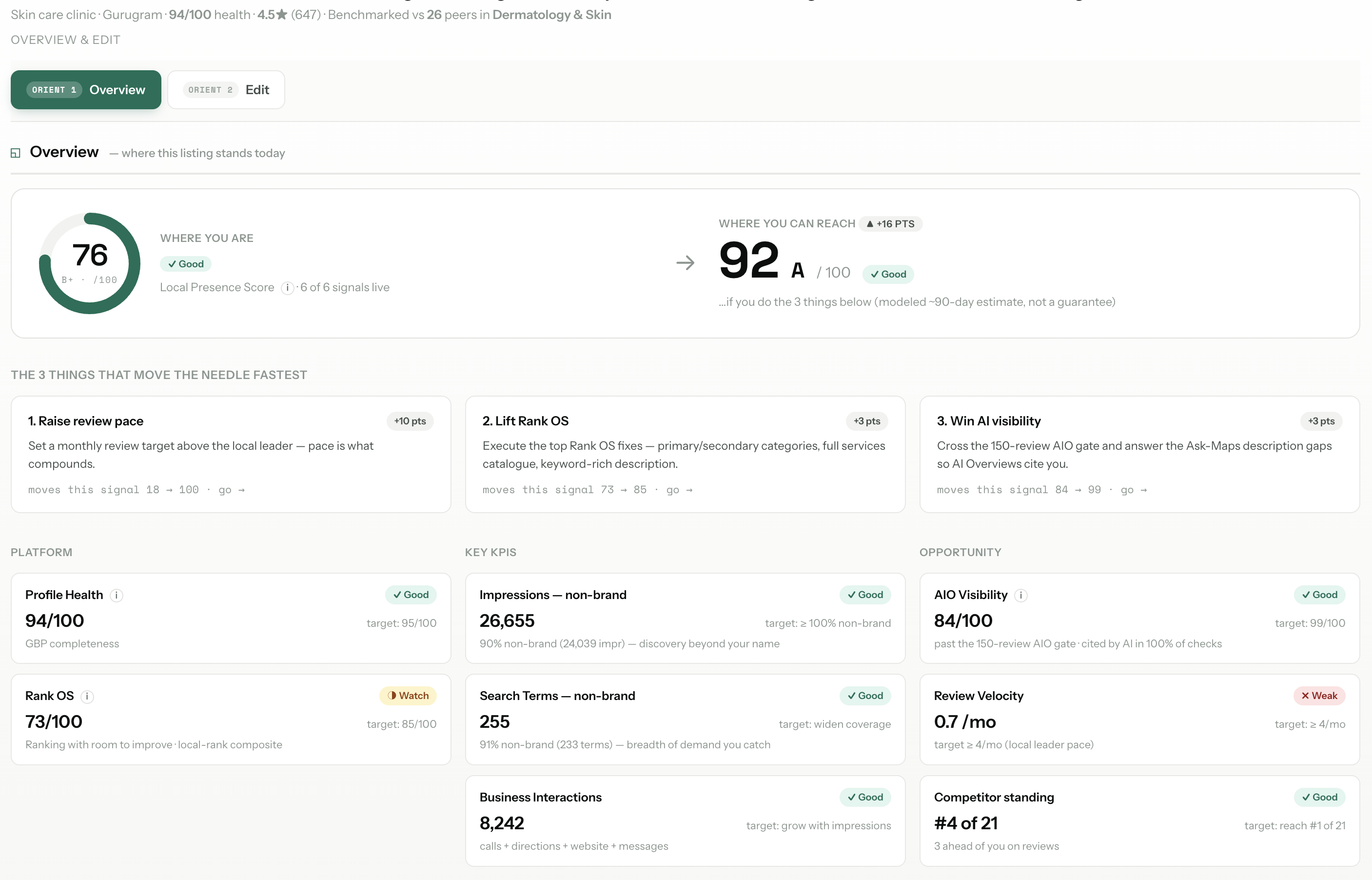
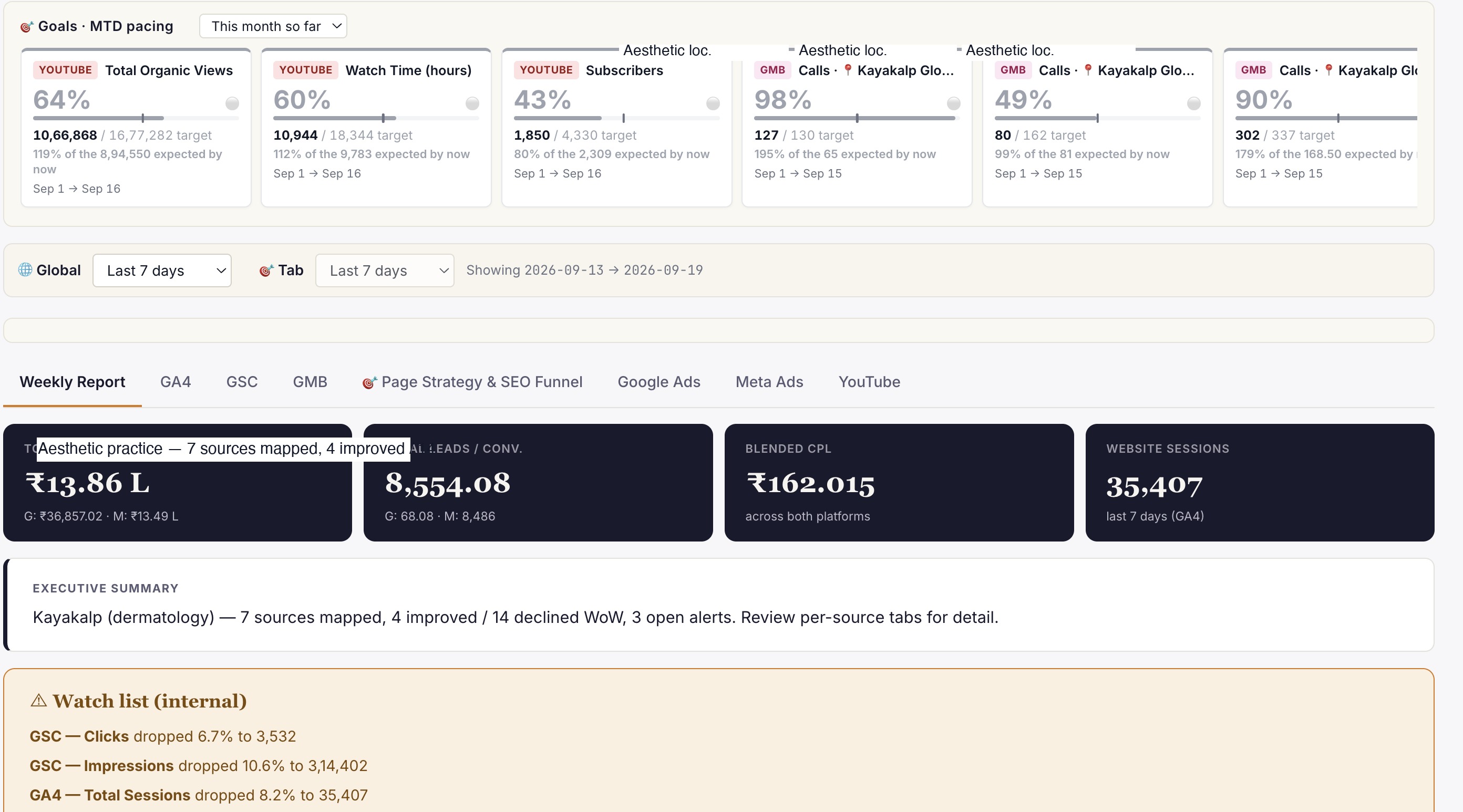
Every ICG engagement runs on the Search Intelligence Trifecta — Angryturtle for GMB, SIE for search and AI Overview, YODA for YouTube. Live product screens below.
Need help operationalising this?
Every ICG service is healthcare-only, NMC + DPDP-aware, and built around the patient-research patterns that drive Indian healthcare growth in 2026.
Every practice welcome — packages from ₹20,000/mo.
Goals-Driven engagements · Performance-Linked Payout Models available


More from
ICG.
Five trends shaping Indian healthcare marketing through 2027: AI-first patient research, Conversions API adoption, ABDM discovery, the AEO w...
Healthcare AIO is the discipline of getting your clinic or hospital cited inside Google AI Overviews, ChatGPT and Perplexity answers — not j...
Conversational-search advertising places brand messages inside AI chat answers — ChatGPT, Perplexity, Copilot — rather than beside a results...
Stop guessing.
Book a Diagnostic.
30 minutes. Free. With the AI-powered healthcare-only marketing agency 150+ brands already run on. No slides, no pitch, no hard close.


