


LinkedIn for Doctors: Building Referral Networks
LinkedIn is not a patient acquisition channel for most clinical specialties. It is a professional network — and in healthcare, that means it is a referral channel, a credentialing signal, and a speaking engagement pipeline.
No pitch. Written root-cause diagnosis. AI-powered, healthcare only.
Direct answer
LinkedIn is not a patient acquisition channel for most clinical specialties. It is a professional network — and in healthcare, that means it is a referral channel, a credentialing signal, and a speaking engagement pipeline.
TL;DR
LinkedIn is not a patient acquisition channel for most clinical specialties. It is a professional network — and in healthcare, that means it is a referral channel, a credentialing signal, and a speaking engagement pipeline.
Used correctly, it is the most efficient channel for building the GP and specialist referral network that drives 50-70% of patient volume for surgical specialties in India. Used incorrectly — which is how most doctors use it — it generates connections without conversions.
What LinkedIn actually does for doctors
Builds credibility with referring physicians. When a GP or internist considers referring a complex patient to you, they look you up. LinkedIn is the professional credentialing surface they check — your training, your publications, your hospital affiliations, your case volume. A complete, well-structured LinkedIn profile is a prerequisite for being taken seriously as a specialist in the referral network.
Generates speaking engagement opportunities. Pharma companies, hospitals, CME platforms, and conference organisers search LinkedIn for specialist speakers. A well-maintained LinkedIn presence with 5,000+ relevant connections and a regular post cadence generates 2-4 speaking enquiries per year for active specialist doctors in most metro markets.
Supports corporate health programme development. HR decision-makers at companies are on LinkedIn. For hospitals and specialists building corporate health tie-ups (health checks, wellness programmes, occupational health), LinkedIn direct outreach to HR leads is significantly more efficient than cold calling.
Is a consultation channel for one specific demographic. The corporate executive aged 30-50 — in Gurgaon particularly — has a higher LinkedIn usage rate for healthcare research than any other Indian patient demographic. ICG's Gurgaon hair transplant data shows LinkedIn as a measurable consultation-enquiry channel specifically for the 35-50 corporate executive — a finding not replicated in any other Indian city or demographic in ICG's portfolio.
Profile optimisation: the five elements that matter
1. Headline (the 220 characters below your name): Default: "Consultant Dermatologist at XYZ Hospital" Optimised: "Consultant Dermatologist — Aesthetic + Medical | 2,000+ laser procedures | Gurgaon | Ex-AIIMS fellowship"
The optimised headline does four things: names the specialty, names the sub-focus (aesthetic + medical), provides a specific credibility signal (case volume), and includes the city for local search.
2. About section (first 300 characters appear before "see more"): The About section should open with your specific expertise, not with a generic "I am a dermatologist with X years of experience." Open with: "I help patients in Gurgaon and Delhi NCR with skin and hair conditions that don't respond to standard treatment — from complex medical dermatology to the full range of aesthetic procedures." Then expand into: clinical journey, fellowship training, specific expertise, what you look for in a clinical collaboration, and how to reach you.
3. Experience section: List every hospital affiliation with dates. Include 2-3 bullet points per role describing the clinical work, not just the job title. "Performed 400+ follicular unit extraction procedures with 95%+ graft survival rate" is more useful than "Worked at XYZ Hospital."
4. Publications section: Link to every PubMed or ResearchGate publication. Even 2-3 publications significantly strengthen the E-E-A-T signal — both for LinkedIn's algorithm and for referring doctors who check your profile.
5. Recommendations: Ask for recommendations from: referring physicians who have sent you patients (professional reference, not patient testimonial — NMC-compliant), colleagues from your training institution, and hospital department heads. A doctor with 8+ LinkedIn recommendations from credentialed colleagues ranks higher in LinkedIn search and converts higher when a referring physician views the profile.
Content cadence: what to post and how often
Optimal frequency: 2 posts per week. More than this for most doctors produces diminishing returns; less than 1 per week reduces algorithm visibility.
Content types that perform for doctors on LinkedIn:
| Content type | Purpose | Frequency |
|---|---|---|
| Clinical opinion post | Authority building — your perspective on a clinical development | 1/week |
| Case-based learning (anonymised, DPDP + NMC compliant) | Engagement with the clinical community | 1/week |
| Conference / CME attendance update | Active learning signal | When relevant |
| Published paper announcement | Academic credentialing | When relevant |
| Industry commentary | Positioning as a thought leader | 1-2/month |
The case-based learning post format — NMC and DPDP compliant: "I saw a case recently that reminded me why [clinical point] matters more than most protocols suggest. A patient [anonymised entirely — no name, no identifying location, no age range that enables identification, no clinical details that could identify] presented with [symptom pattern]. The approach that worked, and why: [clinical reasoning]. What has your experience been with similar presentations?"
This format generates the highest engagement of any doctor LinkedIn post type in ICG's portfolio — because it invites clinical discussion from peers and demonstrates clinical reasoning without any NMC or DPDP compliance risk.
Building the referral network strategically
The strategic connection for each specialty:
| Your specialty | Who to connect with on LinkedIn |
|---|---|
| Cardiologist | GPs, internists, diabetologists, nephrologists in your city |
| Orthopaedic surgeon | Physiotherapists, sports medicine doctors, GPs, rheumatologists |
| IVF specialist | OB/GYNs, gynaecologists, andrologists, general practitioners |
| Plastic surgeon | Dermatologists, oncologists (for reconstruction), GPs |
| Ophthalmologist | Optometrists, GPs, neurologists, diabetologists |
| Oncologist | GPs, internists, radiologists, haematologists, gastroenterologists |
The connection message — NMC-compliant template: "Hi [Name], I'm Dr [X], [specialty] at [Hospital] in [City]. I'd like to connect with [specialty] colleagues in the area — I manage a number of patients who benefit from coordinated care and I'm building a network for appropriate cross-referrals. Looking forward to connecting."
This message: names the professional purpose (coordinated care, not self-promotion), is reciprocal (not "send me referrals"), and is direct without being transactional.
After connecting — the monthly engagement discipline:
- Comment on 3-5 posts per week from GPs and specialists in your target referral community (genuine clinical commentary, not promotional)
- Share 1 clinical update per month specifically relevant to your target referral audience ("for GPs referring patients who may need cardiac evaluation — the updated ESC risk stratification algorithm and what it means for referral timing")
- Message 3-5 new connections per month personally (not with a template) to initiate actual conversations
Read next on ICG
Book a free 30-minute Brand & Growth Diagnostic.
It's a working session, not a sales pitch — you leave with a written root-cause analysis you can act on, whether or not you engage ICG.
Questions readers ask
about this topic.
The three platforms
behind every ICG engagement.
Beacon
CAPI middleware that fixes Event Match Quality, translates CRM statuses to Meta-standard events, dedups across channels.
Agency OS
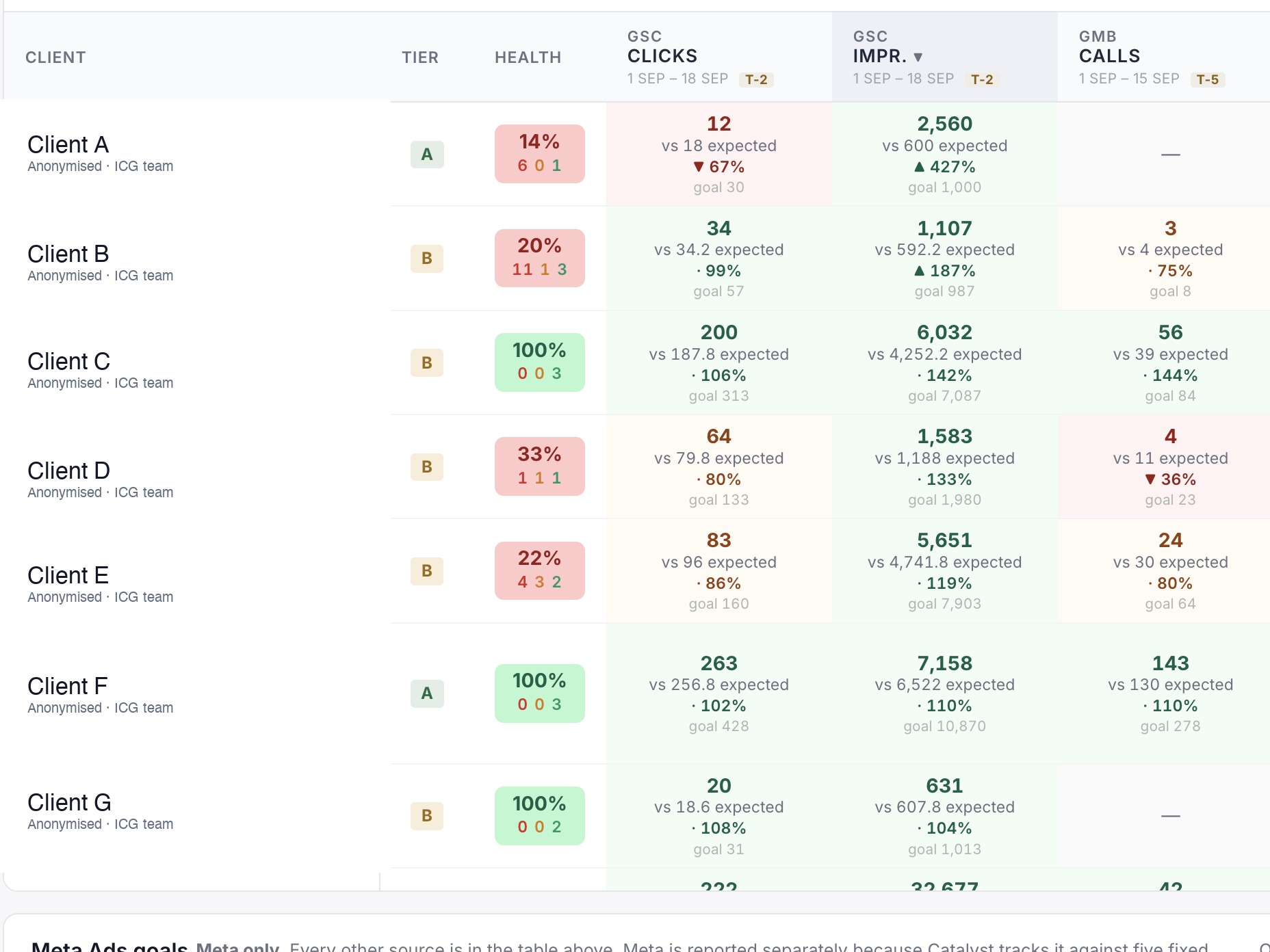
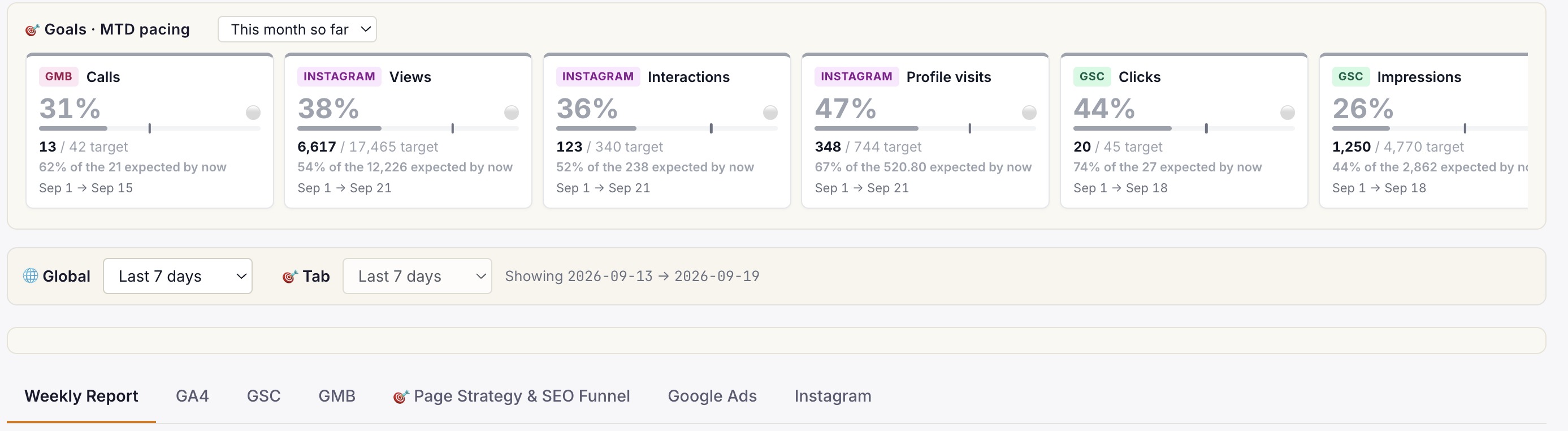
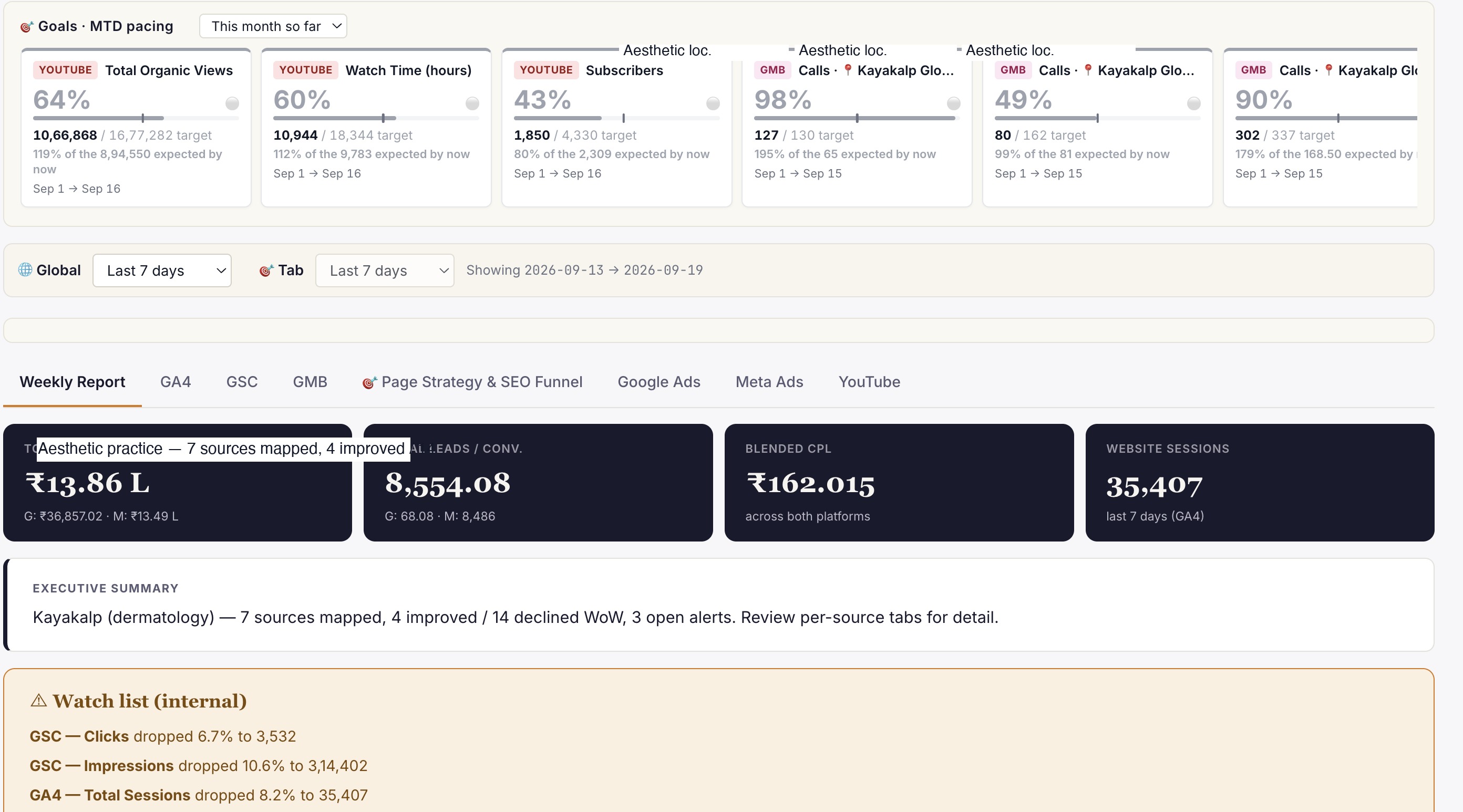
Live client dashboard. GSC, GA4, Google Ads, Meta Ads, IVR calls in one view. Login anytime, not monthly.
Phoenix
Clinic revenue intelligence over your PMS. Daily action queue: Prevent Loss, Maintain & Engage, Grow Revenue. Multi-centre rollout.
Or book a free 30-min audit to see all three in action on your account.
Healthcare brands
that already run on ICG.
A representative slice of the 150+ healthcare brands ICG has delivered for across India. Most engagements remain under NDA.


What ICG clients say · on video.
"Scale up of organic channels and business consulting. ICG has absolute domain authority in their field."
"Working with ICG transformed how we acquire IVF patients in Gurgaon. They understand the fertility journey from inquiry to consult..."
"What Ichelon accomplished — they got all my ideas and worked over 3-4 months to create an amazing, super-customised website."
Need help operationalising this?
Every ICG service is healthcare-only, NMC + DPDP-aware, and built around the patient-research patterns that drive Indian healthcare growth in 2026.
Every practice welcome — packages from ₹20,000/mo.
Goals-Driven engagements · Performance-Linked Payout Models available
More from
ICG.
Five trends shaping Indian healthcare marketing through 2027: AI-first patient research, Conversions API adoption, ABDM discovery, the AEO w...
Healthcare AIO is the discipline of getting your clinic or hospital cited inside Google AI Overviews, ChatGPT and Perplexity answers — not j...
Conversational-search advertising places brand messages inside AI chat answers — ChatGPT, Perplexity, Copilot — rather than beside a results...
Stop guessing.
Book a Diagnostic.
30 minutes. Free. With the AI-powered healthcare-only marketing agency 150+ brands already run on. No slides, no pitch, no hard close.


