


IVF Clinic Marketing Master Guide India 2026
A pillar guide for IVF clinic marketing in India, 2026. Covers the buyer journey, NMC and DPDP compliance, Google Business Profile, Meta and Google Ads, YouTube as trust layer, WhatsApp-first CRM, AI Overview optimisation, benchmarks from 150+ clinics, and a 12-month growth roadmap.
No pitch. Written root-cause diagnosis. AI-powered, healthcare only.
Direct answer
A pillar guide for IVF clinic marketing in India, 2026. Covers the buyer journey, NMC and DPDP compliance, Google Business Profile, Meta and Google Ads, YouTube as trust layer, WhatsApp-first CRM, AI Overview optimisation, benchmarks from 150+ clinics, and a 12-month growth roadm...
TL;DR
If you run marketing for an IVF clinic in India in 2026, the ground has shifted under you three times in the last eighteen months. AI Overviews now sit above your ranked listing on half your money queries. The DPDP Act has turned every lead capture form into a compliance question. NMC's tightened advertising code punishes claim-heavy creative that would have shipped without a second glance in 2022. And the couples you are trying to reach are searching from six different intent moments — sometimes as a couple, sometimes as one partner privately, often with a mother-in-law in the room.
This is a pillar guide. It is meant to be read once end-to-end by anyone owning IVF marketing at a clinic, a chain, or an agency evaluating our work. It compresses what our team has learned across 150+ clinics into the sequence a serious operator needs: the buyer, the channels, the numbers, the regulatory reality, and the twelve-month roadmap that gets a clinic from "we run some ads" to "we own our category in our city."
TL;DR — What Actually Works in Indian IVF Marketing in 2026
- The buying window stretches 3 weeks to 11 months. Most IVF leads convert to consult within 6-14 weeks, not days. Marketing that treats an IVF enquiry like a plumber-service enquiry burns cash. Nurture beats retargeting velocity.
- Google Business Profile still leads qualified enquiry share in most of ICG's IVF clinic audits — often ahead of Meta on a cost-per-consult basis when set up seriously.
- Compliance is a moat. Clinics that build DPDP-compliant consent flows, NMC-aligned creative libraries, and audit trails outperform loose-and-fast competitors within 9-12 months because their accounts survive platform enforcement waves.
- Video is the trust layer, not a channel line item. ICG's IVF clients see 40-60% of consult-stage patients citing "we watched your videos" as the reason they picked the clinic.
- CPL is not the metric to defend. Cost-per-qualified-consult and consult-to-treatment conversion are. Optimise for the last mile, not the click.
- The stack matters more than any single vendor. A GBP operating system, a Meta intelligence layer, a WhatsApp-first CRM, and a video engine — coordinated — beat any three point tools bought separately.
- Budget floors for serious growth start at Rs 3-4 lakh/month all-in (retainer + ad spend + tooling) for a single-city IVF clinic aiming for meaningful category share within 12 months.
Table of Contents
- Why 2026 IVF marketing in India looks nothing like 2022
- The foundation: buyer journey, decision units, consult economics
- Regulatory reality: NMC, DPDP Act 2023, ART Act, ABDM
- Search channel mastery: Google, GBP, local rankings
- The paid media playbook: Meta, Google Ads, YouTube
- Content, video, and trust architecture
- WhatsApp, CRM, and lead-to-consult conversion
- AI Overviews and answer engines for IVF
- Numbers and benchmarks from ICG's 150-clinic portfolio
- Four Indian IVF buyer archetypes
- Common mistakes in 8 of 10 audits
- The ICG 70-30 pricing model
- Your 12-month IVF growth roadmap
- Key takeaways
- FAQ
Why 2026 IVF Marketing in India Looks Nothing Like 2022
Three shifts are compounding at the same time, and any IVF marketing plan that does not respond to all three is already behind.
The intent surface fragmented
Two years ago, "IVF cost in Delhi" was one query. Today the same buyer asks it as a voice search in Hindi, types it into a chatbot, drops it into a WhatsApp thread to compare notes with her sister-in-law, watches a five-part explainer from a competing clinic on YouTube, and only then reaches your Google search result. The funnel isn't a funnel. It's a mesh. Clinics that still buy visibility as if a single search click were the moment of truth are paying for a moment that no longer exists.
Compliance stopped being optional
The DPDP Act coming into force means every lead form on your site needs an explicit, purpose-specific consent. No more silent capture. No more indefinite storage. NMC's professional conduct regulations have been enforced more visibly in the last year, and the specific language IVF clinics used casually in creative — success rate claims, before-after visuals of babies, comparative statements — is squarely in scope. This isn't a legal-team problem to solve later. It shapes what your ad account can actually run.
Generative search redistributed the traffic
Google's AI Overview now surfaces above the classic ten blue links for a growing share of health-adjacent queries. When it does, click-through to the underlying ranked pages drops sharply. But the citation the AI Overview picks becomes disproportionately valuable — a single mention there can send the same volume as a top-three ranking used to. IVF clinics that ignore answer-engine optimisation lose organic share by degrees, not overnight, which is exactly what makes it easy to miss.
The 2022 playbook — rank on Google, run Meta lead ads, retarget aggressively — still works. It just does not work well enough to defend category share against a serious operator anymore.
Section takeaway: IVF marketing in India in 2026 is a multi-surface, compliance-anchored, trust-heavy discipline. The clinics that grow are the ones treating it that way, not the ones running the 2022 playbook harder.
The Foundation: Buyer Journey, Decision Units, and Consult Economics
The IVF buyer journey is not a funnel
A typical IVF enquiry in India, in our audits, looks like this. The couple has been trying to conceive for 12-30 months. They have usually seen one gynaecologist locally who mentioned IVF as a possibility. That mention triggers 4-14 weeks of quiet, private research — mostly by the woman, often from her phone at night, frequently in a mix of English and her regional language. She will consult AI chatbots, watch explainers, read patient forums, look at three to seven clinic websites, and check reviews on multiple platforms. Only after this stretch does an enquiry form get filled. And when it does, the enquiry is often on behalf of the couple by one partner. The other may not even know it has been sent.
This changes everything about how you should think about marketing. Speed-to-lead matters, but so does patience-to-nurture. A first response within five minutes is table stakes. A structured, respectful, unpushy nurture sequence across the next 8-14 weeks is where the actual conversion happens.
The decision unit is 3-5 people
In most IVF decisions we see, four voices are in the room, even if only one of them is on the phone with your counsellor. The couple. Often the mother-in-law or mother. Frequently a sibling who has already had children. Occasionally the referring gynaecologist. Any content, testimonial, or piece of trust architecture that reassures only one of these four risks losing the decision.
This is why single-persona creative — even beautifully crafted single-persona creative — underperforms. The Instagram reel that speaks to the woman as a determined individual seeker of motherhood may convert her intent, but not the family conversation that follows.
Consult economics dictate everything upstream
Before you set a marketing budget, sit with the medical director and get honest numbers on:
- Average revenue per IVF treatment cycle (varies widely by tier: often Rs 1.4-3.5 lakh for a standard cycle in metros, higher for advanced protocols)
- Consult-to-treatment conversion rate (the range across our portfolio is 18-42%; the best-run clinics defend the upper half)
- Multi-cycle retention rate (often 30-55% of couples need more than one cycle)
- Referral coefficient (a happy IVF patient tends to refer 0.6-1.4 additional families over the following two years)
Multiply these out. A consult-to-treatment rate of 30% and average cycle revenue of Rs 2 lakh means every consult is worth roughly Rs 60,000 in immediate revenue and typically another Rs 30,000-50,000 in downstream value. That number — not CPL — is the ceiling on what a rational cost-per-consult can be.
Positioning is the pre-work most clinics skip
Before any channel work, the clinic needs to answer three questions in writing and defend the answers across the entire marketing surface:
- Which patient cohort does the clinic actually serve best? (Age band, complexity level, single vs. couple, first cycle vs. failed elsewhere.)
- What is the clinic genuinely better at than the nearest three competitors in the city? (Not marketing claims — real clinical or experiential differentiators.)
- What is the price ladder, and how is it communicated? (Transparency here compounds trust; opacity compounds churn.)
Without these three answers, marketing amplifies confusion. With them, every downstream decision — channel mix, creative angle, landing page structure, script for the counsellor — gets easier.
Section takeaway: Get honest about buyer journey length, decision unit size, consult economics, and positioning before you spend a rupee on channels. Marketing is downstream of these four inputs.
Regulatory Reality: NMC, DPDP Act 2023, ART Act, and ABDM
NMC advertising norms and IVF creative
The National Medical Commission's professional conduct regulations restrict what a registered medical practitioner and any facility they operate can claim in advertising. In IVF specifically, the areas that draw scrutiny are guaranteed success rate claims, comparative statements against other clinics, before-after imagery framed as clinical outcomes, and endorsements from patients that read as testimonials of clinical results rather than experience narratives. Building a creative-approval workflow that runs every ad through this lens before it goes live is the single highest-leverage compliance investment a clinic can make.
DPDP Act 2023 and lead capture
The Digital Personal Data Protection Act reshapes how you can collect, store, and use enquiry data. For an IVF clinic, this means enquiry forms need explicit purpose-specific consent, storage duration has to be defined and disclosed, retargeting audiences built from patient data need consent that covers that use, and cross-channel data sharing (say, uploading enquirer emails to Meta or Google for lookalike audiences) needs to be examined against the consent you actually collected. Loose implementations that were tolerated in 2023 are being noticed in 2026.
The ART Act and clinic registration signals
The Assisted Reproductive Technology (Regulation) Act imposes registration and disclosure requirements on IVF facilities. From a marketing standpoint, the practical implication is that your clinic's registration status, embryologist credentials, and lab certification are trust signals that should be prominently visible — not buried in a compliance footer. Serious buyers check. Prospective referring doctors check. AI answer engines increasingly cite the presence or absence of such signals when summarising a clinic in a comparative search result.
ABDM and interoperability
Ayushman Bharat Digital Mission's health ID and record architecture is quietly changing what a "digital-ready" clinic looks like. For IVF specifically, ABDM alignment matters less for direct acquisition and more for retention and downstream trust. Clinics whose systems talk cleanly to ABDM tend to be perceived as more legitimate by tech-savvy urban patients, and the operational discipline required to be ABDM-ready tends to correlate with the operational discipline required to run tight consult and treatment funnels.
Section takeaway: Treat compliance as marketing infrastructure. Clinics that build compliant systems from the start do not lose weeks to enforcement disruptions later.
Search Channel Mastery: Google, GBP, and Local Rankings for IVF Clinics
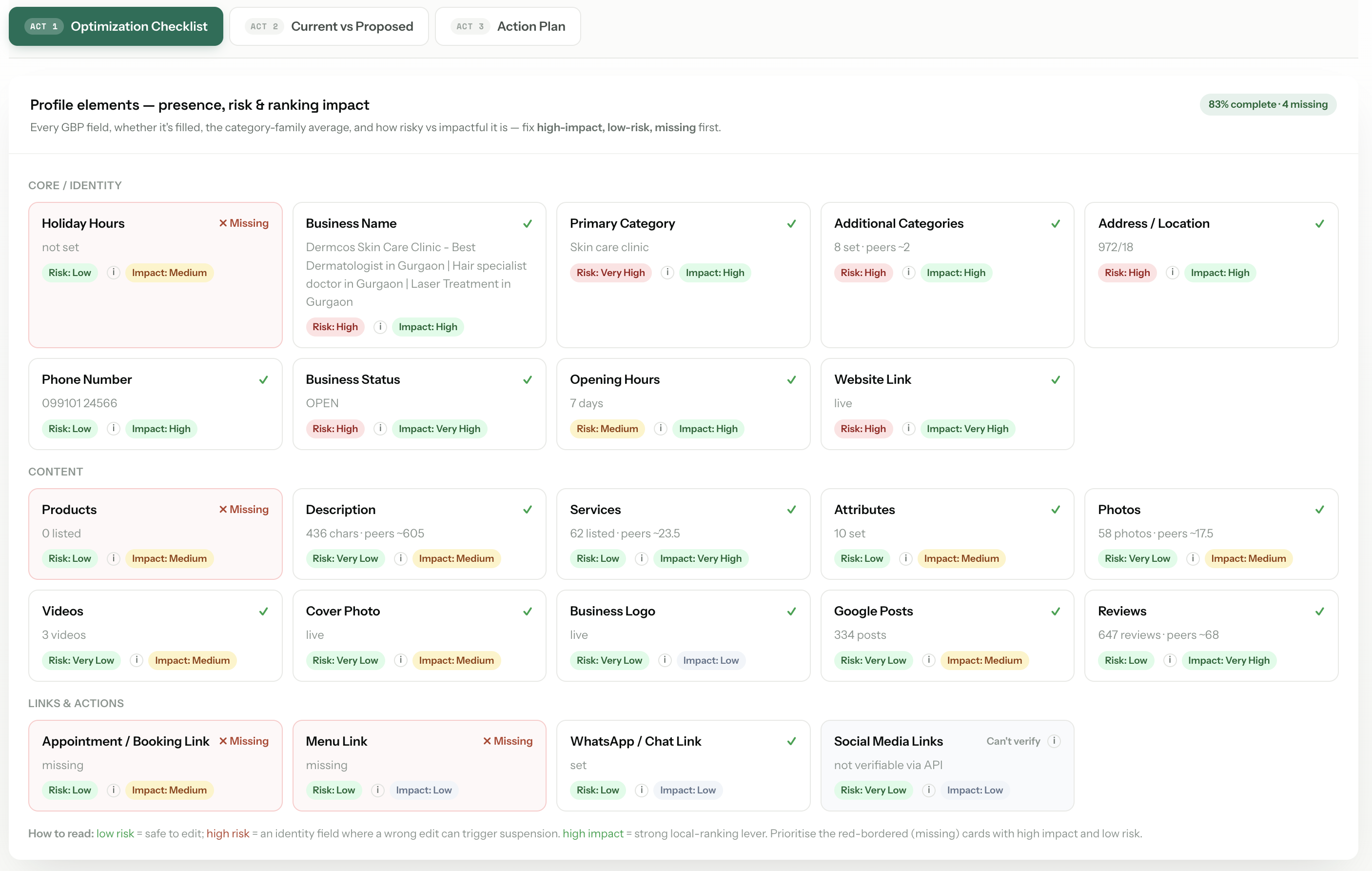
Google Business Profile is the underrated engine
In more than three-quarters of the IVF clinic audits ICG has run over the last twelve months, Google Business Profile is either the largest single source of qualified enquiries or would be if optimised properly. It's underrated because it does not feel like a channel — it feels like plumbing. But the delta between a serious GBP operation and a neglected one, for a mid-tier IVF clinic in a Tier-1 city, is often 60-140 additional qualified enquiries per month.
The core disciplines are: weekly posts, review response within 24 hours (positive and negative), Q&A moderation, service and product listing completeness, photo refresh on a fortnightly cadence, and category selection audits every quarter. Most clinics do one or two of these sporadically. The winning ones do all of them systematically. This is exactly the discipline ICG's Angryturtle GBP operating system was built to automate — pulling review requests, scheduling posts, and monitoring category shifts across a network of clinic locations without a marketing manager having to remember any of it.
Local pack and map ranking factors that actually move
Proximity, category relevance, and review velocity dominate local pack rankings for "IVF centre near me" style queries. Beyond that, the moves that consistently shift map rankings for IVF are hyperlocal landing pages for each clinic location (city + neighbourhood), embedded maps and reviews on those pages, structured data covering the medical business and its services, and NAP consistency across every citation surface the clinic appears on.
The subtler win is category strategy. IVF clinics often auto-select "Fertility Clinic" as their primary GBP category and stop there. The clinics that add secondary categories carefully — reproductive endocrinologist, women's health clinic, medical clinic — often pick up 20-30% additional discovery views for near-neighbour queries.
Organic search: from ranking to referenceability
Ranking for "IVF cost in [city]" or "best IVF clinic in [city]" remains the highest-value organic real estate for most clinics. What has changed is how you win it. The clinics gaining share in 2026 are the ones publishing genuinely deep guides — the sort of resource a doctor could point a patient to — rather than shallow SEO pages. Depth, structured answers to the specific questions patients ask, unambiguous authorship by the treating consultant, and internal linking between the clinic's condition pages and its treatment pages are the four levers that compound.
Schema, entity, and doctor-page architecture
The technical layer most IVF clinics leave on the table is entity architecture: dedicated pages for each consultant with credential disclosure, publications, video content, and Person schema; MedicalCondition and MedicalProcedure schema on relevant service pages; and FAQPage schema on the pages that need to be quoted by AI Overviews. Together these push the clinic from being one of many indexed IVF entities to being a preferred citation source.
Section takeaway: GBP is the underweighted lever. Layer disciplined organic content and clean entity architecture on top, and the compounding effect over 9-12 months usually outperforms any single paid channel investment.
The Paid Media Playbook: Meta, Google Ads, and YouTube for IVF
Meta lead ads and the DPDP-era consent question
Meta remains the highest-volume paid channel for IVF lead generation in India, but the shape of what works has changed. Lead ads that captured a form fill and dumped the enquirer into a CRM without further consent are a compliance liability now. The pattern working across ICG's IVF clients in 2026 is awareness creative with genuine educational value, a landing page that discloses purpose and consent clearly, and a WhatsApp opt-in as the primary lead capture rather than a raw form fill.
Meta's algorithmic targeting has narrowed to broader audiences over the last two years, and the creative-strategy layer has become where competitive advantage lives. This is where ICG's Meta Catalyst IQ and Prism Spy tooling earn their keep — Catalyst IQ manages the always-on creative testing loop across a rotating library of formats, and Prism Spy pulls competitive intelligence on what other IVF clinics in the market are running so the clinic isn't building creative in a vacuum.
Instagram: brand and consideration, not primary acquisition
Instagram plays a role most clinics get wrong. It is not a lead source. It is a trust and consideration surface — the place a buyer confirms she likes the clinic after finding it on Google. Consistent Reels featuring the consultants, patient-experience narratives told compliantly, behind-the-scenes footage of the lab, and short-form educational content compound over time. This is where ICG's Prism Pulse analytics helps clinics understand which creative themes are compounding vs. which are noise.
Google Search ads and the branded-defence layer
The three campaign types every serious IVF clinic should run are branded defence (bid on the clinic's own name to prevent competitor conquesting), high-intent condition and treatment queries (with tight negative keyword lists), and location-anchored campaigns for each geography served. Broader awareness search campaigns rarely justify their cost in IVF. Stay on the demand-capture side.
YouTube: the underused compounding asset
The channel most IVF clinics postpone and most category leaders have already invested in. YouTube's role for IVF is dual — it is where consideration happens before an enquiry, and it is a compounding asset that keeps returning views for years after upload. ICG's YODA is the AI-native YouTube operating system we built specifically for this: script development that reflects real search behaviour, thumbnail testing, and posting cadence discipline that a busy IVF consultant could not sustain manually. The clinics that started YouTube seriously in 2024 are two years ahead of clinics starting now, and the gap is compounding.
Section takeaway: Meta for volume with compliant creative and WhatsApp opt-in, Google Search for demand capture, Instagram for consideration, YouTube for compounding trust. Any paid plan missing one of these four legs will show up as capped growth within 6-9 months.
Content, Video, and Trust Architecture — the E-E-A-T Layer
The consultant-authored content principle
Anonymous or ghost-written clinical content ranks worse and converts worse than content clearly authored by a specific consultant. This has always been true. In 2026 it is more true because AI answer engines lean heavily on authorship signals when deciding which page to cite. Every clinical article on an IVF clinic site should have a named consultant author with a linked bio page, credentials, and — ideally — a video accompanying the piece.
Video as the trust default
Across ICG's IVF portfolio, 40-60% of consult-stage patients cite "we watched your videos" as the reason they chose the clinic. Video isn't a nice-to-have. It is the format the buyer uses to decide. The minimum viable video library for a serious IVF clinic covers consultant introductions for every senior consultant, condition explainers (male-factor, PCOS, endometriosis, unexplained infertility, recurrent loss), procedure walkthroughs framed as education not clinical instruction, patient-experience films (compliantly scripted), and lab and facility tours.
Case studies and testimonials done compliantly
Under NMC's advertising norms, the safe framing for patient content is experience narrative — the couple's journey, the emotional arc, what they valued about the clinic's care — rather than clinical outcome claims. Well-produced experience narratives, told with the patient's explicit consent for use of their story and image, are the single strongest trust asset outside the consultant's own presence.
The knowledge hub as the marketing centre of gravity
Rather than a scattered blog, a serious IVF clinic organises its content around a knowledge hub: a coherent library of condition, treatment, and process content that reads as a resource, not marketing. Every piece is internally linked into the appropriate treatment page. Every treatment page links to the consultants who perform it, the fee structure, and the enquiry pathway. This coherence is what AI answer engines reward — and what serious buyers notice.
Section takeaway: Authorship, video, compliant patient stories, and a knowledge hub structure make up the trust architecture. Together they lift conversion from every other channel by 20-40% in ICG's tracked cohorts.
WhatsApp, CRM, and the Lead-to-Consult Conversion System


WhatsApp as the primary conversion channel
For IVF in India, WhatsApp is where the actual conversion conversation happens. Phone calls get missed. Emails get ignored. But a WhatsApp thread stays open for weeks and often includes the whole family. A serious IVF clinic in 2026 designs its lead flow so that WhatsApp is the primary channel, with a structured first-response template within five minutes, a menu of enquiry paths, and a counsellor who knows how to nurture without pushing.
CRM as the operating system, not the database
A CRM for an IVF clinic is not a lead spreadsheet. It is the operating system for a 6-14 week nurture cycle across multiple family members, multiple touchpoints, and multiple channels. The disciplines that separate the good from the poor are stage-based nurture workflows, source attribution back to campaign creative, counsellor performance visibility, follow-up SLA enforcement, and integration with the clinic's appointment and treatment system. ICG's AtomCRM at Rs 14,999 per month was built specifically for this kind of nurture-heavy healthcare workflow, and connects to the same WhatsApp and appointment layer the clinic already uses. For multi-location IVF chains that also need the hospital-side revenue cycle and record overlay, HealthPro 360 at Rs 14,999 per month sits above the clinical systems and gives the marketing team visibility into what happens after the consult.
Speed-to-lead and the five-minute rule
The single highest-leverage operational fix most IVF clinics can make is speed-to-lead. In our audits, clinics responding within five minutes convert 3-5x better than clinics responding within an hour. Yet most run at 30-90 minute first-response times. The fix is process (a named person on rota, an SLA, a monitoring dashboard) and technology (auto-response templates that buy time while a human takes over).
Attribution: the honest version
IVF attribution is genuinely hard. The buying window is long, decisions cross channels, and self-report at the counsellor stage ("how did you hear about us?") is unreliable. The honest approach is a mixed model: platform-level attribution for the immediate click, self-reported source at the counsellor level with structured options, and a periodic media-mix reconciliation that adjusts for the fact that GBP and YouTube consistently get undercredited by last-click models.
Section takeaway: Fast, structured, WhatsApp-first, nurture-oriented conversion systems are where growth is either won or leaked. The CRM and the counsellor script matter as much as the ad account.
AI Overviews, Answer Engines, and What Generative Search Means for IVF
The AIO click-share compression
Google's AI Overview now shows for a growing share of IVF-related queries in India, particularly cost, comparison, condition, and process queries. When it does, aggregate click-through to the underlying ranked pages compresses. But two things happen that are more important than the top-line click loss: the sources cited within the AIO gain disproportionate visibility, and the tail of the query becomes more specific because the AIO has already handled the general question.
What gets cited by AIO for IVF queries
In ICG's tracking across health queries, the sources that get cited most consistently are pages with clear authorship by a credentialed clinician, pages with structured FAQ answers to the specific question being asked, pages with schema markup declaring the medical entity type, and pages that don't over-optimise for a single keyword but instead answer the question fully. The last point matters. Pages written to answer the question well tend to outperform pages written to rank for the keyword.
Answer engine optimisation is not new SEO — it is better SEO
The disciplines that make a page rank well in classic Google also make it cite well in AI Overviews, ChatGPT search, Perplexity, and Gemini. Depth, structure, authorship, freshness, and internal linking still lead. What has changed is the reward function: pages that answer the specific question fully in a scannable structure now capture disproportionate value, because that is exactly what the answer engines want to lift.
The brand-in-answer moat
The most defensible position an IVF clinic can build in the AIO era is being the brand the answer engine mentions by name when summarising a category — "top clinics for IVF in Delhi include X" rather than just "consider factors A, B, C." Getting there requires the entity architecture, review depth, and content coherence discussed earlier. It is a 9-15 month build. Once earned, it is hard to displace.
Section takeaway: Do not treat AIO as a threat to work around. Treat it as the new distribution surface, and build the entity, authorship, and content depth that gets you cited by name.
Numbers and Benchmarks From ICG's 150-Clinic Portfolio
These ranges are drawn from ICG's IVF clinic client cohort as tracked over the last 12-18 months. They are indicative, not universal — every clinic's numbers depend on tier, city, positioning, and operational maturity.
| Metric | Tier-1 Metro Range | Tier-2 City Range |
|---|---|---|
| Cost per qualified lead (Meta) | Rs 1,200-3,500 | Rs 700-2,000 |
| Cost per qualified lead (Google Search) | Rs 900-2,400 | Rs 500-1,400 |
| Cost per consult (blended) | Rs 3,000-8,500 | Rs 1,800-5,000 |
| Lead-to-consult conversion | 22-38% | 28-45% |
| Consult-to-treatment conversion | 18-42% | 22-48% |
| Average cycle revenue | Rs 1.6-3.2 lakh | Rs 1.1-2.2 lakh |
| Monthly qualified enquiries (mature clinic) | 180-450 | 90-260 |
| GBP share of qualified enquiries | 28-48% | 35-58% |
| YouTube-influenced enquiries (mature channel) | 18-34% | 12-26% |
Two observations from the pattern. First, Tier-2 cities show meaningfully better economics on almost every metric — this is the hidden opportunity most metro-focused chains underinvest in. Second, GBP share is universally higher than what most clinics assume. When they check honestly, it is the biggest single lever they have not fully pulled.
Section takeaway: Use these ranges as sanity checks, not targets. The right target for any specific clinic depends on baseline maturity and market position.
Four Indian IVF Buyer Archetypes
Archetype 1: The metro dual-income couple, 32-38
Both partners are working professionals in a Tier-1 metro. They have been trying for 2-4 years. They research heavily online and value transparency above all. They will read fee structures, credentials, and success-rate disclosures (however framed) and eliminate clinics that seem opaque. Marketing to them looks like depth-heavy website content, video-led consultant introductions, transparent process communication, and a WhatsApp-first enquiry flow that respects their time.
Archetype 2: The Tier-2 city couple, 28-34, family-involved
The couple is in a Tier-2 city, the decision involves parents and often in-laws prominently, and cost sensitivity is real. Trust is built through community reputation, doctor-network referrals, and content in the local language. Marketing to them looks like strong local presence on GBP and vernacular content, testimonials and experience narratives from similar families, and a counsellor who can hold the family conversation with cultural fluency.
Archetype 3: The failed-cycle-elsewhere seeker, 34-42
She has already had one to three cycles at another clinic without success. She is emotionally exhausted, technically informed, and looking for a specialist she can trust with a complex case. Marketing to her looks like consultant-authored deep content on complex indications (recurrent implantation failure, poor ovarian response, immunological factors), video content that treats her intelligence seriously, and a consultation experience that acknowledges her prior journey rather than restarting from zero.
Archetype 4: The single-parent-by-choice or LGBTQ+ seeker
A small but rapidly growing cohort in metro India. Extremely alert to how the clinic communicates about family structures. Will eliminate clinics whose creative or messaging reads as exclusive of their situation. Marketing to them looks like inclusive language across the marketing surface, clear disclosure of what the clinic can and cannot offer given regulatory constraints on their specific situation, and a consultation team trained to hold the conversation with dignity.
Section takeaway: One-size marketing serves none of these well. Structuring your creative library, landing pages, and counsellor scripts around distinct archetypes lifts conversion across all of them.
Common Mistakes We See in 8 of 10 IVF Clinic Audits
- Optimising for CPL instead of cost-per-consult. Cheaper leads that don't convert are more expensive than costlier leads that do. The full-funnel metric is the honest one.
- Ignoring or under-resourcing GBP. The channel that most consistently drives qualified enquiry is the one most consistently under-managed.
- Running Meta creative that would fail NMC review. Success-rate claims, before-after imagery of babies, and comparative statements against unnamed competitors are the three most common violations we see.
- Loose DPDP consent flows. Silent lead capture and indefinite retention are compliance risks that will eventually surface, either through platform enforcement or regulatory scrutiny.
- Treating YouTube as optional. Two years of postponement in a compounding channel is the difference between category leadership and category catch-up.
- Weak WhatsApp response discipline. Thirty-minute first-response times that could be five-minute first-response times. The technology exists; the process discipline usually does not.
- No named consultant authorship on clinical content. Anonymous blog posts underperform both in ranking and in AIO citations, and they miss the trust opportunity entirely.
- Buying point tools instead of building a stack. A GBP tool, a CRM, an ads platform, and a WhatsApp tool that don't talk to each other cost more than an integrated stack and deliver less.
Section takeaway: Most IVF marketing underperformance is not a strategy problem. It is an execution and integration problem. Fix these eight and most clinics see 30-60% qualified enquiry growth within two quarters.
The ICG 70-30 Pricing Model — What You Actually Pay For
ICG structures healthcare marketing retainers on a 70-30 model. Seventy percent of the monthly fee funds direct execution (channel operations, creative production, funnel management, reporting infrastructure). Thirty percent funds the strategic and analytical layer (senior strategist time, quarterly planning, media-mix analysis, competitive intelligence, and stakeholder review). The split is transparent by design — clinics know exactly what they are paying for.
Three retainer tiers cover the range of IVF clinic maturity:
| Tier | Monthly Retainer | Best For |
|---|---|---|
| Foundation | Rs 49,999 | Single-location IVF clinics getting serious about marketing for the first time; establishes the GBP, content, and lead capture foundation. |
| Growth | Rs 74,999 | Established single-location or small-chain clinics scaling channel investment across search, Meta, and video. |
| Scale | Rs 99,999 | Multi-location IVF chains or category-leading single clinics running the full stack including advanced YouTube and answer-engine optimisation. |
The retainer sits alongside ad spend, which is separate and passed through transparently, and any tooling subscriptions the clinic chooses to add — AtomCRM at Rs 14,999 per month, HealthPro 360 for hospital chains that need the RCM and EHR overlay layer, and product tools like Angryturtle for GBP scale or YODA for YouTube. The pricing floor for meaningful growth for a single-city IVF clinic — retainer plus disciplined ad spend plus core tooling — is around Rs 3-4 lakh per month all-in.
Section takeaway: The 70-30 model exists so clients see exactly what they are paying for and can adjust the balance as their marketing matures.
Your 12-Month IVF Growth Roadmap
Quarter 1: foundation and audit
Month 1-3 is diagnostic and foundation-building. Complete a full audit across GBP, website, ad accounts, creative library, CRM, WhatsApp, and analytics. Fix DPDP consent flows on every capture surface. Publish or update NMC-aligned creative guidelines. Establish baseline metrics for CPL, cost-per-consult, consult-to-treatment, and channel share. Rebuild GBP with weekly discipline. Reset organic content strategy around a knowledge-hub structure with named consultant authorship.
Quarter 2: channel maturity
Month 4-6 is channel discipline. Restructure paid search around branded defence, high-intent condition and treatment queries, and location campaigns. Restructure Meta creative around a rotating library tested weekly. Launch or restart YouTube with a monthly cadence of at least four videos across consultant, condition, procedure, and patient-experience formats. Implement WhatsApp-first lead capture with five-minute first-response SLAs. Roll out CRM workflows for 6-14 week nurture cycles.
Quarter 3: compounding and depth
Month 7-9 is where compounding starts to show. Deepen the knowledge hub with 20-40 additional pieces of consultant-authored content. Layer FAQ schema, MedicalEntity schema, and Person schema across the site. Begin dedicated answer-engine optimisation for the top 30 IVF queries in the clinic's geography. Add second-language content in the relevant regional language if the clinic serves a Tier-2 or vernacular-heavy market. Formalise patient-experience video production on a monthly cadence.
Quarter 4: category leadership and defensibility
Month 10-12 is where a serious operator separates from the market. Run a full competitive intelligence pass on the top three competitors in the geography. Launch or scale second-location marketing if the clinic is expanding. Publish annual outcomes and process transparency reports (compliantly framed). Formalise doctor-referral channel work alongside the direct-to-patient marketing. Set 12-month targets for the following year based on the compounded baseline the previous nine months established.
Section takeaway: A twelve-month plan sequenced this way typically produces 60-140% qualified enquiry growth for a mid-tier IVF clinic in ICG's portfolio, with cost-per-consult stable or improving.
Key Takeaways
- The Indian IVF buyer journey is a 6-14 week multi-person decision, not a single-click funnel — every part of the marketing surface must respect that.
- Compliance (NMC advertising norms, DPDP Act 2023, ART Act, ABDM alignment) is marketing infrastructure, not a legal afterthought.
- Google Business Profile is the single most underweighted growth lever in most IVF clinic marketing plans.
- Video, and specifically YouTube, has become the trust layer where the buying decision is confirmed — 40-60% of consults in ICG's IVF cohort cite it.
- WhatsApp-first lead capture with five-minute first-response times and CRM-driven 6-14 week nurture cycles is where conversion is won or lost.
- AI Overviews are redistributing search value toward pages with authorship, structured answers, and entity architecture — start optimising for citation, not just ranking.
- The right stack (GBP OS, Meta intelligence, CRM, WhatsApp, video engine) coordinated across a single strategy outperforms disjointed point tools every time.
- The ICG 70-30 retainer model with Foundation, Growth, and Scale tiers is designed to let clinics buy the right level of execution for their current maturity and scale up as they compound.
Frequently Asked Questions
How much should an IVF clinic in India budget for marketing per month?
The pricing floor for meaningful growth for a single-city IVF clinic in a Tier-1 market is around Rs 3-4 lakh per month all-in — that includes the agency retainer, disciplined ad spend, and core tooling. Tier-2 city clinics often see comparable outcomes at Rs 1.75-2.75 lakh per month all-in. Multi-location chains scale that up materially. The wrong question is "what's the minimum I can spend and still see something." The right question is "what's the payback period at each spend level given my consult-to-treatment economics."
What is a realistic cost per consult for an IVF clinic in a Tier-1 city?
Across ICG's Tier-1 metro IVF cohort, blended cost per consult typically sits between Rs 3,000 and Rs 8,500 depending on maturity of the marketing stack, brand strength, and channel mix discipline. Clinics running the full stack with disciplined execution defend the lower half of that range. Clinics with weak GBP, weak YouTube, and CPL-optimised paid campaigns tend to sit in the upper half or above it.
How long does it take for SEO to move the needle for an IVF clinic?
Six months to see visible movement on secondary queries. Nine to twelve months to see meaningful movement on primary money queries in a competitive geography. Fifteen to twenty-four months to reach category-leader positioning if the clinic starts from a weak baseline. GBP and content depth are the two compounding investments — both take longer than clinics hope and pay off longer than clinics expect.
Are Meta lead ads still compliant to run after the DPDP Act came into force?
Yes, but the implementation has to change. Raw lead form captures with no purpose-specific consent and no defined retention are the risk. The 2026 pattern is a landing page with clear consent disclosure, a WhatsApp opt-in as the primary lead mechanism, defined retention windows in the privacy policy, and audit trails on how enquirer data flows through the marketing stack. Once that plumbing is in place, Meta remains a productive channel.
Do we really need YouTube for IVF marketing in India in 2026?
If the clinic is aiming for category leadership over a 24-36 month horizon, yes. Video is where 40-60% of consult-stage IVF patients in ICG's cohort say the buying decision was confirmed. The compounding nature of YouTube — views keep accruing for years after upload — means every quarter of postponement is a quarter of catch-up. If the clinic is small, one location, and not aiming for category leadership, a lightweight YouTube presence built around the primary consultant is still the right minimum.
What is the biggest single lever most IVF clinics under-invest in?
Google Business Profile. In more than three-quarters of ICG's IVF clinic audits, GBP is either the largest source of qualified enquiries or would be if operated seriously. The gap between a systematically managed GBP and a neglected one is often 60-140 additional qualified enquiries per month for a mid-tier Tier-1 clinic. Most clinics treat it as a set-and-forget listing. The winners treat it as a channel with weekly discipline.
Can we use patient testimonials in IVF marketing under NMC norms?
Yes, if framed carefully. The safe pattern is experience narrative — the couple's journey, what they valued about the care, the emotional arc — with explicit consent for use of story and image. What draws NMC scrutiny is clinical outcome claims presented as testimonials, before-after visuals of babies framed as clinical results, and comparative statements. Every patient-story asset should pass a compliance review before it goes live in creative.
How is AI Overview changing the value of ranking on Google for IVF queries?
Two things happen simultaneously. Click-through to underlying ranked pages compresses when AIO shows. And the sources cited within the AIO gain disproportionate visibility. Net-net, the value of being cited by AIO now often exceeds the value of ranking below it. This shifts the winning discipline from keyword-optimised pages to question-answering pages with clear authorship, structured answers, and entity schema — the same pages that also happen to rank well.
What CRM setup works best for IVF lead management in India?
The setup needs to handle a 6-14 week nurture cycle across multiple family members, multiple channels (WhatsApp primary, phone secondary, email tertiary), source attribution back to campaign creative, counsellor performance visibility, and integration with the clinic's appointment and treatment system. ICG's AtomCRM at Rs 14,999 per month was built specifically for nurture-heavy healthcare workflows of this shape. What matters more than the specific tool is that the CRM, WhatsApp, and appointment systems talk to each other cleanly.
Should a new IVF clinic invest in brand or performance first?
Both, but sequenced. Months 1-3 should establish the foundation — GBP, website, DPDP-compliant lead capture, NMC-aligned creative guidelines, baseline CRM. Months 2-6 layer performance channels on top of that foundation. Months 4-12 add the compounding brand and trust assets — YouTube, knowledge hub, consultant-authored content, patient-experience films. Skipping the foundation and jumping straight to performance ads is the most common expensive mistake we see.
Should Tier-2 city IVF clinics use a different playbook than metros?
The framework is the same. The emphasis shifts. Tier-2 clinics see meaningfully better unit economics on almost every metric, so the case for aggressive channel investment is stronger not weaker. GBP dominance matters more because the local market is smaller and more concentrated. Vernacular content matters more. Family-anchored testimonials matter more. Metro-style Instagram-heavy plays matter less. The 70-30 execution split works the same way; the channel mix is what differs.
What does the ICG 70-30 model actually mean in a retainer?
Seventy percent of the monthly retainer funds direct execution — channel operations, creative production, funnel management, reporting infrastructure. Thirty percent funds the strategic and analytical layer — senior strategist time, quarterly planning, media-mix analysis, competitive intelligence, and stakeholder review. The split is disclosed transparently so clients know what they are paying for and can adjust the balance as their marketing matures. Foundation tier starts at Rs 49,999 per month; Growth at Rs 74,999; Scale at Rs 99,999.
Book a free IVF clinic growth diagnostic.
Raman Soni walks through your current channel mix, CPQL vs cost-per-cycle, and where the 90-day patient journey is leaking.
Questions readers ask
about this topic.
The three platforms
behind every ICG engagement.
Beacon
CAPI middleware that fixes Event Match Quality, translates CRM statuses to Meta-standard events, dedups across channels.
Agency OS
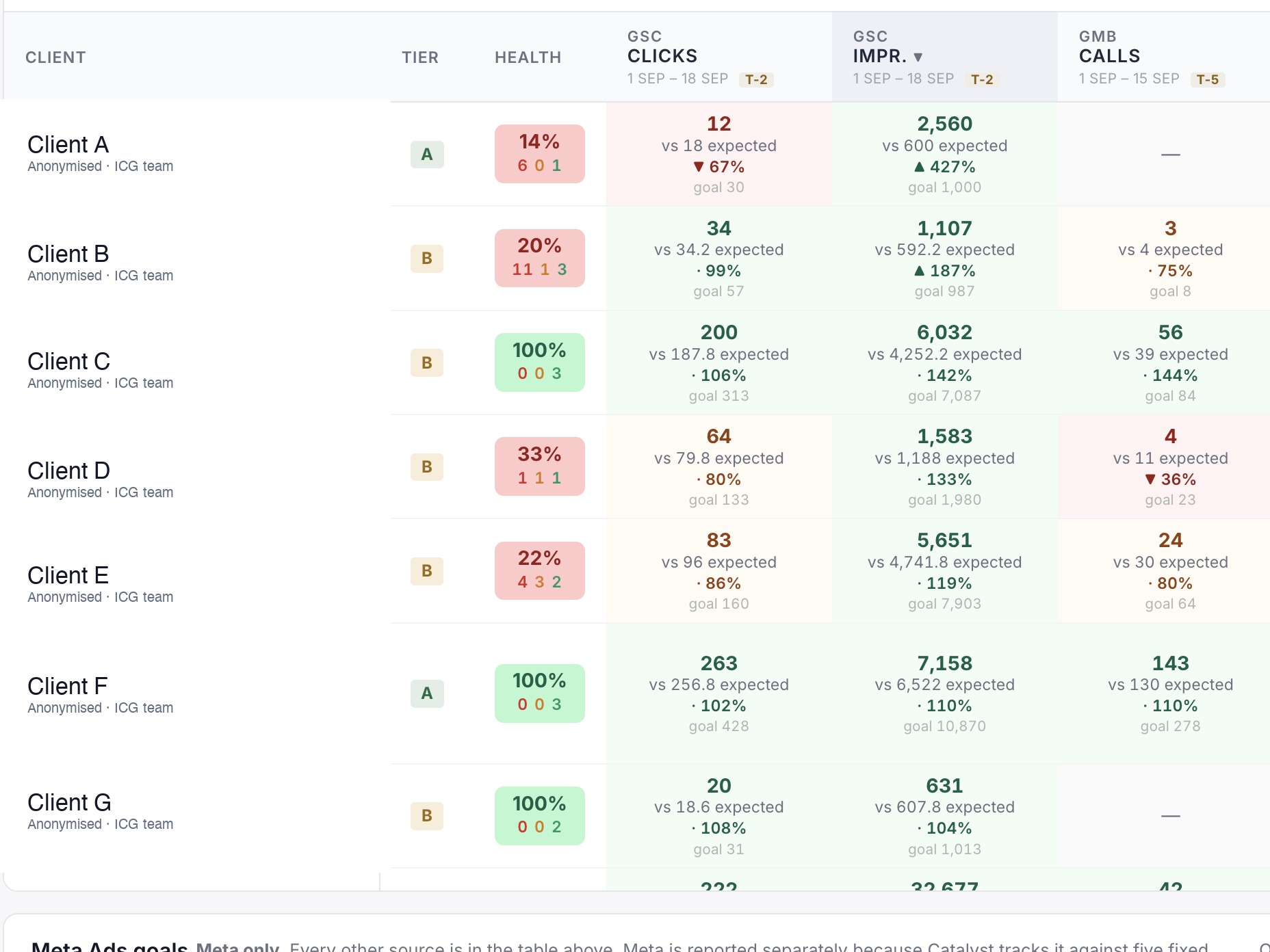
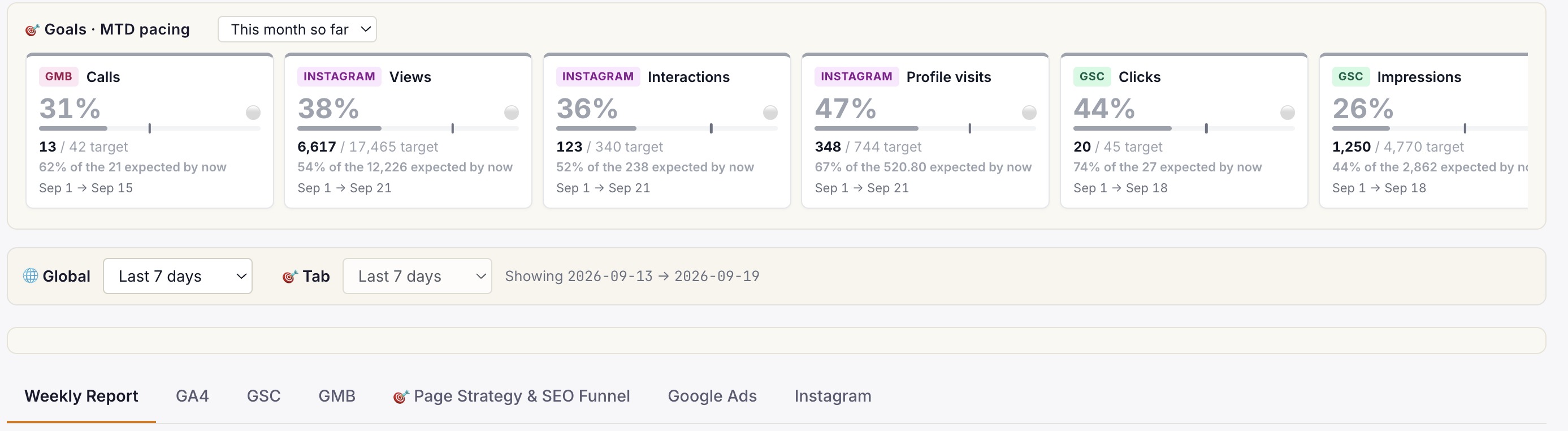
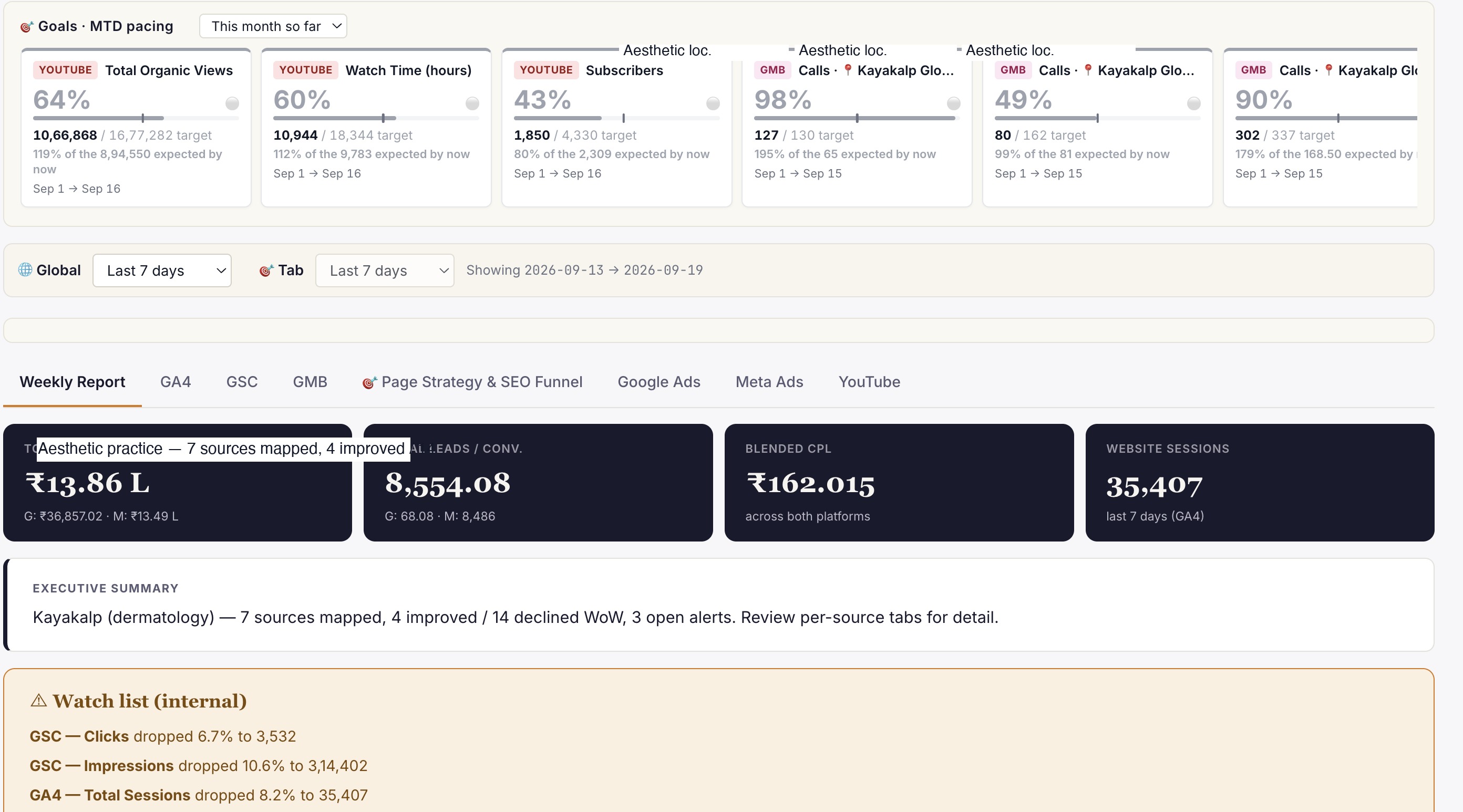
Live client dashboard. GSC, GA4, Google Ads, Meta Ads, IVR calls in one view. Login anytime, not monthly.
Phoenix
Clinic revenue intelligence over your PMS. Daily action queue: Prevent Loss, Maintain & Engage, Grow Revenue. Multi-centre rollout.
Or book a free 30-min audit to see all three in action on your account.
Healthcare brands
that already run on ICG.
A representative slice of the 150+ healthcare brands ICG has delivered for across India. Most engagements remain under NDA.


What ICG clients say · on video.
"Working with ICG transformed how we acquire IVF patients in Gurgaon. They understand the fertility journey from inquiry to consult..."
"ICG built our IVF marketing system from the ground up. The team understands healthcare specifics, not just generic digital marketi..."
Need help operationalising this?
Every ICG service is healthcare-only, NMC + DPDP-aware, and built around the patient-research patterns that drive Indian healthcare growth in 2026.
Every practice welcome — packages from ₹20,000/mo.
Goals-Driven engagements · Performance-Linked Payout Models available
More from
ICG.
Five trends shaping Indian healthcare marketing through 2027: AI-first patient research, Conversions API adoption, ABDM discovery, the AEO w...
Healthcare AIO is the discipline of getting your clinic or hospital cited inside Google AI Overviews, ChatGPT and Perplexity answers — not j...
Conversational-search advertising places brand messages inside AI chat answers — ChatGPT, Perplexity, Copilot — rather than beside a results...
Stop guessing.
Book a Diagnostic.
30 minutes. Free. With the AI-powered healthcare-only marketing agency 150+ brands already run on. No slides, no pitch, no hard close.


