


Instagram Influencer Marketing for Healthcare in India: The 2026 Playbook
A 2026 field guide for Indian healthcare marketers on running Instagram influencer campaigns that respect NMC advertising limits, DPDP consent rules and actual patient trust — with real cost bands, vetting checklists and ROI math.
No pitch. Written root-cause diagnosis. AI-powered, healthcare only.
Direct answer
A 2026 field guide for Indian healthcare marketers on running Instagram influencer campaigns that respect NMC advertising limits, DPDP consent rules and actual patient trust — with real cost bands, vetting checklists and ROI math.
TL;DR
TL;DR
- Instagram influencer marketing in Indian healthcare is legal, but doctors themselves face strict NMC advertising restrictions. Brand handles, hospitals and pharma OTC brands have more room, provided they follow DPDP consent rules.
- Nano and micro creators (1K to 50K followers) in tier-2 and tier-3 cities are outperforming celebrity influencers for lead quality — a Jaipur fertility clinic we studied paid Rs 8,000 to a nano creator and pulled 41 qualified enquiries in eight days.
- Realistic 2026 budgets for a serious healthcare Instagram programme start at Rs 60,000 per month for a single-city clinic and Rs 3-6 lakh per month for a multi-city hospital chain, on top of paid amplification.
- Skip the "10 influencers, one post each" thinking. The formula that works is 3-5 creators run for 90 days, with Reels-first content, WhatsApp-native CTAs and a CRM that captures the actual conversion source.
Table of contents
- Why Instagram influencer marketing matters for Indian healthcare in 2026
- Is Instagram influencer marketing legal for hospitals and doctors in India?
- Which type of Instagram creator actually works for a healthcare brand?
- How do you find and vet healthcare influencers in India?
- What does an Instagram influencer campaign cost for an Indian hospital or clinic?
- How do you measure ROI of a healthcare influencer campaign?
- What are the most common mistakes Indian hospitals make on Instagram?
- How does ICG run Instagram influencer marketing for healthcare clients?
- The 70-30 model: how influencer work fits ICG's pricing
- FAQ
Why Instagram influencer marketing matters for Indian healthcare in 2026
Instagram has crossed 380 million monthly users in India in 2026, and healthcare has quietly become one of its most active discovery categories. Patients aren't opening the app to book a knee replacement, but they are watching Reels about PCOS, hair transplants, dental aligners, IVF timelines, LASIK recovery and mental-health check-ins. That is where a hospital marketing director's next 100 enquiries are already forming an opinion.
Three shifts made 2026 different from 2024. First, short-form video overtook static creatives — Meta's own India data shows Reels get roughly 55 percent more reach than image posts on healthcare handles. Second, tier-2 city audiences (Indore, Kochi, Nagpur, Bhubaneswar) now consume more health content per capita than metros. Third, DPDP Act 2023 enforcement has real teeth in 2026, so casual "just DM us your reports" campaigns from 2023 will get you a notice today.
For hospital marketing directors and clinic-owner doctors reading this, the takeaway is simple. Instagram is no longer a "nice to have" garnish next to Google Ads and SEO. It is the top of the funnel for elective, planned and lifestyle-driven care — the exact revenue lines where margins live.
Is Instagram influencer marketing legal for hospitals and doctors in India?
Yes, but with hard boundaries. The National Medical Commission's advertising code bars registered doctors from soliciting patients through self-promotion, testimonials or before-and-after treatment claims. Hospital brand handles, pharma OTC brands, wellness clinics run by non-MBBS professionals, and healthtech platforms have more flexibility, provided disclosures and consent are handled correctly.
Three rules matter more than the rest in 2026:
- NMC Professional Conduct Regulations — a doctor cannot pay an influencer to praise their skill or show recovered patients. A hospital can run brand-awareness content about services, technology and safety, provided no individual doctor's clinical claims are dramatised.
- DPDP Act 2023 — any lead form, DM funnel or "share your report on WhatsApp" flow must show a purpose notice and get explicit consent before storing personal data. Influencers linking to an unconfigured lead form is now the single most common compliance gap we find on audits.
- ASCI Influencer Guidelines — every paid or barter post needs a visible #Ad, #Partnership or #Sponsored label. The Advertising Standards Council of India has publicly flagged healthcare as a high-scrutiny category for 2026.
The Ayushman Bharat Digital Mission also comes into play if the influencer campaign pushes users towards ABHA-linked services or teleconsultation flows. If you are collecting ABHA IDs, treat it as sensitive personal data with the strictest bucket of DPDP obligations.
Which type of Instagram creator actually works for a healthcare brand?
For Indian healthcare, nano and micro creators between 1,000 and 50,000 followers convert better than mid-tier or celebrity influencers on almost every KPI we track. The exceptions are pharma OTC launches and multi-city hospital brand campaigns, where a mid-tier creator (100K to 500K) adds necessary reach.
Here is how the four practical tiers behave in Indian healthcare in 2026:
| Tier | Follower band | Typical engagement rate | Best use case |
|---|---|---|---|
| Nano | 1K-10K | 4-8 percent | Local clinic footfall, tier-2 city launches, condition-specific niches (PCOS, thyroid, pediatric dentistry) |
| Micro | 10K-50K | 2-4 percent | Multi-branch clinics, single-city hospitals, wellness brands |
| Mid | 50K-500K | 1-2 percent | Regional hospital chains, pharma OTC launches, chronic-care awareness |
| Macro | 500K plus | 0.5-1.5 percent | National brand awareness, screening month campaigns, IPO-year visibility |
The pattern we see across ICG's healthcare book is that hospitals over-index on macro creators and starve their nano-micro layer. That is backwards. A dermatology chain in Hyderabad we advised in Q1 2026 shifted 60 percent of its influencer budget from three macro creators to twelve nano creators across their five city clusters. Cost per qualified consultation dropped from Rs 1,840 to Rs 620 in the same quarter.
How do you find and vet healthcare influencers in India?
Skip the databases that sell you a list of 5,000 "wellness creators" with vanity metrics. In healthcare, vetting is a compliance exercise as much as a marketing one. Any creator who exaggerates a treatment claim, hides a paid tag or shares unverified medical advice is a legal risk you are absorbing on their behalf.
The vetting checklist we use on every ICG engagement:
- Audience geography match. A creator with 80K followers is useless if only 12 percent are in your catchment. Instagram Insights or the creator's media kit should confirm city-level split.
- Comment-to-like ratio. Healthy healthcare creators sit at 1:20 to 1:50. Anything above 1:200 usually signals bought engagement.
- Past healthcare partnerships. Look at the last 12 months. If they promoted a "miracle weight-loss" tea, walk away.
- Disclosure hygiene. Scroll past posts. Do they use #Ad or #Partnership consistently? Non-disclosers will drag your brand into ASCI complaints.
- Reels retention. Ask for average watch-time from the creator's professional dashboard. Sub-3-second averages mean the audience is not interested in that creator's face — bad news for a doctor testimonial format.
This is where ICG's Prism Pulse — our Instagram analytics layer — earns its keep. Instead of reading each creator's screenshots, we pull structured historical performance on any handle, filter for healthcare-relevant reach, and score creators against your brand's ICP before you send the first outreach DM.
What does an Instagram influencer campaign cost for an Indian hospital or clinic?
Realistic 2026 rates for healthcare-relevant Indian creators land between Rs 3,000 for a nano-tier Reel and Rs 8-15 lakh for a macro creator's integrated series. But the bigger cost is orchestration — briefing, medical fact-checking, disclosure compliance, paid amplification and CRM instrumentation.
Here are honest 2026 cost bands from live ICG campaigns:
| Programme type | Creator fees (per month) | ICG orchestration + paid amplification | Typical monthly total |
|---|---|---|---|
| Single-city clinic (nano-heavy) | Rs 25,000-50,000 | Rs 35,000-50,000 | Rs 60,000-1,00,000 |
| Multi-branch clinic chain | Rs 75,000-1,50,000 | Rs 60,000-1,00,000 | Rs 1,35,000-2,50,000 |
| Regional hospital brand | Rs 2,00,000-4,00,000 | Rs 1,50,000-2,00,000 | Rs 3,50,000-6,00,000 |
| Pharma OTC launch (90-day burst) | Rs 5,00,000-15,00,000 | Rs 3,00,000-6,00,000 | Rs 8-21 lakh |
Two Indian benchmarks worth remembering. A Bengaluru cosmetic dentistry brand spent Rs 1.9 lakh over 90 days across seven micro creators, produced 34 Reels, drove 2,200 profile visits and closed 47 new consultations — a blended cost per acquisition of Rs 4,043 against an average ticket size of Rs 68,000. A Pune orthopaedic hospital, in contrast, spent Rs 6 lakh on one Mumbai-based macro creator, got 1.2M views and closed 11 consultations — cost per acquisition of Rs 54,545. Same category, radically different outcomes.
How do you measure ROI of a healthcare influencer campaign?
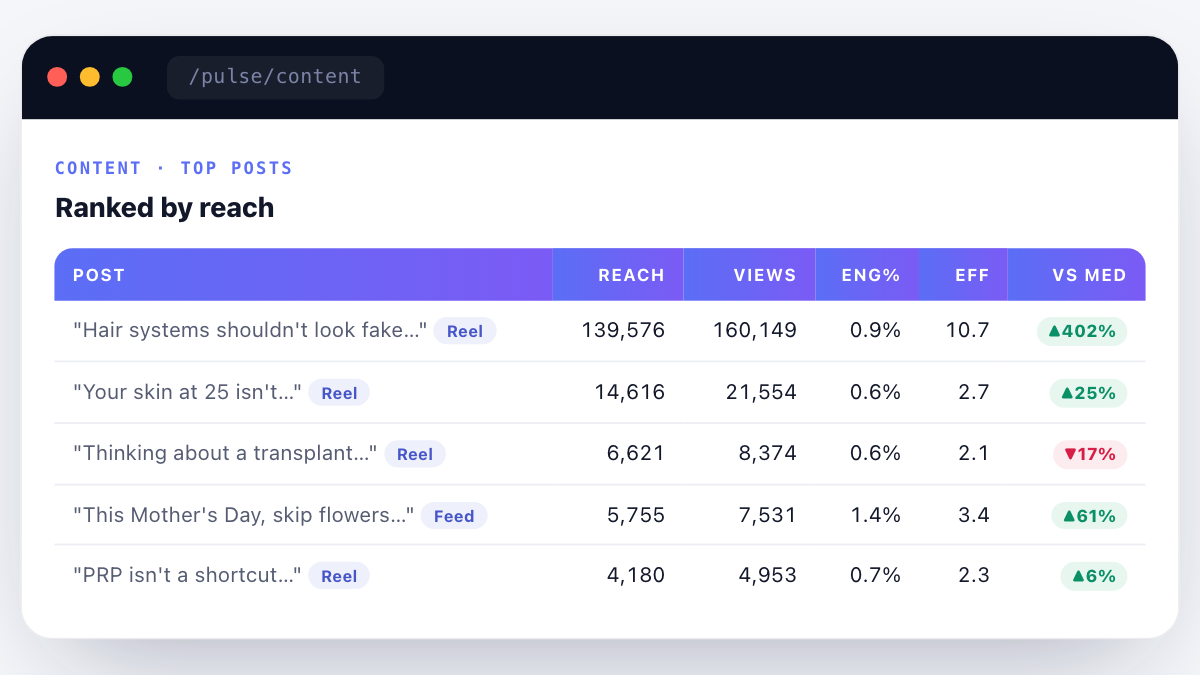
Views, likes and story mentions are not ROI in healthcare. The three metrics your CFO cares about are qualified enquiries, cost per qualified enquiry (CPQL) and lifetime patient value against the acquisition cost. Everything else is a diagnostic metric to explain why those three moved.
The instrumentation stack we set up on every ICG healthcare influencer engagement looks like this:
- Unique WhatsApp numbers per creator — a click-to-WhatsApp link with a tracked utm_source ties every enquiry back to the exact creator, not just "Instagram".
- Landing pages with source-aware forms — the landing page passes utm parameters into the CRM record, so a lead's first-touch creator is preserved.
- CRM with source and stage fields locked — this is where ICG's AtomCRM, priced at Rs 14,999 a month for healthcare workflows, plugs in. Every enquiry moves through New → Contacted → Consulted → Converted, with attribution intact.
- Weekly CPQL report — spend divided by qualified enquiries, per creator, per format (Reel, Story, Static, Collab post). Cut the bottom quartile every four weeks.
For hospital chains, layer HealthPro 360 (also Rs 14,999 a month) on top — it stitches your OP, IP and diagnostics revenue back to the marketing source so you know which creators drove not just enquiries but converted revenue three months later. Attribution without this is guesswork.
What are the most common mistakes Indian hospitals make on Instagram?
The pattern is remarkably consistent across the 300-plus healthcare clients ICG has worked with. Five mistakes account for most wasted influencer budget.
1. Treating the campaign as a "post drop" instead of a 90-day system
One creator, one post, no follow-up is theatre, not marketing. The winning cadence is 3-5 creators over 90 days, each producing 4-6 pieces, with paid amplification behind the top two performers.
2. Ignoring the doctor-brand distinction
A doctor's personal handle cannot be treated like the hospital's handle. NMC restrictions apply differently. Mixing them is how notices arrive.
3. Sending traffic to the website homepage
An Instagram-native audience wants a fast WhatsApp conversation or a service-specific landing page. Homepage dumps kill conversion by 60-80 percent in our data.
4. No competitor listening
If a nearby cosmetic surgery brand is running 15 Reel ads a week and you are running two, you will lose share of voice quietly. ICG's Prism Spy pulls the exact Meta Ads library of any competitor and lets you counter-programme in days.
5. Cutting the campaign at week 6
Instagram healthcare campaigns compound. The Reels published in week 2 keep driving enquiries in week 10, but only if the account keeps posting. Stopping at week 6 kills the flywheel just as it turns.
How does ICG run Instagram influencer marketing for healthcare clients?
ICG's approach differs from a generic influencer agency in four ways, and every one of them is built for Indian healthcare specifically rather than retrofitted from a fashion or food playbook.
First, we start with a compliance layer, not a creative one. Every campaign brief is checked against NMC, DPDP and ASCI rules before creator outreach begins. That is not a legal cost — it is an insurance policy against the notice that ends a marketing director's career.
Second, we run creator discovery through Prism Pulse and Prism Spy in tandem. Prism Pulse tells us how any Indian healthcare creator actually performs on the metrics that matter (audience geography, retention, comment quality). Prism Spy tells us what your top three competitors are already spending on Meta and Instagram, so your brief is a counter-move, not a shot in the dark.
Third, we integrate the Instagram programme with the rest of your discovery surface — Google Business Profile visibility through our Angryturtle GBP operating system, YouTube long-form and Shorts through YODA, and Meta paid amplification through Meta Catalyst IQ. Instagram influencer content works twice as hard when it also anchors your GBP posts, YouTube Shorts and retargeting audiences.
Fourth, we install measurement infrastructure before the first creator post goes live. AtomCRM for lead attribution, HealthPro 360 for revenue stitching, and weekly CPQL dashboards in your inbox every Monday. If we cannot measure it, we do not spend on it.
The 70-30 model: how Instagram influencer work fits ICG's pricing

Instagram influencer campaigns sit inside ICG's 70-30 fixed-variable model, which is how we structure most retainers for Indian healthcare brands. Seventy percent of your monthly fee is a fixed retainer that covers strategy, orchestration, compliance review and measurement infrastructure. Thirty percent is variable creator fees and paid amplification that scales up or down with campaign intensity.
The three anchor tiers most healthcare clients start at:
- Foundation — Rs 49,999 per month. Suitable for single-clinic and small multi-branch brands. Two nano-tier creators per month, one Reel each, basic Prism Pulse reporting, WhatsApp attribution.
- Growth — Rs 74,999 per month. For multi-branch clinics and regional brands. Four to six creators quarterly, integrated GBP and YouTube amplification, Meta Catalyst IQ paid layer, weekly CPQL dashboards.
- Scale — Rs 99,999 per month. For hospital chains and pharma brands. Full Prism Spy competitor intel, HealthPro 360 revenue stitching, dedicated creator relationship management, integrated influencer plus paid plus organic playbook across Instagram, YouTube and GBP.
Above Scale, we build custom retainers for hospital groups running 5-plus city clusters or pharma companies launching multi-molecule OTC portfolios. Those typically start at Rs 3-5 lakh a month on retainer, plus variable amplification.
FAQ

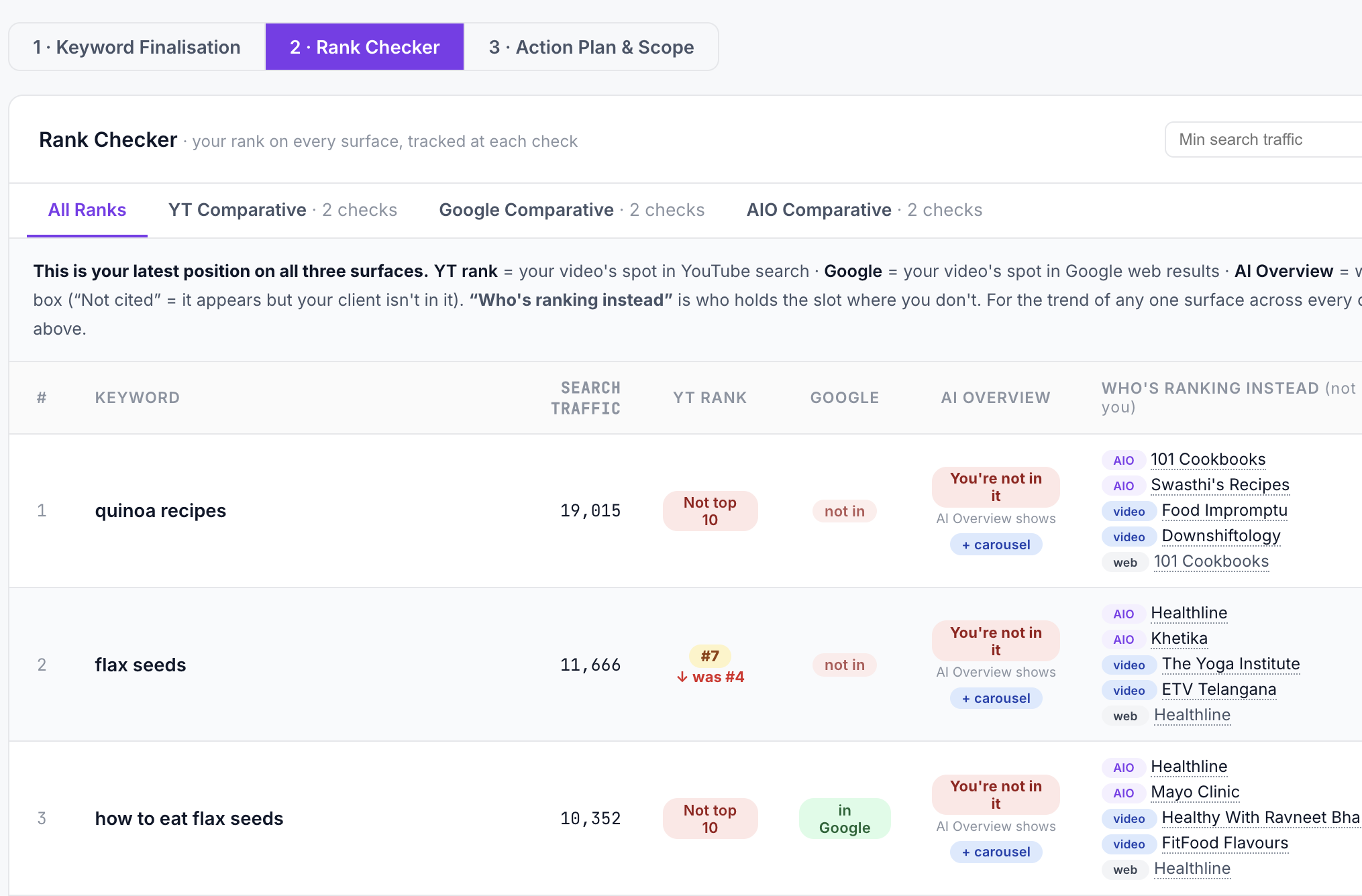 AI Overview citation status per tracked healthcare query with green/yellow/red state" width="1200" height="675" loading="lazy" decoding="async" style="width:100%;height:auto;display:block;">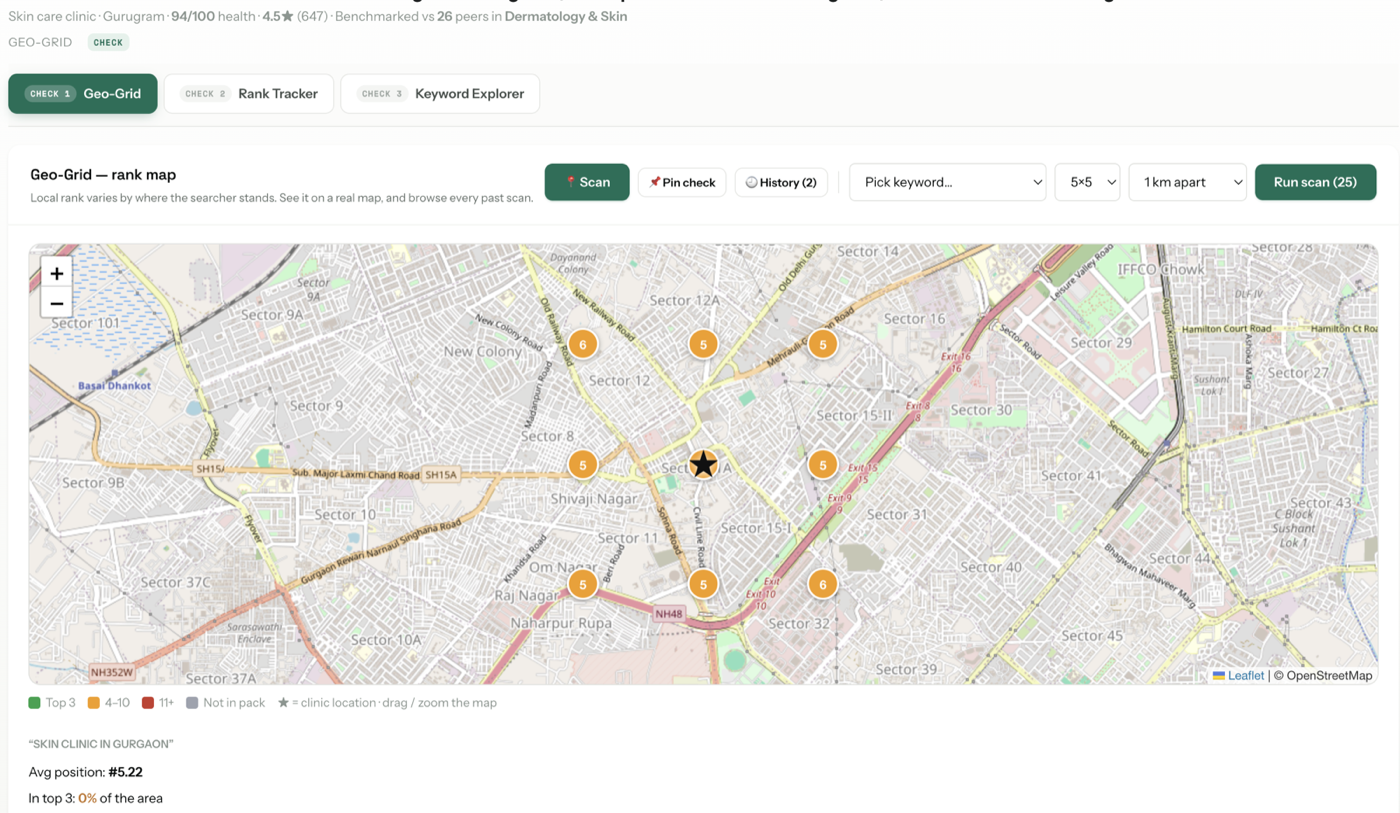
Can Indian doctors legally use Instagram influencers to promote their clinic?
A doctor's personal handle is restricted by NMC advertising rules — no testimonials, no before-and-after work, no soliciting patients. A clinic or hospital brand handle owned by a company or LLP has more room, but must still follow ASCI disclosure rules and DPDP consent for any lead capture.
How much should a small clinic in a tier-2 Indian city budget for Instagram influencer marketing?
A realistic starting budget is Rs 60,000 to Rs 1,00,000 per month for a 90-day pilot, split roughly 40 percent creator fees, 30 percent paid amplification and 30 percent orchestration and measurement. Anything below Rs 40,000 a month rarely produces reliable results.
Which Instagram formats work best for healthcare in India in 2026?
Reels are the clear winner, followed by carousel-format educational posts and Instagram Story polls or Q&As. Static single-image posts underperform by roughly 55 percent in reach. Live sessions with a doctor work well for chronic-condition awareness like diabetes, PCOS or thyroid.
Do I need to disclose paid influencer partnerships in healthcare?
Yes, mandatorily. ASCI's Influencer Guidelines require every paid or barter healthcare post to carry a visible #Ad, #Partnership or #Sponsored tag. Healthcare is a high-scrutiny category, and undisclosed posts have led to complaints being publicly listed against Indian brands.
How do I measure whether an Instagram influencer campaign actually brought patients to my hospital?
Use unique click-to-WhatsApp links per creator, source-tagged landing pages, and a CRM that preserves first-touch attribution through the enquiry-to-consultation-to-conversion journey. ICG's AtomCRM and HealthPro 360 stitch this from first click through to eventual OP or IP revenue.
Should a hospital pick one macro influencer or several micro influencers?
For lead generation and conversion, several micro or nano creators almost always win in Indian healthcare. Reserve macro creators for pure brand awareness moments — a new hospital launch, a screening-month campaign, or a national CSR push. Blend both if the budget is above Rs 5 lakh a month.
How long does it take to see results from an Instagram influencer campaign in healthcare?
The first qualified enquiries usually arrive in week 2-3 of a well-structured campaign. Meaningful cost per qualified enquiry stabilises around week 6-8, and compounding organic reach from evergreen Reels typically peaks between month 3 and month 6.
Can pharma brands run Instagram influencer campaigns in India?
OTC and wellness portfolios have broad room. Prescription molecules cannot be promoted to consumers under Indian drug advertising rules. Most pharma Instagram work centres on disease awareness, adherence education and doctor-facing thought leadership rather than direct product promotion.
Book a free Meta ads account audit.
Raman Soni's team pulls your account, checks CAPI/EMQ, reviews creative for NMC compliance, and shows where CPQL is leaking. 45 minutes, actionable output.
Questions readers ask
about this topic.
The three platforms
behind every ICG engagement.
Beacon
CAPI middleware that fixes Event Match Quality, translates CRM statuses to Meta-standard events, dedups across channels.
Agency OS
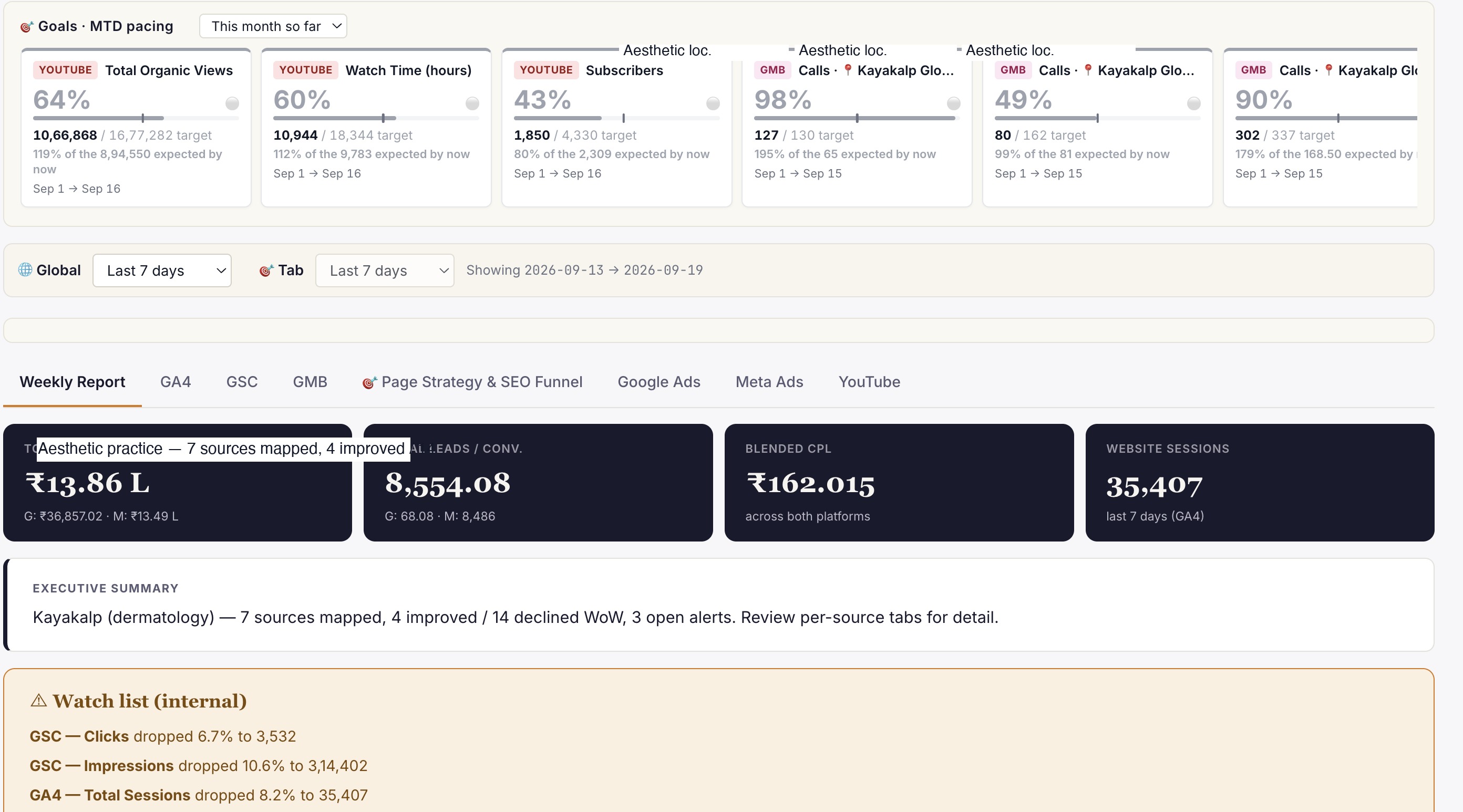
Live client dashboard. GSC, GA4, Google Ads, Meta Ads, IVR calls in one view. Login anytime, not monthly.
Phoenix
Clinic revenue intelligence over your PMS. Daily action queue: Prevent Loss, Maintain & Engage, Grow Revenue. Multi-centre rollout.
Or book a free 30-min audit to see all three in action on your account.
Healthcare brands
that already run on ICG.
A representative slice of the 150+ healthcare brands ICG has delivered for across India. Most engagements remain under NDA.


What ICG clients say · on video.
"Scale up of organic channels and business consulting. ICG has absolute domain authority in their field."
"Working with ICG transformed how we acquire IVF patients in Gurgaon. They understand the fertility journey from inquiry to consult..."
"What Ichelon accomplished — they got all my ideas and worked over 3-4 months to create an amazing, super-customised website."
Need help operationalising this?
Every ICG service is healthcare-only, NMC + DPDP-aware, and built around the patient-research patterns that drive Indian healthcare growth in 2026.
Every practice welcome — packages from ₹20,000/mo.
Goals-Driven engagements · Performance-Linked Payout Models available


More from
ICG.
Five trends shaping Indian healthcare marketing through 2027: AI-first patient research, Conversions API adoption, ABDM discovery, the AEO w...
Healthcare AIO is the discipline of getting your clinic or hospital cited inside Google AI Overviews, ChatGPT and Perplexity answers — not j...
Conversational-search advertising places brand messages inside AI chat answers — ChatGPT, Perplexity, Copilot — rather than beside a results...
Stop guessing.
Book a Diagnostic.
30 minutes. Free. With the AI-powered healthcare-only marketing agency 150+ brands already run on. No slides, no pitch, no hard close.


