


Hospital AI Overview Traffic Loss in India: 2026 Fix | ICG
Indian hospitals lose 30-45% of branded search traffic to Google AI Overviews. See the technical fix and content system ICG uses to reclaim visibility fast.
No pitch. Written root-cause diagnosis. AI-powered, healthcare only.
Direct answer
Indian hospitals lose 30-45% of branded search traffic to Google AI Overviews. See the technical fix and content system ICG uses to reclaim visibility fast.
TL;DR
Indian hospitals are losing 30–45% of branded search traffic to Google AI Overviews — searches where a patient types the hospital's name and receives an AI-generated summary instead of clicking the hospital's website. For multi-location hospital chains spending ₹10–40 lakh per month on marketing, this represents a significant patient acquisition leak that no amount of additional ad spend can fix.
I'm Hanuman Sihag, Head of Innovation Chamber at ICG. ICG manages marketing for Medanta-associated specialists, Tulasi Healthcare, EyeQ, Sitaram Bhartia, Metro Hospitals, and 30+ hospital and clinic groups across India. The pattern documented here appeared consistently across our portfolio from Q3 2025 onwards.
What exactly is the branded search AI Overview problem?
When a patient searches "Tulasi Healthcare Gurgaon" or "Metro Hospitals Delhi oncology," Google increasingly displays an AI Overview panel at the top of the results. This panel provides a synthesised summary of the hospital — extracted from Google's knowledge graph, the hospital's own website, and third-party sources like doctor-listing platforms, local-business directories, and news sites.
If the AI Overview answers the patient's question adequately, the patient may not click through to the hospital website at all. They call the number shown in the AI panel — which may be an aggregator's redirect number — or they read the summary and decide without visiting the site.
How much traffic is actually being lost?
ICG's analysis across 8 hospital and multi-specialty clinic clients from Q2 2025 to Q1 2026 showed: average branded organic CTR dropped from 42% to 28% over 12 months (a 33% decline). Impression volume held steady or increased (meaning rankings were maintained). For a hospital receiving 10,000 branded impressions per month, this represents approximately 1,400 fewer website visits per month from its own brand name.
Why are hospitals more vulnerable than clinics?
Hospital brands are more likely to appear in AI Overviews because Google's knowledge graph has richer data for established hospital brands. Ironically, higher brand authority = higher AI Overview trigger rate = higher traffic loss. The better known your hospital brand, the more Google feels confident synthesising an AI answer about it.
What does a well-structured hospital AI Overview look like?
A well-structured AI Overview — one that still drives traffic to your website — has these characteristics:
- Sources your website directly. The AI panel cites your official website as a primary source, with a visible link.
- Links to specific department pages. Not just the homepage — specific pages for oncology, cardiology, orthopaedics, etc.
- Shows accurate contact information. Phone, address, and booking link pulled from your website's LocalBusiness schema.
- Displays review aggregates. AggregateRating schema ensures your Google Reviews appear with your website as the source.
- Highlights specialists by name. Person schema on doctor profiles means individual specialist names appear in AI answers.
What is the technical fix for hospital AI Overview cannibalisation?
Fix 1: Organization and Hospital schema — comprehensive and current. The schema must include @type: Hospital (not just Organization), all department names as medicalSpecialty properties, all doctors as Person schema, hasMap, openingHoursSpecification, paymentAccepted, and a ReserveAction in potentialAction.
Fix 2: Department-level landing pages with specialty schema. Each department needs a dedicated URL with AIO answer paragraph, named lead physician, FAQ schema with 5+ questions, and SpeakableSpecification.
Fix 3: Physician profile pages with Person schema. Every named specialist should have a /doctors/{name} page with full Person + Physician schema, credentials, and FAQPage.
Fix 4: Google Business Profile optimisation. All departments listed, photos updated within last 90 days, Q&A populated, primary category "Hospital", all specialist names in "Meet the team" section.
Fix 5: FAQ schema on every page. ICG implements these via a database-driven FAQ system with 5–8 questions per page, admin-editable.
Case example: What happened when ICG applied this to a multi-specialty chain?
ICG applied the full hospital AIO architecture to a multi-specialty hospital group across 4 locations in Delhi NCR in Q3 2025. Within 90 days: branded search CTR recovered from 27% to 38%, department-level queries began appearing in the AI Overview with the hospital's website cited as primary source, doctor profile pages began ranking in AI answers, and overall organic visits increased 23% while paid spend held constant.
What is the content strategy for hospital AIO visibility?
Three content types drive hospital AI citations:
Type 1: Procedure explainer pages. "What is a coronary bypass?" written in AIO format — direct answer first, named physician author, FAQ schema.
Type 2: Physician thought leadership. Short, data-backed posts written in the physician's name. "Why early cardiac screening matters for Indian men under 50 — Dr. [Name], Cardiologist, [Hospital]."
Type 3: Real patient outcome data. "Our orthopaedic department performed 340 knee replacements in 2025 with an average post-operative recovery of 4.2 days."
Related ICG Insights
Keep reading on this topic
Apply this to your brand
ICG services covering this work
Specialty practice areas
Book a free 30-min diagnostic →Five mistakes hospitals make trying to reclaim AI Overview visibility
Most hospital marketing teams react to AI Overview cannibalisation by publishing more blog content or adding schema in isolation. Neither reclaims the branded query. After auditing 40+ Indian hospital domains through Prism Spy and our AIO tracking stack, the same five failure patterns keep repeating.
- Rewriting the homepage instead of the entity graph. AI Overviews stitch answers from structured entities (Organization, Physician, MedicalProcedure, Hospital). A homepage rewrite without a cleaned-up entity graph across About, Specialties, and Doctor pages leaves Google guessing.
- Publishing patient-education blogs when the query is buyer-intent. If a hospital brand query surfaces cost, review, or booking language in the AIO, more symptom explainers will not move the needle. The corpus needs decision-stage content, not awareness fluff.
- Ignoring NABH and accreditation surfacing. Google's medical AIO layer weights accreditation heavily. Hospitals that hide NABH, JCI, or NABL badges below the fold get outranked by smaller brands that surface them in first-viewport schema. See our NABH SEO framework for the exact markup.
- Running Google Ads to mask the loss. Paid brand defence is not a fix; it is a tax. Every month spent bidding on your own brand while AIO cannibalises organic is a month the entity graph decays further. Fix the source; then reduce brand spend.
- Treating AIO recovery as a one-time project. AI Overviews refresh weekly. Hospitals that ran a single sprint and stopped saw visibility slip back within 60 days. ICG's Client Elevation Programme runs AIO monitoring + entity refresh on a monthly cadence, which is the minimum viable rhythm.
The pattern beneath all five: hospitals treat AIO as an SEO tactic when it is actually a brand-architecture problem. The fix requires marketing, IT, medical affairs, and clinical leadership to sign off on the same entity definitions — which is why the Meta Catalyst IQ + AIO stack we run inside HealthApex OS routes findings to each stakeholder in the language they speak, not raw crawl reports.
Book a free 30-minute Brand & Growth Diagnostic.
It's a working session, not a sales pitch — you leave with a written root-cause analysis you can act on, whether or not you engage ICG.
The three platforms
behind every ICG engagement.
Beacon
CAPI middleware that fixes Event Match Quality, translates CRM statuses to Meta-standard events, dedups across channels.
Agency OS
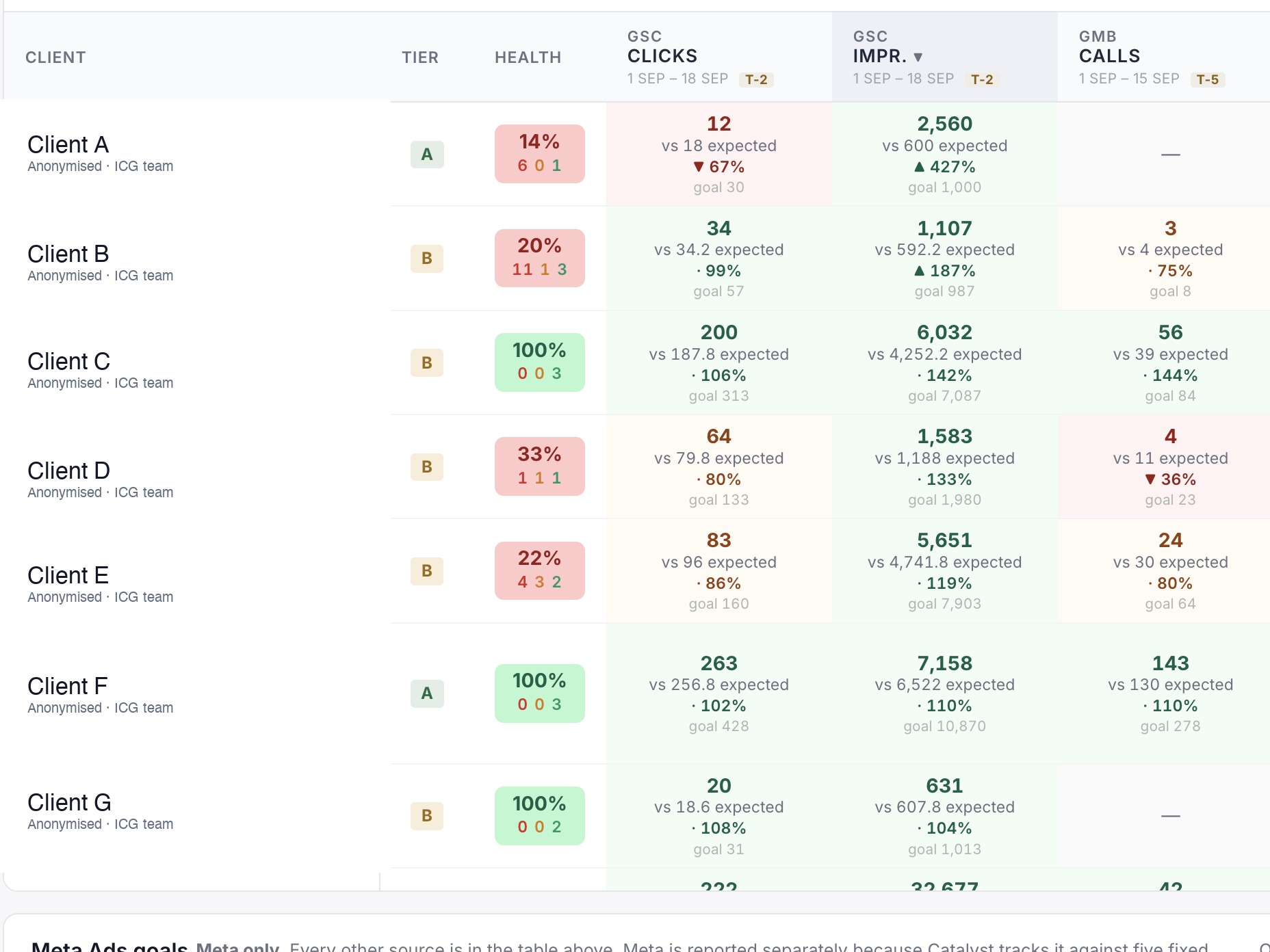
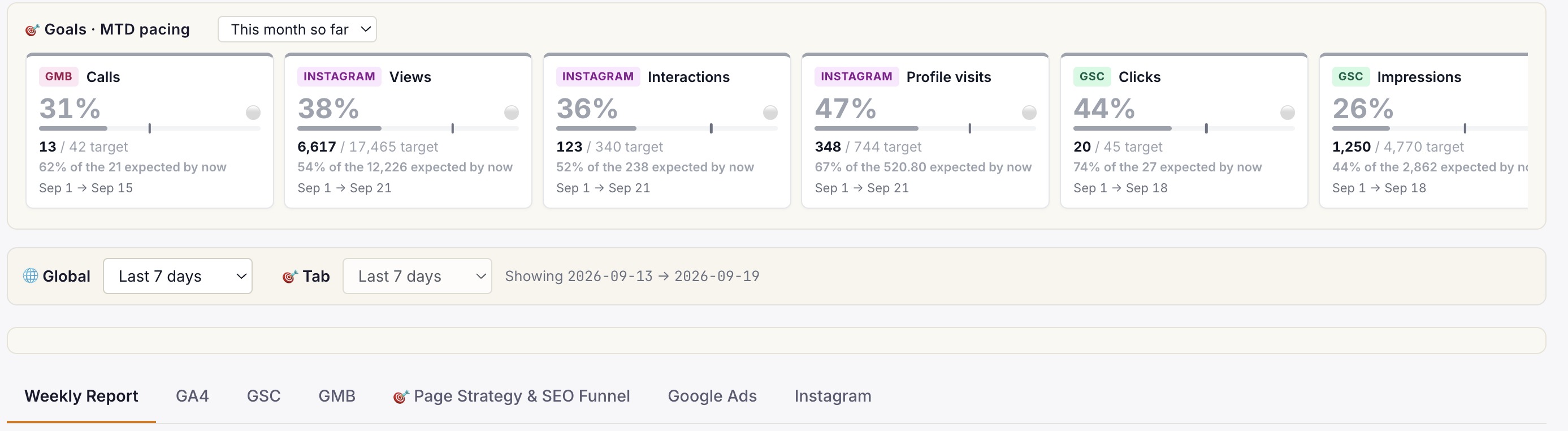
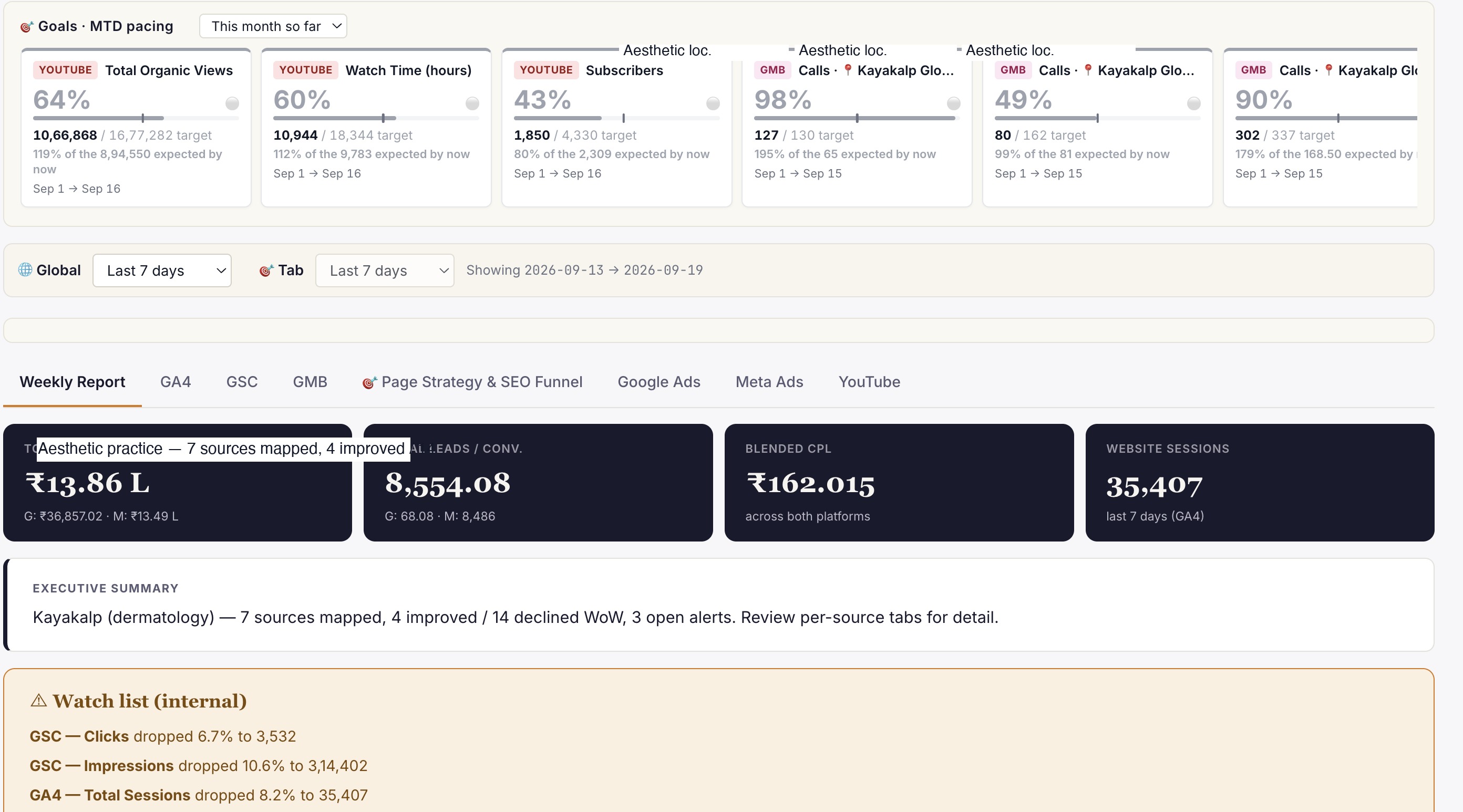
Live client dashboard. GSC, GA4, Google Ads, Meta Ads, IVR calls in one view. Login anytime, not monthly.
Phoenix
Clinic revenue intelligence over your PMS. Daily action queue: Prevent Loss, Maintain & Engage, Grow Revenue. Multi-centre rollout.
Or book a free 30-min audit to see all three in action on your account.
Healthcare brands
that already run on ICG.
A representative slice of the 150+ healthcare brands ICG has delivered for across India. Most engagements remain under NDA.


What ICG clients say · on video.
"Mental health marketing requires a different sensitivity. ICG built compliance-aware campaigns that respect both patients and our..."
"Bariatric surgery patients need a long consideration cycle. ICG built a content + paid system that respects that timeline."
"Working with ICG felt like working with an in-house growth team that happens to specialise in healthcare."
The intelligence stack behind this playbook.
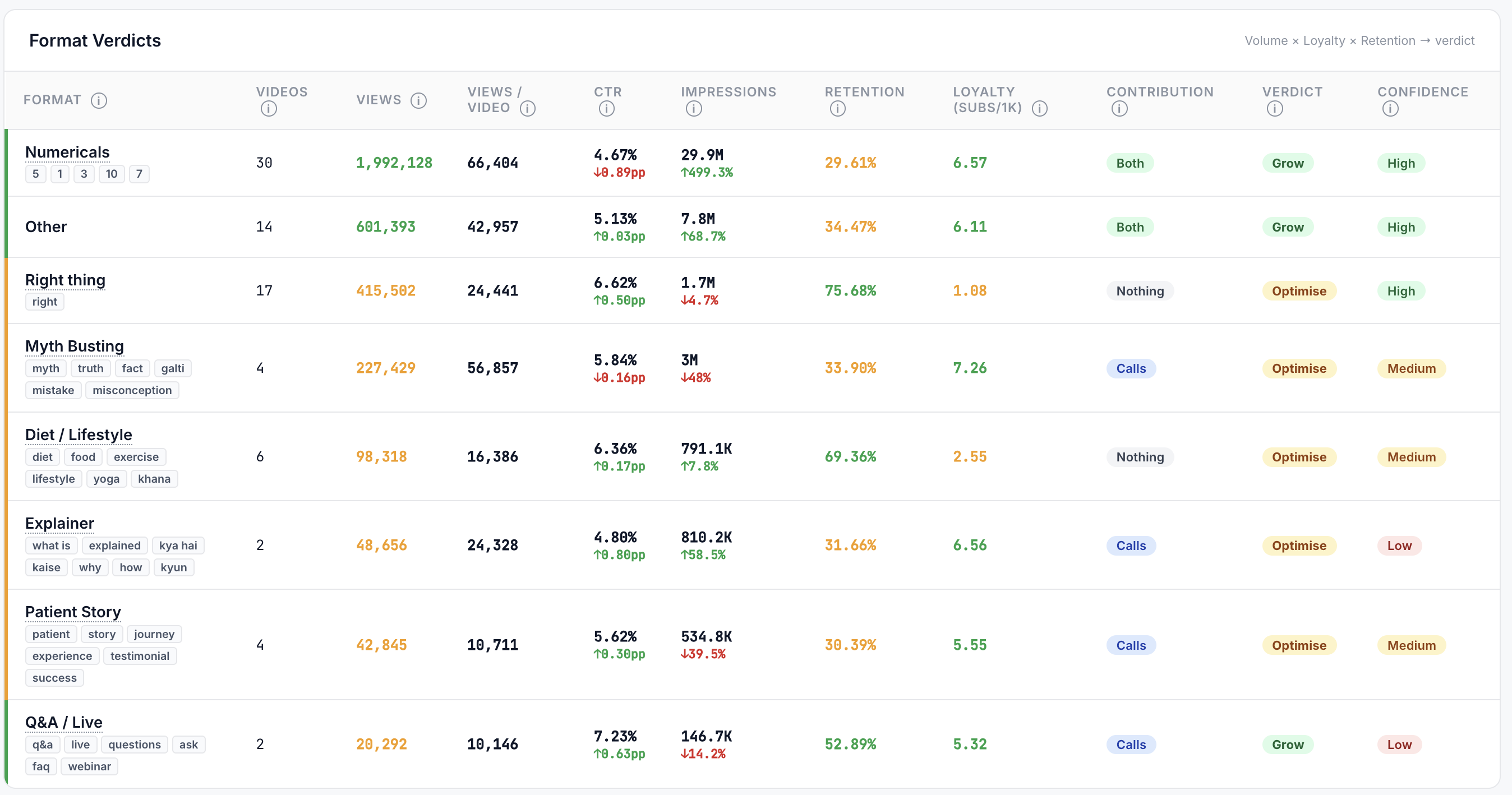
Every ICG engagement runs on the Search Intelligence Trifecta — Angryturtle for GMB, SIE for search and AI Overview, YODA for YouTube. Live product screens below.
Need help operationalising this?
Every ICG service is healthcare-only, NMC + DPDP-aware, and built around the patient-research patterns that drive Indian healthcare growth in 2026.
Every practice welcome — packages from ₹20,000/mo.
Goals-Driven engagements · Performance-Linked Payout Models available
More from
ICG.
Five trends shaping Indian healthcare marketing through 2027: AI-first patient research, Conversions API adoption, ABDM discovery, the AEO w...
Healthcare AIO is the discipline of getting your clinic or hospital cited inside Google AI Overviews, ChatGPT and Perplexity answers — not j...
Conversational-search advertising places brand messages inside AI chat answers — ChatGPT, Perplexity, Copilot — rather than beside a results...
Stop guessing.
Book a Diagnostic.
30 minutes. Free. With the AI-powered healthcare-only marketing agency 150+ brands already run on. No slides, no pitch, no hard close.


