


Healthcare CRM Cost Comparison India 2026 (10 Platforms, TCO)
Compare real per-user, per-location, and 12-month TCO across 10 healthcare CRMs used by Indian clinics and hospital groups. WhatsApp us for a shortlist.
No pitch. Written root-cause diagnosis. AI-powered, healthcare only.
Direct answer
Compare real per-user, per-location, and 12-month TCO across 10 healthcare CRMs used by Indian clinics and hospital groups. WhatsApp us for a shortlist.
TL;DR
Healthcare CRM software cost comparison in India is dominated by three questions buyers rarely ask upfront and then pay for later: what does the license actually cost per user across the tiers we will realistically end up on, what does implementation add beyond the license, and what does the total cost of ownership look like across a full 12 months once integrations, training, admin time, and change requests are accounted for. This is an honest 10-platform comparison across the CRMs Indian healthcare buyers most commonly evaluate. All pricing marked approximate — verify with vendor because CRM vendors negotiate heavily and public pricing rarely reflects the real deal. ICG runs marketing and CRM stack advisory as part of the healthcare local SEO service engagement.
What healthcare CRM cost actually includes
Buyers who ask "what does this CRM cost" almost always mean the per-user license line. In practice the license is 30-60 percent of the real 12-month total cost of ownership. The other 40-70 percent lives in five buckets. First, implementation — setup, data migration from existing systems, configuration of pipelines and automation, custom fields and workflows. Second, integrations — connecting the CRM to the practice management system, the hospital information system, WhatsApp Business API, Meta and Google Ads for lead capture, the website, and often a diagnostic partner or pharmacy API. Third, training — for admin staff, marketing team, and clinical staff who will touch the CRM. Fourth, ongoing customisation — the change requests that appear in months 3-9 as usage patterns become clear. Fifth, admin overhead — the internal or fractional admin time to keep the system healthy.
The 10 healthcare CRM options and their typical pricing
1. HealthPro 360
Category-specific healthcare CRM offering practice management plus patient relationship features. Pricing is not publicly listed and varies by deployment; comparable healthcare-vertical CRMs in the Indian market price at approximately ₹1,500/- to ₹4,000/- per user per month (approximate — verify with vendor). Implementation adds one-time cost typically equal to 1-3 months of annual license value. Best fit for single-location clinics wanting an integrated practice-and-relationship stack.
2. Directory-linked practice management platforms
Practice management and patient communication software offered by doctor-listing and booking platforms. Tightly integrated with the parent platform's patient discovery marketplace. Typical category pricing runs ₹3,000/- to ₹8,000/- per doctor per month depending on plan and features (approximate — verify with vendor). Implementation is largely self-serve, keeping setup cost low. Best fit for clinics that already rely heavily on a doctor-directory platform and want tighter appointment-plus-CRM flow.
3. Enterprise healthcare CRM suites
Enterprise-grade healthcare CRMs built on global enterprise CRM platforms. The top end of the category and priced accordingly. Typical category list pricing starts at approximately US$300 to US$500 per user per month, which translates to roughly ₹25,000/- to ₹42,000/- per user per month (approximate — verify with vendor; enterprise pricing negotiated). Implementation is a major project: certified partner engagements for Indian hospital groups run ₹15L/- to ₹1Cr/- depending on scope. Best fit for large multi-specialty hospital chains with genuine enterprise governance requirements.
4. Indian sales-and-marketing automation CRMs
Indian sales-and-marketing automation platforms with healthcare verticals. Widely deployed across Indian hospital groups and diagnostic chains. Typical category pricing runs ₹2,500/- to ₹6,000/- per user per month across sales and marketing tiers (approximate — verify with vendor; enterprise plans negotiated). Implementation cost typically ₹2L/- to ₹15L/- depending on integration complexity. Best fit for mid-to-large healthcare organisations wanting sales pipeline plus marketing automation in one platform, priced far below global enterprise suites.
5. Mid-market SaaS sales CRMs
Globally sold SaaS sales CRMs with a broad user base and healthcare deployments across the Indian mid-market. Typical category pricing runs ₹1,000/- to ₹4,000/- per user per month across growth, pro, and enterprise tiers (approximate — verify with vendor). Implementation moderate; setup partner cost typically ₹1L/- to ₹8L/-. Best fit for mid-market healthcare organisations wanting a modern user experience at moderate cost.
6. Business-suite CRMs
CRMs sold within a broad business-software suite. Popular across small and mid-market Indian healthcare. Typical category pricing runs ₹800/- to ₹4,000/- per user per month across standard to top-end tiers (approximate — verify with vendor). Suite bundling brings effective per-user cost lower still if the organisation uses multiple apps from the same suite. Implementation cost ₹50,000/- to ₹5L/-. Best fit for cost-sensitive small and mid-market clinics.
7. Bitrix24
CRM plus collaboration platform with an unusually generous free tier and paid plans that scale by user count. Paid tiers typically ₹1,500/- to ₹5,000/- per user per month equivalent depending on plan and user count (approximate — verify with Bitrix24; pricing is per-account, not strictly per-user). Implementation self-serve or partner-assisted; partner-assisted ₹1L/- to ₹5L/-. Best fit for cost-sensitive multi-location clinics wanting an integrated CRM plus telephony plus internal collaboration stack.
8. Inbound marketing CRM platforms
US-built CRM plus marketing plus service platforms. No formal healthcare tier but healthcare organisations use the standard modules. Typical effective category pricing runs ₹4,000/- to ₹15,000/- per user per month when combining marketing, sales, and service modules at professional or enterprise tier (approximate — verify with vendor). Implementation cost ₹2L/- to ₹15L/-. Best fit for healthcare organisations already committed to inbound marketing and willing to pay a premium for user experience.
9. Odoo (Healthcare modules)
Open-source ERP suite with healthcare and CRM modules. Pricing typically ₹800/- to ₹2,500/- per user per month for the Enterprise edition; Community edition is self-hosted and license-free but requires internal DevOps (approximate — verify with Odoo). Implementation is meaningful because Odoo is highly customisable; partner-led implementation ₹3L/- to ₹20L/-. Best fit for hospital groups with in-house tech capability wanting one integrated ERP plus CRM plus practice management stack.
10. EngageBay
All-in-one marketing, sales, and service platform positioned as a lower-priced alternative to inbound marketing CRM platforms. Pricing typically ₹1,500/- to ₹4,000/- per user per month across paid tiers (approximate — verify with EngageBay). Implementation typically self-serve or low-cost. Best fit for small clinics and single-location practices wanting an integrated stack at low cost with modest customisation needs.
Implementation, integration, and training costs beyond the license
Implementation for a mid-market Indian healthcare CRM deployment typically costs 1-3x the first-year license value. Data migration from an existing practice management system, appointment system, or spreadsheet-based lead tracking is the single largest cost driver — dirty legacy data doubles the effort. Integration with WhatsApp Business API is a near-universal requirement for Indian healthcare CRM deployments and typically adds ₹1L/- to ₹5L/- depending on whether the integration is native to the CRM or requires a middleware layer. Integration with Meta Lead Ads and Google Ads lead extensions typically adds ₹50,000/- to ₹2L/-. Training for a 10-person team typically costs ₹50,000/- to ₹3L/- depending on whether delivered by the vendor, a partner, or an internal power-user model. Ongoing customisation in months 3-9 typically consumes ₹1L/- to ₹8L/- as usage patterns crystallise.
12-month total cost of ownership scenarios
Scenario A: Solo clinic (1 user, 1 location, 200-500 patient enquiries per month). Realistic 12-month TCO ranges roughly ₹80,000/- to ₹3,50,000/- depending on platform choice. An entry-tier business-suite CRM, EngageBay, Bitrix24, or a mid-market SaaS CRM at entry tier fit this budget. A directory-linked practice management platform fits if the clinic already relies heavily on a doctor directory. Enterprise healthcare CRM suites are over-specified. Inbound marketing CRM platforms are over-budget for most solo clinics.
Scenario B: Multi-clinic (5 users, 3 locations, 1,500-4,000 patient enquiries per month). Realistic 12-month TCO ranges roughly ₹4L/- to ₹18L/-. An Indian sales-and-marketing automation CRM, a mid-market SaaS CRM at pro tier, a business-suite CRM at enterprise tier, or an inbound marketing CRM professional bundle fit this range. Implementation and integration typically consume ₹3L/- to ₹8L/- of that total.
Scenario C: Hospital chain (25 users, 10 locations, 10,000+ patient enquiries per month). Realistic 12-month TCO ranges roughly ₹20L/- to ₹1.2Cr/- depending heavily on platform choice. Enterprise healthcare CRM suites sit at the top of the range; enterprise tiers of Indian sales-and-marketing automation CRMs and inbound marketing CRM platforms, and Odoo Enterprise-with-partner, sit in the middle; business-suite CRMs at enterprise tier sit at the bottom. Implementation and integration for hospital chain deployments consume ₹10L/- to ₹75L/- of that total.
How ICG's managed service reduces total cost of ownership
Standalone CRM software plus a separate marketing agency plus a separate WhatsApp integration partner plus a separate content platform stacks four vendor bills, four onboarding cycles, and four coordination layers on the clinic's marketing operation. ICG's managed service from ₹25,000/- per month consolidates the marketing execution, WhatsApp lifecycle, GBP intelligence via Angryturtle, and content operations into a single vendor with a single point of contact. The CRM software itself is still sourced from the platform of the clinic's choice, but the marketing execution layer sitting on top is unified, reducing coordination overhead and the ongoing customisation drift that inflates standalone CRM TCO through months 3-12.
Migration cost when switching from one healthcare CRM to another
Switching CRM mid-flight is one of the most expensive decisions a healthcare marketing team makes. Migration cost for a mid-market Indian healthcare organisation typically runs ₹2L/- to ₹15L/-, driven mostly by three factors. First, data model differences — the source CRM's custom fields, pipelines, and lifecycle stages rarely map cleanly to the destination CRM, and every mismatch is a manual reconciliation task. Second, integration reset — every downstream tool integrated with the old CRM (WhatsApp API, Meta Lead Ads, website forms, calling systems) has to be re-wired. Third, team retraining — everyone who touched the old CRM has to learn the new one, and productivity dips for 6-10 weeks post-migration are typical. The practical implication: buyers should pick a CRM they can commit to for 3+ years, because switching costs erase most of the savings from picking a cheaper alternative unless the switch is timed with a major organisational change.
What breaks when the CRM is under-scoped or over-scoped
Under-scoped CRMs (a solo clinic buying an enterprise healthcare CRM suite) waste money on capacity the clinic will never use and burden the small team with governance overhead that slows day-to-day work. Over-scoped CRMs (a 20-location hospital chain on an entry-tier business-suite CRM) hit customisation and integration walls in months 4-9 as the operational complexity outgrows the platform, forcing an expensive mid-flight migration. The right-sized decision uses realistic 24-month growth projections rather than current-state headcount — a CRM chosen for today's size will be under-sized inside a year for any organisation on a growth trajectory.
The tool ICG uses to run this at scale: Angryturtle
ICG runs local SEO and GBP intelligence for 150+ Indian healthcare brands using Angryturtle — our own AI-native GBP intelligence and management OS. The platform scores every profile 0-100 via a proprietary Rank OS model with five weighted dimensions (Relevance, Review Health, Freshness, Entity Authority, AIO Readiness), publishes edits, Posts, media, and review replies directly to Google, and includes Ask Maps AIO Readiness scoring for Google AI Overviews and ChatGPT visibility. Where a clinic is running an Indian marketing-automation CRM, a mid-market SaaS CRM, a business-suite CRM, or another CRM, Angryturtle sits alongside as the GBP and local-SEO layer rather than replacing the CRM.
 AI Overview readiness scoring on every healthcare query for the listing's specialty × city" loading="lazy" decoding="async" style="width:100%;height:auto;display:block;">
Available in two shapes: self-serve at ₹999/- per month for solo owners with 1-2 profiles, and ICG's managed service from ₹25,000/- per month where our healthcare specialists execute inside the same platform. Both are anchored in the Healthcare Local SEO Agency India pillar page which has full scope, methodology, and pricing.
Book a demo on WhatsApp → or start a free trial at angryturtle.ai →
Related reading

- Healthcare local SEO agency India — pillar service page
- Best AI content platforms for Indian healthcare marketing — the content-tool companion piece
- Best local citation sites for Indian healthcare — citation ecosystem overview
- Angryturtle Rank OS explained — the local-SEO scoring model
FAQ
What is the cheapest healthcare CRM that actually works for a small Indian clinic? An entry-tier business-suite CRM, EngageBay Basic paid tier, or Bitrix24 free-plus-add-ons for very small clinics. Realistic 12-month TCO under ₹1L/- for solo-clinic use if the clinic has some internal admin capacity to run setup.
Is an enterprise healthcare CRM suite worth the cost for an Indian hospital? For hospital groups with genuine enterprise governance, complex integrations, and existing commitments to the same enterprise platform elsewhere in the group, yes. For everyone else, an Indian marketing-automation CRM or an inbound marketing CRM platform at 30-60 percent of the cost delivers comparable outcomes.
How much should we budget for implementation over and above the license? 1-3x first-year license value is a fair planning number for a mid-market deployment. Data migration and integration complexity are the two variables that push toward the top of that range.
What is the single biggest hidden cost in healthcare CRM deployments? Ongoing customisation in months 3-9. Every clinic discovers workflows they did not anticipate at setup. Budget ₹1L/- to ₹8L/- for this phase or the CRM will silently underperform.
Do these prices include WhatsApp Business API costs? No. WhatsApp Business API costs are separate — Meta charges per conversation category and pricing changes periodically. Budget an additional ₹5,000/- to ₹50,000/- per month for a mid-sized clinic depending on message volume.
Which CRM has the strongest healthcare vertical support in India specifically? Indian sales-and-marketing automation CRMs have the deepest Indian healthcare deployment base among mid-market platforms. Directory-linked practice management platforms have the deepest integration with Indian patient discovery. Enterprise healthcare CRM suites have the deepest enterprise governance but at enterprise cost.
Can a clinic run without a CRM and use spreadsheets plus WhatsApp? Under approximately 200 patient enquiries per month, yes. Above that volume the coordination cost of running from spreadsheets exceeds the license cost of even the cheapest CRM.
How does ICG's ₹25,000/- managed service compare to buying software and hiring in-house? For clinics under approximately 5,000 patient enquiries per month, ICG's managed service typically costs less than half of buying comparable CRM licenses plus hiring a full-time marketing operations person. Above that scale, in-house teams start to make sense and ICG shifts to advisory rather than execution.
Hidden compliance costs that push healthcare CRM TCO 18-30% higher in 2026
Most CRM cost sheets stop at licence + implementation. For an Indian clinic chain or hospital group, that undercounts the real 12-month bill by roughly a fifth. The DPDP Act 2023, ABDM interop expectations, and hospital-grade audit requirements all add line items that vendors quietly leave off the quote. Here is what usually gets missed.
- Data residency: Storing PHI on India-region servers can cost 12-20% more than the vendor's default US or EU tier. Global enterprise, inbound-marketing and mid-market SaaS CRMs commonly charge extra for an India region.
- Encryption at rest and in transit: Vendor-managed KMS keys are often a paid add-on. Bring-your-own-key adds another SKU. Budget INR 40,000 to INR 1.2 lakh per year for anything above 20 seats.
- Audit logs and retention: Most SMB tiers keep audit trails for 30 to 90 days. NABH and DPDP breach-notification workflows need 12 to 36 months. That upgrade is usually a tier jump, not a small add-on.
- Consent management: DPDP-compliant granular consent capture is rarely native. You either pay for a specialist consent module or a middleware layer.
- Data Protection Officer time: If you touch more than 50,000 patient records a year, DPDP effectively expects a named DPO. Even a fractional DPO costs INR 3 to 8 lakh a year and shows up nowhere in the CRM quote.
The pattern is consistent: the cheapest sticker rarely wins the 12-month race. When we run a stack review inside the Client Elevation Programme, compliance overhead reorders the shortlist about half the time. It is also the single largest reason chains migrate off horizontal CRMs within 18 months.
If you want the shortlist scored against your specific compliance load, our Prism Spy teardown of the top 3 competitors in your city plus a Angryturtle GBP baseline pairs well with the CRM selection. That combination is what most hospital groups use before signing any 24-month contract.
Book a free CRM stack review.
Deep Das walks through your current setup, integration friction with ABDM/DPDP requirements, and whether a build vs buy vs AtomCRM fit works for your scale.
The three platforms
behind every ICG engagement.
Beacon
CAPI middleware that fixes Event Match Quality, translates CRM statuses to Meta-standard events, dedups across channels.
Agency OS
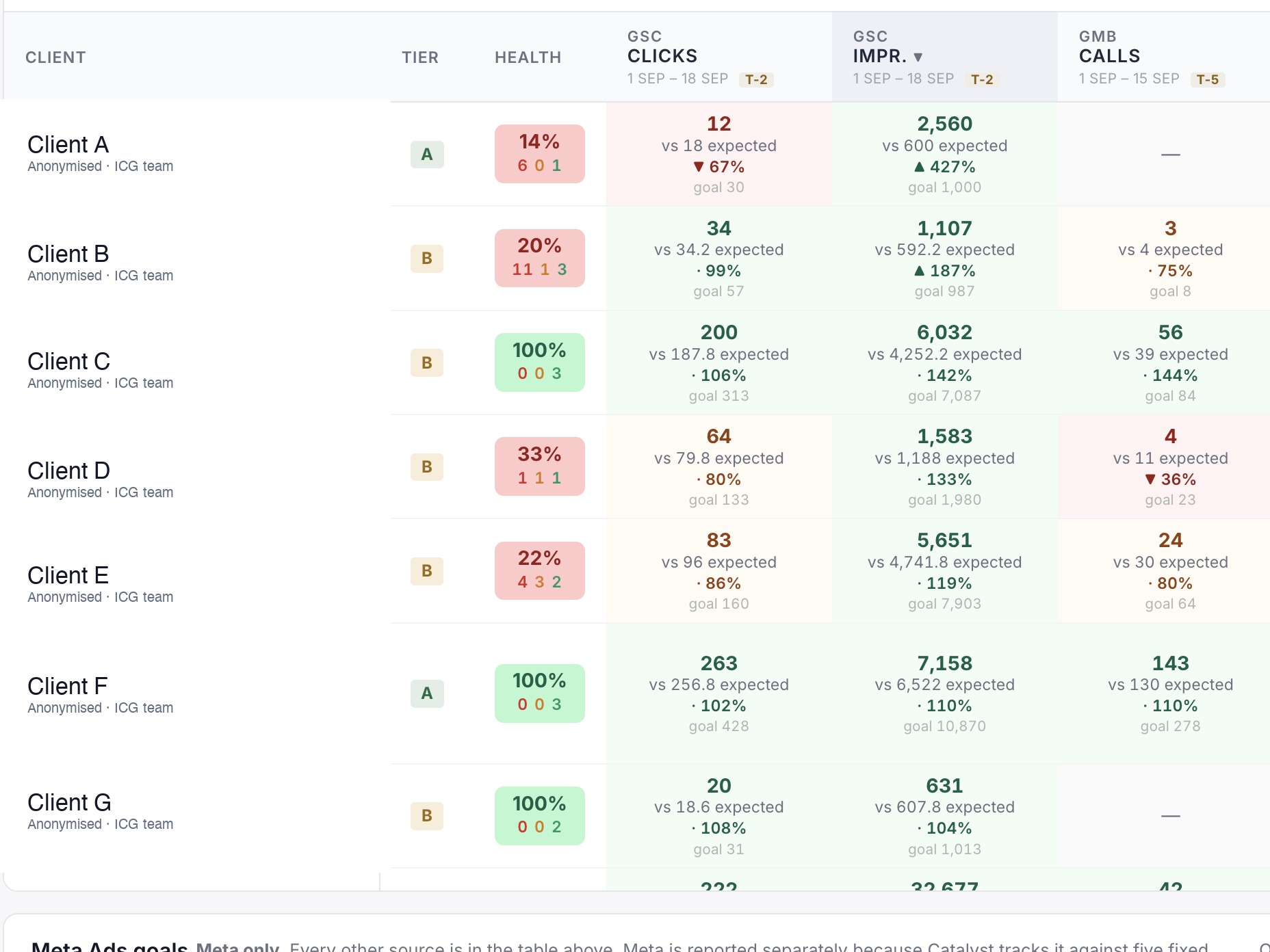
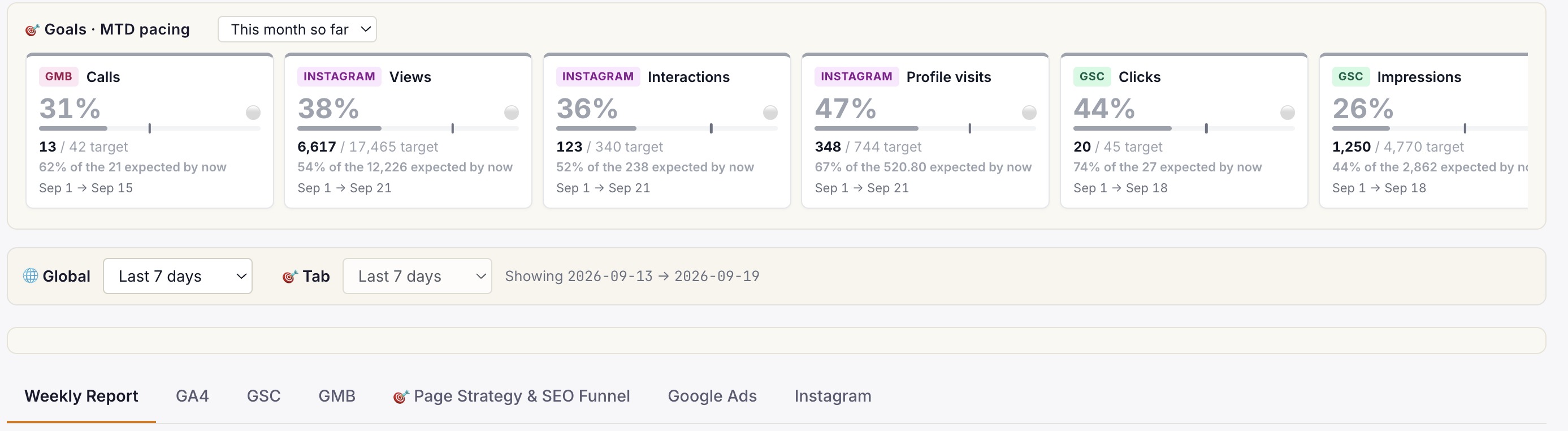
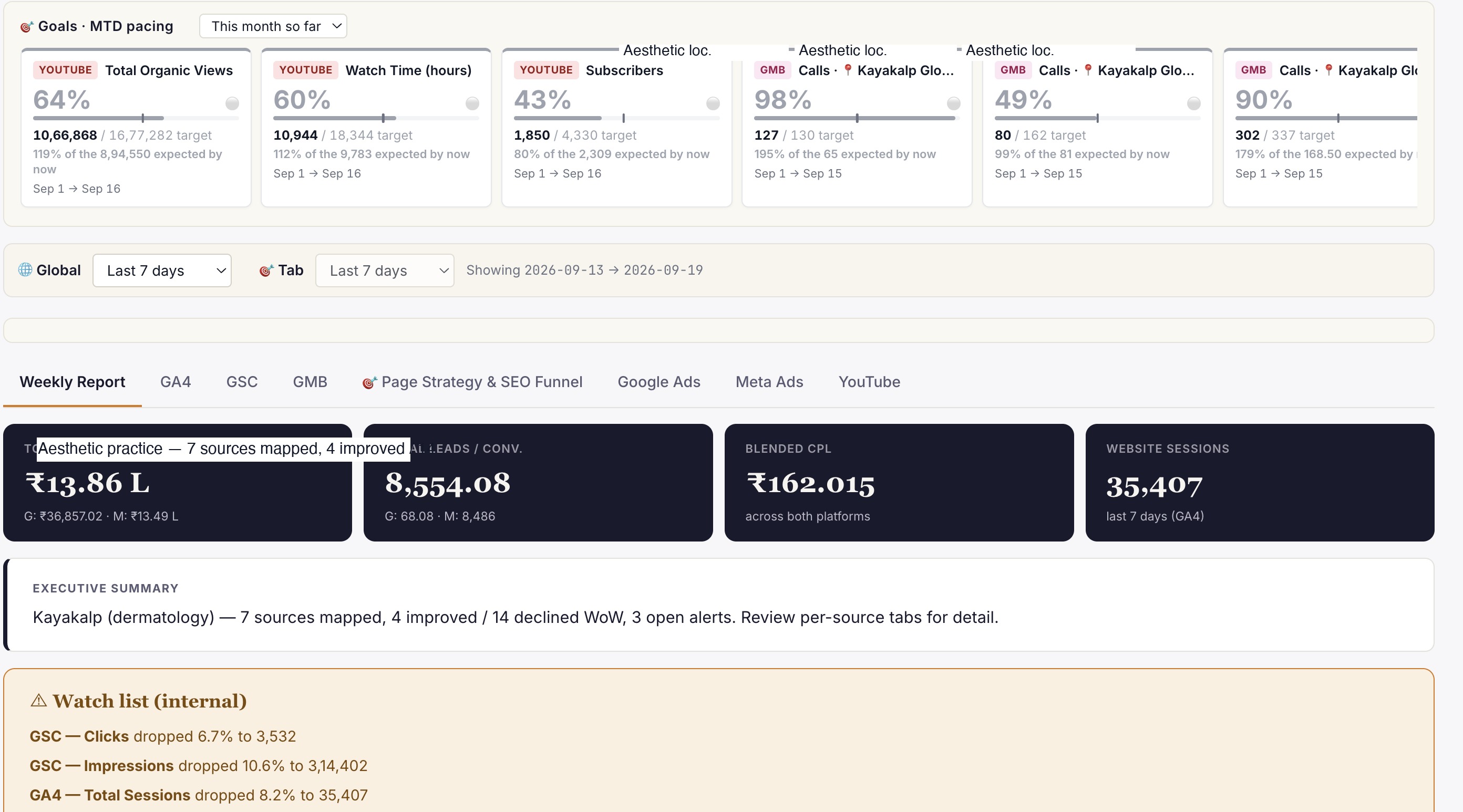
Live client dashboard. GSC, GA4, Google Ads, Meta Ads, IVR calls in one view. Login anytime, not monthly.
Phoenix
Clinic revenue intelligence over your PMS. Daily action queue: Prevent Loss, Maintain & Engage, Grow Revenue. Multi-centre rollout.
Or book a free 30-min audit to see all three in action on your account.
Healthcare brands
that already run on ICG.
A representative slice of the 150+ healthcare brands ICG has delivered for across India. Most engagements remain under NDA.


What ICG clients say · on video.
"Scale up of organic channels and business consulting. ICG has absolute domain authority in their field."
"Working with ICG transformed how we acquire IVF patients in Gurgaon. They understand the fertility journey from inquiry to consult..."
"What Ichelon accomplished — they got all my ideas and worked over 3-4 months to create an amazing, super-customised website."
Need help operationalising this?
Every ICG service is healthcare-only, NMC + DPDP-aware, and built around the patient-research patterns that drive Indian healthcare growth in 2026.
Every practice welcome — packages from ₹20,000/mo.
Goals-Driven engagements · Performance-Linked Payout Models available
More from
ICG.
Five trends shaping Indian healthcare marketing through 2027: AI-first patient research, Conversions API adoption, ABDM discovery, the AEO w...
Healthcare AIO is the discipline of getting your clinic or hospital cited inside Google AI Overviews, ChatGPT and Perplexity answers — not j...
Conversational-search advertising places brand messages inside AI chat answers — ChatGPT, Perplexity, Copilot — rather than beside a results...
Stop guessing.
Book a Diagnostic.
30 minutes. Free. With the AI-powered healthcare-only marketing agency 150+ brands already run on. No slides, no pitch, no hard close.


