


The Healthcare CMO's Board Attribution Guide — What Your Board Needs to See in 2026
Every hospital CMO in India eventually faces a board that asks: "What is marketing generating?" Most CMOs cannot answer this question with a single clean number. This article tells you exactly what the answer should look like, what system p...
No pitch. Written root-cause diagnosis. AI-powered, healthcare only.
Direct answer
Every hospital CMO in India eventually faces a board that asks: "What is marketing generating?" Most CMOs cannot answer this question with a single clean number. This article tells you exactly what the answer should look like, what system p...
TL;DR
Every hospital CMO in India eventually faces a board that asks: "What is marketing generating?" Most CMOs cannot answer this question with a single clean number. This article tells you exactly what the answer should look like, what system produces it, and why most organisations cannot produce it yet.
The board question no CMO can answer today — and why
The attribution gap in most Indian healthcare organisations runs deep. Marketing reports CPL. Patient coordination reports enquiries received. Finance reports procedure revenue. Nobody reconciles these into a single revenue attribution chain.
The result: when the board asks "which marketing investment generated which revenue?", the honest answer is we don't precisely know. Estimated share, blended assumption, indirect proxy — but not verified attribution. This is not a failure of the marketing team. It is a failure of the measurement infrastructure.
What a board-ready healthcare marketing report contains
The 6 metrics the board actually needs:
- CPQL by specialty — not CPL. CPL is cost per form fill; CPQL is cost per qualified lead (patient who attends the consultation). For most healthcare organisations, 55-75% of leads never attend. Reporting CPL to a board is reporting on unqualified traffic.
- Organic consultation share — what percentage of consultations arrived via unpaid channels (SEO, YouTube, referrals, AI Overview citations)? This is the compounding-asset metric.
- LLM citation rate — for enterprise healthcare organisations in 2026, being cited in ChatGPT, Perplexity, and Google AI Overview is now a board-visible metric. 18-22% of urban Indian healthcare patients start their research in AI. Boards want to know: are we there?
- Hawk recovery rate — what percentage of "limbo" leads (leads that arrived but didn't convert to consultation within 30 days) were recovered via re-engagement? ICG portfolio: 18-32% recoverable at zero incremental media cost.
- Marketing revenue attribution — ₹ of procedure revenue attributable to marketing investment. This is the number the CFO wants.
- Revenue per consultation trend — are we attracting higher-value patients over time? A rising trend signals brand equity building; a flat trend signals commoditisation.
Why standard CPL reporting fails the board accountability test
CPL (cost per lead) treats every form fill and WhatsApp message equally. But in healthcare, a form fill from someone who then never attends the consultation has cost you the same as a form fill from someone who becomes a ₹15 lakh IVF cycle patient. Reporting an average CPL to the board averages away exactly the information the board needs.
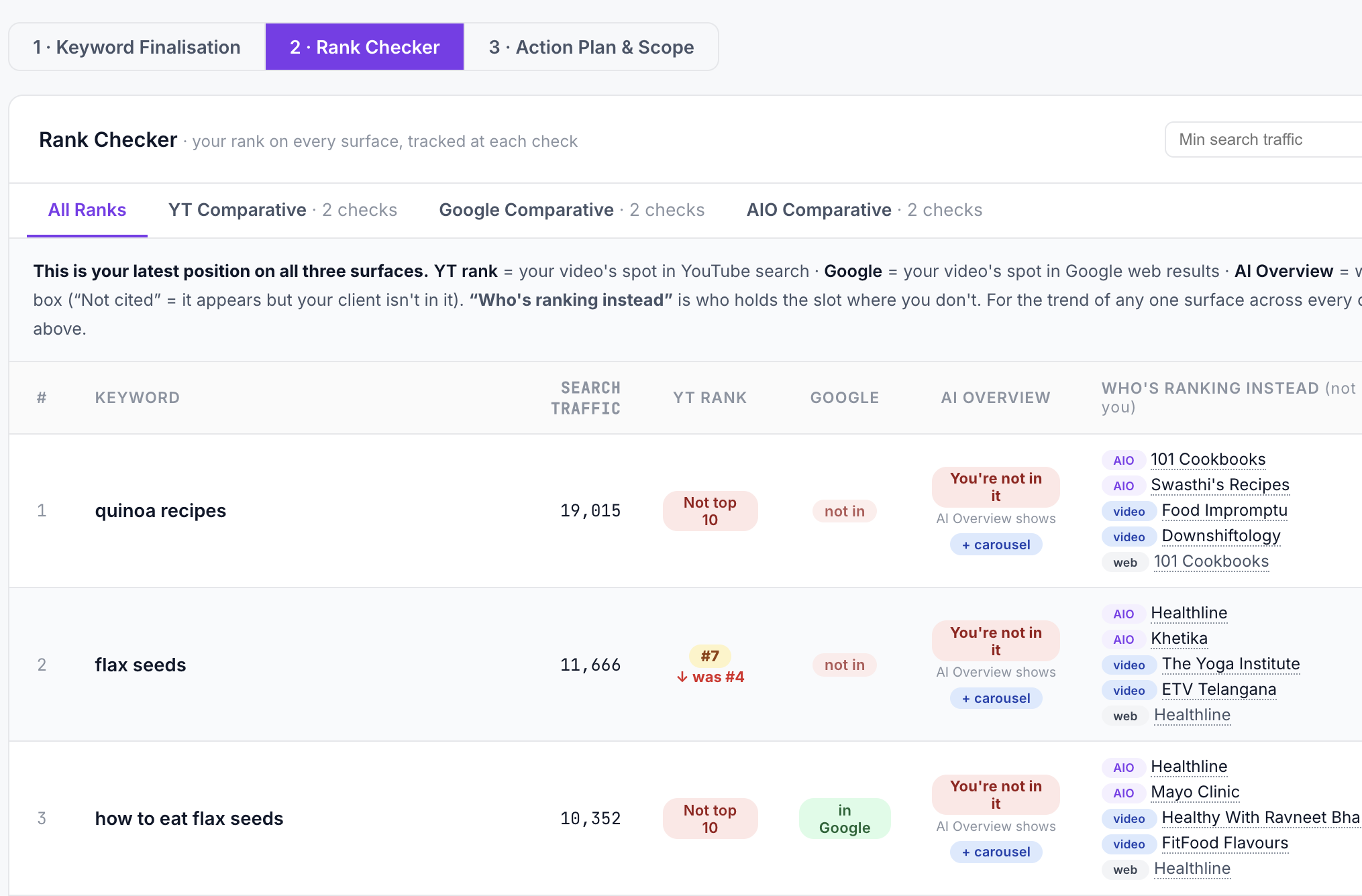
CPQL (cost per qualified lead — patient who attended) reflects what actually happened. It's the metric that maps to revenue. It's what boards want.
The Beacon attribution chain: from media spend to procedure revenue
ICG's Beacon platform builds the attribution chain in four connected layers:
- Layer 1 · Media spend — every rupee of Google Ads, Meta Ads, YouTube ads tracked with source-level detail
- Layer 2 · Lead attribution — server-side CAPI (not just pixel) captures 30-45% of conversions that pixel-only tracking loses in iOS environments
- Layer 3 · Qualified consultation — CRM integration confirms which leads booked and attended
- Layer 4 · Procedure revenue — hospital HIS + finance integration attributes procedure revenue back to the acquisition source
Once the chain is complete, the board report writes itself. Every rupee spent connects to a revenue outcome, or is honestly labelled as unattributed.
How to build the marketing P&L the CFO will believe
The marketing P&L format that boards trust follows CFO conventions, not marketing conventions:
- Revenue by source (Google Ads, Meta Ads, SEO, YouTube, referral, direct)
- Media investment by source
- Attributed procedure revenue by source
- MRR:CAC ratio by source
- Contribution margin by specialty
The critical detail: no metric that the CFO cannot trace back to source data. Every number on the P&L must be verifiable in Beacon, CRM, and HIS. Boards distrust marketing numbers because marketing numbers often can't be traced. Solve the traceability and you solve the trust.
The CPQL Architecture — what it measures and what the board sees

ICG's CPQL Architecture (a proprietary framework, deployed across 150+ healthcare brands since 2018) is the system that connects media spend to qualified consultation to procedure revenue continuously — not just at board-report time. Weekly the CMO sees which specialty is trending on CPQL. Monthly the board sees the full P&L attribution. Quarterly the strategic direction responds to what the data shows.
Portfolio benchmark: healthcare organisations running the CPQL Architecture achieve CPQL 29-51% below their specialty market median within 12-18 months.
Getting to the first clean board report: a 90-day roadmap
Days 1-30 · Foundation. Beacon CAPI deployment (server-side conversion tracking). CRM integration audit and gap remediation. Historical data reconciliation.
Days 31-60 · Attribution chain. HIS integration for procedure revenue attribution. Multi-touch attribution model calibration. First unified dashboard live in Agency OS.
Days 61-90 · Board report ready. First monthly report produced with full attribution chain. CFO reviews and validates. First quarterly board presentation prepared.
The CMO who commits to this 90-day roadmap arrives at the next board meeting with the answer to the question that used to be uncomfortable.
Frequently asked
Q: How is CPQL different from CPL for healthcare organisations?
CPL = cost per lead (any form fill). CPQL = cost per qualified lead (patient who attended consultation). Since 55-75% of healthcare form-fills never attend, CPL systematically overstates campaign efficiency. CPQL reflects what actually happened. It's what maps to revenue.
Q: What's the difference between the Beacon attribution chain and standard GA4 attribution?
GA4 measures traffic to website + form conversions. Beacon adds server-side conversion tracking (CAPI to Meta + Enhanced Conversions to Google), CRM integration for qualified consultation confirmation, and HIS integration for procedure revenue attribution. GA4 gives you web analytics; Beacon gives you revenue attribution.
Q: My hospital's HIS doesn't have marketing integration. What do we do?
Two options: (1) middleware integration — ICG builds a webhook layer connecting HIS to Beacon (typical time: 4-6 weeks), (2) manual attribution — CFO team exports procedure revenue monthly, ICG matches to CRM records via patient identifier. Manual attribution is a workable interim; middleware is the sustainable solution.
Related reading
- Revenue Operations for Healthcare
- Healthcare Analytics + Decision Intelligence
- CPQL — cost per qualified lead
- Healthcare Attribution Window 2026
Compliance: NMC Section 6, DPDP Act 2023.
If this is your organisation's situation at enterprise scale, the linked ICG engagement is where the framework, technology stack, and Co-Founder engagement come together.
Read more →Book a free 30-minute Brand & Growth Diagnostic.
It's a working session, not a sales pitch — you leave with a written root-cause analysis you can act on, whether or not you engage ICG.
The three platforms
behind every ICG engagement.
Beacon
CAPI middleware that fixes Event Match Quality, translates CRM statuses to Meta-standard events, dedups across channels.
Agency OS
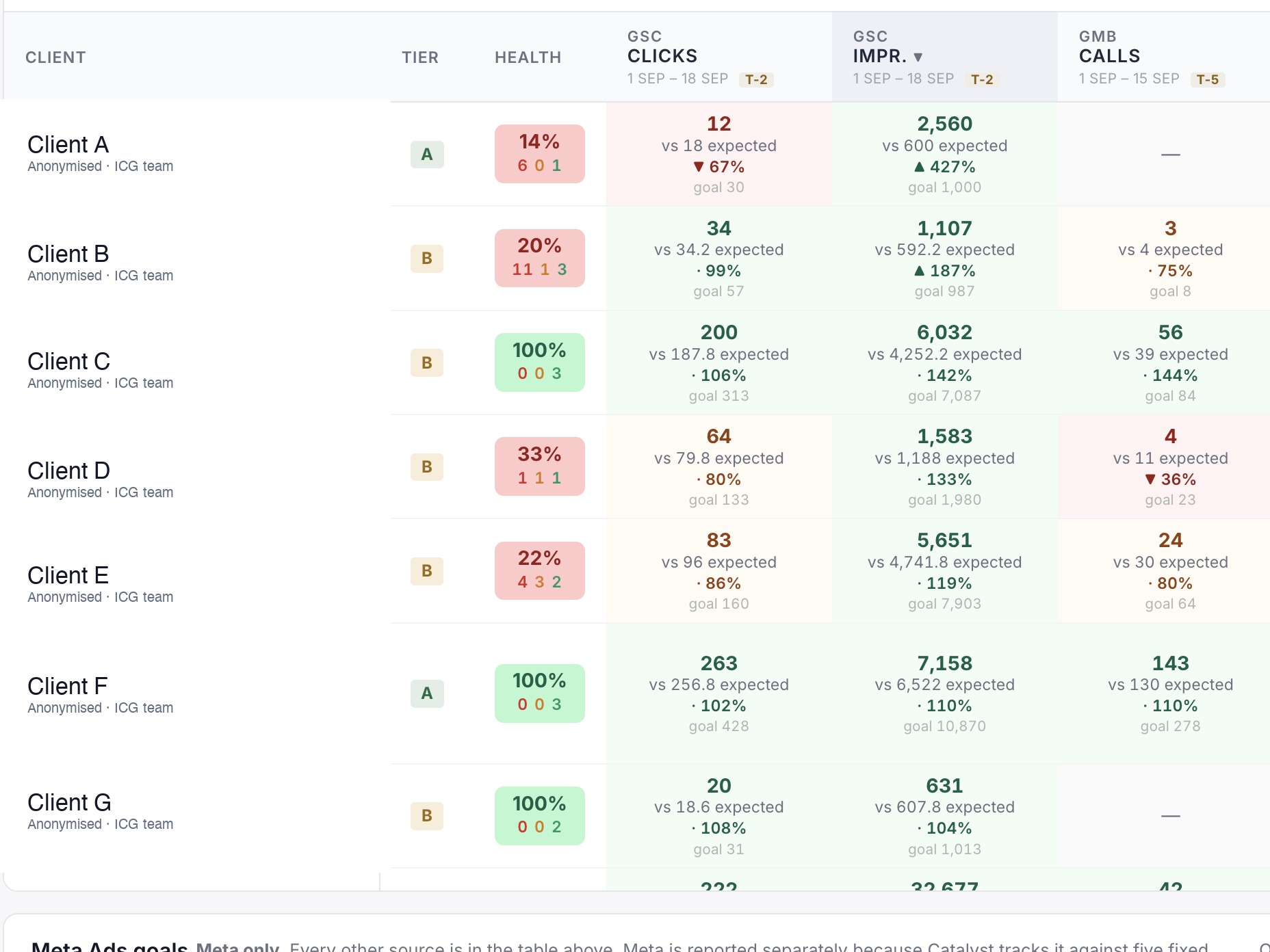
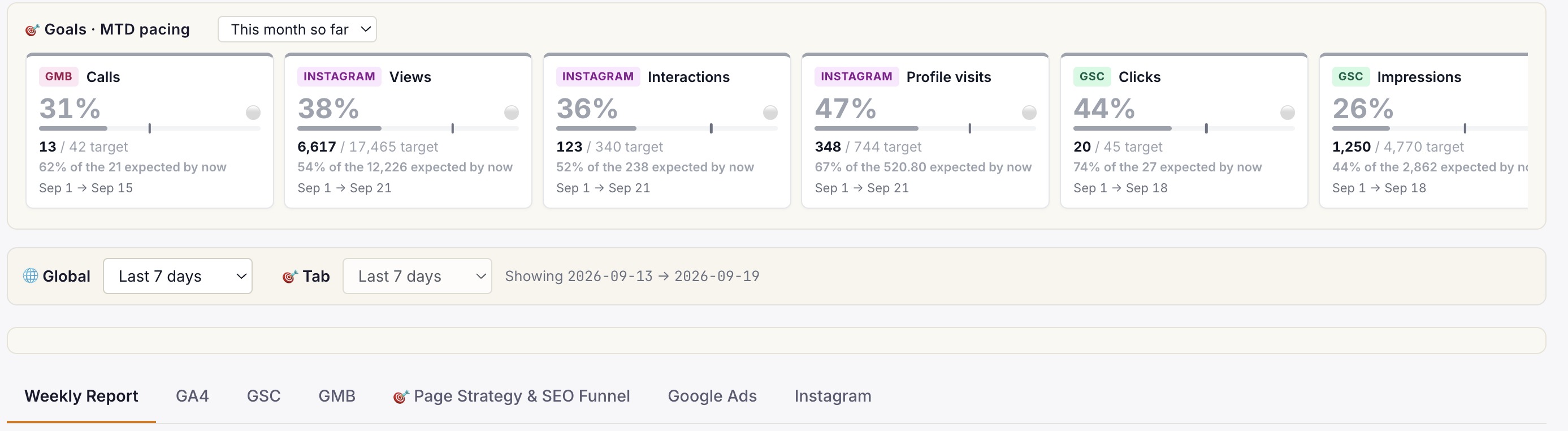
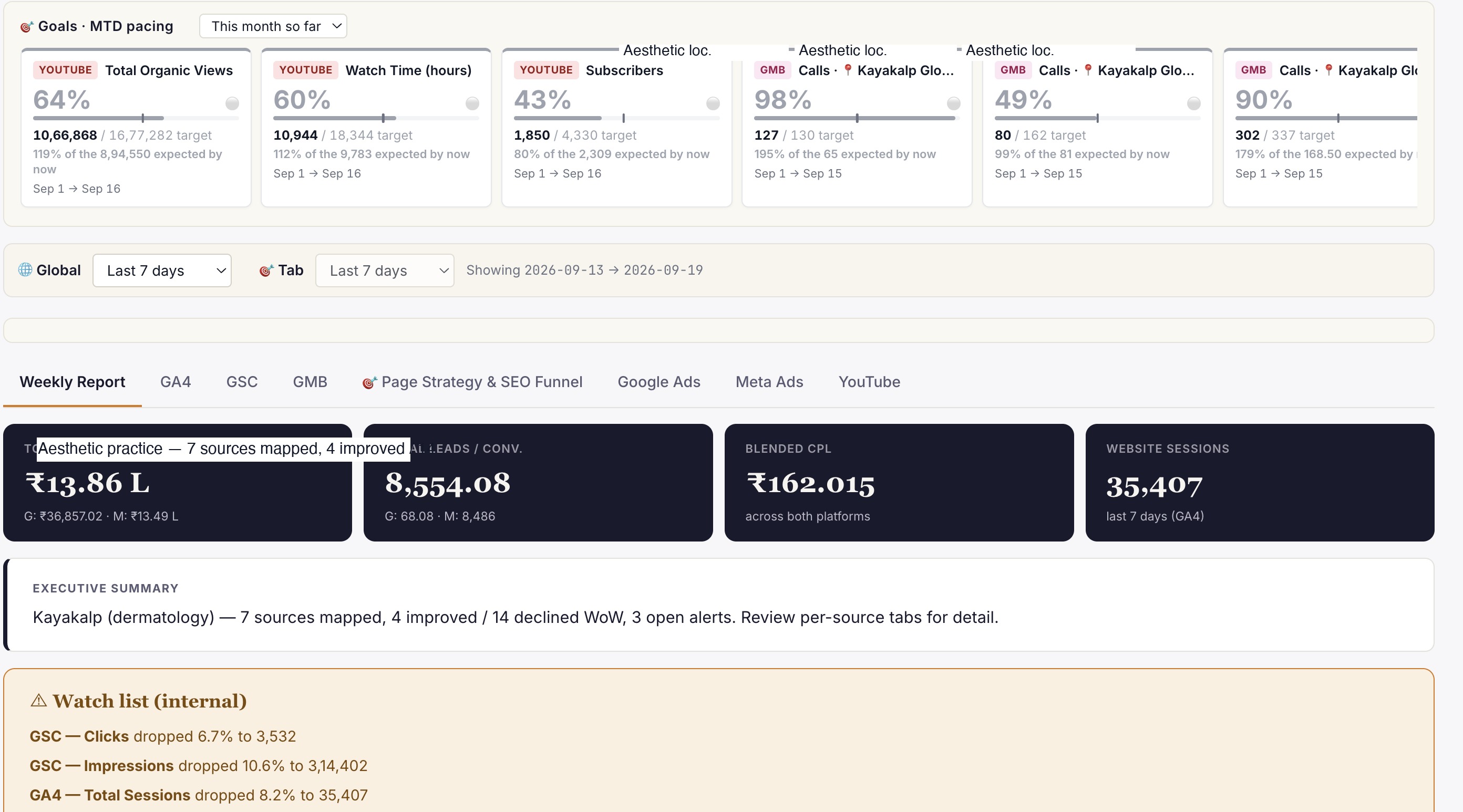
Live client dashboard. GSC, GA4, Google Ads, Meta Ads, IVR calls in one view. Login anytime, not monthly.
Phoenix
Clinic revenue intelligence over your PMS. Daily action queue: Prevent Loss, Maintain & Engage, Grow Revenue. Multi-centre rollout.
Or book a free 30-min audit to see all three in action on your account.
Healthcare brands
that already run on ICG.
A representative slice of the 150+ healthcare brands ICG has delivered for across India. Most engagements remain under NDA.


What ICG clients say · on video.
"Scale up of organic channels and business consulting. ICG has absolute domain authority in their field."
"Working with ICG transformed how we acquire IVF patients in Gurgaon. They understand the fertility journey from inquiry to consult..."
"What Ichelon accomplished — they got all my ideas and worked over 3-4 months to create an amazing, super-customised website."
Need help operationalising this?
Every ICG service is healthcare-only, NMC + DPDP-aware, and built around the patient-research patterns that drive Indian healthcare growth in 2026.
Every practice welcome — packages from ₹20,000/mo.
Goals-Driven engagements · Performance-Linked Payout Models available
More from
ICG.
Five trends shaping Indian healthcare marketing through 2027: AI-first patient research, Conversions API adoption, ABDM discovery, the AEO w...
Healthcare AIO is the discipline of getting your clinic or hospital cited inside Google AI Overviews, ChatGPT and Perplexity answers — not j...
Conversational-search advertising places brand messages inside AI chat answers — ChatGPT, Perplexity, Copilot — rather than beside a results...
Stop guessing.
Book a Diagnostic.
30 minutes. Free. With the AI-powered healthcare-only marketing agency 150+ brands already run on. No slides, no pitch, no hard close.


