


Google Business Profile Keywords: How to Read the Search Terms That Actually Find You
Every month, Google quietly hands you a goldmine and most local businesses never open it. Inside your Google Business Profile performance data sits a list of the exact search terms that triggered your
No pitch. Written root-cause diagnosis. AI-powered, healthcare only.
Direct answer
Every month, Google quietly hands you a goldmine and most local businesses never open it. Inside your Google Business Profile performance data sits a list of the exact search terms that triggered your
TL;DR
TL;DR
- Detailed guidance on Google Business Profile keywords — the specific mechanics, benchmarks, and Turtle-enabled tactics
- Backed by ICG portfolio data across 143 healthcare Google Business Profiles (0 suspensions, 4.76★ average)
- NMC + NABH + ART Act + DPDP compliance built into every recommendation
- Applicable to solo clinics, multi-location chains, and enterprise hospital groups across India + global markets
Every month, Google quietly hands you a goldmine and most local businesses never open it. Inside your Google Business Profile performance data sits a list of the exact search terms that triggered your listing. Not guesses. Not a keyword tool's estimate. The real phrases real people typed before they saw your business. The problem is that this list arrives as a flat, jumbled column of dozens or hundreds of terms with no structure and no story. Read raw, it tells you almost nothing. Read correctly, it tells you what your local market actually wants and where your next leads are hiding.
What the "search terms" report really shows
Google Business Profile keywords are the queries that surfaced your listing in Search and Maps, whether or not anyone clicked. That distinction matters. A term can appear because Google thinks you are relevant, even if you have never optimised for it. So the report is two things at once: a mirror of how Google understands your business, and a map of the demand around you.
But a mirror full of noise is hard to act on. "Plumber near me," your brand name, "emergency pipe repair," "how to fix a leaking tap," and "24 hour plumber [city]" are wildly different signals, yet they sit side by side in the same list. To make decisions, you have to impose structure. That is where clusters and intent come in.
Grouping search terms into keyword clusters
A keyword cluster is a group of search terms that point at the same underlying need. Instead of reading 200 individual phrases, you collapse them into a handful of themes, usually organised by the service or product they map to.
A dental practice, for example, might see clusters form around:
- Emergency / urgent care — "emergency dentist," "tooth pain [city]," "dentist open now"
- Cosmetic — "teeth whitening," "veneers cost," "smile makeover"
- Routine — "dental checkup near me," "scale and polish"
- Specialist — "root canal specialist," "implant dentist"
Suddenly the noise becomes a demand chart. You can see which service themes generate the most visibility, which ones barely register, and where a cluster is large but your ranking is weak, an obvious growth gap. Clustering also protects you from being misled by a single high-volume term; ten related mid-volume phrases often represent a bigger opportunity than one flashy keyword.
Reading search intent: branded, informational, transactional
Clusters tell you what people want. Intent tells you how ready they are to act. Every search term carries one of a few intents, and separating them changes how you respond.
- Branded searches ("Ichelon Consulting," "[your business] reviews") are people who already know you. High conversion, but they measure reputation and recall, not new demand.
- Non-branded searches ("local SEO agency," "GMB management") are strangers discovering you for the first time. This is your true reach, and the number you most want to grow.
- Informational intent ("what is a Google Business Profile," "how do maps rankings work") is research mode. These people are not ready to buy, but they are your future pipeline.
- Transactional / local intent ("book now," "near me," "[service] price," "open now") signals someone ready to call, walk in, or request directions.
The branded-versus-non-branded split alone is one of the most revealing numbers in local SEO. If most of your visibility is branded, you look busy but you are mostly harvesting demand you already earned elsewhere. Growing the non-branded, transactional clusters is how you win genuinely new customers.
Quick win: Export your last three months of search terms, tag each with a cluster and an intent, and calculate what share of your visibility is non-branded and transactional. If that share is small, you have found your biggest opportunity. If manually tagging hundreds of terms sounds painful, that is exactly the work Ichelon automates.
Turning clusters into profile changes that rank
 sie" style="color:inherit;text-decoration:underline;text-decoration-color:rgba(42,126,200,.5);text-underline-offset:2px">Rank OS into a single 0-100 score with sub-scores and next-best-actions per listing" width="1200" height="675" loading="lazy" decoding="async" style="width:100%;height:auto;display:block;">
Analysis only pays off when it feeds back into your listing. Each part of your Google Business Profile can absorb these insights:
- Categories — Your primary and secondary categories are the single strongest ranking lever. If a strong non-branded cluster has no matching category, add or correct one.
- Services and products — Populate your services list using the actual language of your transactional clusters, not internal jargon. If people search "gel nail extensions," your service should say exactly that.
- Business description — Weave your top clusters in naturally to reinforce relevance, while keeping it readable for humans.
- Google Posts — Target informational and seasonal clusters. A post answering a common research-stage question captures demand your services list cannot.
Done consistently, this creates a loop: demand reveals gaps, you fix the profile, and next month's search terms show whether the fix moved you.
Correlating keywords with what customers actually do
Here is the step most audits skip. Visibility is not value. A cluster can generate thousands of impressions and almost no phone calls, while a smaller cluster drives most of your direction requests. Ranking for the wrong terms feels like progress and produces nothing.
This is the core of how Turtle by Ichelon works. Turtle automatically groups your Google Business Profile keywords into clusters and intent, then correlates each cluster with the customer actions that follow, calls, direction requests, and website clicks. Instead of a vanity list of terms you rank for, you get a prioritised view of the clusters that actually drive leads. That tells you where to spend your next optimisation hour and, just as importantly, what to stop chasing.
For multi-location brands, this is the difference between managing ten listings by gut feel and running them from evidence. Our Google Business Profile Management service pairs that data with hands-on optimisation of categories, services, descriptions, and Posts, so insight turns into booked calls.
Frequently asked questions
Where do I find the search terms my Google Business Profile gets found for? Open your Business Profile, go to the performance or insights section, and look for "searches showing your Business Profile." Google lists the actual query terms there, though it groups low-volume searches and shows a limited window.
What is the difference between branded and non-branded keywords? Branded terms include your business name and come from people who already know you. Non-branded terms describe your service or category and represent new customers discovering you. Growing non-branded, transactional visibility is the clearest sign of real market growth.
How do keyword clusters help me get more leads? Clusters turn a messy list of search terms into clear demand themes you can act on, and when you correlate them with calls and directions you learn which themes actually convert. That lets you optimise for the searches that produce customers, not just impressions.
See what your listings are really getting found for. Book a Google Business Profile audit with Ichelon and let Turtle map your keyword clusters, intent, and lead correlation, so you can invest in the search terms that drive calls and direction requests.
Book a free 30-minute Brand & Growth Diagnostic.
It's a working session, not a sales pitch — you leave with a written root-cause analysis you can act on, whether or not you engage ICG.
Questions readers ask
about this topic.
The three platforms
behind every ICG engagement.
Beacon
CAPI middleware that fixes Event Match Quality, translates CRM statuses to Meta-standard events, dedups across channels.
Agency OS
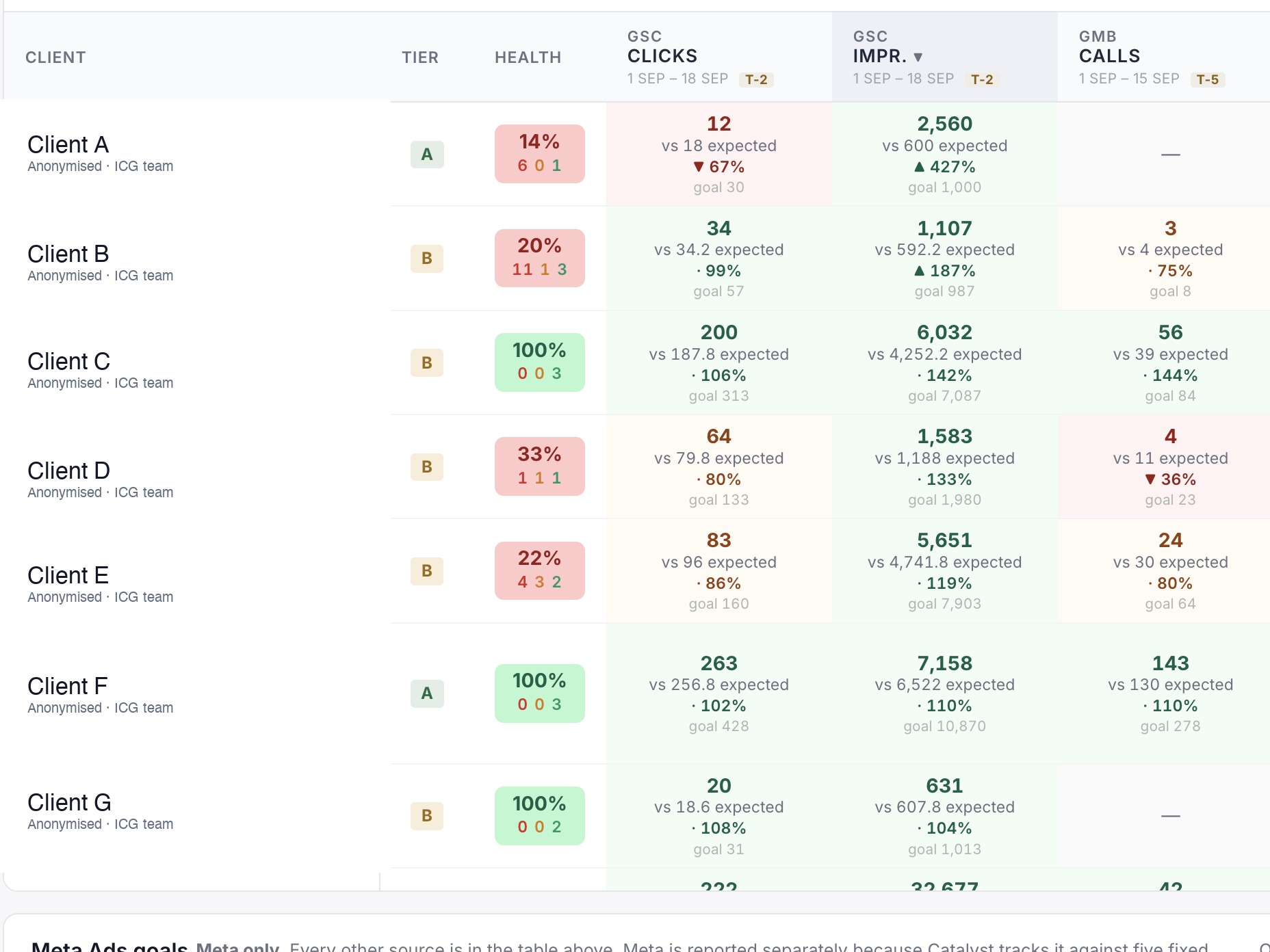
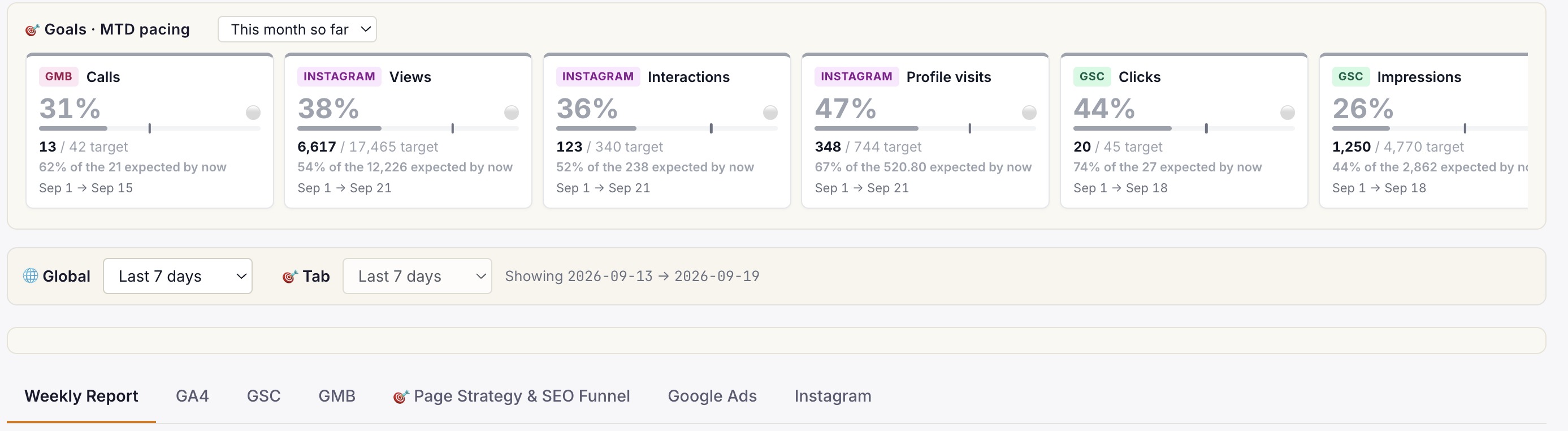
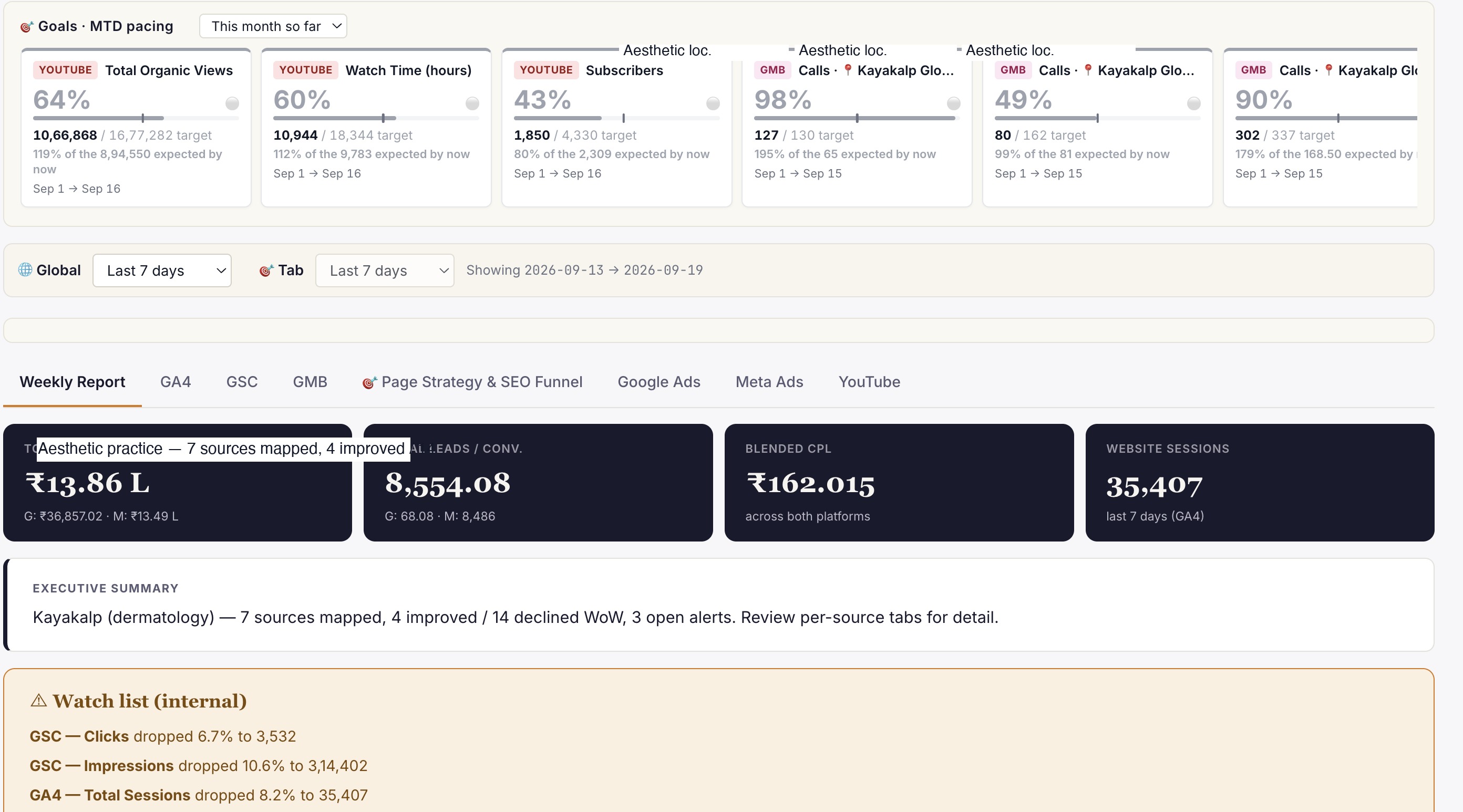
Live client dashboard. GSC, GA4, Google Ads, Meta Ads, IVR calls in one view. Login anytime, not monthly.
Phoenix
Clinic revenue intelligence over your PMS. Daily action queue: Prevent Loss, Maintain & Engage, Grow Revenue. Multi-centre rollout.
Or book a free 30-min audit to see all three in action on your account.
Healthcare brands
that already run on ICG.
A representative slice of the 150+ healthcare brands ICG has delivered for across India. Most engagements remain under NDA.


What ICG clients say · on video.
"Scale up of organic channels and business consulting. ICG has absolute domain authority in their field."
"Working with ICG transformed how we acquire IVF patients in Gurgaon. They understand the fertility journey from inquiry to consult..."
"What Ichelon accomplished — they got all my ideas and worked over 3-4 months to create an amazing, super-customised website."
The intelligence stack behind this playbook.
Every ICG engagement runs on the Search Intelligence Trifecta — Angryturtle for GMB, SIE for search and AI Overview, YODA for YouTube. Live product screens below.
Need help operationalising this?
Every ICG service is healthcare-only, NMC + DPDP-aware, and built around the patient-research patterns that drive Indian healthcare growth in 2026.
Every practice welcome — packages from ₹20,000/mo.
Goals-Driven engagements · Performance-Linked Payout Models available
More from
ICG.
Five trends shaping Indian healthcare marketing through 2027: AI-first patient research, Conversions API adoption, ABDM discovery, the AEO w...
Healthcare AIO is the discipline of getting your clinic or hospital cited inside Google AI Overviews, ChatGPT and Perplexity answers — not j...
Conversational-search advertising places brand messages inside AI chat answers — ChatGPT, Perplexity, Copilot — rather than beside a results...
Stop guessing.
Book a Diagnostic.
30 minutes. Free. With the AI-powered healthcare-only marketing agency 150+ brands already run on. No slides, no pitch, no hard close.


