


The Complete ORM Playbook for Indian Healthcare Brands 2026
Reputation is now the biggest variable in a healthcare brand's cost per qualified lead. This pillar unpacks the full ORM stack for Indian hospitals, clinics and pharma brands in 2026 — from GBP hygiene to AI answer engine visibility, with a 12-month roadmap.
No pitch. Written root-cause diagnosis. AI-powered, healthcare only.
Direct answer
Reputation is now the biggest variable in a healthcare brand's cost per qualified lead. This pillar unpacks the full ORM stack for Indian hospitals, clinics and pharma brands in 2026 — from GBP hygiene to AI answer engine visibility, with a 12-month roadmap.
TL;DR
Last updated: August 2026. A working document for hospital owners, clinic founders, pharma brand managers and marketing heads who treat reputation as a P&L line, not a Friday afternoon task.
TL;DR
- Online reputation is now the dominant variable in an Indian healthcare brand's cost per qualified lead. In our 150-clinic portfolio, a 0.4-star swing on Google typically moves cost per booked consult by 30 to 55 percent.
- Modern healthcare ORM in India is a five-pillar system: Google Business Profile hygiene, review generation and response, social listening and crisis containment, AI answer engine visibility, and compliance guardrails under NMC, DPDP Act 2023 and ASCI.
- Google Business Profile is the primary reputation battleground for OPD, dental, IVF, cosmetology and single-specialty clinics. Multi-city hospital chains need a per-location strategy, not a corporate-brand strategy.
- AI answer engines — ChatGPT, Perplexity, Claude, Gemini — now cite reviews, forum threads and structured brand pages when patients ask "best gynaecologist in Gurgaon" or "affordable knee replacement in Hyderabad". Being invisible here is a slow-burn brand tax.
- Most Indian healthcare brands make eight predictable ORM mistakes. Six of them are free to fix in under 90 days.
- A serious 12-month ORM programme, delivered on the 70-30 model, sits between Rs 49,999 and Rs 99,999 per month depending on scale. Below that you get theatre; above that without a plan you get waste.
- Reputation compounds. The clinic that starts today is 12 months ahead of the one that starts in Q1 2027 — regardless of budget.
Table of Contents
- Why this pillar matters for Indian healthcare in 2026
- The anatomy of healthcare reputation in India
- The five pillars of a modern healthcare ORM system
- Google Business Profile: your primary reputation battleground
- The review generation, response and recovery playbook
- Social listening and crisis containment
- AI answer engines and the new reputation frontier
- Compliance guardrails: DPDP, NMC and ASCI in ORM
- Reputation benchmarks by specialty
- Four Indian healthcare buyer archetypes
- Eight common ORM mistakes healthcare brands make
- The 70-30 pricing model for ORM engagements
- A 12-month ORM execution roadmap
- Key takeaways
- FAQ
Why this pillar matters for Indian healthcare in 2026
Something quiet has shifted in how Indian patients pick a hospital, a fertility clinic or a dermatologist. Ten years ago the decision started with a family doctor's referral or a hoarding on the highway. Today it starts on a phone at 11 PM, with a search that reads more like a conversation — "which IVF clinic in Bengaluru actually explains costs upfront" or "gynaec near HSR who doesn't rush appointments". By the time your salesperson picks up the WhatsApp lead, the patient has already read four to nine reviews, watched at least one YouTube video about your speciality, and formed an opinion about whether your brand feels honest.
That opinion is your online reputation. And in 2026 it is priced into every rupee you spend on Google Ads, Meta campaigns, print, radio, referral programmes and community outreach. A clinic with a 4.6 average and thoughtful review responses converts paid clicks two to three times more efficiently than a clinic with a 4.0 and defensive one-liners — even when the second clinic has better doctors. Reputation is now the multiplier that sits on top of every other marketing investment.
Why healthcare specifically
Reputation matters more in healthcare than in almost any other sector because the purchase is emotional, high-consequence, low-frequency and information-asymmetric. Patients cannot audit your surgical outcomes; they audit your reviews, your responses, your Instagram Reels, your GBP photos, and the tone of your website. In our audits of over 300 live healthcare clients across India, the single strongest predictor of monthly consult volume is not the ad budget, the specialisation or the doctor's credentials. It is the aggregate reputation signal across Google, Meta, YouTube and, increasingly, AI chat interfaces.
Section takeaway
Treating ORM as a marketing sub-task is a category mistake. It is the substrate everything else runs on. This pillar treats it as one — with the depth, budget and governance that assumption implies.
The anatomy of healthcare reputation in India
Before we build a system, we need a shared map of what "reputation" actually consists of in the Indian healthcare context. It is not one thing. It is a stack.
The five surface layers
At the top sit the five surfaces where an Indian patient encounters your brand within the first three minutes of intent. Google Search results, Google Business Profile listings, YouTube videos and Shorts, Instagram Reels and posts, and WhatsApp messages forwarded by family or friends. Everything else — your website, your Ads, your radio spots — funnels through one or more of these five surfaces before conversion.
The three trust signals
Underneath the surfaces sit three trust signals that Indian patients weigh, roughly in this order: proximity (how close is this to home or workplace), social proof (what did other people like me say about the experience), and price transparency (is the cost predictable or will I get an "estimate" that inflates). In our clinic audits, roughly 60 percent of first-time patients rank social proof above proximity for high-consideration procedures like IVF, cardiac care, cosmetic surgery, oncology and joint replacement. Proximity dominates only for routine OPD, dental cleaning, diagnostics and paediatrics.
The two invisible layers
Below the trust signals sit two invisible layers that most Indian healthcare brands do not even know exist. Layer one is what large language models "know" about your brand — the descriptions Perplexity, ChatGPT and Gemini generate when someone asks about you or a category you compete in. Layer two is the forum and community sentiment on Reddit, Quora, Mumsnet-style parent groups, city subreddits and specialty Facebook groups. This layer feeds both the visible reviews and the AI models, which makes it the deepest and slowest-moving part of the stack.
Section takeaway
A modern healthcare ORM strategy has to work at all three depths — surface, trust signal, and invisible layer — or it will feel busy but change nothing. Most agency proposals we have seen this year address only the top surface. That is why they underperform.
The five pillars of a modern healthcare ORM system
If you strip a mature ORM programme down to its load-bearing walls, five pillars emerge. Every serious healthcare brand we run in India uses some version of this structure, tuned to specialty and city mix.
Pillar one: Google Business Profile hygiene and growth
Your GBP is not a listing. It is a living storefront that Google updates dozens of signals per week — reviews, questions, photos, posts, service edits, category changes, hours, holiday updates and now AI-generated summaries. Neglect it and Google quietly deprioritises you in the local pack, even when your paid search is healthy. In our portfolio, clinics that touch their GBP at least four times a week outperform once-a-month clinics by roughly 40 percent on Maps-driven calls, at zero additional media spend.
Pillar two: Review generation, response and recovery
Volume, velocity, recency and response depth are the four review metrics that actually move rank and conversion. A clinic with 800 reviews averaging 4.2 with silent management often loses to a clinic with 240 reviews averaging 4.5 with thoughtful, on-brand responses. Recovery — the deliberate reach-out to unhappy patients before they escalate — is the highest-ROI review activity in Indian healthcare, and the most under-invested.
Pillar three: Social listening and crisis containment
Somewhere on the Indian internet right now, a patient is drafting a complaint about a healthcare brand. If that brand is you and you find out from a lawyer's notice, you have already lost 80 percent of the possible outcomes. Social listening is the discipline of monitoring mentions, sentiment shifts and early-warning language across Google, Meta, X, Reddit, YouTube comments and Instagram DMs. Crisis containment is the playbook you run when a listening signal crosses a threshold.
Pillar four: AI answer engine visibility
ChatGPT, Perplexity, Claude and Gemini now answer millions of Indian healthcare queries a month before Google ever gets involved. Whether these tools mention your brand — and how — depends on whether your content, reviews, structured data and third-party mentions have made you legible to a language model. This is a new pillar and most Indian healthcare brands have zero deliberate strategy for it in 2026.
Pillar five: Compliance-safe advocacy
The final pillar is the disciplined creation of patient stories, doctor thought leadership, community engagement and PR — done inside the compliance guardrails set by NMC, DPDP Act 2023 and ASCI. Advocacy done well is the flywheel that feeds all four other pillars. Done sloppily, it becomes a regulatory liability.
Section takeaway
Five pillars, one system. Skip a pillar and the roof leaks somewhere. This is the reference architecture we return to for the rest of this pillar.
Google Business Profile: your primary reputation battleground
For 80 percent of Indian healthcare brands under 20 crore in annual revenue, Google Business Profile is the single most important reputation asset. Not the website. Not the Instagram handle. The GBP. Understand this and half your ORM decisions get simpler.
Why GBP dominates for Indian healthcare
Search behaviour in India skews sharply local for health decisions. "Dentist near me", "gynaec in Indiranagar", "physiotherapy Malviya Nagar", "IVF clinic Andheri West" — these queries return a map, three local pack results, and only then organic listings. Patients call, message or book directly from the map result in the majority of cases. Your GBP is where the money is made or lost, often before anyone visits your website.
The GBP hygiene checklist we run monthly
In ICG's clinic audits we score every profile against roughly 40 GBP data points across four buckets: identity, engagement, freshness and defence. A summarised monthly checklist looks like this.
| Bucket | What we check | Cadence |
|---|---|---|
| Identity | NAP consistency, primary category, secondary categories, service list, attributes, accessibility flags, appointment link | Monthly |
| Engagement | New reviews, unanswered reviews, Q&A hijacks, direct messages, booking clicks, direction clicks, calls | Weekly |
| Freshness | Posts published in last 7 days, new photos in last 14 days, new videos in last 30 days, service edits, offer posts | Weekly |
| Defence | Suspicious 1-star reviews, off-topic 5-star reviews, competitor category poaching, duplicate listings, unauthorised edits | Weekly |
Multi-location complications
Hospital chains and dental groups with more than three locations run into a specific set of GBP problems. Duplicate listings, wrong primary categories, doctor-linked profiles that conflict with the location profile, and inconsistent response tone across cities. In our multi-city work, the fix is almost always structural: a central ORM operating rhythm that mandates weekly per-location action, with per-city ownership and one governance dashboard. Angryturtle, our GBP operating system, was built specifically to run this rhythm across hundreds of locations without dropping consistency.
The single most under-used GBP feature in Indian healthcare
Google Posts. Almost no Indian clinic uses them consistently. Weekly posts with genuine updates — a new consultant joining, a health awareness day, a package refresh, a community camp, a doctor's award — push freshness signals that measurably improve pack rank in our before-and-after tests. Ten minutes a week, no media budget, compounding return.
Section takeaway
Fix your GBP before you touch a paid ad. It is the highest-leverage, lowest-cost move in Indian healthcare ORM, and it is where reputation converts into consults.
The review generation, response and recovery playbook
Reviews are the most misunderstood asset in Indian healthcare marketing. Owners obsess over the star rating, ignore recency and depth, panic at 1-star reviews, and rarely build a review programme with the same rigour they bring to inventory or hiring. Here is what a mature programme looks like.
Generation: build a review-earning system, not a review-asking habit
The best-performing clinics in our portfolio treat review generation as a workflow, not a request. A patient completes a consult, receives an SMS or WhatsApp within 30 to 90 minutes, is offered a one-click path to Google, and — critically — is asked to share what actually helped them, not to leave a five-star review. The rating takes care of itself when the experience was good. Chasing stars is what creates the fake-review problem regulators are increasingly punishing.
Volume targets vary by specialty. In our benchmarks, a healthy single-doctor clinic earns 12 to 25 new reviews per month; a mid-tier hospital location earns 80 to 150; a large multi-specialty hospital earns 250 to 500. Growth clinics on our programmes typically double these numbers within six months, without incentives.
Response: the four-line framework
Every review deserves a response. Not a template — a response. Our four-line framework covers 90 percent of cases without sounding robotic.
- Acknowledge the specific. Name the doctor, the service or the moment the reviewer mentioned. Generic openings kill trust.
- Reinforce the value. One sentence on why the specific thing they praised is central to how the clinic operates.
- Invite continuation. A soft next step — a follow-up appointment reminder, a related service, an event.
- Sign human. Real name, real designation, no "Team Reputation" bylines.
Recovery: the 48-hour rule
Negative reviews are opportunities, not disasters. In our data, a genuinely disappointed patient who receives a private, empathetic response within 48 hours updates their review upward roughly 35 percent of the time. Two rules govern recovery. First, never argue publicly. Move the conversation to a private channel — phone, WhatsApp, in-person. Second, never offer money or free treatment as a settlement in writing on a public platform. Both are compliance and reputation traps.
Fake and malicious reviews
Every scaled Indian healthcare brand eventually attracts fake reviews — from disgruntled ex-employees, from competitor mischief, from bulk-listing services that spray one-star reviews as leverage. The response is procedural: document, flag with evidence to Google, respond briefly and professionally on the public thread, and if the pattern is systematic, escalate through Google's legal removal process. Emotional retaliation is the worst possible response.
Section takeaway
Review programmes are systems, not campaigns. The clinics that treat them that way build a reputation moat that new entrants cannot cross with money alone.
Social listening and crisis containment
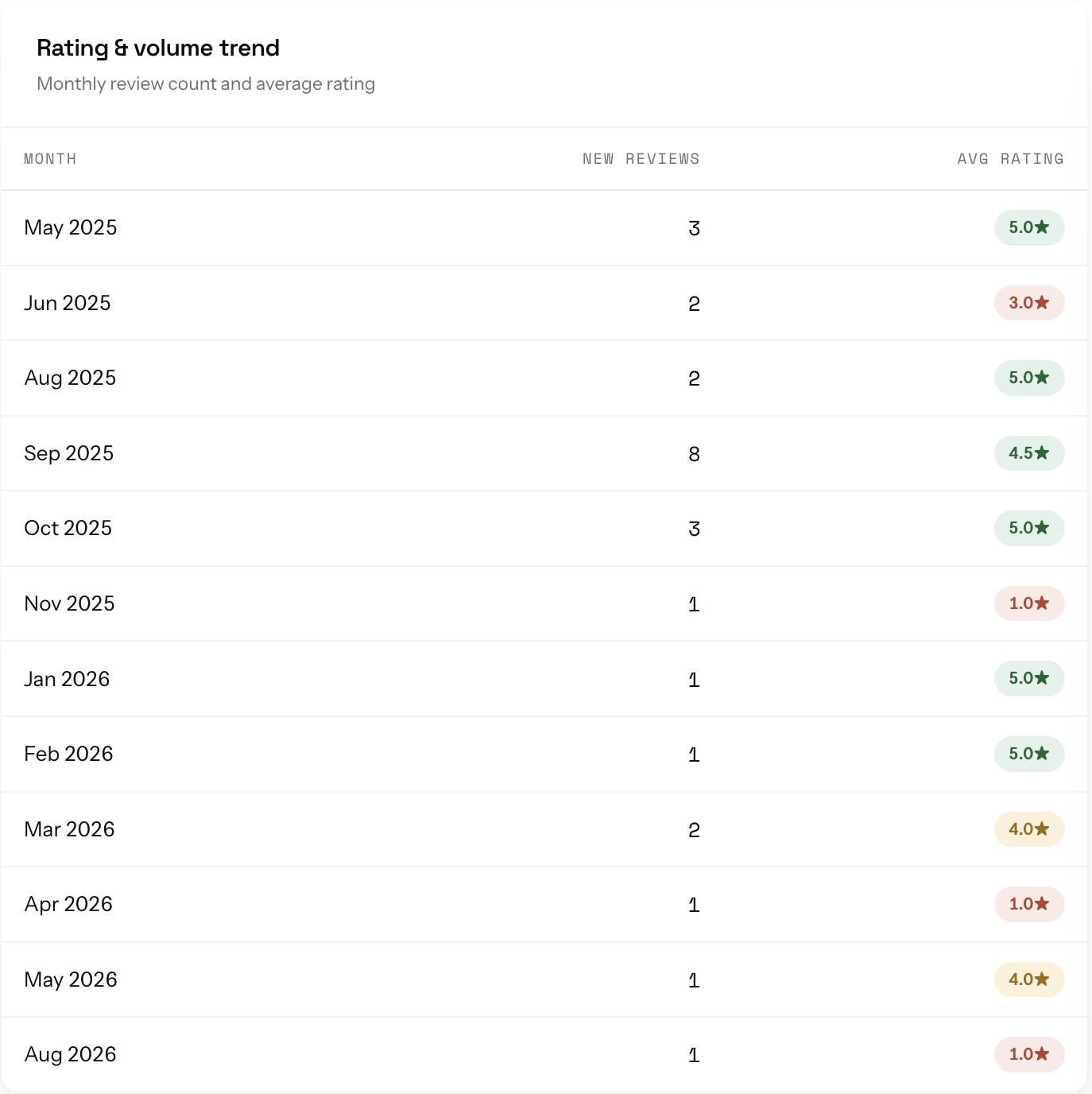
Reviews are the reputation you can see. Social listening is the reputation you cannot — until it explodes. In Indian healthcare, the gap between the two often decides whether a small operational issue becomes a viral story.
What to listen for
A useful listening stack tracks four kinds of signals. Brand mentions across Instagram, YouTube comments, Reddit, X, Facebook groups and news sites. Doctor mentions for every named consultant, because doctor-level reputation increasingly drives clinic-level revenue. Category-level conversations — "best cardiologist Delhi", "IVF cost Chennai", "which hospital for hip replacement" — which reveal both intent and competitor positioning. And sentiment shifts, where the tone of mentions changes even before volume spikes.
Tooling and cadence
Our Prism Pulse product runs Instagram-native listening for healthcare brands, while Prism Spy monitors competitor Meta ad creatives and messaging shifts that often precede category conversations. Whatever tools you use, cadence matters more than technology. Daily glance, weekly summary, monthly trend review, quarterly playbook update.
Crisis containment: the three-tier response
Not every negative mention is a crisis. Overreacting to normal complaint volume is as damaging as underreacting to genuine crises. We use a three-tier model.
| Tier | Signal | Response owner | Response time |
|---|---|---|---|
| Tier 1 | Isolated negative review, low reach | ORM executive | Within 24 hours |
| Tier 2 | Pattern of complaints, mid reach, doctor or department named | Marketing head plus clinical lead | Within 6 hours |
| Tier 3 | Viral post, media pickup, regulatory query | Founder, legal, PR, clinical head as a committee | Within 2 hours to holding statement, 24 hours to full response |
Section takeaway
Most Indian healthcare crises we have seen in the last three years were survivable at Tier 1 and became existential at Tier 3 because the brand had no listening infrastructure and no playbook. Both are cheap to build in advance and impossible to build during the fire.
AI answer engines and the new reputation frontier
This is the pillar that will separate winners and losers in Indian healthcare marketing between now and 2028.
What actually changed
In 2024 and 2025, generative AI interfaces went from novelty to daily habit for a specific, valuable slice of Indian patients — urban professionals aged 25 to 55, English or bilingual, high household income, and the exact profile most healthcare brands compete for. When this segment asks ChatGPT, Perplexity, Claude or Gemini for "best paediatric hospital in Pune" or "affordable dental implants in Kolkata", the answer they get shapes their shortlist before a single Google search happens.
How AI engines decide what to say about you
Three inputs matter, and they are all things you can influence. First, your own structured content — schema markup, FAQ pages, service pages, doctor profiles, transparent pricing pages. Second, third-party mentions in credible publications, healthcare directories, city guides and community forums. Third, review aggregate signals — not just star ratings, but the actual language of reviews, which large language models parse for sentiment nuance.
YODA and the video signal
Video is the newest and fastest-growing signal in AI answer engines. Long-form YouTube content with clean transcripts, chapters, structured descriptions and consistent doctor presence is disproportionately cited by AI tools when they answer "explain" and "compare" queries — which is most of what patients ask. YODA, our AI-native YouTube programme for healthcare, is built specifically to make Indian healthcare brands visible in this new answer surface. Even if you do not use YODA, the principle is the same: video is now a reputation asset, not a marketing asset.
The measurement problem
You cannot easily see when an AI engine mentions you the way you can see a Google click. But you can track proxy signals — branded search volume shifts, direct traffic patterns, referral traffic from AI tools, and the emerging AI Overview citations inside Google itself. Building this measurement muscle now, before it becomes crowded, is one of the highest-value moves an Indian healthcare marketing head can make in 2026.
Section takeaway
AI answer visibility is a slow-burn asset. The clinics that build it in 2026 will look inexplicably lucky in 2028. It is not luck. It is compound interest on structured content, video, third-party mentions and clean reviews.
Compliance guardrails: DPDP, NMC and ASCI in ORM
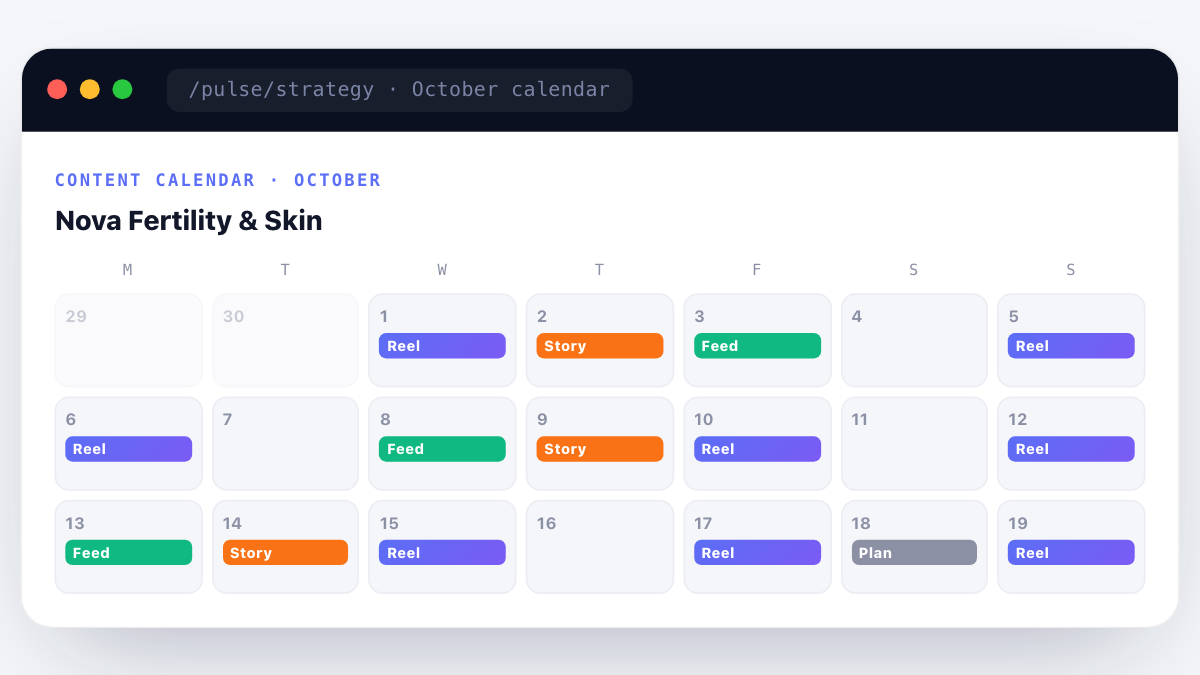

ORM in Indian healthcare is a regulated activity, whether or not your agency treats it that way. Three frameworks in particular set the guardrails every serious brand should design around.
NMC guidance on healthcare advertising
The National Medical Commission's professional conduct regulations set boundaries on how doctors can be promoted, what claims a clinic can make about outcomes, and how patient testimonials can be used. In practice this means several ORM tactics common in other sectors — before-and-after collages with clinical claims, superlative language like "best in India", unverified success percentages, celebrity doctor cults — are risky at best. A compliant ORM programme uses experience-based patient stories, avoids superlatives, and stays factual about credentials.
DPDP Act 2023 and patient data
The Digital Personal Data Protection Act, 2023, changed how Indian healthcare brands can collect, store, use and share patient information — including for review requests, testimonials, remarketing and case studies. Every ORM programme now needs documented consent, purpose limitation, breach notification protocols and the ability to erase data on request. Practically, this shows up in every review request template, every WhatsApp broadcast, every retargeting audience and every CRM segment. Our AtomCRM was built with these controls baked in from the ground up, priced at Rs 14,999 per month for exactly this reason — most standalone tools ask you to bolt DPDP compliance on later, which is where risk creeps in.
ASCI guidelines on health and wellness advertising
The Advertising Standards Council of India's guidelines specifically address health, wellness and pharma claims. Language like "guaranteed cure", "no side effects", "100 percent success rate" and unverified before-after visuals routinely attract ASCI action. A conservative ORM programme runs every public response, every social caption and every website claim through a light legal filter. HealthPro 360, our Rs 14,999 per month hospital RCM and EHR overlay, includes marketing-safe messaging templates that stay clean of ASCI red flags.
Section takeaway
Compliance is not a constraint. It is a competitive moat. Brands that internalise the three frameworks build reputation faster because they never have to unwind a viral misstep or a regulatory notice.
Reputation benchmarks by specialty
Aggregate reputation numbers are misleading because a "good" review profile for a diagnostic lab looks nothing like a "good" profile for an oncology hospital. Here is how we benchmark, drawn from our 150-clinic portfolio.
| Specialty | Healthy avg rating | New reviews per month | Response rate target | Recency (last review) |
|---|---|---|---|---|
| Dental single clinic | 4.6 to 4.8 | 15 to 30 | 100 percent within 48 hrs | < 3 days |
| IVF clinic | 4.5 to 4.7 | 10 to 20 | 100 percent within 24 hrs | < 5 days |
| Cosmetology/dermatology | 4.6 to 4.8 | 20 to 40 | 100 percent within 24 hrs | < 2 days |
| Multi-specialty hospital | 4.2 to 4.5 | 80 to 150 | 90 percent within 48 hrs | < 1 day |
| Diagnostic lab chain | 4.4 to 4.6 | 40 to 80 per location | 80 percent within 72 hrs | < 2 days |
| Physiotherapy clinic | 4.7 to 4.9 | 10 to 20 | 100 percent within 48 hrs | < 5 days |
| Paediatric specialty | 4.5 to 4.7 | 15 to 30 | 100 percent within 24 hrs | < 3 days |
How to read the benchmarks
Rating alone is misleading. A dental clinic at 4.9 with three reviews per month and a 60 percent response rate is actually behind a 4.6 clinic with 25 reviews and full response coverage — because Google, patients and AI models all read the fuller signal. Volume, velocity, recency and response depth compound; a lonely star rating does not.
Section takeaway
Benchmark yourself against your specialty and city, not against national averages. If you are below the healthy band on any dimension, that is the first thing your ORM plan should fix in the next 90 days.
Four Indian healthcare buyer archetypes
The right ORM strategy depends on who you are. We see four dominant archetypes among Indian healthcare buyers who come to us asking for help, and each needs a different opening move.
Archetype one: The single-doctor clinic in a metro
Typical profile: One founder-doctor, one to three support staff, one location in Bengaluru, Mumbai, Delhi NCR, Pune, Hyderabad or Chennai. Revenue Rs 40 lakh to Rs 2 crore. Marketing budget Rs 15,000 to Rs 60,000 per month. This archetype wins with a laser focus on GBP, review generation, doctor thought leadership on Instagram and one long-form YouTube channel. AI answer engine visibility is a strong second-year play. Ads are a distraction until reputation is compounding.
Archetype two: The mid-tier multi-city chain
Typical profile: 4 to 20 locations, one specialty focus like dental, IVF, cosmetology or ophthalmology, Rs 15 to Rs 100 crore annual revenue. This archetype almost always over-invests in ads and under-invests in per-location ORM. The fix is a centralised operating rhythm with per-location ownership, a listening layer, and consolidated reporting. Angryturtle at agency scale plus AtomCRM handles the operational spine; ads become 30 to 40 percent more efficient inside six months.
Archetype three: The large multi-specialty hospital
Typical profile: One to five large hospitals, 100 to 1000+ beds, revenue Rs 50 crore to Rs 500 crore, marketing team of 3 to 15. This archetype has scale but suffers from siloed ownership — the OPD marketing team, the IPD growth team, the international patient desk and the CSR team often run independent ORM efforts that contradict each other. The winning move is a unified ORM function reporting into a single senior owner, with HealthPro 360 as the connective tissue between RCM data, patient feedback and marketing action.
Archetype four: The pharma or medical device brand
Typical profile: National or regional pharma, medical devices, diagnostics or health-tech brand selling to hospitals, doctors or via retail. ORM here is less about reviews and more about doctor sentiment, KOL relationships, clinical evidence visibility and category leadership on LinkedIn and YouTube. Meta Catalyst IQ handles the doctor-targeted paid strategy; YODA handles category leadership content. Reputation is measured in specialty inclusion rates and prescription share of voice, not stars.
Section takeaway
The same ORM playbook does not fit all four archetypes. Diagnose your archetype first, then design the programme. Mismatched programmes waste 30 to 60 percent of budget in our audits.
Eight common ORM mistakes healthcare brands make
In three years of auditing Indian healthcare ORM, the same eight patterns show up almost universally. The good news is six of them are free to fix in under 90 days.
- Treating ORM as a monthly report, not a daily operation. Reputation is a real-time system. Monthly retrospectives on a real-time system are theatre.
- Chasing five-star reviews with incentives. This attracts platform penalties, distorts sentiment data, and eventually shows up as regulatory risk under ASCI and consumer protection frameworks.
- Copy-pasting review responses. Templates signal "we do not read". Patients notice; algorithms increasingly notice too.
- Ignoring Q&A on Google Business Profile. Anyone — including competitors — can answer questions on your GBP. If you are not seeding and monitoring your own answers, someone else is.
- Panicking at every one-star review. A perfect 5.0 profile reads as fake. A 4.5 with thoughtful handling of the occasional 1-star reads as real. Real converts better.
- No listening layer. Learning about a crisis from a lawyer or a journalist is a preventable failure. Basic listening infrastructure costs less than one bed-day of revenue at most hospitals.
- No AI answer engine strategy. In 2026 this is defensible. In 2027 it will be indefensible. In 2028 the leaders will be uncatchable.
- Owner-doctor as the sole responder. Talented doctors are expensive per hour. ORM response is trainable, delegable and better done by a small dedicated function with senior review on exception cases.
Section takeaway
Audit yourself against these eight patterns before you spend on the next ad campaign. The compounding return on fixing them is higher than most media investments.
The 70-30 pricing model for ORM engagements

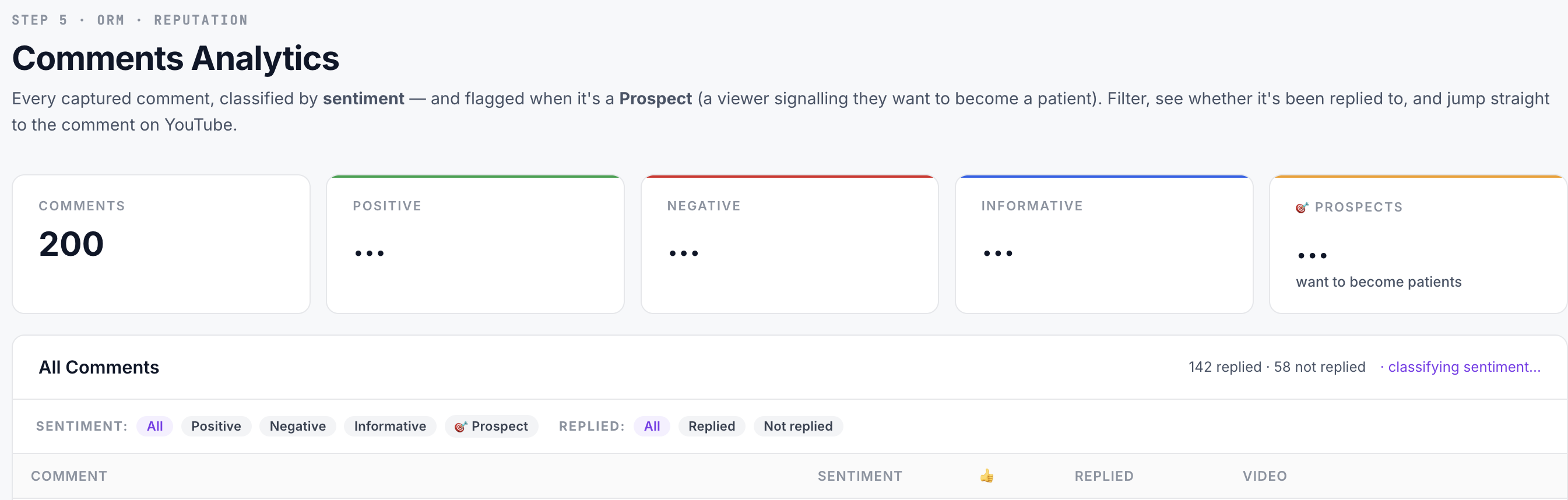
ICG runs its healthcare ORM engagements on a 70-30 model — 70 percent of the effort goes into structural execution (GBP hygiene, review programmes, listening, response workflows, content and video), 30 percent goes into experimentation and reporting. Three tiers cover the vast majority of Indian healthcare brands.
| Tier | Monthly retainer | Best for | What is included |
|---|---|---|---|
| Foundation | Rs 49,999 | Single-clinic or small chains, up to 3 locations | GBP hygiene, review generation and response, basic listening, monthly reporting, quarterly strategy review |
| Growth | Rs 74,999 | Mid-tier chains, 4 to 12 locations, single-specialty | Everything in Foundation, plus multi-location coordination, weekly listening summaries, crisis protocol, doctor content pipeline, AI answer engine baseline work |
| Scale | Rs 99,999 | Multi-specialty hospitals, large chains, pharma brands | Everything in Growth, plus dedicated pod, full YODA video pipeline, Prism Pulse listening, Meta Catalyst IQ integration, senior strategist involvement, monthly leadership review |
All three tiers are anchored on the 70-30 principle. The moment execution drops below 70 percent, the programme becomes a strategy deck. The moment experimentation drops below 30 percent, the programme becomes commodity work. Both failure modes destroy compounding returns.
Section takeaway
Below Rs 49,999 per month for meaningful multi-surface ORM in Indian healthcare, the numbers do not work. Above Rs 99,999 without a defined system, the money does not compound. The 70-30 model is what makes retainer economics sustainable for both sides.
A 12-month ORM execution roadmap
Here is the quarter-by-quarter plan we run for a typical mid-tier Indian healthcare brand starting from a mixed baseline. Adjust cadence for your archetype, but the sequence rarely changes.
Quarter 1: Diagnose, stabilise, build the operating rhythm
Month 1 is the audit — GBP, reviews, social, listening, competitors, compliance, and a baseline AI answer engine visibility scan. Month 2 is stabilisation — response backlogs cleared, GBP hygiene fixed, listening tools live, crisis protocols drafted, review generation workflow deployed. Month 3 is rhythm — weekly cadence locked in, ownership assigned per location, first monthly leadership review completed. Expected outcomes: response rate to 90 percent plus, review velocity up 30 to 50 percent, listening infrastructure live.
Quarter 2: Compound the basics, launch content
Doubling down on the mechanics that showed traction in Q1. Introduce doctor-led content — Instagram Reels, one YouTube long-form per doctor per month, LinkedIn thought leadership for owner or medical director. Begin the AI answer engine work — structured content, FAQ pages, pricing transparency, third-party mention outreach. Expected outcomes: review velocity up 60 to 100 percent from baseline, first meaningful branded search lift, GBP calls up 20 to 40 percent.
Quarter 3: Scale, differentiate, defend
Video and community become the differentiators. YODA-style YouTube programme running on a weekly cadence. Meta and Instagram community-building, not just posting. Reddit and Quora presence for high-consideration specialties. Aggressive but disciplined defence of GBP against category poaching and fake reviews. Expected outcomes: measurable AI answer engine mentions, category-level share of voice improvement, cost per booked consult down 20 to 35 percent versus Q1.
Quarter 4: Institutionalise and plan Year 2
The programme becomes a permanent operating function, not an agency deliverable. Governance dashboards, quarterly business reviews with the executive team, compliance audits, ORM contribution to revenue modelled explicitly, and Year 2 plan built around what Year 1 data revealed. Expected outcomes: ORM is a line item in board reporting, not a marketing sub-task.
Section takeaway
Twelve months is enough time to move an Indian healthcare brand from reactive ORM to a compounding reputation engine. Twenty-four months is enough to build a moat. Six months is enough to convince yourself it is not working — which is why so many programmes die in Q2.
Key takeaways
- Online reputation is now the dominant multiplier on every rupee of healthcare marketing spend in India.
- Healthcare ORM in 2026 is a five-pillar system: GBP hygiene, review programmes, social listening, AI answer engine visibility, and compliance-safe advocacy.
- Google Business Profile is the single most important reputation asset for most Indian healthcare brands under Rs 20 crore in annual revenue.
- Reviews compound on four dimensions — volume, velocity, recency and response depth. Chasing star rating alone is a losing strategy.
- AI answer engines are the new reputation frontier. Building visibility here in 2026 creates a durable advantage by 2028.
- Compliance under NMC, DPDP Act 2023 and ASCI is a moat, not a constraint. Design your ORM programme inside the guardrails from day one.
- Different buyer archetypes need different ORM programmes. Diagnose before you design.
- The 70-30 pricing model — Foundation Rs 49,999, Growth Rs 74,999, Scale Rs 99,999 — is the retainer economics that make Indian healthcare ORM sustainable for both agency and client.
- A 12-month roadmap moves you from reactive to compounding. Twenty-four months builds a moat. Start now.
FAQ
What exactly is ORM in the context of Indian healthcare?
Online reputation management in healthcare is the disciplined practice of shaping how patients, referring doctors and regulators perceive a healthcare brand across every digital surface — search, maps, social, video, forums and now AI answer engines. In India it also includes staying compliant with NMC, DPDP Act 2023 and ASCI while doing so.
How long before ORM investment shows measurable results?
GBP hygiene and review response improvements typically show in 30 to 60 days. Review velocity gains and listening-driven crisis prevention show in 60 to 120 days. AI answer engine visibility and full cost-per-consult impact typically show in 4 to 9 months for most Indian healthcare brands in our portfolio.
Can we do ORM in-house instead of hiring an agency?
Yes, if you have a dedicated resource who owns it full time, tooling, senior review for exception cases and clear governance. Most Indian clinics under Rs 5 crore revenue find agency retainers more efficient than hiring; most hospitals over Rs 100 crore find a hybrid model works best.
How do we handle a viral negative post about our hospital?
Run the Tier 3 protocol. Assemble a small committee of founder, legal, PR and clinical head within two hours, issue a holding statement acknowledging awareness within the same window, and provide a full factual response within 24 hours. Do not delete, do not retaliate publicly, do not engage in comment threads. Move all substantive conversation to private channels.
Are patient testimonials on our website legally safe?
They can be, if you have documented DPDP-compliant consent, avoid clinical claims of guaranteed outcomes, do not use identifying visuals without explicit permission and stay within NMC and ASCI language guardrails. Every healthcare brand should have testimonials reviewed by a compliance-literate lawyer before publishing.
What does an AI answer engine strategy actually involve?
Structured content on your website (FAQ schema, service schema, doctor schema), a serious YouTube video programme with clean transcripts, third-party mentions in credible publications and community forums, transparent pricing pages, and a review corpus rich in genuine descriptive language. Together these make your brand legible to large language models when they answer patient queries.
How much of our ORM budget should go to video?
For most Indian healthcare brands in 2026, we recommend 25 to 40 percent of the ORM budget flow into video — YouTube long-form, Shorts, Reels and testimonials — because video is the fastest-growing signal into both AI answer engines and human decision-making. YODA is built specifically for this allocation for healthcare brands.
Do fake reviews really impact our rank on Google Maps?
Yes, in two ways. They distort your aggregate rating and, if detected as coordinated, can trigger platform penalties that suppress your visibility. The fix is a documented flagging process, professional public responses, and never retaliating in kind. Building a strong volume of genuine reviews is the best long-term defence.
Should our doctors respond to reviews themselves?
For milestone reviews, complex cases and high-profile praise or complaint, yes — a senior doctor's response adds enormous credibility. For routine 4 and 5-star reviews, a trained ORM executive with an approved response framework is more efficient. Reserve doctor time for exceptions.
What is the minimum viable ORM setup for a solo clinic?
Verified GBP with weekly posts, a review request workflow via WhatsApp or SMS after every consult, personal responses to every review within 48 hours, basic listening via Google alerts and Instagram notifications, and a lightweight compliance checklist for every public communication. Most solo clinics can run this on 4 to 6 hours per week of disciplined effort.
How does the 70-30 pricing model actually work in practice?
Seventy percent of every retainer hour goes into execution — GBP work, review responses, listening triage, content production, reporting. Thirty percent goes into experimentation, strategy iteration and unexpected but valuable opportunities. This ratio keeps execution disciplined without turning the retainer into a rigid deliverables checklist.
When should a healthcare brand consider adding a CRM to the ORM stack?
The moment review volume, WhatsApp lead flow and multi-location complexity make manual coordination unreliable — typically for brands crossing Rs 3 crore in annual revenue or three physical locations. A DPDP-compliant CRM like AtomCRM at Rs 14,999 per month is meaningfully cheaper than the revenue lost to disorganised follow-up.
Book a free 30-minute Brand & Growth Diagnostic.
It's a working session, not a sales pitch — you leave with a written root-cause analysis you can act on, whether or not you engage ICG.
Questions readers ask
about this topic.
The three platforms
behind every ICG engagement.
Beacon
CAPI middleware that fixes Event Match Quality, translates CRM statuses to Meta-standard events, dedups across channels.
Agency OS
Live client dashboard. GSC, GA4, Google Ads, Meta Ads, IVR calls in one view. Login anytime, not monthly.
Phoenix
Clinic revenue intelligence over your PMS. Daily action queue: Prevent Loss, Maintain & Engage, Grow Revenue. Multi-centre rollout.
Or book a free 30-min audit to see all three in action on your account.
Healthcare brands
that already run on ICG.
A representative slice of the 150+ healthcare brands ICG has delivered for across India. Most engagements remain under NDA.


What ICG clients say · on video.
"Scale up of organic channels and business consulting. ICG has absolute domain authority in their field."
"Working with ICG transformed how we acquire IVF patients in Gurgaon. They understand the fertility journey from inquiry to consult..."
"What Ichelon accomplished — they got all my ideas and worked over 3-4 months to create an amazing, super-customised website."
The intelligence stack behind this playbook.
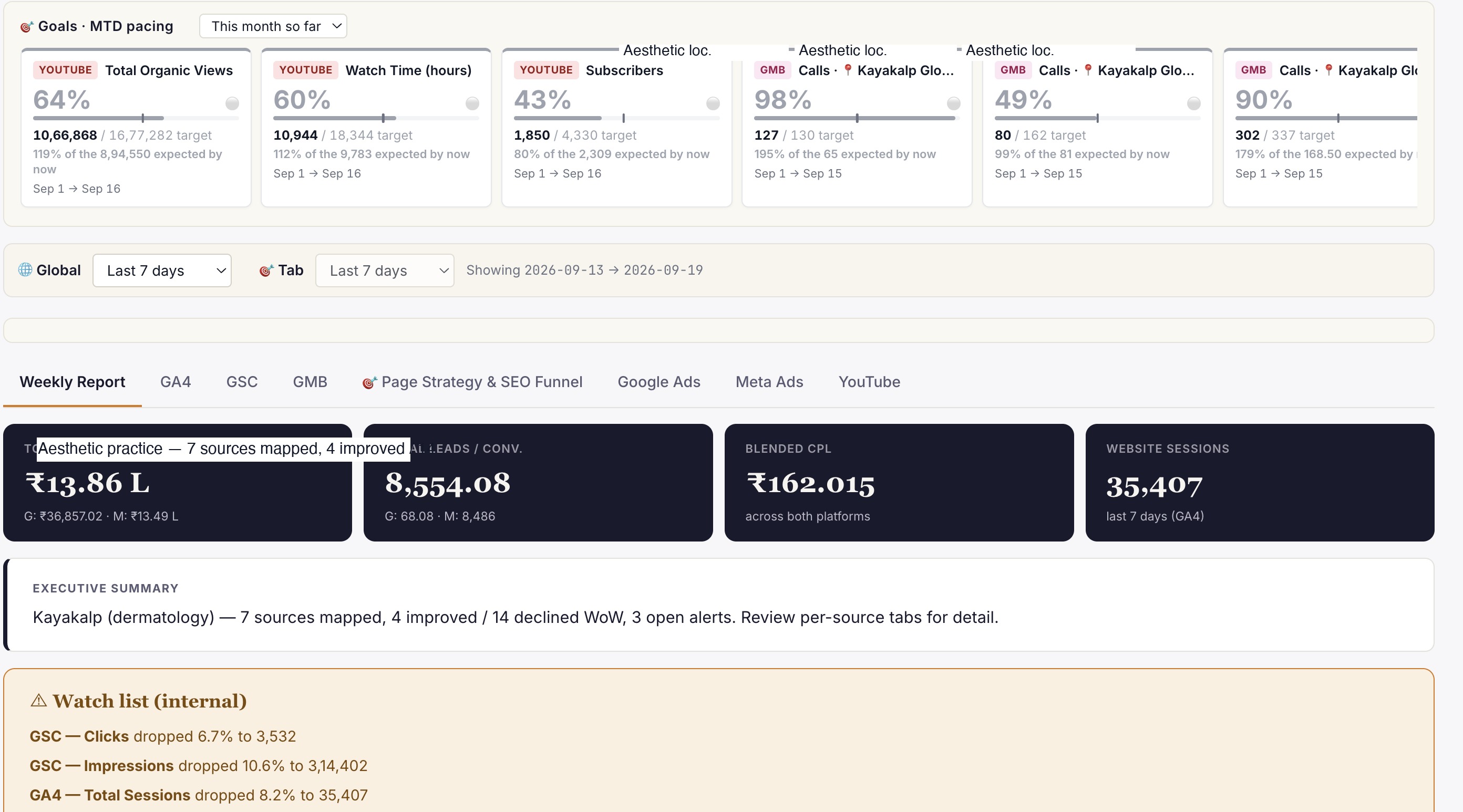
Every ICG engagement runs on the Search Intelligence Trifecta — Angryturtle for GMB, SIE for search and AI Overview, YODA for YouTube. Live product screens below.
Need help operationalising this?
Every ICG service is healthcare-only, NMC + DPDP-aware, and built around the patient-research patterns that drive Indian healthcare growth in 2026.
Every practice welcome — packages from ₹20,000/mo.
Goals-Driven engagements · Performance-Linked Payout Models available


More from
ICG.
Five trends shaping Indian healthcare marketing through 2027: AI-first patient research, Conversions API adoption, ABDM discovery, the AEO w...
Healthcare AIO is the discipline of getting your clinic or hospital cited inside Google AI Overviews, ChatGPT and Perplexity answers — not j...
Conversational-search advertising places brand messages inside AI chat answers — ChatGPT, Perplexity, Copilot — rather than beside a results...
Stop guessing.
Book a Diagnostic.
30 minutes. Free. With the AI-powered healthcare-only marketing agency 150+ brands already run on. No slides, no pitch, no hard close.


