


Cancer Hospital Marketing in India: Schedule J Guide 2026
Schedule J bans direct cancer treatment claims. See the compliant B2B framework Indian cancer hospitals use to fill OPD via screening, empanelment and referrals.
No pitch. Written root-cause diagnosis. AI-powered, healthcare only.
Direct answer
Schedule J bans direct cancer treatment claims. See the compliant B2B framework Indian cancer hospitals use to fill OPD via screening, empanelment and referrals.
TL;DR
Cancer is listed in Schedule J of the Drugs and Magic Remedies Act. It is a listed condition under NMC Section 6's most scrutinised categories. It involves deeply distressed patients and families making high-stakes, often irreversible decisions. And it involves public health — misinformation about cancer treatment causes real patient harm.
The regulatory framework for cancer hospital marketing reflects this seriousness. And yet, cancer hospitals must build patient awareness, generate referrals, and communicate their clinical capabilities to attract patients who could benefit from their care. The tension between these requirements makes oncology marketing one of the most technically demanding healthcare marketing disciplines.
ICG's framework for cancer hospital marketing resolves this tension — systematically, within compliance.
What Schedule J Prohibits for Cancer Marketing
Under Schedule J and the DMRA, advertising of drug treatments for cancer to the general public is prohibited. In practice, this means:
- No advertisement claiming a specific cancer drug or treatment protocol "works" for cancer
- No before-and-after patient outcome content for cancer treatment
- No survival rate claims ("our patients have a 70% 5-year survival rate")
- No implied superiority over other cancer hospitals
However, Schedule J restricts drug treatment advertising — not educational content about cancer, not institutional capability communication, and not referral pathway information.
The Cancer Hospital Marketing Framework: What Works
Track 1 — GP and oncologist referral (60%+ of oncology patients)
The majority of cancer patients at a tertiary cancer hospital arrive via GP or primary oncologist referral. The referral decision is clinical: the GP or community oncologist refers because they believe this hospital offers the specialist capabilities the patient needs.
ICG's B2B referral programme for cancer hospitals:
- Identifies GPs and community oncologists within the hospital's catchment radius
- Designs a structured CME programme led by the hospital's oncology faculty
- Builds a referral feedback loop: the referring doctor receives a structured summary within 48 hours of consultation
- Establishes a dedicated referral coordinator and WhatsApp channel for GPs to use for urgent queries
This track is not digital marketing. It is relationship management with clinical rigour. ICG designs and project-manages it as part of the engagement.
Track 2 — Second opinion digital programme
A significant and underserved patient cohort for cancer hospitals is patients who have received an initial diagnosis or treatment plan elsewhere and want a second opinion. This cohort:
- Is already in the system (diagnosed, sometimes already treated)
- Has high digital literacy (they are researching actively)
- Is specifically looking for institutional authority and MDT capability
- Converts well — a patient seeking a second opinion has high intent
ICG's digital second-opinion programme:
- SEO targeting: "second opinion cancer [city]", "second opinion oncologist India", "cancer MDT review India"
- Website content: a dedicated second-opinion pathway page, MDT structure explained, process and timeline described
- WhatsApp pathway: patients submitting existing reports for review — DPDP-compliant, with clear consent for clinical review
- No outcome claims at any point in the pathway
Track 3 — Screening and early detection content
Cancer awareness and early detection education is explicitly permitted under the NMC/Schedule J educational carve-out. ICG builds awareness content programmes around national and international cancer screening guidelines:
- Breast cancer screening (ICMR guidelines, mammography frequency)
- Cervical cancer screening (Pap smear, HPV vaccination recommendations from NTAGI)
- Colorectal cancer screening (colonoscopy recommendations)
- Lung cancer screening (high-risk population guidelines)
- Oral cancer early detection (especially relevant for India's high oral cancer burden)
This content is unambiguously educational, unambiguously permissible, and unambiguously valuable to patients. It also generates significant organic search traffic and LLM citations.
Tata Memorial as Benchmark Context
Tata Memorial Hospital (TMH) in Mumbai is the reference standard for cancer care communication in India. TMH's public communication — patient information materials, website content, published research, annual report — consistently uses the educational and service framing that ICG recommends for all oncology clients. Survival statistics appear in peer-reviewed publications — not patient-facing marketing. Treatment protocols are described in clinical terms for HCP audiences — not outcome-promised for patient audiences.
ICG's oncology clients benchmark against the TMH communication standard. Not because TMH is the only model — but because it demonstrates that the most authoritative cancer institution in India communicates compliantly, without compromise to credibility.
Corporate Health Screening: The B2B Oncology Channel
Indian corporations — particularly post-pandemic — are investing in employee health screening programmes. Cancer screening (oral cancer, breast cancer, colorectal cancer) is now part of many corporate health-check packages.
ICG designs and executes corporate cancer screening camp programmes for oncology hospital clients:
- Target: 100+ employer corporations within 30 km of the hospital
- Format: on-site screening day with hospital-deployed clinical team
- Outcome: screened employees who require follow-up are channelled to the hospital
- Compliance: all screening results communication is between clinician and patient — no marketing message in the clinical pathway
This channel generates new patients without advertising — through institutional service delivery.
Insurance Empanelment as a Marketing Tool
Cancer treatment is expensive. Insurance coverage is therefore a significant factor in patient hospital choice. CGHS, ECHS, Railway Health, and most private health insurers cover cancer treatment at empanelled hospitals.
ICG's recommendation: make empanelment status prominent on all digital channels. A cancer hospital's website, Google Business Profile, and ad copy should clearly state which insurance panels it accepts. This information reduces the friction for insurance-eligible patients and positions the hospital as accessible, not just prestigious.
CPQL for oncology in ICG's benchmark database: ₹2,100 — the highest of any specialty tracked. This reflects the complexity of the acquisition journey, the high CLTV of oncology patients, and the compliance constraints on content. The ROI remains strongly positive given typical oncology treatment package values.
Read next on ICG
- Oncology marketing — industry hub
- Schedule J compliance guide
- Pharma oncology medical communications India
Common Schedule J Compliance Mistakes Cancer Hospitals Make in 2026
Most cancer hospital marketing teams we audit at ICG are unknowingly running one or more of these violations. The DCA (Drugs and Cosmetics Act) enforcement climate has tightened since the 2024 NMC Professional Conduct amendments, and takedown notices from state drug controllers are now a monthly event, not a rare one.
- Using survival-rate percentages in ads. Even factually correct 5-year survival numbers become non-compliant the moment they appear next to a treatment CTA. Publish them in peer-reviewed publications and quality reports only, never in Google Ads copy, Meta creatives, or landing-page hero sections.
- Patient testimonials that name the disease. A patient saying "the hospital cured my stage-3 breast cancer" is a direct Schedule J violation, even if unedited. Compliant versions describe the care experience, not the outcome or condition.
- Oncologist personal-brand content that promises outcomes. Doctor-led YouTube and Instagram is the fastest legal channel for cancer hospitals, but Section 6 of the NMC Code forbids soliciting patients. Content must stay educational; we cover the safe framework in our YODA playbook for healthcare YouTube.
- Google Business Profile services listing the word "treatment". Angryturtle audits routinely find "Cancer Treatment" listed as a GBP service, which triggers both Google's medical policy and Schedule J. Use "Oncology Consultation" or "Second Opinion" instead — the Angryturtle GBP OS flags these automatically.
- Meta Ads targeting cancer keywords. Meta's healthcare policy already blocks most oncology targeting, but the workaround (targeting caregivers and corporate HR) is where compliant demand actually lives. See how we build these audiences in Meta Catalyst IQ.
The safer path is to route all growth investment through B2B channels — corporate screening, TPA empanelment, referring-physician networks — where Schedule J does not restrict outreach. Hospitals ready to redesign their oncology marketing stack from compliance-first principles typically start with an ICG Client Elevation Programme diagnostic.
Book a free 30-minute Brand & Growth Diagnostic.
It's a working session, not a sales pitch — you leave with a written root-cause analysis you can act on, whether or not you engage ICG.
Questions readers ask
about this topic.
The three platforms
behind every ICG engagement.
Beacon
CAPI middleware that fixes Event Match Quality, translates CRM statuses to Meta-standard events, dedups across channels.
Agency OS
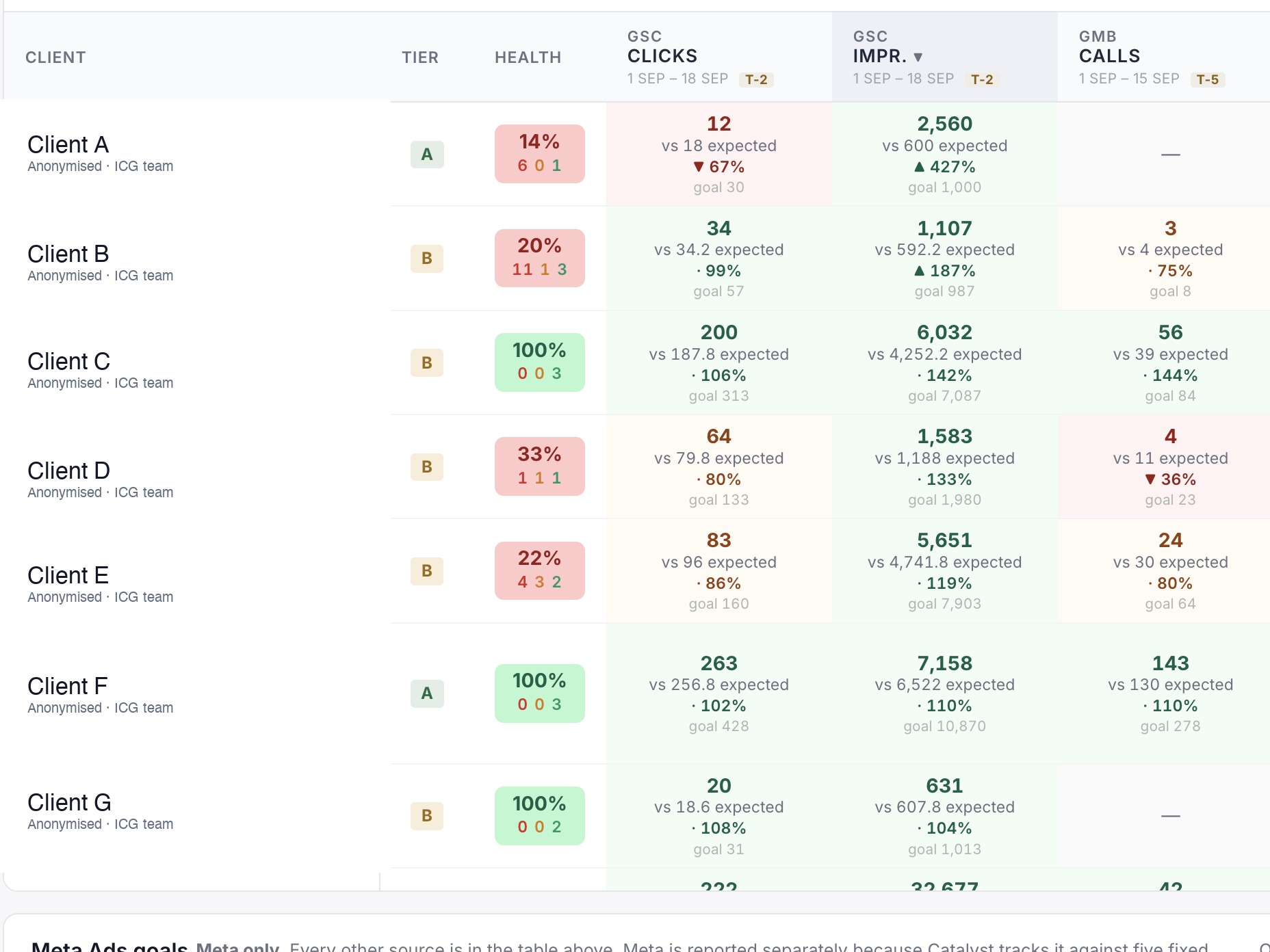
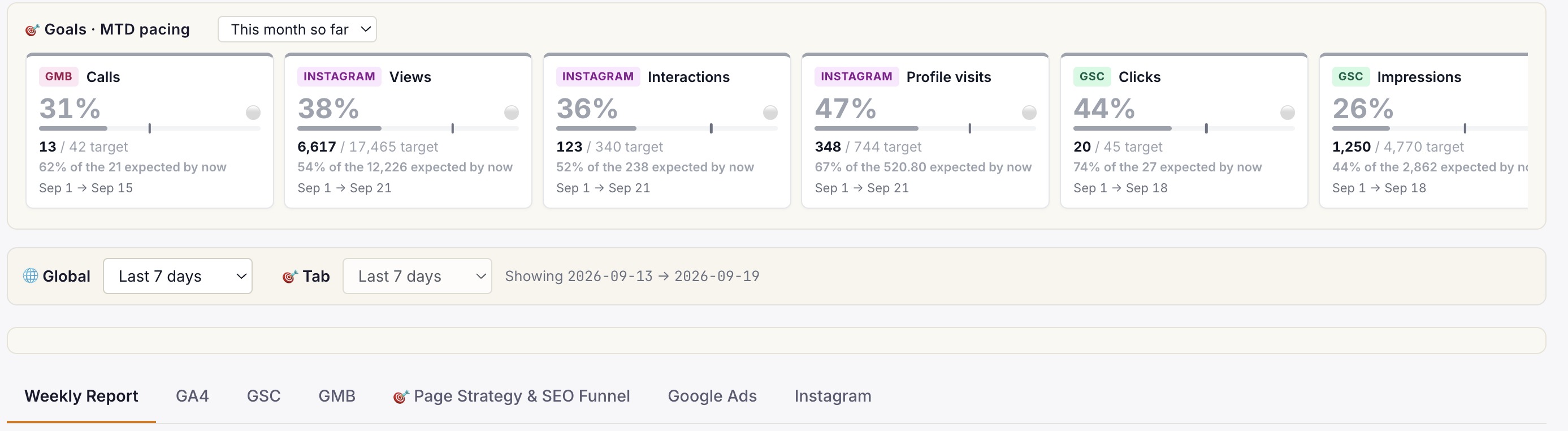
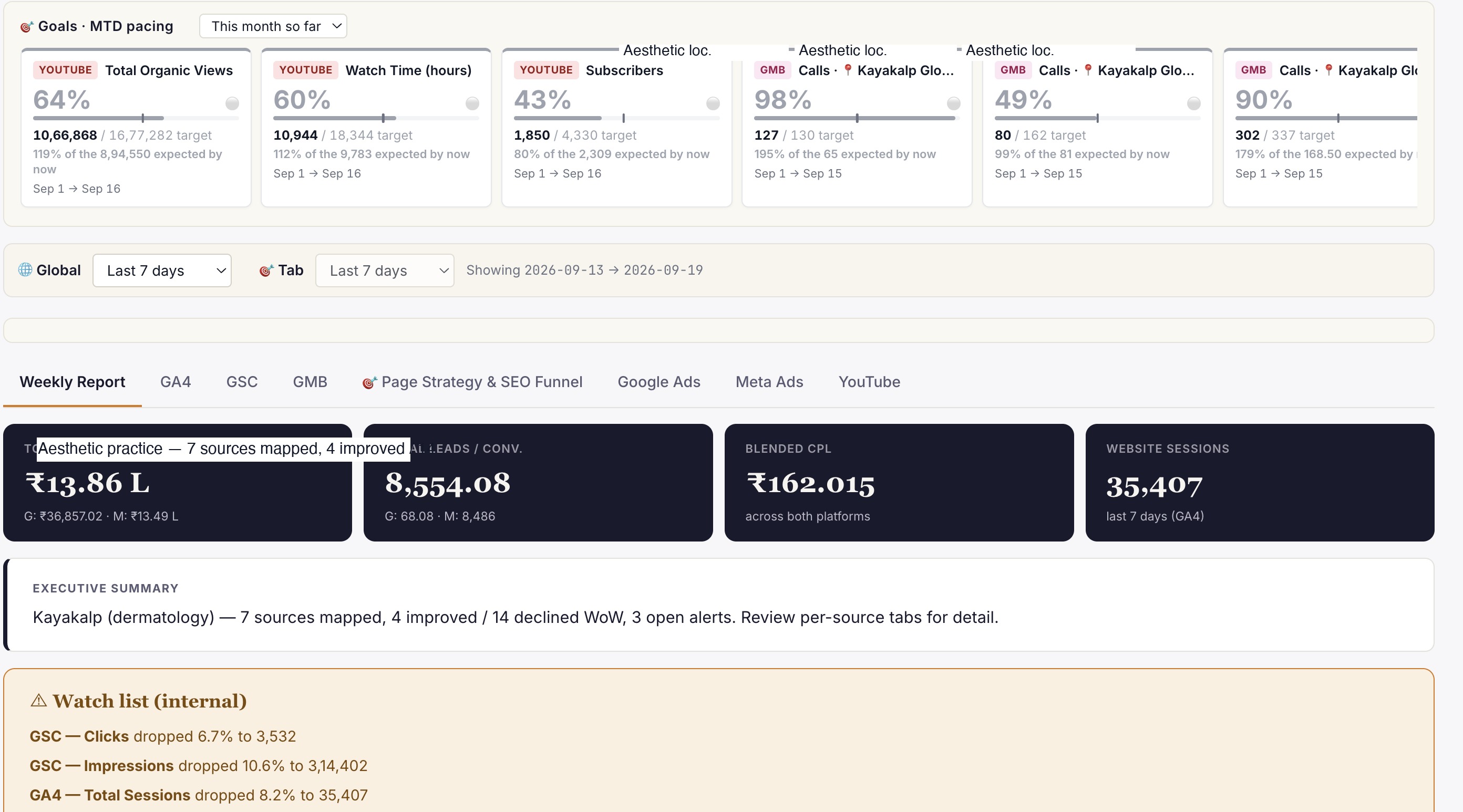
Live client dashboard. GSC, GA4, Google Ads, Meta Ads, IVR calls in one view. Login anytime, not monthly.
Phoenix
Clinic revenue intelligence over your PMS. Daily action queue: Prevent Loss, Maintain & Engage, Grow Revenue. Multi-centre rollout.
Or book a free 30-min audit to see all three in action on your account.
Healthcare brands
that already run on ICG.
A representative slice of the 150+ healthcare brands ICG has delivered for across India. Most engagements remain under NDA.


What ICG clients say · on video.
"Mental health marketing requires a different sensitivity. ICG built compliance-aware campaigns that respect both patients and our..."
"Bariatric surgery patients need a long consideration cycle. ICG built a content + paid system that respects that timeline."
"Working with ICG felt like working with an in-house growth team that happens to specialise in healthcare."
Need help operationalising this?
Every ICG service is healthcare-only, NMC + DPDP-aware, and built around the patient-research patterns that drive Indian healthcare growth in 2026.
Every practice welcome — packages from ₹20,000/mo.
Goals-Driven engagements · Performance-Linked Payout Models available
More from
ICG.
Five trends shaping Indian healthcare marketing through 2027: AI-first patient research, Conversions API adoption, ABDM discovery, the AEO w...
Healthcare AIO is the discipline of getting your clinic or hospital cited inside Google AI Overviews, ChatGPT and Perplexity answers — not j...
Conversational-search advertising places brand messages inside AI chat answers — ChatGPT, Perplexity, Copilot — rather than beside a results...
Stop guessing.
Book a Diagnostic.
30 minutes. Free. With the AI-powered healthcare-only marketing agency 150+ brands already run on. No slides, no pitch, no hard close.


