


Angryturtle vs Yext for healthcare local SEO: enterprise listings syndication versus healthcare-first GBP intelligence
Yext is an enterprise listings-syndication platform used by very large brands to push consistent business data across hundreds of directories at once. Angryturtle is India's healthcare-first GBP intelligence and management OS with a scoring brain Rank OS, AI-answer visibility Ask
No pitch. Written root-cause diagnosis. AI-powered, healthcare only.
Direct answer
Yext is an enterprise listings-syndication platform used by very large brands to push consistent business data across hundreds of directories at once. Angryturtle is India's healthcare-first GBP intelligence and management OS with a scoring brain Rank OS, AI-answer visibility Ask
TL;DR
Yext is an enterprise listings-syndication platform used by very large brands to push consistent business data across hundreds of directories at once. Angryturtle is India's healthcare-first GBP intelligence and management OS with a scoring brain (sie" style="color:inherit;text-decoration:underline;text-decoration-color:rgba(42,126,200,.5);text-underline-offset:2px">Rank OS), AI-answer visibility (Ask Maps), and healthcare-specific compliance workflows built in. The two tools solve different problems for different buyers. Yext excels at "we have 5,000 locations and need consistent NAP across 300 directories overnight"; Angryturtle excels at "we run 150 healthcare brands and need to diagnose, prioritise, execute and prove ranking movement in one loop." For an Indian healthcare brand or a healthcare-focused agency, Angryturtle is the right pick every time; for a global multi-thousand-location retail chain, Yext is the right pick. If you're evaluating healthcare local SEO agency options, knowing the difference matters because generalist agencies sometimes pitch Yext for problems Yext isn't the right shape for.
 AI Overview readiness scoring on every healthcare query for the listing's specialty × city" loading="lazy" decoding="async" style="width:100%;height:auto;display:block;">
The category difference: enterprise syndication versus healthcare intelligence
Yext was founded in 2006 as a listings-management platform focused on push-based data syndication. The core value proposition: give Yext your business data (name, address, phone, hours, services, categories), and Yext pushes it out to a network of publisher partners (Google, Bing, Apple Maps, Facebook, Yelp, Foursquare, and 200+ industry-specific directories). Any data change updates across the network within hours. For very large brands managing hundreds or thousands of locations, this consistency-at-scale is the primary value.
Yext expanded over the years into review management, analytics, search-experience management for enterprise sites, and answer-engine work. But the core architecture — data-push syndication — remains the through-line. Yext is a system-of-record for business information that publishes to the world.
Angryturtle was built for a different problem. Rather than push data outward at scale, Angryturtle diagnoses the state of a Google Business Profile, prioritises the highest-value fixes using a healthcare-tuned scoring model, executes edits directly to Google, and proves ranking movement through geo-grid scans and Rank OS trajectory reports. It's a diagnosis-execution loop for healthcare buyers, not a syndication engine for enterprise buyers.
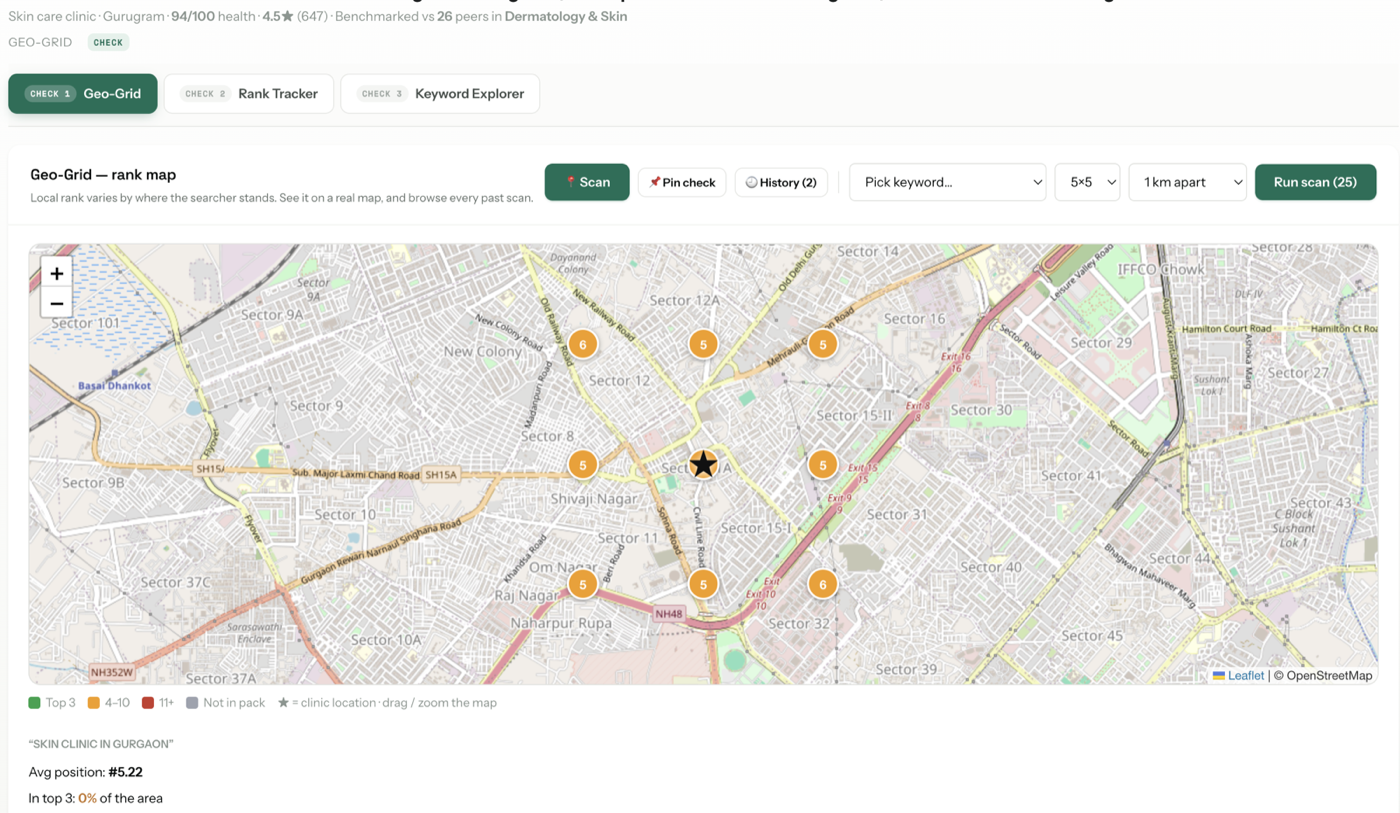
The two tools overlap at the edges (both can push edits to Google Business Profile, both can manage reviews, both can produce reports) but diverge on almost every dimension that matters for an Indian healthcare buyer.
Feature comparison for a healthcare buyer
Data syndication scope
Yext's syndication network is broad — 200+ publisher partners across geographies and verticals. For a US or European enterprise brand with hundreds of locations, Yext's network reach is meaningful because inconsistent NAP across 100+ directories compounds into a significant trust-signal problem.
Angryturtle focuses on Google Business Profile as the primary local SEO surface, with citation management across the healthcare-specific directory list (Practo, Justdial, IndiaMART Healthcare, HealthEnclave, insurance-panel directories, medical associations). The syndication scope is narrower but healthcare-relevant. For an Indian healthcare brand, the directories that matter for ranking are ~30-50 specific ones, not the full 200+ Yext covers globally.
The right comparison isn't "who covers more directories" but "who covers the directories that matter for the buyer's vertical and geography." For Indian healthcare, Angryturtle covers what matters; for global retail chains, Yext covers what matters. Different problems.
GBP editing and profile management
Yext manages GBP data as part of its listings syndication but the interface is oriented toward bulk updates across large location counts. A single-location clinic can use Yext but the tool's design pattern (upload a spreadsheet, sync to 200 directories) is overkill for one profile.
Angryturtle's GBP management is designed for the diagnose-execute workflow. Rank OS scores the profile, action list surfaces the highest-value edits, one-click execution publishes to Google. For a single healthcare business or a small chain (2-20 locations), Angryturtle's workflow is materially faster than Yext's spreadsheet-and-sync pattern.
For large healthcare chains (50+ locations), both tools support portfolio management. Angryturtle's advantage remains the healthcare-specific diagnostic; Yext's advantage remains the enterprise data governance layer.
Review management
Both tools support review monitoring and reply. Yext's Reviews product supports multi-directory review aggregation (Google, Facebook, Yelp, industry-specific review sites), sentiment analysis, and reply workflows.
Angryturtle's review layer is Google-focused (which for Indian healthcare covers 80-90% of the meaningful review flow — Google reviews dominate the healthcare review landscape in India), with three healthcare-specific capabilities Yext doesn't match:
NMC-safe AI-drafted replies. Every AI-drafted reply frames responses to avoid claiming specific treatment outcomes, avoid presenting individual patient stories as clinical evidence, and avoid the language that triggers NMC ethics violations. Yext's generic reply drafting doesn't know NMC exists.
DPDP Act 2023 consent workflows for review requests. Angryturtle's review-request kit includes explicit patient consent framing that satisfies DPDP requirements for messaging patients about reviewing their visit experience. Yext's review-request feature doesn't ship with this.
Brand Identity vs Image gap analysis. Angryturtle's proprietary read of the review corpus against the hospital's brand positioning surfaces where perception diverges from claimed identity. Yext offers sentiment analysis but not the identity-vs-image comparison.
Answer-engine / AIO capabilities
Yext has an Answers product — an AI-driven search-experience-management tool for enterprise brand sites (helping large enterprise sites answer user queries via chat-style interfaces on their own web properties). It's a substantial product for enterprise search use cases but it's not the same problem as scoring whether a GBP is a citable answer for Google AI Overviews.
Angryturtle's Ask Maps is specifically about Google AI Overviews and ChatGPT citation of local healthcare businesses — a distinct problem from enterprise on-site search. Ask Maps scores AIO Readiness per listing, surfaces the specific edits required for AI-answer visibility, and feeds the AIO Readiness dimension of Rank OS. Yext doesn't have an equivalent module for this specific use case.
Rank tracking and geo-grid
Yext has rank tracking in its analytics suite. The data is reliable and the reporting is enterprise-grade.
Angryturtle has geo-grid rank tracking with heatmap visualisation across a configurable lat/long grid, historical scan comparison, and Pin Checker for exact-location rank tests. Functional parity with Yext on the underlying rank data plus healthcare-specific competitive benchmarking (peers are other healthcare businesses in the same specialty and catchment, not generic local businesses).
Pricing and buyer profile
Yext pricing is enterprise-tier. Public pricing starts around $199/month per location for basic listings management, scaling to $999+/month per location for the full platform including reviews, analytics, and Answers. Total contract value for enterprise deployments runs into hundreds of thousands of dollars annually.
Angryturtle pricing: ₹999/month Solo (2 profiles), ₹3,499+/month Agency (10 profiles scalable, white-label), custom Enterprise pricing (typically 5-10× lower per profile than Yext's per-location equivalent for comparable functionality).
The pricing difference reflects the buyer profile difference. Yext is priced for very large enterprises where a $50K-500K annual contract fits comfortably within a marketing budget. Angryturtle is priced for Indian healthcare brands, where a ₹40K annual contract for full local SEO management is a fair fit against realistic marketing budgets.
Where Yext is genuinely stronger
Not every dimension favours Angryturtle. Being honest matters for making the right buying decision.
Global directory network breadth. Yext's 200+ publisher partners include international directories that Angryturtle doesn't cover. For a healthcare brand operating in multiple countries (Middle East, Southeast Asia, Europe), Yext's international reach handles cross-border data governance in one platform.
Enterprise data governance. Yext's role-based permissions, approval workflows, and audit trails are built for large enterprise governance requirements. A 500-location hospital chain with a compliance team may need Yext's governance depth even if Angryturtle's Rank OS diagnostic is stronger.
Answers on-site search. Yext's Answers product for on-site search on the enterprise's own website is a distinct capability Angryturtle doesn't have. Different problem, but a real one for large hospital chains with complex website search needs.
Publisher-partner API depth. Yext's direct API integrations with publishers like Bing, Apple Maps and Facebook are deeper than Angryturtle's coverage of those non-Google surfaces. For an Indian healthcare buyer this rarely matters (Google is 90%+ of local search flow in India), but for global buyers it can.
The healthcare-buyer decision framework

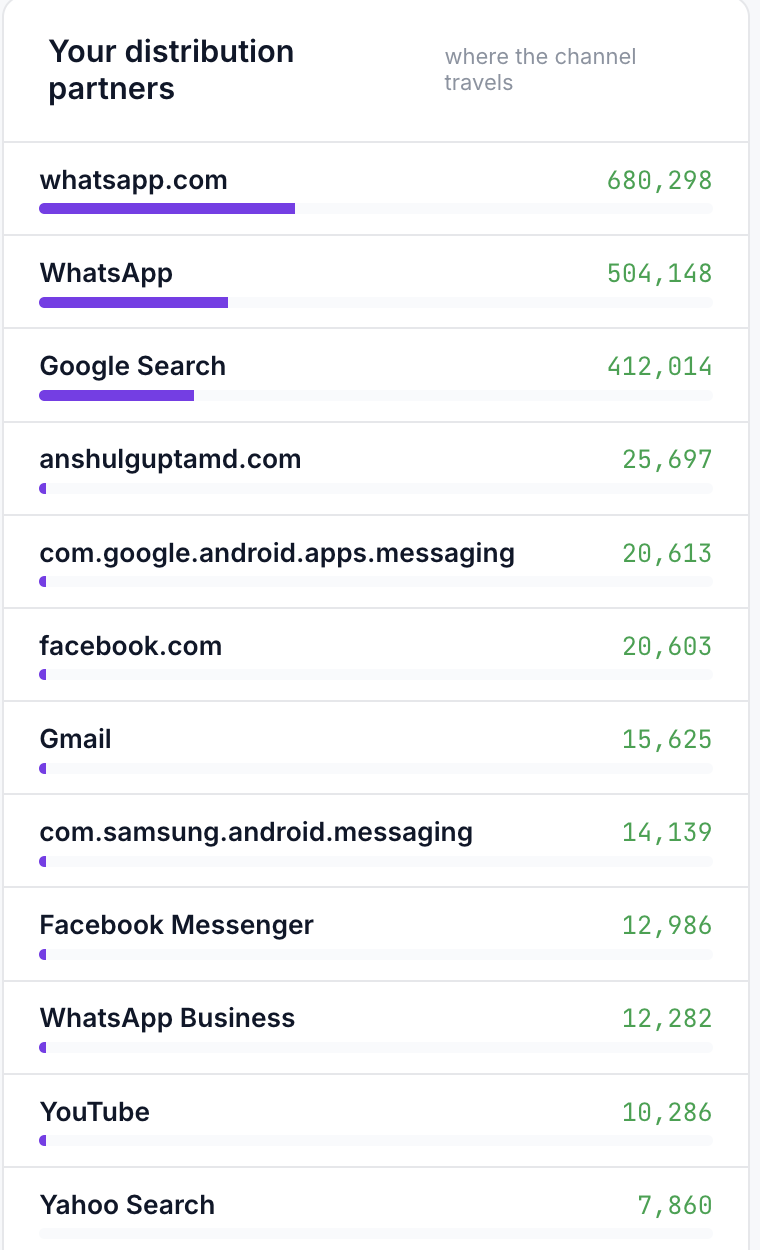
Pick Angryturtle if the primary business is Indian healthcare, if the buyer is a healthcare brand or a healthcare-focused agency, if the priority is diagnosis-execution-proof-of-ranking-movement in one loop, if the buyer wants Rank OS scoring and Ask Maps AIO readiness, and if the pricing needs to fit an Indian healthcare marketing budget rather than a US enterprise budget. This is almost every Indian healthcare buyer.
Pick Yext if the business operates at very large scale (500+ locations), spans multiple countries with heterogeneous directory landscapes, needs enterprise governance and approval workflows, has budget for enterprise-tier pricing, or needs the on-site Answers search capability. This is a very small subset of Indian healthcare buyers — typically only the largest hospital chains with international ambitions.
Use both if the operation is genuinely global with a large Indian healthcare footprint. Yext for global data syndication governance, Angryturtle for the Indian healthcare intelligence layer. Rare, but real for very large healthcare groups.
What ICG does with Angryturtle that a Yext-based competitor cannot
The specific capabilities ICG uses across the 150+ client portfolio that a Yext-based competitor can't match:
Healthcare-tuned Rank OS diagnostic. The 5-dimension score with healthcare-specific weighting and peer benchmarking. Yext's analytics don't produce a comparable synthesised score with an action queue.

Ask Maps AIO readiness per specialty. Question banks tuned per healthcare specialty (cardiology questions differ from IVF questions) scoring whether the profile is citable for AI-generated answers. Yext doesn't have this.
NMC / DPDP compliance workflows. Built into review reply drafting, review request messaging, and Post content generation. Yext operates as compliance-agnostic.
Healthcare-specific citation targets. Practo, insurance-panel directories, medical associations by default. Yext covers these but as one directory among 200+ rather than as the priority list.
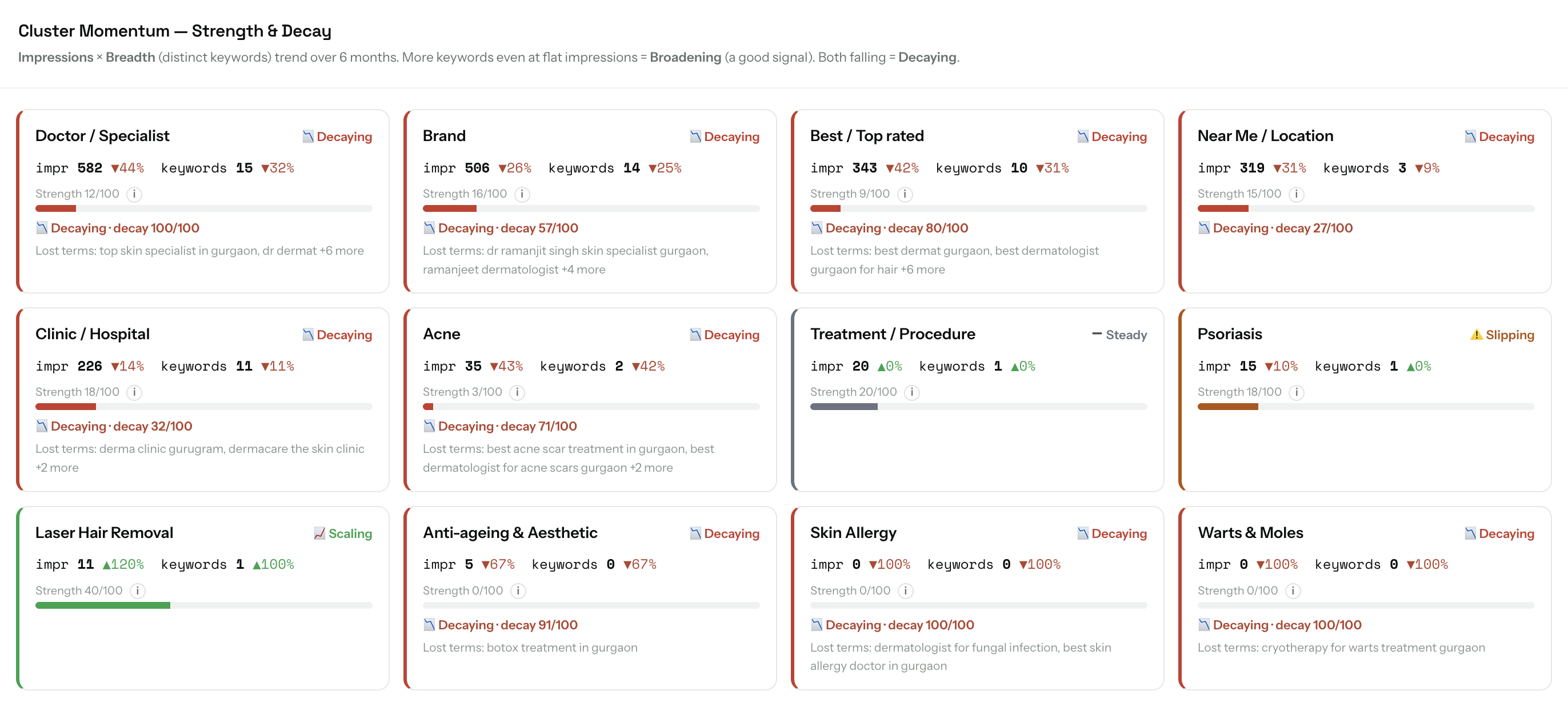
Cluster momentum from first-party GBP data. Angryturtle reads which query clusters are growing and shrinking for each specific profile using its own GBP impression data. Yext's analytics show similar data but without the healthcare-vertical clustering.
Brand Identity vs Image gap. Unique to Angryturtle. Not a feature Yext offers.
When Yext is the right pick despite being generalist
A very large Indian hospital chain (300+ beds, 20+ locations across multiple cities, international patient acquisition ambitions, complex insurance-panel and corporate-tie-up networks) may find that Yext's enterprise governance layer is worth the pricing premium even without healthcare-specific tuning. The chain's operations team can add the healthcare-specific workflow on top of Yext manually if the enterprise governance requirements justify Yext's baseline.
For most other Indian healthcare buyers — solo practices, single-location clinics, small chains, mid-sized hospitals, specialty clinic groups — Yext is over-engineered for the problem and Angryturtle is the appropriate fit.
Migration timing
Healthcare brands currently on Yext typically justify migration to Angryturtle when: (a) the healthcare-specific workflow gaps in Yext are consuming operations team time, (b) the diagnostic-versus-syndication mismatch is producing recommendations that don't get executed, (c) the pricing premium of Yext isn't justified by the utilisation, or (d) the client portfolio has consolidated to Indian healthcare and the generalist tool feels like the wrong fit.
Migration itself: Angryturtle connects to GBP profiles via OAuth (same authentication Yext uses). Existing profile data doesn't migrate directly — Angryturtle starts fresh — but the GBP itself doesn't change, only which management platform reads and writes to it. Typical migration time: under an hour per profile for the technical connection; several weeks for the operations team to adapt to Angryturtle's diagnose-execute workflow instead of Yext's syndication workflow.
Related reading
- Healthcare local SEO agency India — ICG's pillar service page powered by Angryturtle
- Angryturtle vs BrightLocal for healthcare — comparison against the generalist SMB local SEO tool
- Angryturtle Rank OS explained — the scoring model at the heart of Angryturtle
- Angryturtle Ask Maps AIO explained — the AI-answer visibility layer
FAQ
Is Angryturtle a Yext alternative? For Indian healthcare buyers, yes. Angryturtle covers the local SEO problem Yext solves for enterprise buyers, with healthcare-specific capabilities (Rank OS, Ask Maps, NMC / DPDP workflows) that Yext doesn't have. For global enterprise buyers outside healthcare, Yext remains the appropriate pick.
Can Angryturtle replace Yext for a healthcare enterprise? For most Indian healthcare enterprises, yes. For a very large multi-national healthcare group operating across 5+ countries with 500+ locations, the two tools may complement rather than substitute — Yext for global data governance, Angryturtle for the Indian healthcare intelligence layer.
What is the pricing difference? Yext starts around $199/month per location; Angryturtle Agency at ₹3,499/month (about $42) covers 10 profiles scalable. Per-profile cost is roughly 5-10× lower on Angryturtle for comparable functionality within the healthcare vertical.
Does Yext have anything Angryturtle doesn't? Global directory network breadth (200+ publishers vs Angryturtle's healthcare-specific ~40-50), enterprise governance (role-based permissions, approval workflows), and on-site Answers search product for enterprise websites. Angryturtle doesn't cover these.
Which tool is better for a multi-location Indian hospital chain? Angryturtle for chains up to ~50 locations. Both tools potentially in complementary use for chains larger than 100 locations with international operations. For a purely Indian chain of 5-50 locations, Angryturtle covers the problem better at materially lower cost.
How does the migration process work? Sign up for Angryturtle at angryturtle.ai. Connect existing GBP via OAuth. Run initial Rank OS baseline audit. Cancel Yext at current contract end. Total elapsed time: under an hour per profile for the technical connection; several weeks for operations team workflow adaptation.
Can Yext do AIO readiness scoring like Angryturtle's Ask Maps? Not directly. Yext has an Answers product for enterprise on-site search, but it's a different problem from scoring whether a GBP is citable for Google AI Overviews. Angryturtle's Ask Maps is purpose-built for the AIO problem in the local business context.
How does review management compare? Yext has broader multi-directory review aggregation (Google, Facebook, Yelp, industry sites). Angryturtle focuses on Google (which for Indian healthcare covers 80-90% of meaningful review flow) with healthcare-specific capabilities (NMC-safe AI reply drafting, DPDP-compliant review requests, Brand Identity vs Image gap analysis) Yext doesn't have.
Does Yext work well for solo doctors or small clinics? Not really. Yext's pricing and enterprise design pattern are overkill for single-location or small-chain buyers. Angryturtle's Solo tier (₹999/month) or Agency tier (₹3,499/month) fits these buyers better.
What if I need both healthcare-specific workflow AND global directory syndication? The two tools can run in parallel — Angryturtle for the healthcare intelligence layer, Yext for global syndication where needed. Rare setup but supported.
How does ICG position Yext to prospects? As the right tool for a very specific buyer profile (very large multi-national, hundreds of locations, enterprise governance requirements). For everyone else, ICG recommends Angryturtle as the healthcare-fit tool at appropriate scale and pricing.
Which tool has stronger reporting? Yext has more report templates and enterprise-format flexibility. Angryturtle's reports are cleaner and more focused (Rank OS trajectory, dimension breakdowns, action-executed logs) with white-label capability. Different reporting philosophies — Yext for broad enterprise formats, Angryturtle for focused diagnostic-execution proof.
Book a free 30-minute Brand & Growth Diagnostic.
It's a working session, not a sales pitch — you leave with a written root-cause analysis you can act on, whether or not you engage ICG.
The three platforms
behind every ICG engagement.
Beacon
CAPI middleware that fixes Event Match Quality, translates CRM statuses to Meta-standard events, dedups across channels.
Agency OS
Live client dashboard. GSC, GA4, Google Ads, Meta Ads, IVR calls in one view. Login anytime, not monthly.
Phoenix
Clinic revenue intelligence over your PMS. Daily action queue: Prevent Loss, Maintain & Engage, Grow Revenue. 46-centre rollout.
Or book a free 30-min audit to see all three in action on your account.
Healthcare brands
that already run on ICG.
A representative slice of the 150+ healthcare brands ICG has delivered for across India. Most engagements remain under NDA.


What ICG clients say · on video.
"Scale up of organic channels and business consulting. ICG has absolute domain authority in their field."
"Working with ICG transformed how we acquire IVF patients in Gurgaon. They understand the fertility journey from inquiry to consult..."
"What Ichelon accomplished — they got all my ideas and worked over 3-4 months to create an amazing, super-customised website."
The intelligence stack behind this playbook.
Every ICG engagement runs on the Search Intelligence Trifecta — Angryturtle for GMB, SIE for search and AI Overview, YODA for YouTube. Live product screens below.
Need help operationalising this?
Every ICG service is healthcare-only, NMC + DPDP-aware, and built around the patient-research patterns that drive Indian healthcare growth in 2026.
Every practice welcome — packages from ₹20,000/mo.
Goal-linked packages · Fixed retainer + Goal-based Variable Pay · 19-month average client retention — industry-leading.



More from
ICG.
Healthcare AIO is the discipline of getting your clinic or hospital cited inside Google AI Overviews, ChatGPT and Perplexity answers — not j...
Conversational-search advertising places brand messages inside AI chat answers — ChatGPT, Perplexity, Copilot — rather than beside a results...
NABH digital compliance means every claim, image and testimonial your hospital publishes online matches what an accreditation surveyor can v...
Stop guessing.
Book a Diagnostic.
30 minutes. Free. With the AI-powered healthcare-only marketing agency 150+ brands already run on. No slides, no pitch, no hard close.


