What is generative engine optimization (GEO)?
Generative engine optimization (GEO) is the work of making a brand's content and online presence more likely to be mentioned, summarized or cited by generative AI systems. These include ChatGPT, Gemini, Claude, Perplexity and Google's AI Overviews. GEO builds on SEO: crawlable, accurate, well-structured pages and a consistent reputation across the web still do most of the work.

- Goal: be named or cited inside AI-generated answers, not only ranked in links.
- Built on SEO basics: crawlable pages, clear answers, structured data.
- Off-site signals matter: reviews, listings, mentions on trusted sites.
- Results are hard to measure and vary by AI system and prompt.
- Every practice welcome — retainers from $499/mo, Goals-Driven engagements, Performance-Linked Payout Models available.
- Dallas, Texas LLC
- US client team · Central Time (CST)
- 25+ US healthcare clients
- BAA signed with every client
- HIPAA compliance training across client and delivery teams
- Contracts and invoices in USD
-
 Primary Care · North Dallas, TXCase study →
-
 MedSpa · North Dallas, TX
-
 Skin Care · Beverly Hills, CA
-
 Dental · Christiansburg, VACase study →
-
 Pediatrics · Blacksburg, VACase study →
-
 Pediatric Dentistry · Blacksburg, VACase study →
-
 Dental · Roanoke, VACase study →
-
 Functional Medicine · Telehealth · USACase study →
“They were able to get all my ideas and work with me over a period of three to four months and create this amazing website. It's super customized, very modern, and it incorporates all the elements that I had wanted — the patient portal, nice pictures, a very interactive website, patient reviews. I would highly recommend their company to anyone who wants to make an excellent website.”
What GEO means
The term was popularized by academic research in 2023 that tested how content changes affected visibility in AI-generated answers. In practice, GEO describes a set of tactics aimed at large language model products. Some of these systems search the web in real time and cite sources, such as Google AI Overviews, Perplexity and ChatGPT with search. Others answer partly from what they learned in training. GEO tries to influence both.
GEO overlaps heavily with answer engine optimization (AEO), and many people use the terms interchangeably. AEO is often used for featured snippets and voice answers as well as AI answers; GEO is used mainly for generative AI. Both rely on the same foundations as search engine optimization, because most AI systems that cite sources draw on pages that search engines can already find and trust.
How it applies to practice marketing
- Answer real questions plainly: lead with a direct answer, then explain. AI systems quote clear, self-contained passages.
- Show who is behind the content: named clinician reviewers, credentials and dates support trust.
- Be consistent everywhere: practice name, address, services and providers should match across your site, Google Business Profile and directories.
- Earn mentions: local news, professional associations and reputable directories help AI systems connect your practice to a topic and place.
- Use structured data: schema markup helps machines read who you are and what you offer.
Our guide to getting cited in AI Overviews and ChatGPT covers steps. See also SEO vs AI search and our AEO service.
Common mistakes and limits
GEO is young and changing. AI answers vary by system, wording of the question, location and time, so a single test prompt proves little. Track a fixed set of questions over time instead. Be wary of anyone promising guaranteed AI citations or secret tricks.
Common mistakes include publishing large volumes of thin AI-written pages, which can hurt search visibility, and making health claims that would not pass medical board or FTC review just to sound authoritative. In healthcare, accuracy is also a safety issue: content should be clinically reviewed. GEO does not replace SEO, reviews or local listings; it depends on them. A sensible starting point is modest: pick the ten or twenty questions prospective patients most often ask about your core services, make sure your site answers each one clearly, and check every quarter which AI tools mention you.
Related pages from the US team
Get cited in AI Overviews and ChatGPT
Practical steps for practices.
SEO vs AI search
How the two fit together.
AEO / AI Overview agency
How Ichelon Consulting US approaches AI visibility.
US healthcare marketing glossary
Every term, defined in plain English.
Every practice welcome — Goals-Driven engagements from $499/mo
We benchmark your last 90 days, agree monthly goals with you, and track them live on Ichelon Agency OS with a report every Monday. Performance-Linked Payout Models are available. Our US leadership is based in Dallas, and strategy calls run in US business hours.
Common questions
What is the difference between GEO and SEO?
SEO aims to rank pages in search results. GEO aims to have a brand mentioned or cited inside AI-generated answers. They overlap heavily, because AI systems that cite sources often rely on pages search engines already trust. Strong SEO is usually the foundation for GEO.
Is GEO the same as AEO?
They overlap and are often used interchangeably. Answer engine optimization is a broader older term that also covers featured snippets and voice answers. Generative engine optimization refers specifically to answers produced by generative AI systems such as ChatGPT, Gemini and AI Overviews.
How can a medical practice appear in ChatGPT answers?
There is no guaranteed method. Practices improve their chances with clear, accurate pages that answer common questions, consistent listings and reviews, structured data, and mentions on trusted sites. Results vary by AI system and question, so track a fixed set of prompts over time.
Can GEO results be measured?
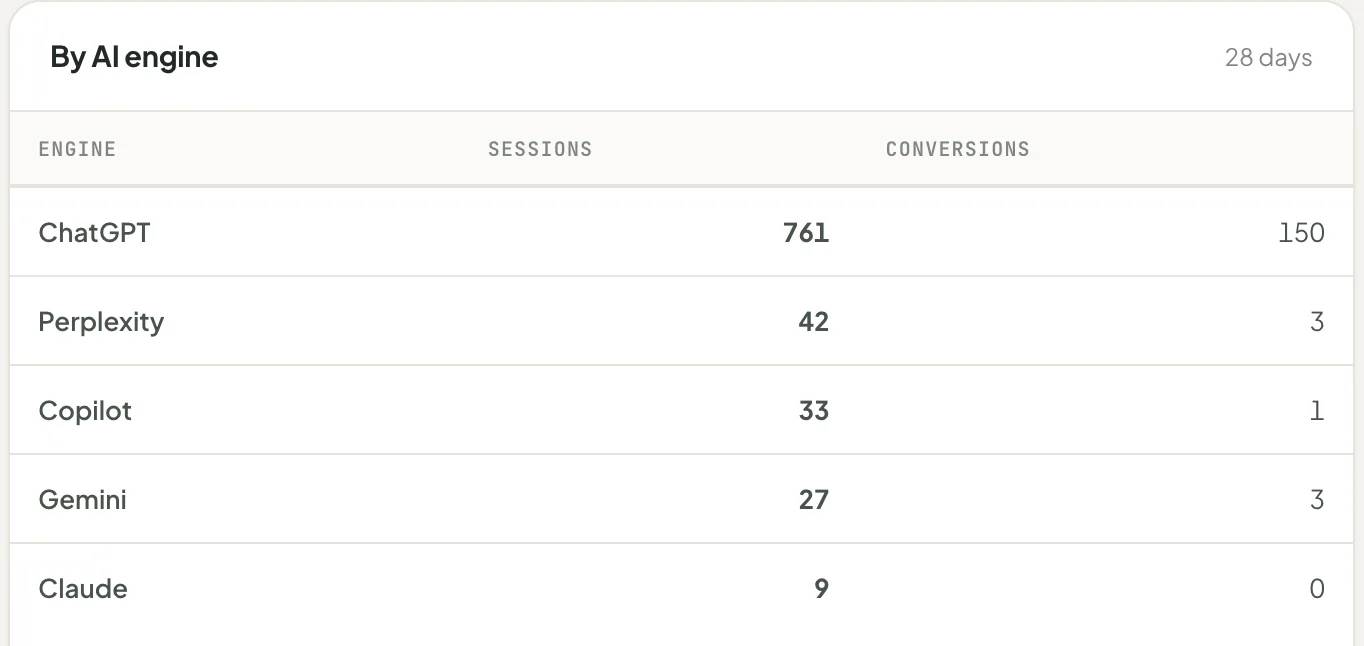
Partly. Practices can track whether they appear for a fixed set of questions across AI systems, referral traffic from AI tools in analytics, and branded search trends. Measurement is imprecise because AI answers vary by wording, user and time.
A note on this guide: it explains marketing practice, not legal advice. Rules on privacy, advertising and insurance change and vary by state, so confirm anything compliance-related with your own counsel.
Want to know if AI assistants mention your practice?
Book a 30-minute call. We'll run a set of patient-style questions and show where you appear today.
AEO / GEO in the nine-stage patient journey
- 0Foundations
- 1Demand gen
- 2Capture
- 3Lead quality
- 4Lead mgmt
- 5Scheduling
- 6Show-up
- 7Conversion
- 8Retention
It works across demand generation and capture: getting your practice named when patients ask AI assistants, then turning that visit into an enquiry. Our own software runs the work, and every stage is reported against a monthly target on Ichelon Agency OS.
See all nine stages and the tool behind each one →