


Healthcare PPC Audit Tier Categories in India: What to Buy
A feature-based buyer guide to the 5 category tiers of healthcare PPC audits in India, compared on benchmark depth, NMC and DPDP compliance, attribution, creative diagnostics, funnel review and competitor intel, with buyer-archetype fit and the 70-30 pricing model.
No pitch. Written root-cause diagnosis. AI-powered, healthcare only.
Direct answer
A feature-based buyer guide to the 5 category tiers of healthcare PPC audits in India, compared on benchmark depth, NMC and DPDP compliance, attribution, creative diagnostics, funnel review and competitor intel, with buyer-archetype fit and the 70-30 pricing model.
TL;DR

Most Indian healthcare marketing leaders don't need another PPC audit. They need to know which tier of PPC audit to buy. A dental single-chair in Indiranagar burning Rs 40,000 a month on Google Search doesn't need a 60-slide deck with cohort attribution modelling. A 120-bed multispecialty in Ahmedabad running Rs 18 lakh a month across Search, Meta, and YouTube absolutely does. Buying the wrong tier wastes both money and, worse, a full quarter of decision inertia.
This guide lays out the category tiers that exist in the Indian market today for healthcare PPC audits, the six-plus axes on which they actually differ, and which buyer archetype each tier fits. No vendor names. Just the shape of what you're buying, so you can walk into your next agency conversation and ask the right questions.
TL;DR
- PPC audits for Indian healthcare split into roughly five category tiers, not two. Confusing "cheap" with "DIY-template" and "expensive" with "enterprise-consulting" costs most buyers a full quarter of paid-media budget.
- The right tier is a function of monthly ad spend, specialty mix, compliance exposure (NMC, DPDP Act 2023, ABDM), and whether you need an audit that ends in a PDF or an audit that ends in a fixed campaign.
- Sub-Rs 1 lakh monthly ad spend usually justifies a template or generalist-freelance audit. Rs 1-5 lakh justifies a mid-market performance-agency audit. Rs 5 lakh and above almost always needs a healthcare-native or enterprise-tier audit because the compliance and attribution surface expands non-linearly.
- Six axes matter more than price: healthcare-specific benchmarks, compliance coverage, attribution method, creative diagnostics, funnel and landing page diagnostics, and competitor intelligence depth.
- At Ichelon, we deliver audits under the 70-30 model. Seventy percent of the fee is fixed for the diagnostic itself; thirty percent is tied to the twelve-month uplift target the audit forecasts. Skin in the game, on both sides.
Table of contents
- Why this comparison matters for Indian healthcare buyers
- The six axes to compare PPC audit tiers on
- The main comparison table
- Per-axis deep dives
- Which tier fits which buyer
- How ICG helps as a neutral advisor
- The 70-30 pricing model for audits
- FAQ
Why this comparison matters for Indian healthcare buyers
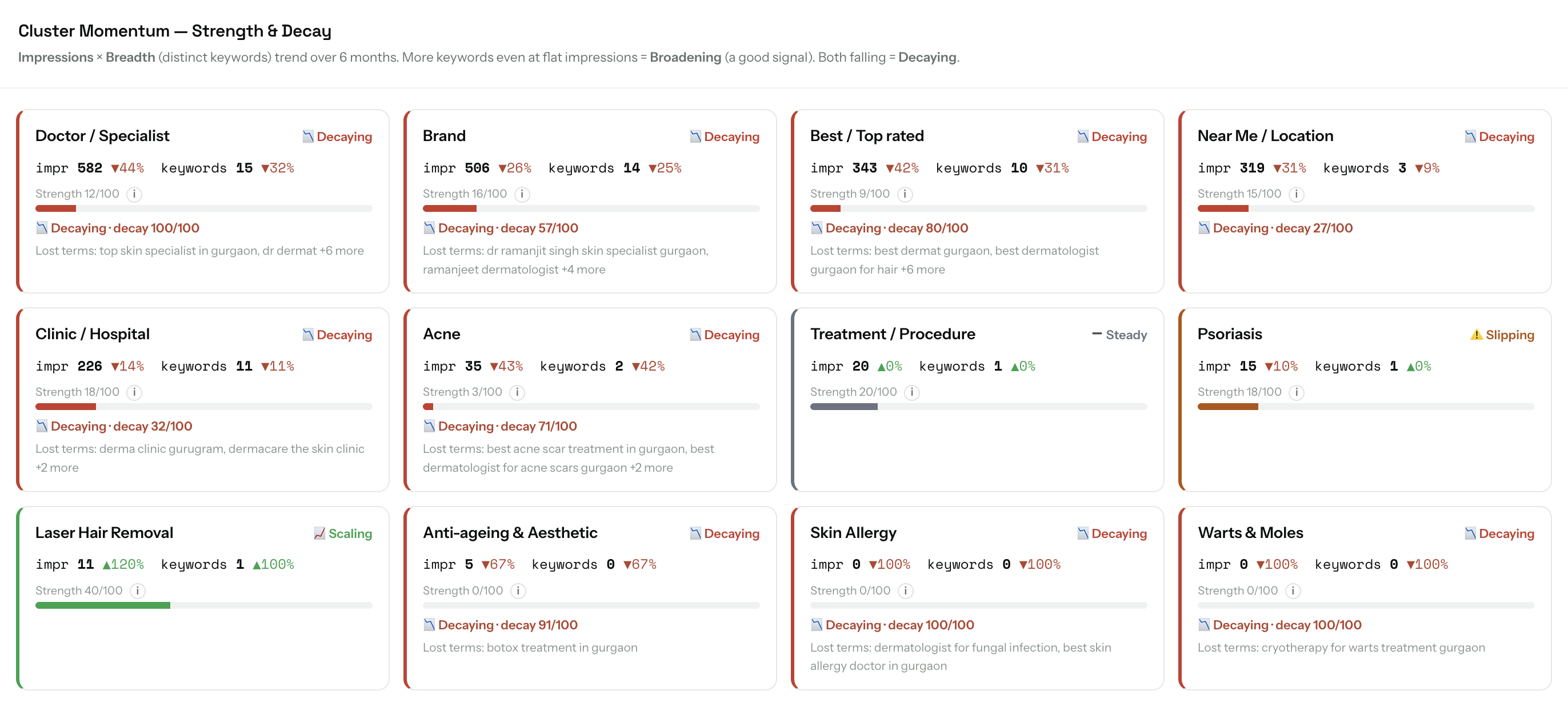
Indian healthcare paid media looks nothing like retail or SaaS. A conversion isn't a checkout. It's a WhatsApp reply, a form submission, an OPD call, a walk-in three weeks later, or a second-opinion enquiry that becomes an IVF cycle in April. Attribution is broken by default. Most audit frameworks written in California or Bengaluru for D2C brands quietly fail on this.
Layer on the Indian compliance stack. The National Medical Commission's Regulations 2023 restrict how doctor names, credentials, and comparative claims show up in creatives. The Digital Personal Data Protection Act 2023 changes how lead-form data can be stored, shared with call centres, or handed to a downstream RCM system. The Ayushman Bharat Digital Mission is quietly reshaping how patient identifiers flow between clinic, lab, and payer. An audit that doesn't check any of this is not an audit; it's a spreadsheet.
Then there is the buyer-archetype problem. A single dental chair in Pune with Rs 35,000 monthly spend and a 21-year-old founder-son handling ads has completely different needs from a mid-tier IVF chain with twelve centres across three states and a marketing head who has burnt through two agencies. The right audit tier for one is expensive noise for the other. Choosing correctly is worth roughly the same as three months of the audit fee itself, in avoided rework alone.
The six axes to compare PPC audit tiers on
Price is the axis buyers ask about first and the one that matters least in isolation. The following six axes describe what actually varies between tiers.
- Healthcare-specific benchmark depth. Does the audit report your cost per qualified lead against real Indian healthcare benchmarks by specialty and city, or against a generic B2C average?
- Compliance coverage. Does the audit explicitly review NMC creative guardrails, DPDP Act 2023 data-flow implications, and ABDM-linked patient-identifier hygiene, or does it skip these entirely?
- Attribution methodology. Does the audit assume last-click, or does it construct a multi-touch view that accounts for WhatsApp handoffs, offline consultation booking, and post-visit conversion?
- Creative and message diagnostic. Does the audit dissect ad copy, hook structure, offer framing, and creative fatigue, or does it stop at CTR and CPC numbers?
- Funnel and landing page diagnostics. Does the audit include the landing page, form design, WhatsApp routing, call-back SLA, and CRM handoff, or does it end at the click?
- Competitor intelligence depth. Does the audit include a real reverse-engineering of what competitor clinics or hospitals are running on Meta Ads Library and Google's ads transparency, or is the "competitor section" a screenshot of two homepages?
Two more axes matter, though buyers rarely ask about them upfront: turnaround time (a four-week audit in a market that changes weekly is a mixed blessing) and post-audit implementation support (an audit that ends in a PDF is not the same product as an audit that ends in a fixed campaign structure). We'll surface both in the table below.
Main comparison table
| Axis | Tier 1 DIY / Template |
Tier 2 Generalist Freelance |
Tier 3 Mid-market Performance Agency |
Tier 4 Healthcare-native AI-augmented |
Tier 5 Enterprise / Management Consulting |
|---|---|---|---|---|---|
| Typical price band (INR) | Rs 0 - 15,000 (one-time) | Rs 15,000 - 60,000 | Rs 75,000 - 2,50,000 | Rs 1,50,000 - 5,00,000 | Rs 8,00,000 - 25,00,000+ |
| Turnaround | Same day (self-serve) | 5-10 days | 2-3 weeks | 2-4 weeks | 6-12 weeks |
| Healthcare benchmark depth | None; generic B2C only | Anecdotal; last 2-3 clients | Cross-vertical, some healthcare | Specialty and city-level, hundreds of clients | Global; often not India-specific |
| NMC / DPDP / ABDM coverage | Not covered | Mentioned informally | Partial checklist | Full workflow-level review | Legal-panel-driven, thorough |
| Attribution method | Last-click in Google Ads UI | Last-click, GA4 basic | GA4 data-driven, some offline | Multi-touch incl. WhatsApp + walk-in | Full media-mix modelling |
| Creative diagnostics | CTR / CPC only | Ad-copy review, one round | Copy + creative fatigue tracking | Hook / offer / creative + competitor library scrape | Brand-linked; often outsourced back to agency |
| Funnel + landing diagnostics | Not included | Superficial; screenshots only | Load speed + form usability | Full LP + WhatsApp + CRM handoff review | Enterprise CX audit, siloed team |
| Competitor intelligence | Not included | Two homepage screenshots | Ads Library manual scan | Live tooling on Meta + Google transparency | Broad market study, less tactical |
| Post-audit implementation | You do it yourself | Optional add-on | Usually bundled as retainer | Built-in 30-90 day fix window | Recommendations only; you find an agency |
| Best-fit monthly ad spend | Under Rs 50,000 | Rs 50,000 - 1,50,000 | Rs 1,50,000 - 5,00,000 | Rs 5,00,000 - 25,00,000 | Rs 25,00,000+ |
Per-axis deep dives
1. Healthcare benchmark depth
Anyone can pull a Rs 150 cost-per-lead number off a blog post and call it a benchmark. The question is: Rs 150 for what? A dental scaling enquiry in Kochi and an oncology second-opinion enquiry in Delhi are not the same lead. A cost per qualified lead of Rs 800 for cardiology in a tier-1 metro can be excellent. The same number for cosmetic-dermatology in a tier-3 city might be terrible.
Tier 1 and Tier 2 audits usually skip this axis entirely because the auditor doesn't have the data. Tier 3 agencies will offer benchmarks pulled from their own client base, which is honest but often skewed by whichever handful of healthcare accounts they happen to run. Tier 4, the healthcare-native tier, is where you start seeing benchmarks broken down by specialty, procedure, city tier, and season, because the agency has hundreds of live healthcare accounts under management. Tier 5 consulting reports usually reference global datasets that, in our experience, translate poorly to Indian buying behaviour.
2. Compliance coverage: NMC, DPDP Act 2023, ABDM
This is where most audits quietly fail. The NMC Regulations 2023 have specific restrictions on how a doctor's name, qualifications, and results can appear in advertising. A creative that survives Meta's approval process can still be a regulatory problem for the clinic that ran it. The DPDP Act 2023 changes how lead-form data flows from a landing page into a call-centre queue into a CRM into a downstream RCM system, and any audit that ignores the storage-and-consent flow is missing a significant piece of the risk picture. ABDM-linked patient-identifier hygiene is more relevant for hospitals than single-doctor clinics but matters increasingly as payers integrate.
Tier 4 audits typically build a workflow-level compliance review because the auditor has been through this with dozens of clients. Tier 5 audits can be excellent here but often over-shoot for a mid-sized clinic's actual risk appetite.
3. Attribution methodology
Last-click attribution in the Google Ads or Meta Ads Manager UI is the most common way Indian healthcare marketers measure their spend. It is also, in most cases, wrong. A patient who first sees your YouTube pre-roll, then a Meta reel, then searches your brand name three days later, then WhatsApps you a week after that, will show up as a "brand search" conversion. All the upper-funnel spend that actually created the lead becomes invisible.
Tier 3 and Tier 4 audits start to fix this by combining GA4's data-driven attribution with offline event upload, WhatsApp click tracking, and, for larger buyers, some form of media-mix modelling. This changes how you spend money by 20-40 percent in our experience. Tier 5 audits do full econometric MMM which is powerful but usually overkill under Rs 25 lakh monthly ad spend.
4. Creative and message diagnostics
An audit that reports "CTR is below industry average, recommend testing new creatives" is not an audit. It is an observation. What you actually need is a diagnostic of hook (the first two seconds), offer (what the ad is actually asking for), and creative fatigue (frequency curve, first-impression drop-off), matched against what competitor clinics are running in the same market.
Tier 4 audits are usually the strongest on this axis because the auditor has creative operators on the same team. Enterprise consulting rarely does this well because creative production sits with a separate agency that the consulting firm doesn't touch.
5. Funnel and landing page diagnostics
The click is where most audits end and where most conversion problems begin. A brilliant Meta campaign feeding a form with eleven fields, no WhatsApp option, and a two-hour call-back SLA will underperform a mediocre campaign feeding a three-field form with instant WhatsApp routing. Every time.
Tier 4 audits will trace a lead from ad click, through landing page, through form or WhatsApp, into your CRM, through to first human contact and appointment booking. The bottleneck is almost never where the buyer thinks it is. In roughly seven out of ten audits we run at Ichelon, the biggest lift is in the last 90 seconds of the funnel, not in the ad platform.
6. Competitor intelligence depth
Meta Ads Library and Google's ads transparency centre are public tools. Anyone can look up what your closest competitor clinic is running. The gap between tiers is not access to the data; it is what you do with it. A Tier 2 audit will screenshot two competitor ads. A Tier 4 audit will pull every active ad from your five closest competitors over the last 90 days, cluster them by hook and offer, identify which have been running longest (a strong signal they're profitable), and compare their landing pages against yours.
At Ichelon we lean on our own tool, Prism Spy, to do this at scale, but the methodology is the point. Without a systematic competitor read, your audit is optimising in a vacuum.
Which tier fits which buyer
Single dental clinic, Rs 30,000-70,000 monthly ad spend
Tier 1 or Tier 2. A DIY template audit or a low-cost freelance audit is honestly the right answer here. At this spend level, the incremental lift from a Tier 4 audit rarely covers the fee. What matters more is getting the campaign structure right on day one and keeping the landing page and WhatsApp routing tight. Reinvest what you would have paid for a fancy audit into a better landing page and a proper CRM like AtomCRM at Rs 50,000/- setup + Rs 799/- per telecaller.
3-8 clinic dental or cosmetic chain, Rs 1,50,000-5,00,000 monthly ad spend
Tier 3, occasionally Tier 4. This is the sweet spot for a mid-market performance agency audit that covers all the fundamentals plus some healthcare-specific benchmarking. Attribution starts to matter here because you're likely running multiple channels. The compliance surface is meaningful but not yet enterprise-scale. Pair the audit with a monthly retainer under the 70-30 model so the agency has skin in the outcome, not just the deliverable.
Mid-tier IVF chain, 10-15 centres, Rs 6,00,000-15,00,000 monthly ad spend
Tier 4. Fertility is one of the highest-consideration healthcare purchases in India. Buyers research for weeks, involve multiple family members, and switch clinics based on trust signals. Attribution is genuinely broken without multi-touch modelling, and creative fatigue kills accounts faster than in most specialties. A healthcare-native audit that includes YouTube, Google Search, Meta, WhatsApp funnel, and CRM handoff is worth several times its fee.
100-150 bed multispecialty hospital, cardiology or oncology heavy, Rs 10,00,000+ monthly spend
Tier 4, with selective use of Tier 5 for specific problems. A healthcare-native audit will cover the paid-media substance. Where an enterprise-consulting engagement makes sense is for board-level questions like brand positioning across a five-hospital group, or a payer-mix strategy. For the actual PPC audit itself, Tier 4 will out-perform Tier 5 in almost every case because the operators are closer to the platforms.
Single-specialty premium clinic (aesthetics, hair-transplant, orthopaedics), Rs 3,00,000-8,00,000 monthly spend
Tier 3 or Tier 4 depending on the operator. The deciding factor is usually how sophisticated the in-house marketing team is. A clinic with a marketing head who has run paid media before can extract most of the value from a Tier 3 audit. A founder-led clinic with no in-house paid-media expertise should invest in Tier 4 because the audit becomes an education as much as a diagnostic.
How ICG helps as a neutral advisor

Ichelon Consulting Group runs paid media for 300-plus live healthcare accounts across India, from single-chair dental clinics to 200-bed hospital groups. Because we sit across that spread of buyers every day, we're often asked to run PPC audits on accounts we don't manage, sometimes on accounts where the incumbent agency is doing a fair job and just needs a second read. We approach every audit at the same axis level laid out above: healthcare benchmark depth, compliance, attribution, creative, funnel, and competitor intelligence. We use our own tooling, Meta Catalyst IQ for the Meta side, Prism Spy for competitor intelligence, Angryturtle for the local-search and GBP layer, YODA for YouTube. But we don't insist on switching platforms or agencies on the back of the audit. Where the existing setup is sound, we say so.
The 70-30 pricing model for audits and beyond
Most agencies price an audit as a flat fee. You pay a lump sum, you get a PDF, and both sides move on. The problem is that neither side has a meaningful stake in whether the audit's recommendations actually move the number.
The 70-30 model, which we use across our SEO packages (Foundation Rs 49,999 per month, Growth Rs 74,999 per month, Scale Rs 99,999 per month) and extend to Google Ads engagements (five-lakh-plus ad budgets) and YouTube plus AIO work (50,000-plus per month), splits the fee into two components. Seventy percent is fixed for the diagnostic or the delivery itself. Thirty percent is tied to the 12-month uplift target that the audit or retainer forecasts, on a sliding scale.
For an audit specifically, this means we forecast an expected lift (in cost per qualified lead, appointment volume, or blended CAC), and thirty percent of the audit fee is contingent on that forecast being met over the following twelve months when the recommendations are implemented, whether by us or by another agency. It aligns incentives in a way flat-fee audits don't.
Frequently asked questions


How much should a healthcare PPC audit cost in India?
Anywhere from free (a self-serve template) to Rs 25 lakh (enterprise consulting engagement). The right price band is a function of your monthly ad spend. As a rule of thumb, an audit fee somewhere between one and three months of your current media spend is proportionate. Paying less usually gets you a superficial read; paying more only makes sense at Rs 25 lakh-plus monthly ad spend.
What's the difference between a PPC audit and a paid media strategy engagement?
An audit diagnoses what's happening in your current account and recommends fixes. A strategy engagement designs what you should be doing over the next 6-12 months, often without reference to existing campaigns. The two often get bundled but they are different products. Buy an audit if your account has been running for at least three months. Buy a strategy engagement if you're launching new channels or entering a new specialty.
Do I need a healthcare-specialist auditor, or will a good generalist do?
Under Rs 1 lakh monthly ad spend, a good generalist is fine. Above that, healthcare-specific benchmarks and compliance coverage start to matter enough that a specialist pays for itself. The DPDP Act 2023 alone has moved the needle on this: generalist auditors rarely check data-flow implications with the same rigour a healthcare specialist does.
How long does a proper audit take?
Two to four weeks is realistic for a Tier 3 or Tier 4 audit. Anything faster is usually a template dressed up as an audit. Anything slower risks stale data given how fast Meta and Google's algorithms iterate. Enterprise consulting engagements that stretch to eight or twelve weeks are usually delivering a strategy document, not an operational audit.
Should the auditor also implement the fixes?
Not automatically. There's a case for separation of concerns: the same agency auditing and implementing can be self-serving. There's also a case for continuity: the auditor already understands your account, your CRM, your team. Our recommendation is to include an optional implementation clause with the audit, priced separately, and only trigger it if the audit itself demonstrates the level of insight you'd want in an ongoing partner.
What's a fair way to measure whether the audit was any good?
Three questions. One, did the audit identify something you didn't already know? Two, did the recommended fixes, when implemented, move the metric they said they would move within 90-120 days? Three, would you buy another audit from the same team? An audit that doesn't clear those three bars was mispriced, whatever it cost.
How does the DPDP Act 2023 change what a PPC audit needs to cover?
Historically, a PPC audit stopped at the ad platform. Under the DPDP Act 2023, personal data collected from a lead form has explicit consent, storage, and processing requirements. An audit that ignores where lead data flows after the form submission is missing part of the risk picture. Any Tier 3 audit or above should trace the lead journey through your CRM, your call-centre queue, and any downstream systems (RCM, EHR overlay, marketing automation) to check consent and retention practices.
Does the 70-30 model apply if we hire ICG only for the audit and not for implementation?
Yes. We forecast the 12-month uplift the audit's recommendations should produce if implemented. Thirty percent of the audit fee is tied to that forecast being met, whether we implement or you or another agency does. We check in at six and twelve months and settle the contingent portion on the sliding scale. It's the same model we use for our SEO packages, Google Ads work above five lakh monthly ad spend, and YouTube plus AIO retainers above 50,000 per month.
Book a free Google Ads account audit.
Raman Soni's team pulls your account, reviews campaign structure, keyword intent tiering, landing pages, and CPQL attribution. 45 minutes, actionable.
Questions readers ask
about this topic.
The three platforms
behind every ICG engagement.
Beacon
CAPI middleware that fixes Event Match Quality, translates CRM statuses to Meta-standard events, dedups across channels.
Agency OS
Live client dashboard. GSC, GA4, Google Ads, Meta Ads, IVR calls in one view. Login anytime, not monthly.
Phoenix
Clinic revenue intelligence over your PMS. Daily action queue: Prevent Loss, Maintain & Engage, Grow Revenue. Multi-centre rollout.
Or book a free 30-min audit to see all three in action on your account.
Healthcare brands
that already run on ICG.
A representative slice of the 150+ healthcare brands ICG has delivered for across India. Most engagements remain under NDA.


What ICG clients say · on video.
"Scale up of organic channels and business consulting. ICG has absolute domain authority in their field."
"Working with ICG transformed how we acquire IVF patients in Gurgaon. They understand the fertility journey from inquiry to consult..."
"What Ichelon accomplished — they got all my ideas and worked over 3-4 months to create an amazing, super-customised website."
Need help operationalising this?
Every ICG service is healthcare-only, NMC + DPDP-aware, and built around the patient-research patterns that drive Indian healthcare growth in 2026.
Every practice welcome — packages from ₹20,000/mo.
Goals-Driven engagements · Performance-Linked Payout Models available
More from
ICG.
Five trends shaping Indian healthcare marketing through 2027: AI-first patient research, Conversions API adoption, ABDM discovery, the AEO w...
Healthcare AIO is the discipline of getting your clinic or hospital cited inside Google AI Overviews, ChatGPT and Perplexity answers — not j...
Conversational-search advertising places brand messages inside AI chat answers — ChatGPT, Perplexity, Copilot — rather than beside a results...
Stop guessing.
Book a Diagnostic.
30 minutes. Free. With the AI-powered healthcare-only marketing agency 150+ brands already run on. No slides, no pitch, no hard close.


