


In-House vs Agency Healthcare Marketing in India: A Decision Guide
Should an Indian hospital or clinic build an in-house marketing team or hire an agency? A tier-by-tier comparison on cost, speed, healthcare depth, NMC and DPDP compliance, tooling, and continuity, with recommendations by buyer archetype.
No pitch. Written root-cause diagnosis. AI-powered, healthcare only.
Direct answer
Should an Indian hospital or clinic build an in-house marketing team or hire an agency? A tier-by-tier comparison on cost, speed, healthcare depth, NMC and DPDP compliance, tooling, and continuity, with recommendations by buyer archetype.
TL;DR
TL;DR
- A single in-house marketer in India costs Rs 6-9 lakh a year loaded, but almost never covers SEO, Meta Ads, GBP, YouTube, creative, dashboards, and NMC-safe copy at the depth Indian healthcare buyers now expect.
- A full internal team of five to eight people crosses Rs 60 lakh a year before tools, licences, and shoots. It only pays back at roughly 200+ beds, or 8+ clinic/centre chains, where retention and repeat volume justify the fixed overhead.
- A boutique or generalist agency solves execution but often misses NMC ad-code nuance, DPDP Act 2023 consent flows, and ABDM-adjacent workflow handovers.
- A specialist healthcare marketing agency in the Rs 49,999-99,999 per month band gives compliance-aware execution plus healthcare-native tooling; the trade-off is category focus rather than sector exclusivity for a single hospital.
- Most Indian hospitals and multi-clinic groups do not pick one lane. They run a hybrid: one internal owner, external execution, shared dashboards, and quarterly re-scoping.
Table of contents
- Why this comparison matters more in Indian healthcare than in most sectors
- The eight axes we compare on
- The main comparison table
- Per-axis deep dives
- Which model fits which buyer
- How ICG plays the neutral-advisor role
- The 70-30 pricing model for service engagements
- FAQ
Why this comparison matters more in Indian healthcare than in most sectors
In most industries, "in-house vs agency" is a spreadsheet exercise. Cost per lead here, cost per lead there, pick a lane. Healthcare in India does not behave like that.
Three things push the decision harder than usual. One, the regulatory surface is unusually wide and getting wider. The National Medical Commission's professional conduct regulations restrict what a doctor or a hospital can claim, how testimonials can be used, and how before-after photography is handled. The DPDP Act 2023 turns any lead form on a hospital website into a personal-data collection event with consent, notice, and retention obligations. The ABDM stack keeps expanding, and patient identifiers, ABHA linkages, and provider records now sit inside the marketing workflow whether the CMO likes it or not.
Two, the buying journey is fragmented across six or seven surfaces at once. A patient in Faridabad choosing between two orthopaedic hospitals will look at Google Business Profile reviews, a YouTube explainer by the surgeon, a WhatsApp status forwarded by a cousin, an Instagram reel, a doctor-directory aggregator, and the hospital's own website within about 72 hours. A single in-house executive cannot own that spread. Neither can a generalist agency that treats healthcare as another vertical.
Three, the economics are lumpy. A single high-value case, one bariatric, one IVF cycle, one cardiac intervention, can be worth Rs 2-8 lakh gross. A cost-per-qualified-lead of Rs 800 that pulls three cases a month covers a full mid-range agency retainer. But mis-attribution, wasted spend, or one compliance notice from a state medical council can erase a quarter of margin. That asymmetry changes the maths.
So the question is not "which is cheaper". It is "which model absorbs regulatory risk, spreads across six channels, and still holds the CFO's attention".
The eight axes we compare on
Before the table, a quick word on what we are actually comparing. Every honest buyer guide should name its axes up front, because the answer changes the moment the axes change. We picked these eight after running the exercise across roughly 300 Indian healthcare accounts, from single-chair dental clinics to 500-bed multi-city groups.
- Annual cost of ownership, loaded with salary, tools, creative, and management overhead.
- Time to first qualified lead, measured from kickoff to first booked consultation attributable to the effort.
- Healthcare domain depth, meaning the person or team's ability to speak the specialty, not just the medium.
- Compliance coverage across NMC advertising code, DPDP Act 2023 obligations, and ABDM-adjacent handoffs.
- Tool and data stack access, including SEO, Meta Ads, GBP management, YouTube, competitor intel, and CRM.
- Scalability during demand swings, especially seasonality (dengue, cataract camps, IVF batches).
- Accountability and KPI ownership, meaning who signs off on the number when the CEO asks in the review.
- Continuity and knowledge risk, the cost of losing the person or partner who holds the context.
The main comparison table
Read the table as a directional guide, not a verdict. Every row assumes an average Indian healthcare buyer with turnover between Rs 8 crore and Rs 200 crore. Boutique agencies range wildly; we describe the median.
| Axis | Solo in-house marketer | Full in-house team (5-8) | Freelancer + tool stack | Boutique generalist agency | Specialist healthcare agency |
|---|---|---|---|---|---|
| Annual cost (loaded) | Rs 6-9 L | Rs 60 L-1.4 Cr | Rs 4-12 L | Rs 6-18 L retainer | Rs 6-15 L retainer |
| Time to first qualified lead | 45-90 days | 30-60 days after hiring cycle | 20-45 days | 15-30 days | 7-21 days |
| Healthcare domain depth | Low to medium | Medium to high (with time) | Low, unless briefed | Low to medium | High by design |
| Compliance coverage (NMC, DPDP, ABDM) | Partial | Full, if trained | Weak | Inconsistent | Full and refreshed |
| Tool and data stack | 2-3 tools | 6-10 tools, self-bought | Ad hoc | Bundled, generic | Healthcare-tuned suite |
| Scalability during demand swings | Low | Medium | Medium | High | High |
| KPI accountability | Single owner (fragile) | Distributed, clear | Diffuse | Retainer-linked | Retainer + outcome-linked |
| Continuity risk | Very high | Medium | High | Low | Low, with SOP transfer |
Per-axis deep dives
1. Annual cost of ownership
The visible number lies. A single in-house marketing manager in Delhi, Mumbai, or Bengaluru costs Rs 55,000-75,000 a month, which sounds cheap. Add EPF, gratuity, laptop, ad-account seat licences, one design tool subscription, and a two-week annual leave contingency, and the loaded number crosses Rs 8 lakh. That still buys almost no paid media, no video, and no serious SEO effort. When the same hospital signs a Rs 74,999 per month retainer with a specialist agency, that number already includes strategy, ad ops, creative, reporting, and tooling. On paper the salary looks cheaper. On value delivered per rupee it is usually not.
The full in-house team of 5-8 people, a manager, an SEO executive, a performance marketer, a designer, a content writer, and a video editor, lands between Rs 60 lakh and Rs 1.4 crore a year in Tier 1 cities. This becomes rational once revenue attributable to marketing crosses roughly Rs 8-10 crore a year, because coordination becomes cheaper than repeated agency briefings.
2. Time to first qualified lead
Speed is not a virtue on its own, but in Indian healthcare it compounds. A missed month during Ramzan or the pre-Diwali dental cleaning window is genuinely gone. A specialist agency with existing healthcare templates, GBP scripts, and Meta Ads creative libraries can turn on a first campaign within a week. A boutique generalist usually takes two to three weeks to research the specialty. An in-house hire takes as long as the hiring cycle plus a ramp, which almost always crosses 90 days combined.
3. Healthcare domain depth
Depth shows up in the small stuff. Does the writer know that "guaranteed pregnancy" is a red line for IVF? Does the media buyer know that Meta rejects certain skin-lightening claims? Does the SEO strategist understand that a cardiology hospital ranks better for procedure pages than for hospital-brand pages? A single in-house marketer eventually learns these things, but usually by making one or two of the mistakes first. A specialist agency has already seen the failures across a hundred accounts.
4. Compliance coverage across NMC, DPDP, and ABDM
The NMC advertising and self-promotion code has teeth. State medical councils have started sending notices for hospital website testimonials that name outcomes, and for reels that imply guaranteed results. The DPDP Act 2023 makes any consultation-request form a personal-data collection surface that needs a clear notice, a purpose statement, a consent record, and a retention policy. ABDM-adjacent workflows, where a marketing lead becomes a linked ABHA record inside the HMIS, add a second layer of consent handling.
Solo hires rarely cover all three cleanly. Boutique generalist agencies apply consumer-brand playbooks that were built for e-commerce and travel; DPDP consent language and NMC-safe testimonial policy are frequently missing. A specialist agency treats compliance as a fixed part of the SOP, not an afterthought.
5. Tool and data stack access
A serious healthcare marketing operation in India needs at least seven tool categories running in parallel: SEO monitoring, GBP posting and review management, Meta Ads campaign management, competitor Meta Ads intelligence, YouTube channel analytics, Instagram content analytics, and a CRM that speaks to the HMIS. Buying all of them retail crosses Rs 3-5 lakh a year in seat licences before any usage. A specialist agency amortises these across clients, which is why the retainer economics work.
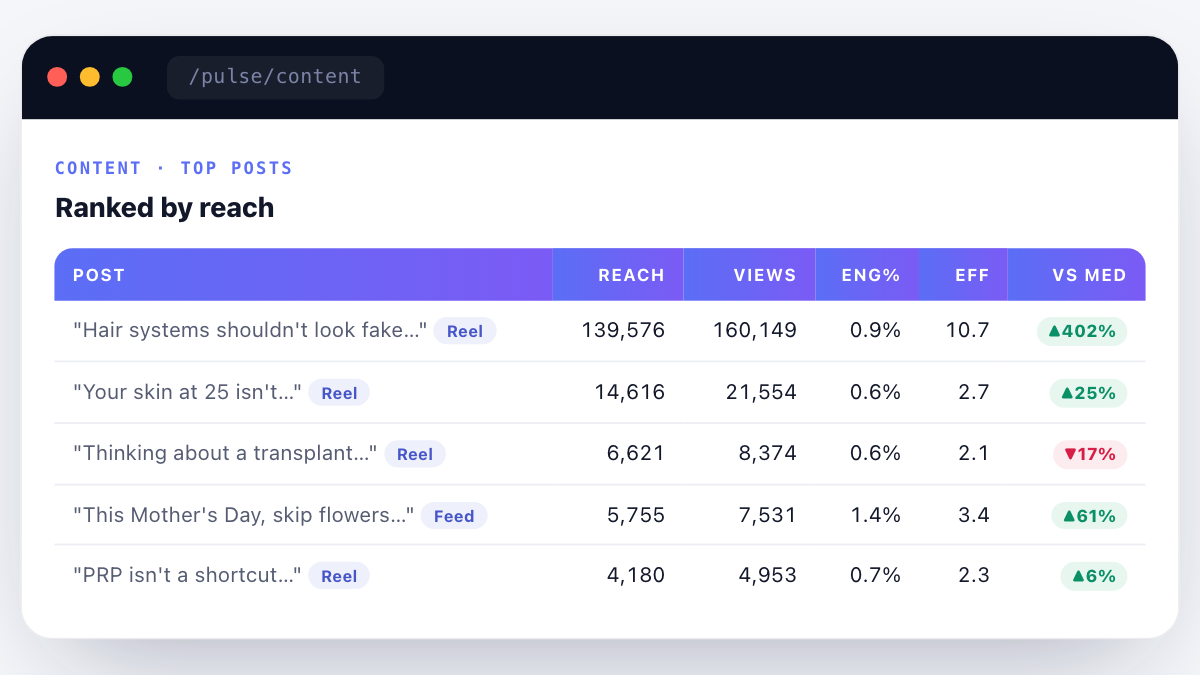
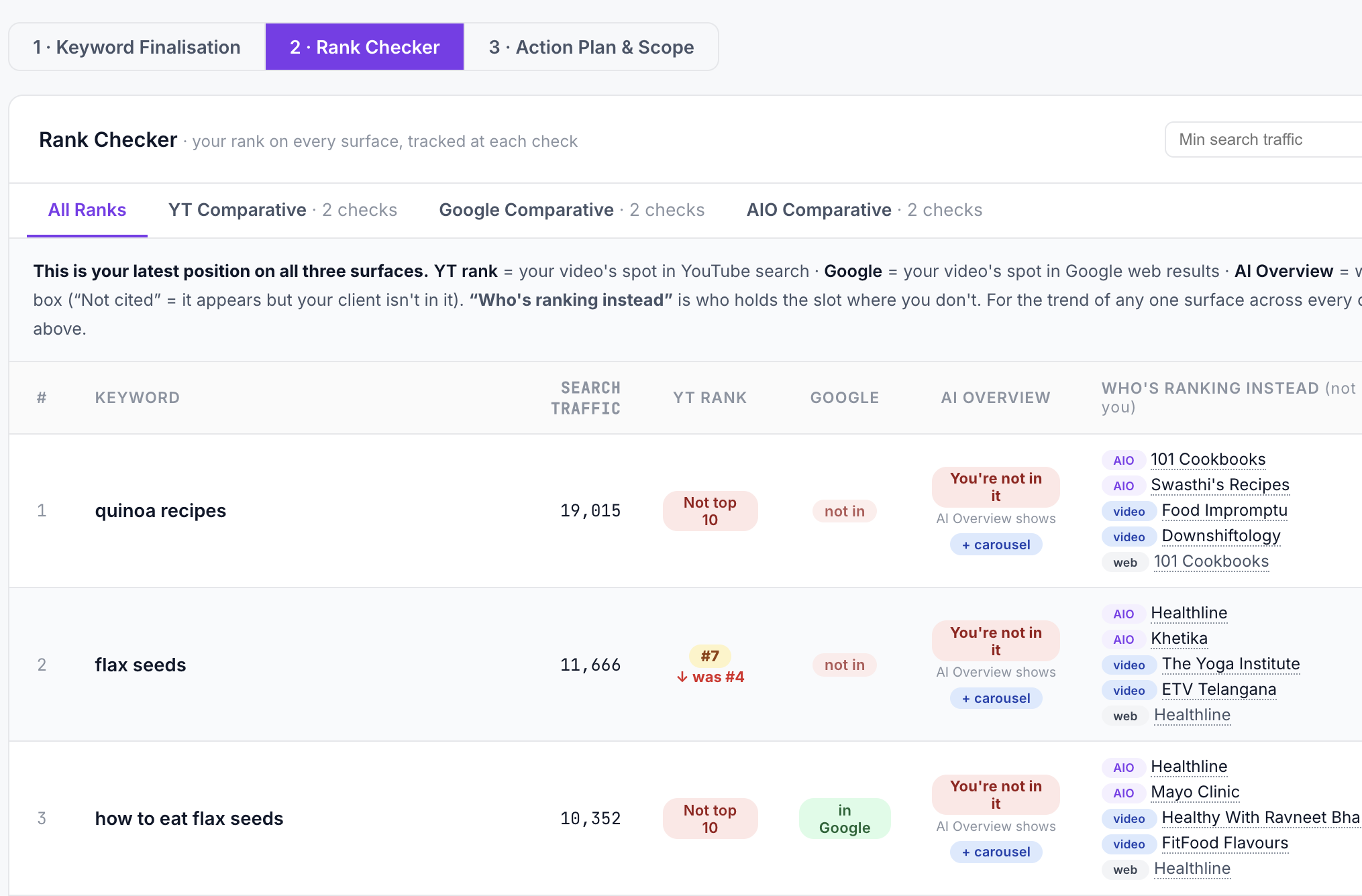
At ICG, that stack is packaged. Angryturtle handles GBP-at-scale for multi-location clinics. YODA handles AI-native YouTube optimisation for surgeon channels and hospital brand channels. Meta Catalyst IQ handles the Meta Ads engine, with a healthcare-tuned rules layer. Prism Spy watches competitor Meta Ads spend and creative patterns. Prism Pulse handles Instagram content analytics for content-heavy specialties like dermatology, aesthetics, and IVF. On the operational side, AtomCRM and HealthPro 360 sit at Rs 14,999 a month each and cover the lead-management and RCM/EHR overlay respectively. A DIY assembly of equivalents costs meaningfully more.
6. Scalability during demand swings
Indian healthcare demand is not flat. Cataract camps in Uttar Pradesh peak between November and February. IVF enquiry volume spikes after Karva Chauth and again in April. Dental cleaning enquiries move with school holidays. Dengue and viral fever ad demand collapses when it rains. A five-person in-house team cannot double capacity for six weeks; an agency partner can, because it has other clients in the trough of their own cycles.
7. Accountability and KPI ownership
The single most under-discussed axis. A retainer buys a named account team with a service-level agreement. An in-house team reports to a marketing head who reports to a CEO, which is cleaner on paper but harder in practice because internal politics dilutes the number. Ideally you get both, an internal owner who signs off on the number and an external team whose retainer renewal depends on hitting it. That structural tension keeps everyone honest.
8. Continuity and knowledge risk
A single in-house marketer resigning takes three to six months of momentum with them. Passwords, ad-account access, GBP roles, YouTube ownership, and campaign context all leave in one Slack farewell. Agencies build SOPs by default because their business model depends on transferring people in and out of accounts. The best buyer setups insist on a written SOP handover clause in the retainer, so continuity is contractual rather than personal.
Which model fits which buyer
Single-location dental or aesthetic clinic (2-4 chairs, Rs 1-3 Cr revenue)
Do not build in-house. A part-time freelancer for content plus a specialist agency at the Rs 49,999 per month Foundation tier is the right envelope. The freelancer holds context; the agency runs GBP-at-scale, Meta Ads, and monthly SEO. Total spend stays under Rs 8 lakh a year, and one internal owner, usually the founder-dentist's spouse or the practice manager, signs off on the number.
30-60 bed multi-specialty hospital (Rs 15-40 Cr revenue)
A single in-house marketing manager plus a specialist agency at the Rs 74,999 per month Growth tier. The manager owns internal coordination, doctor availability, and offline campaigns like health check camps. The agency owns SEO, Meta Ads, GBP, YouTube, and dashboards. Total spend lands between Rs 20-28 lakh a year including tooling. Compliance is fully covered because the agency runs an NMC-safe language checklist and the manager knows the ground.
100-200 bed hospital, cardiology or oncology heavy (Rs 60-150 Cr revenue)
A small internal team of two to three, marketing head, digital executive, in-house content writer, plus a specialist agency at the Rs 99,999 per month Scale tier. The internal team owns patient stories, doctor coordination, and cross-department consent. The agency runs paid media across three or four channels, GBP for the main and satellite units, YouTube content operations for at least three senior surgeons, and a dedicated dashboarding cadence. Total spend is roughly Rs 55-75 lakh a year.
Mid-tier IVF, dental, or diagnostics chain (5-15 centres, Rs 40-120 Cr revenue)
Split the operation. Centralise SEO, YouTube, and Meta Ads with the specialist agency; keep GBP, WhatsApp response, and local outreach with a small in-house team of two per zone. Because GBP-at-scale is where multi-location chains hurt most, an Angryturtle-style GBP operating system inside the agency retainer usually pays for itself in a quarter. Total spend runs Rs 60 lakh to Rs 1.2 crore a year, but it grows more slowly than headcount would.
500+ bed multi-city group or listed hospital chain (Rs 300 Cr and up)
Build a proper in-house team of 8-12 people because coordination, brand governance, and internal politics justify the fixed cost. Retain a specialist agency for specialty campaigns, video production for surgeon channels, competitor Meta Ads intelligence, and compliance audits. At this scale the agency is a capability extension, not a replacement, and the retainer is often a mix of Scale-tier plus project work.
How ICG plays the neutral-advisor role


 AI Overview citation status per tracked healthcare query with green/yellow/red state" width="1200" height="675" loading="lazy" decoding="async" style="width:100%;height:auto;display:block;">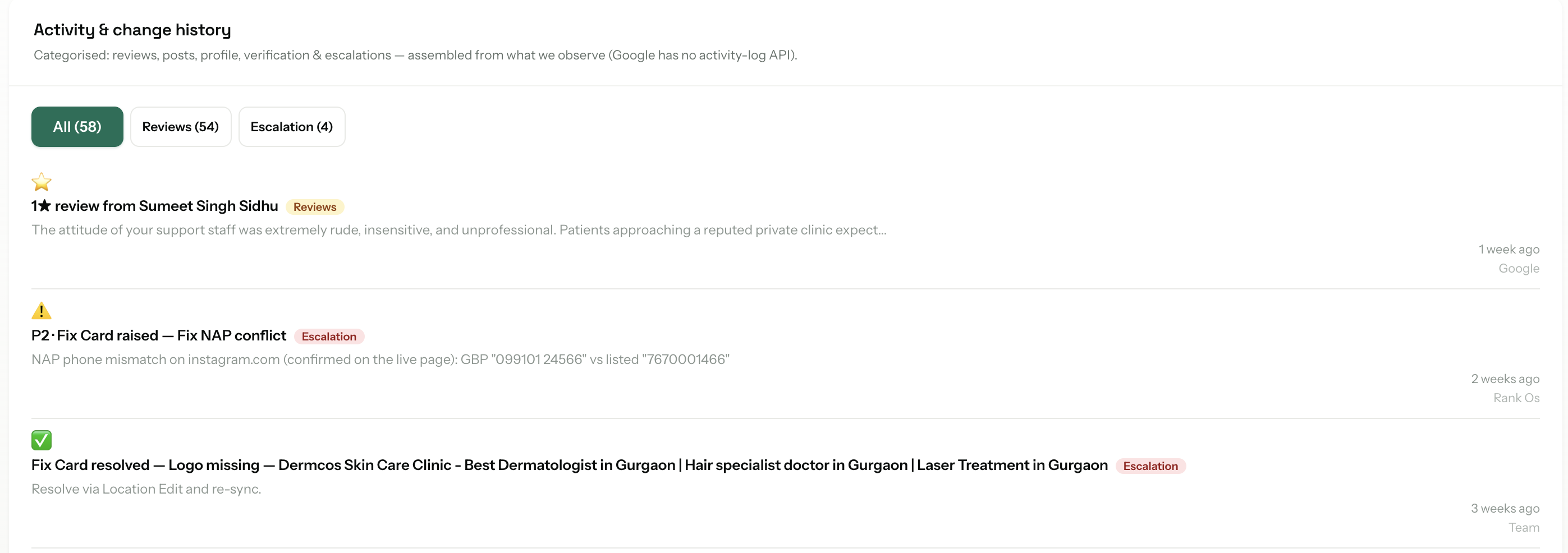
We are an agency, so treat the next paragraph with the healthy scepticism it deserves. That said, we run this same evaluation with buyers on the first call, and we tell roughly a fifth of them that they do not need us yet. A single-chair dental clinic doing Rs 90 lakh a year is better served by a two-person freelancer stack; we say so. A 500-bed group with an eight-person internal team already in place needs us for specific capability gaps like YouTube or competitor intel, not a full retainer; we scope accordingly. Being founder-led and having worked with 150+ clinics and 300+ live healthcare clients across dental, IVF, oncology, aesthetics, and multi-specialty, we have seen the honest failure mode of every model in this table. The advice is worth more than the pitch.
The 70-30 pricing model for service engagements
One structural note that changes the maths for retainers. ICG's SEO packages, Foundation at Rs 49,999, Growth at Rs 74,999, and Scale at Rs 99,999 per month, split payments 70-30. Seventy per cent is the fixed monthly retainer for execution: audit, on-page, off-page, GBP, YouTube SEO, and reporting. The remaining thirty per cent is tied to a 12-month organic-traffic or organic-lead target on a sliding-scale slab, so the agency earns more when the number is hit and less when it is not. The same 70-30 model extends to Google Ads engagements above Rs 5 lakh monthly media spend and to YouTube plus AIO engagements above Rs 50,000 monthly.
The point of the model is not the discount. It is that any comparison of in-house salary versus agency retainer should factor in the fact that thirty per cent of the retainer is contingent on outcomes. An in-house salary is not.
FAQ
Is it cheaper to hire in-house or to retain an agency in India?
For hospitals below Rs 15 crore revenue and clinics below Rs 5 crore, an agency retainer is almost always cheaper on a loaded-cost basis once tools, creative, and management overhead are counted. Above Rs 200 crore revenue, an in-house team plus a smaller agency retainer becomes the better economic answer because coordination costs drop.
Which model handles NMC and DPDP compliance better?
A specialist healthcare agency with a running compliance checklist tends to catch more issues than a solo in-house marketer or a boutique generalist agency. A full trained in-house team with a legal reviewer can match the specialist agency, but requires deliberate SOP investment.
What is the fastest way to see leads for a new hospital campaign?
A specialist agency retainer paired with a founder-signed brief usually delivers first qualified leads inside three weeks. In-house builds are slower because the hiring cycle and platform-access setup consume the first 45-60 days.
How do I know if my agency actually understands healthcare?
Ask three questions on the first call. Can they name three NMC advertising code clauses that changed in the last 24 months? Can they show a DPDP-compliant lead form template? Can they walk through GBP verification steps for a multi-location hospital? Silence on any one of these means they are learning on your budget.
Should we build an in-house content team or outsource content?
Content is the axis where hybrid works best. Keep an in-house medical writer who can vet doctor-authored pieces for accuracy. Outsource high-volume SEO content, video scripts, and reel storyboards to an agency because production velocity matters more than domain memory at that layer.
How much should a 100-bed hospital spend on marketing per year?
Benchmarks vary, but Indian 100-bed hospitals with active outpatient and international-patient departments typically spend between 3 and 5 per cent of revenue on marketing. For a Rs 60 crore revenue hospital that puts total marketing budget at Rs 1.8-3 crore a year, of which roughly Rs 50-75 lakh is paid media, Rs 25-40 lakh is agency retainer, and the rest is internal team, events, and creative.
Can we run only Google Ads and skip the rest?
Technically yes; economically no. Google Ads without SEO burns money on branded search that would rank organically. Without GBP, ad clicks land on a weak local profile. Without Meta Ads, the top-of-funnel remains dry. Without YouTube, the trust layer for specialties like cardiology, IVF, and oncology remains thin. The channels feed each other.
What is a healthy cost per qualified lead in Indian healthcare?
Ranges vary by specialty. Dental cleaning enquiries run Rs 150-400 CPQL in Tier 1 cities. General multi-specialty consultations run Rs 300-700. IVF and bariatric run Rs 1,500-4,000. Cardiology second opinions run Rs 800-2,500. Anything two times these ranges over a quarter needs an audit.
Do we need a CRM before hiring an agency?
Yes. Without a lead-management system, the agency cannot prove attribution, and the hospital cannot enforce accountability. A CRM tuned for Indian healthcare workflows, priced in the Rs 14,999 per month band, usually pays back inside the first quarter through faster follow-up alone.
How often should we re-evaluate the in-house vs agency mix?
Annually at minimum, quarterly if revenue is growing more than 25 per cent year on year. The right mix at Rs 20 crore revenue is rarely the right mix at Rs 60 crore. Rebalancing is normal; treating the first decision as permanent is the mistake.
Book a free 30-minute Brand & Growth Diagnostic.
It's a working session, not a sales pitch — you leave with a written root-cause analysis you can act on, whether or not you engage ICG.
Questions readers ask
about this topic.
The three platforms
behind every ICG engagement.
Beacon
CAPI middleware that fixes Event Match Quality, translates CRM statuses to Meta-standard events, dedups across channels.
Agency OS
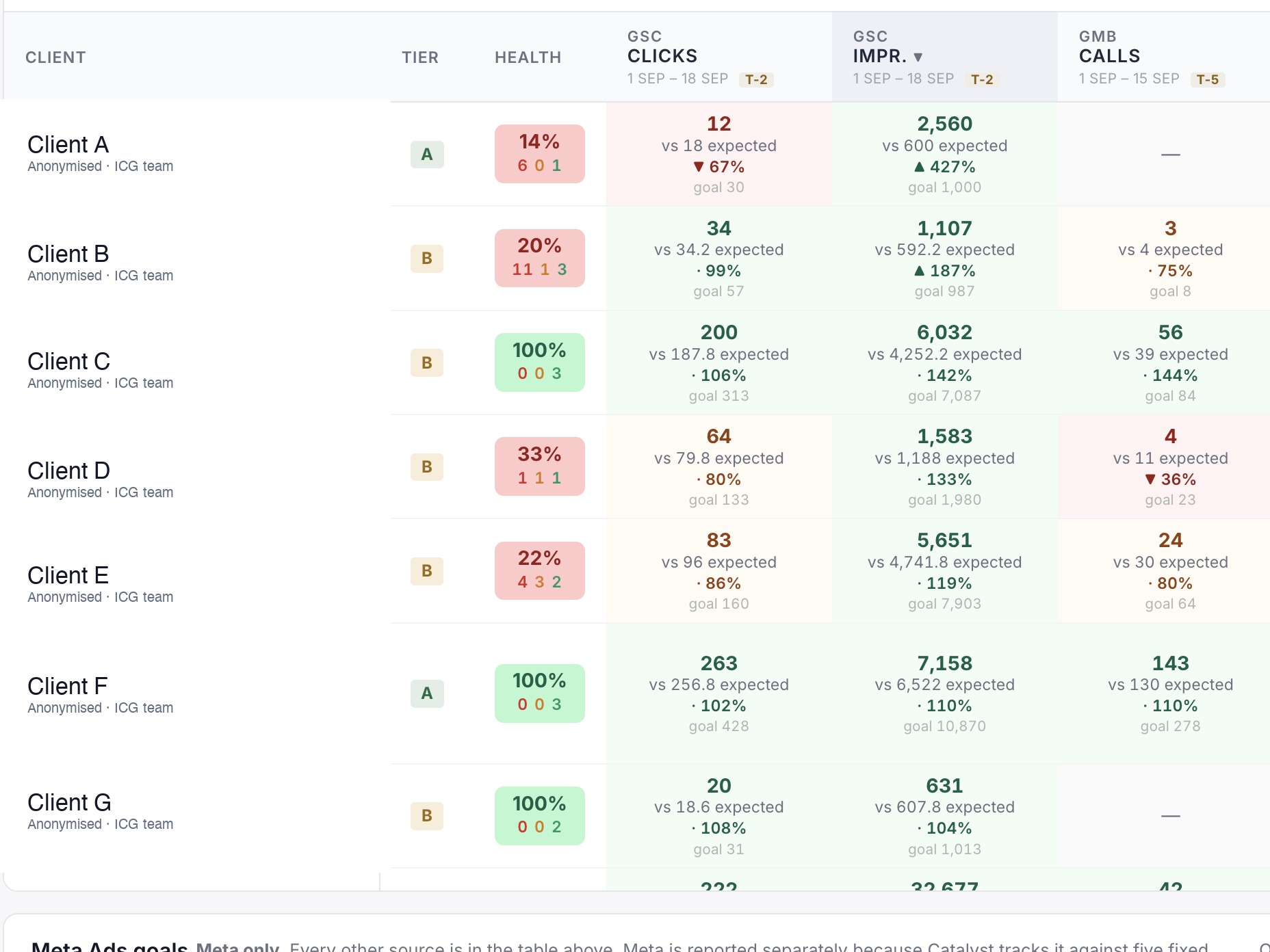
Live client dashboard. GSC, GA4, Google Ads, Meta Ads, IVR calls in one view. Login anytime, not monthly.
Phoenix
Clinic revenue intelligence over your PMS. Daily action queue: Prevent Loss, Maintain & Engage, Grow Revenue. Multi-centre rollout.
Or book a free 30-min audit to see all three in action on your account.
Healthcare brands
that already run on ICG.
A representative slice of the 150+ healthcare brands ICG has delivered for across India. Most engagements remain under NDA.


What ICG clients say · on video.
"Scale up of organic channels and business consulting. ICG has absolute domain authority in their field."
"Working with ICG transformed how we acquire IVF patients in Gurgaon. They understand the fertility journey from inquiry to consult..."
"What Ichelon accomplished — they got all my ideas and worked over 3-4 months to create an amazing, super-customised website."
Need help operationalising this?
Every ICG service is healthcare-only, NMC + DPDP-aware, and built around the patient-research patterns that drive Indian healthcare growth in 2026.
Every practice welcome — packages from ₹20,000/mo.
Goals-Driven engagements · Performance-Linked Payout Models available
More from
ICG.
Five trends shaping Indian healthcare marketing through 2027: AI-first patient research, Conversions API adoption, ABDM discovery, the AEO w...
Healthcare AIO is the discipline of getting your clinic or hospital cited inside Google AI Overviews, ChatGPT and Perplexity answers — not j...
Conversational-search advertising places brand messages inside AI chat answers — ChatGPT, Perplexity, Copilot — rather than beside a results...
Stop guessing.
Book a Diagnostic.
30 minutes. Free. With the AI-powered healthcare-only marketing agency 150+ brands already run on. No slides, no pitch, no hard close.


