


How to Choose a Healthcare Marketing Agency in India (2026)
Twelve questions to vet any healthcare marketing agency in India before you sign — pricing benchmarks, contract red flags, and the checklist ICG uses itself.
No pitch. Written root-cause diagnosis. AI-powered, healthcare only.
Direct answer
Twelve questions to vet any healthcare marketing agency in India before you sign — pricing benchmarks, contract red flags, and the checklist ICG uses itself.
TL;DR
ICG competes for clients. This guide includes evaluation criteria that may disqualify ICG for your specific situation. We publish it anyway — because the principle "diagnosis before prescription" means telling you the truth about what to look for, not just what makes us look good.
If you apply the 12-question framework below, you will make a better hiring decision — whether that leads to ICG or to a competitor.
Why choosing wrong is expensive
The average Indian clinic that engages a generalist agency for healthcare marketing spends 8-14 months and ₹5-15 lakh before realising the agency does not understand the regulatory environment (NMC Section 6, Schedule J, DPDP Act), cannot measure CPQL, and is reporting CPL metrics that look good but don't translate to consultation volume.
The sunk cost is not just the agency fee. It is the opportunity cost of 8-14 months without a functioning patient acquisition system — during which your practice could have been growing.
The 12-question framework below takes 45 minutes to apply in an agency evaluation. It is worth every minute.
The 12-question evaluation framework
Category 1: Healthcare specialisation
Question 1: What percentage of your client base is healthcare? A healthcare marketing agency should have at least 60-70% of its portfolio in healthcare. Below that threshold, healthcare is a secondary vertical — and healthcare marketing has specialisation requirements (regulatory compliance, CPQL measurement, clinical content accuracy) that require genuine depth.
Question 2: Show me 3 case studies with CPQL data, not just CPL. Any agency managing healthcare campaigns for 6+ months has CPQL data. If they cannot produce case studies showing CPQL before and after their programme — with the methodology for how "qualified lead" is defined — they are not measuring the right metric. Polished CPL case studies are insufficient.
Question 3: Name the NMC Code of Professional Ethics sections relevant to our specialty. For a specialist doctor, the relevant NMC provisions include Section 6 (advertising), Section 1.5 (patient autonomy), and the specialty-specific provisions (DCI for dental, ART Act for IVF, Schedule J for relevant conditions). An agency that cannot name Section 6 and describe its implications for your specific specialty has not studied it.
Category 2: Technical capability
Question 4: How do you deploy Meta CAPI and what EMQ improvement do you typically see? Meta Conversions API (CAPI) is the server-side attribution layer that replaces degraded pixel tracking. An agency that is still running pixel-only Meta attribution in 2026 is leaving 25-38% of media spend efficiency on the table. Ask: "What is our baseline EMQ and what will it be after CAPI deployment?" A correct answer: "We typically see EMQ improve from 3.8-4.4 to 7.5-8.5 within 3 weeks of CAPI deployment, which reduces CPM by 25-38%."
Question 5: How do you handle the 30% limbo-lead problem? In ICG's CRM audit data across 34 Hawk deployments, 28-34% of all monthly healthcare leads sit in "limbo" — contacted once or twice, then abandoned by the clinic's follow-up system. An agency without a CRM re-engagement programme is ignoring 30% of the media budget's output. Ask: "What is our current limbo-lead percentage, and what is your protocol for re-engagement?" If they don't know what a limbo lead is, that is an answer in itself.
Question 6: What is your WhatsApp Business API response time architecture? A patient enquiry responded to within 60 minutes has a 2.8× higher consultation-booking rate than one responded to after 4 hours. Most agencies set up campaigns but don't build the response infrastructure. Ask: "What is your target first-response time for WhatsApp enquiries and how do you achieve it?" A correct answer involves an automated first-response system under 5 minutes, not "we tell the clinic to respond quickly."
Category 3: Compliance rigour
Question 7: Walk me through your pre-publication compliance review for healthcare creative. A healthcare marketing agency should have a specific, named compliance process. ICG's process includes: NMC Section 6 check (outcome guarantees, identifiable before-and-after, superlative claims), Schedule J check (drug claim framing for listed conditions), DPDP Act check (consent for any patient data used in creative), and specialty-specific checks (DCI for dental, ART Act for IVF). An agency that says "we follow all regulations" without describing a specific process does not have one.
Question 8: Have you ever had a formal NMC, DCI, or CDSCO complaint filed against a client as a result of marketing content you produced? This is a direct question. A zero-complaint track record across 150+ engagements (ICG's record since 2018) is a specific differentiator. If an agency has had complaints, ask how they responded and what they changed.
Category 4: Commercial transparency
Question 9: What is your fee structure and what does it include? Agency fees in Indian healthcare marketing range from ₹15,000 to ₹5,00,000+/month. The right fee is not the lowest fee — it is the fee that is justified by the CPQL outcome. Ask for a specific breakdown: what does the retainer include (campaign management, content production, compliance review, reporting), what is additional (media spend, platform fees, creative production), and how does the fee scale as the programme grows?
Question 10: How do you handle the situation where CPQL targets are not met? Every well-run engagement has CPQL targets agreed at the start. Ask: "If CPQL is 30% above target at the 8-week checkpoint, what happens?" A correct answer involves a structured review process: diagnosis of root cause (attribution issue, audience issue, creative issue, landing page issue), a specific remediation plan, and a timeline for correction. An incorrect answer: "We'll try some different creatives."
Category 5: Engagement structure
Question 11: Is our engagement founder-led or account-manager-led? Healthcare marketing decisions require clinical-context judgment that junior account managers typically don't have. The difference between an agency that treats you as a client and an agency that treats you as an account matters significantly in healthcare. ICG's founder-led diagnostic (Rohit Gupta runs the initial engagement diagnostic for every client) is a structural commitment to this — not a sales claim.
Question 12: What does a typical 18-month engagement trajectory look like? ICG's typical engagement trajectory: month 1-3 (infrastructure, Beacon CAPI, Hawk, baseline CPQL); month 4-6 (campaign optimisation, first CPQL improvement to target range); month 7-12 (compounding organic channels, YouTube organic consultations starting, AEO citations appearing); month 13-18+ (full-stack compounding, media budget scaling with demonstrated CPQL). An agency that promises results in month 1 and cannot describe a 12-18 month arc is selling you a short-term fix.
Agency types to understand
Healthcare-specialist agencies (ICG, a small number of others): Deep healthcare compliance knowledge, CPQL measurement capability, clinical content accuracy, multi-specialty portfolio. The right choice for: most healthcare practices in India.
Generalist digital marketing agencies that "do healthcare": Strong on paid media execution, weak on compliance and clinical accuracy. The right choice for: practices with a very specific, non-regulated marketing need (e.g., corporate health check programme outreach that doesn't involve patient testimonials or medical claims).
Hospital in-house marketing teams: Compliance knowledge without the multi-account benchmark data. The right choice for: large hospital chains (200+ beds) where the marketing spend justifies a full-time team.
Freelancer networks: Low cost, variable quality, no compliance infrastructure. Not recommended for any practice that publishes patient-facing content.
The contract red flags

Before signing with any healthcare marketing agency, review the contract for these provisions:
Red flag 1: Ownership of campaign assets. Your Google Ads account, Meta Business Manager, and website should be owned by you. An agency that holds these assets hostage makes switching agencies expensive and painful.
Red flag 2: No CPQL commitment. Any engagement worth the fee has a CPQL target built into the contract or statement of work. "Best efforts" language without a specific metric is not a performance commitment.
Red flag 3: 12-month lock-in from month 1. A well-structured engagement earns the extension through CPQL results at the 8-week and 12-week checkpoints. A 12-month lock-in from day one protects the agency, not the client.
Red flag 4: No compliance warranty. The agency should represent in writing that content produced for you complies with NMC Section 6, Schedule J, and DPDP Act 2023 — and that they carry the compliance review responsibility.
Read next on ICG
What healthcare marketing should cost in India (2026 benchmarks)
Most clinic founders overpay because they never see a real price band. Before you sign anything, calibrate the quote against the range Indian healthcare buyers are actually paying in 2026 — for the same scope, not just the same label.
| Engagement type | Monthly range (INR) | What it should include |
| Google Business Profile only (single location) | ₹999 – ₹5,000 | Posts, review nudges, Q&A, category/service updates. Our own Angryturtle product sits at the ₹999/mo floor. |
| SEO retainer (single-city clinic) | ₹25,000 – ₹60,000 | 10–15 pages/mo, technical fixes, local pack work, monthly GSC review. |
| Meta + Google Ads management | ₹35,000 – ₹1,20,000 + ad spend | Creative refresh weekly, landing pages, WhatsApp/CRM pipe, competitor intel from tools like Prism Spy. |
| Full-stack growth (multi-location or hospital) | ₹2,00,000 – ₹20,00,000 | SEO + paid + content + video + reputation + analytics — this is what our Client Elevation Programme is built for. |
Three cost traps to price against
- Ad spend hidden inside the retainer. If the agency does not break out media budget vs. management fee on the invoice, walk.
- Per-lead pricing without CPQL guardrails. A ₹300 "lead" that never books is expensive. Ask for a qualified-lead definition in writing before you sign.
- Tool subscriptions billed as line items. A healthcare agency worth hiring in 2026 owns its own stack — for example, ICG runs YODA for YouTube and Prism Spy for Meta intel in-house, so clients never see per-seat SaaS invoices tacked on.
If the quote in front of you sits outside these bands by more than 30% in either direction, the scope on paper does not match the scope you will actually get. Send it back for a rebuild before you sign.
Book a free 30-minute Brand & Growth Diagnostic.
It's a working session, not a sales pitch — you leave with a written root-cause analysis you can act on, whether or not you engage ICG.
Questions readers ask
about this topic.
The three platforms
behind every ICG engagement.
Beacon
CAPI middleware that fixes Event Match Quality, translates CRM statuses to Meta-standard events, dedups across channels.
Agency OS
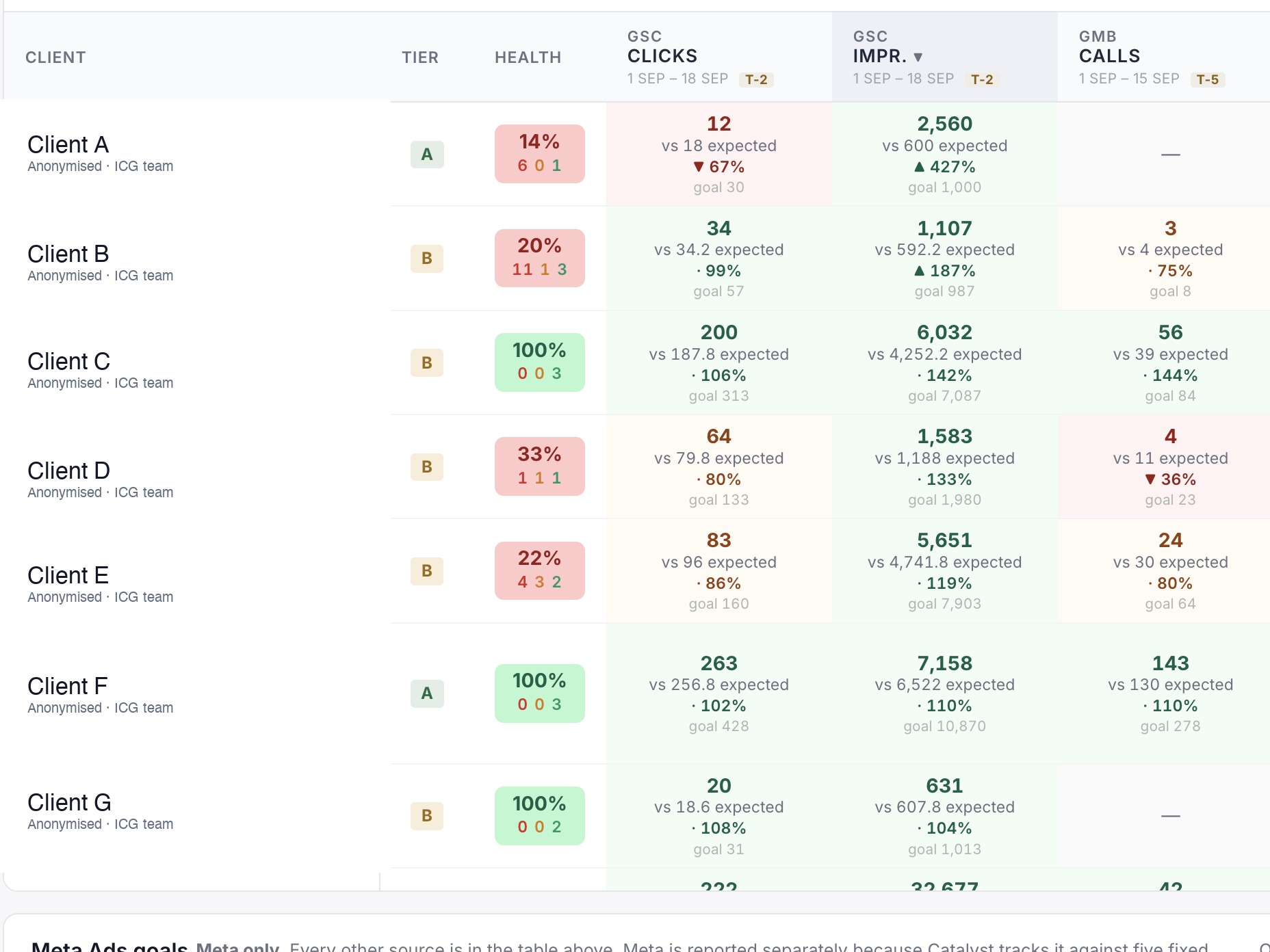
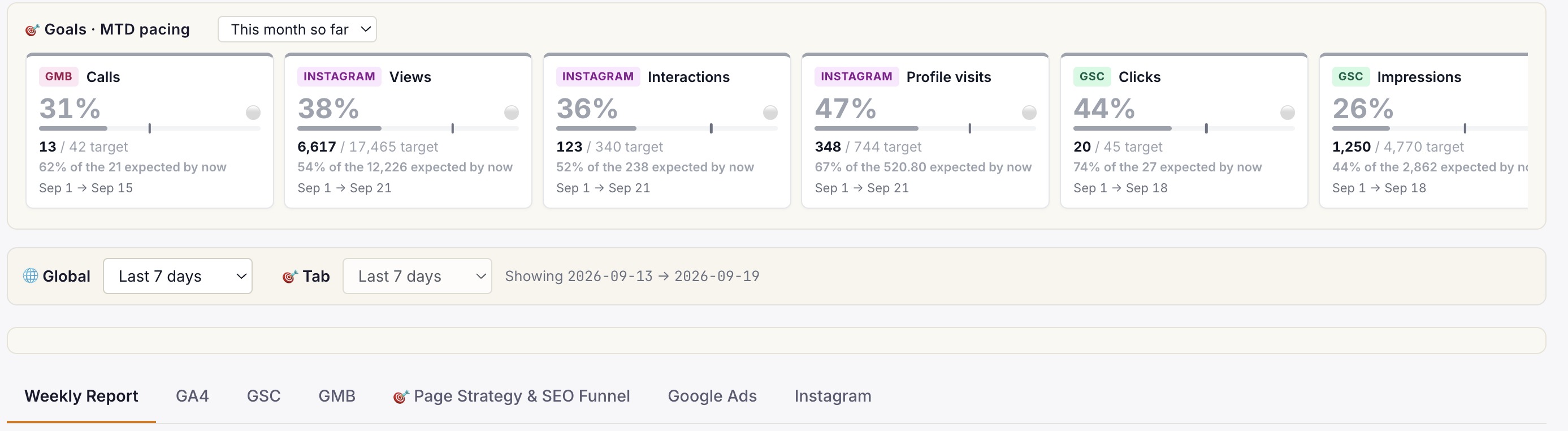
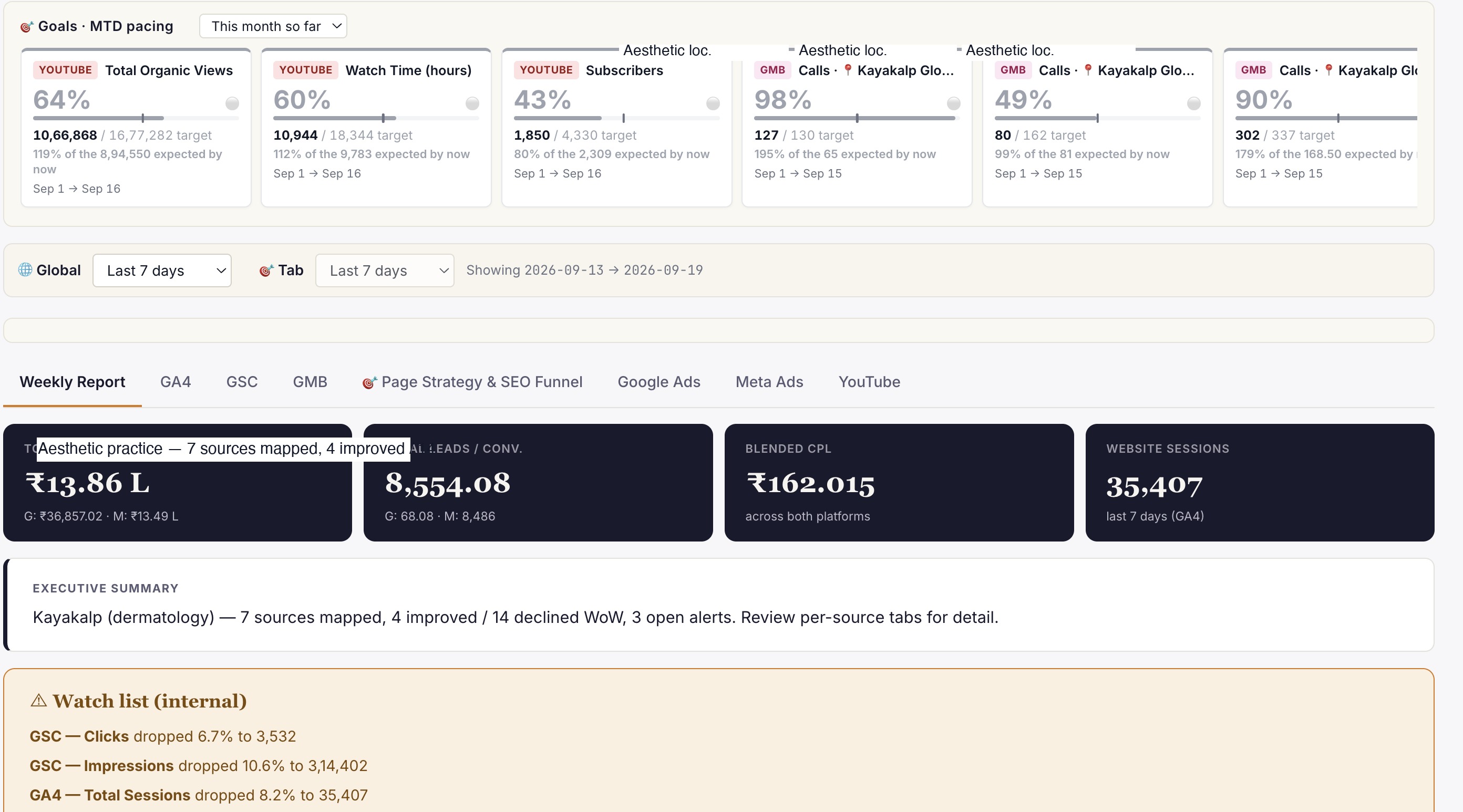
Live client dashboard. GSC, GA4, Google Ads, Meta Ads, IVR calls in one view. Login anytime, not monthly.
Phoenix
Clinic revenue intelligence over your PMS. Daily action queue: Prevent Loss, Maintain & Engage, Grow Revenue. Multi-centre rollout.
Or book a free 30-min audit to see all three in action on your account.
Healthcare brands
that already run on ICG.
A representative slice of the 150+ healthcare brands ICG has delivered for across India. Most engagements remain under NDA.


What ICG clients say · on video.
"Scale up of organic channels and business consulting. ICG has absolute domain authority in their field."
"Working with ICG transformed how we acquire IVF patients in Gurgaon. They understand the fertility journey from inquiry to consult..."
"What Ichelon accomplished — they got all my ideas and worked over 3-4 months to create an amazing, super-customised website."
Need help operationalising this?
Every ICG service is healthcare-only, NMC + DPDP-aware, and built around the patient-research patterns that drive Indian healthcare growth in 2026.
Every practice welcome — packages from ₹20,000/mo.
Goals-Driven engagements · Performance-Linked Payout Models available
More from
ICG.
Five trends shaping Indian healthcare marketing through 2027: AI-first patient research, Conversions API adoption, ABDM discovery, the AEO w...
Healthcare AIO is the discipline of getting your clinic or hospital cited inside Google AI Overviews, ChatGPT and Perplexity answers — not j...
Conversational-search advertising places brand messages inside AI chat answers — ChatGPT, Perplexity, Copilot — rather than beside a results...
Stop guessing.
Book a Diagnostic.
30 minutes. Free. With the AI-powered healthcare-only marketing agency 150+ brands already run on. No slides, no pitch, no hard close.


