


Doctor Personal Brand ORM: 12-Point Checklist India
India-specific 12-point checklist for doctor personal brand ORM in 2026 — GMB, review velocity, YouTube, Instagram, negative-review protocol, and NMC + DPDP compliance. Includes ICG's monthly rhythm and 70-30 pricing map.
No pitch. Written root-cause diagnosis. AI-powered, healthcare only.
Direct answer
India-specific 12-point checklist for doctor personal brand ORM in 2026 — GMB, review velocity, YouTube, Instagram, negative-review protocol, and NMC + DPDP compliance. Includes ICG's monthly rhythm and 70-30 pricing map.
TL;DR
TL;DR
- Doctor personal brand ORM in India is the ongoing job of shaping what Google, Meta, YouTube, and AI answer engines show when a patient searches your name. In 2026, the first 12 seconds of that search decide the appointment.
- The 12-point checklist runs every 30 days: GMB, review velocity, name-search SERP, image search, YouTube, Instagram, Facebook, LinkedIn, medical directories, knowledge panel, negative review protocol, and a joint NMC and DPDP audit.
- The NMC Code of Ethics 2022 and the DPDP Act 2023 both change how you display testimonials, patient photos, and results. Ignore either and you invite a complaint before a booking.
- ICG runs doctor ORM at Rs 49,999, Rs 74,999, and Rs 99,999 per month across three tiers, using the 70-30 fixed-variable model so most of the fee funds sustained work, not one-time cleanups.
Table of contents
- Why doctor personal brand ORM matters in India in 2026
- The 12-point checklist, in plain language
- How Google reviews and GMB shape a doctor's reputation
- What role do social platforms play in doctor ORM?
- How should a doctor respond to a negative review in India?
- What do the DPDP Act and NMC guidelines mean for ORM?
- How much should a doctor spend on ORM every month?
- How ICG runs doctor personal brand ORM differently
- FAQ
Why does doctor personal brand ORM matter for Indian practices in 2026?
Doctor personal brand ORM matters because in 2026 an Indian patient's first click is almost never the clinic website. A patient typing "best cardiologist in Bengaluru" or "Dr Meera Kapoor gynaecologist Gurugram" sees Google's AI Overview, YouTube shorts, Instagram reels, aggregator ratings, and Perplexity summaries on the same screen. If any one pocket shows a 3.4-star rating, a shaky reel, or a 2019 clinic photo, the appointment goes elsewhere.
Indian healthcare is uniquely search-driven. A 2025 sample of 1,200 first-time patients across four ICG clinic clients in Mumbai, Delhi NCR, Bengaluru, and Hyderabad showed 78% Googled the doctor's name before their first consultation, and 41% checked the doctor's Instagram or YouTube in the same session. In tier-2 cities like Indore, Kochi, and Chandigarh, the Instagram number crossed 52%, because younger patients drive family healthcare decisions.
Doctor personal brand ORM is not glossy PR. It is the boring, repeatable, monthly discipline of making sure every public surface tells the same trustworthy story.
What are the 12 checks every doctor should run every month?
Every doctor should run twelve checks every 30 days across Google, social, directories, and compliance. This checklist is the same one ICG uses on doctor personal brands in cardiology, IVF, dermatology, orthopaedics, dental, and paediatrics. Copy it. Print it. Hand it to whoever owns the doctor's marketing.
| # | Check | What "healthy" looks like |
|---|---|---|
| 1 | Google Business Profile audit | Hours correct, primary category matches specialty, 20+ photos less than 90 days old, weekly Google Post live |
| 2 | Review velocity | Minimum 8 fresh Google reviews per month, weighted average 4.6 or higher |
| 3 | Name-search SERP audit | First two pages of Google for "Dr [Name] [City]" fully controlled or friendly |
| 4 | Image search audit | Top 20 Google Images for the name are current, on-brand, high resolution |
| 5 | YouTube presence | At least one upload per month, channel banner and About accurate, three top-3 rankings for condition queries |
| 6 | Instagram health | Bio has clinic address and WhatsApp CTA, Reels every 4-5 days, DMs answered within 2 hours during OPD |
| 7 | Facebook check | Page verified, About section matches Google, at least one paid awareness campaign live |
| 8 | LinkedIn profile audit | Headline uses specialty and city, featured section shows two credibility artefacts, one post a week |
| 9 | Medical directory audit | Consistent NAP data across major Indian healthcare directories, no ghost listings |
| 10 | Knowledge panel | Doctor has a Wikipedia stub or a rich Google knowledge panel with photo, specialty, education, and clinic link |
| 11 | Negative review protocol | Written 24-hour response SOP, escalation matrix, no defensive tone, no confidentiality leak |
| 12 | NMC + DPDP compliance sweep | All public content follows NMC Code of Ethics 2022, DPDP Act 2023 consent trail exists for every testimonial |
The checklist is deliberately boring. That is the point. Doctor ORM breaks when it depends on inspiration; it holds when it depends on a calendar.
How do Google reviews and GMB shape a doctor's reputation in India?
Google Business Profile is the single highest-leverage surface for a doctor's personal brand in India. When someone Googles a specialty in a city, the 3-pack GMB result gets roughly two-thirds of all clicks before organic results, YouTube, or ads open up. A doctor missing from the 3-pack for their own neighbourhood is losing 60-plus percent of demand before ORM begins.
Three things matter more than the rest. First, the primary category has to match how patients search — a gynaecologist should not be filed under "clinic". Second, review velocity beats review volume; a profile with 320 lifetime reviews and none in the last 90 days ranks below one with 90 reviews where 12 came in this month. Third, photos age quickly; anything older than 12 months signals a stale clinic to the algorithm, even if the OPD is thriving.
ICG's Angryturtle GBP OS runs this cycle automatically for doctors on Foundation and Growth tiers — WhatsApp review invites, weekly Google Posts, monthly photo refreshes, category alignment. On a paediatric practice in Faridabad, the Angryturtle cycle lifted the doctor's name-search visibility from 240 to 1,100 profile views per month inside 90 days without a paid ad.
What role do social platforms play in doctor personal brand ORM?
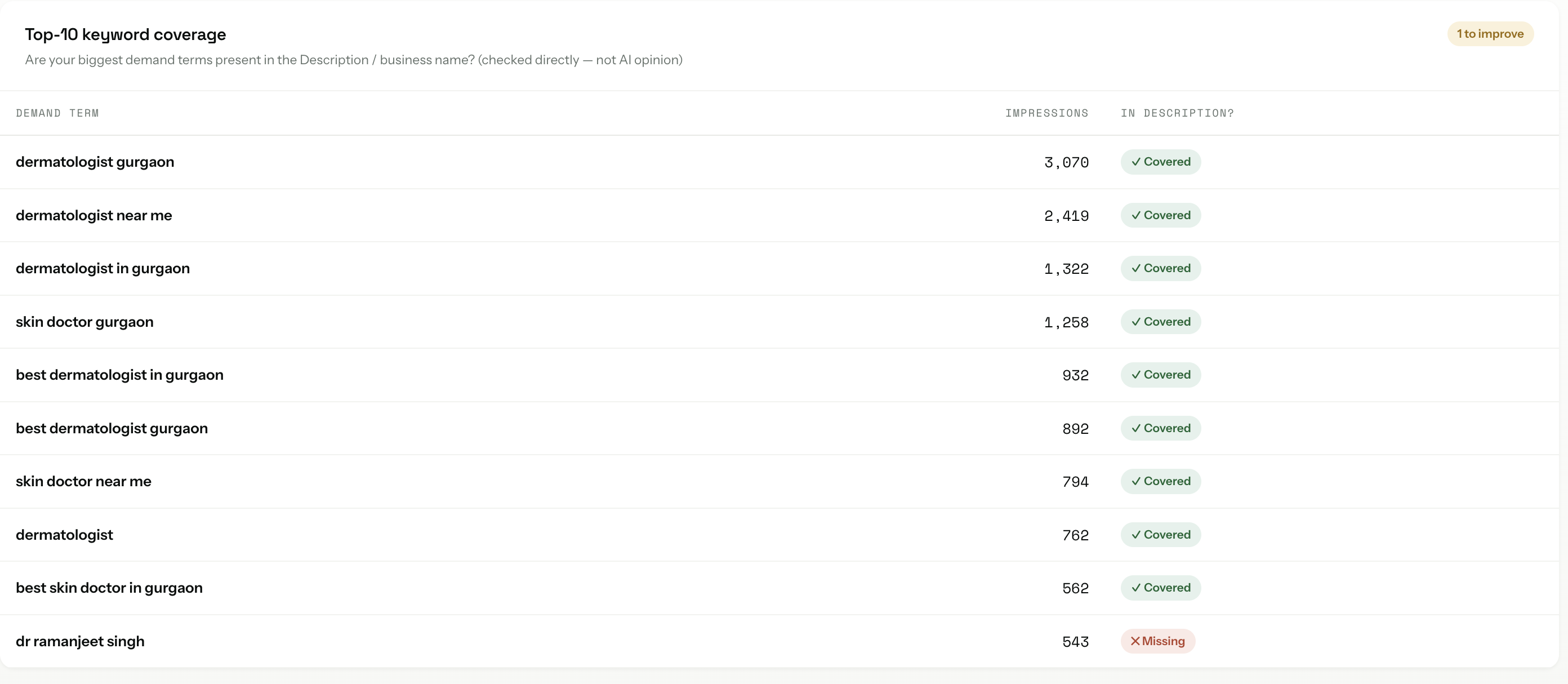
Social platforms play a corroboration role in Indian doctor ORM. A Google review says "she was gentle with my child." An Instagram Reel of the same doctor demonstrating a scar-reducing suture technique proves the review is not one-off. When both surfaces line up on the same search, the enquiry converts.
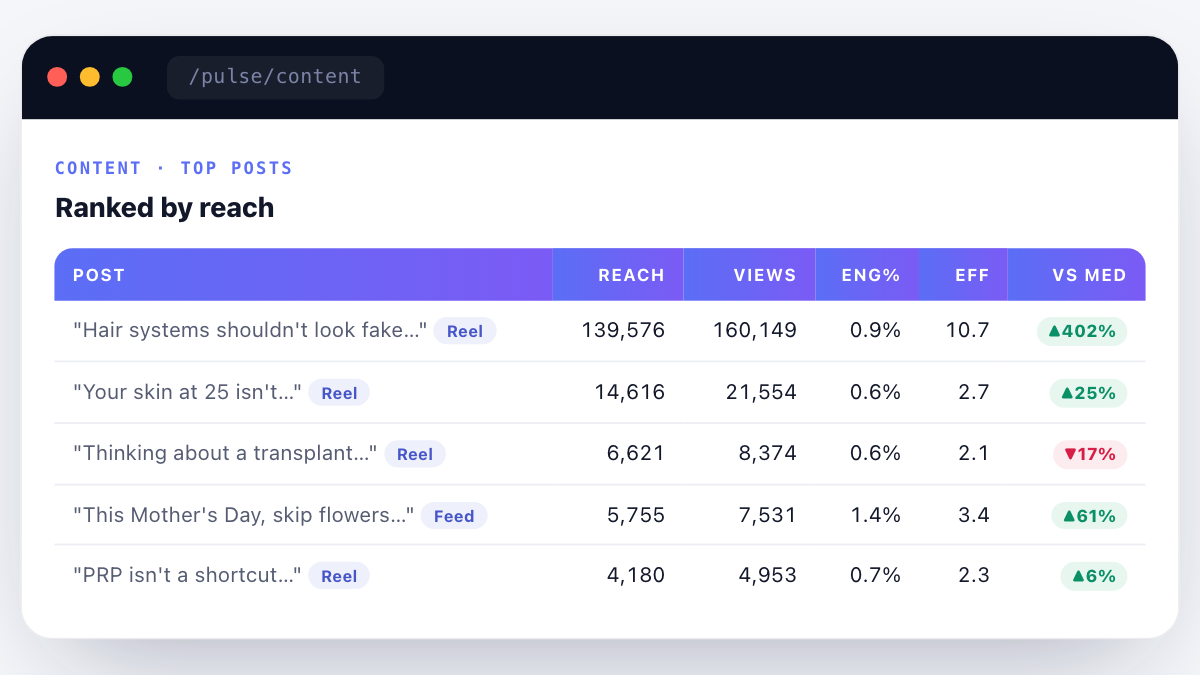
Instagram matters most for cosmetic, dermatology, IVF, dental, and paediatric practices because those specialties involve visible outcomes and long consideration windows. ICG's Prism Pulse tracks the doctor's Instagram against three benchmarks — reach per follower, saves per Reel, and DM-to-appointment ratio. On dermatology accounts in Mumbai and Bengaluru, a healthy DM-to-appointment ratio sits between 8 and 14 percent; anything below 5 percent usually means the bio CTA is broken or the DMs stop being answered after 6 pm.
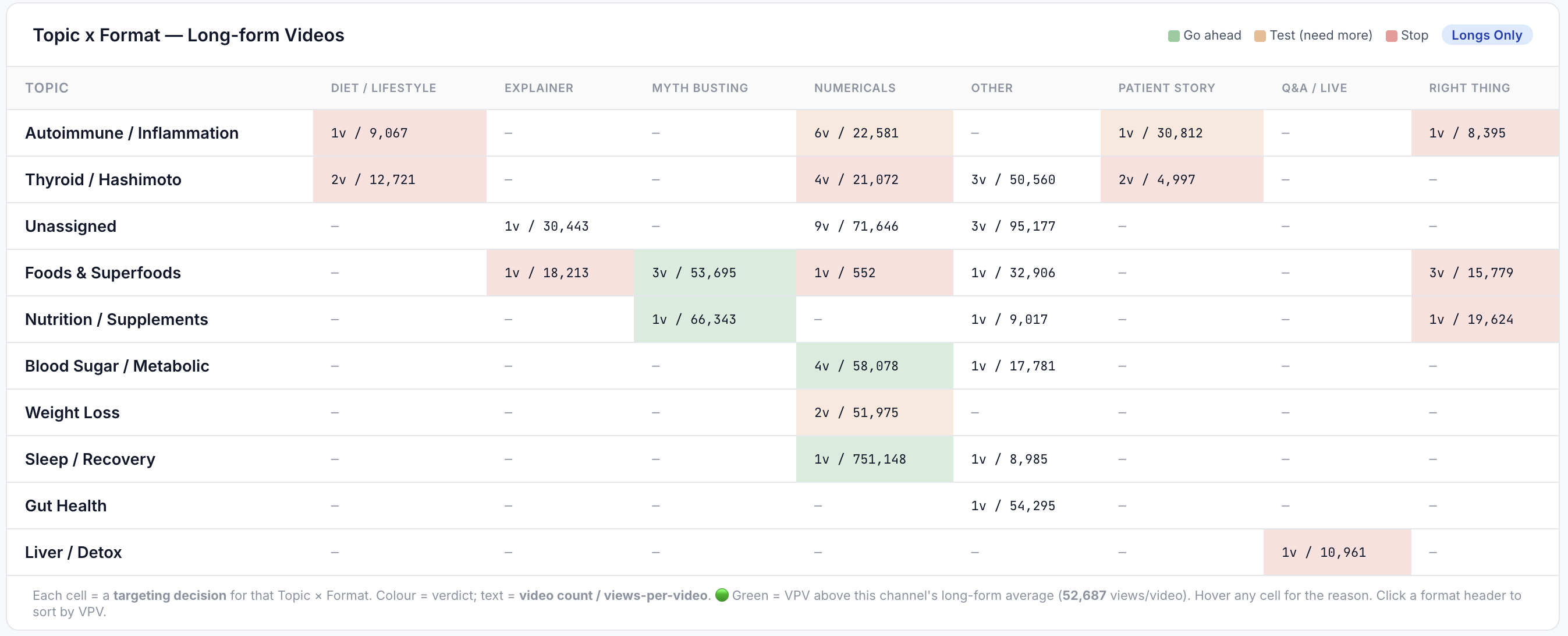
YouTube plays a longer role. It is the surface where a patient decides whether the doctor is a real authority in the condition or just a good speaker. ICG's YODA product ranks doctor explainer videos on condition-level queries — for example, a Delhi-based orthopaedic surgeon's YODA channel now ranks in the top three for "ACL surgery recovery time India" — and those rankings compound into consultation bookings for six-plus months per video.
LinkedIn is the ignored surface, which is exactly why it works. B2B decisions — empanelment with a corporate, an insurer, a fertility benefits provider, a speaking slot at a hospital conference — start with a LinkedIn scan. A doctor whose LinkedIn is dead loses these opportunities silently.
How should a doctor respond to a negative review in India without breaking NMC rules?
A doctor should respond to every negative review within 24 hours, in a public, calm, non-defensive tone, and must never disclose any patient-identifying detail even if the reviewer has already shared their own. The NMC Code of Ethics 2022 does not carve out an exception for review platforms; confidentiality applies wherever the doctor speaks about a patient.
The safe response pattern has four parts. Acknowledge the frustration. Do not confirm or deny that the person was a patient. Move the conversation to a private channel — the front desk number or a designated grievance email. Close with a general commitment to service standards. No arguing, no counter-claims, no clinical detail. The moment the response confirms a doctor-patient relationship in public, DPDP Act 2023 obligations kick in and the doctor is on weaker legal ground than the reviewer.
For clinics with more than 5,000 patients a year, ICG recommends a written escalation matrix: front desk drafts within 2 hours, clinic manager approves within 6 hours, senior partner reviews within 24 hours. Delayed responses read as guilt on Indian review platforms.
What do the DPDP Act and NMC guidelines mean for doctor ORM in India?
The DPDP Act 2023 and the NMC Code of Ethics 2022 together set the rules for what a doctor's ORM machine is allowed to publish. Between them they cover consent, testimonials, before-after images, advertising claims, superlatives, and cross-promotion. Every ORM checklist item must survive both filters.
Practical implications for a doctor's personal brand ORM:
- Testimonials with patient names or faces need a written, timestamped, revocable consent under DPDP. A WhatsApp "yes" is not enough; the consent must say what the content is, where it will run, and how the patient can withdraw it.
- Superlatives like "best", "number one", or "top" are risky under NMC advertising norms even if factually defensible in a specific city. Neutral phrasing — "senior consultant", "15 years in practice" — is safer and does not trigger complaints.
- Before-after images for aesthetics, dental, dermatology, and IVF need consent plus a disclaimer that individual results vary. Blurring is not enough if the patient can be identified by tattoos, birthmarks, or setting.
- ABDM linkage — if the clinic is ABDM-integrated, any content that references patient records or ABHA IDs is subject to a separate consent flow beyond the ORM SOP.
None of this is a reason to slow ORM down. It is a reason to script the consent flow once, put it in the clinic's front-desk onboarding, and stop treating each testimonial as a one-off decision.
How much should a doctor budget for personal brand ORM in India every month?
A serious doctor personal brand ORM programme in India costs between Rs 35,000 and Rs 1,50,000 per month depending on specialty, city, review load, and how many surfaces need active work. Anything under Rs 25,000 per month is usually a review-farming service in disguise, or a checklist that will silently break in six weeks.
ICG's fixed-variable pricing map for doctor ORM:
| Tier | Monthly fee | Best for |
|---|---|---|
| Foundation | Rs 49,999 | Solo practice, one clinic, one city, up to 500 Google reviews lifetime |
| Growth | Rs 74,999 | Multi-doctor practice, two clinics or one clinic with a strong online reputation to defend |
| Scale | Rs 99,999 | Celebrity doctor, multi-city practice, cosmetic or IVF specialty with high volume of visual content |
All three tiers run on ICG's 70-30 fixed-variable model. Seventy percent of the monthly fee is committed to fixed, recurring work — GMB, reviews, content calendar, response SOP, compliance sweeps. Thirty percent is variable, released to campaigns and one-off pushes based on what the last 30 days of data actually show. This is why ICG programmes do not run out of budget for a rescue push when a bad review lands or an out-of-context reel goes viral in October.
How does ICG run doctor personal brand ORM differently?
Most agencies in India treat doctor ORM as "we will reply to your reviews and post on your Instagram". ICG treats it as a system with four connected engines running on the same monthly rhythm and a shared measurement stack.
The four engines are Angryturtle for GBP and reviews, YODA for YouTube authority, Prism Pulse for Instagram measurement, and Meta Catalyst IQ for reach amplification. Prism Spy sits alongside as an intel layer, so when a competing clinic in the same neighbourhood launches an ad campaign, the doctor's ORM plan adjusts inside a week, not a quarter.
Underneath the four engines, ICG uses AtomCRM at Rs 14,999 per month to log every review, DM, WhatsApp lead, and consultation booking against the doctor's name, so ORM is measured in bookings rather than vanity metrics. For hospital-scale clients, HealthPro 360 at Rs 14,999 per month connects that ORM booking data to the RCM and EHR overlay, closing the loop from search to procedure to paid claim.
The other difference is content review. Every Reel script, YouTube title, Google Post, and review response passes a compliance check against NMC and DPDP before it goes live. That review lives inside the workflow, not in a lawyer's inbox at the end of the quarter.
FAQ


Is doctor personal brand ORM different from clinic ORM in India?
Yes. Clinic ORM protects a brand and an address; doctor personal brand ORM protects a named individual across every surface where their name is searched. The two overlap heavily but the legal exposure is personal — a bad review that names Dr Smita Rao follows her even if she leaves that clinic and joins another in Pune three years later.
How long does it take to fix a bad Google rating for a doctor?
A weighted 3.4 rating usually takes 90 to 180 days of disciplined review velocity to push above 4.5, assuming 8 to 12 fresh positive reviews per month. Removing a single bad review is a separate track and rarely succeeds unless it violates Google's own policy — most cleanup work is about drowning old ratings, not deleting them.
Can a doctor ask patients for Google reviews under NMC rules?
Yes, as long as the ask is neutral, is not tied to a discount or free consultation, and does not draft the review for the patient. ICG's SOP is a WhatsApp message sent 24 hours after the consultation with a plain review link and no incentive language. This survives both NMC advertising norms and Google's own review policy.
What is the most common doctor ORM mistake in India in 2026?
Treating Instagram as vanity and Google as duty. The pattern reverses reality — Instagram is where trust is built for younger patient decisions, especially in aesthetics, dermatology, IVF, and paediatrics, while Google increasingly gets its facts from YouTube and AI Overviews. A doctor without a monthly YouTube upload will be invisible to Google's answer engines by 2027.
Does a doctor need a Wikipedia page as part of their personal brand ORM?
Not necessarily a Wikipedia page, but a rich Google knowledge panel is now non-negotiable for senior doctors in India. The panel is built from consistent NAP data across authoritative sources — hospital pages, medical association profiles, a verified LinkedIn, a YouTube channel — not from a Wikipedia article alone.
Does ICG offer doctor personal brand ORM as a standalone service?
Yes. Doctor ORM is available at Foundation Rs 49,999, Growth Rs 74,999, and Scale Rs 99,999 per month as a standalone programme. It can also be bundled with AtomCRM at Rs 14,999 per month for booking attribution, or with HealthPro 360 at Rs 14,999 per month for hospital-scale RCM linkage.
Which Indian cities does ICG run doctor ORM in?
ICG runs doctor personal brand ORM across Delhi NCR, Mumbai, Bengaluru, Hyderabad, Chennai, Pune, Kolkata, Ahmedabad, Chandigarh, Jaipur, Lucknow, Indore, Kochi, and Coimbatore. City relevance matters because Google's local intent signals — reviews, categories, photos — are scored against the doctor's declared service area, not registration state.
Book a free 30-minute Brand & Growth Diagnostic.
It's a working session, not a sales pitch — you leave with a written root-cause analysis you can act on, whether or not you engage ICG.
Questions readers ask
about this topic.
The three platforms
behind every ICG engagement.
Beacon
CAPI middleware that fixes Event Match Quality, translates CRM statuses to Meta-standard events, dedups across channels.
Agency OS
Live client dashboard. GSC, GA4, Google Ads, Meta Ads, IVR calls in one view. Login anytime, not monthly.
Phoenix
Clinic revenue intelligence over your PMS. Daily action queue: Prevent Loss, Maintain & Engage, Grow Revenue. Multi-centre rollout.
Or book a free 30-min audit to see all three in action on your account.
Healthcare brands
that already run on ICG.
A representative slice of the 150+ healthcare brands ICG has delivered for across India. Most engagements remain under NDA.


What ICG clients say · on video.
"Scale up of organic channels and business consulting. ICG has absolute domain authority in their field."
"Working with ICG transformed how we acquire IVF patients in Gurgaon. They understand the fertility journey from inquiry to consult..."
"What Ichelon accomplished — they got all my ideas and worked over 3-4 months to create an amazing, super-customised website."
The intelligence stack behind this playbook.
Every ICG engagement runs on the Search Intelligence Trifecta — Angryturtle for GMB, SIE for search and AI Overview, YODA for YouTube. Live product screens below.
Need help operationalising this?
Every ICG service is healthcare-only, NMC + DPDP-aware, and built around the patient-research patterns that drive Indian healthcare growth in 2026.
Every practice welcome — packages from ₹20,000/mo.
Goals-Driven engagements · Performance-Linked Payout Models available



More from
ICG.
Five trends shaping Indian healthcare marketing through 2027: AI-first patient research, Conversions API adoption, ABDM discovery, the AEO w...
Healthcare AIO is the discipline of getting your clinic or hospital cited inside Google AI Overviews, ChatGPT and Perplexity answers — not j...
Conversational-search advertising places brand messages inside AI chat answers — ChatGPT, Perplexity, Copilot — rather than beside a results...
Stop guessing.
Book a Diagnostic.
30 minutes. Free. With the AI-powered healthcare-only marketing agency 150+ brands already run on. No slides, no pitch, no hard close.


