


Dental Clinic Cost in India 2026: ₹8L-₹1.5Cr (40+ Setups)
Real dental clinic setup cost in India 2026 — ₹8L single chair to ₹1.5Cr multi-specialty. Equipment, X-ray, licensing, staff, ROI. Chat with a Co-Founder.
No pitch. Written root-cause diagnosis. AI-powered, healthcare only.
Direct answer
Real dental clinic setup cost in India 2026 — ₹8L single chair to ₹1.5Cr multi-specialty. Equipment, X-ray, licensing, staff, ROI. Chat with a Co-Founder.
TL;DR
Starting a dental clinic in India 2026 requires ₹25 lakh-1.5 crore initial investment for a 1-5 chair facility. Mumbai/Delhi commercial real estate, premium equipment (CBCT, intraoral scanners, CAD/CAM), and specialty positioning (orthodontics + cosmetic dentistry + dental implants) drive the upper end. Tier-3 cities + 1-chair start can be done for ₹15-25 lakh.
Cost components — 3-chair dental clinic Tier-1
1. Dental chairs + equipment (35-45% of capex)
Indian dental chairs 2026: ₹3-12 lakh per chair for mid-range (Anthos, Sirona, Adec, A-Dec). Premium chairs ₹12-25 lakh. Each chair needs: dental compressor, suction system, autoclave (steriliser), instrument tables. Plus per-chair X-ray (₹2-5 lakh intraoral digital), curing lights, ultrasonic scaler.
3-chair clinic equipment + chairs: ₹15-50 lakh.
2. Imaging + diagnostics (15-25% of capex)
- Digital intraoral X-ray: ₹2-5 lakh per unit
- OPG (panoramic): ₹6-15 lakh
- CBCT (Cone Beam CT): ₹20-60 lakh (premium clinics only)
- Intraoral scanner (CEREC, iTero): ₹15-50 lakh (cosmetic + implant clinics)
3. Dental lab (10-20% of capex)
In-house lab: ceramic furnace ₹3-8 lakh, milling machine for CAD/CAM ₹15-40 lakh, plaster + investment + finishing equipment ₹3-8 lakh. Alternative: outsource lab work (60-70% of Indian dental clinics outsource).
4. Real estate
3-chair clinic needs 600-1,200 sq ft. Mumbai/Delhi premium: ₹150-400 per sq ft monthly rental. Tier-1 secondary: ₹70-150 per sq ft. Tier-2 cities: ₹30-70 per sq ft.
5. Licensing + compliance
Dental Council of India registration + state dental council + Clinical Establishments Act + Biomedical Waste Management + AERB (X-ray) + ABDM HFR + DPDP architecture. Total: ₹2-8 lakh.
6. CMS + software
Dental practice management + EMR. ICG HealthPro 360 dental configuration: ₹3,999-14,999/mo. Includes treatment-package modelling (implants, braces, smile makeover), Phoenix lapsed-treatment retention, photo-annotated EMR. Alternatives: other dental and clinic software products.
Total cost summary
| Setup | Capex | Year 1 Opex/mo | Breakeven months |
|---|---|---|---|
| 1-chair start (Tier-2/3) | ₹15-30 lakh | ₹2-4 lakh | 10-18 |
| 2-3 chair Tier-1 secondary | ₹30-60 lakh | ₹4-8 lakh | 12-24 |
| 3-chair premium Tier-1 (Mumbai/Delhi) | ₹60-1.2 crore | ₹8-15 lakh | 18-30 |
| 5-chair specialty centre + CBCT + CAD/CAM | ₹1-1.8 crore | ₹12-22 lakh | 24-36 |
Dental treatment pricing 2026
- Consultation + checkup: ₹300-1,500
- Filling (composite): ₹500-3,000
- Root canal treatment: ₹3,000-12,000 (specialty endodontist 2x)
- Crown (PFM): ₹3,500-12,000
- Crown (zirconia): ₹8,000-25,000
- Dental implant (single): ₹25,000-1,20,000 depending on brand + city
- Orthodontic treatment (braces): ₹30,000-1,50,000 over 12-24 months
- Invisalign / Clear Aligners: ₹80,000-4,00,000
- Smile makeover: ₹50,000-3,00,000+
- Full mouth rehabilitation: ₹2-15 lakh
Patient acquisition for dental clinics
Dental marketing in India 2026 is GMB-dominated (90% search "dentist near me"). Key dynamics:
- CPQL benchmark (ICG portfolio): ₹780-1,400 by city. Mumbai ₹980, Delhi ₹820, Bangalore ₹890
- Patient cycle: 1-14 days (lowest of all healthcare)
- GMB + Map Pack: 60-70% of new patient discovery
- Treatment package modelling: implants (3-6 months), braces (12-24 months), smile makeover (6-9 months)
- EMI integration: 60%+ of patients use EMI for treatments >₹50K (Bajaj Finserv, HealthLine, ZestMoney)
- Phoenix retention: surfaces incomplete treatments + lapsed hygienist visits — recovers revenue from the existing patient base
For deeper guidance: Dental Marketing Agency India, CMS for Dental Clinics, Dental CRM. For founder-led dental practice advisory, book free 48-hour diagnostic.
Seven cost mistakes that quietly blow up a dental clinic setup budget
After watching 40+ founders build clinics between 2023 and 2026, the pattern is boring: the equipment quote is almost never where the budget breaks. It breaks in the gaps most founders don't line-item. Here are the seven we now flag on every diagnostic call.
- Under-costing electricals and plumbing. Dental chairs need a specific compressor line, suction, RO, and a UPS-backed 15A point per chair. Retro-fitting after civil work is finished routinely adds Rs 1.2-2.4L per chair.
- Skipping the AERB X-ray licence timeline. Intra-oral X-ray and OPG both need eLORA registration and Type Approval verification. Founders budget the machine, forget the 6-14 week approval window, and end up running an unlicensed setup on soft launch.
- Trade licence + BMW tie-up assumed as one-time. Bio-medical waste contracts, pollution consent, and municipal trade licence are recurring. Budget Rs 45-90K/year, not zero.
- Signage, GBP and launch marketing left for “after opening”. A dental clinic without a live Google Business Profile in month one loses 60-90 days of local intent. Our Angryturtle GBP OS costs less than the signboard most founders re-print in month three.
- Hiring the DA before the flow is stable. A full-time dental assistant at Rs 22-32K/month for a chair doing 4 patients a day is dead capital for the first 90 days.
- Buying a PMS that doesn't talk to WhatsApp or Meta Ads. Every rupee spent on patient acquisition leaks if bookings live in a notebook. Pair the PMS with a real ads layer — see Meta Catalyst IQ for how dental clinics run paid intake in 2026.
- No competitor intel before picking the catchment. Two of every five founders open within 800m of a clinic already spending Rs 1L/month on Meta. Prism Spy shows the ad-spend map before the lease is signed.
Founders who avoid these seven typically hit break-even by month 9-11 on a 3-chair Tier-1 setup instead of month 16-20. If you want a second pair of eyes on the number before you sign the lease, our Client Elevation Programme runs a paid diagnostic on the plan first.
What ongoing monthly operating costs do most dental clinic owners underestimate in 2026?
 Meta Catalyst IQ Master Dashboard showing account-level KPIs, spend, CPQL and campaign health for a healthcare Meta Ads account" width="1200" height="675" loading="lazy" decoding="async" style="width:100%;height:auto;display:block;">
Most 3-chair dental clinics in India underestimate monthly OPEX by 25-40%. Founders plan capex tightly, then miss consumables, sterilisation, lab outsourcing, DCI and Clinical Establishments Act renewals, DPDP-ready IT, and a real patient-acquisition run-rate. Budget ₹4.5L-₹8L per month for a Tier-1 3-chair clinic and ₹2.5L-₹5L for Tier-2 across the first year, before organic traffic compounds.
| Recurring line item | Tier-1 (Delhi, Mumbai, Bengaluru) | Tier-2 (Jaipur, Indore, Kochi) |
|---|---|---|
| Consumables + sterilisation (3 chairs) | ₹80,000-₹1,60,000 | ₹55,000-₹1,10,000 |
| Lab outsourcing (crowns, aligners, RPD) | 20-30% of prosthodontic revenue | 18-25% of prosthodontic revenue |
| Compliance + DPDP + ABDM software | ₹12,000-₹22,000 | ₹9,000-₹16,000 |
| Patient acquisition (paid + SEO + content) | ₹1,50,000-₹3,00,000 | ₹75,000-₹1,60,000 |
Recurring compliance, renewals, and DPDP-ready IT
State DCI registration renewal runs ₹5,000-₹15,000 annually. Clinical Establishments Act registration (live in Delhi, Karnataka, Rajasthan, MP, HP and eight more states) adds ₹2,000-₹10,000 per renewal cycle. Biomedical Waste authorisation is ₹15,000-₹30,000 yearly plus a monthly vendor pick-up at ₹3,000-₹8,000. AERB certification for OPG or CBCT machines renews every five years. DPDP Act 2023 adds ₹40,000-₹90,000 annually for a small clinic — consent-artefact tooling, privacy notice, breach-response SOP, and one external review. DCI's advertising code, aligned with the NMC ethics framework, also caps what a clinic can promise in Meta or Google Ads; misalignment triggers ad takedowns that quietly wipe the media spend.
Consumables, sterilisation, and the implant working-capital trap
Per chair, sterilisation consumables run ₹8,000-₹15,000 monthly. Restorative and endodontic consumables — composites, files, GP points, matrix systems — sit at ₹18,000-₹40,000 monthly, driven by case mix. Lab outsourcing for crowns, aligners, and removable partials typically consumes 20-30% of prosthodontic revenue. Implant SKUs are the silent drain: sizes rotate slowly, and ₹3L-₹6L of stock stays on the shelf for six to fourteen months in most single-location Tier-1 clinics.
Patient acquisition run-rate (the 70-30 lens)
A 3-chair Tier-1 dental clinic needs ₹1.5L-₹3L per month in marketing during months 1-9, split roughly 60% paid media, 30% local SEO plus GMB, 10% content and reviews. Tier-1 CPQL benchmarks land at ₹280-₹520 for consultation intent and ₹1,400-₹2,600 for implant or aligner intent; Tier-2 cities run 40-50% cheaper. ICG's 70-30 model books 70% of the agency fee against operations and rate-carded media, 30% against qualified-lead delivery — this keeps clinic cash flow protected before ABDM-linked organic traffic and GMB reviews compound in months 6-10.
Mini-FAQ
Q: How much should a Tier-1 3-chair dental clinic budget monthly for marketing in 2026?
A: ₹1.5L-₹3L per month for the first six to nine months. Roughly 60% goes to Meta and Google Ads, 30% to local SEO and GMB, 10% to content and reviews. Blended CPQL settles at ₹280-₹520 for consultation and ₹1,400-₹2,600 for implants or aligners. Under a 70-30 agency model, about 30% of the fee is tied to qualified-lead volume, not activity hours.
Q: Is ABDM integration a recurring cost for a dental clinic?
A: Listing on the Health Facility Registry and Healthcare Professionals Registry under ABDM is free. The recurring cost sits in the practice-management software licence that reads ABHA IDs and writes FHIR-compliant records — ₹18,000-₹35,000 per year for a single-location clinic. DPDP Act 2023 layers a consent-artefact and notice requirement on top; a small clinic can cover this for ₹40,000-₹90,000 annually including one external audit.
Cost to open a dental clinic in India 2026 — eight-city breakdown for a 3-chair setup
Category-level "₹25 lakh to ₹1.5 crore" bands are useful for a first-pass reality check. They are not useful for the founder holding a Letter of Intent from a landlord and needing to know whether the number on the loan application should be ₹42 lakh or ₹78 lakh. City-level cost variance in Indian dental clinic setup is the single largest driver of that answer — larger than chair count, larger than specialty positioning, larger than equipment brand choice. This table maps a standard 3-chair general-plus-specialty (general, endo, one implant workstation) setup across eight cities where ICG has run diagnostic calls with founders in 2025-26.
| City | Total capex (INR) | Real estate (deposit + fit-out) | Equipment + chairs | Licensing + compliance | Working capital (6 mo) |
|---|---|---|---|---|---|
| Mumbai (Andheri, Bandra, Powai) | ₹72-1,20,00,000 | ₹22-40,00,000 | ₹28-45,00,000 | ₹4-7,00,000 | ₹18-28,00,000 |
| Delhi NCR (South Delhi, Gurgaon) | ₹62-1,05,00,000 | ₹18-34,00,000 | ₹26-42,00,000 | ₹4-6,00,000 | ₹14-23,00,000 |
| Bengaluru (Indiranagar, Koramangala, Whitefield) | ₹54-88,00,000 | ₹15-28,00,000 | ₹24-38,00,000 | ₹3-5,00,000 | ₹12-17,00,000 |
| Hyderabad (Banjara Hills, Gachibowli, Kondapur) | ₹46-78,00,000 | ₹12-22,00,000 | ₹22-36,00,000 | ₹3-5,00,000 | ₹9-15,00,000 |
| Chennai (Anna Nagar, Adyar, OMR) | ₹44-74,00,000 | ₹11-20,00,000 | ₹22-35,00,000 | ₹3-5,00,000 | ₹8-14,00,000 |
| Pune (Kothrud, Baner, Viman Nagar) | ₹42-70,00,000 | ₹10-18,00,000 | ₹22-34,00,000 | ₹3-5,00,000 | ₹7-13,00,000 |
| Ahmedabad (Bodakdev, SG Highway, Prahlad Nagar) | ₹36-62,00,000 | ₹8-16,00,000 | ₹20-32,00,000 | ₹2-4,00,000 | ₹6-10,00,000 |
| Jaipur / Indore / Lucknow (Tier-2) | ₹28-52,00,000 | ₹5-12,00,000 | ₹18-28,00,000 | ₹2-4,00,000 | ₹3-8,00,000 |
The two columns that vary most across cities are real estate and working capital. Equipment costs are almost city-agnostic — the same Anthos chair and Carestream OPG cost the same rupee amount whether they are shipped to Mumbai or Indore, with GST and freight differences of two or three percent, not fifty. What changes across cities is what the founder pays to house that equipment and how long the working capital cushion needs to last before local patient acquisition compounds.
Working-capital variance is the more dangerous of the two, because it is easier to under-estimate. A Mumbai clinic in a mid-tier neighbourhood needs six months of runway not because operating costs are that high but because the first six months of GMB reviews, local SEO and referral network build take that long in a city with 400+ dental clinics inside a 5-km radius. A Jaipur clinic in a Tier-1-of-Tier-2 neighbourhood needs less runway not because the founder is smarter but because the competitive intensity is roughly one-eighth of Mumbai's. The ICG Dental Clinic Setup Calculator maps this city-tier variance into a per-founder plan in about eight minutes.
Equipment cost sub-table — general vs endo vs implant vs ortho
The equipment number founders quote in month one is almost always the equipment number for a general dental clinic. That number is fine, until the clinic decides in month four that endodontics or implants or orthodontics is the specialty positioning it wants to lead with, and discovers it needs to spend another ₹18-40 lakh to actually deliver what the marketing promises. Better to model the specialty in month one.
| Equipment line | General dentistry | Endodontics | Implantology | Orthodontics |
|---|---|---|---|---|
| Dental chair (per unit, mid-range) | ₹3-8,00,000 | ₹4-9,00,000 | ₹5-12,00,000 | ₹3-7,00,000 |
| Compressor + suction | ₹80,000-1,80,000 | ₹1,00,000-2,00,000 | ₹1,20,000-2,40,000 | ₹80,000-1,80,000 |
| Autoclave (Class B) | ₹80,000-1,80,000 | ₹1,00,000-2,00,000 | ₹1,20,000-2,40,000 | ₹80,000-1,80,000 |
| Digital intra-oral X-ray | ₹2-4,00,000 | ₹3-5,00,000 | ₹3-5,00,000 | ₹2-4,00,000 |
| OPG / panoramic | Optional | ₹7-14,00,000 | ₹7-14,00,000 | ₹7-14,00,000 |
| CBCT (cone beam CT) | Not required | ₹22-45,00,000 | ₹22-55,00,000 | ₹22-45,00,000 |
| Apex locator + rotary endo system | ₹60,000-1,20,000 | ₹3-6,00,000 | Not required | Not required |
| Dental operating microscope | Not required | ₹4-12,00,000 | ₹4-10,00,000 | Not required |
| Implant surgical kit + physiodispenser | Not required | Not required | ₹3-8,00,000 | Not required |
| Intra-oral scanner (iTero / TRIOS / CEREC) | Optional | Optional | ₹15-35,00,000 | ₹15-45,00,000 |
| Orthodontic instrument kit + bracket inventory | Not required | Not required | Not required | ₹4-9,00,000 |
| Digital treatment planning software (annual) | ₹20,000-60,000 | ₹40,000-1,20,000 | ₹80,000-2,40,000 | ₹1,20,000-3,60,000 |
Three observations from the table matter for the founder building a business plan. First, CBCT is the single largest specialty-level equipment decision. A general dental clinic that adds implantology in year two without CBCT will refer every implant case out for imaging, lose the diagnostic revenue, and pay a per-case cost that in aggregate exceeds the CBCT capex by month 30. Second, the intra-oral scanner is the equipment line most likely to be under-specified in a founder plan — ortho and implant clinics running without a scanner in 2026 lose 15-25% of high-value cases to competitor clinics that scan on the same visit. Third, endodontic microscopy is a mid-tier decision, not a premium one. A ₹5 lakh mid-range microscope pays for itself in the first year on a dedicated endo chair through case fee premiums of ₹4-8K per treatment.
Fixed vs variable cost split — opex modeling for the first 24 months
The opex line that founders under-model most often is not rent, and it is not staff salary. It is the ratio between what stays the same whether the clinic sees five patients a day or 45, and what scales with patient volume. Get the ratio wrong and month-six break-even calculations produce a number that looks fine on paper and disintegrates on the ground.
For a 3-chair Tier-1 dental clinic, the fixed-vs-variable split typically looks like this at steady state:
| Line item | Monthly cost (Tier-1, 3 chairs) | Fixed / Variable | Scales with |
|---|---|---|---|
| Rent + maintenance | ₹1,20,000-2,80,000 | Fixed | N/A |
| Utilities (electricity, water, internet) | ₹25,000-55,000 | Semi-fixed | Chair usage hours |
| Front-office + assistant salaries (2-3 FTEs) | ₹80,000-1,60,000 | Fixed (base) + variable (incentives) | Patient volume incentives |
| Associate dentist retainers (visiting / per-day) | ₹40,000-1,80,000 | Variable | Cases handled |
| Consumables (per patient) | ₹180-450 per case | Variable | Case volume |
| Sterilisation + PPE (per patient) | ₹80-220 per case | Variable | Case volume |
| Lab outsourcing (prostho, aligners, RPD) | 18-30% of prostho revenue | Variable | Prostho revenue |
| Implant SKU inventory carry cost | ₹18,000-45,000 | Semi-fixed | Implant case pipeline |
| Practice management + EMR SaaS | ₹12,000-22,000 | Fixed | N/A |
| Compliance renewals + BMW disposal | ₹8,000-18,000 | Fixed | N/A |
| Marketing + patient acquisition | ₹1,50,000-3,00,000 | Fixed (months 1-9), then variable | Volume + CAC target |
| EMI on capex loan (60-month tenor) | ₹1,20,000-2,40,000 | Fixed | N/A |
The break-even math looks different once the fixed-variable split is honest. A Tier-1 3-chair clinic with ₹5.5 lakh in monthly fixed costs and a variable cost of ₹850 per patient case at an average case realisation of ₹4,200 has a contribution margin of ₹3,350 per case. Break-even case count sits at roughly 165 cases per month — five and a half cases per chair per working day, six days a week. That is the operational tempo the marketing plan needs to actually deliver. Anything less and the clinic is burning capex reserves; anything more and the operational bottleneck usually shifts to associate dentist capacity, not patient supply.
Founders modelling opex for the first 24 months should build two curves, not one. A months 1-9 curve where marketing spend is fixed (the clinic buys distribution before it needs it) and a months 10-24 curve where marketing shifts to variable and starts responding to CAC-to-LTV ratios. The switch from fixed to variable marketing spend around month 9-11 is when the clinic actually starts compounding, and it is the switch that opens the door to the 3-chair-to-5-chair expansion decision that most founders face in year two.
Extended FAQ — questions founders keep asking after the lease is signed
Should we buy or lease dental chairs?
For a founder-owned first clinic, buy. Chair leases in India in 2026 carry an implicit interest rate of 14-18% and rarely make sense unless the founder has a specific balance-sheet reason (short-term working capital protection). For chair 4 and beyond in a scaling multi-location practice, chair-lease financing at 11-13% starts to make sense as a working-capital tool. The break decision usually lands around chair 4.
Do we need CBCT for a 3-chair general dental clinic in a Tier-1 city?
Not on day one. Add it in month 12-18 if the case mix has shifted meaningfully toward implants or endodontic re-treatments. A Tier-1 3-chair clinic doing under 4 implant cases per month cannot justify a ₹22-45 lakh CBCT capex; the same clinic doing 12+ implants per month typically recovers CBCT capex within 14-18 months on avoided referral fees and captured diagnostic revenue.
What is the realistic time-to-break-even for a 3-chair Mumbai clinic in 2026?
18-30 months from soft launch, if patient acquisition starts on day one and the founder-dentist works clinical hours for the first 12 months. Delayed marketing (waiting for word-of-mouth) pushes break-even to 30-42 months. Fully non-clinical founder (no dentist working chairs) pushes break-even to 36+ months in the Mumbai market. Delhi NCR runs 3-6 months faster than Mumbai on the same setup.
How much monthly patient volume does a chair need to run at healthy utilisation?
Six to eight patients per chair per working day for a general dental case mix, four to six for an implant or ortho-heavy specialty mix. Below four per chair per day, the clinic is operating below the fixed-cost coverage line; above ten per chair per day, the front-office and sterilisation infrastructure typically becomes the bottleneck before the chair does.
What is the recurring marketing budget benchmark for a Tier-1 3-chair dental clinic?
₹1.5-3 lakh per month for the first 6-9 months, then a shift to CAC-to-LTV modelling. Roughly 60% goes to Meta and Google Ads, 30% to local SEO and GMB (via automated systems like Angryturtle), 10% to content and reviews. ICG's 70-30 model at this scale ties 30% of the agency retainer to qualified-lead delivery. Founders looking for a working example of how the paid-plus-organic split runs in a scaling Mumbai clinic can start with ICG's Mumbai healthcare marketing service.
Is it better to open one 5-chair clinic or two 3-chair clinics for the same total capex?
Depends on the founder-dentist's clinical capacity. If the founder can only physically be at one location, two 3-chair clinics require hiring principal dentists for both, which changes the P&L structurally and usually requires 4-6 months longer to break even. One 5-chair location with the founder-dentist plus one associate typically breaks even faster and produces a cleaner base for the second location once patient acquisition patterns are proven at scale.
How much working capital should we hold in reserve after opening?
Six months of full fixed-cost coverage, not three months. Dental clinic P&Ls in India in 2026 look bad in months 3-5 — the honeymoon patient volume from launch marketing peaks in month two and then dips as the campaign fatigues before organic and referral traffic takes over. Founders who reserve six months' fixed-cost cushion survive that dip without having to slash marketing spend, which is what actually breaks the growth curve when it happens.
Do we need a DPO under the DPDP Act for a single-location dental clinic?
Technically not required at single-location small-clinic scale — DPO obligations trigger at "significant data fiduciary" thresholds not yet numerically set in the DPDP rules. Practically, though, a dental clinic taking 15+ WhatsApp enquiries a day is processing sensitive personal data at meaningful volume; a documented consent framework, breach-response SOP, and one annual external audit (₹40,000-90,000 total) is the minimum realistic posture. Multi-location practices past three units almost always need a DPO.
Founders working through a live setup plan can pressure-test the numbers with the Dental Clinic Setup Calculator — chair count, city tier and specialty positioning generate a personalised capex-plus-opex plan in about eight minutes. For the marketing side of the plan, particularly in Mumbai where competitive intensity forces a specific acquisition mix, the ICG Mumbai healthcare marketing service covers how the paid, SEO and GMB layers run together under a single retainer.
Book a free 30-minute Brand & Growth Diagnostic.
It's a working session, not a sales pitch — you leave with a written root-cause analysis you can act on, whether or not you engage ICG.
Questions readers ask
about this topic.
The three platforms
behind every ICG engagement.
Beacon
CAPI middleware that fixes Event Match Quality, translates CRM statuses to Meta-standard events, dedups across channels.
Agency OS
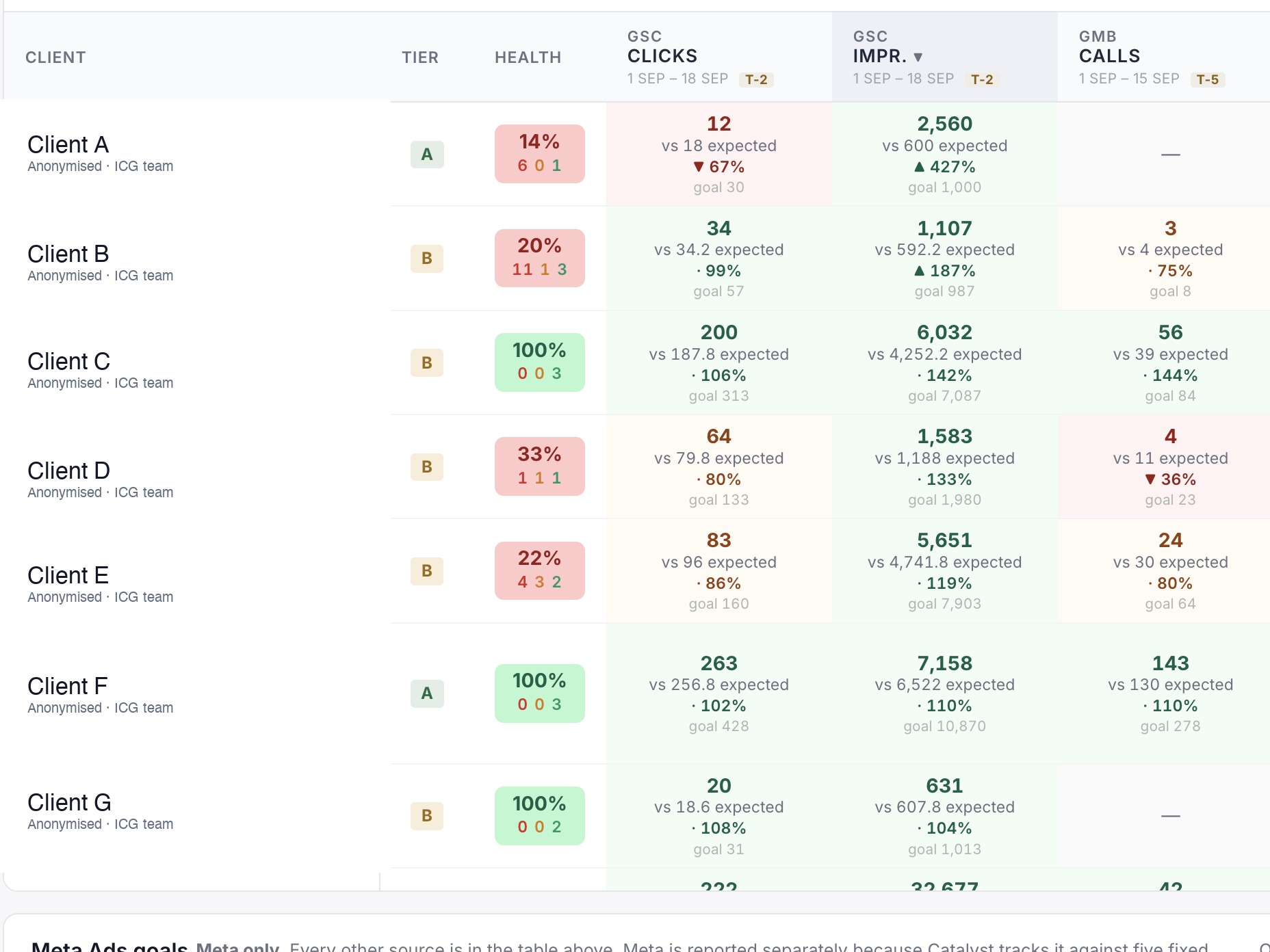
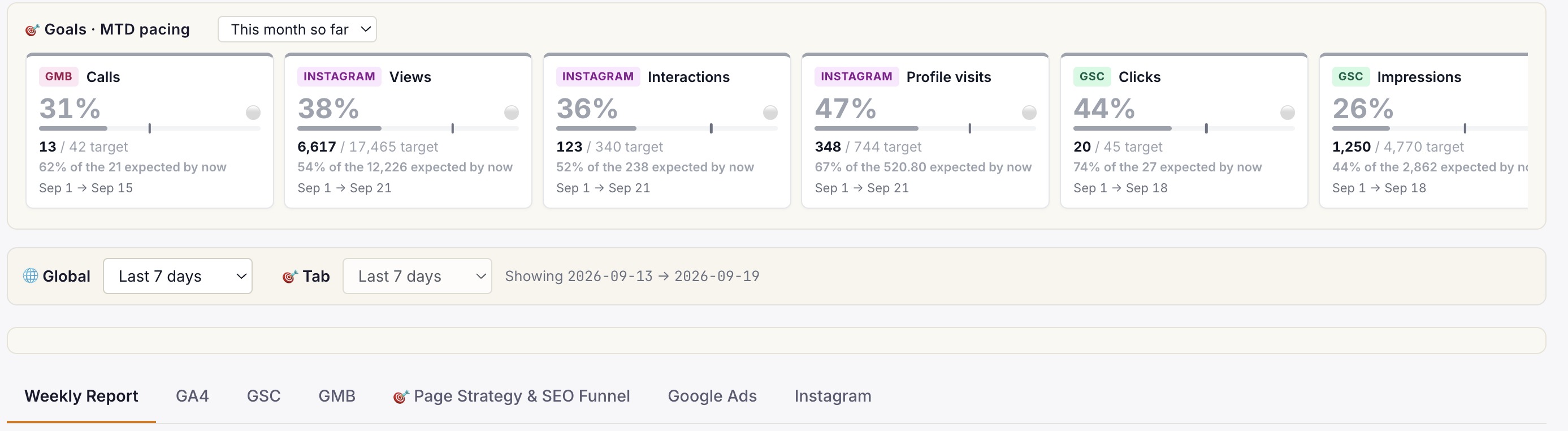
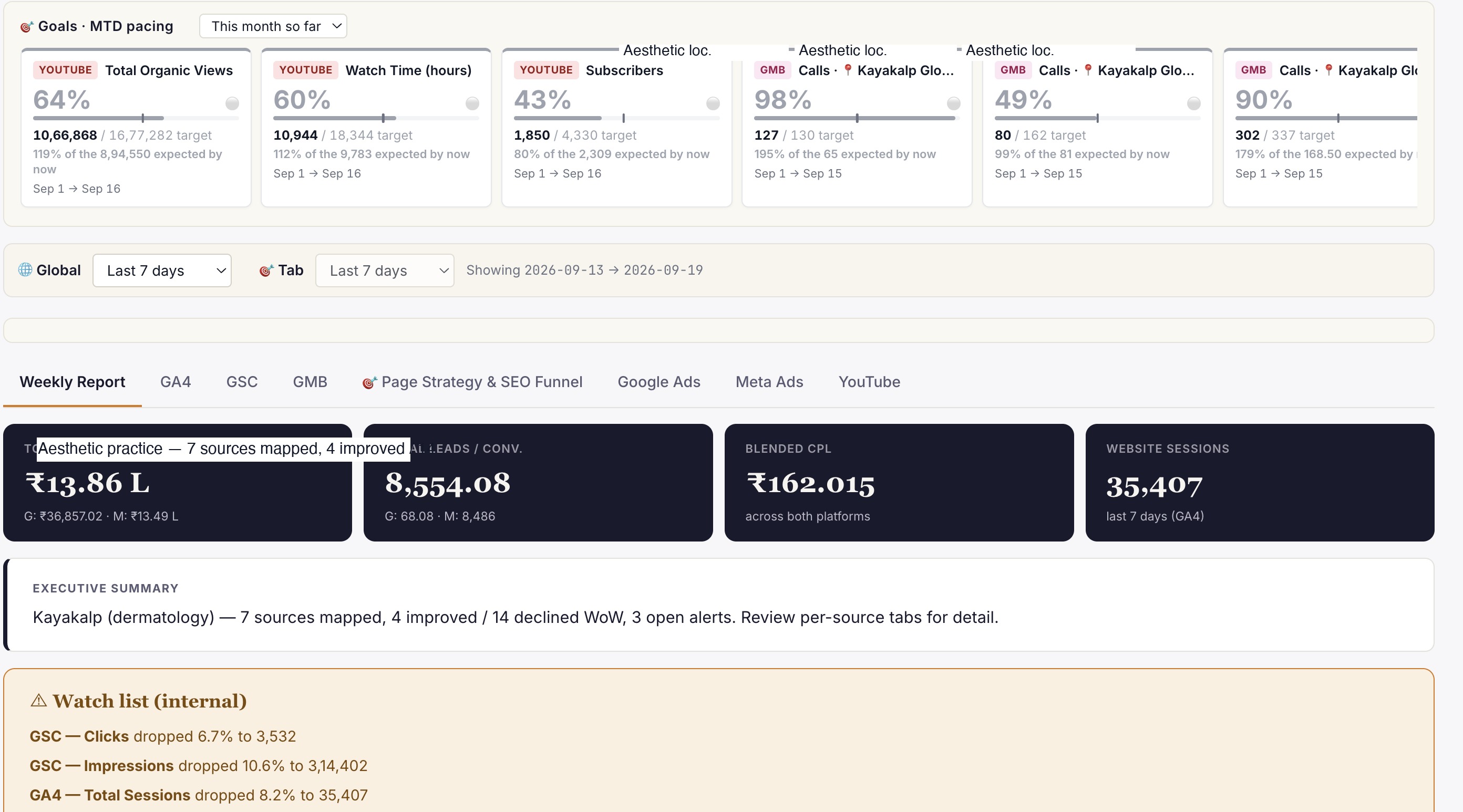
Live client dashboard. GSC, GA4, Google Ads, Meta Ads, IVR calls in one view. Login anytime, not monthly.
Phoenix
Clinic revenue intelligence over your PMS. Daily action queue: Prevent Loss, Maintain & Engage, Grow Revenue. Multi-centre rollout.
Or book a free 30-min audit to see all three in action on your account.
Healthcare brands
that already run on ICG.
A representative slice of the 150+ healthcare brands ICG has delivered for across India. Most engagements remain under NDA.


What ICG clients say · on video.
"Dental marketing in Delhi is brutally competitive. ICG's local SEO + Google Ads stack moved the needle steadily."
"Scale up of organic channels and business consulting. ICG has absolute domain authority in their field."
Need help operationalising this?
Every ICG service is healthcare-only, NMC + DPDP-aware, and built around the patient-research patterns that drive Indian healthcare growth in 2026.
Every practice welcome — packages from ₹20,000/mo.
Goals-Driven engagements · Performance-Linked Payout Models available
More from
ICG.
Five trends shaping Indian healthcare marketing through 2027: AI-first patient research, Conversions API adoption, ABDM discovery, the AEO w...
Healthcare AIO is the discipline of getting your clinic or hospital cited inside Google AI Overviews, ChatGPT and Perplexity answers — not j...
Conversational-search advertising places brand messages inside AI chat answers — ChatGPT, Perplexity, Copilot — rather than beside a results...
Stop guessing.
Book a Diagnostic.
30 minutes. Free. With the AI-powered healthcare-only marketing agency 150+ brands already run on. No slides, no pitch, no hard close.


