


D2C Healthcare Brand Marketing India 2026 — The Growth Playbook | ICG
Author: Rohit Gupta · Co-Founder, ICG · IIT BHU Pharmaceutical Engineering + IIM Rohtak · July 2026 The Indian D2C healthcare brand market went through a gold rush from 2019-2023. Hundreds of supplement, nutraceutical, ayurveda, and wellnes...
No pitch. Written root-cause diagnosis. AI-powered, healthcare only.
Direct answer
Author: Rohit Gupta · Co-Founder, ICG · IIT BHU Pharmaceutical Engineering + IIM Rohtak · July 2026 The Indian D2C healthcare brand market went through a gold rush from 2019-2023. Hundreds of supplement, nutraceutical, ayurveda, and wellnes...
TL;DR
Author: Rohit Gupta · Co-Founder, ICG · IIT BHU Pharmaceutical Engineering + IIM Rohtak · July 2026
The Indian D2C healthcare brand market went through a gold rush from 2019-2023. Hundreds of supplement, nutraceutical, ayurveda, and wellness brands raised capital, poured it into Meta and Amazon advertising, achieved rapid top-line growth, and then hit a wall when CAC rose faster than LTV.
The brands that survived and are growing in 2026 made specific strategic choices about brand architecture, channel mix, and retention economics that the ones that didn't survive missed. This is the playbook those surviving brands used.
The D2C healthcare market structure in 2026
India's D2C health and wellness market is approximately ₹15,000-20,000 crore in 2026 and growing at 18-22% annually. It splits into four segments:
Supplement and nutraceutical brands: Protein supplements, vitamins, omega-3, probiotics, ashwagandha, and combination wellness supplements. Dominated by Wellbeing Nutrition, The Whole Truth, OZiva, and 50+ smaller brands. Highly competitive; margin pressure from Amazon pricing dynamics.
Ayurveda and natural health brands: Kapiva, Zandu (HUL), Organic India, Forest Essentials (premium positioning), and hundreds of regional brands. The "natural" positioning is resilient to the commoditisation affecting supplement brands — if backed by genuine ingredient quality and clinical credibility.
D2C diagnostic and healthtech: Niramai, Orange Health, Tata 1mg (D2C diagnostics), and consumer health monitoring devices. High CAC, but stickier LTV than supplement brands.
Personal care with health claims: Mamaearth (graduated to mass market), mCaffeine, Minimalist, RE'EQUIL, Dot & Key. The boundary between personal care and healthcare is where DMRA Act + FSSAI intersection creates most compliance complexity.
The CAC-to-LTV framework: the only number that matters
D2C healthcare brands that scaled on paid media without solving the LTV equation built businesses that require paid media to exist. The moment the media tap is turned off, revenue collapses.
Sustainable D2C economics: LTV:CAC ≥ 3:1, with payback period ≤ 6 months.
The CAC drivers: Meta and Google CPMs for supplement and health brands have risen 35-50% from 2021 to 2026 as competition increased. A supplement brand that had a ₹800 CAC in 2021 is paying ₹1,200-1,400 in 2026 for the same customer — without any improvement in conversion rate or LTV.
The LTV drivers: Subscription conversion (one-time buyer → monthly subscriber) is the single highest-impact LTV intervention. A supplement customer who buys once generates ₹800-1,200 in revenue. The same customer on a monthly subscription generates ₹9,600-14,400 annually. ICG's subscription conversion optimisation for D2C health brands: subscription offer timing (immediately post-purchase, in the packaging, and at day 20 WhatsApp replenishment prompt), subscription pricing strategy (10-15% discount vs single-unit price), and subscription programme communication (monthly progress content that reinforces the product's value).
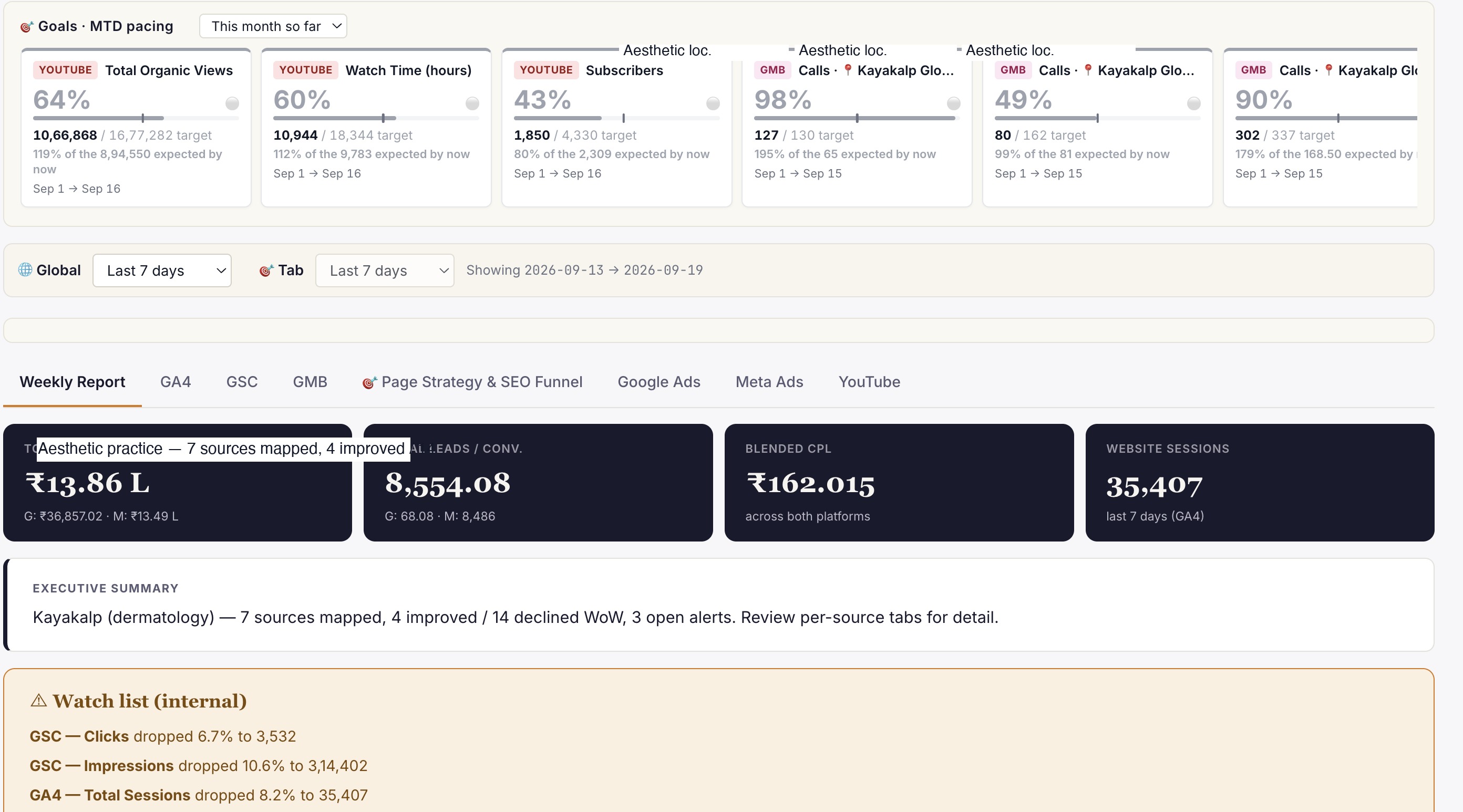
ICG's Kayakalp Global reference: D2C Derma brand. Scope: brand architecture, multi-channel acquisition, subscription conversion. Client testimonial (Co-Founder): "Scale up of organic channels and business consulting. ICG has absolute domain authority in their field."
Amazon vs D2C site: the strategic balance
Amazon:
- Discovery and volume: Amazon India has 200+ million registered buyers. Supplement brands that are not on Amazon are invisible to a majority of the Indian supplement market.
- Price pressure: Amazon's "frequently bought together" and comparison features commoditise every non-differentiated supplement. Price becomes the primary decision factor.
- Customer ownership: Amazon customers are Amazon's customers, not the brand's. The brand cannot communicate with them directly outside Amazon's platform (outside Amazon's buyer-seller messaging).
D2C site:
- Brand story: the space to tell the full ingredient narrative, clinical backing, founder story, and sustainability credentials that justify premium pricing.
- Subscription economics: the channel where monthly subscription relationships are built.
- Customer ownership: direct customer data (with DPDP consent), enabling WhatsApp-based retention sequences, cross-sell education, and LTV building.
ICG's recommended balance: Amazon for discovery (new customer acquisition), D2C site for retention (subscription conversion, LTV building). Media investment split: 50-60% of paid media to Amazon Sponsored Products (for new customer acquisition), 40-50% to Meta/Google driving D2C site traffic (for subscription conversion).
FSSAI compliance for D2C health brand claims
Every health claim in D2C marketing must pass FSSAI's advertising standards:
| Claim type | FSSAI status | Evidence required |
|---|---|---|
| "Clinically proven to reduce cholesterol" | Restricted | RCT in human subjects meeting FSSAI evidence standards |
| "Supports healthy cholesterol levels" | Permitted (health function claim) | Scientific substantiation at appropriate level |
| "Rich in omega-3 fatty acids" | Permitted (compositional claim) | Compositional data |
| "Boosts immunity" | Restricted | "Helps support normal immune function" is permitted |
| "Treats diabetes" | Prohibited | Disease cure claim — DMRA + Schedule J |
| "Supports healthy blood sugar" | Permitted (with substantiation) | Scientific data for the specific ingredient/dose |
ICG's FSSAI claim review maps every marketing claim against this hierarchy before approval. The most common error: "boosts immunity" appearing in D2C advertising — FSSAI has repeatedly issued notices against this unqualified claim. The compliant alternative: "helps support normal immune function" with ingredient-specific substantiation.
FAQ
Q1: How does ICG's work with Kayakalp Global illustrate the D2C playbook? Kayakalp Global is a D2C derma brand with ayurveda-adjacent ingredients. ICG's engagement covered brand architecture (premium positioning that earns above-market pricing), multi-channel acquisition (Meta + Google + organic content), and subscription conversion. The result cited by the Co-Founder: scale up of organic channels and business consulting. ICG does not publish specific Kayakalp metrics without client approval — the testimonial is public and is the reference we use.
Q2: What is the difference between a nutraceutical and a supplement from a regulatory perspective? "Nutraceutical" is not a defined regulatory category in Indian law — it is a marketing term. Regulatory classification depends on the product's composition and claims: food supplement (FSSAI jurisdiction if consumed as food), Ayurvedic product (AYUSH jurisdiction if classifiable under Ayurveda), or drug (D&C Act jurisdiction if making therapeutic claims). The same product can be marketed differently depending on its claims — ICG maps each product to its correct regulatory category before producing any marketing content.
Q3: Can a D2C health brand use doctors in marketing without NMC implications? Only if the doctor is a named co-founder or a properly disclosed paid advisor, and all product claims in the doctor-featuring content meet both NMC Section 6 standards and FSSAI claim standards simultaneously. A doctor who is paid to appear in a health brand's Instagram campaign without appropriate disclosure is in violation of NMC's 2026 influencer provision. ICG reviews all doctor-featuring D2C brand content for both NMC and FSSAI compliance before production.
Compliance note: FSSAI Advertising Regulations, DMRA Act, ASCI Code, NMC Section 6 (for doctor-featuring content), Schedule J, DPDP Act 2023.
Book a free 30-minute Brand & Growth Diagnostic.
It's a working session, not a sales pitch — you leave with a written root-cause analysis you can act on, whether or not you engage ICG.
The three platforms
behind every ICG engagement.
Beacon
CAPI middleware that fixes Event Match Quality, translates CRM statuses to Meta-standard events, dedups across channels.
Agency OS
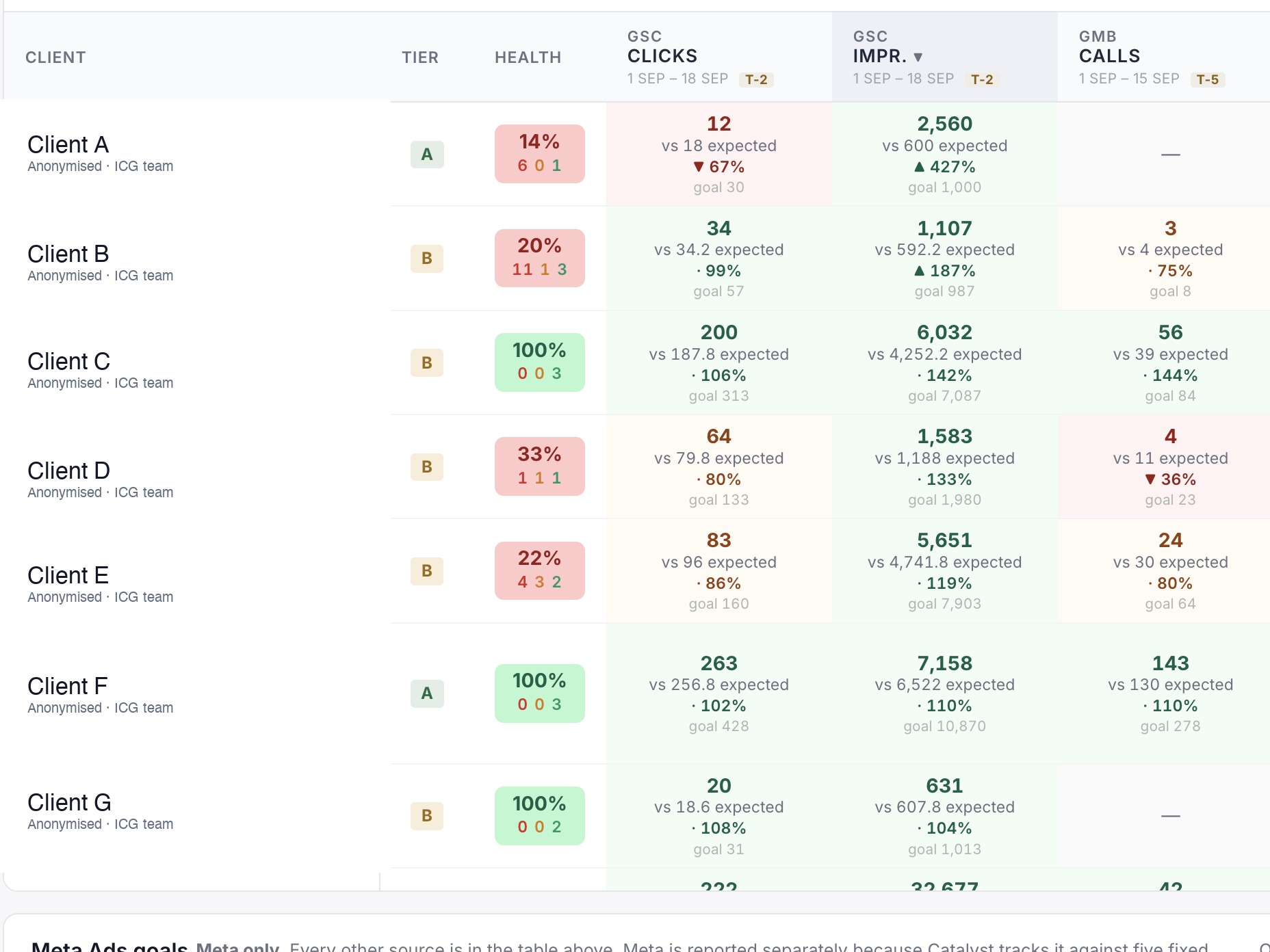
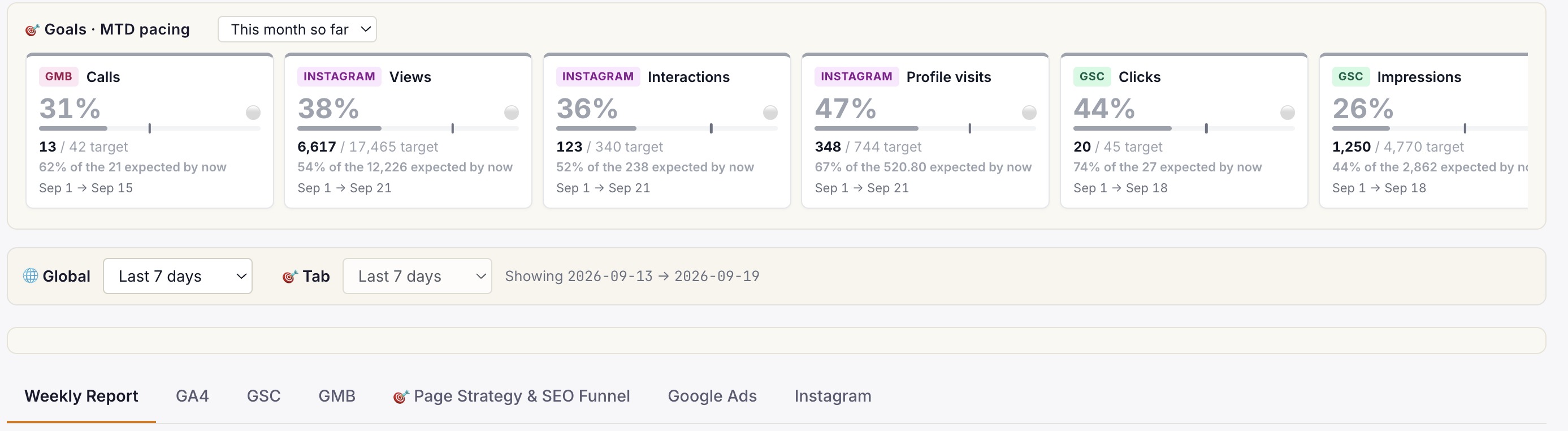
Live client dashboard. GSC, GA4, Google Ads, Meta Ads, IVR calls in one view. Login anytime, not monthly.
Phoenix
Clinic revenue intelligence over your PMS. Daily action queue: Prevent Loss, Maintain & Engage, Grow Revenue. Multi-centre rollout.
Or book a free 30-min audit to see all three in action on your account.
Healthcare brands
that already run on ICG.
A representative slice of the 150+ healthcare brands ICG has delivered for across India. Most engagements remain under NDA.


What ICG clients say · on video.
"Scale up of organic channels and business consulting. ICG has absolute domain authority in their field."
"Working with ICG transformed how we acquire IVF patients in Gurgaon. They understand the fertility journey from inquiry to consult..."
"What Ichelon accomplished — they got all my ideas and worked over 3-4 months to create an amazing, super-customised website."
Need help operationalising this?
Every ICG service is healthcare-only, NMC + DPDP-aware, and built around the patient-research patterns that drive Indian healthcare growth in 2026.
Every practice welcome — packages from ₹20,000/mo.
Goals-Driven engagements · Performance-Linked Payout Models available
More from
ICG.
Five trends shaping Indian healthcare marketing through 2027: AI-first patient research, Conversions API adoption, ABDM discovery, the AEO w...
Healthcare AIO is the discipline of getting your clinic or hospital cited inside Google AI Overviews, ChatGPT and Perplexity answers — not j...
Conversational-search advertising places brand messages inside AI chat answers — ChatGPT, Perplexity, Copilot — rather than beside a results...
Stop guessing.
Book a Diagnostic.
30 minutes. Free. With the AI-powered healthcare-only marketing agency 150+ brands already run on. No slides, no pitch, no hard close.


