


CPQL vs CPL for Healthcare PPC in India: A 2026 Buyer Guide
CPL flatters. CPQL is honest. An India-first buyer guide to Cost Per Qualified Lead in healthcare PPC — 2026 benchmarks by specialty and city tier, channel guidance, CRM plumbing, and a migration path for clinics, hospital groups and pharma teams.
No pitch. Written root-cause diagnosis. AI-powered, healthcare only.
Direct answer
CPL flatters. CPQL is honest. An India-first buyer guide to Cost Per Qualified Lead in healthcare PPC — 2026 benchmarks by specialty and city tier, channel guidance, CRM plumbing, and a migration path for clinics, hospital groups and pharma teams.
TL;DR
TL;DR
- CPL counts every raw form fill on your Google or Meta campaign. CPQL counts only the leads that clear qualification — right city, right specialty, right budget, right intent. In Indian healthcare, the CPL-to-CPQL ratio commonly runs 1:3 to 1:6.
- A dental clinic in Bengaluru paying Rs 220 CPL on Google Search often ends up at Rs 1,320 CPQL once junk, wrong-city walk-ins and price-shoppers are stripped out.
- Switch to CPQL reporting the moment your qualified-lead-to-consult rate drops under 25%, or when paid spend crosses Rs 1.5 lakh a month per specialty.
- Track CPQL by channel and specialty, never as a blended number. Google Search, Meta lead forms, YouTube in-stream, GBP calls and WhatsApp click-to-chat each behave very differently in Indian healthcare.
Table of contents
- Why CPQL matters more than CPL for Indian healthcare in 2026
- What is CPQL and how is it different from CPL?
- Why does CPL mislead Indian healthcare advertisers?
- How do you calculate CPQL for a hospital or clinic?
- What are healthy CPQL benchmarks for Indian healthcare in 2026?
- Which channels deliver the lowest CPQL for Indian healthcare?
- How do you move an existing account from CPL to CPQL reporting?
- What role does the CRM play in making CPQL trustworthy?
- The ICG approach to CPQL-first healthcare PPC
- The 70-30 model: how pricing lines up with CPQL
- FAQ
Why CPQL matters more than CPL for Indian healthcare in 2026
Because CPL counts a form fill. CPQL counts a real opportunity. In Indian healthcare paid media — dental, IVF, aesthetics, oncology, ortho, hospital OPD — the gap between the two numbers is where most agency retainers quietly bleed. If you report only CPL to a hospital marketing director, you look great every month. If you report CPQL, you look honest.
Three things have shifted in the last eighteen months that make this urgent for Indian healthcare marketers. First, ad platform auctions have tightened. Google Search CPCs in health verticals across Delhi NCR, Mumbai and Bengaluru have climbed 30-55% since early 2025 depending on specialty. Second, the DPDP Act is changing how consent, storage and downstream use of a lead's data must be handled — and most agencies have not adjusted their tracking or reporting. Third, patients now research on ChatGPT, Perplexity and YouTube before ever filling a form, which means the leads that do come through are less "warm" and more "still comparing". That last shift is why blended CPL numbers look stable while your actual paid-consult numbers are sagging.
If you own or run a healthcare clinic, hospital marketing team or pharma brand desk in India, this guide is written for you. No patient advice. Only the metric plumbing that decides whether your paid budget is compounding or leaking.
What is CPQL and how is it different from CPL?
CPQL is Cost Per Qualified Lead. It is the total paid media spend divided by the count of leads that pass a written qualification filter. CPL is Cost Per Lead — total spend divided by every raw lead the account produced, junk included. CPQL is always higher than CPL. It is also always more useful.
A qualified lead in Indian healthcare typically clears four gates:
- Geography — the lead is in a city or catchment your clinic actually serves. A Chandigarh IVF centre is not going to fly a patient in from Guwahati.
- Specialty match — the enquiry is for a treatment you offer. Aesthetics clinics running "hair fall treatment" ads get flooded with alopecia queries that need dermatology consultations they do not run.
- Budget fit — the enquiry is not a price shopper looking for the cheapest quote across ten centres. This is heavy in dental implants, IVF and hair transplant.
- Intent signal — the caller or form filler is willing to book a consultation within 30 days, not "researching for my mother-in-law in six months".
Every account should have these four gates defined in writing before spend starts. If the qualification rulebook lives only in the head of the front-desk executive, your CPQL numbers will never be trustworthy month over month.
Why does CPL mislead Indian healthcare advertisers?
CPL misleads because Indian healthcare demand is unusually noisy. A hair transplant search in Hyderabad pulls in three kinds of clicks: patients ready to consult, patients wanting a WhatsApp quote to compare, and researchers who will not act for months. All three fill your form. All three drop your CPL. Only one drives revenue.
Four common patterns keep CPL flattering:
- Junk form fills from Meta lead forms. Cheap CPL, but 40-60% of the leads never respond to a callback. Meta's in-platform pre-fill is a double-edged sword — friction is low, but so is intent.
- Wrong-city clicks on Google Search. Location targeting is directional, not surgical. An IVF clinic on Bannerghatta Road in Bengaluru will still see form fills from Mysuru, Hosur and Belagavi despite tight radius settings.
- Price-shopper WhatsApp chats. A dentist in Jaipur running click-to-WhatsApp gets 3x the "lead" volume of a form campaign, but 70% of the chats stop at "kitna lagega".
- Repeat enquiries from the same phone number. Nobody deduplicates before averaging CPL. The same aunt who called twice about her son's braces shows up as two leads.
A senior media buyer at a Delhi hospital chain shared their December 2025 audit: 1,412 raw leads across four hospitals, blended CPL of Rs 380. After deduplication, city filter and intent check, only 289 qualified. Real CPQL was Rs 1,856. Same spend, four different stories depending on which number the CFO saw.
How do you calculate CPQL for a hospital or clinic?
The formula is straightforward. Divide total paid media spend for a defined window by the count of leads that cleared your qualification rulebook in that same window. Attribute both cost and qualified count to the source channel, source campaign and specialty. Never mix specialties in the numerator or denominator.
Step-by-step:
- Define the qualification rulebook — geography, specialty, budget, intent — for each specialty separately. IVF's rulebook is not dental's rulebook.
- Assign a status field in your CRM: New, Contacted, Qualified, Consulted, Converted. Only leads that hit Qualified count in CPQL.
- Pull spend by channel and campaign from Google Ads, Meta Ads Manager, YouTube and any DV360 or GBP-boosted post spend.
- Compute CPQL = channel-specific spend / channel-specific qualified count.
- Publish the number weekly, not monthly. Monthly hides the campaign-level swings that matter.
A single-specialty ortho clinic in Pune with Rs 90,000 in Google Search spend and 46 leads that cleared its qualification rulebook is running a CPQL of Rs 1,956. Compare that to its raw CPL of Rs 620 across 145 form fills, and you can see how the honest number is 3.15x higher.
What are healthy CPQL benchmarks for Indian healthcare in 2026?
Benchmarks vary sharply by specialty and city tier. A safe CPQL in one specialty is a disaster in another. Below is a working set of ranges we use across ICG's healthcare portfolio for planning conversations. Use these as guardrails, not commandments — your own qualified-conversion economics matter more than any national average.
| Specialty | Tier-1 city CPQL (Rs) | Tier-2 city CPQL (Rs) | Primary channel |
|---|---|---|---|
| General dentistry | 900 - 1,600 | 500 - 900 | Google Search + GBP |
| Dental implants | 2,400 - 4,200 | 1,400 - 2,600 | Google Search + YouTube |
| Hair transplant | 2,800 - 5,000 | 1,600 - 3,200 | Meta + YouTube |
| IVF | 4,500 - 8,500 | 2,600 - 5,000 | Google Search + Meta |
| Aesthetics / skin | 1,600 - 3,000 | 1,000 - 1,800 | Meta + Instagram |
| Ortho / joint replacement | 1,800 - 3,600 | 1,200 - 2,200 | Google Search + GBP |
| Oncology (multi-speciality) | 3,500 - 7,000 | 2,000 - 4,500 | Google Search + YouTube |
These ranges assume a written qualification rulebook, a CRM that tags status honestly, and at least Rs 1.5 lakh per specialty per month in spend. Under that spend threshold the numbers get too noisy for weekly reporting to be meaningful.
Which channels deliver the lowest CPQL for Indian healthcare?
Google Search almost always wins on CPQL in high-intent specialties. Meta and Instagram win on CPL but rarely on CPQL. GBP calls are the sleeper — the CPQL is often the lowest in the entire mix because the caller has already read your reviews and is ready to book.
A rough working order across our client base:
- GBP calls and directions — lowest CPQL because intent is highest. Underspent by most Indian clinics.
- Google Search brand + non-brand — reliably lower CPQL than social, especially in dental, ortho and IVF.
- YouTube in-stream and shorts — mid CPQL, but excellent for high-consideration specialties like hair transplant and cosmetic dentistry where trust is a bigger blocker than price.
- Meta lead forms — lowest CPL, highest junk ratio, therefore mid-to-high CPQL.
- WhatsApp click-to-chat from Meta — variable. Excellent for aesthetics if the chat script filters price shoppers in the first three messages.
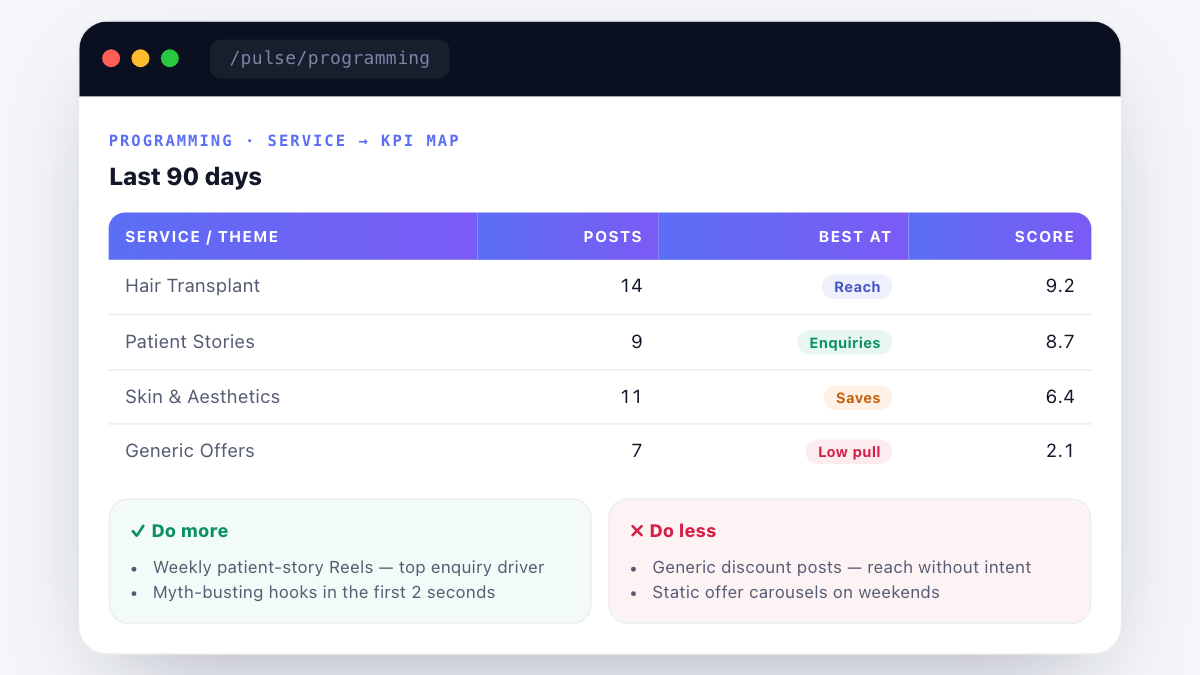
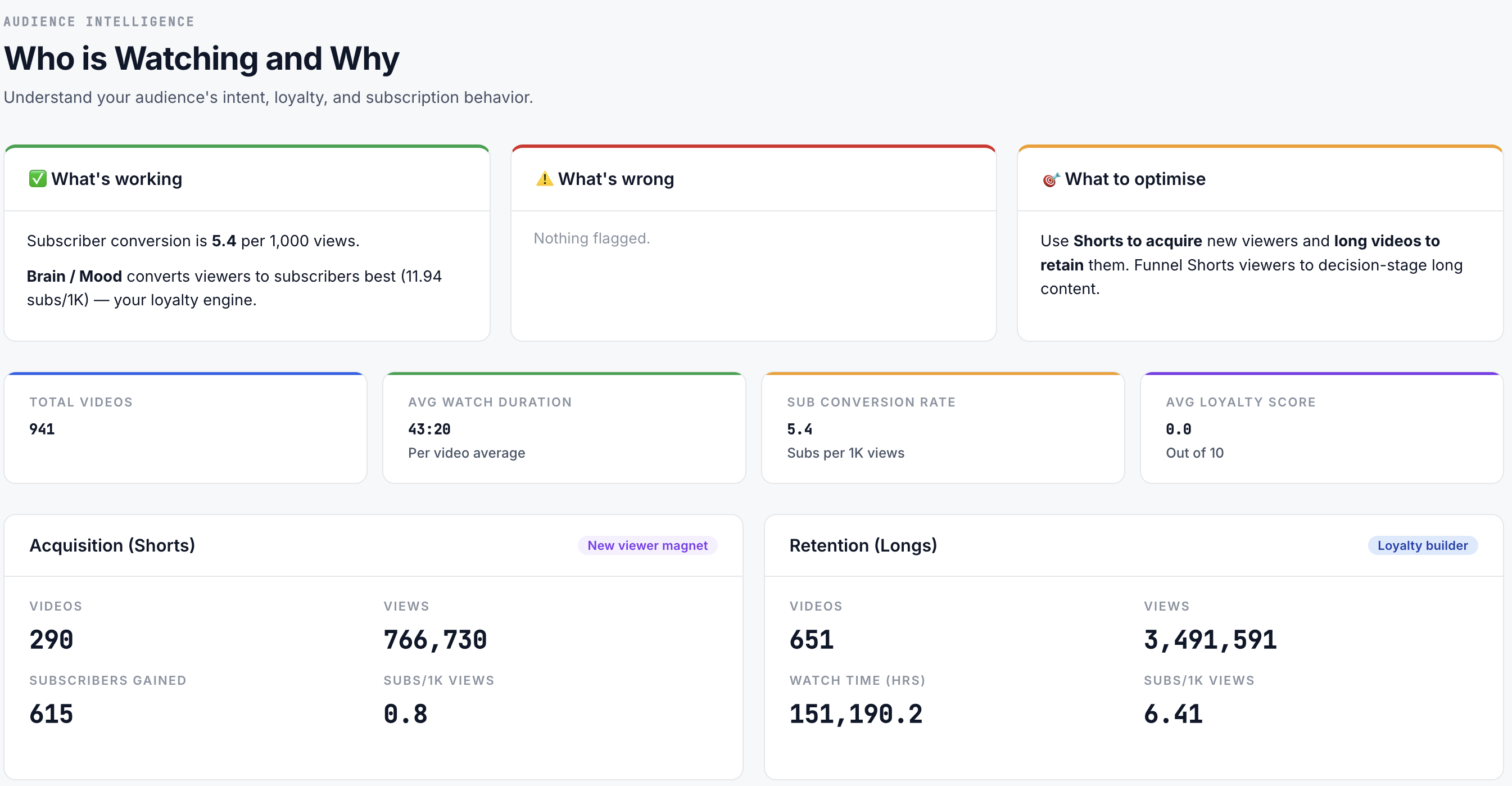
This is where ICG's four-part media stack shows up in practice. Angryturtle handles GBP so calls and directions compound. YODA drives the YouTube video engine that carries high-consideration specialties. Meta Catalyst IQ runs the Meta Ads engine with junk-lead scoring built in. Prism Spy reads competitor Meta creative in your city so you know what price-shopper decoys they are running, and Prism Pulse tracks Instagram content performance so organic reinforces paid.
How do you move an existing account from CPL to CPQL reporting?



Start with the definition, not the dashboard. Ninety percent of failed CPQL migrations happen because the agency and the client never wrote down what "qualified" means for each specialty. Write the rulebook, get sign-off, then rebuild the reporting.
Practical migration order:
- Week 1 — draft the qualification rulebook per specialty. Get the CMO and front-desk lead to sign it.
- Week 2 — audit the CRM. Ensure every lead has a source, campaign, specialty tag, city and status field. Fix missing fields before you touch reporting.
- Week 3 — rebuild the weekly report. Kill blended CPL. Show CPQL by channel and specialty. Keep CPL as a secondary column for six months so the client can see the delta.
- Week 4 onwards — bid and optimise on CPQL, not CPL. This means uploading qualified-lead conversions back into Google Ads and Meta as offline conversions, so the auction learns to find the same profile.
What role does the CRM play in making CPQL trustworthy?
The CRM is where CPQL either becomes trustworthy or becomes theatre. If your front-desk team is not tagging status honestly, CPQL is just a slower version of CPL with extra steps. The CRM has to be built for the way an Indian clinic actually operates — walk-ins, WhatsApp back-and-forth, family decision-makers, appointment reschedules.
Non-negotiables for the CRM layer:
- Every lead source auto-tagged. No manual "where did you hear about us" dropdown.
- Status transitions logged with timestamps, not just current state.
- Qualified/junk toggle available to whoever answers the phone or WhatsApp, not just the marketing analyst.
- Offline conversion export to Google Ads and Meta at least weekly.
- DPDP-compliant consent capture at the point of first contact.
ICG's own healthcare CRM stack — AtomCRM at Rs 14,999 per month for lead-to-consult, HealthPro 360 at Rs 14,999 per month for the RCM and EHR overlay — is built to solve exactly this gap. If your existing CRM cannot export qualified-lead conversions to Google Ads offline conversions, CPQL bidding is closed to you and your spend is optimising for junk.
The ICG approach to CPQL-first healthcare PPC
Ichelon Consulting Group works with 150+ clinics and 300+ live healthcare clients across India. Every paid media engagement starts with a written qualification rulebook per specialty, a CRM audit, and a CPQL reporting layer before a single rupee is spent. We do not run accounts where CPL is the primary KPI — the incentives get misaligned within a quarter.
Our media stack is built to feed CPQL, not CPL. Angryturtle keeps GBP calls compounding. YODA compounds YouTube trust for high-consideration specialties. Meta Catalyst IQ scores junk before it hits the client's inbox. Prism Spy watches competitor Meta creative in your city. Prism Pulse tracks Instagram so organic reinforces paid. AtomCRM and HealthPro 360 hold the qualified-lead status honest. Every layer is designed so the number you see in Friday's report is the number that pays for itself in Monday's OPD.
The 70-30 model: how pricing lines up with CPQL
ICG's healthcare SEO and paid media packages run on a 70-30 fixed-variable model. Seventy percent of the retainer is fixed. Thirty percent is tied to a written twelve-month CPQL and qualified-lead target, on a sliding-scale slab. Miss the target, we take the hit. Beat it, we share the upside.
The three package anchors:
- Foundation — Rs 49,999 per month. Right for single-specialty clinics under Rs 2 lakh monthly ad spend.
- Growth — Rs 74,999 per month. Multi-specialty clinics or single-specialty hospitals with Rs 2-5 lakh monthly ad spend.
- Scale — Rs 99,999 per month. Hospital groups or multi-location clinics with over Rs 5 lakh monthly ad spend.
The same 70-30 model extends to Google Ads and Meta Ads media management on budgets over Rs 5 lakh, and to YouTube SEO and AIO retainers from Rs 50,000 per month.
FAQ
What counts as a qualified lead in Indian healthcare PPC?
A lead that clears four written gates: geography (in your catchment), specialty (for a treatment you offer), budget (not a price-shopper looking for the cheapest quote), and intent (willing to consult within 30 days). The rulebook must be written per specialty and signed off by the CMO before spend starts.
Is CPQL the same as CAC or Cost Per Acquisition?
No. CPQL is upstream of CAC. CPQL is spend divided by qualified leads. CAC is spend divided by paying patients or completed procedures. In Indian healthcare, CAC is usually 3-8x CPQL depending on specialty and how strong the front-desk conversion team is.
How often should CPQL be reported to the client?
Weekly for accounts above Rs 3 lakh monthly spend. Fortnightly for accounts between Rs 1-3 lakh. Monthly reporting on CPQL hides the campaign-level swings that matter, especially in specialties like IVF and hair transplant where auction dynamics shift week to week.
Does the DPDP Act change how CPQL should be tracked?
Yes. Consent must be captured at the point of first contact, and the downstream use of the lead's data — including uploading it as an offline conversion to Google Ads or Meta — has to be covered by that consent language. If your CRM captures a phone number without an explicit tick-box for marketing follow-up and offline conversion sharing, your CPQL bidding pipeline is exposed.
What is a good CPQL for a single-doctor dental clinic in a tier-2 city?
For general dentistry in a tier-2 city like Jaipur, Indore, Kochi or Coimbatore, a healthy CPQL sits in the Rs 500-900 range. Dental implants in the same tier-2 city typically run Rs 1,400-2,600 CPQL. Anything under Rs 500 for implants usually indicates junk contamination in the qualified count.
Can Meta lead forms ever deliver a healthy CPQL in healthcare?
Yes, but only with three fixes: an instant-form with at least one open-text question that filters casual browsers, WhatsApp-first callback within 15 minutes, and a chat script that qualifies budget and city in the first three messages. Without those, Meta CPL looks brilliant while CPQL runs 5-8x higher.
Should CPQL be different for brand versus non-brand Google Search?
Absolutely. Brand search CPQL is usually 40-70% lower than non-brand because the searcher already knows the clinic. Reporting a blended Google Search CPQL hides whether your non-brand campaigns are pulling their weight. Split brand and non-brand in the CPQL report every week.
How does ICG measure CPQL differently for hospital groups?
For hospital groups running multiple specialties across cities, we build a CPQL matrix — specialty rows, city columns — and refuse to average them. A group hospital in Bengaluru optimising a blended CPQL will always underinvest in oncology and overinvest in general OPD. The matrix keeps the capital allocation honest.
Book a free Google Ads account audit.
Raman Soni's team pulls your account, reviews campaign structure, keyword intent tiering, landing pages, and CPQL attribution. 45 minutes, actionable.
Questions readers ask
about this topic.
The three platforms
behind every ICG engagement.
Beacon
CAPI middleware that fixes Event Match Quality, translates CRM statuses to Meta-standard events, dedups across channels.
Agency OS
Live client dashboard. GSC, GA4, Google Ads, Meta Ads, IVR calls in one view. Login anytime, not monthly.
Phoenix
Clinic revenue intelligence over your PMS. Daily action queue: Prevent Loss, Maintain & Engage, Grow Revenue. Multi-centre rollout.
Or book a free 30-min audit to see all three in action on your account.
Healthcare brands
that already run on ICG.
A representative slice of the 150+ healthcare brands ICG has delivered for across India. Most engagements remain under NDA.


What ICG clients say · on video.
"Scale up of organic channels and business consulting. ICG has absolute domain authority in their field."
"Working with ICG transformed how we acquire IVF patients in Gurgaon. They understand the fertility journey from inquiry to consult..."
"What Ichelon accomplished — they got all my ideas and worked over 3-4 months to create an amazing, super-customised website."
Need help operationalising this?
Every ICG service is healthcare-only, NMC + DPDP-aware, and built around the patient-research patterns that drive Indian healthcare growth in 2026.
Every practice welcome — packages from ₹20,000/mo.
Goals-Driven engagements · Performance-Linked Payout Models available
More from
ICG.
Five trends shaping Indian healthcare marketing through 2027: AI-first patient research, Conversions API adoption, ABDM discovery, the AEO w...
Healthcare AIO is the discipline of getting your clinic or hospital cited inside Google AI Overviews, ChatGPT and Perplexity answers — not j...
Conversational-search advertising places brand messages inside AI chat answers — ChatGPT, Perplexity, Copilot — rather than beside a results...
Stop guessing.
Book a Diagnostic.
30 minutes. Free. With the AI-powered healthcare-only marketing agency 150+ brands already run on. No slides, no pitch, no hard close.


