


Sentiment Analysis Tool Categories for Healthcare Brands in India: A Buyer Guide
A neutral, feature-based comparison of the five sentiment tool categories Indian healthcare brands actually shortlist, mapped to buyer archetypes from single dental clinics to 100-bed hospitals and IVF chains.
No pitch. Written root-cause diagnosis. AI-powered, healthcare only.
Direct answer
A neutral, feature-based comparison of the five sentiment tool categories Indian healthcare brands actually shortlist, mapped to buyer archetypes from single dental clinics to 100-bed hospitals and IVF chains.
TL;DR
TL;DR
- Sentiment tools for Indian healthcare brands fall into five clean tiers: free listening, DIY English-first SaaS, mid-market Indic-aware, enterprise voice-of-customer suites, and agency-managed stacks.
- The single biggest filter isn't price. It's whether the tool handles Hindi, Tamil, Bengali and Marathi patient reviews with the same accuracy as English.
- DPDP Act 2023 has quietly killed the case for storing raw patient comments in tools hosted outside India without an explicit processor agreement.
- A 30-bed hospital rarely needs anything above the mid-market Indic tier; a 100-bed multi-specialty with a cardiology or oncology focus usually does.
- Sentiment is a workflow, not a dashboard. Whichever tier you pick, budget for the response engine, not just the listening layer.
Table of Contents
- Why sentiment analysis is a different problem in Indian healthcare
- The eight axes we compare on
- The main comparison table
- Per-axis deep dives
- Which category fits which buyer
- Where ICG sits as a neutral advisor
- The 70-30 model for sentiment-adjacent services
- FAQ
Why sentiment analysis is a different problem in Indian healthcare
Most sentiment analysis tools were built for retail and hospitality brands running on English-first review corpora. Healthcare in India breaks almost every assumption those tools make.
Start with language. A single 60-bed hospital in Pune will typically collect reviews in English, Marathi, Hindi and occasionally Gujarati, sometimes inside the same sentence. A Chennai fertility chain sees Tamil-English code-mixed reviews on Google, pure Tamil on Facebook, and clean English on the healthcare directories. Off-the-shelf NLP that scores everything as "neutral" because it can't parse Devanagari or Tamil script is worse than useless, because it tells the marketing head everything is fine when it isn't.
Then there's the vocabulary problem. "The nurse was rude" is easy. "Doctor didn't explain the LSCS risks properly" needs the model to know LSCS is a lower-segment caesarean and that the complaint is about informed consent, not the procedure. Generic sentiment engines miss this. Healthcare-tuned taxonomies catch it and route it to the clinical governance queue instead of the marketing queue.
Third, regulation. The Digital Personal Data Protection Act 2023 treats patient identifiers, treatment references and health conditions as sensitive personal data. That has real consequences for which sentiment vendors you can even shortlist. Storing raw review text that names doctors, quotes symptoms, or references specific admissions inside a US-hosted tool without a data processing agreement is now a defensible risk only when the DPO has signed off in writing.
Finally, the response side matters more than the listening side. A rude Google review left unanswered for eleven days lands in the Local Pack while a prospective patient is comparing three hospitals for a knee replacement. Whatever tool you pick, the useful question isn't "does it detect sentiment?" It's "can my front-office actually close the loop within four hours, in the right language, without breaching MCI/NMC advertising norms?"
The eight axes we compare on
Every sentiment vendor pitch will sound impressive in a demo. The only way to compare fairly is to force each tool onto the same axes. Across 300+ live healthcare accounts, these are the eight that actually predict whether a category tier will work for you.
- Language and dialect coverage — how well the NLP handles Hindi, Tamil, Bengali, Marathi, Telugu, Kannada, Malayalam, Punjabi, Gujarati and code-mixed variants.
- Data source breadth — GMB, Instagram, YouTube comments, Facebook, X, Reddit, WhatsApp Business, Indian healthcare directories, RSS, and long-tail regional review sites.
- Healthcare taxonomy depth — recognition of specialty terms, drug names, procedure codes, and clinical intent tags.
- DPDP Act 2023 and data residency posture — hosting location, processor agreements, PII redaction, retention windows.
- Response workflow and escalation — routing rules, SLA timers, template libraries, approval chains, clinical review paths.
- Integration surface — CRM, EHR/HIS, marketing stack, WhatsApp Business API, ad platforms, BI tools.
- Pricing bands in rupees — actual monthly cost including seats, data volume overages, and mandatory add-ons.
- Time to live dashboard — how long from contract signed to your first genuinely useful weekly report.
The main comparison table
| Axis | Tier A: Free/Freemium Listening | Tier B: DIY SaaS (English-first) | Tier C: Mid-Market Indic-Aware | Tier D: Enterprise VoC Suite | Tier E: Agency-Managed Stack |
|---|---|---|---|---|---|
| Indian language coverage | English only; script-mixed content mostly ignored | English strong, Hindi patchy, other Indic languages weak | 9-11 Indian languages with usable accuracy on code-mixed text | Full Indic coverage plus custom dialect training | Uses Tier C or D underneath, human reviewers close the gap |
| Data source breadth | 1-3 sources, usually GMB and Facebook | 6-10 sources, weak on Indian directories | 12-18 sources including Indian healthcare portals and Reddit India | 25+ sources, custom scrapers on request | Whatever the underlying stack covers plus manual sweeps |
| Healthcare taxonomy depth | None — generic sentiment only | Retail-tuned; misses clinical nuance | Healthcare-tuned specialty tags, 40-80 taxonomy nodes | 150+ nodes, ICD/procedure-aware, custom drug libraries | Human-tagged for clinical vs service vs billing themes |
| DPDP Act 2023 posture | Mostly foreign-hosted, no processor agreement | Foreign-hosted, DPA available on paid tiers | India-hosted or India-region cloud, DPA standard | India data residency guaranteed, PII redaction native | Agency signs a formal DPA, hosts export data on India infra |
| Response workflow | None — read-only | Basic ticket assignment, no SLA timers | SLA timers, template libraries, WhatsApp reply from dashboard | Full case management, clinical review chains, audit trail | Human pod replies within defined SLA, sends daily digest |
| Integration surface | Nothing beyond CSV export | Zapier/webhook-tier integrations | Native connectors to major Indian CRMs, WhatsApp API, meta ads | Deep API into HIS/EHR, custom middleware supported | Bespoke — integration budget quoted separately |
| Monthly price band | Rs 0 to Rs 4,999 | Rs 12,000 to Rs 40,000 | Rs 45,000 to Rs 1,20,000 | Rs 2,00,000 to Rs 8,00,000+ | Rs 35,000 to Rs 3,00,000 (all-in, humans included) |
| Time to live dashboard | Same day | 1-2 weeks | 3-5 weeks | 10-16 weeks with implementation partner | 2-3 weeks including SOP writing |
Per-axis deep dives
1. Language and dialect coverage
This is the axis most vendors quietly fudge. A tool that "supports Hindi" often means it can tokenise Devanagari and return polarity scores, not that it can correctly classify a review like "doctor sahab bahut acche the lekin billing counter pe bahut wait karna pada" as a mixed sentiment where clinical experience is positive and administrative experience is negative. Ask any shortlisted vendor for 200 sample reviews from a comparable Indian healthcare brand, run them through the tool, and audit against a manual gold standard. Anything below 75% agreement with a bilingual human reviewer on Hindi and English mixed content isn't fit for Indian healthcare marketing.
2. Data source breadth
The default assumption is that Google Business Profile and Instagram together give you 80% of the signal. For hospitals, that's true. For a specialty like IVF, dental cosmetics, or hair transplant, half the sentiment lives on Reddit India, on regional Facebook groups, and on healthcare directories that the enterprise suites often ignore because their addressable market is US healthcare. Mid-market Indic-aware vendors and agency-managed stacks tend to score best here simply because their business depends on covering the Indian long tail. Products like Prism Pulse focus specifically on Instagram signal depth, which the average VoC suite treats as a rounding error.
3. Healthcare taxonomy depth
The difference between "the food was cold" and "the anaesthetist changed the plan without telling my father" is a taxonomy problem, not a sentiment problem. Both will score negative. Only the second should trigger a clinical review path. Tier A and Tier B tools essentially can't tell them apart, which means every clinical complaint gets treated as a customer service issue. Tier C tools ship with 40-80 healthcare tags. Tier D suites let you extend the taxonomy — a private hospital chain we advise runs a 220-tag custom taxonomy that separates anaesthesia, informed consent, billing dispute, delayed discharge, and pharmacy stock-out into their own workflows.
4. DPDP Act 2023 and data residency posture
The Act became enforceable through 2025 with staggered rulemaking. Two things are now table-stakes when a hospital DPO reviews a sentiment vendor. First, the vendor must be willing to sign a Data Processing Agreement naming the fiduciary and describing what it does with the raw review text. Second, sensitive personal data — anything that identifies a patient, condition, or treatment — must either stay in India or be processed under a documented safeguards regime. Tier A tools almost never satisfy these tests. Tier C onward usually do, but only on paid plans, and only after the vendor's legal team has actually issued the DPA rather than pointed at a marketing page. If your brand is in oncology, mental health, or fertility, treat this axis as a hard filter.
5. Response workflow and escalation
Detection without response is decorative. The right question is: when a Hindi one-star review lands on GMB at 9:47 pm on a Sunday, what happens in the next four hours? Tier C tools introduce SLA timers, template libraries with pre-approved MCI-safe language, and one-click reply into GMB and WhatsApp. Tier D adds clinical review chains — a serious complaint routes to a medical superintendent before a public reply goes out, with the audit trail preserved for medico-legal purposes. Tier E, the agency-managed stack, replaces the "who's on call" problem entirely by putting a pod of trained reviewers behind the queue.
6. Integration surface
Sentiment data on its own creates dashboards. Sentiment data plugged into your marketing and clinical stack creates decisions. The two integrations that pay for themselves fastest for Indian hospitals are the CRM connection — so a negative sentiment episode on GMB automatically pauses re-marketing to that phone number — and the WhatsApp Business API connection, so replies can happen inside the same conversation the patient started in. A CRM like AtomCRM was designed around this loop: sentiment events become CRM triggers rather than a parallel report. Anything that requires manual export-and-import will erode within a quarter as ops teams stop feeding it.
7. Pricing bands and total cost of ownership
List prices lie. The real cost of a Tier B DIY SaaS for a 5-branch dental chain is rarely the Rs 24,000 sticker — it's that plus two hours per day of a marketing coordinator's time plus the cost of a missed complaint that spreads on social. Tier C mid-market pricing looks steep at Rs 60,000-Rs 90,000/month but usually collapses TCO because the workflow layer is built in. Tier D enterprise suites are honest only above Rs 2 lakh/month and require an implementation partner budgeted separately. Agency-managed stacks, priced Rs 35,000 to Rs 3 lakh depending on ticket volume and languages covered, are the fastest way for a 30-bed hospital to get to grown-up sentiment ops without hiring a dedicated team.
8. Time to live dashboard
Enterprise VoC suites promise integration richness and deliver it — three to four months later. Mid-market Indic-aware tools land in 3-5 weeks including source authentication and taxonomy tuning. Agency-managed stacks are usually fastest to genuine insight because a human pod is drafting the first meaningful weekly report inside three weeks, while the platform work continues underneath. This matters for a healthcare buyer because sentiment problems tend to arrive uninvited and you rarely have a quarter to wait.
Which category fits which buyer
Single dental or aesthetic clinic (1-3 chairs)
A single-owner clinic in Bengaluru or Hyderabad running Rs 60,000-Rs 1.5 lakh/month of marketing spend usually doesn't need a paid sentiment tool at all. The right stack is a disciplined GMB review workflow, an Instagram DM triage habit, and a WhatsApp Business setup with saved replies. If you must buy something, buy a Tier A/B tool for GMB monitoring only. Above that, spend goes further on a GBP operating system like Angryturtle that ships review-response prompts, holiday alerts and post cadences the front desk can execute, rather than a standalone listening tool nobody logs into.
30-60 bed multi-specialty hospital
This is the sweet spot for Tier C mid-market Indic-aware tools or Tier E agency-managed stacks. Review volume is high enough that manual monitoring breaks down, brand risk is real, and the marketing team is usually two or three people who can't run a Tier D implementation. Budget Rs 50,000-Rs 90,000/month for a Tier C tool with an internal owner, or Rs 45,000-Rs 1.2 lakh/month for an agency-managed setup that includes the humans.
100-bed multi-specialty with cardiology or oncology focus
Now clinical stakes climb. A missed sentiment thread about a cardiology outcome is a medico-legal event, not a marketing event. Tier D enterprise VoC suites start earning their keep here, especially those with strong clinical taxonomy libraries and India data residency guarantees. Expect Rs 2-4 lakh/month for the tool plus an implementation partner. Some 100-bed hospitals get further faster by layering an agency-managed stack over a Tier C platform, keeping enterprise complexity out until the internal team has grown into it.
Mid-tier IVF or dermatology chain (5-15 branches)
Chains have a different problem: comparing sentiment across branches without letting one bad branch drown the brand-level view. The right answer is almost always a Tier C tool with a well-modelled location hierarchy plus a Tier E human pod for response quality control. Language coverage matters more here because a chain typically operates across three or four states. Budget Rs 1-2.5 lakh/month all-in.
Pharma or OTC brand India go-to-market
Pharma brands sit outside the hospital pattern entirely. The listening problem is category-level — what are patients saying about a therapy area, not a facility — and the compliance surface is much heavier under DCGI and NMC rules. Tier D suites with strong Reddit and forum coverage plus custom taxonomies for adverse-event detection are usually the right fit. Standalone competitor Meta Ads intelligence — a tool like Prism Spy — sits next to the sentiment stack rather than inside it, giving brand and med-affairs teams a shared view of what competitors are saying versus what patients are hearing.
Where ICG sits as a neutral advisor

 AI Overview readiness on every healthcare query for the listing specialty and city" width="1200" height="675" loading="lazy" decoding="async" style="width:100%;height:auto;display:block;">
ICG doesn't sell a sentiment analysis platform. That's deliberate. Across 300+ live healthcare clients and 150+ clinics, we've watched the same three failure modes repeat: buying enterprise complexity for a mid-market problem, buying an English-first tool for a multilingual patient base, and buying a listening layer without budgeting for the response workflow. Our job in a sentiment evaluation is to sit on your side of the table — write the DPA checklist your DPO will actually approve, run a language accuracy test on real reviews from your specialty, and cost the tool against the internal FTE and agency hours it will genuinely need. Where we do help operationally, it's through category-adjacent products: Angryturtle for GBP review ops, YODA for YouTube comment sentiment, Meta Catalyst IQ and Prism Spy for the paid-social side, Prism Pulse for Instagram, HealthPro 360 for hospital-side RCM/EHR overlay, and AtomCRM for closing the sentiment-to-conversion loop.
The 70-30 model when sentiment work touches services


Most Indian healthcare brands don't need a bigger sentiment platform. They need someone to actually run the workflow every day. That's why ICG's service pricing on sentiment-adjacent engagements — reputation management, ORM, GMB review ops, YouTube comment sentiment — sits inside our 70-30 model: Foundation at Rs 49,999/month, Growth at Rs 74,999/month, Scale at Rs 99,999/month, with 70% of the retainer spent on execution work you can point at and 30% on the strategy, reporting and neutral tool advisory that keeps the direction right. For Google Ads engagements the same 70-30 logic starts at Rs 5 lakh/month working budgets; for YouTube and AIO retainers, from Rs 50,000/month upward. The reason the model works for sentiment specifically is that the shape of the work is 70% response ops and 30% deciding what to respond to.
FAQ
What's the minimum realistic monthly spend to get a working sentiment setup for a 30-bed hospital in India?
Roughly Rs 45,000-Rs 75,000/month, all-in. That covers either a Tier C mid-market Indic-aware platform with one internal owner spending 6-8 hours a week, or a Tier E agency-managed stack that ships a human response pod inside the same budget. Anything below Rs 45,000/month for a 30-bed hospital usually means either a free tool nobody uses or a paid tool where reviews still go unanswered for days.
Do free sentiment tools work for tracking Hindi and regional language patient reviews?
Not really. Free tiers almost always score anything in Devanagari, Tamil or Bengali as neutral because the underlying model was trained on English review corpora. You'll get counts of reviews but not usable polarity or theme detection. For English-only DTC brands operating in metros the free tier can be a starting point; for genuine multilingual patient bases it's a false economy.
How does the DPDP Act 2023 change vendor selection for healthcare sentiment tools?
Three practical changes. First, a signed Data Processing Agreement is now a shortlisting criterion, not a nice-to-have. Second, tools that can't demonstrate where the raw review text is hosted and for how long it's retained will struggle to get through a hospital DPO review. Third, sensitive categories — mental health, fertility, oncology, paediatrics — should default to India-hosted or India-region cloud processing unless there's a very specific reason otherwise.
Can sentiment tools reliably pull patient reviews from Indian healthcare directories?
The mid-market Indic-aware tier and agency-managed stacks can, because their coverage roadmap prioritises Indian long-tail sources. Enterprise suites built for US healthcare frequently can't, or can only via custom scraper contracts that are quoted separately. Ask any shortlisted vendor for the specific list of Indian directories they index today, and treat a vague "we can add sources on request" answer as a no.
Should sentiment analysis live inside our CRM or as a standalone tool?
It depends on volume. Below roughly 300 sentiment events per month a standalone tool with a CRM webhook is fine. Above that, sentiment ideally lives as a data layer inside the CRM so a negative episode automatically suppresses re-marketing, flags the patient record, and lands in the same case queue as leads and enquiries. AtomCRM was built around this integration pattern, but any modern CRM with a decent API can achieve it.
What's a realistic time-to-value for a mid-market Indic-aware sentiment tool?
Three to five weeks from contract to a genuinely useful first weekly report. Week one goes to source authentication (GMB, Instagram, Facebook, YouTube, WhatsApp Business). Weeks two and three cover taxonomy tuning against your specialty mix. Weeks four and five build the response templates and SLA rules. Vendors quoting one-week deployment are usually skipping the taxonomy work, which is exactly the work that makes the tool useful for healthcare.
When should we hire an agency-managed stack instead of buying a platform?
When any of the following are true: your internal team is fewer than three marketers, your monthly review volume is under 400 across all sources, you operate in more than two languages, or you don't yet have documented response SOPs. In those situations the platform-only route almost always underperforms because the software is being asked to solve a workflow problem.
Can sentiment tools cover WhatsApp Business chats?
Only with an explicit WhatsApp Business API integration, which is a separate compliance and cost layer. Free and DIY tiers effectively don't. Mid-market Indic-aware tools increasingly do, treating WhatsApp as a first-class source rather than an export. For Indian hospitals where WhatsApp is often the dominant patient channel, this integration is worth paying for.
How do we compare tools without letting the demo bias us?
Force every shortlisted vendor onto the same 200-review test set drawn from your own brand. Score their output against a bilingual human reviewer. The tool that lands closest to the human on Indian language accuracy, healthcare taxonomy, and code-mixed content wins, regardless of how polished the dashboard is. This single exercise disqualifies more vendors than any RFP.
What's the biggest mistake Indian healthcare marketers make when buying a sentiment tool?
Buying the listening layer and forgetting the response layer. A dashboard that surfaces negative sentiment nobody replies to is worse than no dashboard, because it creates the illusion of control while the review sits publicly for a week. The right sequencing is: define the response SOP first, staff or outsource the response pod, then pick the tool that fits the workflow you've already designed.
Book a free 30-minute Brand & Growth Diagnostic.
It's a working session, not a sales pitch — you leave with a written root-cause analysis you can act on, whether or not you engage ICG.
Questions readers ask
about this topic.
The three platforms
behind every ICG engagement.
Beacon
CAPI middleware that fixes Event Match Quality, translates CRM statuses to Meta-standard events, dedups across channels.
Agency OS
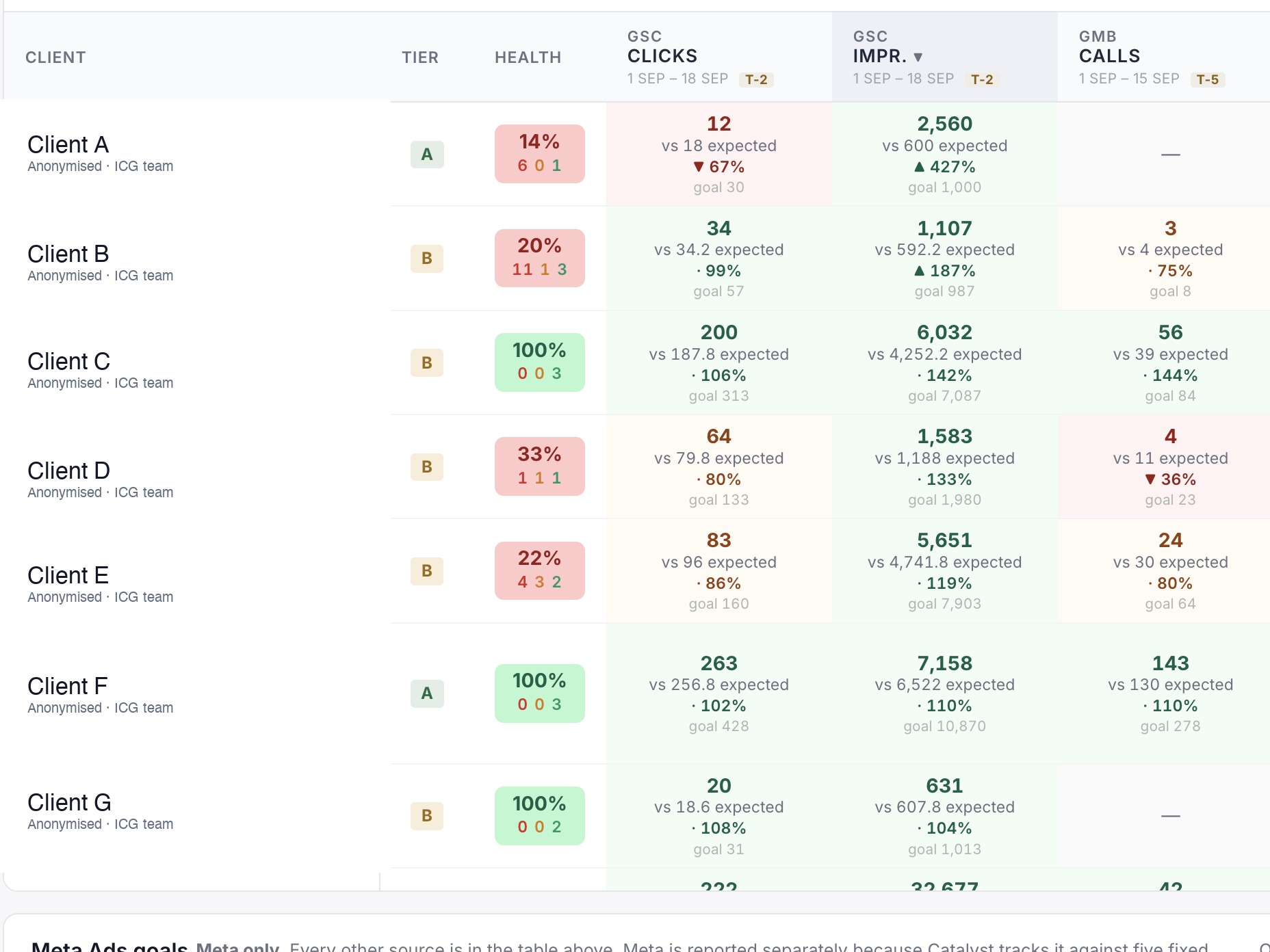
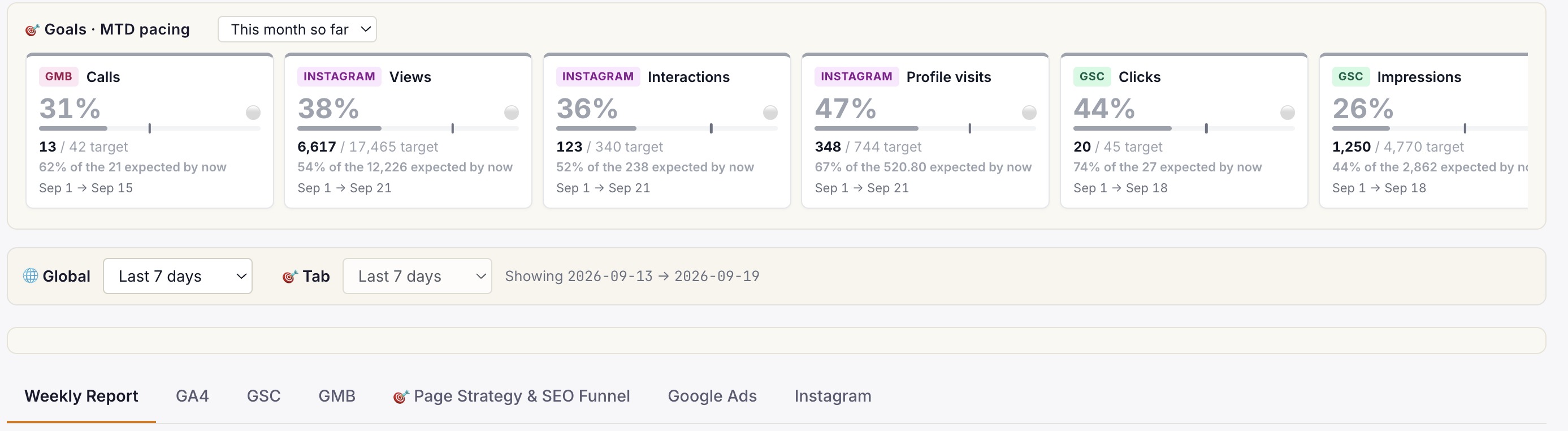
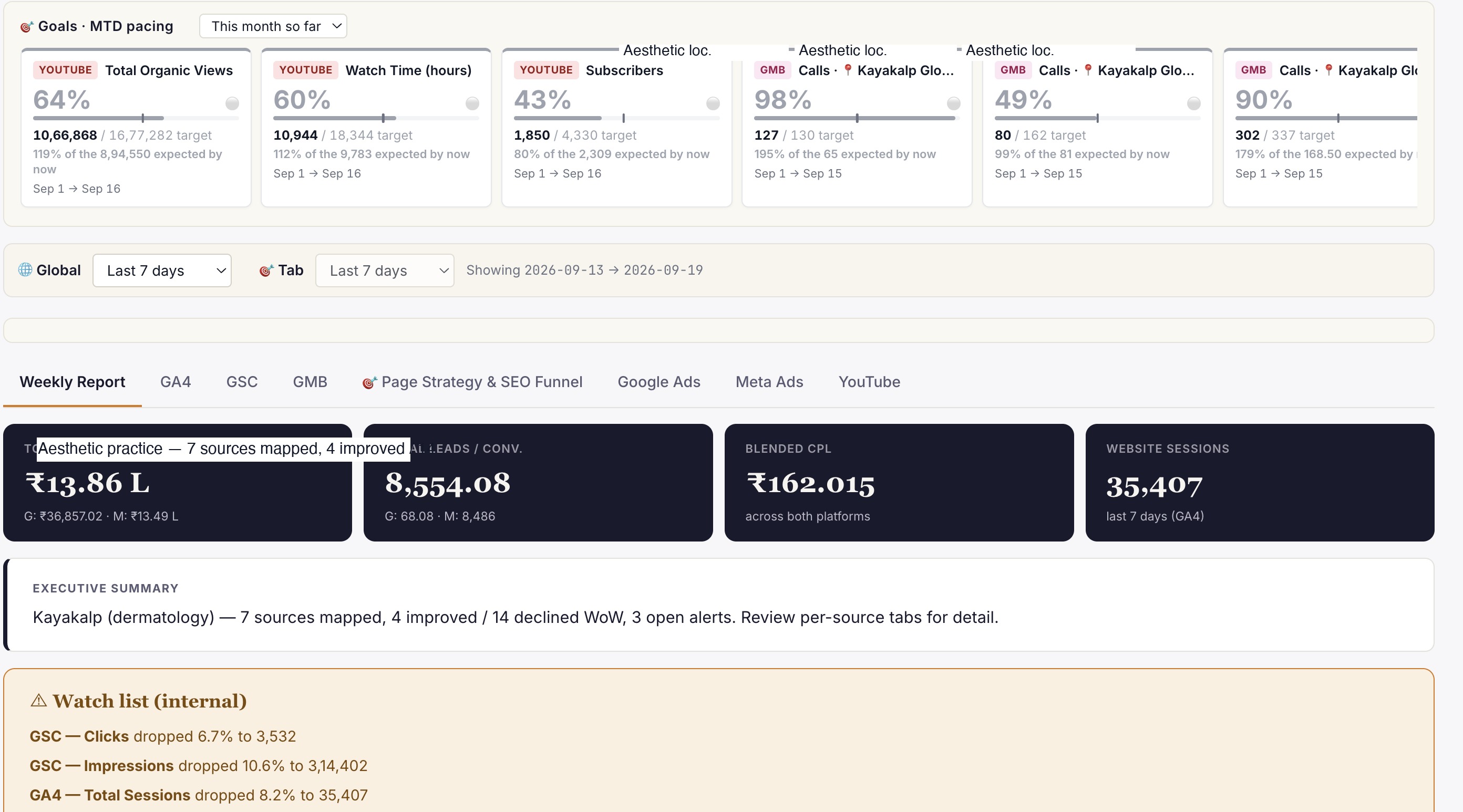
Live client dashboard. GSC, GA4, Google Ads, Meta Ads, IVR calls in one view. Login anytime, not monthly.
Phoenix
Clinic revenue intelligence over your PMS. Daily action queue: Prevent Loss, Maintain & Engage, Grow Revenue. Multi-centre rollout.
Or book a free 30-min audit to see all three in action on your account.
Healthcare brands
that already run on ICG.
A representative slice of the 150+ healthcare brands ICG has delivered for across India. Most engagements remain under NDA.


What ICG clients say · on video.
"Scale up of organic channels and business consulting. ICG has absolute domain authority in their field."
"Working with ICG transformed how we acquire IVF patients in Gurgaon. They understand the fertility journey from inquiry to consult..."
"What Ichelon accomplished — they got all my ideas and worked over 3-4 months to create an amazing, super-customised website."
Need help operationalising this?
Every ICG service is healthcare-only, NMC + DPDP-aware, and built around the patient-research patterns that drive Indian healthcare growth in 2026.
Every practice welcome — packages from ₹20,000/mo.
Goals-Driven engagements · Performance-Linked Payout Models available
More from
ICG.
Five trends shaping Indian healthcare marketing through 2027: AI-first patient research, Conversions API adoption, ABDM discovery, the AEO w...
Healthcare AIO is the discipline of getting your clinic or hospital cited inside Google AI Overviews, ChatGPT and Perplexity answers — not j...
Conversational-search advertising places brand messages inside AI chat answers — ChatGPT, Perplexity, Copilot — rather than beside a results...
Stop guessing.
Book a Diagnostic.
30 minutes. Free. With the AI-powered healthcare-only marketing agency 150+ brands already run on. No slides, no pitch, no hard close.


