


GMB Ads for Physiotherapy Clinics
Search ads that show your physiotherapy centre's distance, rating and call button to people searching "physiotherapist near me", "back pain treatment near me" or "sports injury physio in [area]".
For physiotherapy clinics, GMB ads are Google Search ads linked to the clinic's Business Profile, so they show distance, rating and a call button. Physiotherapy suits them well because treatment means many repeat sessions, and patients strongly prefer a centre close to home or work.
Why physiotherapy is built for local ads
A course of physiotherapy usually means 6–12 sessions. Patients will not cross the city twice a week, so distance decides more than almost any other factor. Showing "1.8 km away" in the ad answers the first question before they ask it.
Pain-led searches ("back pain treatment near me", "knee pain physiotherapy") come from people who want help this week. A call button gets them booked while the pain is still the priority.
Many physiotherapy practices also offer home visits. Those need a different set-up: a service-area approach and call-focused ads, because there is no clinic for the patient to visit.
How we run Google Ads, and where it sits in the patient journey
- 0Foundations
- 1Demand gen
- 2Capture
- 3Lead quality
- 4Lead mgmt
- 5Scheduling
- 6Show-up
- 7Conversion
- 8Retention
It works in demand capture. Spend should follow the searches that book, and every paid enquiry should be screened and called back fast.
Every month starts with targets per stage, drawn from your own audit data, and part of the fee can be tied to platform KPIs you can check yourself. You see progress on the same screens we work from.
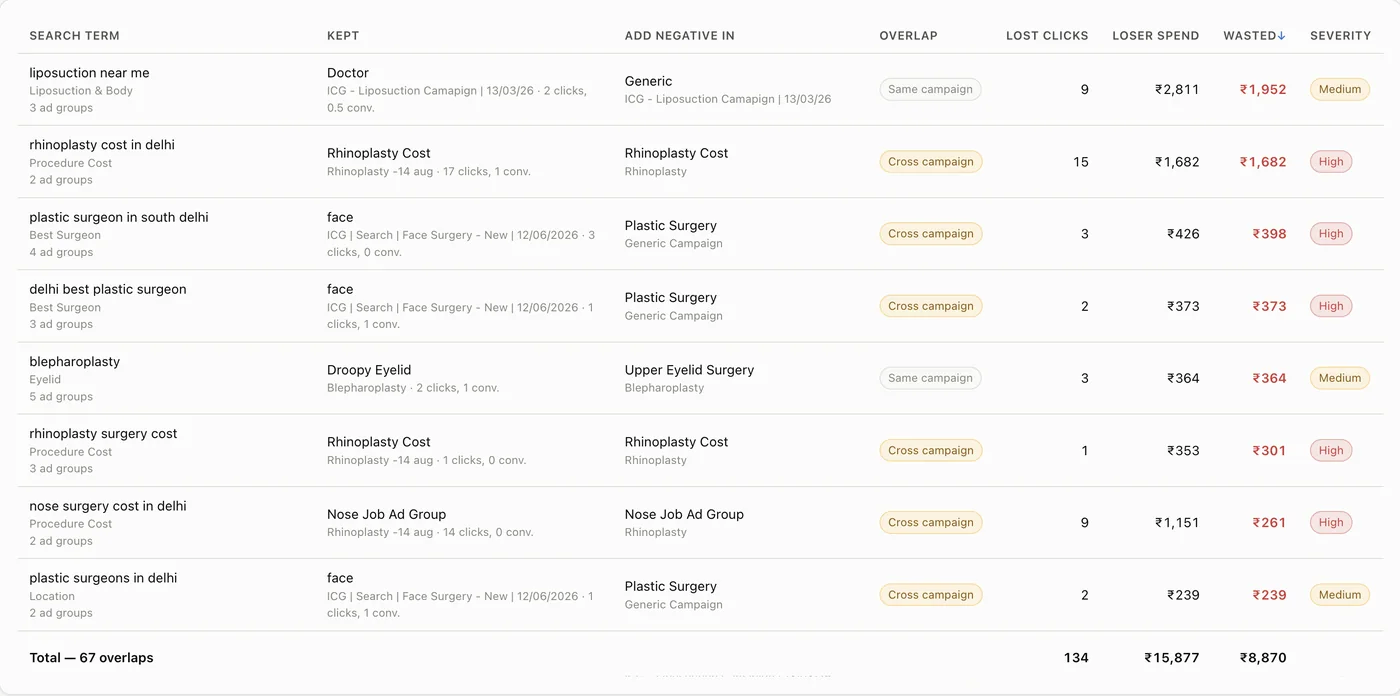
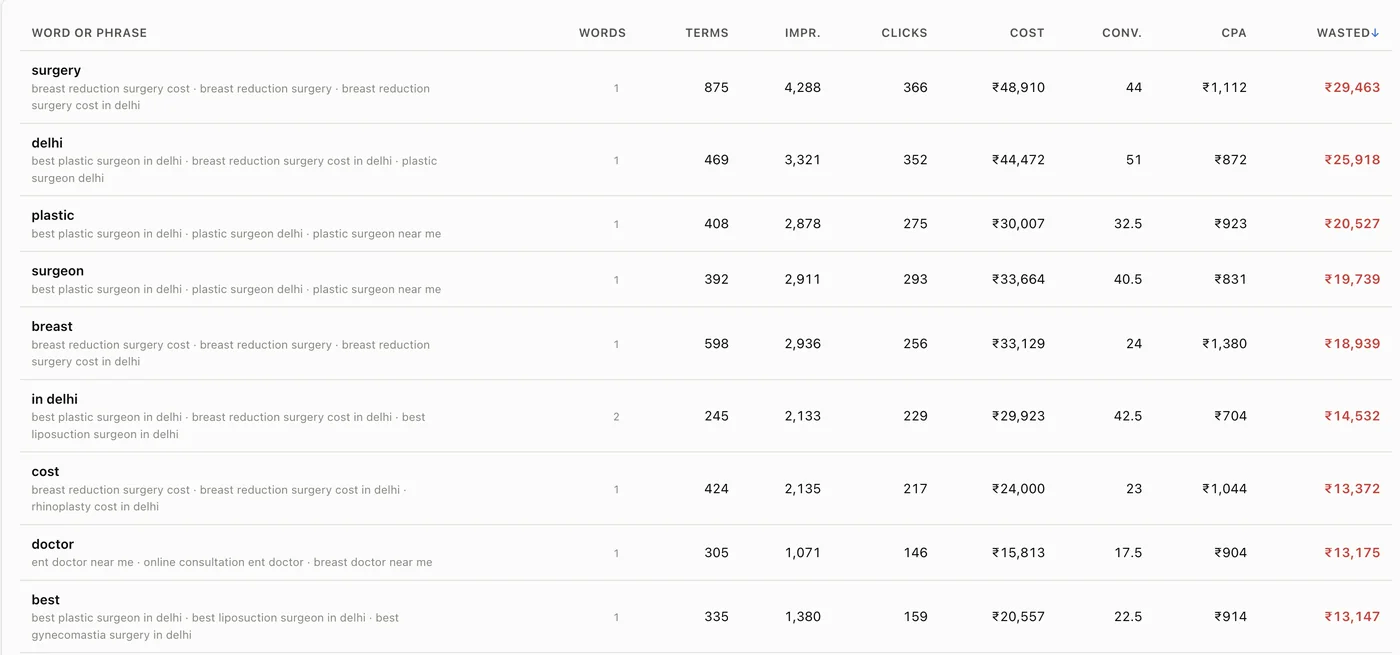
Clusters every search term, finds campaigns bidding against each other, and shows where spend leaks.
What "GMB ads" actually are
"GMB ads" isn't a separate product you switch on in Google Ads. The term means Search campaigns set up so that the clinic's Google Business Profile (formerly Google My Business) is pulled into the ad through location assets. Once the profile is linked to the Google Ads account, a plain text ad can show "2.1 km away · 4.7★ (312) · Call", turning it into a local listing patients already trust.
| Format | Where it shows | What triggers it | Best for |
|---|---|---|---|
| Standard Search ad | Google search results | Keyword | Awareness and informational searches |
| Search ad + location assets ("GMB ad") | Search results, with address, distance and rating | Keyword + proximity | High-intent "near me" and "[treatment] in [area]" searches |
| Local pack placements | The map results on Search | Local relevance + proximity | People comparing nearby clinics |
| Google Maps placements | Inside Google Maps | Location-based browsing | People already deciding where to go |
A well-built Search campaign with location assets becomes eligible for several of these placements automatically, based on Google's reading of each search.
Physiotherapy searches we build campaigns around
Radius: 3–6 km around each centre for clinic visits; city or service-area targeting for home-visit campaigns, with call-only ads and clear visit charges on the landing page.
Compliance: Physiotherapists are allied health professionals, and Google limits medical claims. Ads describe conditions treated, session formats and availability, without promising recovery times or outcomes.
Results from a live account: dermatology clinic, India
An anonymised dermatology clinic in India, managed by ICG's performance team. Search campaigns with location assets, 1–30 September 2026, read directly from the Google Ads account.
A second campaign for a higher-value pigmentation treatment produced 73 enquiries at ₹416.45 each (10.3% conversion rate): a higher cost per enquiry, for a treatment worth far more per patient. Read the full case study →
How we set up and run GMB ads
- Service lines first. We list the services with the most demand and margin, and give each its own ad group.
- Keyword clusters by intent. "[Service] near me", "[service] in [area]" and treatment searches, kept apart from informational queries.
- Geo and radius. The real catchment, not a whole state or country, with a tighter radius for "near me" searches.
- Business Profile linked and complete. Location assets verified, and every field, photo and service filled before budget scales.
- Review process. An ethical routine to ask satisfied patients for reviews, and a reply to every review within 48 hours.
- Concern-led ad copy. Ads speak to the problem and the doctor's credentials, with city and area names in headlines.
- Assets. Call, location and sitelink assets pointing to specific treatment pages.
- Tracking before launch. Calls, direction requests, WhatsApp clicks and forms as primary conversions, plus offline import of booked visits.
- Bidding in stages. Maximise Conversions to gather data, then Target CPA once there is enough volume.
- Weekly hygiene. Search-term reviews, negative keywords ("course", "salary", "jobs") and budget moved to what produces calls and visits. Our Google Ads MCP tool finds overlapping and wasted terms.
What we count as a result
| Conversion | What it captures | Weight |
|---|---|---|
| Phone calls | Calls from the ad's call button or the website | Primary |
| Direction requests | Taps on "Directions" from the ad or profile | Primary |
| WhatsApp chats | Conversations started from the ad or landing page | Primary |
| Booking forms | Appointment requests on the site or in-ad lead forms | Primary |
| Offline conversion import | Booked and attended visits uploaded from the CRM | Primary, the true measure |
| Website clicks | Visits to the site | Secondary |
Calls and direction requests carry the most intent: a patient who taps "Call" has skipped several steps a website visitor still has to go through.
Common mistakes we fix in audits
- Running Search ads without linking the Business Profile, so no location assets ever show.
- An incomplete profile: missing hours, photos or services.
- Targeting a whole city or state instead of the real catchment.
- One ad group for every treatment instead of one per service line.
- Counting website visits and calls as equally valuable, which misleads automated bidding.
- No negative keywords, so budget goes to job-seekers and students.
- No offline conversion import, so Google never learns which enquiries became patients.
- Call ads running when nobody can answer the phone.
Pricing
Google Ads management from ₹25,000/- per month; media is paid directly to Google. Every engagement is Goals-Driven, and Performance-Linked Payout Models are available. Retainers across services start from ₹20,000/- per month. GST additional.
Frequently asked questions
Do GMB ads work for physiotherapy clinics?
Yes. Physiotherapy is chosen by distance and convenience because a course of treatment means many visits, and GMB ads show distance and a call button directly in the ad.
How do we advertise home physiotherapy?
Run it as a separate campaign targeting the service area, with call-focused ads and a landing page that explains visit charges and coverage. Location assets matter less here than fast call handling.
What radius should a physiotherapy clinic use?
Usually 3–6 km for clinic visits, because patients return several times a week. Go wider only for specialist rehab services people travel for.
Which searches convert best?
Pain-led and near-me searches: "back pain treatment near me", "physiotherapist near me", "knee pain physiotherapy". They come from people who want an appointment this week.
What does it cost?
Media is paid directly to Google. ICG's Google Ads management is ₹25,000/- per month, with Performance-Linked Payout Models available.
The team that runs your account
One team of 100+ healthcare marketing specialists at our Gurgaon headquarters, with a named lead for every discipline. A member of our Sr. Leadership team leads every diagnostic.
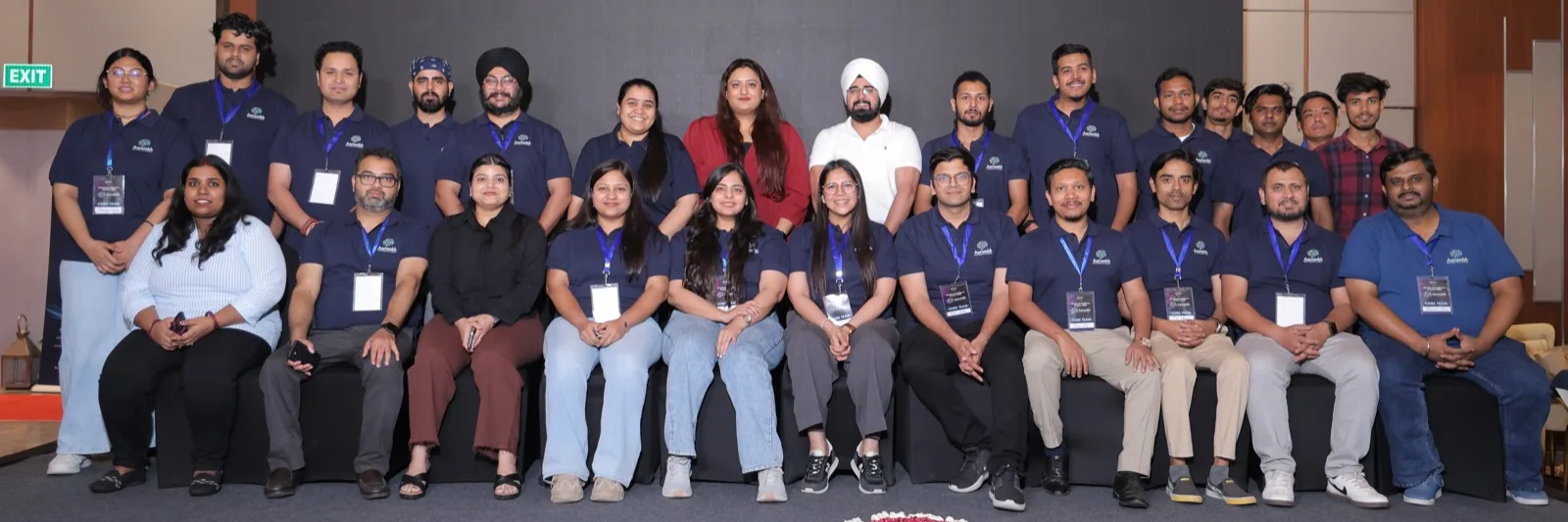
 Hanuman SihagHead of Innovation Chamber & SEO Lead
 Raman SoniHead of Performance Marketing
 Sabhyaa GuptaConsulting Head
 Akanksha TyagiCreative & CRO Lead
 Abhishek KumarAnalytics Lead
 Himanshu RanjanEngineering Lead


Meet the full team.
