How do med spas market PRP hair restoration?
Med spas market PRP hair restoration best as a clinician-led, candidacy-first program for people with thinning hair, not as a regrowth promise. The buyer is anxious, skeptical and comparing options over weeks. Win them with a physician-supervised consult, accurate wording about FDA status, honest progress photography, and follow-up that lasts as long as the treatment plan does.

- Lead with candidacy: a medical consult decides who is suitable, and saying so openly builds trust with a skeptical buyer.
- Never say "FDA-approved PRP": FDA clears the devices that prepare PRP, for the indications in each clearance, and treating a clearance as approval is misleading.
- Hair buyers decide slowly: plan education content, retargeting where allowed, and email nurture with consent.
- Measure plan completion and photo follow-up, not just consults booked.
- Every practice welcome — retainers from $499/mo, Goals-Driven engagements, Performance-Linked Payout Models available.
- Dallas, Texas LLC
- US client team · Central Time (CST)
- 25+ US healthcare clients
- BAA signed with every client
- HIPAA compliance training across client and delivery teams
- Contracts and invoices in USD
-
 Primary Care · North Dallas, TXCase study →
-
 MedSpa · North Dallas, TX
-
 Skin Care · Beverly Hills, CA
-
 Dental · Christiansburg, VACase study →
-
 Pediatrics · Blacksburg, VACase study →
-
 Pediatric Dentistry · Blacksburg, VACase study →
-
 Dental · Roanoke, VACase study →
-
 Functional Medicine · Telehealth · USACase study →
“They were able to get all my ideas and work with me over a period of three to four months and create this amazing website. It's super customized, very modern, and it incorporates all the elements that I had wanted — the patient portal, nice pictures, a very interactive website, patient reviews. I would highly recommend their company to anyone who wants to make an excellent website.”
Who looks for PRP hair restoration, and how do they decide?
PRP hair restoration buyers are usually men and women noticing thinning hair who want a non-surgical option. They are emotionally invested and skeptical at the same time. Many research for weeks, compare PRP with medication and hair transplant surgery, and read reviews closely before booking a consultation.
What drives the search
- Early thinning: people who have just noticed a wider part or receding hairline and want to act early.
- Medication hesitancy: people looking for an option alongside or instead of daily medication, which their clinician should discuss with them.
- Post-transplant support: transplant patients asking whether PRP fits their plan.
- Women with thinning hair: often underserved by male-focused hair marketing, and looking for a provider who takes the concern seriously.
What they need answered before booking (as marketing insight)
Is PRP right for my type of hair loss? Who does the assessment, and is a physician involved? How many sessions are typical in the clinic's protocol, and how long until we review progress? How is my progress measured? What if it does not work for me? Your marketing cannot answer these clinically, but it must show that the consult will, and who will run it.
Because hair loss has many causes, the strongest message is that a clinician assesses the cause first. That message filters out poor candidates and protects reviews.
How should a med spa position PRP hair restoration?
Position PRP hair restoration as one part of a clinician-led hair program: assessment, a personal plan, scheduled progress reviews with standardized photos, and honest conversations about expectations. This framing suits skeptical buyers better than "regrow your hair" headlines, and it keeps your marketing inside what you can substantiate.
Positioning pillars
- Physician oversight: name the supervising physician and explain their role in assessment.
- Candidacy honesty: state that not everyone is a good candidate and that the consult may recommend another route, including referral to a dermatologist or hair surgeon.
- Measured progress: describe how progress is tracked, such as standardized photos at set check-ins, reviewed with the client.
- Discretion: private consult rooms, discreet appointment reminders, and photo use only with permission.
Offer design
Sell a program, not a single injection. A program includes the assessment, the treatment sessions in the provider's protocol, progress reviews and a maintenance conversation. Keep payment and refund terms in writing and visible before booking. Avoid "results guaranteed" or money-back offers tied to hair growth unless counsel has reviewed them and you can honor them fairly.
Speak to women as a distinct audience
Much hair-loss marketing is written for men, which leaves women searching for a provider who understands their concern. Create a dedicated page or section reviewed by your medical lead, use imagery and language that reflect women clients, and explain that the consult looks at possible causes before recommending anything. Keep the same claim discipline: no promises, only process.
Separate PRP from add-ons
Many clinics bundle PRP with microneedling, topical serums or exosome products. Market each component accurately and separately. FDA states there are currently no FDA-approved exosome products (see the FDA consumer alert on regenerative medicine products). FDA also lists "restoring hair growth" as a claim that makes a product a drug (see FDA), so retail hair serums need careful wording.
Which marketing channels work for PRP hair restoration?
Organic search and YouTube suit PRP hair restoration because buyers research for weeks before booking. Google Ads captures people ready to book a consult. Email nurture, sent with consent, keeps you in the conversation during the decision period. Referral relationships with hair professionals can help where state rules allow.
| Channel | Buyer stage | What to publish or run |
|---|---|---|
| Organic search | Research | A PRP hair page, a page on hair loss consults, and a neutral comparison of non-surgical and surgical options |
| YouTube | Research and trust | The supervising physician explaining the assessment, the process and the realistic timeline for progress reviews |
| Google Business Profile | Local choice | PRP hair restoration listed as a service, photos of the consult room, steady reviews that mention the experience |
| Google Ads | Ready to book | Consult-focused campaigns on PRP hair and hair loss consult terms, sent to a dedicated consult page |
| Email nurture | Deciding | A short series for people who downloaded a guide or asked a question: how the consult works, FAQs, what to bring |
| Referral partners | Warm introduction | Hair stylists, barbers and transplant surgeons who do not offer PRP; confirm any referral payment rules with counsel first |
Ad policy notes
Google and Meta restrict ads that target people by health conditions and that imply knowledge of a viewer's health. Write ads about the service, not the person: "PRP hair restoration consultations in [your city]" rather than "Losing your hair?". Do not build audiences from patient lists without a HIPAA-safe process and authorization where needed.
Reviews that speak to the experience
Hair buyers read reviews for signs of honesty: did the clinic explain candidacy, set realistic expectations, and follow up? Ask for reviews after a progress review, when clients can speak to the whole experience. Reply to every review without confirming that the reviewer is a patient or mentioning treatment details, which keeps responses HIPAA-safe. Our guide to responding to negative reviews under HIPAA shows the wording.
Video is the trust engine
Hair buyers want to see who will treat them. A short physician-led video series answering real questions usually does more than polished brand ads. Our hair restoration clinic marketing playbook covers video and search for hair practices in more depth.
What should a PRP hair restoration consult page include?
A PRP hair page should explain what PRP is in plain language, who supervises, how candidacy is assessed, what the program involves, how progress is measured and how to book a consult. It must avoid growth promises and use accurate FDA wording. Put the consult booking path at the top and bottom.
Checklist
- A plain explanation: PRP is prepared from the client's own blood drawn at the visit.
- Supervising physician's name, credentials and role.
- Who performs the blood draw and injections, matching your state's rules.
- What the consult covers, including assessment of the likely cause of thinning.
- Who may not be a good candidate, worded by your medical team.
- Program structure in general terms, with "your provider will set your plan".
- How progress is reviewed, including standardized photos.
- Device wording that matches the clearance for your system (see the compliance section).
- Before-and-after photos only with written authorization, consistent lighting and angles, and a results-vary statement backed by your own data or a typicality disclosure.
- FAQs on discomfort, downtime, sessions and cost structure, answered by the clinical team.
- Consult booking: online scheduler, phone and a short form with HIPAA-safe handling.
Photo standards
Inconsistent photos quickly undermine trust with a skeptical hair buyer. Use the same camera, distance, lighting, hair styling and angles at every check-in. Do not edit photos. If your typical client does not see the change a featured photo shows, say what clients generally experience.
What we found when we studied 555 US med spas on Google
Patients praise the care almost without exception. The one area where complaints outnumber praise is booking and communication, and that is where most med spas can win.
Full study · 555 US med spas across 20 metros · roughly ±4% nationally · review velocity and themes from a 115-spa subsample · verified against raw data.
What compliance rules shape PRP hair restoration marketing?
The key rules cover how you describe FDA status, what you claim about hair growth, how you use testimonials and photos, who may perform the procedure in your state, and how you handle patient data online. Each has drawn regulator attention in aesthetic marketing. Review copy with counsel and your medical lead before launch.
FDA wording: cleared devices, not approved treatments
FDA regulates the systems used to prepare PRP as devices. Many are cleared through 510(k) as blood cell separators under 21 CFR 864.9245, and their cleared indications are often about mixing PRP with bone graft material in orthopedic settings, not hair. Look up the clearance for your system in the FDA 510(k) database and use only wording that matches it. Under 21 CFR 807.97, any statement that creates an impression of official approval because a device was cleared through premarket notification is misleading. So "FDA-approved PRP for hair loss" is a phrase to remove.
Claims and testimonials
- Health benefit claims, such as regrowth or thicker hair, need competent and reliable scientific evidence under the FTC Health Products Compliance Guidance.
- Testimonials and before-and-after photos that imply typical results need substantiation, or a clear disclosure of what clients generally achieve, under the FTC Endorsement Guides (16 CFR 255.2).
- The FTC rule against fake reviews and testimonials took effect in October 2024. Never script, buy or suppress reviews.
State scope of practice
Who may draw blood, inject PRP and supervise varies by state, as do good faith exam expectations. Read our good faith exam guide and check your medical board's rules before naming provider types in ads.
HIPAA-safe tracking and photos
A hair loss consult request is sensitive. Keep advertising pixels off consult forms and booking flows, follow the HHS guidance on online tracking, and use tools covered by a Business Associate Agreement. Use client photos in marketing only with written authorization.
Which KPIs should a med spa track for PRP hair marketing?
PRP hair restoration has a long decision cycle and a multi-visit program, so judge marketing on consult quality and program completion. Cost per booked consult, consult-to-program conversion, session attendance and progress-review attendance tell you far more than clicks or leads.
| KPI | How to calculate | What it tells you |
|---|---|---|
| Cost per booked consult | Channel spend divided by booked hair consults | Channel efficiency |
| Good-candidate rate | Consults the clinician marks as suitable divided by consults held | Whether ads and pages attract the right people |
| Consult-to-program conversion | Programs started divided by suitable consults | Consult experience and offer clarity |
| Program completion | Clients finishing all planned sessions divided by programs started | Follow-up quality and client confidence |
| Progress-review attendance | Clients attending scheduled photo reviews | Whether you can show progress honestly |
| Days from first inquiry to consult | Median days between first contact and consult | How long nurture needs to run |
Attribution over a long cycle
Because hair buyers often inquire weeks before they book, last-click reports undercount the content and video that started the conversation. Ask every consult how they first heard of you, record the answer in your CRM, and compare it with the tracked source. Where the two disagree often, give research channels more credit before cutting them.
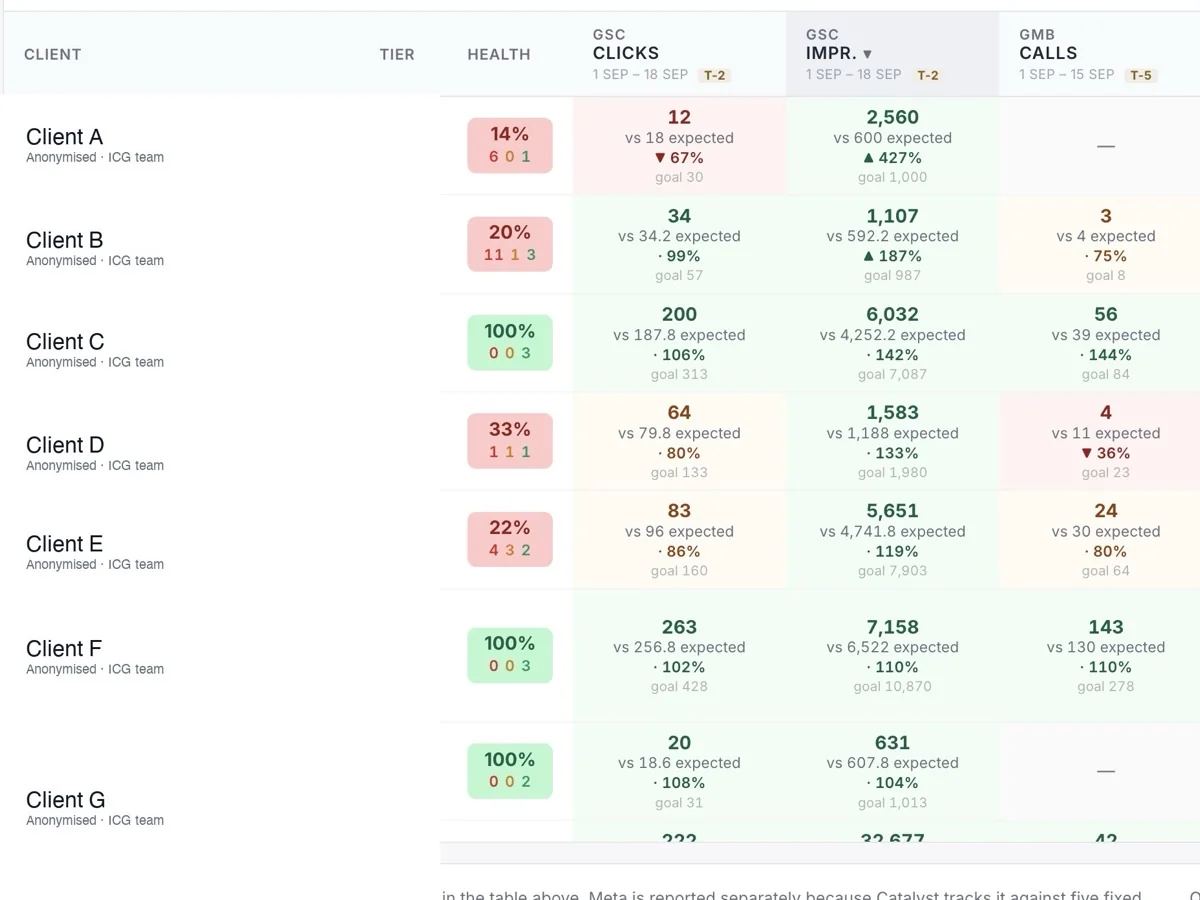
For market context, see our hair restoration marketing statistics. At Ichelon Consulting US, monthly goals are agreed with the client and tracked live on Ichelon Agency OS, with a report every Monday. Performance-Linked Payout Models are available.
What is a 90-day plan to launch PRP hair restoration marketing?
Month one is compliance and foundations: device wording, supervision and the consult page. Month two adds education content and consult campaigns. Month three tunes the consult, nurture and progress-review routine. Because hair buyers decide slowly, expect the content built in month two to keep paying off after day 90.
Days 1 to 30
- Look up your PRP system's clearance and write device wording that matches it.
- Confirm state rules on blood draws, injections and supervision.
- Publish the PRP hair consult page; add the service to Google Business Profile.
- Set up HIPAA-safe call and form tracking and sign BAAs with relevant vendors.
- Agree a standard photo protocol with the clinical team.
Days 31 to 60
- Record physician-led videos answering the top buyer questions.
- Launch consult-focused search campaigns written about the service, not the viewer.
- Start a consent-based email nurture for people who inquire but do not book.
- Approach referral partners after counsel confirms the arrangement is allowed.
Days 61 to 90
- Review good-candidate rate and adjust targeting and page wording.
- Fix drop-off between sessions with reminders and scheduled check-ins.
- Ask for reviews after a progress review, not after the first session.
Want a second opinion on your plan? Book a call with the US team, or see our approach to med spa marketing in the USA. We sign a Business Associate Agreement (BAA) with every US client.
Related pages from the US team
Med spa marketing agency USA
How Ichelon Consulting US plans and runs med spa marketing.
Hair restoration clinic marketing
Search, video and consult strategy for US hair practices.
Good faith exam guide
How GFE rules shape med spa consults and supervision.
Consultation to booking
Turn med spa consultations into booked treatment plans.
Every practice welcome — Goals-Driven engagements from $499/mo
We benchmark your last 90 days, agree monthly goals with you, and track them live on Ichelon Agency OS with a report every Monday. Performance-Linked Payout Models are available. Our US leadership is based in Dallas, and strategy calls run in US business hours.
Common questions
Can a med spa advertise PRP for hair loss as FDA-approved?
No. FDA clears the devices used to prepare PRP through 510(k), for the indications in each clearance, which are often orthopedic bone-graft uses rather than hair. Federal rules say presenting a 510(k) clearance as official approval is misleading. Check your system's clearance and confirm wording with counsel.
What is the best way to get PRP hair restoration consults?
Combine organic search pages and physician-led videos for the research stage, Google Ads for people ready to book, and a consent-based email nurture for those still deciding. Send every channel to a consult page that explains candidacy, supervision and progress tracking, and judge results by suitable consults booked.
Can I promise hair regrowth in PRP marketing?
Avoid promises. The FTC expects health benefit claims such as regrowth to rest on competent and reliable scientific evidence, and testimonials implying typical results need substantiation or a disclosure of generally expected results. Describe the program, the assessment and how progress is reviewed instead.
Can med spas target ads to people with hair loss?
Google and Meta restrict ads that target or address people based on health conditions. Write ads about the service and location, for example a PRP hair consultation in your city, rather than addressing the viewer's hair loss. Do not upload patient lists for targeting without a HIPAA-safe process.
How long do PRP hair restoration buyers take to decide?
It varies, but many hair buyers research for weeks, comparing PRP with medication and surgery and reading reviews. Measure your own median days from first inquiry to consult, then size your email nurture and retargeting to that window rather than expecting same-week bookings.
Which KPIs matter most for PRP hair restoration marketing?
Cost per booked consult, the share of consults the clinician marks as suitable, consult-to-program conversion, program completion and progress-review attendance. Together they show whether marketing attracts the right people and whether clients stay long enough to see and review their progress.
A note on this guide: it explains marketing practice, not legal advice. Rules on privacy, advertising and insurance change and vary by state, so confirm anything compliance-related with your own counsel.
Launching or fixing PRP hair marketing?
Book a 30-minute call with the US team. We will review your PRP page, device wording and consult flow, and show where suitable candidates are dropping out. Retainers start from $499/month, custom-scoped.
We cover every stage, from first search to repeat visit
- 0Foundations
- 1Demand gen
- 2Capture
- 3Lead quality
- 4Lead mgmt
- 5Scheduling
- 6Show-up
- 7Conversion
- 8Retention
We work across all nine stages, from foundations to past patients, and fix the stage that leaks first. Our own software runs the work, and every stage is reported against a monthly target on Ichelon Agency OS.
See all nine stages and the tool behind each one →