


YouTube Live for Medical Community Building: An Indian Hospital Playbook
A working YouTube Live playbook for Indian hospitals and doctor-led clinics. Which formats build community, what NMC and DPDP Act rules apply, how to plan the show, and how to measure return without gaming view count.
No pitch. Written root-cause diagnosis. AI-powered, healthcare only.
Direct answer
A working YouTube Live playbook for Indian hospitals and doctor-led clinics. Which formats build community, what NMC and DPDP Act rules apply, how to plan the show, and how to measure return without gaming view count.
TL;DR
TL;DR
- YouTube Live for Indian hospitals works when the show is a consultant answering real audience questions on air, not a corporate broadcast about the building or the founder story.
- NMC advertising norms and the DPDP Act 2023 mean no live patient consult, no drug names, and no case-specific advice on stream. The playbook has to be built around those guardrails.
- The formats that actually convert in Tier-1 and Tier-2 India are: OPD-hour Q&A, festival health explainer, disease-day panel, new-facility virtual walkthrough, and a monthly "ask a specialist" show.
- Real return shows up in three places, and hospitals that measure only one usually kill the channel by month four: YouTube comments and returning viewers, WhatsApp enquiries with a UTM, and Google Business Profile calls in the 48 hours after a stream.
Table of contents
- Why YouTube Live matters for Indian hospital marketing right now
- Which YouTube Live formats actually work for Indian hospitals?
- How do you plan a hospital YouTube Live stream in India?
- What NMC, DPDP, and ABDM rules apply to hospital YouTube Live?
- How do you get busy consultants to actually show up on live stream?
- How should Indian hospitals measure YouTube Live ROI?
- What common mistakes kill hospital YouTube Live channels in India?
- How ICG approaches YouTube Live for healthcare clients
- Frequently asked questions
Why YouTube Live matters for Indian hospital marketing right now
YouTube is the second-largest search surface in India after Google, and for health queries in Hindi, Marathi, Tamil, and Telugu it is often the first one. India crossed 490 million monthly active YouTube users in 2024. Health, home remedies, and doctor explainers are three of the most watched non-entertainment categories. That is where your patient's mother-in-law forms her opinion about whether your hospital does knee replacements the right way.
Recorded videos help discovery. Live changes the trust equation. When a consultant answers a stranger's question on air, unedited, with a face and a name and a hospital logo behind him, the viewer moves from "let me search more" to "let me save this hospital's number." That shift is what a marketing director in Pune or a group CEO in Hyderabad is buying when they green-light a YouTube plan for the year.
The window is also short. Every 100-bed-plus hospital in a metro is already spending on Meta Ads and paid search. Very few are running a serious live schedule. A doctor-led hospital in a Tier-2 city can still own an entire specialty on YouTube in a single quarter if the show is booked and the compliance is clean.
Which YouTube Live formats actually work for Indian hospitals?
Five formats do the heavy lifting for Indian hospitals: the doctor Q&A, the disease-day panel, the festival explainer, the new-facility walkthrough, and the "case type" education show. Everything else is a variation. Corporate-style press-conference streams almost never build community, no matter how big the launch.
Doctor Q&A during OPD hour
Book a consultant for a fixed 30-minute slot each week, same day, same time. The chair, the light, the background stay identical week on week. Viewers should be able to say "Wednesday 7 pm, ortho with Dr Menon" the way they say "Sunday 8 pm, cricket." Consistency beats production value.
Disease-day panel
World Diabetes Day, World Kidney Day, World IVF Day, World Heart Day, Breast Cancer Awareness Month. Indian hospitals under-use these dates. A single well-planned live panel with two consultants and one senior nurse or dietician outperforms a whole month of scheduled reels because the calendar itself drives search demand.
Festival health explainer
Diwali eye safety, Karva Chauth fasting for diabetics, Holi skin care, Navratri fasting rules for cardiac patients, Ramzan sehri and diabetes. These are the shows that get shared on family WhatsApp groups. That is your real distribution channel.
New-facility walkthrough
Whenever a hospital opens a new cath lab, a robotic surgery unit, an IVF wing, or a mother-and-child block, the walkthrough should be live. It fills the empty-corridor problem that new departments face for the first 90 days.
Case-type education show
"What happens in the first 24 hours after a bypass." "What a fresh IVF cycle looks like from day 1 to day 14." Not one patient's case. The general shape. Done right, this becomes the most saved and rewatched video on the channel.
How do you plan a hospital YouTube Live stream in India?
A hospital live show needs three artefacts before you switch on the camera: a doctor brief, an audience question bank, and a compliance sign-off. Skip any one of these and the show either becomes a monologue, breaks a rule, or wastes the consultant's Wednesday evening.
The doctor brief is a single-page document. Consultant name, credential line as it will appear on-screen, three topics that will be covered, three things that will not be discussed on air, and the sign-off name of the marketing lead. Doctors are more likely to agree to a live slot when they see boundaries in writing.
The audience question bank is 20 questions collected in the seven days before the show. Sources: Google Business Profile Q&A, WhatsApp enquiries, comments on previous videos, and staff at the OPD reception who hear the same five questions every week. The producer picks eight for the live, and the doctor sees them 24 hours in advance. This is not "scripted"; it is prepared. There is a difference.
The compliance sign-off is one email from the medical superintendent or a nominated authority confirming that the topic list respects the NMC Code of Ethics 2023 and the hospital's own advertising policy. Keep the email. It is your defence if a stream ever gets flagged.
On production, keep it simple in year one. A DSLR or a good phone on a tripod, a lavalier mic, a soft LED panel, and a wired ethernet connection into the OPD or a dedicated content room. Do not attempt three-camera multi-doctor productions until you have shipped 20 clean single-doctor streams first.
What NMC, DPDP, and ABDM rules apply to hospital YouTube Live?
Three regulations matter for hospital YouTube Live in India: the National Medical Commission's Code of Ethics 2023 for what a doctor can say on camera, the Digital Personal Data Protection Act 2023 for what patient data can appear on screen, and the Ayushman Bharat Digital Mission framework for how you handle any health ID or record references. Understand these before you plan a show.
Under the NMC Code of Ethics 2023, a registered medical practitioner cannot solicit patients, cannot make superiority claims, and cannot advertise in a way that misleads. On a live show, that translates to plain rules the producer enforces in the earpiece: no "best in the city" language, no "guaranteed results," no discount codes for surgery, and no comparative talk about other hospitals or doctors. The doctor is there to educate.
The DPDP Act 2023 treats health data as sensitive personal data. On air, that means no patient photographs, no reading out phone numbers or MR numbers from WhatsApp questions, no on-screen file shots that show a name band, and no live consult framed as "let me look at your report." If a viewer sends a report in the chat, the moderator deletes and reminds. That behaviour has to be trained.
The ABDM angle is subtler. If your show ever mentions the ABHA number, health records, or health locker services, the framing must be educational and neutral. Do not use ABDM branding to imply endorsement, and do not push viewers to share ABHA IDs in the chat.
None of this is legal advice for your hospital's specific set-up. Show these three points to your MS and your legal advisor before the first stream and get their written version of what the show can and cannot do.
How do you get busy consultants to actually show up on live stream?
Consultants show up when the show respects three things: their calendar, their reputation, and their patient flow. Marketing teams that ignore any of the three lose their doctor line-up by the third month. The fix is boring but structural.
Book slots one quarter in advance, not one week. Give the consultant a calendar invite with a hard 30-minute block plus 15 minutes for a walk-in-walk-out buffer. Never move the slot without a written trade. Once a doctor has moved his OPD to accommodate a live show and then had it cancelled twice, he is done with the channel.
Protect the reputation. Every clip that leaves the live show as a Short, a reel, or a testimonial edit must be sent to the doctor for a green light before it goes up. Yes, this slows down the content pipeline. It also keeps senior consultants agreeing to come back.
Feed the patient flow. Set up a simple WhatsApp intake that the doctor's PA can see. The moment a viewer in Ghaziabad watches the cardiology stream and asks for an appointment, the PA sees the request in her existing WhatsApp inbox, not a new dashboard. A well-configured healthcare CRM such as ICG's AtomCRM (Rs 14,999 per month) handles the routing without giving the doctor's team another login to remember. HealthPro 360 (also Rs 14,999 per month) sits on top of the hospital's existing HIS to link that live-show lead to an eventual bill, so at year-end the finance head can see rupee return, not just view count.
How should Indian hospitals measure YouTube Live ROI?
Measure YouTube Live ROI across three surfaces in this order: engaged community on the YouTube channel itself, WhatsApp enquiries with a UTM in the 72 hours after a stream, and Google Business Profile calls in the same window. View count alone is a vanity metric for hospitals, because a viewer in Karachi does not book knee surgery in Kanpur.
The community layer is the leading indicator. Watch four numbers per stream: peak concurrent viewers, average view duration, live chat messages per minute, and returning viewers over eight weeks. If returning viewers grow week on week, the show is working, even if peak concurrent stays flat.
The WhatsApp layer is the middle indicator. Every stream should have a "Ask the coordinator" WhatsApp link on-screen with a UTM tag like utm_source=youtube&utm_medium=live&utm_campaign=ortho_wed. A basic Rs 49,999 per month Foundation SEO engagement at ICG already includes this kind of UTM discipline, and the numbers roll up into a monthly report the marketing head can show the CEO.
The GBP layer is the trailing indicator. Compare "calls" and "direction requests" on the hospital's Google Business Profile in the two-day window after a stream against the two-day window before it. Do this for eight consecutive streams. The lift is small per stream but compounds. This is where a GBP-focused product like ICG's Angryturtle earns its keep: it holds the review, photo, and Q&A layer on the profile so the traffic driven by the live stream does not bounce off an empty listing.
What common mistakes kill hospital YouTube Live channels in India?
The four mistakes that kill hospital live channels in India are: chasing production value in year one, letting the CEO or founder host every show, ignoring the disease-day calendar, and never repurposing the recording. Each one is fixable, but only if the marketing team names the mistake out loud.
Over-investing in production before proving the show
Hospitals in Delhi and Mumbai often begin with a three-camera setup, a scripted teleprompter, and a Rs 6 lakh production budget. The first eight streams look beautiful and get 40 concurrent viewers. Compare that against a Coimbatore paediatric clinic that streamed on a phone with a lavalier mic for a year and now has 62,000 subscribers. Buy the equipment when the audience demands it.
Making it the CEO's channel
Patients want to hear from the doctor who will treat them, not the group CEO. Founder appearances are useful once a quarter for a strategy conversation. Weekly, it becomes a promotional loop and the community disengages.
Ignoring the disease-day calendar
India's health awareness calendar has more than 40 anchor dates through the year. A hospital that plans its live schedule around those dates gets a free demand tailwind from every wire service and news outlet covering the same day.
Not repurposing the stream
Every 30-minute live show is 6 to 10 Shorts, one long-form re-cut, four Instagram reels, and one WhatsApp broadcast summary. If your team only ships the live, you are throwing away 80 percent of the value.
How ICG approaches YouTube Live for healthcare clients
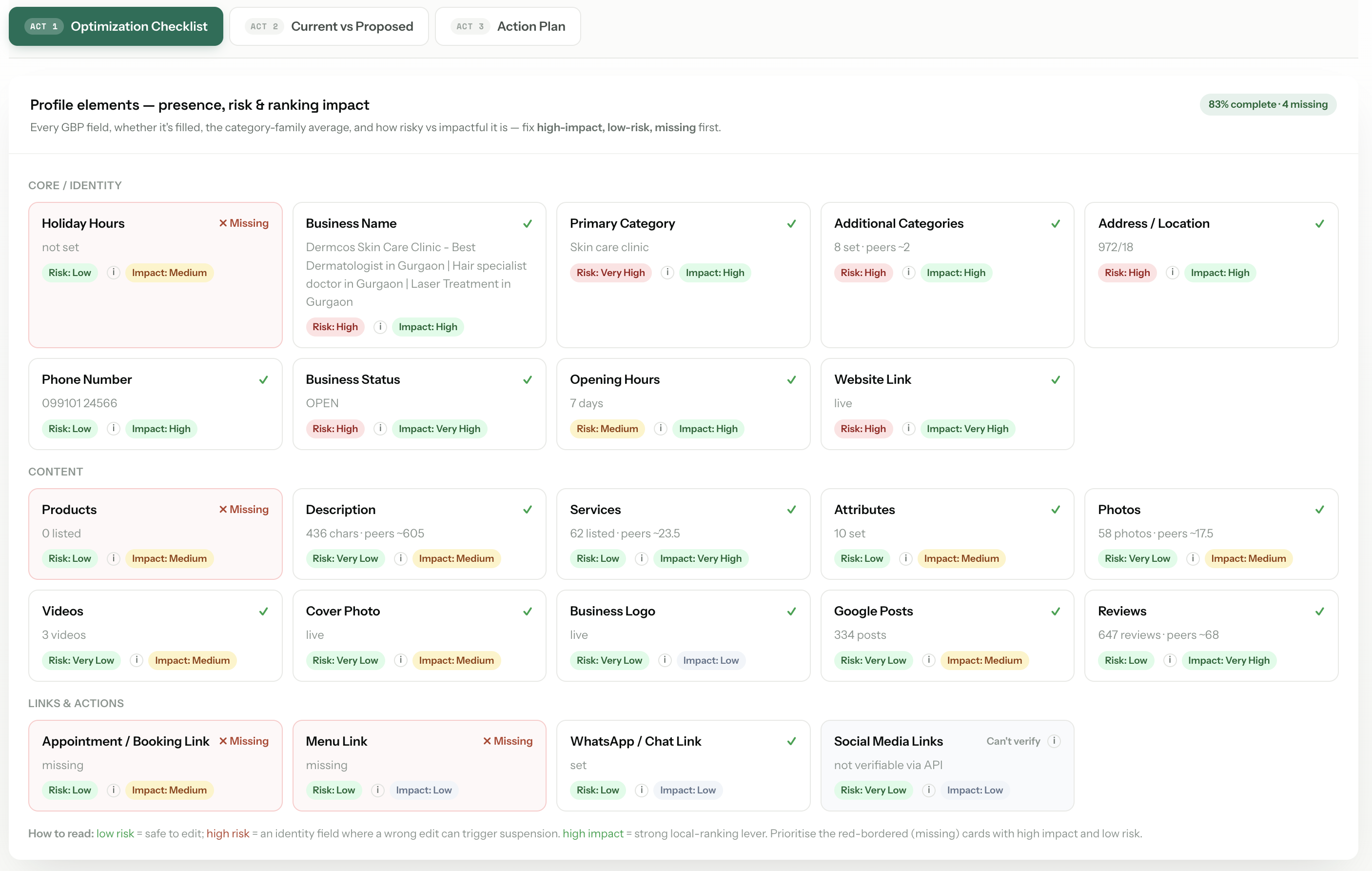
At Ichelon Consulting Group we run the YouTube layer for our healthcare clients through YODA, our AI-native YouTube system built for hospitals, doctor brands, and pharma marketers. YODA handles the pre-stream question harvesting, the compliance checklist, the comment moderation queue during the live, and the post-stream repurposing into Shorts and reels. It is not a scheduler bolted onto a spreadsheet; it is designed around what actually breaks in a hospital's YouTube workflow after the fifth stream.
The rest of the stack fits around the live show. Angryturtle keeps the Google Business Profile alive so the extra calls have somewhere clean to land. Meta Catalyst IQ handles the paid distribution of the recorded clips to lookalike audiences in the hospital's catchment. Prism Spy tells us what the competitor hospitals in the same city are running as Meta creatives, which shapes what we defend and what we amplify. Prism Pulse gives the marketing head weekly Instagram analytics so the reel version of the live actually reaches the intended cohort.
All of it is founder-led. Rohit Gupta, our Business & Growth Lead, personally reviews the YouTube plan for every enterprise hospital client in the first 90 days. That is the difference between hiring an agency and hiring a partner.
Where YouTube Live fits into ICG's engagement model
ICG's SEO and content engagements run on a 70-30 fixed-variable model. The Foundation engagement is Rs 49,999 per month, Growth is Rs 74,999 per month, and Scale is Rs 99,999 per month. Seventy percent of the fee is fixed for the guaranteed deliverables, thirty percent is tied to a 12-month outcome band on the sliding-scale slabs agreed at the start. The same model extends to YouTube SEO and AIO for channels with a minimum monthly investment of Rs 50,000, and to paid engagements on Meta and Google Ads for budgets above Rs 5 lakh a month. A hospital adding YouTube Live to an existing SEO engagement usually plugs into the Growth or Scale tier because the workflow needs weekly content operations, not a one-off shoot.
Frequently asked questions


Book a free 30-minute Brand & Growth Diagnostic.
It's a working session, not a sales pitch — you leave with a written root-cause analysis you can act on, whether or not you engage ICG.
Questions readers ask
about this topic.
The three platforms
behind every ICG engagement.
Beacon
CAPI middleware that fixes Event Match Quality, translates CRM statuses to Meta-standard events, dedups across channels.
Agency OS
Live client dashboard. GSC, GA4, Google Ads, Meta Ads, IVR calls in one view. Login anytime, not monthly.
Phoenix
Clinic revenue intelligence over your PMS. Daily action queue: Prevent Loss, Maintain & Engage, Grow Revenue. Multi-centre rollout.
Or book a free 30-min audit to see all three in action on your account.
Healthcare brands
that already run on ICG.
A representative slice of the 150+ healthcare brands ICG has delivered for across India. Most engagements remain under NDA.


What ICG clients say · on video.
"Mental health marketing requires a different sensitivity. ICG built compliance-aware campaigns that respect both patients and our..."
"Bariatric surgery patients need a long consideration cycle. ICG built a content + paid system that respects that timeline."
"Working with ICG felt like working with an in-house growth team that happens to specialise in healthcare."
Need help operationalising this?
Every ICG service is healthcare-only, NMC + DPDP-aware, and built around the patient-research patterns that drive Indian healthcare growth in 2026.
Every practice welcome — packages from ₹20,000/mo.
Goals-Driven engagements · Performance-Linked Payout Models available



More from
ICG.
Five trends shaping Indian healthcare marketing through 2027: AI-first patient research, Conversions API adoption, ABDM discovery, the AEO w...
Healthcare AIO is the discipline of getting your clinic or hospital cited inside Google AI Overviews, ChatGPT and Perplexity answers — not j...
Conversational-search advertising places brand messages inside AI chat answers — ChatGPT, Perplexity, Copilot — rather than beside a results...
Stop guessing.
Book a Diagnostic.
30 minutes. Free. With the AI-powered healthcare-only marketing agency 150+ brands already run on. No slides, no pitch, no hard close.


