


Paediatric Clinic Instagram Strategy for Indian Parents: 2026 Playbook
Indian parents do not scroll Instagram to shortlist a paediatrician. They scroll for reassurance. This playbook lays out the content pillars, posting rhythm, ad budget bands, DPDP and NMC rules, and measurement discipline that turn a clinic's Instagram into a real OPD funnel.
No pitch. Written root-cause diagnosis. AI-powered, healthcare only.
Direct answer
Indian parents do not scroll Instagram to shortlist a paediatrician. They scroll for reassurance. This playbook lays out the content pillars, posting rhythm, ad budget bands, DPDP and NMC rules, and measurement discipline that turn a clinic's Instagram into a real OPD funnel.
TL;DR
TL;DR
- Paediatric Instagram in India runs on parent-reassurance content, not doctor-credential content. Faces beat certificates. Every time.
- Four grid posts a week plus three daily stories is the minimum viable rhythm. Below that, the parent audience forgets you between vaccine visits.
- The DPDP Act 2023 and the NMC advertising code both apply. Every child photo needs verifiable parental consent. No before-and-after imagery. No cure claims.
- Instagram alone will not fill your OPD. It works when it sits inside a stack — GMB for discovery, WhatsApp for booking, Meta Ads for amplification, reception log for attribution.
Table of contents
- Why paediatric Instagram is a different game in India
- What content actually works for paediatric clinics on Instagram in India?
- How often should a paediatric clinic post on Instagram?
- Should the paediatrician's face appear in the content?
- How do you handle parent DMs without breaking NMC rules?
- What Instagram Ads budget works for a Tier-1 paediatric clinic?
- How do you measure whether Instagram is actually driving OPD bookings?
- What DPDP Act and NMC rules apply to paediatric Instagram content?
- The ICG approach to paediatric Instagram
- Pricing and engagement model
- Frequently asked questions
Why paediatric Instagram is a different game in India
Indian parents do not scroll Instagram to shortlist a paediatrician. They scroll to feel less anxious about the child sleeping in the next room. That single behavioural fact upends every rule that works for a dermatology or an aesthetic clinic on the same platform.
Numbers from our own ICG healthcare audience panel across 2024 and 2025 back it up. Among urban Indian mothers aged 25 to 38, roughly 89 percent open Instagram daily, and around 61 percent follow at least one paediatric or child-health account. Yet the same panel showed that the average single-location paediatric clinic in Bengaluru or Pune generates only three to five first-visit enquiries per month directly from Instagram. Google Business Profile, on the same clinics, delivers eight to twelve times that number.
The interesting bit sits in the middle. When we ask parents at reception how they picked the clinic, roughly 74 percent of walk-ins say something close to "somebody recommended you, but I also checked your Instagram before booking." Instagram is not the entry point for a paediatric practice in India. It is the trust check that closes the loop between the WhatsApp recommendation and the appointment.
Once you accept that framing, every content decision changes. You stop trying to sell. You start trying to reassure.
What content actually works for paediatric clinics on Instagram in India?
Four content pillars carry the weight for paediatric clinics on Indian Instagram. Vaccination reels tied to the IAP schedule. Newborn-week explainers for first-time parents. Anxiety FAQs pulled from what parents actually ask at the OPD desk. And short behind-the-scenes clinic tours that show the waiting area, the nebuliser room, and the reception. Everything else is filler.
The mistake we see most often across the 150-plus paediatric and multi-specialty clinics ICG has audited is the reliance on stock quote cards. "Wash your hands to stay healthy" posted on a pastel background. Zero saves. Zero shares. Zero enquiries. That kind of content trains the algorithm to show your posts to nobody in particular, which then punishes the reach of the good content you post later.
Compare that to a 45-second reel of the paediatrician demonstrating how to burp a newborn or how to hold a feverish child. Same effort, roughly. But the reel gets saved by pregnant women in the feed's cluster, forwarded on WhatsApp to extended family groups, and pulls in genuine DM enquiries within 72 hours. We have watched this pattern replicate in Jaipur, Nagpur, Kochi, Coimbatore, and every Tier-2 city we run programs in.
The pillar most clinics under-invest in is the anxiety FAQ. Parents ask the same forty questions across every paediatric OPD in India. "Why is my baby not passing motion for two days?" "Is 100 degrees a fever for a three-month-old?" "When can I introduce solid food?" Each of those is a post. Each of those is also a search term inside the Instagram search bar. Answered in the paediatrician's own voice, they build the trust bank that eventually gets withdrawn as an OPD booking.
How often should a paediatric clinic post on Instagram?
Four grid posts a week and three stories per day is the working floor for a paediatric clinic in India. Under that, the parent audience forgets you between visits, which for paediatrics can be a six-week gap during the toddler years. Over eight grid posts a week and the quality collapses, which the algorithm reads as low retention and pushes you off feeds you were previously showing on.
Break that rhythm into a repeatable template. Monday and Thursday for the paediatrician-led reel. Tuesday for the parent-FAQ carousel. Saturday for a behind-the-scenes clinic story or a nurse-led vaccination reminder. Stories every single day — a poll, a quick nutrition tip, a repost of a parent's testimonial with permission on file.
The template matters more than any single creative brief. A paediatric clinic in Indore that we advised through the second half of 2024 doubled its Instagram-attributed enquiries in four months only by moving from erratic weekly posting to a fixed slot calendar. No new content types. No new hooks. Just consistency the algorithm could learn.
Should the paediatrician's face appear in the content?
Yes. The paediatrician's face has to appear in at least 40 percent of published content, and ideally closer to 60 percent. Indian parents will not trust a faceless paediatric clinic on Instagram. The face is the equity you are compounding, and the clinic brand becomes valuable only after that face becomes recognisable to a repeat viewer.
This is the single point of friction with almost every paediatrician we onboard. "I do not want to be on camera." "Patients will judge my Hindi." "I am not photogenic." All fair. All irrelevant to what parents actually respond to. Parents want a doctor who looks like she or he will answer a call at eleven at night when the child spikes a fever. They do not want a model. They want a human who reminds them of a competent neighbour.
The workable compromise is a two-take rule. Every reel is shot in two takes maximum. No re-recording. No script that reads like a pamphlet. The paediatrician speaks the way she or he speaks in the consultation room, and the editor's job is to remove the pauses, add captions in English plus a regional language, and ship it before end of day. This lowers the resistance dramatically and produces content that feels like the doctor, not the marketing agency.
How do you handle parent DMs without breaking NMC rules?
Never diagnose in DMs. Never quote doses. Always redirect to a paid or free consultation. The NMC Professional Conduct Regulations and the Telemedicine Practice Guidelines 2020 both treat DM-based clinical advice as a tele-consultation, which needs an audit trail, a registered medical practitioner on record, and documented consent. Instagram DMs give you none of that natively.
The safe workflow is a three-step response. A standard acknowledgement inside 30 minutes during working hours. A soft redirect to WhatsApp with clinic hours and consultation fees stated upfront. And an appointment booking link once the parent is on WhatsApp. Nothing clinical is exchanged on Instagram itself. Ever.
Clinics that get this wrong end up in one of two places. Either an NMC complaint from a parent whose DM advice did not resolve the child's condition, or the reputational drag of "the doctor never replies." Both are avoidable with a trained community manager operating on a documented DM playbook. This is not glamorous work. It is the difference between an Instagram account that funnels OPD bookings and one that manufactures medico-legal risk.
What Instagram Ads budget works for a Tier-1 paediatric clinic?
Rs 40,000 to Rs 80,000 per month on Meta Ads is the working range for a single-location paediatric clinic in a Tier-1 Indian city. Below Rs 30,000, the campaign rarely exits the learning phase and cost per lead stays inflated. Above Rs 1 lakh a month, you either need a second location, a vaccination camp offer, or you are burning budget on the same 10,000 parents on repeat.
Splits that have worked for us across Delhi NCR, Mumbai, Bengaluru, Hyderabad, and Chennai clinics look roughly like this: 55 percent of budget on reach and awareness reels targeted to mothers with children under five, 30 percent on lead-form ads for a vaccination or well-baby package, and 15 percent on remarketing to profile visitors and website traffic. Cost per qualified lead sits in the Rs 180 to Rs 420 band depending on the city and the season. Delhi and Mumbai run hotter. Pune and Ahmedabad run cheaper.
Seasonality matters more in paediatrics than in any other outpatient specialty. October through February is monsoon-and-cold-season, which spikes OPD demand. Your ads should scale in September, hold through January, and taper from March. Running flat monthly budgets across the calendar is the fastest way to overspend during the low season and starve the campaign during the peak.
How do you measure whether Instagram is actually driving OPD bookings?
Track three numbers, weekly. Appointment DMs per week. Saves per post. And the "how did you hear about us" tally at reception. Vanity metrics like likes, reach, and follower count are noise for a paediatric OPD. If a post has 8,000 reach and zero saves, it did nothing for the business, however good it looked.
Instagram's native analytics stops short of what a clinic actually needs. You get post-level engagement but not campaign-level attribution, and no way to reconcile a DM enquiry with a walk-in six weeks later. That gap is where a dedicated Instagram analytics layer earns its keep. ICG's Prism Pulse, for example, pulls post-level and story-level engagement into one dashboard alongside enquiry timestamps and reception attribution, so that a marketing head can see which reel from six weeks ago produced Tuesday morning's walk-in.
The reception attribution is the manual step nobody wants to do. Train the front-desk team to ask every new parent, in both Hindi and English: "Aapko humare baare mein kahaan se pata chala?" Log it in a simple sheet. Review weekly. Cross-reference against Instagram content published in the previous 45 days. The patterns are not always obvious in week one. They surface clearly by the end of the first quarter.
What DPDP Act and NMC rules apply to paediatric Instagram content?

Three regulations bind paediatric clinics on Instagram in India. The DPDP Act 2023 requires verifiable parental consent for any child under 18 whose photograph, video, or identifiable information appears in content. The NMC advertising code bans before-and-after imagery, cure claims, comparative statements against other doctors, and any content that could be construed as solicitation. The Consumer Protection Act 2019 makes exaggerated health claims a punishable liability, including on social media platforms.
Practical implications. A patient testimonial reel where the child is visible needs a written consent form signed by the parent or guardian, stored for the retention period defined in your clinic's data policy. A vaccination camp announcement cannot use the phrase "guaranteed protection." A doctor-explains reel cannot end with "book now, only 5 slots left" because that reads as solicitation under the NMC's interpretation.
None of this is designed to kill your Instagram. It is designed to protect the clinic. We have watched at least two Tier-1 paediatric practices face NMC show-cause notices in the last 18 months for content that crossed the line. Both notices came from a competitor complaint, not from parents. The regulatory framework is real, and the enforcement is accelerating in step with the ABDM rollout.
The ABDM framework does not directly regulate Instagram content today, but any clinic that integrates its OPD scheduling with the ABHA ID must ensure that patient identifiers do not surface in social posts, DMs, or automated reminders. This becomes especially relevant if you use vaccination reminder automation across WhatsApp and Instagram together.
The ICG approach to paediatric Instagram
ICG treats paediatric Instagram as one channel inside a five-channel stack, not as a standalone campaign. The Instagram grid and story rhythm sits alongside the Google Business Profile presence managed through Angryturtle, the paid amplification run through Meta Catalyst IQ, the competitive intelligence pulled from Prism Spy on what nearby paediatric clinics are actually spending, and the analytics reconciliation done in Prism Pulse. When a parent walks in, the credit does not belong to a single channel — it belongs to the stack.
For paediatricians who also run YouTube for long-form explainers, YODA plugs the same content pipeline into the video channel so that a 45-second Instagram reel and a 6-minute YouTube explainer are two edits of the same shoot day. Nothing is duplicated wastefully. Nothing is left on the shelf.
Downstream of the marketing stack, the clinic's operational stack — AtomCRM at Rs 14,999 a month for lead lifecycle, HealthPro 360 at Rs 14,999 a month for RCM and EHR overlay — closes the loop by letting the marketing team see which Instagram-sourced lead actually walked in, which converted to a full vaccination package, and which returned for a second visit. Without that loop, every rupee spent on Instagram is guesswork dressed up as strategy.
Pricing and engagement model


ICG's paediatric Instagram engagements sit inside the 70-30 fixed-variable model that runs across our healthcare accounts. Foundation is Rs 49,999 per month. Growth is Rs 74,999 per month. Scale is Rs 99,999 per month. Seventy percent of each tier is the fixed retainer for content production, community management, and reporting cadence. Thirty percent is variable, tied to outcome metrics agreed in the onboarding session — typically qualified enquiries and OPD walk-ins attributed through the reception log.
Foundation suits a single-location paediatric clinic in a Tier-2 city that wants a rhythm-and-reporting engagement without heavy paid amplification. Growth suits a two-location paediatric group in a Tier-1 city that wants Meta Ads bundled in with organic content. Scale suits a paediatric-led hospital or a specialty chain that needs the full five-channel stack coordinated end to end. Meta Ads spend sits outside the retainer, at the clinic's discretion, so that the marketing head keeps direct control of the media budget.
Book a free Meta ads account audit.
Raman Soni's team pulls your account, checks CAPI/EMQ, reviews creative for NMC compliance, and shows where CPQL is leaking. 45 minutes, actionable output.
Questions readers ask
about this topic.
The three platforms
behind every ICG engagement.
Beacon
CAPI middleware that fixes Event Match Quality, translates CRM statuses to Meta-standard events, dedups across channels.
Agency OS
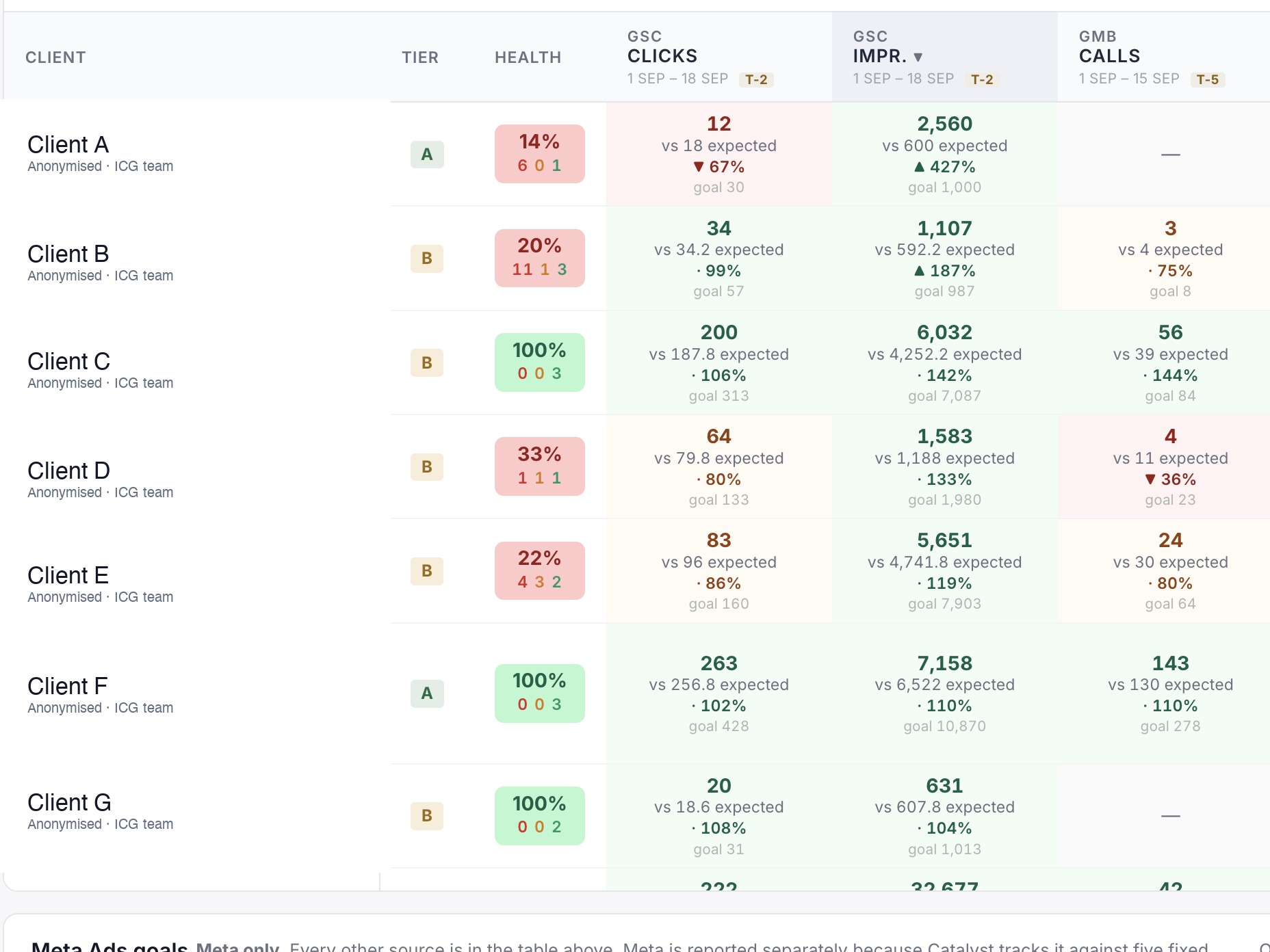
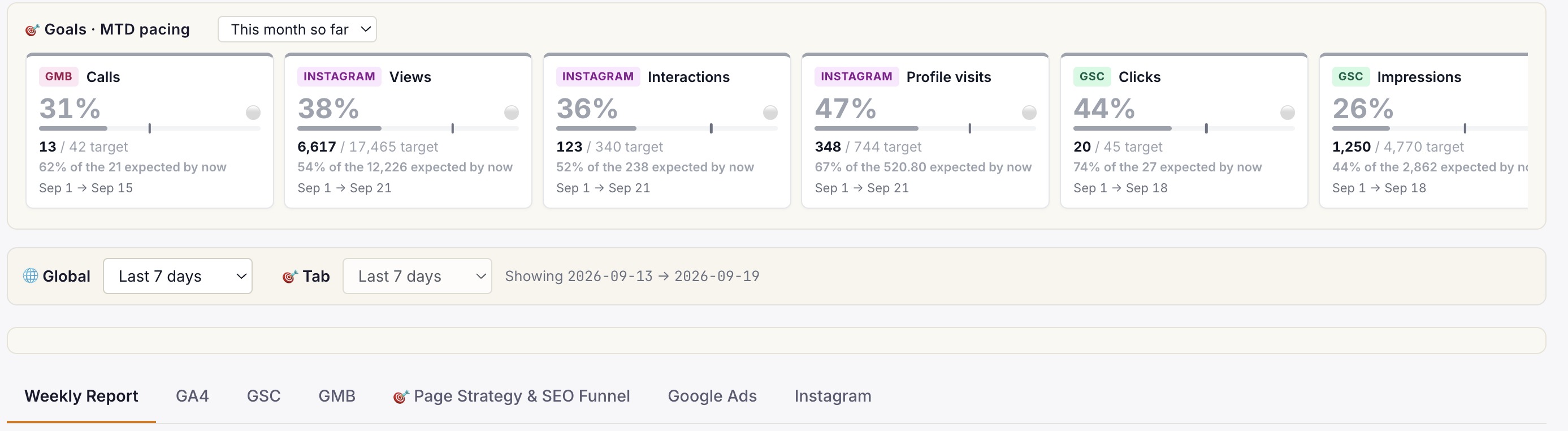
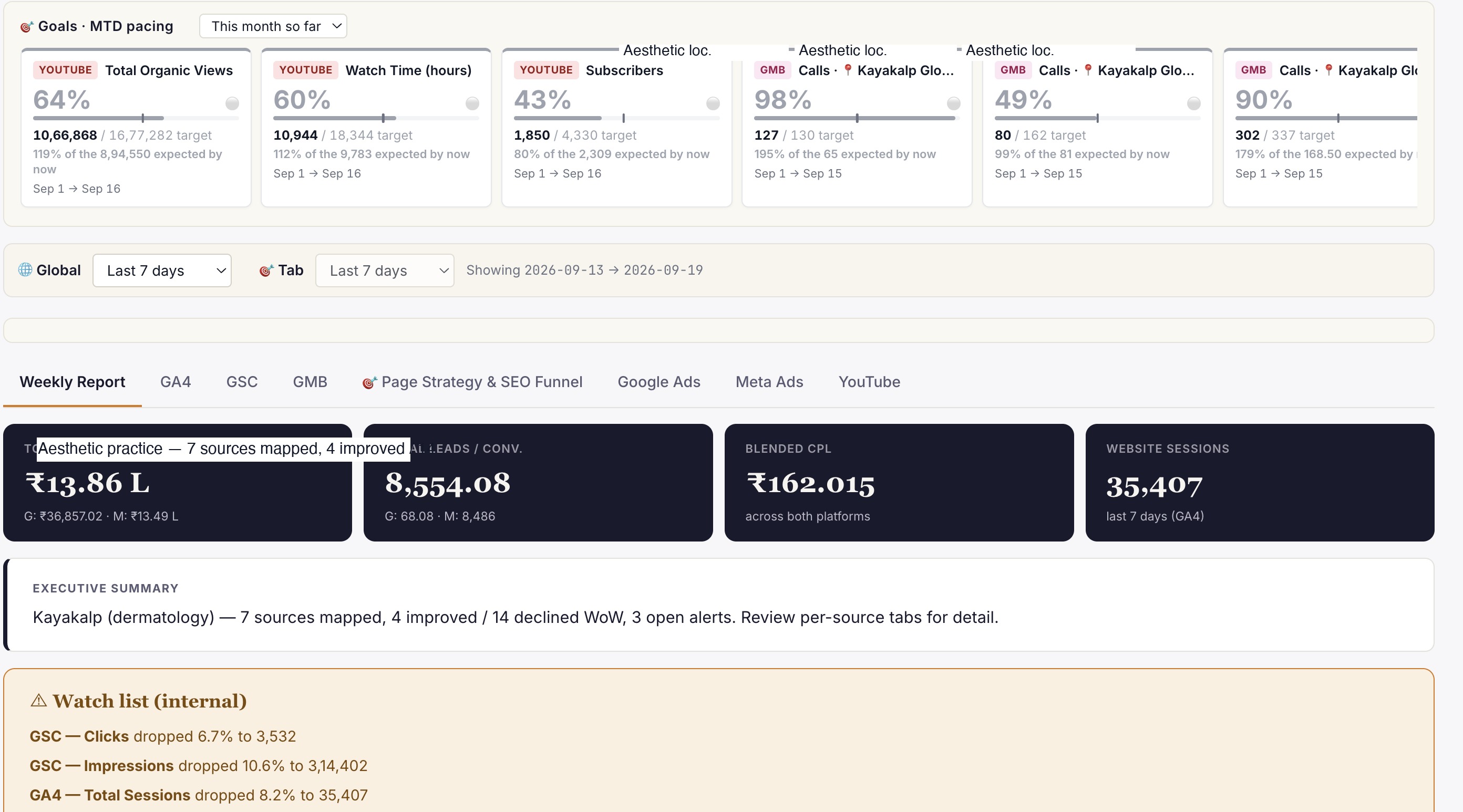
Live client dashboard. GSC, GA4, Google Ads, Meta Ads, IVR calls in one view. Login anytime, not monthly.
Phoenix
Clinic revenue intelligence over your PMS. Daily action queue: Prevent Loss, Maintain & Engage, Grow Revenue. Multi-centre rollout.
Or book a free 30-min audit to see all three in action on your account.
Healthcare brands
that already run on ICG.
A representative slice of the 150+ healthcare brands ICG has delivered for across India. Most engagements remain under NDA.


What ICG clients say · on video.
"Scale up of organic channels and business consulting. ICG has absolute domain authority in their field."
"Working with ICG transformed how we acquire IVF patients in Gurgaon. They understand the fertility journey from inquiry to consult..."
"What Ichelon accomplished — they got all my ideas and worked over 3-4 months to create an amazing, super-customised website."
Need help operationalising this?
Every ICG service is healthcare-only, NMC + DPDP-aware, and built around the patient-research patterns that drive Indian healthcare growth in 2026.
Every practice welcome — packages from ₹20,000/mo.
Goals-Driven engagements · Performance-Linked Payout Models available
More from
ICG.
Five trends shaping Indian healthcare marketing through 2027: AI-first patient research, Conversions API adoption, ABDM discovery, the AEO w...
Healthcare AIO is the discipline of getting your clinic or hospital cited inside Google AI Overviews, ChatGPT and Perplexity answers — not j...
Conversational-search advertising places brand messages inside AI chat answers — ChatGPT, Perplexity, Copilot — rather than beside a results...
Stop guessing.
Book a Diagnostic.
30 minutes. Free. With the AI-powered healthcare-only marketing agency 150+ brands already run on. No slides, no pitch, no hard close.


