


Oncology centre setup cost in India: ₹25 Cr – ₹300 Cr, and why the radiation bunker — not the linac — sets the number
Cancer hospital setup cost in India runs from ₹25 Cr to ₹300 Cr, a spread ICG has seen across its own oncology engagement base. ₹25 Cr buys a medical-oncology day-care unit — chemotherapy chairs, pharmacy, pathology tie-ups, no radiation capability at all. ₹300 Cr buys a comprehe
No pitch. Written root-cause diagnosis. AI-powered, healthcare only.
Direct answer
Cancer hospital setup cost in India runs from ₹25 Cr to ₹300 Cr, a spread ICG has seen across its own oncology engagement base. ₹25 Cr buys a medical-oncology day-care unit — chemotherapy chairs, pharmacy, pathology tie-ups, no radiation capability at all. ₹300 Cr buys a comprehe
TL;DR

Cancer hospital setup cost in India runs from ₹25 Cr to ₹300 Cr, a spread ICG has seen across its own oncology engagement base. ₹25 Cr buys a medical-oncology day-care unit — chemotherapy chairs, pharmacy, pathology tie-ups, no radiation capability at all. ₹300 Cr buys a comprehensive centre with linear accelerators, brachytherapy, surgical oncology theatres and inpatient beds. The fork between them is radiation, not scale.
Table of contents
- Three businesses, one specialty name: where the ₹25 Cr – ₹300 Cr spread comes from
- City and tier: why the catchment matters more than the land price
- Cost drivers: the bunker is civil works, and it sits on the critical path
- Revenue drivers: a course of treatment, not a procedure
- Break-even: the clock starts at the concrete pour
- Common mistakes first-time oncology investors make
- FAQ
Three businesses, one specialty name: where the ₹25 Cr – ₹300 Cr spread comes from
A twelvefold spread between the low end and the high end of one specialty's setup cost is not imprecision. Most specialties turn on a single decision — a city tier, or one piece of equipment. Oncology centre setup cost in India turns on which of three separate businesses is being built under one name.
Medical oncology is day-care chemotherapy: infusion chairs, a pharmacy that can handle cytotoxic drugs safely, pathology and lab tie-ups. It needs no AERB licence at all, because no ionising radiation source sits on the premises. Radiation oncology adds a linear accelerator, possibly brachytherapy, and the shielded structure both sit inside — this is where the AERB regime, the safety-officer requirement and the civil-works cost all enter at once. Surgical oncology adds operating theatres and an ICU, closer in shape to a general surgical hospital than to either of the other two.
An oncology centre setup cost in India of ₹25 Cr can be a real, functioning business with none of the second or third layer. That is the low-end anchor, and it is also why a founder comparing this range to the general clinic capital-plan logic covered in ICG's clinic setup cost guide will find the logic familiar even though the ceiling here is far higher. ICG's oncology industry page covers positioning and referral-channel questions the capital plan alone doesn't answer.
City and tier: why the catchment matters more than the land price
AERB's siting and shielding requirements for a linear accelerator bunker do not soften in a Tier 2 or Tier 3 city. The civil-works spec is identical wherever the machine goes — the concrete thickness, the maze design, the control-room shielding are set by the physics of the radiation source, not by the municipality. What does vary by city is everything around the bunker: land or built-up rent, construction labour rates, and how many referring oncologists and radiologists are already practising nearby.
Cancer hospital investment in India concentrates by city more heavily than most specialties do, because a comprehensive centre needs a referral catchment large enough to keep a linac running near capacity — a single machine serving too few patients a day is expensive idle capital, not a cushion. Tier 1 cities carry higher land and construction cost but a deeper existing referral network; Tier 2 cities can cost less to build in while asking the operator to build that referral pipeline from close to zero.
Clinical Establishments Act registration applies here as it does to any clinical facility, with its fee and process set by the state rather than by one national schedule.
Cost drivers: the bunker is civil works, and it sits on the critical path
A radiation bunker poured six months late doesn't delay a linac order. It delays every day of billable radiation-oncology revenue behind it, because the machine cannot be installed, let alone consented, into an unfinished vault. That single fact reorders the entire capital plan: civil works begin before the equipment order is placed, and AERB clearance and safety-officer empanelment run in parallel with construction, not after it.
AERB's own published guidance requires that installations with equipment of this class have a qualified radiation-protection specialist involved from the design stage, and that the equipment room have an adjoining control room built for shielding, direct viewing and oral communication with the patient. Cardiac's AERB explainer covers what AERB is and how cath-lab consenting works generally; a linac vault is a heavier version of the same regime, built around a different equipment class with its own bunker geometry.
The bunker is civil works, not equipment
Linac cost in India starts with the vault it sits in, not the machine invoice. The vault is reinforced concrete, often several feet thick, poured to a specification the equipment vendor and AERB both sign off on before the machine can arrive — retrofitting an existing structure to that spec later is rarely cheap and sometimes not possible at all.
NABH's entry-level certification fee table is public and runs by bed count, from ₹21,000 for up to five beds to ₹2,50,000 for 501-plus beds, with a discounted rate currently listed through 30 September 2026 — worth confirming that window is still current before quoting it to a client.
PET-CT is a separate decision
PET-CT sits outside the bunker question entirely. It is high capital, high running cost, and its economics depend on referral volume rather than on anything specific to the radiation build — a centre with a strong diagnostic referral base can justify it early, and one without that base is better served adding it once the referral pattern is proven.
Revenue drivers: a course of treatment, not a procedure
Modelling oncology revenue as a per-procedure business is the wrong category entirely. Cancer care bills as a course of treatment running months, not a single episode, and the payer mix behind that course looks nothing like a single-episode specialty's.
What PM-JAY actually covers, and what it doesn't
PM-JAY's Health Benefit Package 2.2 manual sets ward and ICU per-bed-day rates that apply across specialties — ₹1,800 for a routine ward day, ₹2,700 for high-dependency care, ₹3,600 for intensive care without ventilator support — and a ₹1 lakh ceiling on any single "unspecified procedure" package, sitting inside an overall ₹5 lakh limit per beneficiary. The manual does not publish a distinct oncology package rate, so a per-course figure has to come from the state health agency's own package list rather than from the national manual.
| Payer type | What it covers for a course of treatment |
|---|---|
| Self-pay | Full billing flexibility, no package ceiling, but exposed to real affordability limits over a multi-month course |
| Private insurance | Covers by policy terms, not a fixed government schedule; varies by insurer and plan |
| PM-JAY | Ward/ICU per-day rates and package ceilings as above; the ₹5 lakh overall limit constrains how much of a long treatment course it can carry |
A comprehensive centre building its revenue model around PM-JAY alone, without accounting for the ₹5 lakh ceiling against a treatment course that can run well past that figure, is building on an incomplete picture.
Break-even: the clock starts at the concrete pour
If an oncology centre break even clock started the day the linac arrived, most capital plans for a comprehensive cancer centre would already be wrong. The clock actually starts on the day the bunker's civil works begin, months before the machine is ordered — rent, staff salaries and loan interest accrue against the building the whole time the vault is being poured and the AERB paperwork is moving.
Capital and operating cost split unusually sharply in oncology. The capital side front-loads the bunker, the linac and the shielding fit-out, most of it committed before a single patient is treated. The operating side only really turns on once medical oncology's chemotherapy chairs open, since day-care revenue can start well before the radiation layer is licensed. A centre that phases medical oncology first can generate some revenue against fixed costs long before the comprehensive build finishes.
Common mistakes first-time oncology investors make
Budgeting a linear accelerator as an equipment line item hides the number that actually breaks oncology capital plans: the bunker, the safety-officer empanelment and the AERB consenting sequence sitting underneath it. Owners who price the machine and stop there are pricing perhaps a third of what the radiation layer actually costs.
A centre doesn't have to launch all three businesses at once. Medical oncology can open first, since it needs no radiation licence and can start generating revenue while the bunker is still being built. Radiation oncology follows once the vault, the AERB clearance and the safety officer are all in place. Surgical oncology and PET-CT can each be added once the referral base is proven, rather than built speculatively at launch.
Why oncology marketing carries the tightest compliance line in Indian healthcare
Oncology marketing is the most tightly constrained specialty in Indian healthcare advertising. Outcome claims, survival statistics and testimonial use are where cancer-centre marketing most often crosses NMC's 2026 advertising guidelines — not because the rule is unusually strict for this specialty, but because the temptation to reach for a survival figure or a patient story is stronger here than almost anywhere else in medicine. Naming that risk is a genuinely useful thing for an owner to hear before their first campaign brief goes out, and it is exactly what a generic cost-calculator page has no reason to write. See ICG's NMC Section 6 compliance guide for what is and isn't permitted in doctor and clinic social-media conduct.
Marketing an oncology centre inside that boundary is a narrower job than marketing most specialties, and it's covered at ICG's oncology marketing page. ICG's marketing engagement typically accounts for engagement-specific and clinic-model-dependent; see CPQL benchmarks for methodology of this clinic type's opex. There's no published oncology row in ICG's CPQL benchmark table no published specialty benchmark exists; see CPQL benchmarks for national average methodology, and the multi-specialty and cardiology rows aren't a substitute for a specialty this different in payer mix and sales cycle. What is measurable: ICG's CPQL benchmarks (272 engagements across 16 specialties) put the median cost per qualified lead at ₹1,220 against a ₹2,100 market median.
FAQ
What determines whether my oncology project costs ₹25 Cr or ₹300 Cr? Which of the three businesses you're building: medical oncology alone sits near ₹25 Cr, a comprehensive centre with radiation and surgical oncology sits toward ₹300 Cr. Everything in between depends on how many of the three layers you add.
Do I need an AERB licence if I'm only running a day-care chemotherapy unit? No. Medical oncology involves no ionising radiation source, so it falls outside AERB's licensing regime entirely. AERB only enters once a linear accelerator or brachytherapy source is part of the build.
Why does the radiation bunker cost more to plan around than the linear accelerator itself? The bunker is civil works with a long lead time and a fixed physical specification that AERB and the equipment vendor both sign off on before the machine can be installed. Budgeting only for the machine invoice misses the concrete, the shielding and the consenting sequence sitting underneath it.
Is PET-CT worth adding at launch, or is it a later decision? It's usually a later decision. PET-CT is high capital and high running cost, and its economics depend on having enough referral volume to keep it busy, which most new centres don't have proven at launch.
How does NABH accreditation affect my referral pipeline, not just my compliance file? Empanelment with insurers and government schemes, and referral flow from other clinicians, both lean on NABH status in oncology more than in most specialties. The entry-level certification fee runs by bed count on NABH's own published table, currently with a discount window through 30 September 2026.
How does PM-JAY change my revenue model compared to a single-episode specialty? It bills against per-bed-day ward and ICU rates and package ceilings rather than a distinct oncology package, and the ₹5 lakh overall limit can fall short of what a multi-month treatment course actually costs. That means the revenue model has to plan for a longer course rather than a single reimbursed episode.
What's the biggest capital mistake first-time oncology investors make? Pricing the linear accelerator as the number and stopping there. The bunker, the safety-officer empanelment and the AERB consenting sequence usually cost more than the machine and are the part most first-time plans miss.
What can and can't I legally say in oncology-centre marketing under Indian law? Outcome claims, survival statistics and testimonial use are the categories most likely to cross NMC's 2026 advertising guidelines in oncology marketing specifically. Capital, licensing, staffing and facility information can be marketed directly; anything implying a treatment result cannot.
How long does a radiation-oncology unit typically take before both the bunker and the licence are ready? Civil works for the vault and the AERB clearance process run in parallel rather than one after the other, which shortens the combined timeline compared to running them sequentially. The exact duration depends on the state's Clinical Establishments Act process and how quickly the safety-officer empanelment clears, both of which vary by location.
Should I build medical, radiation and surgical oncology together, or phase them? Phasing is usually the lower-risk path: medical oncology first, since it needs no radiation licence and can start generating revenue immediately, then radiation oncology once the bunker and AERB clearance are in place, then surgical oncology and PET-CT once referral volume justifies them.
Written by Rohit Gupta, Co-Founder, Business & Growth. Reviewed by Adrito Basu, NABH and compliance lead.
Neither the author nor the reviewer is a clinician. This is a capital-planning and marketing-economics analysis for prospective operators. It is not clinical advice, it makes no claim about treatment outcomes, and it is not intended for patients or their families.
Book a free 60-minute business-model review.
Rohit Gupta walks through your capex plan, city mix, breakeven assumptions and what marketing spend will actually cost against your revenue projections.
The three platforms
behind every ICG engagement.
Beacon
CAPI middleware that fixes Event Match Quality, translates CRM statuses to Meta-standard events, dedups across channels.
Agency OS
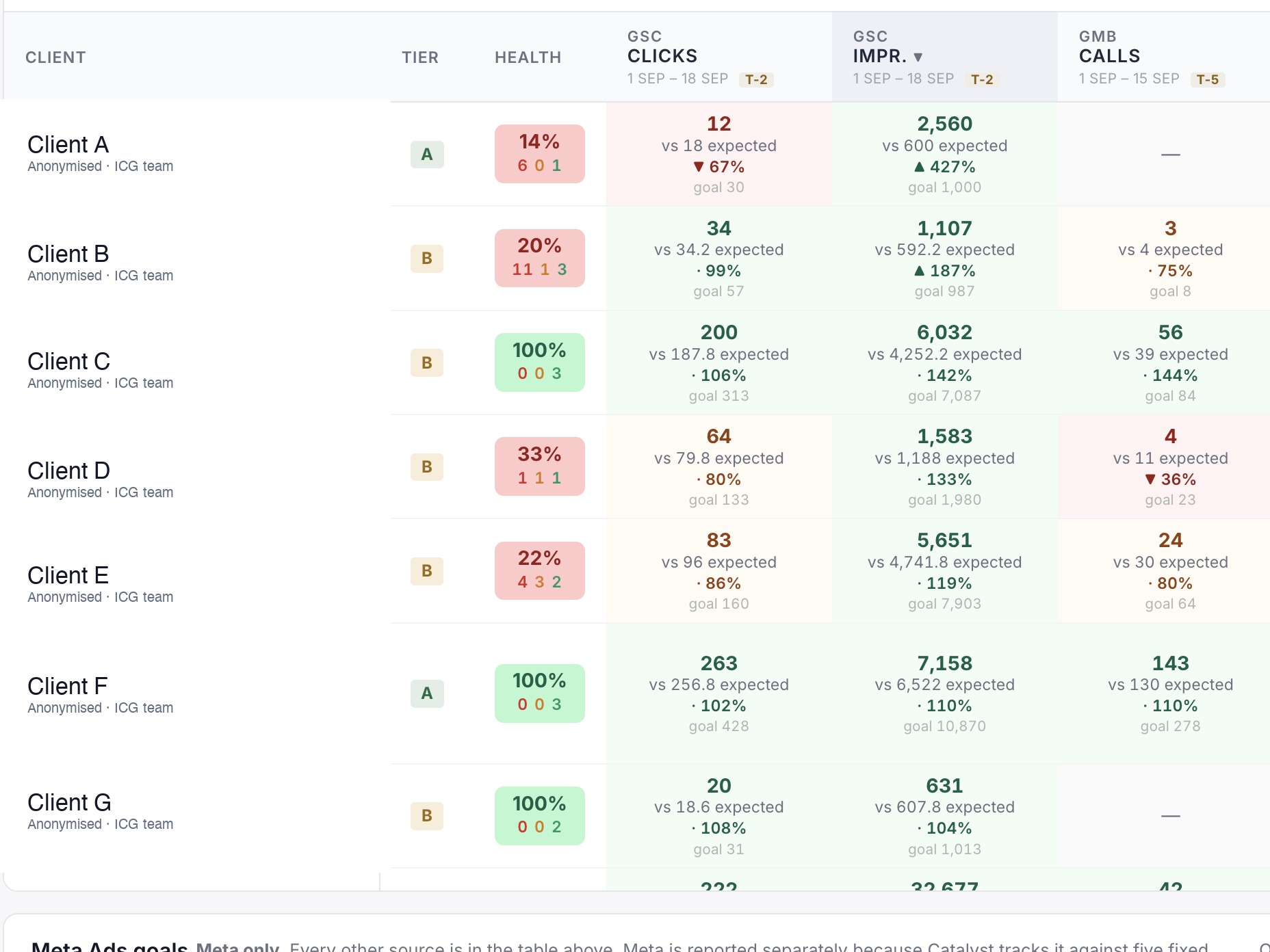
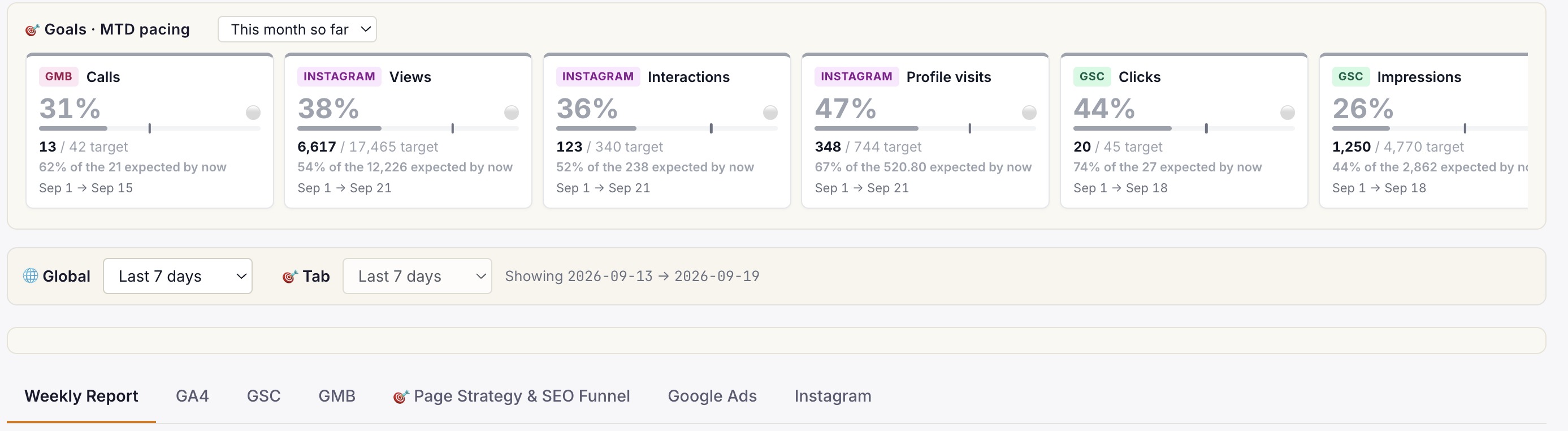
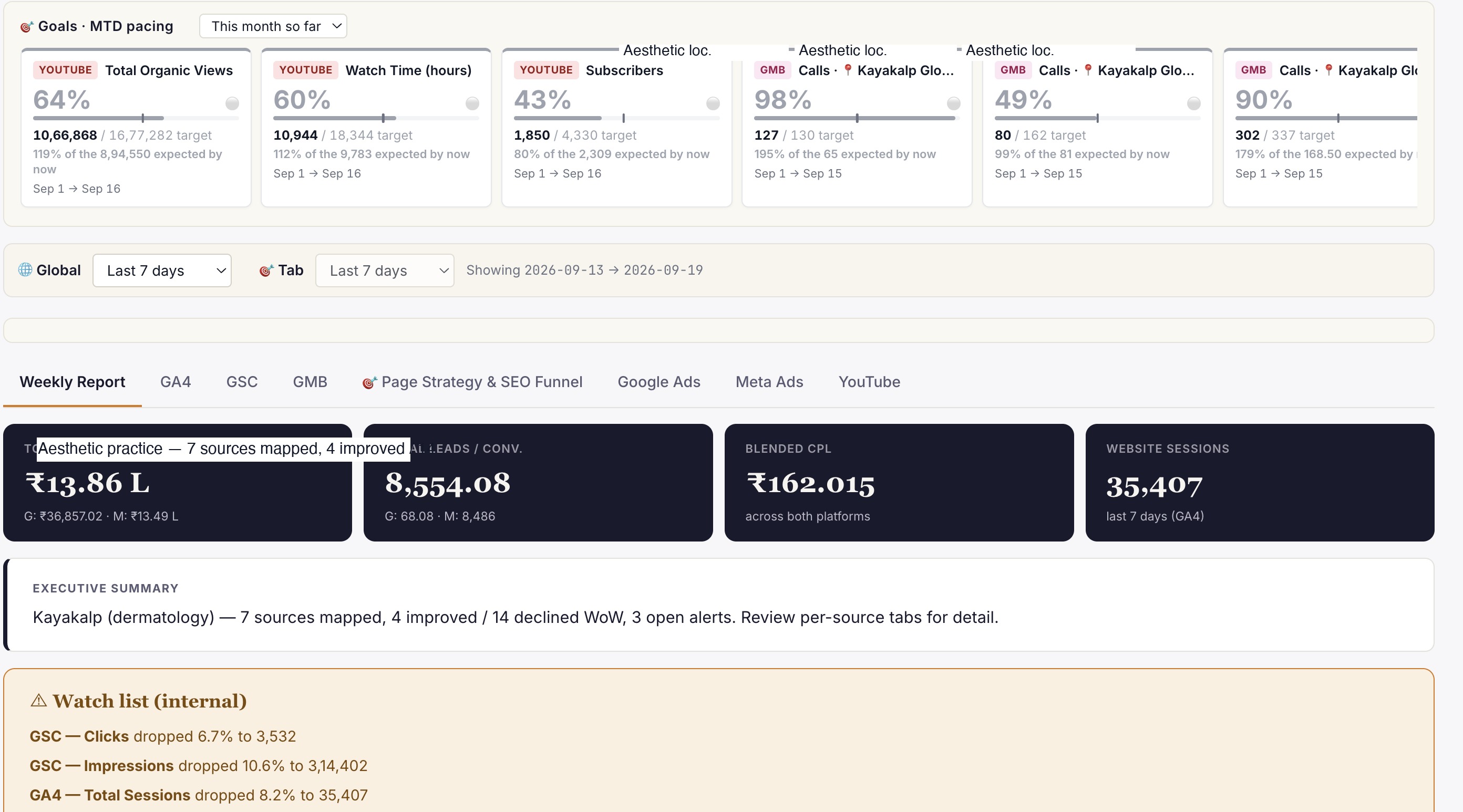
Live client dashboard. GSC, GA4, Google Ads, Meta Ads, IVR calls in one view. Login anytime, not monthly.
Phoenix
Clinic revenue intelligence over your PMS. Daily action queue: Prevent Loss, Maintain & Engage, Grow Revenue. Multi-centre rollout.
Or book a free 30-min audit to see all three in action on your account.
Healthcare brands
that already run on ICG.
A representative slice of the 150+ healthcare brands ICG has delivered for across India. Most engagements remain under NDA.


What ICG clients say · on video.
"Scale up of organic channels and business consulting. ICG has absolute domain authority in their field."
"Working with ICG transformed how we acquire IVF patients in Gurgaon. They understand the fertility journey from inquiry to consult..."
"What Ichelon accomplished — they got all my ideas and worked over 3-4 months to create an amazing, super-customised website."
Need help operationalising this?
Every ICG service is healthcare-only, NMC + DPDP-aware, and built around the patient-research patterns that drive Indian healthcare growth in 2026.
Every practice welcome — packages from ₹20,000/mo.
Goals-Driven engagements · Performance-Linked Payout Models available
More from
ICG.
Five trends shaping Indian healthcare marketing through 2027: AI-first patient research, Conversions API adoption, ABDM discovery, the AEO w...
Healthcare AIO is the discipline of getting your clinic or hospital cited inside Google AI Overviews, ChatGPT and Perplexity answers — not j...
Conversational-search advertising places brand messages inside AI chat answers — ChatGPT, Perplexity, Copilot — rather than beside a results...
Stop guessing.
Book a Diagnostic.
30 minutes. Free. With the AI-powered healthcare-only marketing agency 150+ brands already run on. No slides, no pitch, no hard close.


