


Healthcare marketing strategy in India: a planning framework, not a tactics list
Most articles that promise a healthcare marketing strategy hand you a list of fifteen channels and call it a plan. That is not a strategy.
No pitch. Written root-cause diagnosis. AI-powered, healthcare only.
Direct answer
Most articles that promise a healthcare marketing strategy hand you a list of fifteen channels and call it a plan. That is not a strategy.
TL;DR
By Rohit Gupta — Co-Founder, Business & Growth, ICG.
Reviewed for strategy and compliance accuracy by Abhash Kumar — Co-Founder, Strategy, ICG.
Neither the author nor the reviewer is a clinician; this is a strategy and compliance review, not a clinical sign-off.
Last substantively updated: 29 July 2026.
Most articles that promise a healthcare marketing strategy hand you a list of fifteen channels and call it a plan. That is not a strategy. A real healthcare marketing strategy is a sequence: assess where you stand, decide who you're for and what you can credibly say, size a budget and split it across channels, roll it out in an order that lets you tell what's working, then measure and adjust. This piece walks through that sequence for the Indian market specifically, where most patients pay cash out of pocket rather than routing through an insurer, where the NMC and ASCI shape what a clinic can actually claim in an ad, and where a chunk of discovery happens on doctor-listing platforms and local directories before it ever reaches Google. The same layering — foundations first, then paid acquisition, then retention — is what ICG calls the Three-Level Growth Architecture: implementation before consulting, consulting before AI solutions, each layer earning the right to the next. If you'd rather have someone build and run this sequence for you, our healthcare digital marketing team does exactly this work day to day, turning a marketing budget into booked OPD appointments rather than impressions.
Table of contents
- What a healthcare marketing strategy actually is
- Why India needs a different playbook
- Situation assessment
- Positioning and audience definition
- Channel mix and budget allocation
- Execution sequencing and timeline
- Measurement, ownership, and iteration
- The front desk is part of your marketing strategy
- Compliance guardrails before you launch anything
- Frequently asked questions
What a healthcare marketing strategy actually is
A healthcare marketing strategy is a sequence with a budget, an owner, and a way to measure whether it worked. That's the whole definition. If a document doesn't answer who is spending what, in what order, and who checks the results, it's a channel list, not a strategy, no matter how many tactics it names. This is also the difference between marketing in the healthcare industry and marketing in most other sectors: the sequence has to account for regulatory limits on what you can claim, and the audience is making a decision about their own body or a family member's, which changes both the content and the compliance bar.
What is healthcare marketing, stripped of the jargon? It's the set of activities that move a person from "I have a symptom or a need" to "I've booked an appointment at this specific hospital or clinic," and then keeps them coming back and referring others. Most published guides on this topic stop at a list of channels: SEO, social media, email, reviews, referral programmes. Channels are ingredients. A strategy tells you which ones to use first, how much to spend on each, and how you'll know in three months whether it's paying off. Content is one piece of that mix, not the whole plan, and our healthcare content marketing work sits inside this sequence rather than replacing it.
Why India needs a different playbook
An OPD patient in Pune deciding between three multi-specialty hospitals is not running the same decision process as an insured patient in Ohio choosing from a referral network. Most Indian healthcare spend is still out of pocket, which is the marketing of healthcare services India actually has to plan for. That single fact changes almost everything about how a strategy has to work: price becomes something patients actively compare rather than something an insurer negotiates on their behalf, EMI and financing options become a real decision lever for anything above a certain ticket size, and corporate health insurance covers a growing but still comparatively small slice of the market rather than being the default rail nearly every patient travels on.
The discovery layer is different too. Sixty-seven percent of patients start with a Google search (ICG GSC + doctor-directory aggregate · n=42,300 attributable patient touches · Jul–Dec 2025 · India healthcare cohort), but the remaining third splits across doctor-listing, local-directory and doctor Q&A platforms, comparing doctor ratings and consultation fees before a hospital's own website ever enters the picture. Add regional-language search, especially outside metro tier-1 cities, and a strategy built purely around English-language Google SEO misses a real share of the funnel. Our patient journey content mapping work for Indian healthcare covers this discovery layer in more depth if you want the specifics of how patients actually move across these platforms before they call.
Vernacular search also changes what "content" needs to mean in the channel mix. A tier-2 or tier-3 city hospital that only publishes in English is invisible to a real share of its own catchment, even patients who are comfortable enough in English to read a discharge summary but search in Hindi, Marathi, or Tamil when they're worried about a symptom at 11pm. A landing page or GBP description in the local language, matched to the service line most likely to be searched that way, tends to close more of that gap than another English blog post would.
None of this means channels are wrong, just that a marketing strategy for hospitals built on a US template will misallocate budget from month one. The rest of this piece works through what to do instead, in order.
Situation assessment
A Google Business Profile with the wrong phone number costs a clinic bookings every day it stays wrong, silently, with no line in any report to show for it. That's the shape of the problem situation assessment exists to catch: not a missing channel, but a gap in something already running that nobody's checked on in months. It could be a competitor two blocks away claiming the same specialty with sharper messaging, or a patient database that's been collected for years and never once used for a reminder campaign.
ICG has run this exact audit across 150+ healthcare brands since 2018, spanning 12 specialties, and the same handful of gaps shows up in almost every intake call: a GBP nobody's properly claimed, a patient database nobody's mailed, a competitor everyone's noticed but nobody's actually mapped.
Situation assessment means finding that gap before spending a rupee on new channels. Start with what's already running: pull performance data from your website, Google Business Profile, and any paid campaigns from the last six months, and look honestly at what's converting and what's just spending. Map who else is competing for the same patients in your catchment area and what they're claiming. Then check what trust assets you already hold and aren't using — NABH 6th Edition accreditation, if you have it, is a real differentiator that most clinics bury on an "About" page instead of surfacing where a decision is actually being made. Once that's mapped, look at your existing patient database: how old is it, is it segmented by service line, and has anyone ever mailed or called it with a reason to come back.
A short audit checklist covers the ground:
- Channel performance: website traffic and conversion, GBP views and calls — a tool like Angryturtle surfaces this across multiple locations in one pass rather than location by location
- Competitor positioning within a 5-10 km radius or relevant catchment
- Existing trust assets: NABH 6th Edition status, doctor credentials, awards, testimonials, none of them currently surfaced
- Patient database health: size, recency, segmentation, and whether it's used for anything beyond appointment reminders
This phase usually takes two to three weeks if someone's actually pulling the data rather than guessing at it.
Positioning and audience definition
Picture a 120-bed multi-specialty hospital in a tier-2 city, three months from a rebrand, and its marketing head is stuck on one decision: lead with affordability, lead with specialist depth in cardiology and orthopaedics, or lead with NABH-backed safety. All three are true. Only one can be the headline, because a positioning statement that tries to be everything ends up being nothing a patient remembers. The right call usually comes down to what the hospital can prove, not what sounds best in a meeting — if the cardiology team has genuinely lower complication rates or faster turnaround, lead there; if the real edge is EMI options and transparent package pricing, lead there instead.
Positioning within NMC's 2026 advertising guidelines
Before any positioning statement goes near an ad, it has to survive NMC's 2026 advertising guidelines — currently published as the Code of Medical Ethics Regulations — which restricts individual-doctor self-promotion and bars the kind of before-after or outcome-guarantee claims that Western hospital marketing leans on freely. That's a real constraint, not a footnote — a positioning line built around "the best cardiac surgeon in the city" or a specific success-rate guarantee is likely to run into trouble before it runs into a patient. The ASCI Healthcare Guidelines add another requirement on top: any comparative or outcome claim has to be substantiated, so "fastest recovery" needs a number behind it, not a slogan.
Segmenting by service line economics
Marketing strategy for healthcare providers rarely treats every department the same, and it shouldn't. Cardiology and oncology patients are usually referral-driven and research-heavy, arriving already knowing which hospital they want to verify rather than discover. Elective and cosmetic patients behave more like retail consumers, comparing price and reviews across three or four clinics before calling any of them. Maternity patients tend to decide early in pregnancy and stay loyal to one provider for the full cycle, which makes retention content matter more than acquisition ads. A single positioning statement can sit above all three, but the content and channel mix underneath it should differ by service line, not repeat the same message with a different department name swapped in. This is the exact split ICG's SLC Matrix is built to hold — Service × Location × Customer, each cell with its own creative and budget rather than one campaign covering a hospital's whole demand at once. The budget follows the same logic: a referral-driven specialty rarely needs heavy paid search, while an elective or cosmetic service line usually does, since that's where the comparison shopping actually happens. Our healthcare branding work usually starts exactly here, before a single ad goes live.
Channel mix and budget allocation

Most Indian clinics treat marketing as whatever's left over after payroll and equipment, not as a planned percentage of revenue, and that's the single biggest reason budgets swing wildly month to month with no clear return. A marketing spend that gets decided fresh every quarter based on how the previous quarter felt is not a budget, it's a mood. The fix is treating marketing as a fixed share of revenue and holding to it even in a slow month, the same way a hospital wouldn't cut its diagnostics budget just because footfall dipped for four weeks.
There's no universal percentage that fits every specialty, city tier, and competitive set, and any article that hands you one number is guessing. What matters more than the exact figure is holding to whichever share you pick for at least a couple of full quarters before judging it, because a fixed allocation behaves differently from a reactive one precisely by surviving a slow month instead of getting cut to zero and relaunched from scratch later at a higher cost. Underneath that figure sits the real decision: how it splits across three buckets.
Owned
This is the website, Google Business Profile, and listings on doctor-directory and local-directory platforms — assets you control and that cost time more than money, but that everything else depends on. A paid campaign pointed at a weak website or an unclaimed GBP listing is money spent proving a leak exists rather than fixing one.
Paid
Search ads, social ads, and sponsored placement on aggregator platforms sit here. This is the bucket that should scale up once the owned assets are solid, not before, because paid traffic hitting a broken funnel just produces expensive data about the funnel being broken. Where the money goes within this bucket is itself a decision — ICG's DCG Matrix (Demand Capture × Demand Generation) is the logic we use to stop a budget from running dry as search saturates: capture channels like Google Search harvest demand that already exists, generation channels like Meta and YouTube build demand that doesn't yet, and most Indian clinics over-invest in the first and starve the second.
Real numbers help size the pilot. Across the 16 specialties in ICG's CPQL benchmark dataset, the market median is ₹2,100 per qualified lead and ICG's median is ₹1,220, and the gap varies sharply by specialty: an IVF centre runs at ₹1,180 against a market median of ₹2,400 (51% lower) and a general dental practice at ₹780 against ₹1,100 (29% lower) (272 client engagements · Q2 2026 · full specialty breakdown at /cpql-benchmarks-india). A Delhi NCR hospital group running four hospitals and 580 beds under board pressure to justify marketing ROI used exactly this kind of specialty-level CPQL work to rebuild its channel mix — the case study is worth reading if your board is asking the same question.
Earned
Reviews, referrals, and PR fall in this bucket, and it's the one Indian clinics underinvest in relative to how much it drives OPD volume. A single strong Google review responded to well is worth more to a cash-pay patient weighing options than another ad they'll scroll past. A structured ask, a simple SMS or WhatsApp message sent a day or two after a good outcome, tends to generate more reviews than waiting for a patient to volunteer one unprompted, and it costs nothing beyond the time to set the message up. DermaClinix in Gurgaon combined this earned-review discipline with a tighter paid funnel and took its own CPQL from ₹2,800 to ₹1,080 over 28 weeks without raising media spend — the full breakdown shows how the three buckets reinforced each other rather than competing for the same rupee.
One thing threads through all three buckets: any form on your website, any call-tracking number, and any WhatsApp lead capture is now subject to the DPDP Act 2023, which requires clear consent before you collect and use patient contact data for marketing follow-up. This is not optional paperwork — build the consent language into the lead-gen form before the campaign goes live, not after legal asks about it. For more detail on the paid and performance side of this bucket split, our healthcare performance marketing guide goes deeper into channel-level allocation. Getting this split right, and reviewing it quarterly, is closer to what healthcare marketing best practices actually looks like than any single tactic on its own.
If you want a second opinion on how your own budget should split across these three buckets before you commit spend, that's a conversation our digital marketing team has regularly with hospital marketing heads.
Execution sequencing and timeline
The mistake we see most often isn't picking the wrong channels, it's launching all of them at once — paid search, social ads, a referral programme, and an email campaign, all live in month one, with no way to tell which one actually moved the needle when enquiries go up. By month three nobody can say whether the paid campaign worked or whether it was the referral push, because they started together and get credited together. The fix is sequencing: get the foundational assets live and converting before paid acquisition starts, and hold referral and retention programmes back until paid has a baseline, so each layer has room to show its own signal before the next one lands on top of it.
In practice that looks like this. Months one and two go to fixing the owned assets from the situation-assessment work: website conversion paths, GBP accuracy, doctor-directory and local-directory listing hygiene, and surfacing NABH 6th Edition accreditation or other trust signals somewhere a patient will actually see them. Nothing paid launches yet. By month three, once the basics are live and converting reasonably well, a modest paid search and social pilot goes up, scoped tightly to one or two service lines rather than the whole hospital at once, so the results are attributable. From month five onward, once paid channels have a baseline, referral and retention programmes come online, built on the patient database work started back during situation assessment.
This isn't a fixed calendar for every hospital. A clinic with almost no digital presence might need four months just on foundations; one with a decent website but a weak referral system could compress situation assessment to three weeks. What doesn't compress is the order. Skipping straight to paid ads because a competitor just launched a campaign is how budget gets spent proving the website needed fixing all along.
Measurement, ownership, and iteration
Call-tracking assigns a unique phone number to each channel, so a call from a Google ad, a call from the website, and a call from a local-directory listing each ring in on a different line even though they land on the same front desk. Pair that with a basic CRM entry logging the outcome of the call, booked or not, and you can trace a single ad click all the way to a booked OPD visit weeks later, not just to a form fill that may or may not have gone anywhere. Tools like Device ID exist specifically for the messier version of this problem, where the same patient researches on a phone, books from a laptop, and confirms over WhatsApp, and a CRM without cross-device stitching records that as three separate people.
That mechanism is what makes cost per booked appointment a more useful number than cost per lead. A campaign generating cheap leads that never convert to visits is worse than one generating fewer, pricier leads that mostly show up. No-show rate deserves its own line item too — an appointment booked but never kept costs the hospital a slot and costs marketing its credit, and most strategy content skips it entirely because it sits at the boundary between marketing and operations.
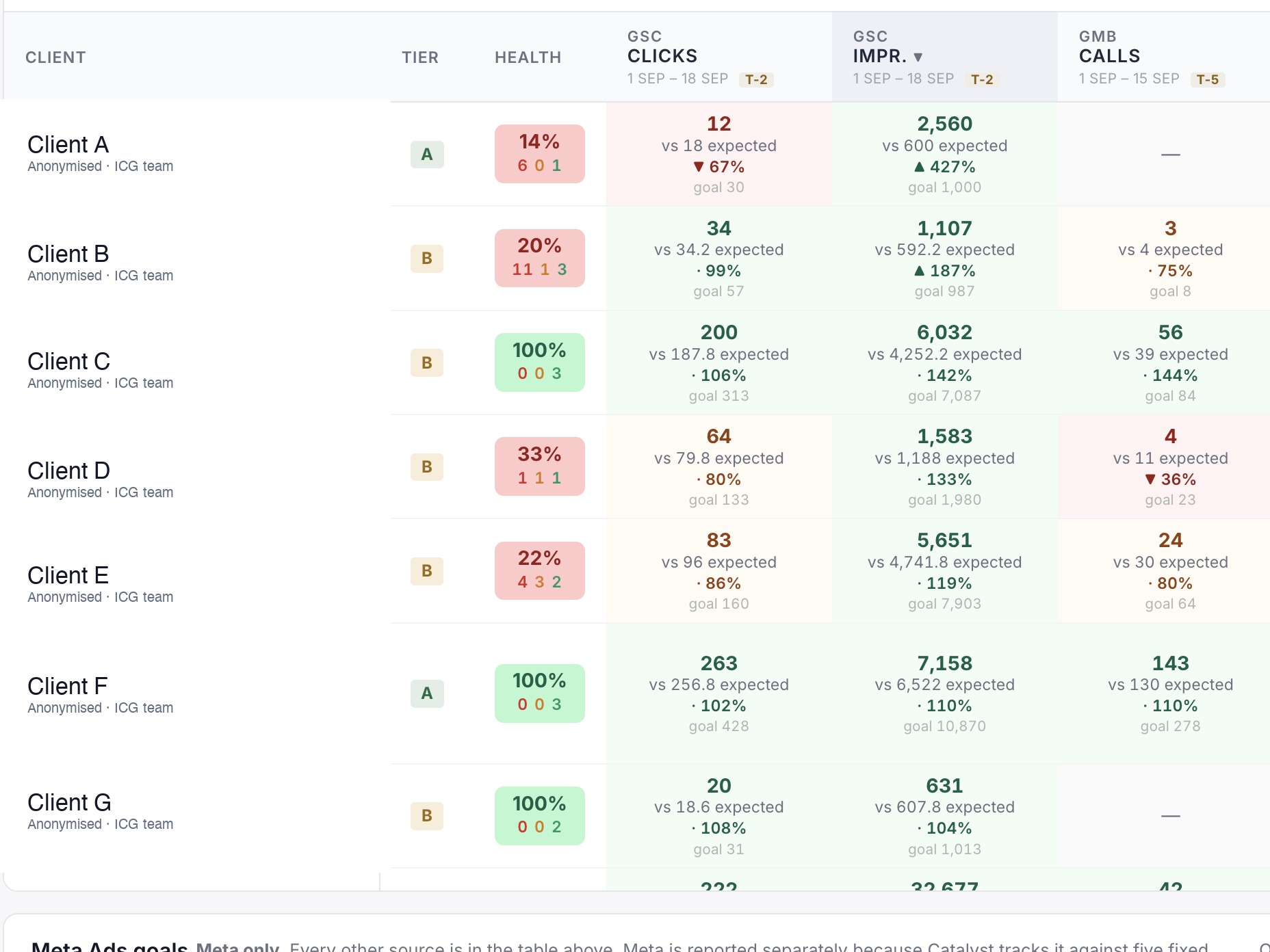
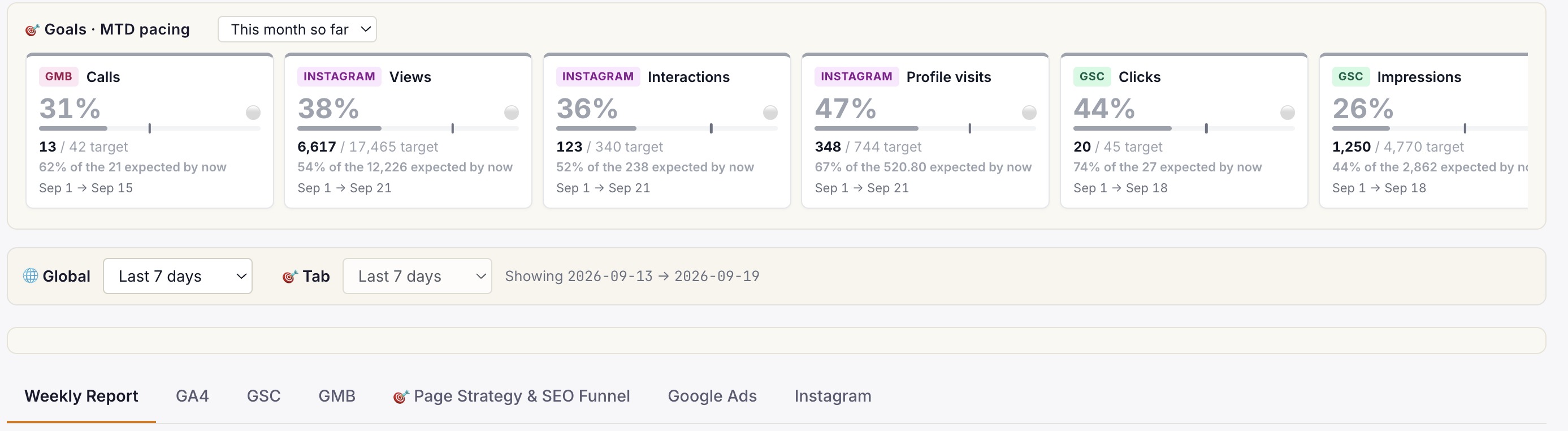
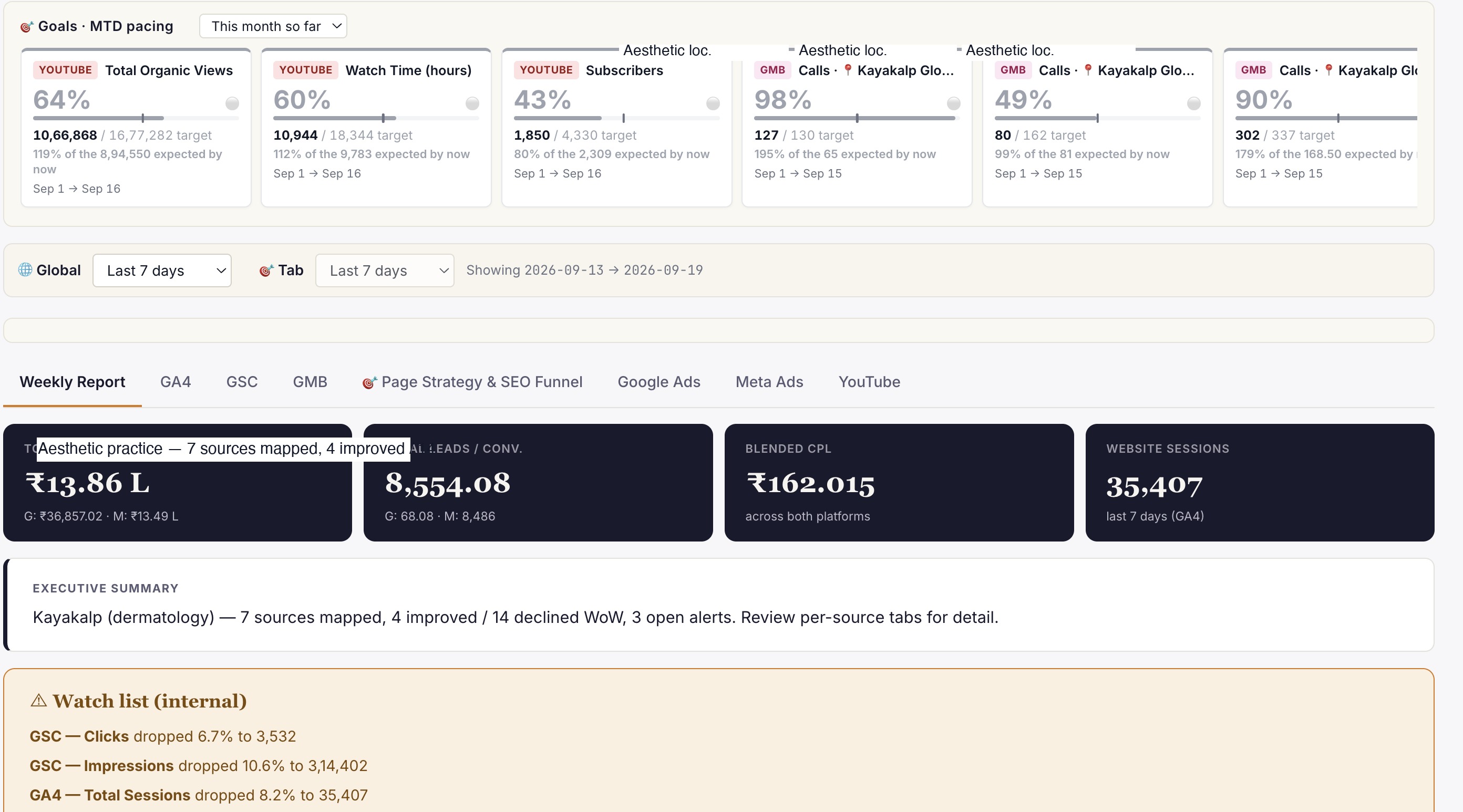
A real monthly review isn't a slide deck of impressions and clicks. It's a short sit-down that walks through each channel's cost per booked appointment against last month's, flags any service line where no-shows have crept up, and decides whether a channel gets more budget, less, or gets paused for a month while the team figures out why it stopped converting. Dashboards like Agency OS, which pull GSC, GA4, Google Ads, Meta Ads and IVR into one daily view, exist so this meeting starts from one number everyone agrees on rather than three spreadsheets that don't reconcile. The point of the meeting is a decision, not a report — if nobody in the room can change next month's spend based on what's discussed, the meeting wasn't measurement, it was theatre. Weekly check-ins make sense only while a new campaign is still being tuned; once a channel has settled into a pattern, monthly is usually enough to catch it drifting before real budget is wasted.
Who should own this
In-house works when a hospital already has a marketing coordinator who understands the data and has time to chase the numbers weekly, which in practice tends to describe larger hospitals with an established internal team rather than a single-location clinic. An agency partnership works when the hospital wants the sequencing, budget, and reporting handled end to end, which is what a partnership like our healthcare growth transformation work is built around — for a multi-hospital group, that end-to-end reporting typically runs on HealthApex OS, which ties the attribution, reporting and operations layers together across sites rather than per location. A hybrid model, an in-house coordinator handling day-to-day front desk and CRM data with an agency running strategy and paid execution, tends to suit mid-sized hospitals: enough complexity across departments to need outside strategy input, but enough daily call and enquiry volume to need someone on-site actually watching the calls come in.
The front desk is part of your marketing strategy
A patient calls after finding a hospital through a doctor-directory search, gets put on hold, calls back twenty minutes later, and books at the clinic down the road instead. That patient never shows up in any marketing report as a lost lead, because the marketing worked. The campaign brought them in. The front desk lost them.
This is the gap most strategy guides skip entirely, and it's a real one: a receptionist who can't quote a package price with confidence, a missed call that doesn't get a callback within the hour, or a WhatsApp enquiry that sits unread until the next morning erodes marketing ROI just as effectively as a badly targeted ad campaign, and it's usually invisible in the reporting because the analytics stop at "call initiated," not "call resolved." The problem tends to concentrate at predictable points: peak OPD hours when the front desk is also handling walk-ins and billing queries, a receptionist who's new and hasn't been briefed on current package pricing or doctor availability, or an enquiry that arrives outside working hours and sits until the next shift without anyone owning the callback. A tier-2 cardiac hospital ICG worked with was tracking every one of these enquiries in WhatsApp groups with no CRM at all — 200 beds and ₹68 crore in revenue running on a system that lost leads the moment a phone changed hands; the case study covers what replacing that with a proper CRM actually looked like operationally.
ICG's healthcare CRO model, OHMRC — Offer, Headline, Media, Reviews, Call-to-action — treats the front desk conversation as one of those five levers rather than something outside marketing's remit, because from a patient's side of the phone, a confusing landing page and a confused receptionist produce the identical outcome: no booking. None of this needs a large fix. A written call script covering the questions patients ask most, price, doctor availability, insurance or EMI options, location, and appointment slots, closes most of the price-quoting gap on its own. A same-day callback rule, tracked the same way a missed ad click would be tracked, closes the rest. CRM tools built for this specifically — Hawk for lead-leak detection and funnel drop-off analysis, AtomCRM for the day-to-day front-desk workflow — exist because a generic sales CRM rarely maps to how an Indian OPD front desk actually works.
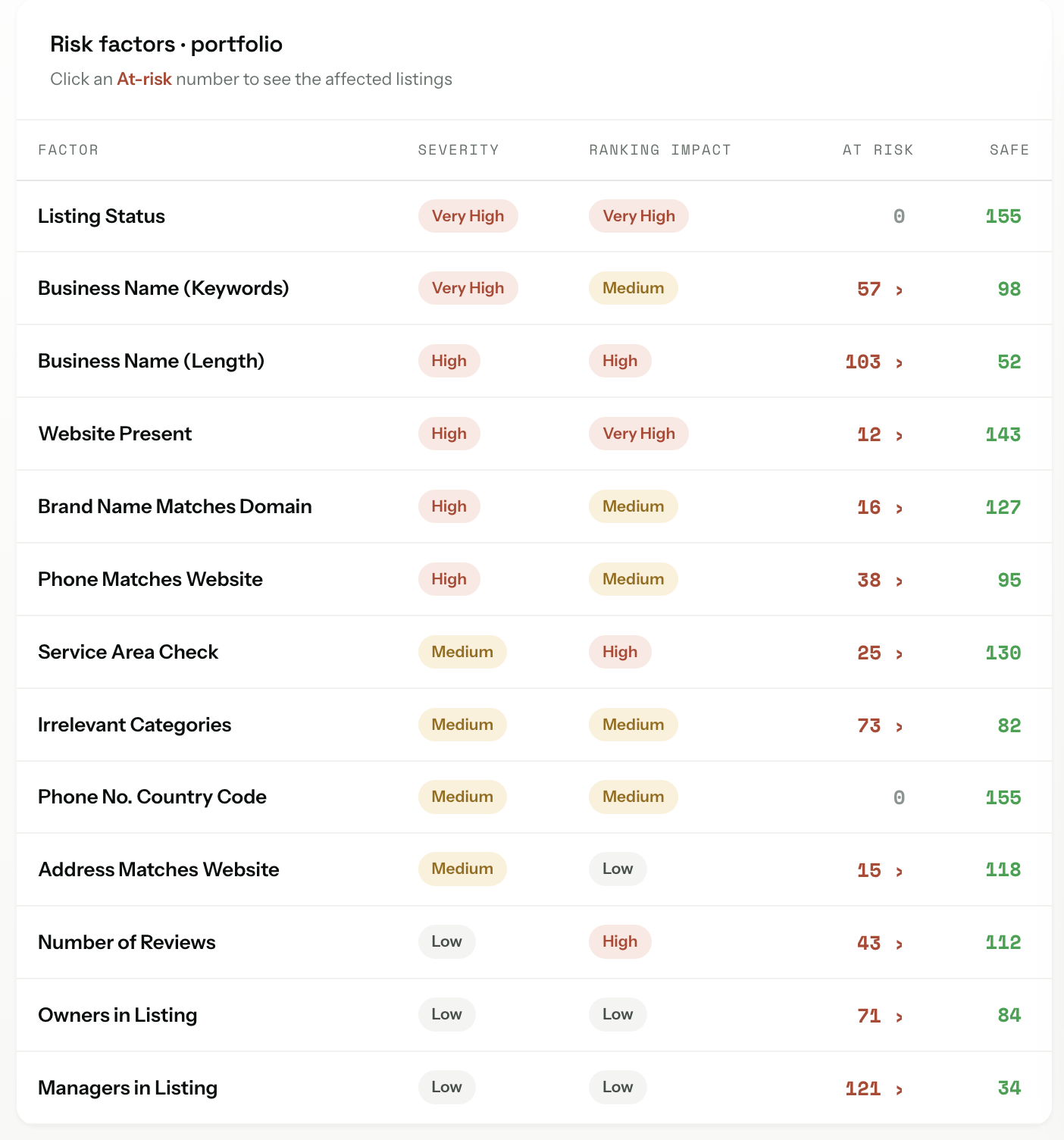
Review handling belongs in the same conversation. Across ICG's Angryturtle portfolio of 143 managed Google Business Profiles, the average rating sits at 4.76 stars across 28,137 reviews managed, with zero suspensions and 531 risk factors monitored on an ongoing basis — the kind of review volume a front desk simply cannot respond to manually once a hospital crosses a few hundred reviews a year. Staff turnover at the front desk makes the script side of this harder to hold in place than it sounds; a script that lives only in one experienced receptionist's head disappears the day she takes leave or moves on, so it's worth writing the script down and reviewing it whenever a new hire joins the front desk rather than assuming it'll get passed on informally. Auditing call-handling and front-desk response time belongs in the same review as auditing ad spend, because from the patient's side of the phone, the two are the same experience. Our healthcare conversion optimisation work treats the front desk and the website as one funnel for exactly this reason, since a leak at either point produces the same lost appointment.
Compliance guardrails before you launch anything

Three sets of rules sit underneath everything in this framework, and getting them wrong doesn't just risk a fine, it risks a campaign getting pulled mid-flight. The NMC's 2026 advertising guidelines limits how an individual doctor can be promoted, restricts the use of patient testimonials, and extends to how a registered practitioner conducts themselves on their own social media accounts, not just in paid ads. A hospital running a doctor-fronted testimonial video, or a specific consultant posting patient before-after images on a personal Instagram account, is exactly the kind of campaign that can get flagged and pulled after the media spend is already gone.
The ASCI Healthcare Guidelines require that any outcome or comparison claim in an ad be substantiated, which rules out unverifiable lines like "best in the city" without something behind them, and gives competitors and patients alike a formal channel to complain if a claim looks unsupported. That complaint process moves faster than most hospitals expect, which is part of why substantiation has to be sorted before a campaign launches, not gathered afterward once a complaint has already landed. And the DPDP Act 2023 requires documented consent for any website form, call recording, or WhatsApp thread used to capture patient data for marketing purposes, not just for clinical records — this includes re-confirming consent if a patient's data gets reused for a new campaign months after it was first collected, not just at the point of first contact.
Where accreditation hasn't already come up earlier in your assessment, NABH 6th Edition status is worth building into your compliance and trust checklist here too, since it doubles as both a patient-safety credential and a marketing asset that can be surfaced across the website, GBP, and aggregator listings without running into any of the claims restrictions above. This is also why ICG builds every engagement around MMT — Marketing × Medicine × Technology — so a campaign clears compliance before it clears creative review, rather than getting flagged after spend is already committed. Our own editorial process for this kind of claim-sensitive content is documented at /editorial-standards.
This is not legal advice. Specific ad copy, testimonial usage, and comparative claims should be checked with compliance counsel before anything goes live, especially anything referencing patient outcomes or success rates.
Frequently asked questions
What is a healthcare marketing strategy, in one sentence? It's a sequenced, budgeted plan with a named owner and a defined way to measure results, not a list of channels or tactics.
How much should a hospital or clinic in India budget for marketing? There's no universal percentage that fits every specialty and city tier, and treat any article that hands you one specific number with caution. What matters more is picking a fixed share of revenue rather than a leftover line item, and holding to it for at least a couple of quarters before adjusting, so a slow month doesn't trigger a budget cut that then has to be rebuilt from scratch.
Can doctors in India legally advertise on Google or social media? Yes, within limits. The NMC's 2026 advertising guidelines restrict individual self-promotion, testimonial use, and unverifiable outcome claims, so hospital-level branding tends to carry less regulatory risk than doctor-level promotion built around personal success claims.
How long before a healthcare marketing strategy shows results? Foundational fixes in the first two months rarely move enquiry volume on their own. A paid pilot launched around month three usually starts showing attributable bookings within four to six weeks of going live, and referral programmes launched around month five typically take another full quarter to show a measurable lift, since referral behaviour lags the original visit that triggers it.
Do we need an agency, or can this be done in-house? Either can work. In-house suits hospitals with a coordinator who has the time and data literacy to chase weekly numbers; an agency or hybrid model suits hospitals that want sequencing and reporting handled end to end, or that only have front-desk staff available to run the daily patient-facing side while someone else runs strategy.
If you're weighing which of these five phases your hospital actually needs help with first, that's a conversation worth having before you commit budget to any one of them — our team can be reached at /audit or over WhatsApp at +91 81302 26224.
Book a free Brand & Growth Diagnostic.
60 minutes with Sr. Leadership. You leave with a written root-cause analysis of where growth is stalling and what to fix first — whether or not you engage ICG.
The three platforms
behind every ICG engagement.
Beacon
CAPI middleware that fixes Event Match Quality, translates CRM statuses to Meta-standard events, dedups across channels.
Agency OS
Live client dashboard. GSC, GA4, Google Ads, Meta Ads, IVR calls in one view. Login anytime, not monthly.
Phoenix
Clinic revenue intelligence over your PMS. Daily action queue: Prevent Loss, Maintain & Engage, Grow Revenue. Multi-centre rollout.
Or book a free 30-min audit to see all three in action on your account.
Healthcare brands
that already run on ICG.
A representative slice of the 150+ healthcare brands ICG has delivered for across India. Most engagements remain under NDA.


What ICG clients say · on video.
"Scale up of organic channels and business consulting. ICG has absolute domain authority in their field."
"Working with ICG transformed how we acquire IVF patients in Gurgaon. They understand the fertility journey from inquiry to consult..."
"What Ichelon accomplished — they got all my ideas and worked over 3-4 months to create an amazing, super-customised website."
Need help operationalising this?
Every ICG service is healthcare-only, NMC + DPDP-aware, and built around the patient-research patterns that drive Indian healthcare growth in 2026.
Every practice welcome — packages from ₹20,000/mo.
Goals-Driven engagements · Performance-Linked Payout Models available
More from
ICG.
Five trends shaping Indian healthcare marketing through 2027: AI-first patient research, Conversions API adoption, ABDM discovery, the AEO w...
Healthcare AIO is the discipline of getting your clinic or hospital cited inside Google AI Overviews, ChatGPT and Perplexity answers — not j...
Conversational-search advertising places brand messages inside AI chat answers — ChatGPT, Perplexity, Copilot — rather than beside a results...
Stop guessing.
Book a Diagnostic.
30 minutes. Free. With the AI-powered healthcare-only marketing agency 150+ brands already run on. No slides, no pitch, no hard close.


