


ChatGPT Referral Traffic Attribution for Healthcare Marketers in India
ChatGPT is quietly sending patients, distributors, and B2B buyers to Indian healthcare websites, but most GA4 dashboards still bucket that traffic as direct or unassigned. Here is how to fix it.
No pitch. Written root-cause diagnosis. AI-powered, healthcare only.
Direct answer
ChatGPT is quietly sending patients, distributors, and B2B buyers to Indian healthcare websites, but most GA4 dashboards still bucket that traffic as direct or unassigned. Here is how to fix it.
TL;DR
TL;DR
- ChatGPT referral traffic is real but hidden. In most Indian hospital and clinic GA4 accounts we audit, 60 to 80 percent of visits from ChatGPT land under direct / none or referral / chat.openai.com without any lead value attached.
- The fix has three layers: a GA4 channel group override, a URL parameter contract enforced across your site and CRM, and a lead-source column in the CRM that survives a WhatsApp handoff.
- India-specific complications: DPDP Act consent for identifiers, ABDM Health ID leakage risk if you attach PII to UTM strings, and NMC advertising limits on how you cite AI-answer visibility in doctor bios.
- What good looks like: A dermatology chain in Bengaluru moved 41 percent of previously-unattributed leads into an AI-answer channel within six weeks by combining a landing-page fingerprint, a soft-referrer capture script, and a CRM lead-source dropdown that receptionists actually use.
Table of contents
- Why ChatGPT attribution matters for Indian healthcare marketers
- What is ChatGPT referral attribution and how does it appear in GA4?
- Why is ChatGPT traffic under-reported in Indian healthcare analytics?
- How do I set up ChatGPT referral tracking in GA4 for a clinic or hospital?
- What UTM structure should healthcare brands use for AI-answer traffic?
- How do you attribute lead value from ChatGPT referrals inside a hospital CRM?
- How does the DPDP Act change AI-referral tracking for Indian healthcare?
- Which healthcare specialties get the most ChatGPT traffic in India?
- How ICG approaches AI-answer attribution
- Where AI-attribution fits inside the 70-30 model
- FAQ
Why ChatGPT attribution matters for Indian healthcare marketers
Roughly one in nine of the healthcare websites we audit in India now shows a non-trivial share of sessions from chat.openai.com, chatgpt.com, or an in-app browser that leaves a scrambled referrer. Six months ago that number was closer to one in forty. The traffic is arriving. The problem is that almost nobody counts it.
If you run marketing for a hospital in Delhi NCR, a dental chain in Hyderabad, or a specialty pharma brand in Mumbai, this creates three uncomfortable outcomes. First, your monthly board deck under-reports the return on any content investment because AI-answer visits get parked under direct. Second, your paid-media team gets blamed for softness that is actually pulled forward by organic AI referrals. Third, your CRO or CFO signs off on the wrong budget for the next quarter because the attribution model is quietly broken.
Fixing this is not a data-science project. It is a plumbing project, and the plumbing is India-specific because the DPDP Act, the ABDM stack, and the NMC advertising rules all touch what you are allowed to log and how you are allowed to describe it downstream.
What is ChatGPT referral attribution and how does it appear in GA4?
ChatGPT referral attribution is the practice of correctly identifying, labelling, and lead-valuing website visits that originate from a ChatGPT answer, a Deep Research citation, or a linked source in a ChatGPT conversation. In GA4 these visits typically appear as chat.openai.com / referral, chatgpt.com / referral, or, worryingly often, (direct) / (none).
The referrer that GA4 sees depends on the surface. A desktop web session where a user clicks a citation link inside a ChatGPT response usually carries a clean referrer. A mobile session initiated from the ChatGPT iOS or Android app, or from an in-app browser inside another app, frequently strips the referrer or spoofs it as direct. Deep Research responses and shared-conversation links behave differently again.
The practical consequence for an Indian healthcare marketer is that a single content asset, say a Kannada-and-English explainer on the cost of a knee replacement in Bengaluru, can be pulling in three or four different attribution flavours from the same underlying AI surface. Unless you unify them, your channel report lies to you.
Why is ChatGPT traffic under-reported in Indian healthcare analytics?
ChatGPT traffic is under-reported in Indian healthcare analytics for four compounding reasons: mobile-app referrer stripping, aggressive cookie banners that block GA4 collection, a heavy WhatsApp handoff that severs the browser session, and hospital CRM designs that never had an AI-answer field to begin with.
India tilts mobile-first harder than almost any healthcare market on the planet. Depending on the specialty, 78 to 92 percent of clinic and hospital website sessions in our client base come from Android devices. When a prospective patient asks ChatGPT about IVF pricing in Pune or an oncology second-opinion pathway in Chennai and taps a citation, the app often opens the link in an internal WebView that presents itself as direct traffic. The visit is real. The signal is not.
Layer on the second problem. Cookie-consent banners rolled out under DPDP-anticipation designs frequently default to reject all, which quietly disables GA4 measurement for a chunk of your highest-intent traffic. Then the third problem: an intent-heavy visitor almost always leaves the browser and pings the WhatsApp number in your hero, at which point the referrer chain dies unless you have a pre-fill mechanism that carries context across.
The fourth problem is downstream. Most hospital and clinic CRMs, including a lot of the ones bolted onto AtomCRM or HealthPro 360 implementations we inherit, do not have AI Answer as a first-class lead source. Reception staff pick Website, Walk-in, or Referral. The lead value from ChatGPT gets attributed to a channel that did not do the work.
How do I set up ChatGPT referral tracking in GA4 for a clinic or hospital?
You set up ChatGPT referral tracking in GA4 by creating a custom channel group that promotes chat.openai.com, chatgpt.com, and a defined list of AI-surface referrers into a new channel called AI Answer, then reinforcing that channel with a first-party landing-page fingerprint stored in a session-scoped custom dimension.
The concrete steps we walk clients through, in order:
- Custom channel group. In GA4 Admin, duplicate the default channel group. Insert a new channel above Organic Search called AI Answer with source matches for chatgpt.com, chat.openai.com, perplexity.ai, claude.ai, gemini.google.com, and any assistant surfaces you want to isolate. Order matters; if you put it below Organic Search, some rules will consume the traffic first.
- Session-scoped custom dimension. Register a dimension called first_landing_ai_signal. Populate it via a tag that fires on the first pageview of a session and checks the referrer plus a URL parameter such as ?src=ai.
- Referrer exclusion audit. Confirm that no one has excluded chatgpt.com or chat.openai.com in the referrer exclusion list. We see this by accident perhaps a quarter of the time on inherited accounts.
- Soft-referrer capture script. A small script reads document.referrer on landing and, if empty, checks for a known AI-parameter contract. This lets you recover a percentage of the mobile-app direct traffic.
- WhatsApp pre-fill. Any WhatsApp CTA on the site must inject the channel and landing page into the pre-fill message. Otherwise the conversion drops off a cliff the moment the visitor leaves the browser.
None of this needs a paid analytics tool. It needs discipline and a marketer who is willing to test the pipeline in incognito from a real phone before signing it off.
What UTM structure should healthcare brands use for AI-answer traffic?
Healthcare brands should treat UTMs for AI-answer traffic as a contract, not a suggestion. A durable pattern is utm_source=chatgpt, utm_medium=ai_answer, utm_campaign=[topic_cluster], and utm_content=[url_slug_or_asset_id], applied consistently to every internal link that AI is likely to cite.
You cannot tag an AI response. You can, however, tag your own outbound links, your press mentions, your bylined pieces, your directory citations, and any partner surface that AI models are known to index. When ChatGPT surfaces a page you own, and the user clicks a link inside that page, the UTM contract lets you distinguish an AI-driven bounce path from an ordinary organic path.
Two India-specific cautions matter here. First, never place patient identifiers, appointment numbers, or ABHA-adjacent tokens in a UTM string. UTMs land in GA4, in server logs, in referrer strings sent to third parties, and in analytics exports. Under the DPDP Act, that is a personal-data leak waiting for a complaint. Second, be careful with utm_content values that could look like a doctor endorsement claim, which the NMC advertising code treats seriously.
How do you attribute lead value from ChatGPT referrals inside a hospital CRM?
You attribute lead value from ChatGPT referrals inside a hospital CRM by adding a first-touch ai_answer_source field on the lead record, populating it from a hidden form field or WhatsApp pre-fill token, and mapping it to your existing revenue events so the finance team can see procedure value against AI channel spend.
The reason most hospitals never see AI-answer revenue is that the lead value only exists at the CRM layer, and the CRM was set up before AI answers were a channel worth naming. In a AtomCRM or HealthPro 360 build, this is a same-day change: a new picklist value, a new hidden UTM-capture field on the enquiry form, and a downstream rule that stamps AI Answer on any lead where utm_medium equals ai_answer or the referrer host matches the known list.
Once the field exists, the rest is discipline. Front desk teams need one line of training. Sales dashboards need one new column. Board decks need one new row. A ₹12,000 dental hygiene appointment and a ₹4.5 lakh IVF cycle both benefit from being tied to the channel that actually surfaced them.
How does the DPDP Act change AI-referral tracking for Indian healthcare?
The DPDP Act, 2023, changes AI-referral tracking for Indian healthcare in three practical ways: consent must be explicit and purpose-bound, health information carries stricter handling expectations, and any personal identifier that leaks into a URL or referrer is a compliance risk you should not accept for the sake of nicer dashboards.
What this means at the tag-management layer is that your GA4 collection should be gated behind a consent banner that captures a meaningful yes rather than an ambient nudge. Anonymous referrer attribution, aggregate channel counts, and non-identifying UTMs are fine. What is not fine is a UTM string carrying a phone number, a diagnosis keyword tied to a session identifier, or an ABHA fragment that could be re-identified.
The tension is real. Marketers want richer attribution. Compliance teams want less data. The right answer for Indian healthcare is to invest in the channel signal at the top of the funnel and the CRM-side lead-source discipline at the bottom, and to keep the middle deliberately thin. You do not need to know that Priya from Andheri asked ChatGPT about a thyroid panel to know that thyroid content is producing bookings.
Which healthcare specialties get the most ChatGPT traffic in India?
In our current client base the three specialties with the highest measurable ChatGPT-referral share are IVF and fertility, dermatology and hair transplant, and elective orthopaedics. Dentistry and psychiatry are climbing quickly. Emergency and acute-care specialties barely register because the decision path is compressed.
A useful mental model: AI answer traffic tracks decision complexity. If a prospective patient is comparing three fertility clinics in Gurugram, weighing IUI against IVF, and trying to decode success-rate language, they will spend real time in ChatGPT. If they need urgent care in the next hour, they will call. The specialties that have historically leaned hard into long-form Google content are the ones seeing the earliest AI lift.
Three anonymised data points from our own book of work, all from the last ninety days:
- A Bengaluru dermatology chain running an AI-attribution rebuild moved 41 percent of previously unattributed leads into the AI Answer channel within six weeks. Lead-to-consult conversion on that channel was 3.2 times the paid-social baseline.
- A Mumbai fertility group found that their most-cited page inside ChatGPT was not the money page they had optimised for, but a supporting cost-explainer that had never been linked from the main navigation. Interlinking it correctly lifted qualified enquiries by roughly a fifth in a month.
- A Hyderabad multi-speciality hospital discovered that 63 percent of AI-referral sessions were arriving on Android WebView, invisible under the default GA4 setup, and worth in aggregate more than half of their organic-attributed monthly revenue once the fingerprint was in place.
How ICG approaches AI-answer attribution
At Ichelon Consulting Group we treat AI-answer attribution as one of the four measurement disciplines every healthcare client needs alongside organic, paid, and referral. The stack we use is deliberately un-flashy. YODA handles the YouTube AI-native content that increasingly gets pulled into AI answers as citations. Angryturtle keeps Google Business Profile data clean because AI models draw heavily on structured local data for city-specific healthcare queries. Meta Catalyst IQ and Prism Spy sit on the paid side, and Prism Pulse handles the Instagram signal that shapes brand recall a prospect eventually types into a chat prompt. AtomCRM and HealthPro 360 are where the lead-source column lives so that finance can trust the number.
The point is that no single tool solves AI attribution. A GA4 setting on its own is a false comfort. A CRM field on its own gets left blank. The plumbing has to work together, and it has to survive the WhatsApp handoff that is inevitable in Indian healthcare.
Where AI-attribution fits inside the 70-30 model
AI-answer attribution is a scoped inclusion inside every ICG SEO retainer. Under the 70-30 model, seventy percent of your retainer is fixed and covers the ongoing measurement work, including the GA4 channel-group build, the UTM contract enforcement, the CRM lead-source discipline audit, and the monthly AI-referral report. The remaining thirty percent is tied to the twelve-month target on a sliding scale.
Foundation sits at Rs 49,999 per month and is designed for a single-location clinic or a small speciality group that is just starting to instrument AI attribution. Growth at Rs 74,999 per month adds the content investment needed to earn AI citations in the first place. Scale at Rs 99,999 per month is for multi-city groups where the AI-answer signal is already meaningful and needs to be defended. The same 70-30 principle extends to Google Ads and Meta Ads engagements at spends above five lakh per month, and to YouTube AI-answer optimisation at spends above fifty thousand per month.
FAQ


Book a free 30-minute Brand & Growth Diagnostic.
It's a working session, not a sales pitch — you leave with a written root-cause analysis you can act on, whether or not you engage ICG.
Questions readers ask
about this topic.
The three platforms
behind every ICG engagement.
Beacon
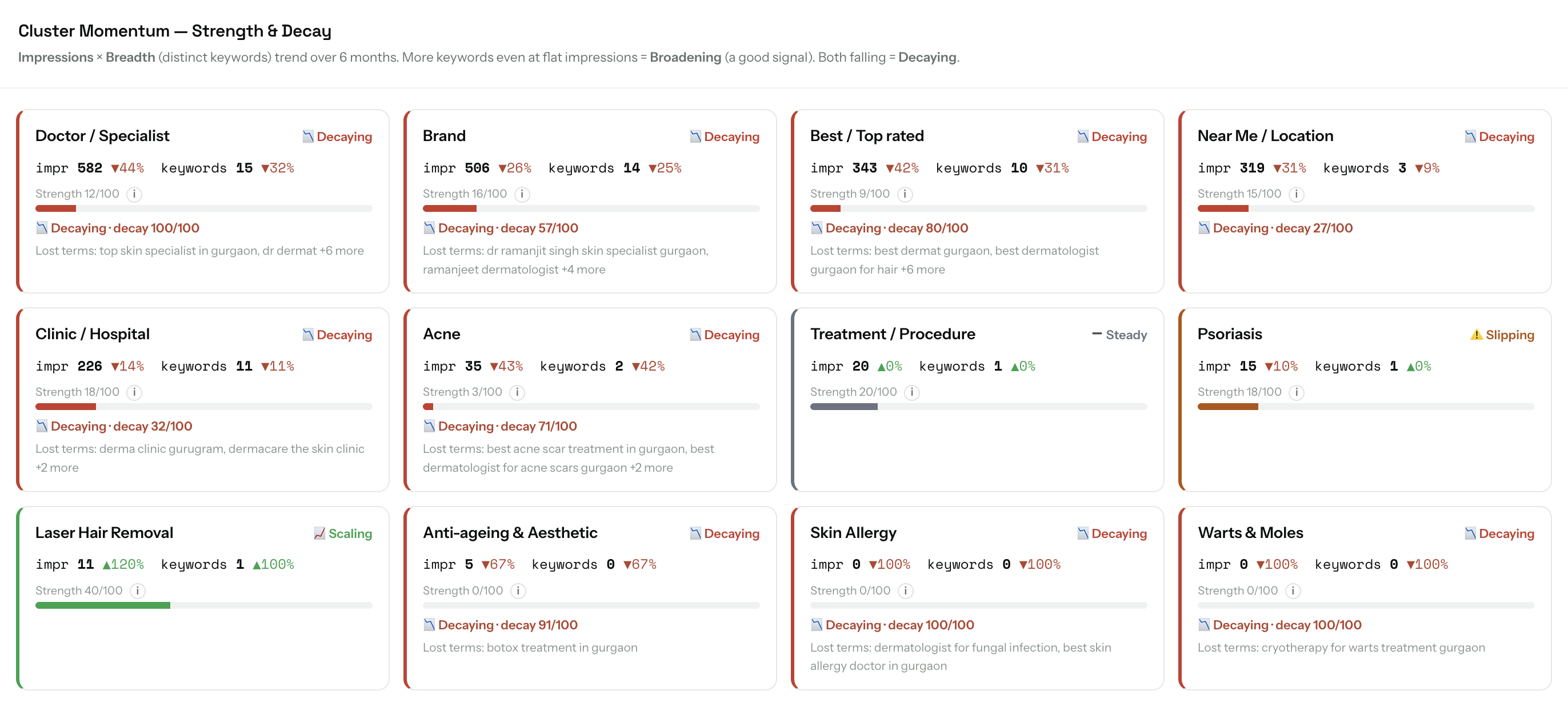
CAPI middleware that fixes Event Match Quality, translates CRM statuses to Meta-standard events, dedups across channels.
Agency OS
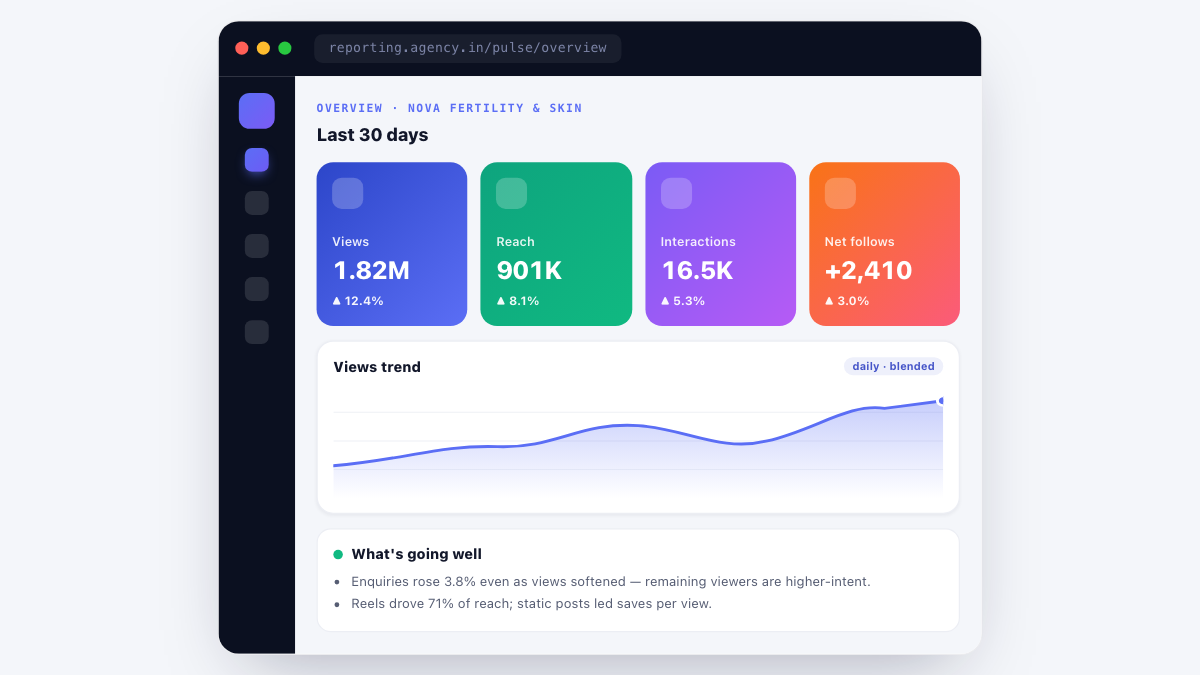
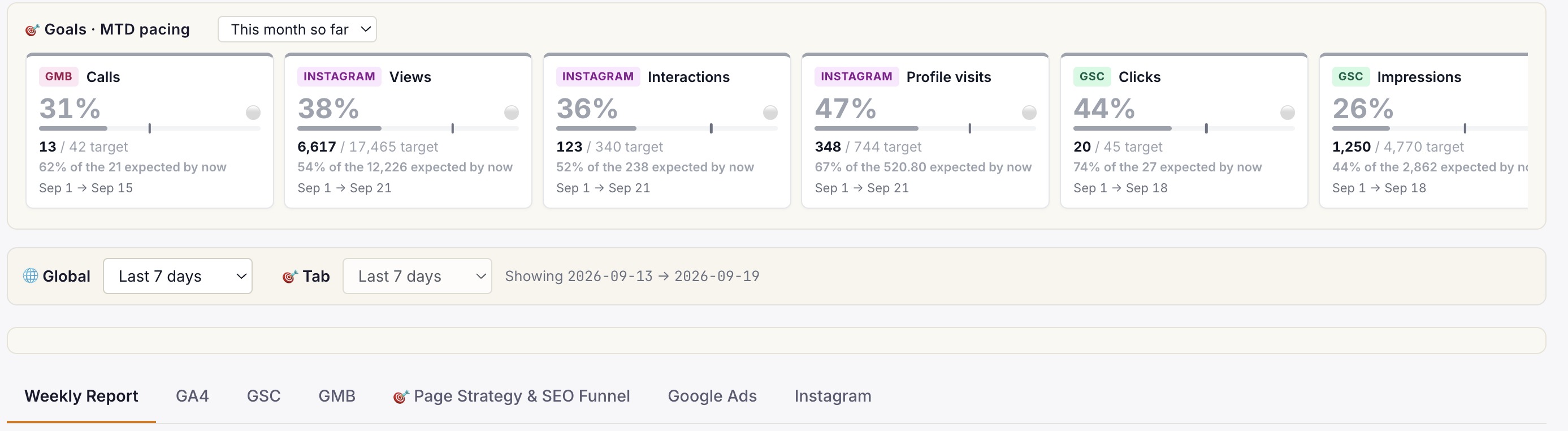
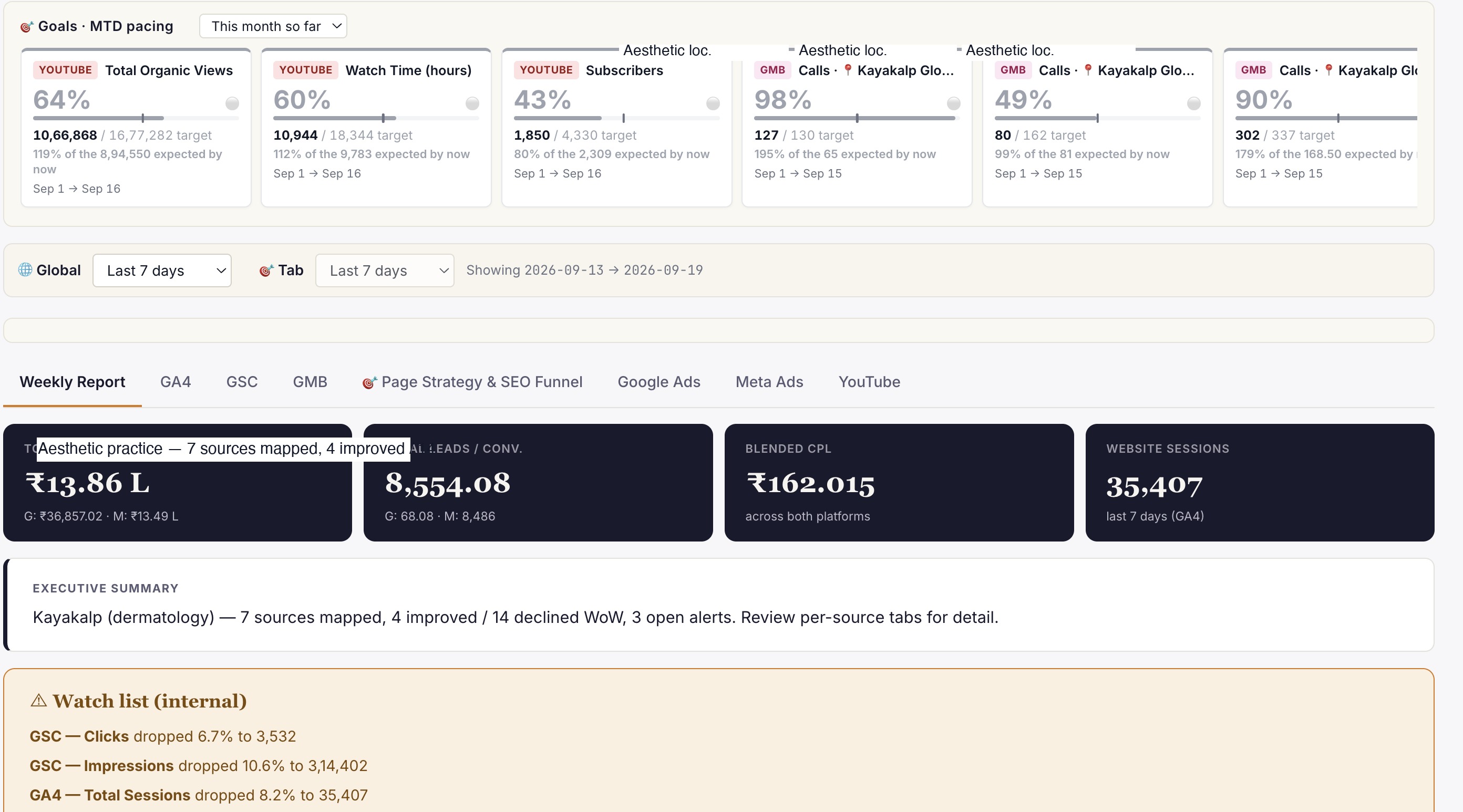
Live client dashboard. GSC, GA4, Google Ads, Meta Ads, IVR calls in one view. Login anytime, not monthly.
Phoenix
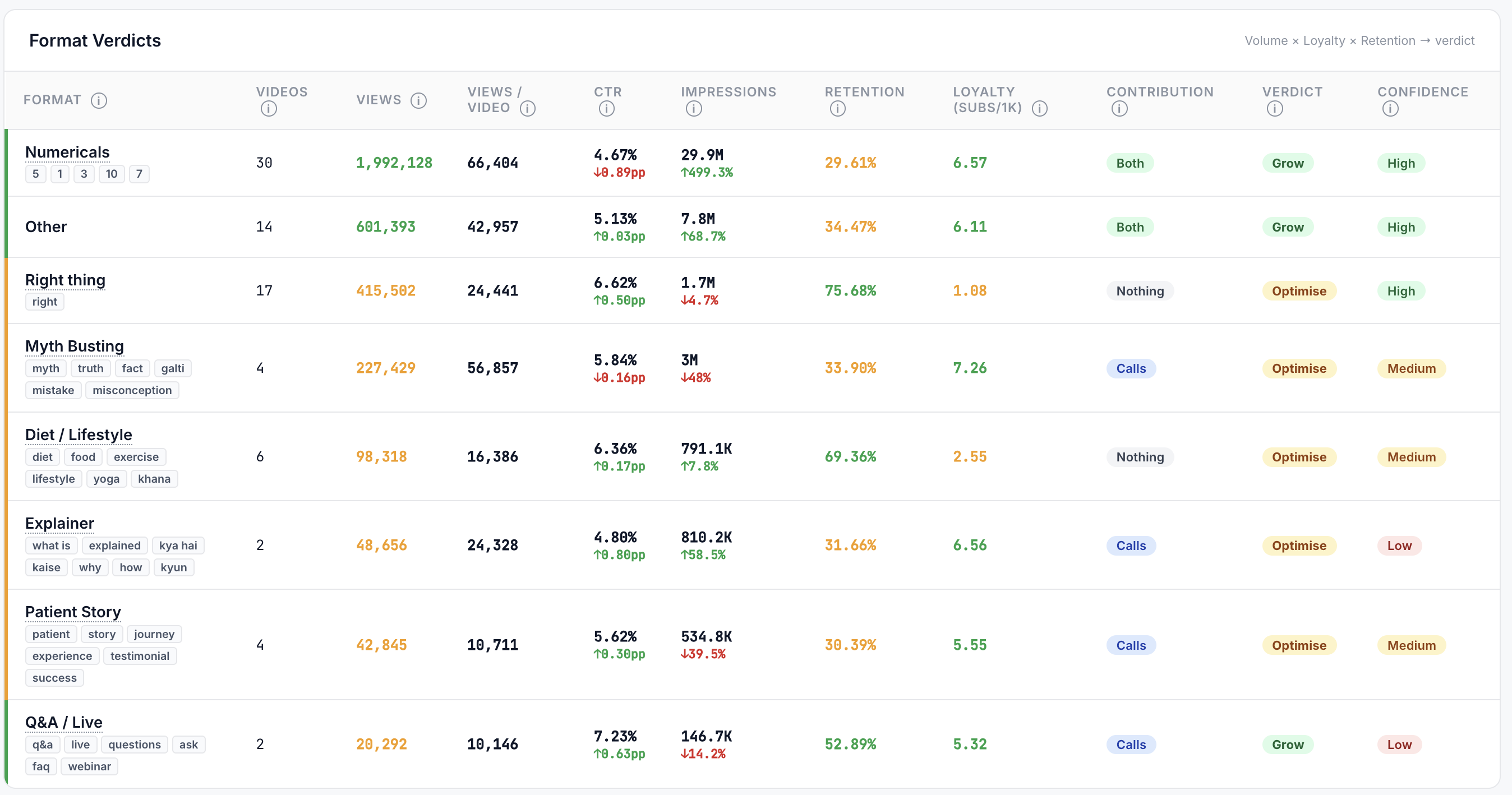
Clinic revenue intelligence over your PMS. Daily action queue: Prevent Loss, Maintain & Engage, Grow Revenue. Multi-centre rollout.
Or book a free 30-min audit to see all three in action on your account.
Healthcare brands
that already run on ICG.
A representative slice of the 150+ healthcare brands ICG has delivered for across India. Most engagements remain under NDA.


What ICG clients say · on video.
"They were able to get all my ideas and work with me over a period of three to four months and create this amazing website. I would..."
Need help operationalising this?
Every ICG service is healthcare-only, NMC + DPDP-aware, and built around the patient-research patterns that drive Indian healthcare growth in 2026.
Every practice welcome — packages from ₹20,000/mo.
Goals-Driven engagements · Performance-Linked Payout Models available
More from
ICG.
Five trends shaping Indian healthcare marketing through 2027: AI-first patient research, Conversions API adoption, ABDM discovery, the AEO w...
Healthcare AIO is the discipline of getting your clinic or hospital cited inside Google AI Overviews, ChatGPT and Perplexity answers — not j...
Conversational-search advertising places brand messages inside AI chat answers — ChatGPT, Perplexity, Copilot — rather than beside a results...
Stop guessing.
Book a Diagnostic.
30 minutes. Free. With the AI-powered healthcare-only marketing agency 150+ brands already run on. No slides, no pitch, no hard close.


