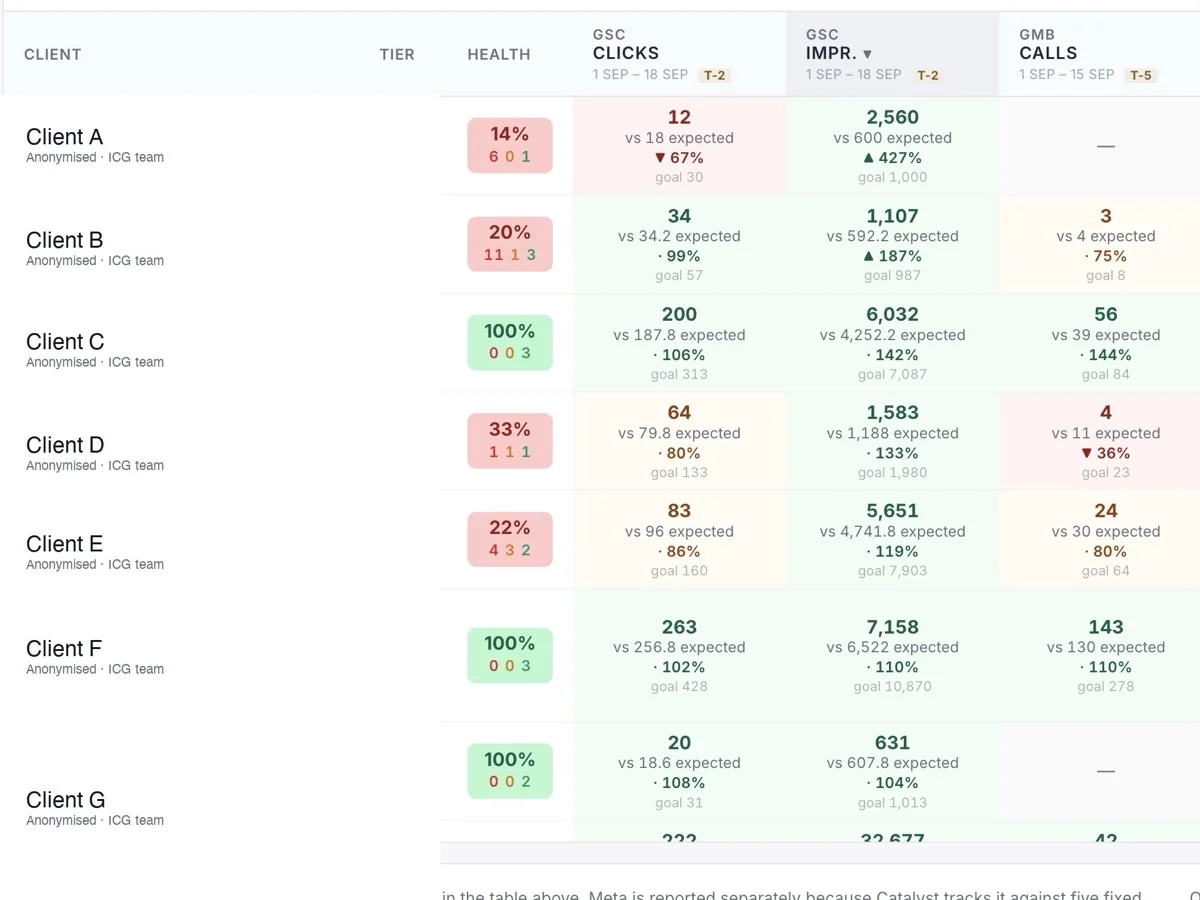
Aesthetics lead generation for Dallas practices that are done being disappointed by generic agencies
Ichelon Consulting US is a Dallas-headquartered performance marketing team for aesthetic practices whose surgeon or medical director already trusts their clinical outcomes — and now needs the pipeline to match. We do lead generation the way a growth team inside a top-quartile aesthetic group would run it: HIPAA-scoped GA4, offline-conversion attribution back to booked visits and cash collected, CPQL benchmarks defended weekly, and a compliance envelope wired into the ad-review flow instead of taped on after launch.
- Dallas aesthetic practices — Highland Park, Preston Hollow, Uptown, Park Cities, Frisco, Plano — run one of the hottest cosmetic auctions in the American South. A lead-gen program that does not price the auction correctly by submarket burns 20–40% of every dollar.
- Ichelon Consulting US runs a HIPAA-scoped, TX Medical Board Rule 165.5-safe, TCPA-clean lead generation stack: Google Search + LSA, Meta and Instagram inside the Personal Attributes policy, YouTube pre-roll for consult-driving, local SEO for high-intent aesthetic queries, offline-conversion attribution back to booked visits.
- CPQL benchmarks Dallas: injectables $40–$120, laser $55–$180, body contouring $180–$450, plastic surgery consult $120–$500. Practice offer, submarket, and provider trust markers all move the number.
- Retainers start from $499/month, custom-scoped to your goals, with Goals-Driven engagements and Performance-Linked Payout Models available. Media pass-through, scoped separately.
- Dallas, Texas LLC
- 10-person US client team · Central Time (CST)
- 25+ US healthcare clients
- BAA signed with every client
- HIPAA compliance training across client and delivery teams
- Contracts and invoices in USD
-
 Primary Care · North Dallas, TXCase study →
-
 MedSpa · North Dallas, TX
-
 Skin Care · Beverly Hills, CA
-
 Dental · Christiansburg, VACase study →
-
 Pediatrics · Blacksburg, VACase study →
-
 Pediatric Dentistry · Blacksburg, VACase study →
-
 Dental · Roanoke, VACase study →
-
 Functional Medicine · Telehealth · USACase study →
“They were able to get all my ideas and work with me over a period of three to four months and create this amazing website. It's super customized, very modern, and it incorporates all the elements that I had wanted — the patient portal, nice pictures, a very interactive website, patient reviews. I would highly recommend their company to anyone who wants to make an excellent website.”
Why most Dallas aesthetic practices are stuck below their real lead ceiling
Every Dallas aesthetic practice we scope has already been through at least one generic agency — usually two or three. Ad accounts full of leftover audiences, GA4 property with PHI leaking into three different pixels, offline conversions never uploaded, CPQL reported by "leads" that were never actually qualified past the initial form. The surgeon is a strong operator. The clinical outcomes are excellent. The practice is stuck because the funnel is instrumented wrong.
Under-performance in Dallas aesthetics almost always comes down to four failures compounding at the same time:
- Submarket auction blindness. An agency running Highland Park CPCs the same as Bishop Arts CPCs is losing 30–60% of the budget in the wrong zip codes. Highland Park, Preston Hollow, and University Park run a substantially hotter auction than the DFW average — and the buyers there convert at a substantially higher lifetime value. Bidding flat kills both sides of the trade.
- Creative built by a general-purpose team. Aesthetic buyers detect generic creative instantly. Stock photography, "book your consultation" hooks, and generic before/after collages produce clicks that never book. The creative library has to be built for aesthetic-buyer attention economics — high-craft, native-feeling, provider-forward.
- Attribution that stops at the form fill. The metric that matters is booked visits and cash collected — not form fills. A form fill that never books is a leak, not a win. If offline conversions are not being uploaded from the practice management system back into the ad platforms weekly, the algorithm is optimizing toward the wrong signal.
- Compliance envelope ignored until an issue surfaces. Rule 165.5 on before/after and testimonials, HIPAA on tracking, TCPA on SMS and outreach — every one of these can cost the practice more than a year of ad spend if it goes wrong. Building compliance into the ad-review flow costs one hour a week. Fixing it after a complaint costs a settlement.
The lead-gen program does not scale until all four are fixed at the same time. Fixing one, one at a time, produces incremental gains that regress as soon as the auction shifts. Fixing all four at once resets the practice's CPQL floor and CAC ceiling in the same quarter — and that is when the funnel gets defensible.
The six-layer envelope every Dallas aesthetics lead-gen program runs inside
Compliance is not a legal review that happens after the campaign launches. It is a specification the creative is written to and the analytics is instrumented against. Every layer below is enforced at the ad-review level and re-scoped whenever a regulator issues updated guidance.
HIPAA and the OCR tracking-tech guidance
The 2022 OCR Bulletin and its March 2024 update treat identifiable event data tied to condition or provider information as PHI when it is sent to a third-party analytics or ad platform. For an aesthetic practice, a URL like /services/mommy-makeover or /treatments/laser-hair-removal-preston-hollow combined with a Meta CAPI event carrying an IP address, hashed email, or cookie ID is a PHI transmission unless the third party is under a BAA. Google, Meta, and TikTok do not sign BAAs on standard ad infrastructure. The scope answer is a PHI scrub across GA4, Google Ads enhanced conversions, Meta CAPI, TikTok Events API, session-recording tools, chat widgets, and any HIPAA-exposing embed on the practice website.
Texas Medical Board Rule 165.5 — before/after and testimonial audit trail
Rule 165.5 requires written patient consent for every image and testimonial used in advertising, disclosure of atypical results, disclosure of compensation for endorsements, images that reasonably represent actual outcomes, and content current enough to reflect the physician's present standard of care. Ichelon Consulting US maintains a per-asset audit trail linking every image and testimonial in circulation to its signed consent, the disclosure state, and the physician on record. A missing consent removes the asset from rotation until re-consented; a consent expiry triggers a re-consent request.
Texas Medical Board Rule 165.1 — false, deceptive or misleading language
Rule 165.1 prohibits false, deceptive or misleading communication including superiority claims without objective evidence, implied guarantees, and unverifiable "top-rated" or "leading" framing. This shapes ad headlines, meta descriptions, landing page hooks, and organic content voice. The discipline is achievable without losing conversion power — the aesthetic buyer trusts specificity more than superlative anyway.
FDA on aesthetic device and injectable claims
Aesthetic device advertising has to stay inside the FDA-cleared indication for each device. Injectable claims stay inside the on-label indication unless the practice can defend the off-label context clinically. Ichelon Consulting US's creative review flags language that skates on-label boundaries and reframes it inside the FDA-safe envelope. A separate FDA-endorsement-rules explainer for med spa marketing is linked below.
FTC endorsement guides on influencers and reviews
Every Dallas influencer collaboration, staff-referred client story, or incentivized Google review triggers the FTC Endorsement Guides. Material connection disclosure, honest depiction of results, and truthful representation of the endorser's experience are all in scope. We do not run influencer or review-incentive programs without a compliant disclosure structure baked into the campaign contract.
TCPA and CAN-SPAM on outreach and nurture
Lead-form language, appointment-reminder SMS, patient-education drip, and reactivation outreach all scoped against the TCPA rule set including the FCC's 2024 revocation-of-consent updates. Statutory damages of $500 to $1,500 per violating message make this the highest-cost compliance error a Dallas aesthetic practice can make. Email drip inside the CAN-SPAM envelope. Nurture flows written for consent-clean opt-ins, not scraped lists.
Meta Personal Attributes policy for aesthetic advertising
Meta's Personal Attributes policy prohibits ad copy that asserts or implies knowledge of the viewer's personal characteristics — including physical appearance, weight, age, medical condition, and beauty concerns. "Struggling with double chin?" fails. "Highland Park Kybella packages, Tuesday appointments available" passes. Every ad hook is rewritten against the policy before Ad Library scan.
TikTok aesthetic-advertising restrictions
TikTok's aesthetic-services advertising policy restricts before/after photography, restricts language on injectables and surgical procedures, and requires a landing page inside the platform's scope. TikTok is a practice-brand and awareness channel for Dallas aesthetic practices, not a surgical-procedure conversion channel. Scope reflects that.
Every paid and organic channel, scoped for aesthetic buyer economics
Google Search + LSA
Branded and non-branded intent tightly geo-fenced. Local Service Ads where the practice qualifies. Enhanced conversions with hashed first-party identifiers only. Offline conversion imports on booked-visit and cash-collected triggers so the algorithm optimizes toward revenue, not form fills.
Meta + Instagram inside the Personal Attributes policy
Advantage+ and interest-plus-context targeting. HIPAA-scoped audience construction, TCPA-safe lead-form consent, Rule 165.5-safe before/after with disclosure. Ad Library monitoring on every scoped competitor so creative fatigue is caught before CPQL climbs.
YouTube pre-roll for aesthetic consults
Consult-driving pre-roll on aesthetic-buyer intent surfaces. Educational-first framing on injectables, before/after with disclosure on laser and body contouring, provider-forward on surgical-adjacent consideration. Custom audiences on the practice's own YouTube subscribers and site visitors.
TikTok for practice-brand awareness
Practice-brand and awareness content inside the TikTok aesthetic-advertising envelope. Provider POV, treatment day, and behind-the-scenes content that carries into search and Meta later. Not a surgical-procedure conversion channel — scope reflects that.
Local SEO for aesthetic queries
Service × neighborhood topic map. Long-tail programmatic coverage for injectable, laser, body contouring, and surgical-adjacent queries at the submarket level. Content briefs optimized for AI Overview and PAA citation. Google Business Profile density per address.
CRM + attribution + nurture
GA4 with PHI-safe event names, offline-conversion uploads on booked visits and cash collected, call tracking on HIPAA-safe platforms, weighted attribution across research surfaces (RealSelf, Instagram, YouTube education). TCPA-safe SMS and CAN-SPAM-safe email nurture through the practice CRM.
What we found when we studied 555 US med spas on Google
Patients praise the care almost without exception. The one area where complaints outnumber praise is booking and communication, and that is where most med spas can win.
City figures from 34 med spas; smaller samples swing more, so read them as typical rather than exact.
Full study · 555 US med spas across 20 metros · roughly ±4% nationally · review velocity and themes from a 115-spa subsample · verified against raw data.
Attribution for high-consideration cosmetic decisions, without leaking PHI
Cosmetic decisions inside the $2,500-and-up ticket range — body contouring, plastic surgery, aesthetic packages — have a 3 to 12 week consideration window, cross five to nine research surfaces, and touch multiple devices. Last-click attribution kills the top-of-funnel channels that actually earn the sale. Every dollar credited to branded search that was earned by a YouTube pre-roll six weeks earlier is a dollar mis-invested next month.
The scope answer is a HIPAA-scoped, PHI-safe attribution stack with three components running in parallel:
- GA4 with PHI-safe event names. Event names and URL parameters that never carry condition, procedure, or provider-service data. Service-name query parameters stripped at the tag manager level. Deep-link URLs replaced with pixel-safe wrappers. Every custom event audited before it hits the pipeline.
- Offline-conversion uploads from the practice management system. Booked visits, kept visits, and cash-collected revenue uploaded weekly (or daily where the PMS allows) into Google Ads and Meta on the hashed first-party identifiers the patient provided at booking. The algorithm learns to optimize toward booked visits and revenue, not form fills that never show.
- Call tracking on a BAA-covered platform. Every call routed through a HIPAA-safe number pool with a BAA in place. Call transcripts scanned for qualification signals and outcome, mapped back to the source campaign and creative. Voicemail-only leads scored differently from conversation-length calls.
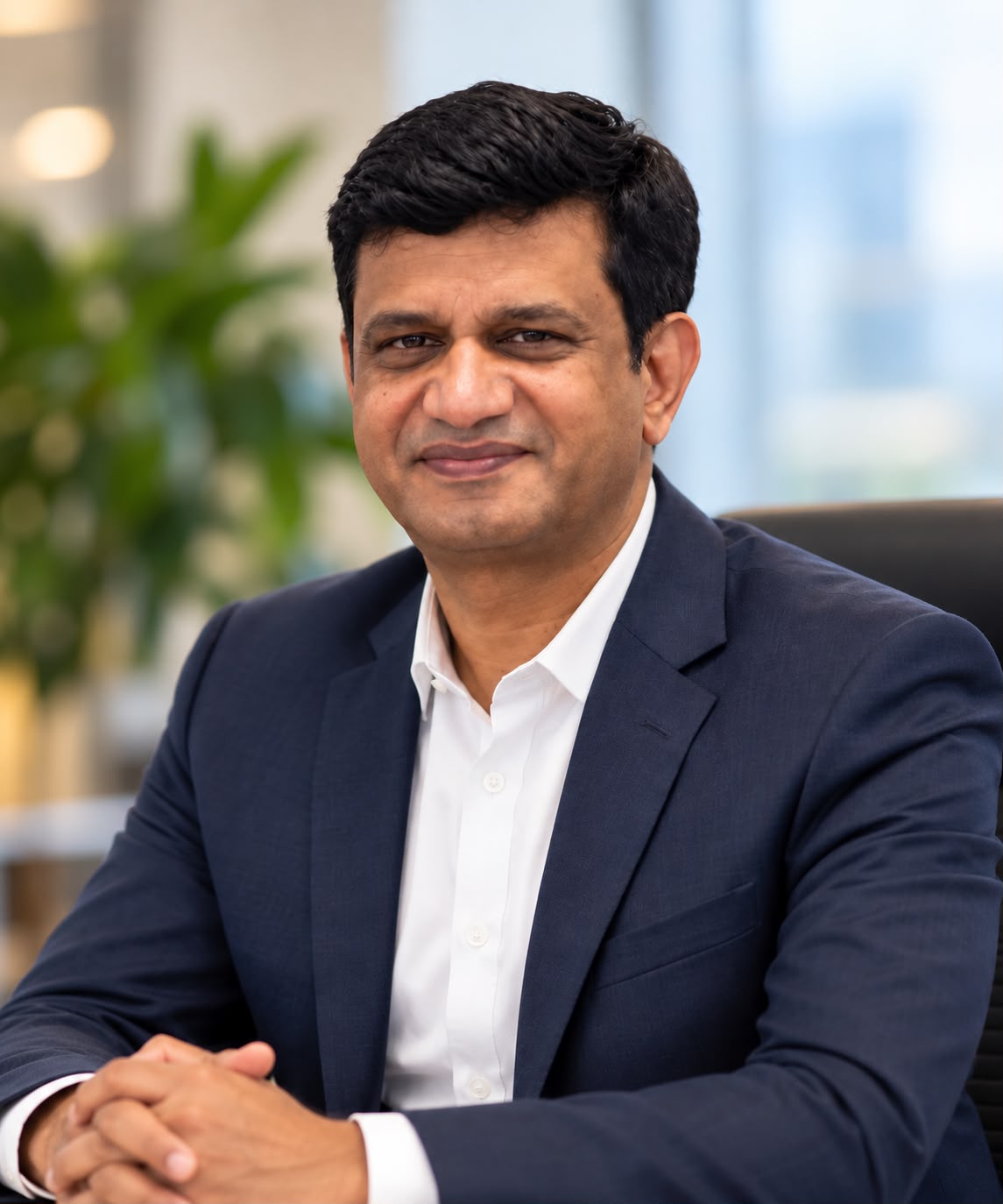
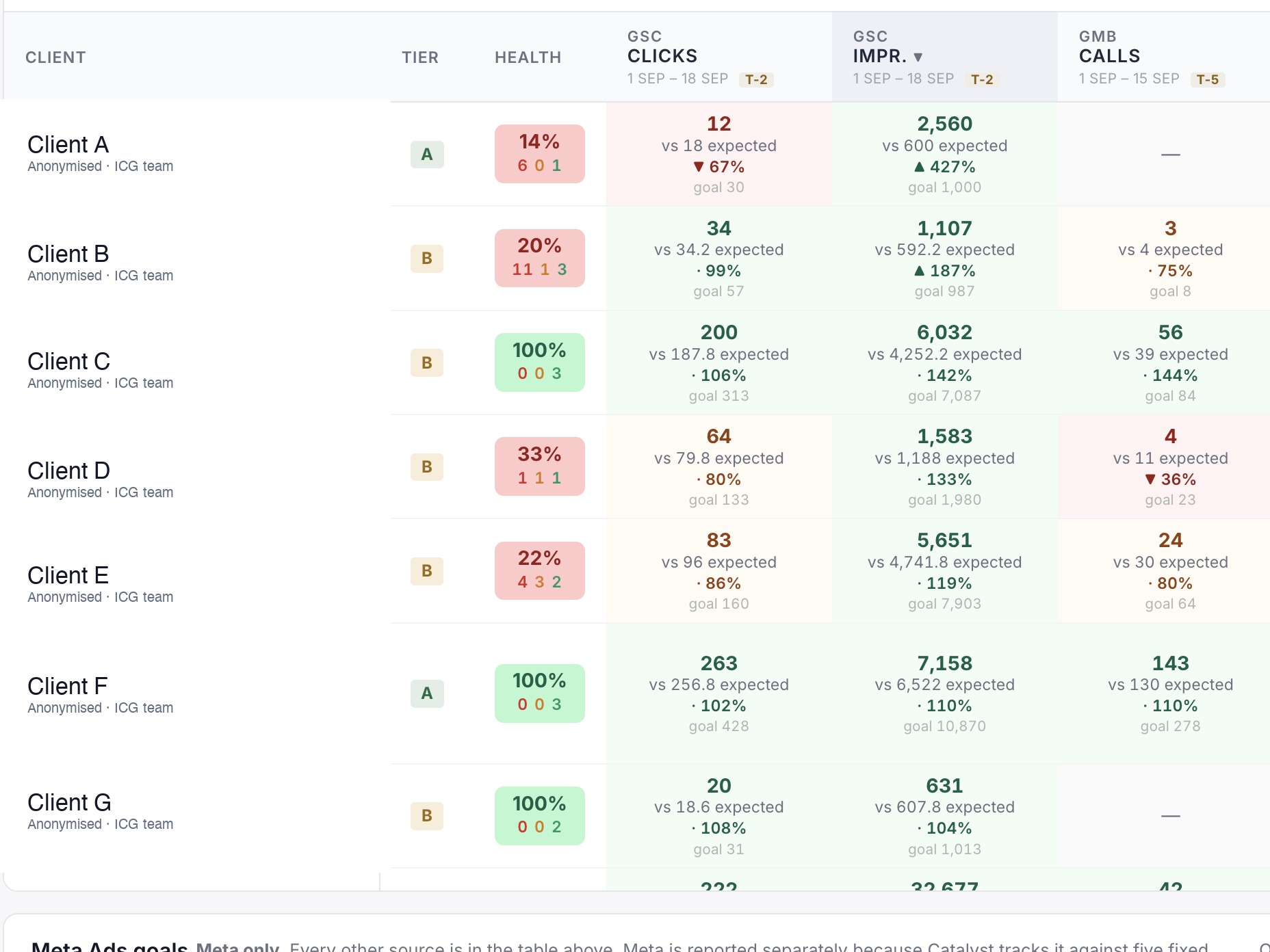
The output is a weekly CPQL and cost-per-booked-visit report by campaign, creative, and submarket. Not a dashboard that says "500 leads generated." A report that says "38 booked visits at $217 cost per booked visit, 14 from Highland Park at $301, 12 from Preston Hollow at $268, 12 from Uptown at $158, cash collected $47,800, CAC:LTV 1:8.2." That is the report the surgeon actually reads.
Dallas aesthetics CPQL benchmarks by vertical
Numbers below are stabilized Dallas benchmarks after a properly scoped account has been running for 8 to 12 weeks. First-eight-weeks numbers run 30–80% above the stabilized range while the algorithm learns the offline-conversion signal. Highland Park, Preston Hollow, and University Park submarkets consistently run at the top of each range; DFW-wide averaged campaigns run mid-range; Frisco and Plano typically run at the low end.
| Vertical | Qualified lead type | CPQL range |
|---|---|---|
| Botox / Dysport / Xeomin | Consult-booked or first-visit-booked | $40 – $120 |
| Laser (hair, skin resurfacing, IPL) | Consult-booked | $55 – $180 |
| Injectable packages (multi-syringe) | Consult-booked, package intent | $75 – $200 |
| Body contouring (CoolSculpting, EmSculpt, RF) | Consult-booked | $180 – $450 |
| Plastic surgery consult | Consult-booked, surgical intent | $120 – $500 |
| Medical weight loss (GLP-1) | Consult-booked | $60 – $180 |
| PDO threads / non-surgical rhinoplasty | Consult-booked | $95 – $260 |
| Skin (medical facial, hydrafacial, chemical peel) | First-visit-booked | $35 – $95 |
The important number is not CPQL — it is CPQL divided by close rate divided by average ticket. A $180 CoolSculpting CPQL at a 40% close rate and a $2,400 average package equals a $450 CAC on $2,400 revenue — a healthy 1:5+ ratio. A $60 Botox CPQL at a 65% close rate and a $520 average visit equals a $92 CAC on $520 — also healthy, but only defensible if the patient ascends to filler or laser inside twelve months. We report on CAC:LTV, not CPQL alone.
DFW submarkets we price the auction for individually
The DFW aesthetic auction is not one auction — it is a set of overlapping submarket auctions with 30–60% CPC variance between them. Bidding one flat rate across the metroplex overpays in the low-density submarkets and underdelivers in the premium submarkets. Every campaign is scoped by submarket, seasonally adjusted, and rebalanced against Ad Library signals monthly.
Retainer scope for Dallas aesthetics lead-gen engagements
Retainers start from $499/month, custom-scoped to your goals, with Goals-Driven engagements and Performance-Linked Payout Models available. Media spend passes through and is scoped separately. No performance bonuses or CPA-based fees that push the account toward loose qualification — the incentive alignment sits inside the retainer plus a clean weekly CAC:LTV report.
- Boutique single-provider aesthetic practice. One primary paid channel plus SEO, offline-conversion attribution, monthly reporting, quarterly strategy review. Media pass-through typically $3,000 to $12,000/month.
- Two-to-three location aesthetic group. Full paid stack (Google + Meta + LSA + selective YouTube), local SEO, GBP density per location, offline-conversion attribution, weekly CPQL and CAC:LTV reporting.
- Multi-location aesthetic platform or PE-backed group. Full paid stack, per-location P&L attribution, per-provider content and paid-social scoping, CRM integration, monthly executive review.
Dallas aesthetics lead generation — common questions
What is a realistic Dallas aesthetic CPQL for our practice?
Injectables (Botox and filler): $40 to $120 per qualified lead in most Dallas submarkets, closer to the high end in Highland Park and Preston Hollow where the auction runs hot. Laser and energy device: $55 to $180. Body contouring: $180 to $450. Plastic surgery consult: $120 to $500. Practice-specific offer, provider trust markers, and neighborhood submarket all move the number. First-eight-weeks CPQL runs 30–80% above the stabilized range while the algorithm learns the offline-conversion signal.
How do you structure attribution for high-consideration cosmetic procedures?
HIPAA-scoped GA4 with PHI-safe event names, offline-conversion uploads from the practice management system back into Google Ads and Meta on booked-visit and cash-collected triggers, call tracking on a BAA-covered platform, and a weighted attribution model that credits the first touch, the last touch, and the assisting research surfaces (RealSelf, Instagram grid, YouTube education, Google Business Profile). Last-click alone kills the top-of-funnel channels that actually earn the sale.
How do we scale ad spend on Meta without leaking PHI?
Two rules: no procedure or condition names in URL slugs surfaced to Meta CAPI, and no hashed identifier tied to a condition-specific page. We strip service-name query parameters at the tag manager level, replace deep-link URLs with pixel-safe wrappers, and audit every CAPI event before it hits the pipeline. Scale then comes from creative volume and audience width, not from over-signaling that puts the practice under HIPAA and OCR bulletin exposure.
What is the Meta Personal Attributes rule and how does it affect aesthetic ads?
Meta prohibits ad copy that asserts or implies knowledge of the viewer's personal characteristics — including physical appearance, weight, age, medical condition, and beauty concerns. "Are you unhappy with your jawline?" fails. "Preston Hollow tox packages, Tuesday appointments" passes. We rewrite every hook against the policy before Ad Library scan and before human review. It is one of the top three reasons aesthetic accounts get flagged.
Does TikTok advertising work for Dallas aesthetic practices?
Yes, with tight scope. TikTok's aesthetic and cosmetic-procedure advertising policies restrict before/after photography, restrict language on injectables and surgical procedures, and require a landing page inside their scope. We run TikTok for practice-brand awareness and appointment-driving content that stays inside the platform's aesthetic-services envelope — not for surgical-procedure conversion. Traffic that seeds Search and Meta later, not a primary conversion channel.
How long before we see qualified leads flow at scale?
Google Search and LSA typically produce qualified leads inside week two on a properly scoped account. Meta paid social hits a stable CPQL by weeks four to six once the creative library and audience feedback loop mature. YouTube pre-roll for consult-driving contributes measurably by month three. SEO for local aesthetic queries starts moving in months three to six depending on domain history and content depth.
Scope your Dallas aesthetics lead-gen engagement
Book a 30-minute scoping call with the Leadership Team, email Santosh (Dallas HQ) directly, or WhatsApp us. Central Time hours, same-day response where we can.
Adjacent Dallas aesthetic hubs and compliance references
-
Primary Care · North Dallas, TXCase study →
-
MedSpa · North Dallas, TX
-
Skin Care · Beverly Hills, CA
-
Dental · Christiansburg, VACase study →
-
Pediatrics · Blacksburg, VACase study →
-
Pediatric Dentistry · Blacksburg, VACase study →
-
Dental · Roanoke, VACase study →
-
Functional Medicine · Telehealth · USACase study →
“They were able to get all my ideas and work with me over a period of three to four months and create this amazing website. It's super customized, very modern, and it incorporates all the elements that I had wanted — the patient portal, nice pictures, a very interactive website, patient reviews. I would highly recommend their company to anyone who wants to make an excellent website.”
Performance marketing in the nine-stage patient journey
- 0Foundations
- 1Demand gen
- 2Capture
- 3Lead quality
- 4Lead mgmt
- 5Scheduling
- 6Show-up
- 7Conversion
- 8Retention
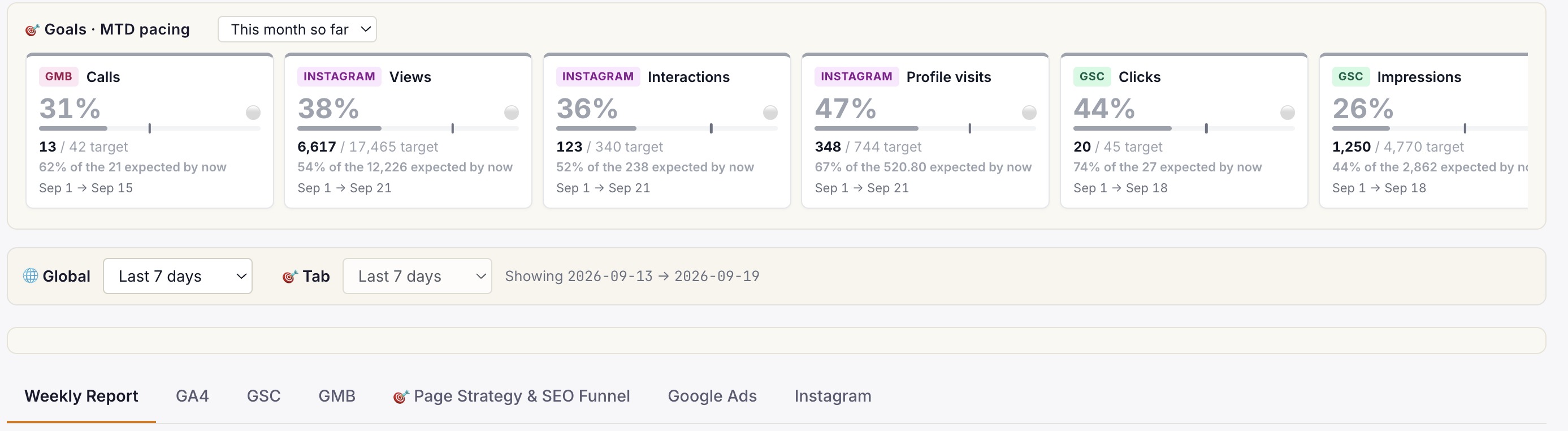
It spans demand generation and capture, with budget moved monthly toward whichever channel books visits at the lowest cost. Our own software runs the work, and every stage is reported against a monthly target on Ichelon Agency OS.
See all nine stages and the tool behind each one →