YouTube for telehealth and functional-medicine practices: turning education into consultations
A telehealth practice has no storefront and no map listing. Patients find it because they were searching for answers about their condition and came across a doctor who explained it clearly. For many functional-medicine and telehealth physicians, YouTube is where that happens. This guide shows how to build a channel that brings in consultations, not just views.

- For telehealth, education is the funnel. Patients who have watched you explain their condition arrive already trusting you.
- YouTube is a search engine. Topic choice, titles and structure decide whether a good video is ever found.
- Start from real patient questions, not what you want to talk about.
- Connect the channel to your website and booking, and answer the same questions on Google and in AI search.
- Stay within licensure (say which states you can treat patients in) and health-claim rules.
- Every practice welcome — retainers from $499/mo, Goals-Driven engagements, Performance-Linked Payout Models available.
- Dallas, Texas LLC
- US client team · Central Time (CST)
- 25+ US healthcare clients
- BAA signed with every client
- HIPAA compliance training across client and delivery teams
- Contracts and invoices in USD
-
 Primary Care · North Dallas, TXCase study →
-
 MedSpa · North Dallas, TX
-
 Skin Care · Beverly Hills, CA
-
 Dental · Christiansburg, VACase study →
-
 Pediatrics · Blacksburg, VACase study →
-
 Pediatric Dentistry · Blacksburg, VACase study →
-
 Dental · Roanoke, VACase study →
-
 Functional Medicine · Telehealth · USACase study →
“When I first approached Ichelon Consulting, my YouTube channel was stuck and despite my own efforts, it was not growing. They created a specific strategy which was based on SEO, and completely evaluating the channel, which worked great and has propelled our YouTube channel to new heights. Because of the channel growth, we have seen new patient consultations coming on a regular basis.”
Why video education works for telehealth practices
Local practices compete on location: the patient needs someone nearby. A telehealth or functional-medicine practice competes on trust. The patient could choose any doctor licensed in their state, and they are usually dealing with something complex and long-running, such as a thyroid condition, autoimmune disease, fatigue, gut problems or hormone issues. They research for weeks or months before booking.
YouTube fits that behavior. Patients search for their questions, watch doctors explain them and subscribe to the ones who make sense. By the time they book, they have spent hours with you through video. That is a stronger basis for a consultation than any ad.
But effort alone doesn't build a channel. Many physicians record good videos for months with little growth, because the videos answer questions nobody is searching for, carry titles nobody would type, or never link viewers to a next step.
What a stalled channel needed: Dr. Anshul Gupta, MD
Dr. Anshul Gupta, MD is a board-certified family medicine physician whose telehealth practice treats thyroid disease, Hashimoto's and chronic illness for patients across the United States. When he came to us, his YouTube channel was stuck despite his own efforts.
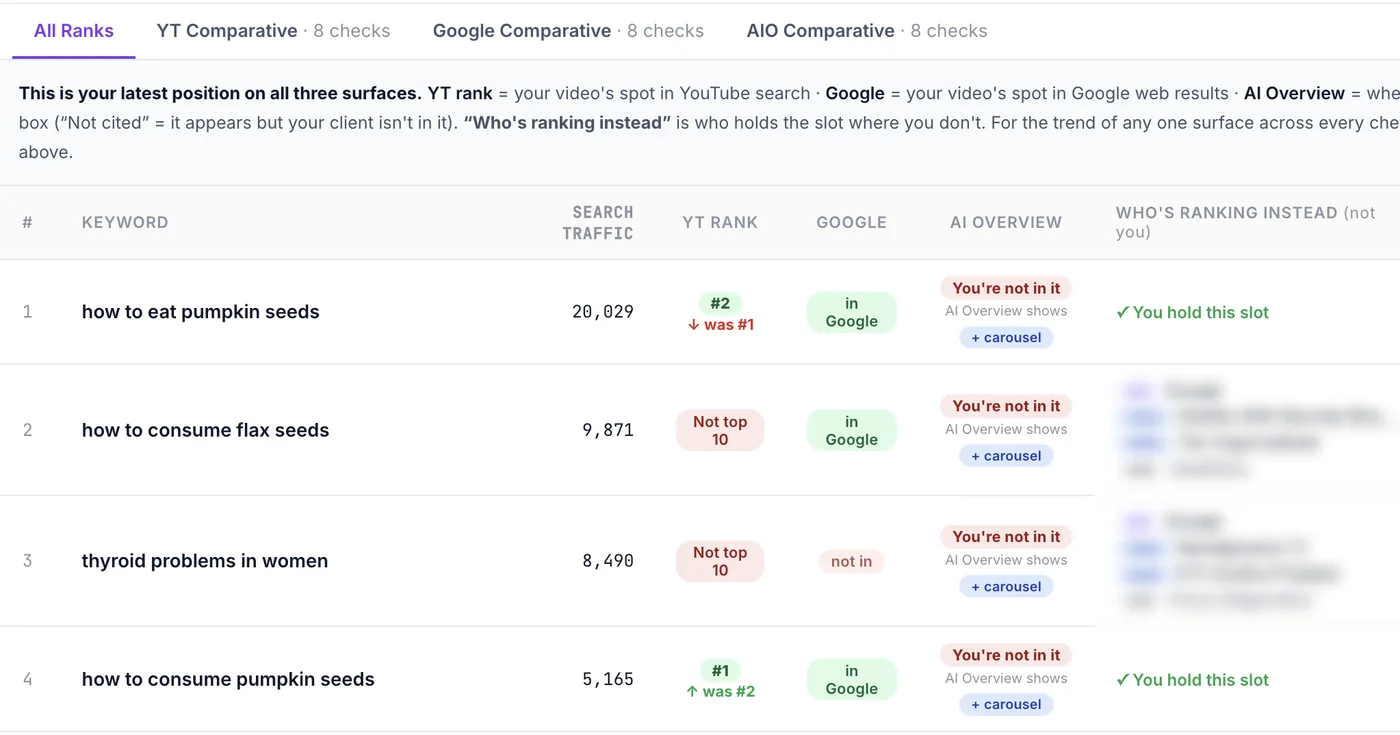
Rohit and Abhash reviewed the channel and identified the gaps. Sabhyaa, our head of projects, then led the team through a complete evaluation of the channel and an SEO-led strategy: which questions patients search for, how videos are titled and structured so they can be found, and how the channel and website support each other. Alongside YouTube, we run SEO for his website and AI-search optimization.
In his own words: "Because of the channel growth, we have seen new patient consultations coming on a regular basis."
The lessons from that work shape the steps below.
Eight steps to a channel that brings in consultations
- Evaluate the channel honestly. Which videos brought subscribers and website visits? Which were ignored? What are viewers searching for when they find you? YouTube Studio's analytics answer most of this. Start from evidence, not guesses.
- Build a topic list from real patient questions. Collect the questions patients ask in consultations, the questions people type into YouTube and Google about your conditions ("is turmeric bad for hypothyroidism?", "fruits for thyroid health", "Hashimoto's fatigue"), and the questions in your comments. Prioritize questions with real search demand that you can answer well.
- Title videos the way patients search. A title should read like the question or the answer: "Is Turmeric Safe With Hypothyroidism? A Doctor Explains". Clever or vague titles hide good videos. Thumbnails should be clear and honest, not sensational.
- Structure every video. Answer the question early, then go deeper. Use chapters so viewers can jump to what they need. Write descriptions that summarize the answer, include a link to the related article on your website and a link to book.
- Cut Shorts from long videos. Take the clearest 30–60 seconds from each long video and publish it as a Short that points to the full explanation. Shorts reach new viewers. Long videos turn them into patients.
- Connect the channel to your website. Embed each video in a matching article that answers the same question in writing. This helps Google and AI assistants understand your expertise and gives visitors who prefer reading a way in.
- Give viewers a clear next step. In the video, the description and the pinned comment: a free guide, a newsletter or a consultation booking page. State which states you can treat patients in.
- Measure consultations, not views. Track website visits from YouTube, consultation requests where the patient mentions YouTube, and which videos drive them. Ask every new patient how they found you.
YouTube, Google and AI assistants: one library of answers
Patients increasingly ask AI assistants and read AI Overviews on Google before they watch a video or visit a site. These systems draw on content that answers questions clearly and comes from credible sources. A physician who has answered the same patient question in a video, a written article and a clear FAQ is well placed to be surfaced across all three.
On YouTube
Question-led titles, chapters, accurate captions and descriptions that summarize the answer.
On your website
An article per video, with the video embedded, a clear written answer near the top, your credentials and a review date.
For AI search
Direct answers, clear headings, structured data and consistent information about who you are and what you treat.
Rules and good practice for physician channels
- Licensure. Physicians generally need a license in the state where the patient is located at the time of care. Say which states you serve and check location at intake.
- Health claims. Don't promise cures or specific outcomes. The FTC expects health-related advertising claims to be backed by competent and reliable scientific evidence, and state medical boards regulate physician advertising. See our state medical board advertising guide.
- Supplements and products. If you recommend or sell products, disclose any financial relationships clearly in the video and description, as the FTC Endorsement Guides require.
- Patient stories. Don't discuss identifiable patients without written HIPAA authorization. Composite or hypothetical examples should be labeled as such.
- Educational disclaimer. A short, clear note that videos are educational and not individual medical advice.
- Comments. Don't give individual medical advice in replies. Point people to a consultation or their own doctor.
- YouTube's own policies. YouTube has specific policies on medical misinformation. Stay close to established evidence and cite sources where you can.
Making it sustainable
The biggest risk to a physician's channel is burnout. Batch-record several videos in one session, let the team handle editing, titles, descriptions, Shorts and website articles, and keep the doctor's time for what only the doctor can do: explaining clearly and honestly. That division of labor is how our team supports channels through YODA, our YouTube system for doctors.
Related pages from the US team
Case study: Dr. Anshul Gupta, MD
How an SEO-led strategy revived a stalled channel for a nationwide telehealth functional-medicine practice.
YouTube marketing for US practices
Our YouTube service for US healthcare practices.
YODA · YouTube for doctors
Our AI-native YouTube system for healthcare channels.
Healthcare marketing agency USA
How Ichelon Consulting US works with practices across the country.
Every practice welcome — Goals-Driven engagements from $499/mo
We benchmark your last 90 days, agree monthly goals with you, and track them live on Ichelon Agency OS with a report every Monday. Performance-Linked Payout Models are available. Our US leadership is based in Dallas, and strategy calls run in US business hours.
Common questions
Is YouTube worth it for a telehealth or functional-medicine practice?
For many, yes. Patients in these fields often research their condition at length before choosing a doctor, and video lets them hear how you think and explain. A channel built around the questions they search can bring a steady flow of consultation requests from people who already trust you. Our client Dr. Anshul Gupta, MD describes seeing new patient consultations on a regular basis because of his channel's growth.
How often should a doctor post on YouTube?
Consistency matters more than volume. A realistic schedule you can keep, such as one well-researched long video a week or every two weeks plus a few Shorts cut from it, usually beats bursts of activity followed by silence. Batch-recording several videos in one session makes this manageable for a busy physician.
Should we make long videos or Shorts?
Both, for different jobs. Long videos answer a question in depth and are more likely to be found through search and to convert viewers into patients. Shorts reach new viewers and work well as teasers that point to the full explanation. Many channels cut several Shorts from each long video.
Can a telehealth doctor treat patients from any state who find them on YouTube?
Generally, physicians need to be licensed in the state where the patient is located at the time of the visit, with some exceptions and interstate arrangements. Your channel will reach people everywhere, so state clearly on your website and in video descriptions which states you can see patients in, and make intake check the patient's location.
What should doctors avoid saying in YouTube videos?
Avoid promising cures or specific outcomes, making claims you can't support with evidence, giving individual medical advice to viewers, and discussing identifiable patients without written authorization. Add a short note that videos are educational and not a substitute for individual care. The FTC expects health claims in advertising to be supported by competent and reliable scientific evidence.
A note on this guide: it explains marketing practice, not legal advice. Rules on privacy, advertising and insurance change and vary by state, so confirm anything compliance-related with your own counsel.
Is your channel stuck?
A 30-minute benchmarking call with the US team. We'll review your channel, titles and website connection and tell you what we'd change first.
YouTube and video in the nine-stage patient journey
- 0Foundations
- 1Demand gen
- 2Capture
- 3Lead quality
- 4Lead mgmt
- 5Scheduling
- 6Show-up
- 7Conversion
- 8Retention
It works in demand generation: videos built on patient questions, tracked on YouTube, Google and AI Overviews. Our own software runs the work, and every stage is reported against a monthly target on Ichelon Agency OS.
See all nine stages and the tool behind each one →