


DCGI and UCPMP 2024 — pharma ChatGPT Ads compliance
Pharma brands entering ChatGPT Ads in India carry a compliance layer static ad formats never had to solve at this granularity: conversational fragments that recombine on the fly, a prescription-versus-OTC boundary that has to hold across every possible turn, and an approval-communication discipline lifted straight from UCPMP 2024 and DCGI labelling norms. This page sets out what the rule actually requires, where conversational copy breaks it in practice, and the checklist ICG runs before any pharma ChatGPT Ads campaign goes live.
What the rule actually says
The Uniform Code for Pharmaceuticals Marketing Practices 2024, issued by the Department of Pharmaceuticals, is the operative framework for how pharmaceutical companies and anyone acting on their behalf — including a marketing agency buying media — may communicate about drugs, devices, and related services in India. Paraphrased from the code's core intent: promotional communication must be accurate, balanced, and substantiated by the approved product information; it must not mislead, either through direct claims or through omission; and any inducement dressed up as promotional content is out of bounds. The code sits alongside, not in place of, the Drugs and Cosmetics Act 1940 and the Drugs Controller General of India's approval process, which is where the specific indication, dosage, and patient population for any molecule gets fixed.
DCGI approval is the anchor point every claim has to trace back to. When a drug or device is approved, the label documents exactly what it can be said to do, for which population, at what dose. UCPMP 2024's clean-copy requirement and DCGI's approved-label boundary work together: UCPMP governs the tone and structure of the communication (no misleading superlatives, no unbalanced risk-benefit framing), while the DCGI approval governs the factual content (you can only say what the label supports). A claim can be UCPMP-compliant in tone and still be a DCGI violation if it references an indication the label doesn't cover — and the reverse holds too, a factually label-accurate claim delivered with consumer-inducement framing still breaks UCPMP.
The third boundary that matters here, and the one most agencies underweight, is the prescription-versus-OTC line. Schedule H, H1, and X drugs cannot be advertised directly to consumers in India under any circumstance — this predates UCPMP 2024 and sits in the Drugs and Cosmetics Rules directly. OTC and Schedule K products can be advertised to consumers but still fall under UCPMP's clean-copy discipline. A ChatGPT Ad, because it can address a consumer conversationally and personally, sits closer to the consumer-communication end of the spectrum than a trade publication ad — which raises the stakes on getting the Rx/OTC classification right before a single word of copy is written.
How it applies to conversational-ad copy specifically
A Google Search ad or a Meta banner is a single fixed asset: one headline, one description, reviewed once, approved once, and it either runs as approved or it doesn't run. A ChatGPT Ad is structurally different. The sponsored response is assembled from a small library of copy fragments — an opening framing line, a set of factual product statements, a closing prompt — that the model can recombine depending on how the conversation unfolds. That recombination is the entire point of the format: it lets the ad feel responsive to the user's actual question rather than reciting a fixed script. It is also exactly where UCPMP compliance gets harder to guarantee, because a review that only checks each fragment in isolation can miss combinations that, put together, cross a line no single fragment crosses alone.
Take a concrete structural risk: fragment A states an approved indication accurately and neutrally. Fragment B, written for an unrelated conversational branch, includes a comparative phrase like "more effective option." Neither fragment alone is necessarily a violation in isolation — but if the model combines them in a single response because a user's question touched both threads, the assembled answer now makes an unsubstantiated superiority claim tied to a specific molecule. Static-ad compliance review, built around approving one finished asset, has no natural process for catching this. Conversational-ad compliance review has to test plausible fragment combinations, not just individual fragments — which is a materially bigger review surface than pharma marketing teams are used to budgeting for.
The second structural difference is tone-matching. ChatGPT Ads read as part of a natural-language answer, which pushes copywriters toward a conversational register — shorter sentences, more direct address, occasionally a rhetorical question. That register is precisely where UCPMP's balanced-communication requirement gets tested, because conversational phrasing naturally compresses nuance. "This works well for most patients" is a compressed, friendlier version of a risk-benefit statement that a static ad's mandatory fine print would normally qualify — but a ChatGPT Ad has no fine-print real estate in the same sense, so the qualification has to live inside the sentence itself, or get pushed to the landing page with the ad copy carrying an honest, unqualified statement that doesn't need the caveat to remain accurate.
The third difference is audience ambiguity. A pharma trade publication ad has a known, professional audience — HCPs reading a medical journal. A ChatGPT Ads placement, even one targeted at a professional intent bucket, can surface to a consumer who phrased a question in professional-sounding language. UCPMP's rules on consumer-directed promotion of Rx products don't bend based on who the advertiser intended to reach; they apply based on who could plausibly see the ad. That means Rx-molecule ChatGPT Ads copy has to be written defensively — safe if a layperson reads it, not just safe if the intended HCP audience reads it — which is a stricter bar than most pharma digital teams have applied to intent-targeted programmatic before.
Common violations and how to avoid them
Working across pharma-adjacent accounts, the same handful of violation patterns show up repeatedly in early draft copy, before compliance review catches them. None of the examples below reference a real brand, molecule, or client — they're composite patterns drawn from category-wide review experience, anonymised deliberately.
A draft for a pain-management OTC product read "the fastest way to relieve your headache" — a comparative claim with no head-to-head trial data behind it. UCPMP requires comparative claims to be substantiated by evidence, not implied by adjective choice. The fix: replace comparative adjectives with label-sourced factual statements ("provides relief within [approved onset time], as per approved product information") that carry the same persuasive weight without the unsupported comparison.
A draft for a Schedule H antihypertensive included a closing line "ask your ChatGPT for where to buy" — functionally a consumer purchase nudge for an Rx drug, which is not permitted regardless of channel. The fix: Rx-molecule copy stays at corporate or therapy-awareness level ("learn about treatment options" routing to an HCP-directed or disease-education landing page), never a purchase or self-selection prompt.
A device approved for one diagnostic use had draft copy referencing a broader "screening" use case the DCGI approval didn't cover — a natural drift that happens when a copywriter generalises from the product's mechanism rather than its approved label. The fix: every factual claim in the copy library gets tagged against the specific line item in the approved label it traces to; anything untraceable is cut before it reaches media.
A draft opened with an alarming symptom description designed to surface against anxious searches, with the product mention arriving only in a later fragment — a pattern that reads as fear-based inducement rather than balanced information when a user only sees the opening fragment. The fix: every fragment that can stand alone as a user's first-seen response must itself carry balanced, non-alarming framing, not defer balance to a fragment the user might never reach.
The most common violation isn't in the copy itself — it's the absence of a documented review. A campaign that ran with only an informal Slack "looks fine" from a brand manager, rather than a logged medical-director or regulatory sign-off tied to the exact copy version pushed live, is exposed even if the copy itself would have passed review, because there's no record proving it was reviewed at all.
What "clean copy" looks like inside a ChatGPT Ad for this domain
Clean copy for a pharma ChatGPT Ad follows a consistent pattern: state what the approved label supports, in plain language, without comparative or superlative framing, and route any deeper interest to a landing page or HCP channel rather than a purchase action when the product classification requires it. Worked example, OTC analgesic, compliant version: "For occasional headache pain, [product] contains [approved active ingredient] at the standard adult dose per product labelling. Full dosing and safety information is available on the product page." That sentence makes a factual, label-traceable claim, carries no comparative language, and defers safety detail to a linked page rather than compressing it into an unqualified conversational aside.
Worked example, Rx cardiometabolic molecule, compliant corporate-level version: "[Company] develops treatments for cardiometabolic conditions, including therapies reviewed and approved by India's drug regulator for specific indications. Healthcare professionals can find prescribing information at [HCP portal link]." This copy never names a self-selection action, stays at the corporate-awareness level appropriate for a channel that can't reliably filter for an HCP-only audience, and routes interested professionals to a gated HCP resource rather than a consumer-facing purchase or booking flow.
Worked example, diagnostic device with a narrow approved use, compliant version: "[Device] is approved for [specific approved diagnostic use] as documented in its regulatory clearance. Ask your physician whether it's appropriate for your situation." Note the explicit narrowing to the specific approved use rather than a generalised category claim, and the explicit deferral to a physician rather than an implied self-diagnosis or self-selection prompt — both are load-bearing compliance choices, not just careful wording.
The common thread across all three examples is that clean copy inside a ChatGPT Ad reads, if anything, slightly more restrained than the conversational register the format otherwise rewards. That's a deliberate trade-off: the format's native tone pulls toward informality and personalisation, and pharma copy has to resist that pull at exactly the points where informality would compress out a required qualification. ICG's copywriters draft two passes for every pharma fragment — a natural-register first pass for tone, then a compliance-constrained second pass that removes anything the first pass added beyond what the label supports.
ICG's compliance checklist before every ChatGPT Ad push
Every pharma ChatGPT Ads campaign — new or refreshed — clears this checklist before it goes live. The checklist runs against the assembled fragment library, not just individual creative lines, because the recombination risk described above sits at the fragment-set level.
- Label-traceability. Every factual claim maps to a specific line in the DCGI-approved product information; anything unmapped is cut.
- Rx/OTC classification confirmed. The product's schedule (H, H1, X, or OTC/K) is checked before drafting begins, and copy scope is set accordingly.
- No superiority or comparative language without head-to-head substantiation on file.
- No consumer purchase or self-selection prompts on any Rx-classified molecule, regardless of targeting intent.
- Disease-name-bait screen. Every fragment that could be a user's first-seen response carries balanced, non-alarming framing on its own.
- Fragment-combination test. Plausible recombinations of the copy library are reviewed together, not only in isolation.
- Medical-director or regulatory sign-off logged against the exact copy version, with a timestamp.
- Landing-page consistency check. The page the ad routes to makes no claim the ad copy itself wouldn't be permitted to make.
- Audit-log entry created before the campaign goes live — copy version, sign-off name, date, and targeting parameters.
- Final legal spot-check on any campaign touching a new molecule, new indication, or new market first-time.
What happens if you're audited
A compliance audit over pharma promotional content in India can originate from the Department of Pharmaceuticals, an internal company compliance committee, or a competitor complaint routed through industry self-regulation channels. Whatever the trigger, the request is broadly the same: produce the exact copy that ran, the dates and audiences it ran against, and the approval chain that signed off on it before it went live. For a static print or trade-publication ad, that record is usually straightforward — one asset, one sign-off, one media plan. For a ChatGPT Ads campaign, the record has to cover the full fragment library, every review pass on it, and — where the platform's reporting allows — a sample of assembled conversational responses that actually reached users, since the auditor's real question is what a user could plausibly have seen, not just what was submitted for review.
Brands that come into an audit without a logged, timestamped trail carry the heaviest exposure, independent of whether the underlying copy was actually compliant. An auditor evaluating undocumented copy has no way to distinguish a brand that reviewed carefully but didn't record it from one that never reviewed at all — and the practical consequence, a formal inquiry with production timelines and potential penalties under the Drugs and Cosmetics Act framework, lands the same either way. The single highest-leverage compliance investment a pharma brand can make in this channel isn't better copy — most draft copy converges to compliant after one review pass — it's the discipline of logging that review against a specific, retrievable copy version every single time.
ICG's ChatGPT Ads compliance process is built around exactly that discipline: every fragment-library version gets a hash-stamped record, every sign-off is logged with a name, role, and date against that exact version, and every campaign's audit trail is retrievable on request without needing to reconstruct anything after the fact. That record is standard on every ICG pharma engagement, not an add-on — because the cost of building it is small next to the cost of not having it when a regulator, a client's own legal team, or an industry body asks the question.
This page is general compliance guidance for marketing operations, not legal advice. UCPMP 2024, DCGI approval requirements, and the Drugs and Cosmetics Act framework carry legal force that should be confirmed with your organisation's regulatory affairs and legal counsel before any pharma campaign goes live, particularly for new molecules, new indications, or first-time market entries.

Get your pharma ChatGPT Ads copy compliance-reviewed before it goes live
ICG runs UCPMP 2024 and DCGI-traceability review on every pharma ChatGPT Ads fragment library before media spend starts, with a logged, timestamped audit trail on every campaign.
ChatGPT Ads and LLM marketing in the nine-stage patient journey
- 0Foundations
- 1Demand gen
- 2Capture
- 3Lead quality
- 4Lead mgmt
- 5Scheduling
- 6Show-up
- 7Conversion
- 8Retention
It works in demand generation, inside the AI assistants patients now ask before they search. SIE tracks the sessions and enquiries those AI engines send. Our own software runs the work, and every stage is reported against a monthly target on Ichelon Agency OS.
See all nine stages and the tool behind each one →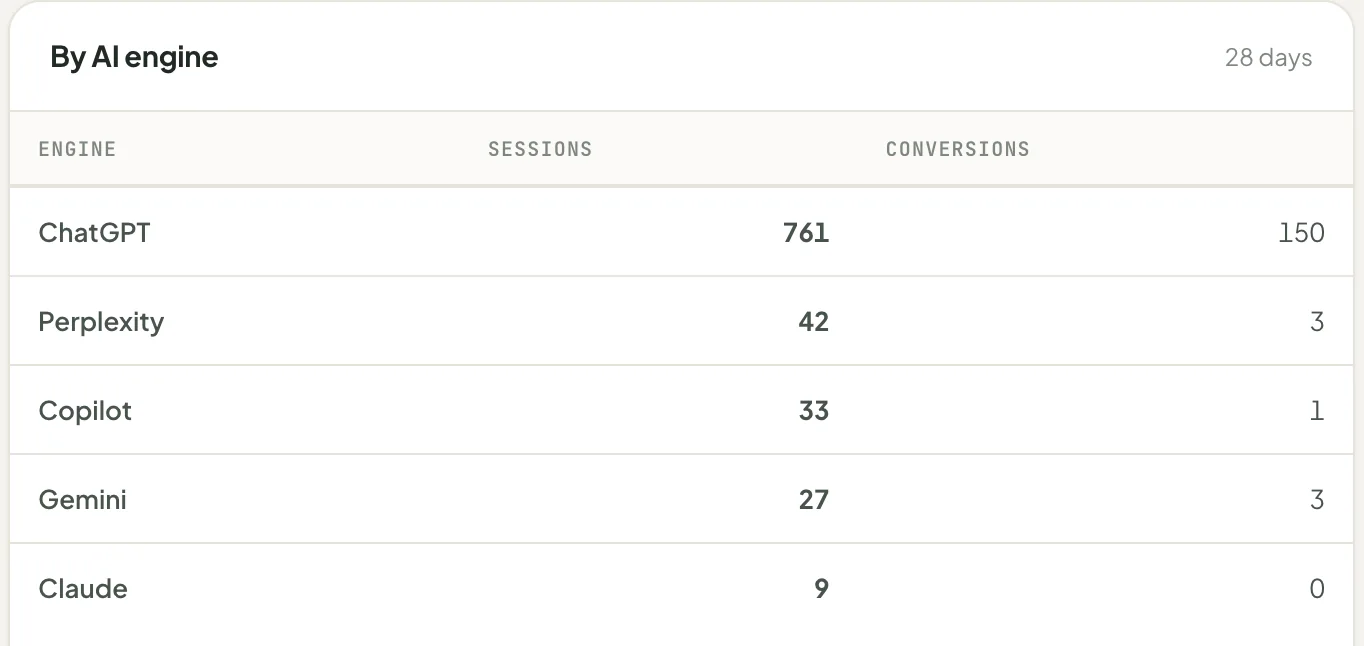
Frequently asked questions
What is UCPMP 2024 and why does it matter for ChatGPT Ads?
The Uniform Code for Pharmaceuticals Marketing Practices 2024 is the Department of Pharmaceuticals' code governing how pharma companies and their marketing partners communicate about drugs and devices — no misleading claims, no inducements framed as promotion, and product information that stays within approved labelling. It applies to any medium carrying pharma promotional content, and a ChatGPT Ad sponsored response is a medium in that sense, so the same clean-copy discipline that governs a print detail aid or a website banner governs the conversational ad unit.
What does "DCGI approval-communication" mean in practice?
The Drugs Controller General of India approves a drug or device for specific indications, dosages, and patient populations, documented in the approved label. "Approval-communication" means any marketing claim about the product must trace back to that approved scope — you can state what the label says, you cannot extrapolate, imply broader efficacy, or reference off-label use, even implicitly, inside an ad.
Can a prescription drug be advertised directly to consumers via ChatGPT Ads in India?
No. India does not permit direct-to-consumer advertising of prescription (Schedule H, H1, X) drugs through any consumer-facing channel, ChatGPT Ads included. Ad copy for a prescription molecule must stay at the corporate, therapy-awareness, or HCP-directed level — never a consumer purchase or self-selection prompt. OTC and Schedule K products carry more latitude but still fall under UCPMP's clean-copy rules.
What is the single most common UCPMP violation ICG sees in pharma digital ad copy?
Superiority language without head-to-head trial support — phrases like "fastest relief" or "best-in-class" that imply comparative clinical superiority the approved label does not state. The second most common is blurring a prescription molecule's brand name with a consumer call-to-action ("buy now," "order today"), which reads as consumer-directed promotion of a prescription product regardless of intent.
How is a ChatGPT Ad copy review different from a static banner review?
A static banner is one fixed asset reviewed once. A ChatGPT Ad copy set is a small library of response fragments that the model can recombine into different conversational turns, so compliance review has to cover the fragment-level building blocks and plausible combinations, not just a single finished creative — a compliant opening line paired with a non-compliant follow-up fragment still produces a non-compliant conversation.
Does UCPMP 2024 restrict AYUSH or nutraceutical ChatGPT Ads the same way?
AYUSH products sit under separate rules (primarily the AYUSH advertising framework and, where relevant, the Drugs and Magic Remedies Act), not UCPMP directly. But the underlying discipline — no unsubstantiated cure claims, no disease-name bait inside ad copy — mirrors UCPMP closely enough that ICG applies one shared clean-copy checklist across pharma and AYUSH accounts to avoid gaps.
What happens if a pharma brand is audited over its ChatGPT Ads copy?
The Department of Pharmaceuticals or an internal company compliance committee can request the full record of what ad copy ran, when, against which audience, and what approval chain signed off on it. Brands without a logged audit trail face the heaviest exposure — not because the copy was necessarily non-compliant, but because they cannot prove it was reviewed at all. ICG timestamps every compliance sign-off against the exact copy version pushed live.
What does ICG check before every pharma ChatGPT Ads push?
A ten-point checklist covering label-traceability of every claim, prescription-versus-OTC classification of the product, absence of superiority or cure language, absence of consumer purchase prompts on Rx molecules, disease-name-bait screening, medical-director or regulatory sign-off, fragment-combination testing, landing-page consistency, audit-log timestamping, and a final legal spot-check before the campaign goes live.
