


ORM Tool Tier Categories for Healthcare in India: A Buyer's Guide
A neutral, feature-based comparison of the four category tiers of online reputation management tooling used by Indian hospitals, clinics, and healthcare chains. No vendor names. Real trade-offs, NMC and DPDP guardrails, and buyer archetypes mapped to the tier that actually fits.
No pitch. Written root-cause diagnosis. AI-powered, healthcare only.
Direct answer
A neutral, feature-based comparison of the four category tiers of online reputation management tooling used by Indian hospitals, clinics, and healthcare chains. No vendor names. Real trade-offs, NMC and DPDP guardrails, and buyer archetypes mapped to the tier that actually fits.
TL;DR
TL;DR
- There is no single "best" ORM tool for Indian healthcare. There are four category tiers, and the right tier is decided by bed count, doctor count, review volume per month, and how tightly you must comply with the NMC advertising code and the DPDP Act 2023.
- DIY free-tool stacks work up to roughly 40-50 reviews per month across one location. Beyond that, response SLAs slip and NMC-sensitive claims leak through.
- Single-channel automation tools (review request only, or listing sync only) suit growing single-specialty clinics but hit a ceiling the moment you add a second location or a second platform.
- Multi-channel cloud-native ORM platforms are the sweet spot for 5-50 location chains, IVF and dental groups, and diagnostic networks that need unified sentiment across Google, Meta, and Indian healthcare directories.
- Enterprise reputation suites only earn their price at 100+ bed multi-city hospitals with in-house marketing, legal, and PR functions that need media monitoring plus review ORM in one pane.
- Agency-managed hybrids (tools + humans) exist because most Indian healthcare buyers cannot staff the response layer even if they buy the software.
Table of contents
- Why this comparison matters for Indian healthcare buyers
- The eight axes to compare ORM tool tiers on
- The main comparison table
- Per-axis deep dives
- Which tier fits which buyer archetype
- How ICG plays a neutral advisor role
- The 70-30 pricing model for managed ORM services
- Frequently asked questions
Why this comparison matters for Indian healthcare buyers
Online reputation management in Indian healthcare is a very different animal from ORM in retail, hospitality, or D2C. A single one-star review that alleges a wrong diagnosis, a bill dispute, or a consent violation can trigger three parallel workflows at once: a defensive medical response, a legal review under the NMC advertising code, and a data-handling check under the Digital Personal Data Protection Act 2023. No spreadsheet, and no generic global ORM tool, is built for that combination.
Add the operational reality: most Indian hospitals and clinics receive reviews across at least four channels simultaneously. Google Business Profile carries the heaviest weight for local search and AI Overview surfacing. Indian healthcare directories drive appointment intent for specific specialties. Meta pages and Instagram reels attract patient sentiment in comment threads. WhatsApp forwards and regional-language complaints on X and Reddit rarely show up in dashboards but travel fast when they do.
The category of tool you pick decides four things, whether you realise it at the buying stage or not: how many of those channels you can actually see, how quickly you can respond in-language, how safely your responses stay inside NMC boundaries, and what happens to the patient identifiers you inevitably touch while replying. Getting the tier wrong is not just a productivity problem. It is a compliance and clinical-risk problem.
The point of this guide is to give a hospital administrator, a clinic owner, or a healthcare marketing director the vocabulary to walk into a demo call and separate the tier of the tool from the polish of the sales deck. Everything below is framed in categories and features, not in vendor names, because the vendor landscape shifts every quarter but the tier trade-offs do not.
The eight axes to compare ORM tool tiers on
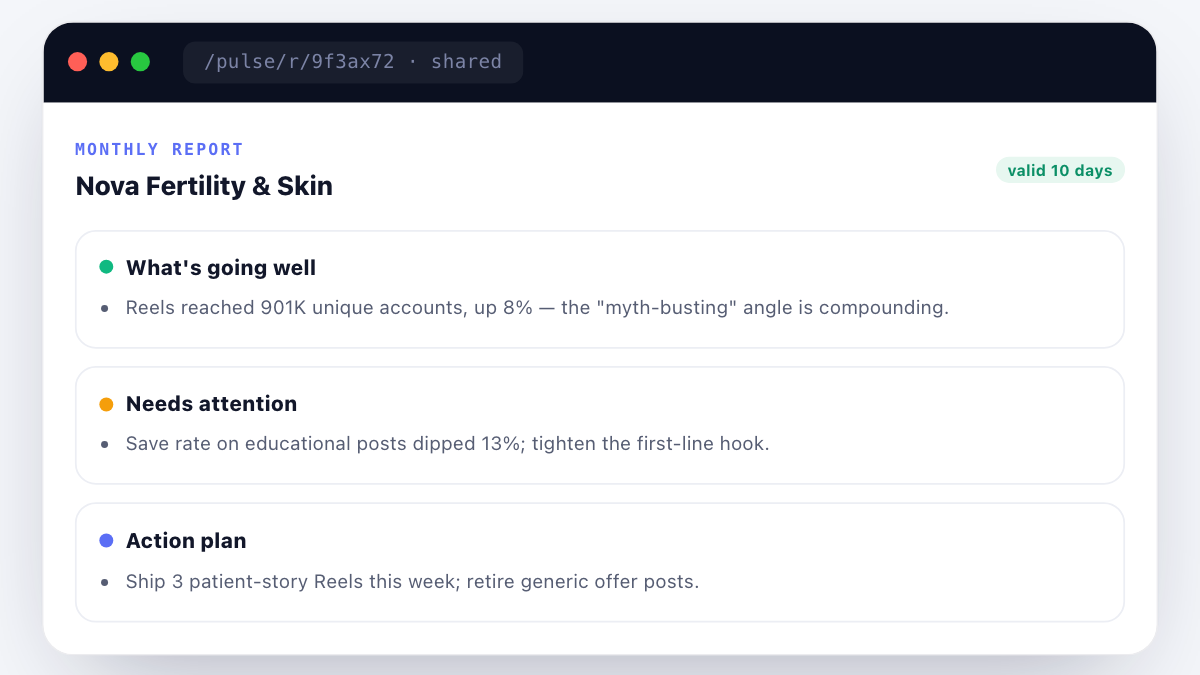 Prism Pulse client-shareable monthly report with what-is-working, needs-attention and action-plan sections signed off for a healthcare Instagram account" width="1200" height="675" loading="lazy" decoding="async" style="width:100%;height:auto;display:block;">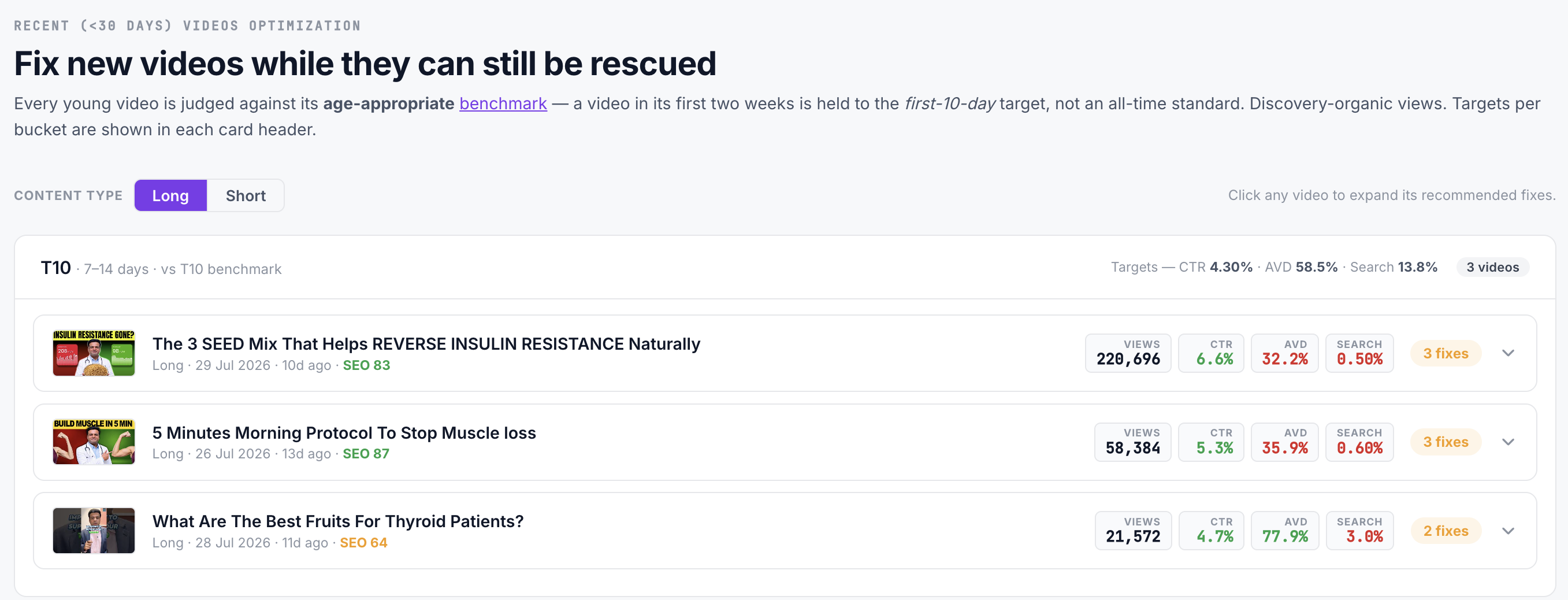
 sie" style="color:inherit;text-decoration:underline;text-decoration-color:rgba(42,126,200,.5);text-underline-offset:2px">Rank OS into a single 0-100 score with sub-scores and next-best-actions per listing" width="1200" height="675" loading="lazy" decoding="async" style="width:100%;height:auto;display:block;">
Before you evaluate any specific product, agree internally on the axes that matter. Most poor ORM buys happen because the buyer weighted "pretty dashboard" and "easy onboarding" and did not price in the operational axes that break at scale. We use eight axes with our Indian healthcare clients and recommend the same set as a baseline scorecard.
- Review capture and solicitation workflow — how the tool moves a discharged patient or a consulted OPD case into a review request without breaching consent norms.
- Multi-platform aggregation coverage — how many channels the tool actually pulls from, and how deep the API access is on each.
- Sentiment analysis and AI classification — whether the tool can tell a billing complaint apart from a clinical complaint apart from a wait-time complaint, in English and Indian languages.
- NMC advertising code guardrails — whether the response templates, auto-suggested replies, and public-facing copy stay clear of prohibited claims.
- DPDP Act 2023 consent and data residency — where patient data goes, how consent is recorded, and how deletion requests are honoured.
- Crisis response and escalation — whether the tool can route a serious allegation to legal, medical, and PR within minutes, not days.
- EHR, HIS, CRM, and appointment-system integration depth — whether the tool can trigger review requests from an actual clinical event, not a manual export.
- Multilingual and vernacular handling — Hindi, Tamil, Telugu, Marathi, Bengali, Kannada, Punjabi, Gujarati, at minimum.
A ninth axis, reporting granularity, sits alongside these. Facility-level reporting is table stakes. Doctor-level reporting, where you can slice sentiment per consultant and per specialty, is where enterprise chains extract real operational value.
The main comparison table
The table below maps each axis against the four ORM tool tiers most Indian healthcare buyers actually shortlist. The fifth column, agency-managed hybrid, is described separately below because it is a delivery model rather than a tool tier.
| Axis | DIY Free-Tools Tier | Single-Channel Automation Tier | Multi-Channel Cloud-Native Tier | Enterprise Reputation Suite Tier |
|---|---|---|---|---|
| Review capture and solicitation | Manual SMS or WhatsApp, no tracking | Automated, one channel, template-based | Multi-touch, journey-based, opt-in aware | EHR-triggered, event-based, audit-logged |
| Multi-platform aggregation | 1-2 channels, mostly manual scraping | 1 channel, deep API | 4-8 channels, mixed API depth | 10+ channels including media and forums |
| Sentiment analysis | None | Basic positive-negative | Multi-category, English-first | Aspect-based, multilingual, custom taxonomies |
| NMC advertising code guardrails | Not built for it | Generic templates | Configurable phrase blocklists | Legal-approved response library plus review |
| DPDP 2023 consent and data residency | Buyer's own responsibility | Vendor-declared, often unclear | Consent capture, India-region hosting on ask | India data residency, DPO workflow, audit trail |
| Crisis response and escalation | Ad-hoc email | Alerts only | Rule-based routing to team inboxes | Full playbook with legal, PR, medical branches |
| EHR, HIS, CRM integration | None | CSV import | Native connectors for common systems | HL7, FHIR, ABDM-ready APIs |
| Multilingual and vernacular | None | Rare | 4-6 Indian languages, basic | 10+ Indian languages with domain training |
| Reporting granularity | Location-only | Location plus channel | Location, doctor, and specialty | Doctor, specialty, department, executive |
| Indian monthly pricing band | Rs 0 to Rs 3,000 | Rs 4,000 to Rs 15,000 | Rs 20,000 to Rs 90,000 | Rs 1,50,000 and upwards |
Per-axis deep dives
1. Review capture and solicitation workflow
The single biggest cause of poor ORM outcomes in Indian healthcare is not negative reviews. It is the absence of positive reviews to dilute them. A 100-bed hospital that discharges 800 patients a month but requests reviews from 30 will always look worse than its actual patient experience. The DIY tier depends on a receptionist remembering to send a WhatsApp message. Reality is that they will send it for two weeks after training and then stop. Single-channel automation tiers fix this for one platform, usually Google, by triggering an SMS or WhatsApp on a schedule. Cloud-native multi-channel tiers add journey logic, so the request only goes to patients who have completed billing without a dispute flag. Enterprise suites plug into the EHR itself, waiting for a discharge event or a follow-up visit to fire the ask, and can suppress requests for cases flagged as clinically sensitive.
2. Multi-platform aggregation coverage
An Indian hospital's reputation lives across Google Business Profile, Meta, healthcare-specific consumer directories, insurer portals, WhatsApp forwards, and increasingly Reddit and short-video platforms. DIY stacks handle one or two of these and rely on manual copy-paste for the rest. Single-channel tools optimise one platform beautifully but leave the others uncovered. The multi-channel cloud-native tier is the first where you can honestly say "we know what people are saying about us today", because it maintains four to eight live integrations at once. Enterprise suites go further and add media monitoring, so a regional newspaper article or a viral X post is triaged in the same queue as a Google review. For a diagnostic chain running in 30 towns, that difference is not a nice-to-have. It is the difference between hearing about a bill-shock complaint on day one or on day fourteen.
3. Sentiment analysis and AI classification
Generic sentiment analysis is close to useless in healthcare because it collapses "the doctor was rude" and "the waiting room had no AC" into the same "negative" bucket. The tier that matters is the one that can tag reviews by aspect: clinical outcome, billing, wait time, staff behaviour, facility hygiene, ambience, communication, insurance coordination, and follow-up. Cloud-native ORM platforms started shipping aspect-based classifiers around 2023, and by 2026 the best of them handle Indian English reliably. Enterprise suites layer domain-trained models on top, allowing a hospital to define its own taxonomy, for example splitting oncology reviews differently from paediatric ones. The DIY tier and the single-channel tier essentially skip this axis, which is why buyers who start there upgrade within eighteen months.
4. NMC advertising code guardrails
The National Medical Commission's advertising code prohibits testimonials that imply superior clinical outcomes, guaranteed cures, or comparisons with other practitioners. Most global ORM tools do not know this and cheerfully suggest response templates that would breach the code, for example "we are proud to be the best oncology unit in the city". The DIY tier leaves this entirely to the person typing the reply. The single-channel tier gives you generic hospitality-flavoured templates. The multi-channel cloud-native tier is where you first get configurable phrase blocklists, so you can flag words like "guaranteed", "cure", "best", "safest", or "world-class" and force a human review before the reply goes live. Enterprise suites go further and ship a legal-approved response library, curated with an Indian healthcare legal advisor, plus a queue that requires a designated approver's sign-off for any response above a risk threshold.
5. DPDP Act 2023 consent and data residency
Under the Digital Personal Data Protection Act 2023, patient personal data collected during a review request cycle counts as personal data with all the associated obligations: purpose limitation, storage limitation, consent, and the right to erasure. Free tools push this entirely onto the buyer. Single-channel vendors often make vague claims. Cloud-native platforms have begun offering India-region hosting on request and consent-capture screens ahead of the review invite. Enterprise suites treat DPDP as a first-class requirement and provide a full data protection officer workflow, complete with audit trails for every access, every export, and every deletion. If your organisation has already appointed a data protection officer, the tier below multi-channel cloud-native will simply not clear internal review.
6. Crisis response and escalation
Every hospital eventually receives a review that alleges a wrong diagnosis, a consent breach, a wrong-site event, or a death. The reputational stakes and the medico-legal stakes are entangled. The tier of tool decides how quickly the right three people (medical director, legal, PR) are looped in. DIY tools rely on someone forwarding an email. Single-channel tools throw an alert into a dashboard. Cloud-native platforms let you build routing rules, so any review containing certain keywords is auto-assigned to a specific inbox with an SLA. Enterprise suites operationalise a full crisis playbook with branching workflows, external counsel loops, and evidence preservation. For a 200-bed hospital, the enterprise tier's crisis workflow alone often justifies the annual fee.
7. EHR, HIS, CRM, and appointment-system integration depth
ORM tools that live in a silo require someone to export patient contact lists from the hospital information system every week. That job never survives contact with reality. The multi-channel cloud-native tier introduces native connectors to the common Indian hospital information systems and clinic CRMs, so a discharge, a follow-up, or a completed procedure automatically eligibly-flags a patient for a review request. The enterprise suite tier goes to full HL7 and FHIR integrations and, increasingly, to ABDM-ready APIs so the ORM system can consume clinical events without breaking the ABDM consent architecture. If your goal is scale without adding headcount, this axis alone tends to force the decision upward by one tier.
8. Multilingual and vernacular handling
India-first ORM means Hindi at minimum, Tamil, Telugu, Marathi, Bengali, Kannada, Gujarati, and Punjabi for anything national, and Malayalam, Odia, and Assamese for regional depth. A review in Devanagari script, or in Romanised Hindi, or in a mixed English-Hindi sentence, must be parsed correctly. DIY and single-channel tools typically default to English-only, which means large chunks of your patient sentiment are simply not being read. Cloud-native platforms cover four to six Indian languages with reasonable accuracy in 2026. Enterprise suites cover ten or more, often with domain-trained models that understand medical terms in the local language. For any hospital operating outside the top three metros, this axis usually decides whether the tool is actually usable on the ground.
9. Reporting granularity, from location to doctor
Board-level dashboards want NPS, average rating, and complaint volume. Operations want per-department trends. Consultants want per-doctor sentiment, because that is how they get better. DIY tools stop at location-level rating. Single-channel tools add channel dimension. Multi-channel cloud-native platforms allow doctor and specialty slicing, provided the review request captured that context at source. Enterprise suites allow arbitrary hierarchies, so you can roll up sentiment by department, by unit, by cluster, by region, and by executive owner. The reporting axis is deceptive because every tier shows charts. Only the top two tiers show charts that are useful for accountability.
Which tier fits which buyer archetype
Archetype 1: single-doctor clinic in a tier-2 city
A single-specialty clinic, typically dental, dermatology, or general physician, seeing 20-30 patients a day, with one receptionist and no dedicated marketing person. This buyer belongs firmly in the DIY free-tools tier, augmented by a Google Business Profile discipline layer. The correct spend is under Rs 3,000 a month on tooling. Anything more is theatre. The correct human effort is 30 minutes a week from the doctor's spouse or office manager. What this buyer usually needs is not a fancier tool, it is the habit of asking every satisfied patient for a review and replying to every review within 48 hours. Adding a DIY GBP operating system on top of this can dramatically increase local visibility without changing the tool tier.
Archetype 2: growing multi-location dental or dermatology chain (3-15 locations)
This is where the single-channel automation tier and, above 6-7 locations, the multi-channel cloud-native tier come in. A three-clinic chain can get away with a review-request tool alone. A ten-clinic chain cannot, because sentiment is now being generated across Google, Meta, WhatsApp, and directories in parallel, and no one person can watch all of them. The correct spend is Rs 15,000 to Rs 60,000 a month on the platform, and a part-time content and reputation lead. This buyer should not touch the enterprise tier. It will be over-configured and under-used.
Archetype 3: mid-tier IVF or diagnostics chain (20-50 locations)
Multi-channel cloud-native, with heavy investment in the integration and multilingual axes. Reviews now come in five languages, from five channels, tied to specific consultants whose availability changes monthly. The platform must speak to the appointment system so review requests fire after successful cycles or reports, and must slice sentiment by consultant so operational corrections can happen quarterly. Spend lands between Rs 50,000 and Rs 90,000 a month on the tool, and a dedicated one to two person reputation team, sometimes co-owned with the CRM team. This tier of buyer usually benefits from a hybrid model where an outside agency owns response quality and NMC-guardrail curation.
Archetype 4: 100+ bed multi-specialty hospital or hospital chain
Enterprise reputation suite, no shortcuts. This buyer has legal exposure, media exposure, insurer scrutiny, and consultant politics all pulling on the same review threads. Data residency, DPO workflows, HL7 or FHIR integrations, ABDM alignment, and a formal crisis playbook are non-negotiable. Spend starts at Rs 1,50,000 a month and rises with bed count and number of cities. The correct decision-maker is a triangle of the marketing head, the compliance officer, and the CIO. If the tool cannot survive a joint review from those three, it is the wrong tool.
How ICG helps as a neutral advisor
Ichelon Consulting Group works with 300+ healthcare clients and 150+ clinics across India, which means we sit through category-tier decisions almost weekly. Our role is deliberately neutral. We do not resell any ORM platform. We help buyers score their own axes, run structured demos, and make the trade-offs visible. Where in-house teams cannot absorb the response layer, we run a managed ORM function on top of whichever tier the client has purchased. That includes NMC-safe response drafting, DPDP-aware data handling, and integration with the client's SEO, Google Business Profile, and YouTube surface areas through our in-house operating systems for local search and video. The tool is a means. The published reputation is the end.
The 70-30 model for managed ORM services
Where ICG delivers managed reputation services on top of a client's chosen ORM tier, we follow our 70-30 model. Seventy percent of the monthly retainer is committed to the always-on work that compounds: review response, sentiment analysis, GBP posting, listing hygiene, and monthly reputation reporting. Thirty percent is deliberately reserved for the reactive and creative layer: crisis response, campaign-linked review pushes, testimonial content production, and community management on Meta and YouTube. On our Foundation retainer of Rs 49,999 a month, that means roughly Rs 35,000 of dependable weekly activity and Rs 15,000 of flexible bandwidth. Growth at Rs 74,999 and Scale at Rs 99,999 keep the same ratio but expand the surface area of both halves. The same 70-30 split extends to our Google Ads work at Rs 5 lakh plus monthly budgets and our YouTube and AI Overview retainers at Rs 50,000 plus.
Frequently asked questions
How do I know when to move up from the DIY tier?
Watch three signals: review volume crossing 40 a month across all locations, more than one channel producing meaningful patient sentiment, and the first genuinely negative review that you did not know about for a week. When two of the three trigger, upgrade to at least a single-channel automation tool. When all three trigger, jump to the multi-channel cloud-native tier.
Are Indian-hosted ORM tools always better for DPDP compliance?
Not automatically. Indian hosting is one input into DPDP compliance. Consent capture, purpose limitation, retention limits, and the ability to honour data-principal rights matter equally. A well-configured tool on foreign hosting with clear cross-border transfer disclosures can be more compliant than a poorly configured Indian-hosted tool. Ask for the data flow diagram, not just the hosting location.
Does the NMC advertising code apply to responses to negative reviews?
Yes. Any public-facing communication by a registered medical professional or the establishment they practise at falls within the scope of the code. This is why enterprise tiers include legal-approved response libraries and why we recommend that even mid-tier chains build an internal blocklist of prohibited phrases.
Can I combine tiers, for example a DIY GBP tool plus a cloud-native ORM platform?
Absolutely, and many mid-tier chains do this deliberately. A specialised Google Business Profile operating system can outperform a general ORM tool on local search rankings and posting cadence, while the ORM platform owns cross-channel sentiment and workflow. The combination often costs less than a single enterprise tier and delivers more visible outcomes.
What is the honest ROI window for moving up a tier?
For a chain moving from single-channel to multi-channel cloud-native, three to six months to see rating uplift on the primary local search surface, and six to nine months to see it translate to inquiry and appointment growth. Enterprise tier ROI is measured differently, in downside risk avoided rather than upside captured, which is why the case has to include the compliance and crisis dimensions.
Should smaller clinics ever consider enterprise tools?
Rarely. The failure mode of enterprise tools in small clinics is not the price, it is the operational overhead. The tool assumes a marketing team, a compliance function, and a CIO. Without those, the tool becomes shelfware within a quarter.
How do I evaluate multilingual review handling in a demo?
Bring five real reviews of your own in five different Indian languages, including at least one in Romanised Hindi and one in a script other than Devanagari. Ask the vendor to classify sentiment, tag aspects, and suggest a reply for each. This one exercise separates the tiers faster than any feature matrix.
Does an ORM tool replace the need for a reputation team?
No tier of tool does. The DIY tier saves the receptionist nothing. The single-channel tier requires someone to close the loop. The cloud-native and enterprise tiers automate the plumbing but still need trained humans for the actual response, especially in NMC-sensitive cases. The right question is not "can I skip the team" but "how much of the team's time can I redirect from data-collection to response quality".
Where does an agency-managed hybrid model fit?
Between tiers. If your organisation cannot commit to a full-time reputation lead or a compliance-trained responder, a managed layer on top of a mid-tier platform will out-perform an enterprise tier that no one drives. The 70-30 retainer model above is designed exactly for this handoff.
What is the single biggest mistake Indian healthcare buyers make in ORM procurement?
Buying by feature checklist instead of buying by tier. Two products at completely different tiers can tick the same boxes on a demo grid. The right question is not "does it have sentiment analysis" but "at what depth, in how many languages, with what NMC safety, and integrated into which of my systems". That depth of question is what separates a good ORM buy from an expensive one.
Book a free 30-minute Brand & Growth Diagnostic.
It's a working session, not a sales pitch — you leave with a written root-cause analysis you can act on, whether or not you engage ICG.
Questions readers ask
about this topic.
The three platforms
behind every ICG engagement.
Beacon
CAPI middleware that fixes Event Match Quality, translates CRM statuses to Meta-standard events, dedups across channels.
Agency OS
Live client dashboard. GSC, GA4, Google Ads, Meta Ads, IVR calls in one view. Login anytime, not monthly.
Phoenix
Clinic revenue intelligence over your PMS. Daily action queue: Prevent Loss, Maintain & Engage, Grow Revenue. 46-centre rollout.
Or book a free 30-min audit to see all three in action on your account.
Healthcare brands
that already run on ICG.
A representative slice of the 150+ healthcare brands ICG has delivered for across India. Most engagements remain under NDA.


What ICG clients say · on video.
"Scale up of organic channels and business consulting. ICG has absolute domain authority in their field."
"Working with ICG transformed how we acquire IVF patients in Gurgaon. They understand the fertility journey from inquiry to consult..."
"What Ichelon accomplished — they got all my ideas and worked over 3-4 months to create an amazing, super-customised website."
The intelligence stack behind this playbook.
Every ICG engagement runs on the Search Intelligence Trifecta — Angryturtle for GMB, SIE for search and AI Overview, YODA for YouTube. Live product screens below.
Need help operationalising this?
Every ICG service is healthcare-only, NMC + DPDP-aware, and built around the patient-research patterns that drive Indian healthcare growth in 2026.
More from
ICG.
Healthcare AIO is the discipline of getting your clinic or hospital cited inside Google AI Overviews, ChatGPT and Perplexity answers — not j...
Conversational-search advertising places brand messages inside AI chat answers — ChatGPT, Perplexity, Copilot — rather than beside a results...
NABH digital compliance means every claim, image and testimonial your hospital publishes online matches what an accreditation surveyor can v...
Stop guessing.
Book a Diagnostic.
30 minutes. Free. With the AI-powered healthcare-only marketing agency 150+ brands already run on. No slides, no pitch, no hard close.


