


How to Monitor Your Clinic's Calling Quality Without Listening to Every Call
Your IVR (Interactive Voice Response) system captures a data trail of every call that enters or leaves your clinic. If you are using a cloud telephony provider or any similar system, this data exists. The question is whether anyone is re
No pitch. Written root-cause diagnosis. AI-powered, healthcare only.
Direct answer
Your IVR (Interactive Voice Response) system captures a data trail of every call that enters or leaves your clinic. If you are using a cloud telephony provider or any similar system, this data exists. The question is whether anyone is re
TL;DR
Layer 1: IVR Analytics — The Quantitative Foundation
Your IVR (Interactive Voice Response) system captures a data trail of every call that enters or leaves your clinic. If you are using a cloud telephony provider or any similar system, this data exists. The question is whether anyone is reading it.
The five IVR metrics that diagnose calling quality:
1. Outbound Attempt Rate
FREE 30-MIN AUDIT
Book a free Beacon + Agency OS audit
Written summary on the call. EMQ, intent tier, IVR leak, funnel drop-off. No commitment.
Calls attempted / leads received in the same period.
If this ratio is below 90%, leads are sitting uncalled. This is not a quality problem — it is a work ethic or capacity problem. Address it with daily activity quotas.
2. Connected Conversation Rate
Calls where the patient spoke for more than 90 seconds / total calls connected.
This is the closest data proxy for "was this a real conversation?" A 60 second call is an answer and a hang-up. A 90+ second call means the caller got into a meaningful exchange.
3. Average Call Duration by Caller
Calculate this individually. If one caller's average connected call duration is 4 minutes and another's is 1.5 minutes, something very different is happening on those calls. The 1.5-minute average caller either has an opening problem (patients hang up quickly) or a premature close problem (trying to book an appointment before the patient is ready).
4. Inbound Miss Rate
Inbound calls received / inbound calls answered.
This measures a different kind of quality failure — not calling quality, but availability quality. A 40% inbound miss rate means 4 in 10 patients who called your clinic got no answer. For IVF or dermatology where CPL is ₹500–2,000 per lead, every missed inbound call is significant wasted spend.
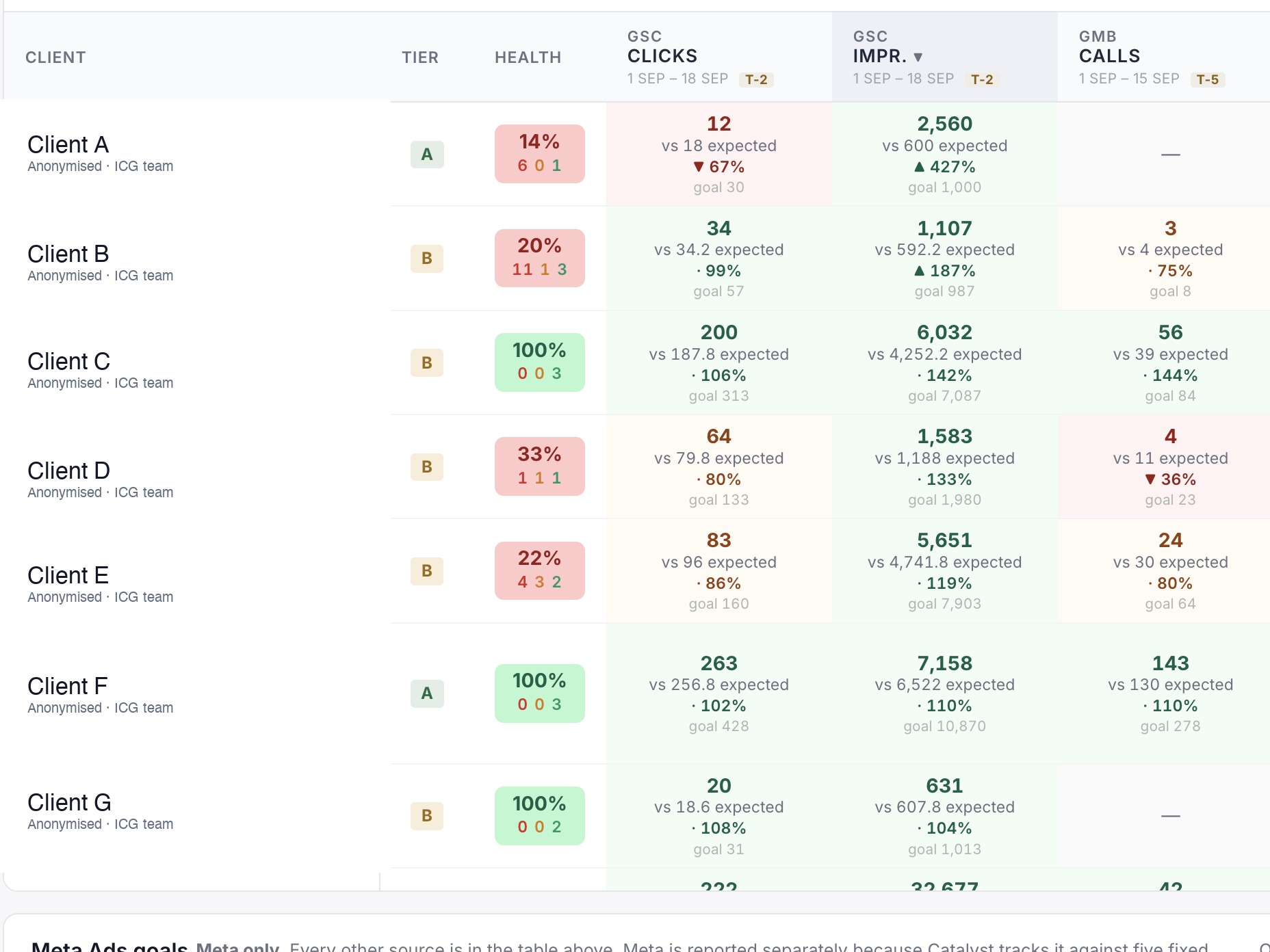
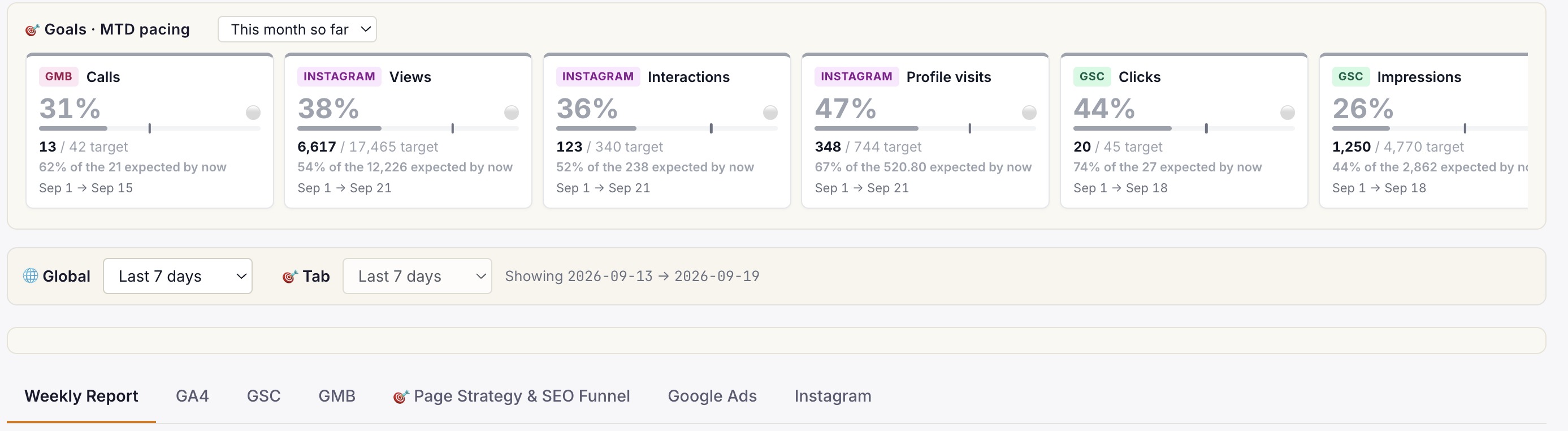
Agency OS IVR intelligence surfaces this metric in real time, broken down by integration source (GMB vs Google Ads vs Facebook vs direct).
5. Call Attempt Distribution by Hour
When are calls being made? If 70% of outbound calls happen between 10am–12pm and the contact rate is low, the timing is wrong for your patient demographic. Shift calling hours to 11am–1pm and 5pm–7pm and re-measure.
Layer 2: Conversion Rate Benchmarking — Detecting Quality Problems from Outcomes
Quantitative conversion data at each funnel stage is the second monitoring layer. Even without listening to calls, specific stage conversion problems point to specific call quality issues.
Contact rate drops below 35%: Calling number is unknown or untrusted, or timing is wrong. Not a script problem.
Contact rate is fine (>40%) but conversation rate is low (under 50%): The opening is failing. The caller is not establishing connection quickly enough and patients are ending calls early. Listen to five opening sequences from the lowest-performing caller.
Conversation rate is fine but appointment set rate is low (under 20%): Either the close is too aggressive (patients who were warming up are being pushed away) or not assertive enough (calls are ending without a specific appointment offer). Listen to five call endings.
Appointment set rate is fine but show rate is low (under 60%): The appointment is being set before the patient is truly committed, and the confirmation process is inadequate. Check confirmation call completion rate first (often the simpler fix).
Layer 3: Structured Spot-Check Protocol
With Layers 1 and 2 automated, the spot-check protocol becomes targeted rather than random — you know which callers and which call types to review.
Weekly spot-check routine (30 minutes, centre manager):
- Pull the previous week's conversion metrics by caller
- Identify the two callers with the largest gap between contact rate and appointment set rate
- Listen to three calls each from these callers — one that converted, two that did not
- Note one specific behaviour that differed between converting and non-converting calls
- Share the finding in the next morning huddle as an anonymous example
This protocol turns the spot-check from a surveillance exercise into a learning exercise. The data tells you where to look. The listening tells you what to fix.
Monthly deep review (60 minutes, centre manager + senior caller):
Select ten calls that resulted in QBNI (Qualified But Not Interested) tags. Listen to each. For each call, assess:
- Was there a discovery conversation?
- Was the patient's specific objection identified?
- Was the objection addressed with a prepared response or ignored?
- Was an alternative (video consult, EMI, different timing) offered?
Classify each as: Genuinely Not Interested (GNI), Poorly Handled (PH), or Unknown (no recording or insufficient data).
If more than 30% are Poorly Handled, call quality is the primary conversion problem. If more than 60% are Genuinely Not Interested, the lead quality or targeting is the primary problem.
Layer 4: Patient Feedback Signals
A fourth monitoring layer is available in clinics that collect any form of patient feedback — even informal.
Post-appointment verbal check: Receptionist asks all attending patients, "How did your experience of reaching us feel? Was it easy to get through and get the information you needed?" This takes 20 seconds and surfaces recurring issues (voicemail, wrong number on website, waiting too long on hold) without any technology.
WhatsApp feedback loop: After appointment confirmation, add a line: "If there is anything about your experience reaching us that could be easier, just reply here." Patients who had a friction point in calling will sometimes mention it. These are gold for improving the calling experience.
Putting the Layers Together: The Weekly Monitoring Rhythm
Every Monday morning (15 minutes):
- Pull IVR metrics from the previous week: attempt rate, connected rate, miss rate, average duration by caller
- Flag any metric below threshold
- Identify which callers need this week's spot-check
Every Wednesday (30 minutes):
- Complete spot-check protocol for the two flagged callers
- Identify the one behaviour change to reinforce at Thursday's morning huddle
Every Friday (10 minutes):
- Week's conversion metrics review: contact rate, appointment set rate, show rate
- Week-over-week trend: improving, stable, declining?
- One observation for the week's team communication
Total monitoring time: approximately 55 minutes per week per centre manager. The data does 80% of the work. The manager provides the interpretation.
The Agency OS IVR Dashboard
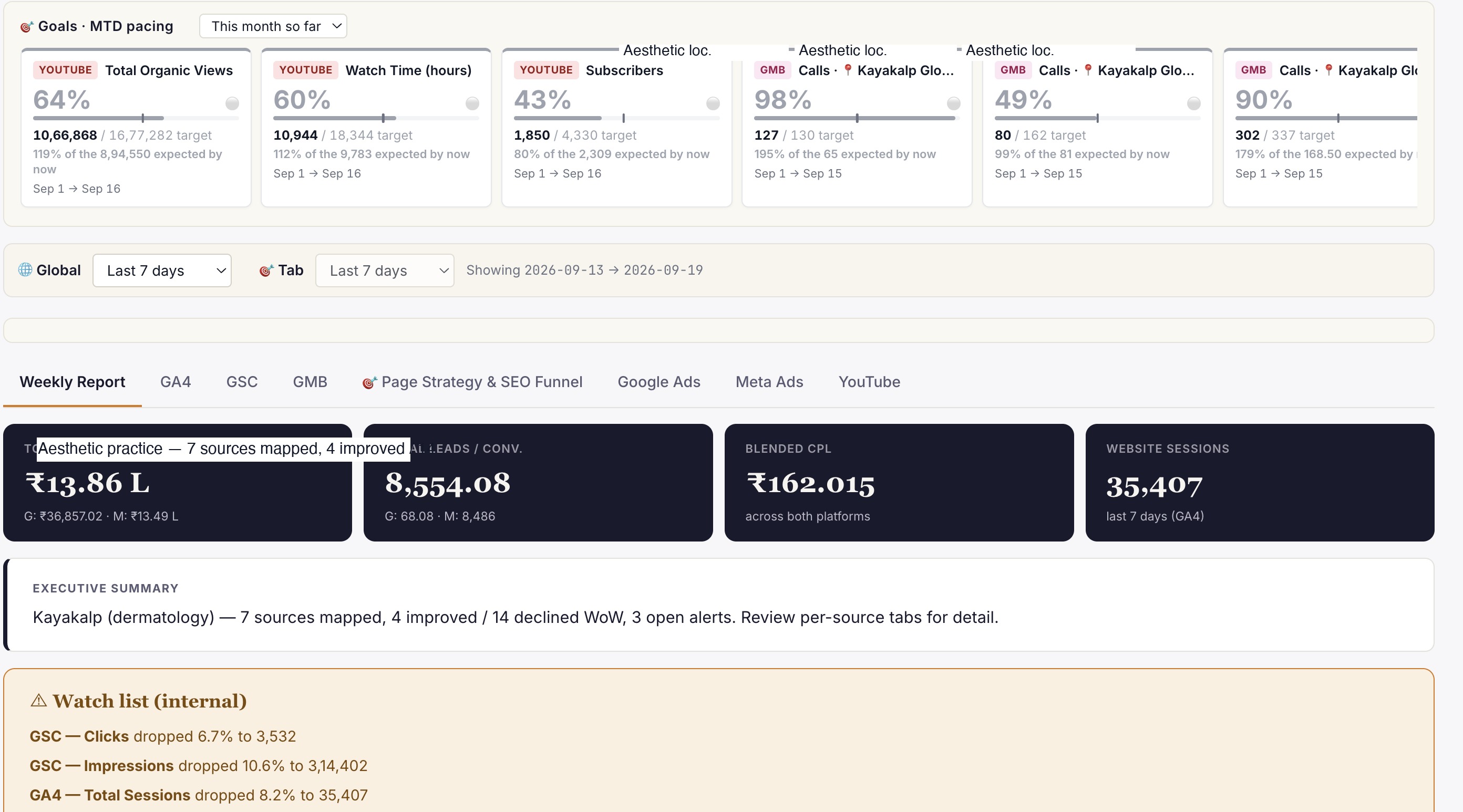
For clinics with multiple calling integrations (a dedicated number for GMB enquiries, a different number for Facebook leads, another for Google Ads), the Agency OS IVR dashboard shows performance per integration.
This is critical because calling quality problems are often source-specific. Meta Ads leads from a cold audience are harder to convert than GMB leads from local patients who already looked you up. If the calling team is measured on a blended conversion rate, Meta's harder leads artificially lower the team's number — which demotivates callers who are actually doing well with high-intent traffic.
Source-level IVR analytics gives managers the nuance to evaluate fairly.
See Agency OS IVR intelligence →
Want to see how this applies to your clinic? Book a free 30-min audit or WhatsApp the founders.
Book a free 30-minute Brand & Growth Diagnostic.
It's a working session, not a sales pitch — you leave with a written root-cause analysis you can act on, whether or not you engage ICG.
Questions readers ask
about this topic.
The three platforms
behind every ICG engagement.
Beacon
CAPI middleware that fixes Event Match Quality, translates CRM statuses to Meta-standard events, dedups across channels.
Agency OS
Live client dashboard. GSC, GA4, Google Ads, Meta Ads, IVR calls in one view. Login anytime, not monthly.
Phoenix
Clinic revenue intelligence over your PMS. Daily action queue: Prevent Loss, Maintain & Engage, Grow Revenue. Multi-centre rollout.
Or book a free 30-min audit to see all three in action on your account.
Healthcare brands
that already run on ICG.
A representative slice of the 150+ healthcare brands ICG has delivered for across India. Most engagements remain under NDA.


What ICG clients say · on video.
"Scale up of organic channels and business consulting. ICG has absolute domain authority in their field."
"Working with ICG transformed how we acquire IVF patients in Gurgaon. They understand the fertility journey from inquiry to consult..."
"What Ichelon accomplished — they got all my ideas and worked over 3-4 months to create an amazing, super-customised website."
Need help operationalising this?
Every ICG service is healthcare-only, NMC + DPDP-aware, and built around the patient-research patterns that drive Indian healthcare growth in 2026.
Every practice welcome — packages from ₹20,000/mo.
Goals-Driven engagements · Performance-Linked Payout Models available
More from
ICG.
Five trends shaping Indian healthcare marketing through 2027: AI-first patient research, Conversions API adoption, ABDM discovery, the AEO w...
Healthcare AIO is the discipline of getting your clinic or hospital cited inside Google AI Overviews, ChatGPT and Perplexity answers — not j...
Conversational-search advertising places brand messages inside AI chat answers — ChatGPT, Perplexity, Copilot — rather than beside a results...
Stop guessing.
Book a Diagnostic.
30 minutes. Free. With the AI-powered healthcare-only marketing agency 150+ brands already run on. No slides, no pitch, no hard close.


