


Medical YouTube Monetization in India: Rules, CPMs, and Framework
A practical, India-first framework for hospital marketers, clinic founders, and healthcare agencies who want to turn YouTube from a brand cost line into a P&L line — covering NMC 2022, DPDP Act, YouTube health policy, CPM benchmarks, and channel ownership.
No pitch. Written root-cause diagnosis. AI-powered, healthcare only.
Direct answer
A practical, India-first framework for hospital marketers, clinic founders, and healthcare agencies who want to turn YouTube from a brand cost line into a P&L line — covering NMC 2022, DPDP Act, YouTube health policy, CPM benchmarks, and channel ownership.
TL;DR
TL;DR
- Medical YouTube monetization in India is not just AdSense. For most hospital and clinic channels, patient lead capture through description-link WhatsApp flows earns 3-5x more than direct YouTube ad income.
- Three rulebooks govern what you can publish — the NMC 2022 professional conduct advisory, YouTube's medical misinformation policy, and India's DPDP Act 2023 on patient data.
- Realistic Indian benchmarks: Rs 80-250 CPM for medical content, Rs 15-40K per month in AdSense at 10K subscribers, and Rs 3-8 lakh per month in attributable clinic revenue when the channel is wired as a lead engine.
- Channel ownership structure (hospital brand channel vs doctor-personal channel) sets your compliance risk and your monetization ceiling. Sequence matters.
Table of contents
- Why this matters for Indian healthcare businesses
- What does medical YouTube monetization actually mean in India?
- Which NMC and YouTube rules govern medical content?
- How does the DPDP Act change patient video consent?
- Which monetization streams work for Indian medical channels?
- What revenue benchmarks are realistic in India?
- Doctor-personal channel or hospital brand channel — which should you build?
- How do you build a medical YouTube channel that actually monetizes?
- The ICG approach — YODA and the AI-native YouTube stack
- Where the 70-30 model fits YouTube retainers
- FAQ
Why this matters for Indian healthcare businesses
Direct answer: Indian patients now research doctors on YouTube before Google. In a 2024 industry survey of urban Tier-1 patients, 62% watched at least one video about a doctor, hospital, or procedure before booking a paid appointment. If your channel is either absent or unmonetized, you are handing that pre-purchase window to somebody else.
Most hospital marketing directors still frame YouTube as a brand-awareness cost line. That framing is a decade old. Between AdSense payouts a healthcare channel can now earn, the WhatsApp leads a well-structured video pulls in, and the brand deals a credible medical creator can sign with pharma and device brands, YouTube in India has moved from a budget line to a P&L line for clinics that treat it seriously.
The trigger for a rethink is regulatory. The 2022 NMC professional conduct advisory, the DPDP Act rolling out through 2024-25, and YouTube tightening its health authority signals mean the old playbook — hire a videographer, shoot a procedure explainer, upload, hope — is no longer safe, let alone profitable.
What does medical YouTube monetization actually mean in India?
Direct answer: Medical YouTube monetization in India is the practice of building a healthcare-owned channel that converts watch time into three revenue streams — AdSense and YouTube Premium payouts, direct patient leads that book paid consultations, and brand or sponsorship revenue from healthcare-adjacent categories like pharma, devices, insurance, and healthtech. It is a stack, not a single line.
The mental model inside most hospital marketing teams is that monetization equals YouTube's own ad button. For a lifestyle creator, roughly true. For a healthcare channel in India, AdSense is often the smallest of the three streams. A cardiology explainer that pulls 200,000 views may earn Rs 25,000 from AdSense and Rs 4 lakh from the 60 paid consultations it books through the description-link WhatsApp flow.
Once you accept that YouTube is a lead channel first and an ad-inventory channel second, everything about how you structure videos, thumbnails, end-screens, and description CTAs changes.
Which NMC and YouTube rules govern medical content?
Direct answer: Three rulebooks matter — the NMC Registered Medical Practitioner (Professional Conduct) Regulations 2022, YouTube's Medical Misinformation Policy, and the Drugs and Magic Remedies (Objectionable Advertisements) Act 1954. The NMC restricts self-promotion and testimonials by registered doctors. YouTube restricts contradictions of public health guidance. The DMR Act restricts claims about a defined list of conditions.
NMC 2022 advisory
A registered medical practitioner cannot solicit patients directly, cannot publish self-laudatory testimonials, and cannot claim exclusive skill or superior results. This does not mean doctors cannot appear on YouTube. It means the framing has to be educational, not promotional. A gynaecologist explaining PCOS in a six-minute video is fine. The same gynaecologist saying "book me now, I am the best in Gurgaon" is not.
YouTube's medical misinformation lane
YouTube treats content that contradicts WHO or local health-authority guidance as removable. It also runs a health source verification programme that Indian medical channels can apply for through a formal review — verified sources get a signed information panel on videos and a small ranking lift on health queries.
DMR Act 1954
This 70-year-old act still governs what you can advertise for a specific list of conditions, including diabetes, cancer, sexual weakness, and pregnancy-related claims. Any video that reads as an advertisement — not as education — for these conditions carries exposure. Category teams inside pharma brand marketing already know this well; hospital marketing teams often do not.
How does the DPDP Act change patient video consent?
Direct answer: The Digital Personal Data Protection Act 2023 requires explicit, purpose-limited, revocable consent before you record, publish, or reuse any identifiable patient data on YouTube — including face, voice, procedure footage, and named case histories. Verbal consent on the operating table is no longer defensible. Every testimonial and B-roll subject needs a written consent artefact that names YouTube as a publication channel and lists the permitted uses.
The practical fallout for hospital marketing teams is retrospective. Every patient testimonial you published between 2018 and 2024 was collected under a consent framework that predates the DPDP Act. Once the Data Protection Board starts enforcing, a patient who spots their old video and objects can trigger a takedown obligation and a compliance notice.
The workable pattern we see across the 150+ clinics we support is a three-layer consent flow — a video-release form at the time of shooting, a review-and-approve cycle before publication, and a documented take-down SOP with a 72-hour SLA if a data principal withdraws consent.
Which monetization streams work for Indian medical channels?
Direct answer: Five streams work — AdSense and YouTube Premium, direct patient leads via description-link WhatsApp CTAs, channel memberships for specialty education, brand deals with pharma, device, insurance and healthtech partners, and live streams with Super Chat. The mix should be roughly 15% AdSense, 55% patient leads, 20% brand deals, 10% memberships and community, though this varies sharply by specialty.
| Revenue stream | Best-fit specialty | Indicative share |
|---|---|---|
| AdSense + Premium | General health, preventive, lifestyle | 10-20% |
| Direct patient leads (WhatsApp/form) | IVF, dental, aesthetic, orthopaedic, cardiology | 45-65% |
| Brand deals and sponsorships | Nutrition, pharma OTC, devices, insurance | 15-25% |
| Channel memberships / paid Q&A | Specialty education, second-opinion niches | 5-15% |
| Live streams and Super Chat | Live surgery education, doctor training | 3-8% |
The specialties that convert YouTube views to rupees fastest in India are the ones where the patient journey is planned, high-ticket, and repeatable — IVF, dental implants, orthopaedic joint replacement, aesthetic and hair, LASIK, and bariatric. Emergency and diagnostics convert poorly on YouTube. Preventive and lifestyle content builds brand equity slowly but rarely books paid consultations at scale.
What revenue benchmarks are realistic in India?
Direct answer: For a well-run Indian medical channel, expect Rs 80-250 CPM (varies by specialty), Rs 15-40K monthly AdSense at 10,000 subscribers, and Rs 3-8 lakh monthly in attributable clinic revenue at the same subscriber count. Surgical specialties in metros can push clinic-attributable revenue to Rs 12-25 lakh a month at 50,000 subscribers.
Three real numbers worth internalising:
- CPM range. Medical content in India typically earns Rs 80-250 per thousand ad-eligible views. Dental, IVF, and cardiology sit at the top end because pharma and device advertisers bid up those keywords. Nutrition and wellness sit near the bottom.
- Watch-time to lead conversion. A well-structured 8-minute explainer with a WhatsApp CTA in the description and a pinned comment converts at roughly 0.6-1.2% of views to a WhatsApp click, and roughly 8-15% of those clicks to a booked consultation. Do the math — 100,000 views at 1% and 10% is 100 booked consultations from one video.
- Break-even timeline. Most Indian clinic channels we onboard hit AdSense eligibility (1,000 subs plus 4,000 watch hours) in month 6-9 with a disciplined cadence of two long-form videos a week and daily Shorts. Meaningful lead flow starts around month 4.
Doctor-personal channel or hospital brand channel — which should you build?
Direct answer: Build both, but sequence them. Start with the hospital brand channel because it carries the marketing budget, owns the leads, and has cleaner compliance defaults. Then spin up doctor-personal channels for your two or three strongest on-camera clinicians. The doctor channel builds trust and authority; the brand channel captures the booking.
A common structural mistake in Indian hospitals is letting the star doctor build a large personal channel that redirects patients to the hospital via description links only. When the doctor leaves, the channel and its 200,000 subscribers leave with them. The reverse mistake is running only a brand channel with no human face — those channels rarely cross 20,000 subscribers in the medical category because Indian viewers want a person on camera, not a logo.
The pattern that works: hospital brand channel as the parent, with a "Meet our Doctors" playlist that features individual clinicians. Each clinician also runs a personal channel where the framing is educational and the description points to the hospital's WhatsApp. Both channels cross-link. If a clinician exits, the brand channel continues; if the hospital rebrands, the doctor keeps the audience. This is a distribution structure, not a legal one.
How do you build a medical YouTube channel that actually monetizes?
Direct answer: A channel that monetizes in India needs five things — a specialty-narrow content pillar, a twice-a-week long-form cadence, a daily Shorts feed, a hard-wired WhatsApp lead flow, and a monthly compliance review against NMC, DPDP, and YouTube's health policy. Miss any one and you leak either revenue or risk.
Specialty-narrow content pillar
A channel called "Dr Sharma's Health Videos" covering everything from diabetes to hair loss will underperform a channel called "Delhi IVF Journey" for a fertility clinic. The algorithm and Indian viewers both reward specificity. Pick one specialty and one language — or make Hindi and English separate channels.
Twice-a-week long-form plus daily Shorts
Long-form drives AdSense revenue and lead capture. Shorts drive subscriber growth. Running one without the other is the most common mistake we see — teams either dump Shorts and watch subscribers grow while leads stall, or run only long-form and never break subscriber velocity.
Hard-wired WhatsApp lead flow
Every video description should carry a WhatsApp link at line one, a booking form link at line two, and a pinned comment repeating the WhatsApp link. Ideally the video card and end-screen point to a "Book a consultation" landing page. Every WhatsApp click should route into a healthcare CRM — this is where a system like Nexus CRM (built for Indian healthcare workflows at Rs 14,999 per month) attributes revenue back to individual videos. Multi-specialty hospitals often layer this on top of HealthPro 360 for the RCM view.
Monthly compliance review
Once a month, someone in the marketing team should re-audit the last 30 uploads against NMC 2022, DPDP consent artefacts, and YouTube's health policy updates. This is a 90-minute exercise that has saved several ICG clients from takedown notices.
The ICG approach — YODA and the AI-native YouTube stack
ICG's approach to healthcare YouTube differs from a generic video-agency approach in three concrete ways. First, we treat YouTube as one distribution surface for the same clinic story that lives on Google Search (via Angryturtle, our Google Business Profile operating system) and on Meta Ads (via Meta Catalyst IQ and Prism Spy, our competitor Meta Ads intelligence layer). Second, we run YODA — an AI-native YouTube stack that scripts, thumbnails, chapters, and A/B-tests titles for medical channels using Indian search intent, not global lifestyle-creator benchmarks. Third, every video is wired to a lead attribution loop, not published in isolation.
YODA covers three rank races — the AIO Lab (winning AI Overview citations for health queries on Google, ChatGPT, Perplexity, and Gemini), the classic YouTube Search race, and the Shorts velocity race. Instagram cross-post analytics feed in through Prism Pulse. Google Business Profile videos feed in through Angryturtle. The point is that a hospital channel does not exist alone; it lives inside a search and social system with 300+ live healthcare clients as reference data.
This is why we tell clinic founders not to hire a videographer as their first YouTube move. Hire the strategist and the attribution stack first; the shooter is a downstream commodity.
Where the 70-30 model fits YouTube retainers

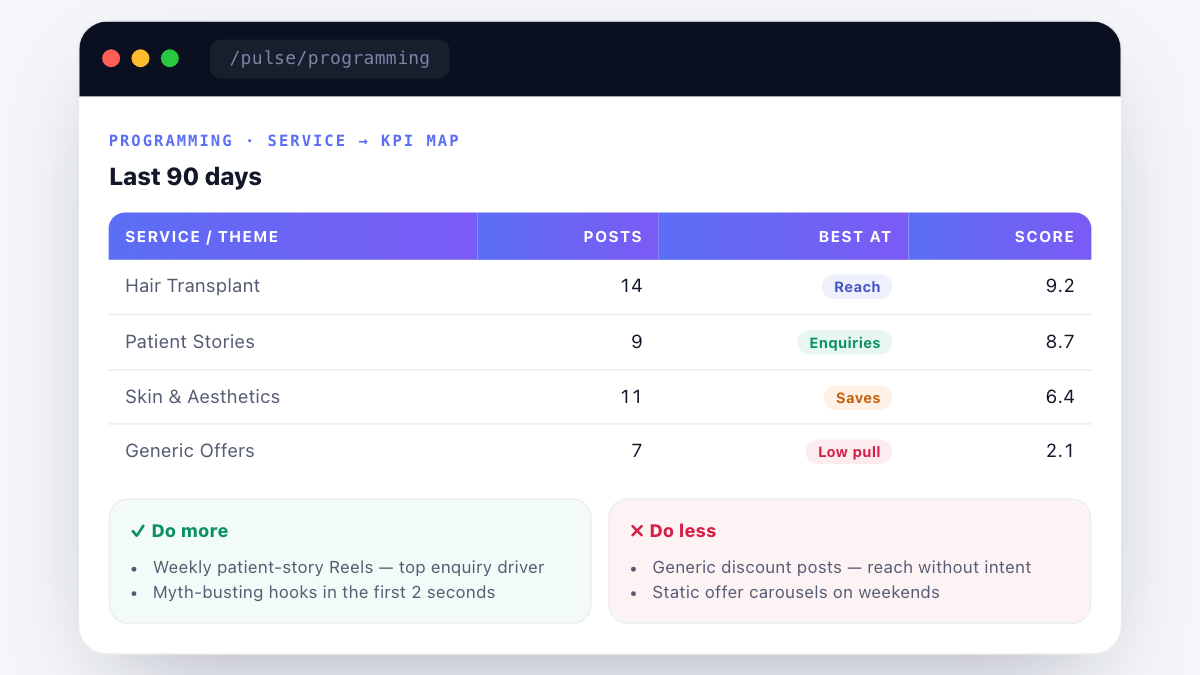

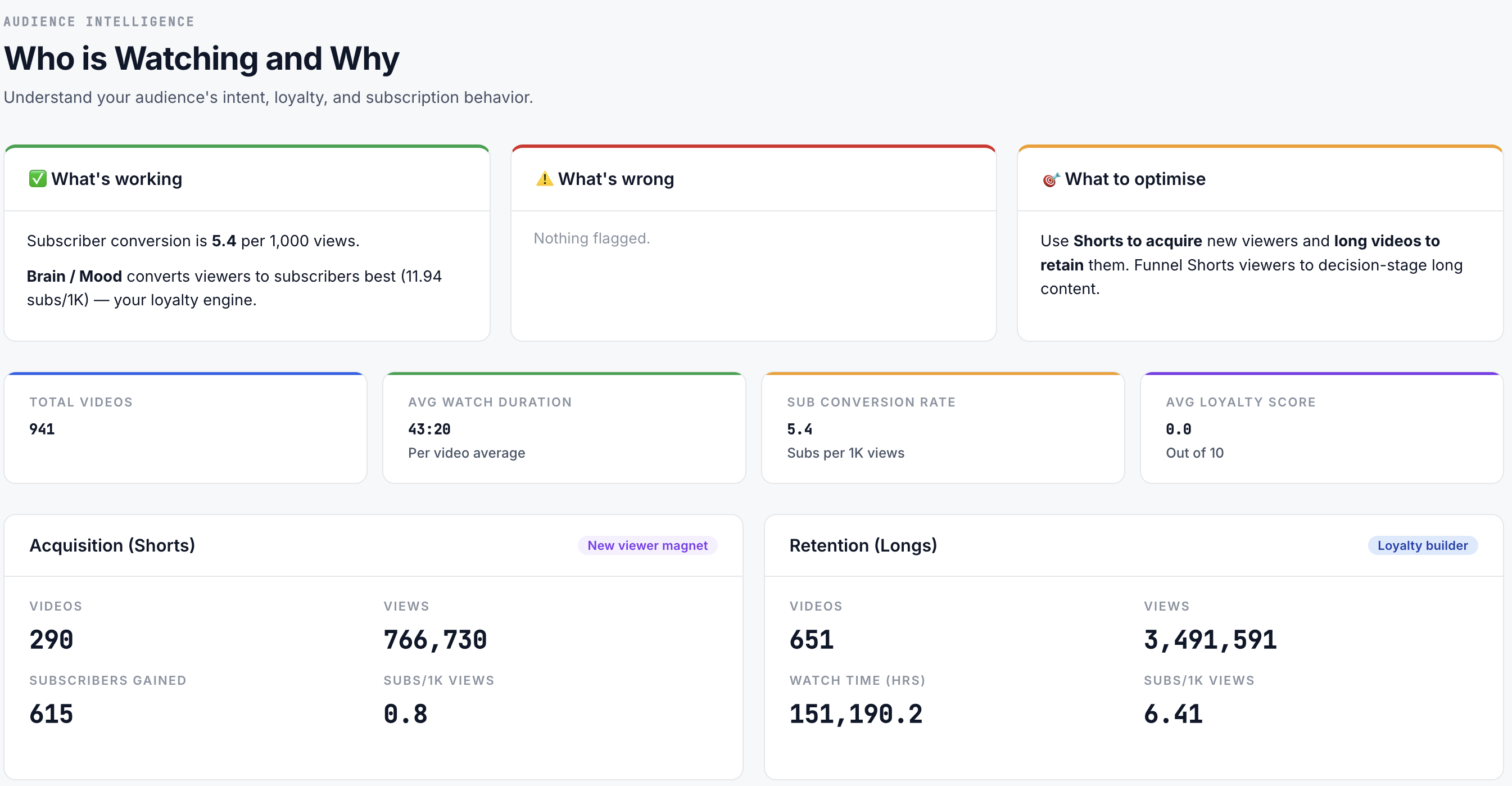
 sie" style="color:inherit;text-decoration:underline;text-decoration-color:rgba(42,126,200,.5);text-underline-offset:2px">Rank OS into a single 0-100 score with sub-scores and next-best-actions per listing" width="1200" height="675" loading="lazy" decoding="async" style="width:100%;height:auto;display:block;">
ICG's YouTube SEO and AIO retainers follow the same 70-30 fixed-variable model that runs across our Foundation (Rs 49,999 per month), Growth (Rs 74,999 per month), and Scale (Rs 99,999 per month) SEO packages. Seventy percent of the fee is fixed against defined deliverables — scripting, publishing, thumbnails, compliance review, Shorts, community management. Thirty percent is tied to a 12-month subscriber, watch-hour, or attributable-lead target on a sliding-scale slab.
Why a sliding scale and not a pure performance model on YouTube? Because the algorithm has real seasonality and platform-side variability that a doctor or a hospital cannot influence. A pure pay-per-lead structure penalises the agency for platform behaviour outside its control. The 70-30 model keeps the base work funded and rewards the outcome the client actually cares about — subscribers, watch time, or leads, chosen at contract signing.
FAQ
Is it legal for Indian doctors to earn AdSense revenue from YouTube?
Yes. Earning AdSense revenue is not restricted by the NMC. What the NMC restricts is content — self-promotion, testimonials, and superiority claims. A doctor can run a monetized channel as long as content stays educational and complies with the 2022 conduct advisory, YouTube's health policy, and the DMR Act 1954.
How long does it take to reach YouTube AdSense eligibility for a medical channel in India?
With a disciplined cadence of two long-form videos and 4-5 Shorts per week, most Indian medical channels hit the 1,000 subscriber and 4,000 watch-hour threshold in 6-9 months. Channels that publish sporadically often take 18 months or never cross the line.
Can a hospital use patient testimonials on YouTube under the DPDP Act?
Yes, with explicit written consent that names YouTube as a publication channel, lists permitted uses, and includes a revocation clause. Verbal or blanket consents collected before 2024 are not defensible under the DPDP Act. Retroactive consent collection is the fastest fix for existing testimonial libraries.
What is a realistic AdSense CPM for medical content in India?
Between Rs 80 and Rs 250 per thousand ad-eligible views. Dental, IVF, cardiology, and pharma-adjacent content sits at the top of that band. Nutrition and general wellness sits near the bottom. Indian medical CPMs are 3-4x higher than general lifestyle content because of advertiser bid density.
Should our hospital run one YouTube channel or one per doctor?
Use one hospital brand channel as the parent, and spin off doctor-personal channels for two or three strong on-camera clinicians. Cross-link them. This structure protects the audience if a clinician exits and gives each doctor authority-building space without fragmenting your marketing budget across ten small channels.
Can pharma companies sponsor Indian medical YouTube channels?
Yes, within the boundaries of the DMR Act and the Uniform Code for Pharmaceutical Marketing Practices. OTC categories, nutraceuticals, and devices have wider latitude. Prescription-only categories are heavily restricted. Every sponsorship needs a documented brief and a compliance sign-off before publish.
Does YouTube favour verified health sources for Indian channels?
Yes. YouTube's health source verification programme, open to eligible Indian channels through a formal review, adds an information panel to videos and gives a small ranking lift on health-related search queries. Eligibility typically requires that the channel is operated by a licensed clinician or an accredited healthcare organisation.
How does a hospital attribute YouTube-sourced revenue to individual videos?
Use a unique WhatsApp link or a UTM-tagged form link per video, route incoming leads into a healthcare CRM that captures source URL, and reconcile booked consultations back to video IDs monthly. Without this loop, YouTube revenue attribution defaults to guesswork — and finance stops funding the channel.
Book a free 30-minute Brand & Growth Diagnostic.
It's a working session, not a sales pitch — you leave with a written root-cause analysis you can act on, whether or not you engage ICG.
Questions readers ask
about this topic.
The three platforms
behind every ICG engagement.
Beacon
CAPI middleware that fixes Event Match Quality, translates CRM statuses to Meta-standard events, dedups across channels.
Agency OS
Live client dashboard. GSC, GA4, Google Ads, Meta Ads, IVR calls in one view. Login anytime, not monthly.
Phoenix
Clinic revenue intelligence over your PMS. Daily action queue: Prevent Loss, Maintain & Engage, Grow Revenue. 46-centre rollout.
Or book a free 30-min audit to see all three in action on your account.
Healthcare brands
that already run on ICG.
A representative slice of the 150+ healthcare brands ICG has delivered for across India. Most engagements remain under NDA.


What ICG clients say · on video.
"Scale up of organic channels and business consulting. ICG has absolute domain authority in their field."
"Working with ICG transformed how we acquire IVF patients in Gurgaon. They understand the fertility journey from inquiry to consult..."
"What Ichelon accomplished — they got all my ideas and worked over 3-4 months to create an amazing, super-customised website."
Need help operationalising this?
Every ICG service is healthcare-only, NMC + DPDP-aware, and built around the patient-research patterns that drive Indian healthcare growth in 2026.
More from
ICG.
Healthcare AIO is the discipline of getting your clinic or hospital cited inside Google AI Overviews, ChatGPT and Perplexity answers — not j...
Conversational-search advertising places brand messages inside AI chat answers — ChatGPT, Perplexity, Copilot — rather than beside a results...
NABH digital compliance means every claim, image and testimonial your hospital publishes online matches what an accreditation surveyor can v...
Stop guessing.
Book a Diagnostic.
30 minutes. Free. With the AI-powered healthcare-only marketing agency 150+ brands already run on. No slides, no pitch, no hard close.


