


The Attribution Problem in Hospital Groups
ICG's diagnostic data across 28+ hospital engagements shows one number consistently: 47%.
No pitch. Written root-cause diagnosis. AI-powered, healthcare only.
Direct answer
ICG's diagnostic data across 28+ hospital engagements shows one number consistently: 47%.
TL;DR
ICG's diagnostic data across 28+ hospital engagements shows one number consistently: 47%.
That is the median percentage of a hospital group's new-patient consultation revenue that can be attributed to a specific marketing source at the start of an ICG engagement.
The other 53% is real revenue — patients are showing up, being treated, generating procedure fees. But where those patients came from is invisible in the marketing system.
This is the attribution problem. And it has three compounding costs that most hospital CFOs have not quantified.
Cost 1 — Misallocated media spend
When 53% of consultation revenue has no traceable marketing origin, the marketing budget allocation is based on the 47% that is visible. The channels that appear most efficient in the partial attribution data get more budget. The channels that are driving the invisible 53% — which often includes SEO organic, YouTube organic, and GP referral — get no budget because they appear to produce no conversions.
The result: budget flows toward paid media (the most trackable) and away from organic channels (the least trackable, but often the most cost-efficient). Over 12–24 months, this creates a media-dependency trap: the hospital becomes addicted to paid spend because organic has been starved of investment.
ICG's data across 150+ client portfolio: organic consultation share (SEO + YouTube organic) grows to 30–45% by month 18 of a full-programme engagement. For a hospital spending ₹40 lakh/month in paid media, that 30–45% organic share represents ₹12–18 lakh/month in media cost elimination at equivalent consultation volume.
Cost 2 — Algorithm mistraining
Both Google's Smart Bidding and Meta's algorithm learn from the conversion events they receive. When only 47% of conversions are visible to the algorithms, they learn from a biased sample. The 53% of conversions that are invisible — which often disproportionately includes high-consideration, high-value patients (the ones who researched for 90+ days before converting, the international patients who contacted via WhatsApp rather than form) — are absent from the training set.
The algorithm optimises for the visible 47%, which skews toward shorter-cycle, lower-consideration conversions. Cardiac OPD emergency patients (3-day consideration) show up more clearly in the partial attribution data than cardiac surgery patients (45-day consideration). The algorithm learns to favour the former, under-serving the latter — even though the latter generates 15–20× the procedure revenue.
Cost 3 — The valuation conversation
For PE-backed hospital groups and those approaching fundraising, the attribution gap is a valuation problem.
An investor looking at a hospital group that cannot attribute 53% of its revenue has one of two interpretations: either the marketing infrastructure is broken (a fixable problem with a specific cost), or the business does not understand its own customer acquisition economics (a more serious concern about management capability).
The most sophisticated healthcare investors are now asking specifically: "What is your CPQL?" and "What percentage of your consultation revenue is attributable to marketing channels?" A hospital that cannot answer these questions is at a disadvantage in a competitive fundraising environment.
The remediation cost — building the attribution infrastructure — is ₹8–15 lakh as a one-time project. The return on that investment is not just better campaign performance. It is the ability to answer the investor's questions with a specific, defensible number.
What 80% attribution looks like
ICG's target for a full RevOps engagement: 80% of new-patient consultation revenue attributable to a marketing source within 8 months. This is not 100% — walk-ins and peer-referrals that cannot be digitally captured will always represent some share. But 80% is sufficient for the marketing P&L that the CMO can defend at board level and the investor can read with confidence.
The path from 47% to 80%: Beacon CAPI (captures the 35–42% of conversions currently invisible due to iOS/browser degradation), offline conversion import from CRM (captures consultation attendance vs form submission), GP referral digital programme (turns the previously uncaptured GP referral channel into a measurable source), and UTM tagging across all channels (the simplest fix, often undone).
The 47% attribution gap is not a permanent condition. It is a 90-day sprint to fix.
→ Revenue Operations Consulting for Healthcare
If this post's issues are what you're facing at enterprise scale, ICG's engagement model that addresses this is above. Co-Founder-engaged. Benchmark-driven. CPQL-measured.
Read more →Book a free 30-minute Brand & Growth Diagnostic.
It's a working session, not a sales pitch — you leave with a written root-cause analysis you can act on, whether or not you engage ICG.
The three platforms
behind every ICG engagement.
Beacon
CAPI middleware that fixes Event Match Quality, translates CRM statuses to Meta-standard events, dedups across channels.
Agency OS
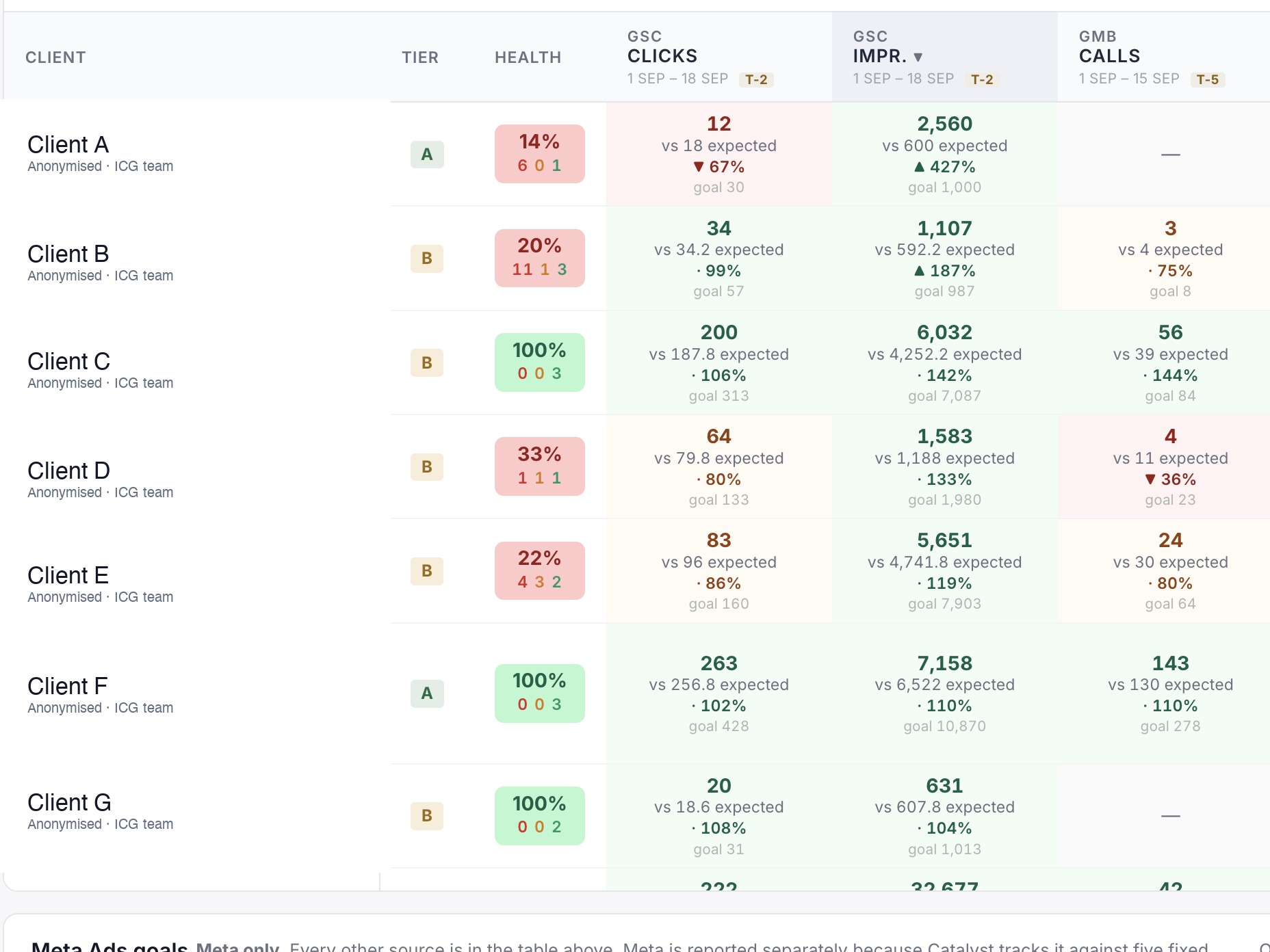
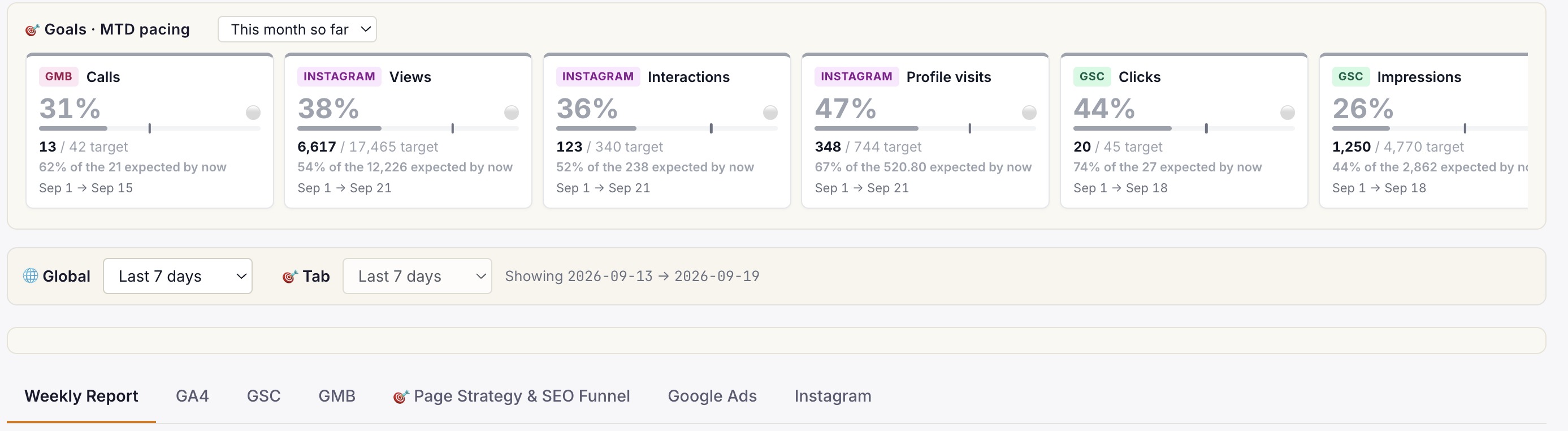
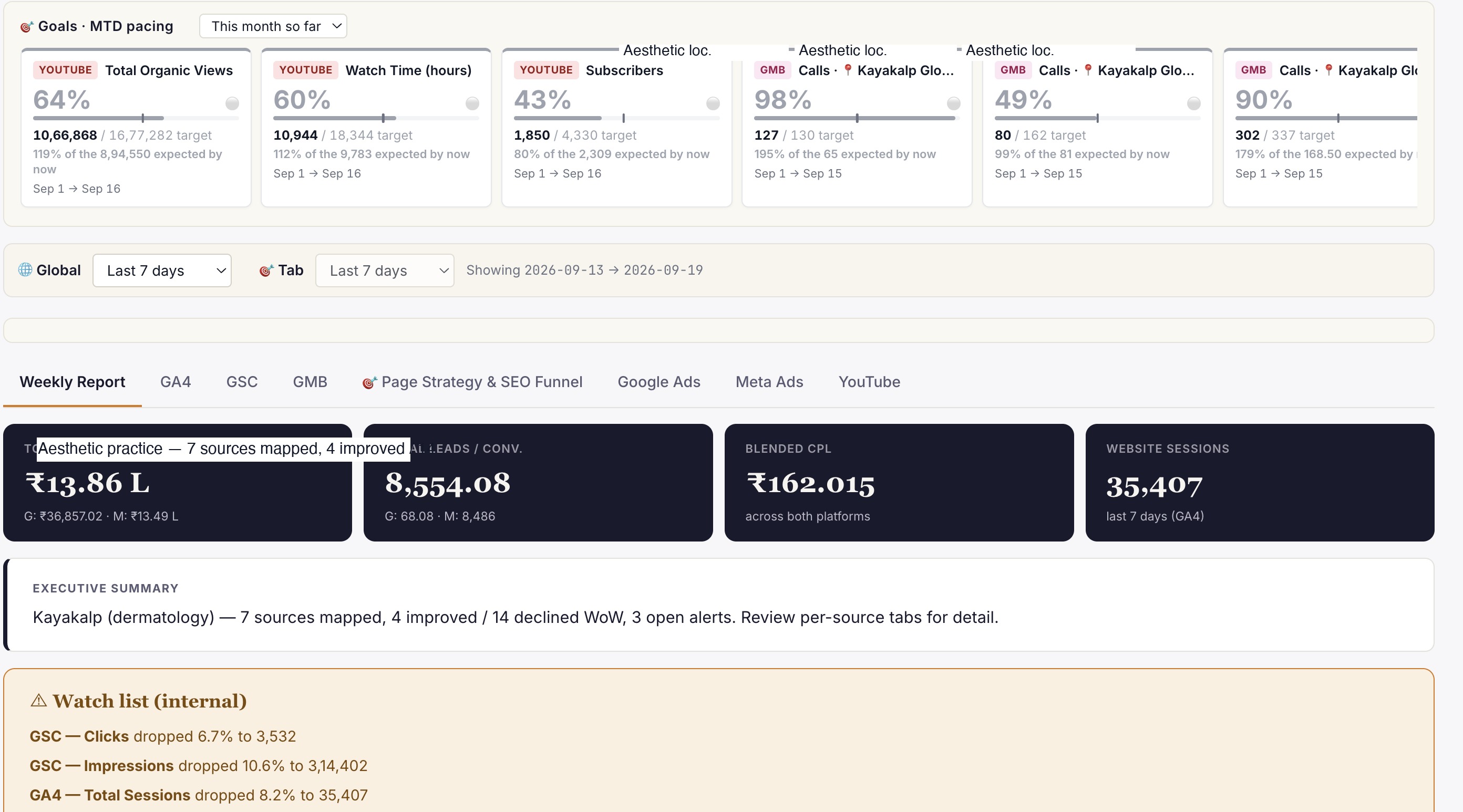
Live client dashboard. GSC, GA4, Google Ads, Meta Ads, IVR calls in one view. Login anytime, not monthly.
Phoenix
Clinic revenue intelligence over your PMS. Daily action queue: Prevent Loss, Maintain & Engage, Grow Revenue. Multi-centre rollout.
Or book a free 30-min audit to see all three in action on your account.
Healthcare brands
that already run on ICG.
A representative slice of the 150+ healthcare brands ICG has delivered for across India. Most engagements remain under NDA.


What ICG clients say · on video.
"Mental health marketing requires a different sensitivity. ICG built compliance-aware campaigns that respect both patients and our..."
"Bariatric surgery patients need a long consideration cycle. ICG built a content + paid system that respects that timeline."
"Working with ICG felt like working with an in-house growth team that happens to specialise in healthcare."
Need help operationalising this?
Every ICG service is healthcare-only, NMC + DPDP-aware, and built around the patient-research patterns that drive Indian healthcare growth in 2026.
Every practice welcome — packages from ₹20,000/mo.
Goals-Driven engagements · Performance-Linked Payout Models available
More from
ICG.
Five trends shaping Indian healthcare marketing through 2027: AI-first patient research, Conversions API adoption, ABDM discovery, the AEO w...
Healthcare AIO is the discipline of getting your clinic or hospital cited inside Google AI Overviews, ChatGPT and Perplexity answers — not j...
Conversational-search advertising places brand messages inside AI chat answers — ChatGPT, Perplexity, Copilot — rather than beside a results...
Stop guessing.
Book a Diagnostic.
30 minutes. Free. With the AI-powered healthcare-only marketing agency 150+ brands already run on. No slides, no pitch, no hard close.


