


IVF PPC Strategy India 2026: CPQL Benchmarks and Playbook
Real CPQL benchmarks for IVF PPC in India in 2026 — by platform, by city tier — plus the ART Act compliant creative angles, campaign structure, and coordinator SLAs that separate fertility clinics paying Rs 800 per qualified lead from those burning Rs 3,000.
No pitch. Written root-cause diagnosis. AI-powered, healthcare only.
Direct answer
Real CPQL benchmarks for IVF PPC in India in 2026 — by platform, by city tier — plus the ART Act compliant creative angles, campaign structure, and coordinator SLAs that separate fertility clinics paying Rs 800 per qualified lead from those burning Rs 3,000.
TL;DR
TL;DR
- Qualified IVF lead costs (CPQL) in India range Rs 450 to Rs 1,800 depending on platform, city tier and audience filters. Meta and YouTube typically undercut Google Search on raw CPQL, but Search still wins on close-to-cycle rate.
- The strongest IVF PPC stack in 2026 is a four-layer setup: Google Search for high intent, Meta for interruption plus retargeting, YouTube for trust and AIO surfaces, WhatsApp Business as the qualification layer.
- The ART (Regulation) Act 2021 restricts sex-selection claims and guaranteed-outcome language. The DPDP Act 2023 now decides whether your landing-page lead form and WhatsApp routing are even legal to run.
- A Rs 50,000 per month PPC spend, run properly, produces 30 to 70 qualified consult leads for a Tier-1 city IVF centre. Numbers below that almost always reflect broken tracking, coordinator delays, or a wrong bid strategy — not weak demand.
Table of Contents
- Why IVF PPC matters for Indian fertility clinics in 2026
- What are the CPQL benchmarks for IVF PPC in India?
- Which platforms deliver the best qualified IVF leads?
- How should IVF PPC campaigns be structured?
- What creative angles work in IVF ads without breaching the ART Act?
- How do you filter low-intent leads before they hit your CRM?
- What does a Rs 50K per month IVF PPC budget actually deliver?
- How does ICG approach IVF PPC differently?
- 70-30 model: what fertility clinics pay ICG
- Frequently asked questions
Why IVF PPC matters for Indian fertility clinics in 2026
Direct answer: IVF is one of the highest-ticket outpatient decisions in Indian healthcare. A single cycle costs Rs 1.5 lakh to Rs 3.5 lakh across most metros, and 40 to 60 percent of couples run three or more cycles before conclusion. That makes every qualified consult worth Rs 15,000 to Rs 40,000 in direct first-cycle revenue and often two to three times that over lifetime treatment. PPC is the fastest channel to reach couples inside that active-decision window.
Indian search demand for fertility care has grown steadily since 2022 as urban marriage age climbed past 28 in the top eight metros and PCOS awareness spread through Instagram health creators. Delhi NCR, Mumbai, Bengaluru, Hyderabad, Chennai, Pune, Ahmedabad and Kolkata together drive over 70 percent of paid fertility search volume in India. But Tier-2 cities — Jaipur, Lucknow, Indore, Kochi, Bhubaneswar, Coimbatore — are the fastest-growing pools of net-new consults for centres that price sensibly and travel-friendly.
What has changed structurally is compliance. The Assisted Reproductive Technology (Regulation) Act, 2021 tightened what fertility centres can and cannot promise inside an ad. The Digital Personal Data Protection Act, 2023 changed how lead forms must be built, how consent must be recorded, and how patient data can be stored or shared between clinic staff. Fertility centres still running 2019-style PPC — sweeping success-rate claims, no consent trail, WhatsApp lists forwarded across coordinators — are one complaint away from a National Medical Commission notice or a DPDP penalty. Marketing directors who understand this are quietly winning the category.
What are the CPQL benchmarks for IVF PPC in India?
Direct answer: In 2026, cost per qualified lead for IVF PPC in India sits between Rs 450 and Rs 1,800 depending on platform, city tier and how strict your qualification filter is. Google Search runs highest, Meta sits in the middle, YouTube runs lowest when the video creative is decent. A qualified lead here means someone who confirmed city, age band, marital status and treatment intent — not merely someone who tapped submit on a form.
| Platform | Tier-1 metro CPQL | Tier-2 city CPQL | Consult show-up rate |
|---|---|---|---|
| Google Search (branded + generic) | Rs 950 to Rs 1,800 | Rs 600 to Rs 1,100 | 55 to 70 percent |
| Meta (Instagram + Facebook) | Rs 550 to Rs 1,200 | Rs 350 to Rs 800 | 35 to 55 percent |
| YouTube (in-stream + Discovery) | Rs 400 to Rs 900 | Rs 250 to Rs 650 | 40 to 60 percent |
| Google Performance Max | Rs 700 to Rs 1,400 | Rs 450 to Rs 950 | 40 to 55 percent |
Two clarifications matter. First, the word qualified varies by clinic — some centres define it as a rescheduled consult, others as a paid consult booking, others as a coordinator-verified prospect who confirmed the appointment on WhatsApp. Second, blended CPQL across the full mix matters more than any single channel number in isolation, because Meta at Rs 550 that never converts to a cycle is worse than Google Search at Rs 1,600 that closes 22 percent of cycles booked.
Which platforms deliver the best qualified IVF leads?
Direct answer: For Indian IVF clinics in 2026, the winning stack is Google Search for high-intent capture, Meta for education and retargeting, YouTube for trust plus AI Overview surface presence, and WhatsApp Business as the routing layer between all three. No single channel wins alone. Most centres that hit their consult targets run all four with roughly a 45-30-15-10 spend split by revenue attribution.
Google Search catches active-decision demand: "IVF cost near me", "best IVF doctor Bengaluru", "IUI vs IVF success rate", "test tube baby cost Delhi". Cost per click for the top three IVF Search keywords across Indian metros sits between Rs 85 and Rs 280 depending on quality score and competition. Match types matter more than raw bids — phrase match with weekly negative-keyword hygiene routinely outperforms broad match by 30 to 40 percent on CPQL.
Meta Ads reaches the pre-decision audience — couples researching, comparing, or simply seeing fertility content in feed for the first time. Custom audiences built off page visitors, video viewers, and lookalikes of past patients tend to convert two to three times better than cold interest targeting. This is where the Meta Catalyst IQ engine ICG runs for fertility clients earns its keep — it rotates creatives by fatigue signal and reassigns spend to the winning ad set on a 24-hour cycle rather than the usual seven-day human review loop.
YouTube has quietly become the most under-priced fertility channel in India. Founder-doctor explainer videos of two to four minutes run at Rs 0.30 to Rs 0.80 cost per view and drive branded search lift at five to eight times the rate of comparable Meta view campaigns. YODA, ICG's AI-native YouTube engine for healthcare, was built specifically to industrialise this — script, title, thumbnail and metadata for IVF explainers get generated and A/B tested weekly instead of quarterly.
WhatsApp Business is not a lead generation channel. It is the qualification and re-engagement layer that decides whether the leads from the other three are usable. Every ad click should route into a WhatsApp flow that captures age, city, marital status and prior treatment history before any coordinator picks up the phone.
How should IVF PPC campaigns be structured?
Direct answer: The cleanest IVF campaign structure in 2026 uses four separate spend buckets — high-intent Search, city or area Search, Meta prospecting, and cross-platform retargeting — with a separate CPQL target set for each. Lump-sum "IVF campaign" spending inside a single ad set is the single most common reason clinics report Rs 3,000-plus CPQLs when their peers pay Rs 800 for the same audience.
Bucket 1: High-intent Search
Keywords like "IVF cost", "IVF doctor near me", "IVF specialist [city]", "test tube baby cost". Highest CPCs, highest conversion. Use exact and phrase match, avoid broad. Target CPQL: Rs 1,200 to Rs 1,800 in metros, Rs 700 to Rs 1,100 in Tier-2.
Bucket 2: City or area Search
Keywords tied to specific neighbourhoods your clinic actually serves — Andheri, Whitefield, Gurugram Sector 56, Banjara Hills, Salt Lake. Lower competition, higher relevance to your real catchment. Target CPQL: Rs 700 to Rs 1,100 in metros.
Bucket 3: Meta prospecting
Lookalike audiences built off past patients, uploaded via hashed CRM export in a DPDP-compliant flow, plus interest targeting for parenting and wellness communities. Target CPQL: Rs 550 to Rs 900.
Bucket 4: Cross-platform retargeting
Website visitors, video viewers past 50 percent, WhatsApp openers who did not complete qualification, form abandoners. Target CPQL: Rs 250 to Rs 500. This bucket should be only 15 to 20 percent of spend but consistently drives 35 to 45 percent of qualified consults.
What creative angles work in IVF ads without breaching the ART Act?

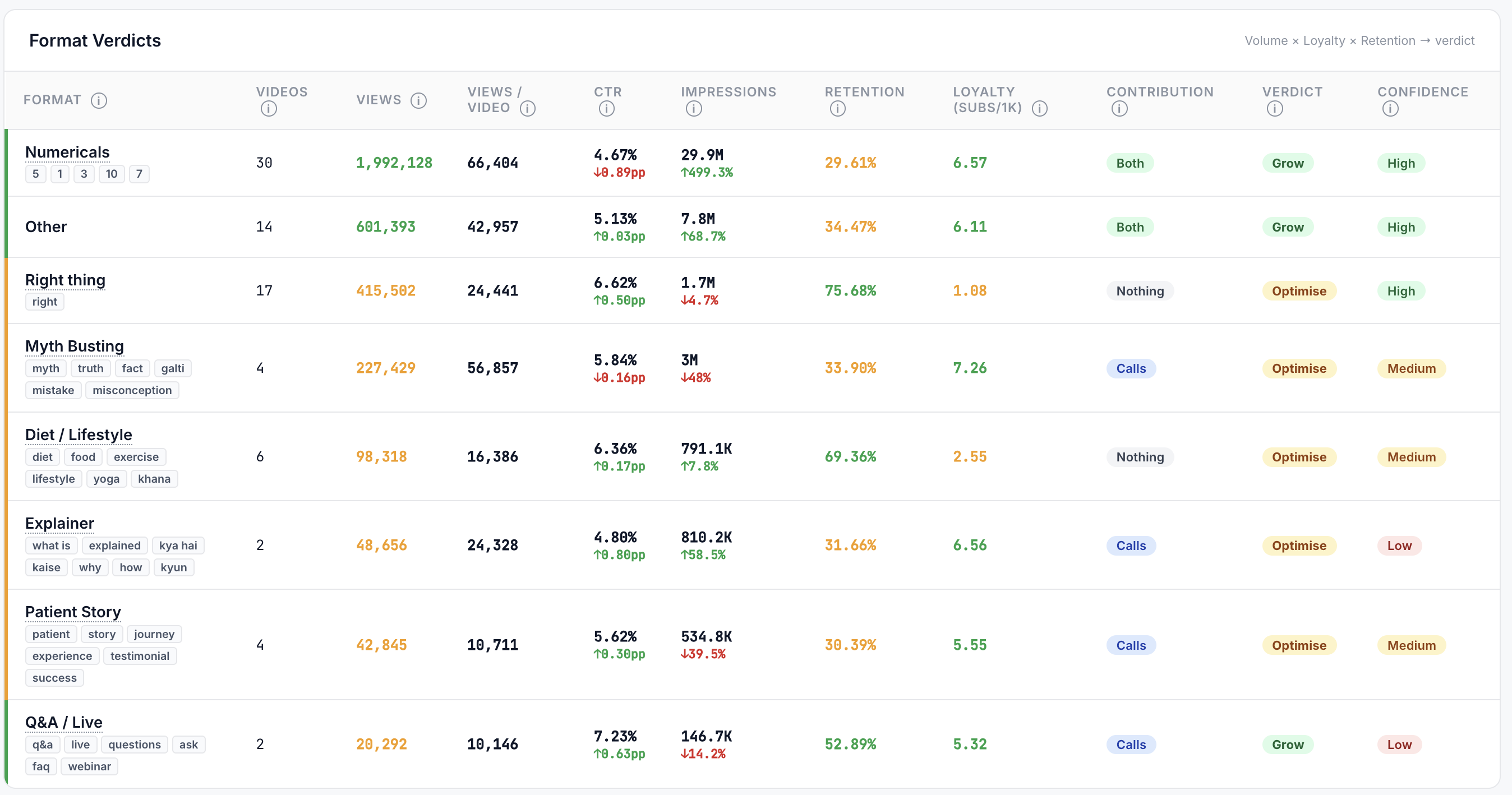
Direct answer: The ART Act 2021 prohibits sex-selection claims, guaranteed outcome language, and misleading success-rate advertising. Compliant creatives lean on doctor credentials, transparent process explainers, patient counselling access, and finance options. Emotional imagery like families and babies is permitted but must not be framed as an implied outcome guarantee for the viewer.
Angles that consistently outperform in Indian IVF PPC:
- Doctor-led explainers: 45 to 90 second videos where the fertility consultant walks through what a first consultation actually covers. Book-consult CTR runs two to four times higher than static image ads on Meta and delivers stronger consult show-up rates.
- Cost transparency creatives: "What Rs 1.8 lakh actually covers at our centre" carousels perform strongly against couples researching finance options. They also filter out low-budget enquiries at the ad level.
- Age-band specific messaging: 28 to 34, 35 to 39 and 40-plus audiences respond to very different framing and different medical realities. Splitting creatives by age band alone reduces CPQL by 20 to 30 percent versus a single generic creative.
- Second-opinion angle: For couples who have already done one or two failed cycles elsewhere, "bring your reports for a free clinical review" is among the highest-converting angles in Indian fertility PPC. It also self-selects for higher-intent prospects.
Angles to avoid: guaranteed-pregnancy language, 100 percent success claims, world-class superlatives, sex-selection hints of any kind, and imagery that implies a specific baby is the direct outcome of a specific patient's treatment. That last one crosses into identifiable-patient territory and can breach both the NMC advertising code and DPDP consent rules simultaneously.
How do you filter low-intent leads before they hit your CRM?
Direct answer: Filter with a three-question pre-qualifier before any human coordinator touches the lead — city, marital status, and prior treatment history. For higher-spend campaigns, add a soft-friction step like WhatsApp OTP verification or a nominal Rs 99 consult token. Both approaches drop unqualified volume by 40 to 60 percent while lifting consult show-up rates by 15 to 25 percentage points.
A concrete filter stack that works for Indian IVF centres:
- Landing page form with city dropdown restricted to your actual catchment radius
- Age band selector — 18 to 24 auto-flagged for coordinator review, 25 to 45 auto-routed to a consult slot
- Two-tap WhatsApp OTP verification to confirm the phone number is real and reachable
- Coordinator sees full context — city, age, prior cycles, source campaign — before dialling
Every lead should hit a healthcare-purpose-built CRM. The Nexus CRM ICG operates for fertility clients at Rs 14,999 per month is set up specifically for this workflow — city and catchment filters, cycle-history tags, DPDP consent audit trail, coordinator response-time SLAs, and WhatsApp reply timers baked in from day one. Clinics using generic sales CRMs regularly lose 30 to 45 percent of qualified consults simply because coordinator SLAs are not enforced and lead ownership is unclear after the first call attempt.
What does a Rs 50K per month IVF PPC budget actually deliver?
Direct answer: A well-run Rs 50,000 monthly PPC spend in a Tier-1 Indian city delivers 30 to 70 qualified consult leads, of which 12 to 25 will show up for a consult, and 2 to 5 will convert into a paid cycle inside 60 days. That translates to Rs 3 lakh to Rs 8 lakh of first-cycle revenue against Rs 50,000 ad spend and roughly Rs 35,000 to Rs 75,000 in agency fees, before lifetime cycle value is counted.
| Monthly PPC spend | Qualified leads | Consults completed | Cycles booked (60 days) | Est. first-cycle revenue |
|---|---|---|---|---|
| Rs 50,000 | 30 to 70 | 12 to 25 | 2 to 5 | Rs 3 to 8 L |
| Rs 1,00,000 | 65 to 140 | 28 to 55 | 5 to 11 | Rs 7 to 17 L |
| Rs 2,00,000 | 140 to 280 | 60 to 110 | 11 to 22 | Rs 15 to 34 L |
These numbers assume a tracked conversion setup with GA4 plus Meta Conversions API server-side, a functioning WhatsApp qualification layer, and a coordinator team calling qualified leads within 15 minutes of form submission. Miss any one of those three and the entire model collapses. ICG has audited fertility centres burning Rs 1.5 lakh per month while producing four consults — and the root cause is almost always coordinator response time or CRM ownership, not the ads themselves.
How does ICG approach IVF PPC differently?
ICG runs IVF PPC as a four-layer system rather than a straight media buy. Layer one is competitive intelligence — Prism Spy pulls what other fertility centres in your city are running on Meta Ads right now, which creatives they are scaling, and which angles they are quietly testing. The clinic's marketing director gets a weekly digest instead of guessing what the market is doing.
Layer two is the ad engine. Meta Catalyst IQ handles Meta Ads with a creative-rotation logic tuned specifically for healthcare — the algorithm knows the difference between a fertility creative that fatigues after four days and a hair-transplant creative that runs healthy for six weeks. Google Ads sits on a manual bid layer with negative keyword hygiene refreshed weekly and quality score monitored per ad group.
Layer three is organic presence that reduces paid dependence over time. Angryturtle handles Google Business Profile for every fertility centre location — reviews, photos, Q&A, weekly posts, all synced from a single dashboard. A well-run GBP absorbs 20 to 30 percent of branded search demand that would otherwise cost paid clicks. YODA handles YouTube: doctor explainers, patient education, and the AI Overview surface that Google is quietly routing more fertility queries into every month.
Layer four is the qualification and reporting layer. Nexus CRM captures every lead, tags by source campaign, tracks consult-to-cycle conversion, and reports weekly to the marketing director. Prism Pulse runs alongside to track the clinic's Instagram organic performance — critical because a growing share of urban fertility leads are social-first patients who research on Instagram before ever hitting Google, and generic analytics setups miscount them as direct traffic.
70-30 model: what fertility clinics pay ICG
ICG's healthcare PPC packages follow a 70-30 fixed-variable model. Seventy percent of the fee is fixed month-to-month for guaranteed retainer work — creatives, bid management, weekly reporting, CRM integration. Thirty percent is tied to a 12-month qualified-lead target on a sliding-scale slab. Hit target, the full variable pays. Overshoot, ICG earns more. Undershoot, ICG earns less. This is the anchor pricing framework across every specialty ICG runs, not a fertility-only construct.
Three package tiers apply to IVF and other specialty PPC engagements:
- Foundation Rs 49,999 per month — single-city fertility clinic, up to Rs 75,000 monthly ad spend, Google Search plus Meta Ads.
- Growth Rs 74,999 per month — multi-location or two-city fertility chain, up to Rs 2 lakh monthly ad spend, adds the YouTube layer via YODA.
- Scale Rs 99,999 per month — three-plus locations or Rs 2 lakh-plus monthly ad spend, adds Prism Spy weekly competitive intelligence and full Meta Catalyst IQ engine access.
Nexus CRM is priced separately at Rs 14,999 per month and is optional, though recommended for any fertility centre running more than 30 qualified leads monthly. HealthPro 360 at Rs 14,999 per month sits on top for clinics that want revenue cycle management and EHR overlays synchronised with the PPC lead source data — useful when the finance team needs to attribute cycle revenue back to specific campaigns for board reporting.
Frequently asked questions

Answers to the questions Indian fertility centre owners and marketing directors ask most often when scoping an IVF PPC engagement.
Book a free Google Ads account audit.
Raman Soni's team pulls your account, reviews campaign structure, keyword intent tiering, landing pages, and CPQL attribution. 45 minutes, actionable.
Questions readers ask
about this topic.
The three platforms
behind every ICG engagement.
Beacon
CAPI middleware that fixes Event Match Quality, translates CRM statuses to Meta-standard events, dedups across channels.
Agency OS
Live client dashboard. GSC, GA4, Google Ads, Meta Ads, IVR calls in one view. Login anytime, not monthly.
Phoenix
Clinic revenue intelligence over your PMS. Daily action queue: Prevent Loss, Maintain & Engage, Grow Revenue. 46-centre rollout.
Or book a free 30-min audit to see all three in action on your account.
Healthcare brands
that already run on ICG.
A representative slice of the 150+ healthcare brands ICG has delivered for across India. Most engagements remain under NDA.


What ICG clients say · on video.
"Working with ICG transformed how we acquire IVF patients in Gurgaon. They understand the fertility journey from inquiry to consult..."
"ICG built our IVF marketing system from the ground up. The team understands healthcare specifics, not just generic digital marketi..."
Need help operationalising this?
Every ICG service is healthcare-only, NMC + DPDP-aware, and built around the patient-research patterns that drive Indian healthcare growth in 2026.
More from
ICG.
Healthcare AIO is the discipline of getting your clinic or hospital cited inside Google AI Overviews, ChatGPT and Perplexity answers — not j...
Conversational-search advertising places brand messages inside AI chat answers — ChatGPT, Perplexity, Copilot — rather than beside a results...
NABH digital compliance means every claim, image and testimonial your hospital publishes online matches what an accreditation surveyor can v...
Stop guessing.
Book a Diagnostic.
30 minutes. Free. With the AI-powered healthcare-only marketing agency 150+ brands already run on. No slides, no pitch, no hard close.


