


ICU Nursing Shortage in India: Why Hospitals Can't Staff Beds
India's ICU has a nurse pipeline problem, not just a hiring problem. See NABH ratios, real attrition numbers, and what actually works for hospital staffing.
No pitch. Written root-cause diagnosis. AI-powered, healthcare only.
Direct answer
India's ICU has a nurse pipeline problem, not just a hiring problem. See NABH ratios, real attrition numbers, and what actually works for hospital staffing.
TL;DR
ICG's recruitment team receives more briefs for ICU nursing positions than any other clinical role. We also have longer fill times for ICU nursing than for any other nursing role. The demand is real. The supply is structurally constrained. This article explains why India's critical care nursing shortage is not a training-throughput problem — it's a structural mismatch between where ICU competency is built and where it is priced.
Why ICU nursing is a supply problem, not just a demand problem
India trains 150,000–200,000 nurses per year. The country does not have a nursing shortage in aggregate — it has a critical care nursing shortage specifically.
Structural cause 1 — ICU nursing requires post-basic training most hospitals don't provide
Basic nursing (GNM or B.Sc) does not produce ICU-ready nurses. ICU competency requires additional training: ventilator management, haemodynamic monitoring, ABG interpretation, ACLS, invasive line management. Some hospitals run structured ICU training programmes. Most do not. The result: ICU-trained nurses are a subset of the total nursing workforce, largely trained by the hospitals that currently employ them.
Structural cause 2 — ICU nurses are underpriced relative to their value
A general ward nurse with 5 years experience earns ₹4–6 lakh in a Tier 1 city. An ICU nurse with 5 years experience — significantly rarer, specifically trained, operating at higher clinical complexity — earns ₹5.5–8.5 lakh. The 20–30% premium is real but not large enough to make the ICU career path dramatically more attractive than general nursing.
Structural cause 3 — Burnout attrition is underaddressed
ICU nursing has significantly higher burnout rates than general nursing. Night shift rotation, high patient acuity, emotional intensity, and frequently inadequate nurse-to-patient ratios all contribute. Hospitals that do not address structural factors lose ICU nurses at 2–3× the rate of general ward nurses — and try to fill the positions with identical conditions.
What hospitals are getting wrong
Wrong: Posting "Staff Nurse — ICU preferred" without specificity
"ICU preferred" in the description generates 80% applications from nurses without ICU experience. The recruiter spends time screening out candidates. The qualified pool is tiny.
Right approach: "ICU Staff Nurse" with "Minimum 2 years ICU experience" and salary that reflects the premium.
Wrong: Requiring 3+ years ICU experience for all ICU roles
The pool of nurses with verified 3+ years ICU experience at the salary most hospitals offer is small. Hospitals open to 1–2 years ICU experience with strong training credentials — and willing to develop the nurse further — fill their ICU faster and build loyalty simultaneously.
Wrong: Offering theoretical relocation support
ICG has multiple ICU candidates in Chandigarh, Kochi, Patna, and Indore open to metro relocation. Offers fall through because "we'll help you find accommodation" is not the same as "we provide accommodation for 3 months." Nurses with families considering relocation need concrete, not vague, support.
What actually helps
- Build an internal ICU pipeline. The hospitals with consistent ICU nursing supply run structured internal training: taking general nurses after 2–3 years ward experience and providing 3–6 months of structured ICU rotation. Trained internally, they develop loyalty. Longer path — more sustainable.
- Raise the ICU salary ceiling. A 5–8 year ICU nurse with options will not take your ₹7 lakh offer when a competitor offers ₹9 lakh. Hospitals that extend ICU ceiling 15–20% above general nursing ceiling see significantly faster fill times.
- Address the nurse-to-patient ratio honestly. ICU nurses talk. A hospital with 1:4 ICU ratio will not attract nurses from hospitals with 1:2. Being explicit — and having a credible improvement plan — is more effective than avoiding the subject.
- Use specialist healthcare recruitment. The passive ICU candidate pool — nurses not on Naukri but open to the right opportunity — is larger than the active pool. ICG's private database includes ICU nurses specifically not on public platforms.
Where ICG's placement data shows the gap widening
Between mid-2024 and mid-2026, ICG's average fill time for ICU staff nurse requirements in Delhi NCR moved from 12 working days to 17 working days. In Mumbai from 14 to 18. In Bangalore from 11 to 16. The trend line has not turned. Hospitals commissioning new critical care capacity in the next 24 months should assume ICU nursing hiring will take longer and cost more than their 2023 planning assumed.
Where to start if you have an ICU nursing requirement

Post the requirement with specifics: minimum experience, ventilator management protocols expected, whether the ratio is 1:1, 1:2, or 1:3, and the specific pay band. ICG's nursing recruitment team returns a shortlist of NMC-verified, ICU-experienced candidates typically within 10–15 working days for Tier 1 cities.
Submit an ICU nursing requirement →
Staff Nurse jobs in Gurgaon → · Mumbai → · Bangalore →
ICU nurse-to-bed ratios: NABH standard vs. what most Indian hospitals actually staff
Most staffing conversations skip the number that matters. NABH is explicit about ICU nurse-to-patient ratios, and it is the single line auditors flag most often during entry-level and full-accreditation renewals. If your hospital is planning a Level-3 ICU expansion or a fresh NABH cycle, the shortfall below is the gap you will be asked to close on paper before you close it in practice.
| Setting | NABH / ICMR benchmark | Typical Indian hospital reality |
|---|---|---|
| Level-3 ICU (ventilated bed) | 1 nurse : 1 patient | 1 nurse : 2-3 patients |
| Level-2 HDU | 1 nurse : 2 patients | 1 nurse : 4-5 patients |
| Night shift ICU cover | Same as day + 1 float | Reduced by 30-40%, no float |
| ICU-certified nurses on floor | Minimum 60% CCN-trained | 15-25% CCN-trained |
The gap is not laziness. It is a pipeline problem and a retention problem stacked on top of each other. Two shifts hidden inside the numbers above:
- Attrition inside 18 months — hospitals we work with through the Client Elevation Programme report ICU nurse attrition of 34-48% in the first 18 months, versus 12-18% for ward nurses.
- Certification decay — a CCN-trained nurse who spends 9+ months on general wards loses procedural fluency. NABH still counts the certificate; your intensivist does not.
The fix is not one hire. It is a staffing system: a ratio dashboard the CNO reviews weekly, a paid CCN track with a 24-month bond, and an employer-brand pipeline that keeps applications flowing even when you are not actively hiring. That last piece — building the employer signal so nurses apply before you post — is what our healthcare workforce and YODA teams do together. If your ICU is running below ratio right now, a diagnostic call is the fastest way to see what is fixable this quarter.
Book a free 30-minute Brand & Growth Diagnostic.
It's a working session, not a sales pitch — you leave with a written root-cause analysis you can act on, whether or not you engage ICG.
Questions readers ask
about this topic.
The three platforms
behind every ICG engagement.
Beacon
CAPI middleware that fixes Event Match Quality, translates CRM statuses to Meta-standard events, dedups across channels.
Agency OS
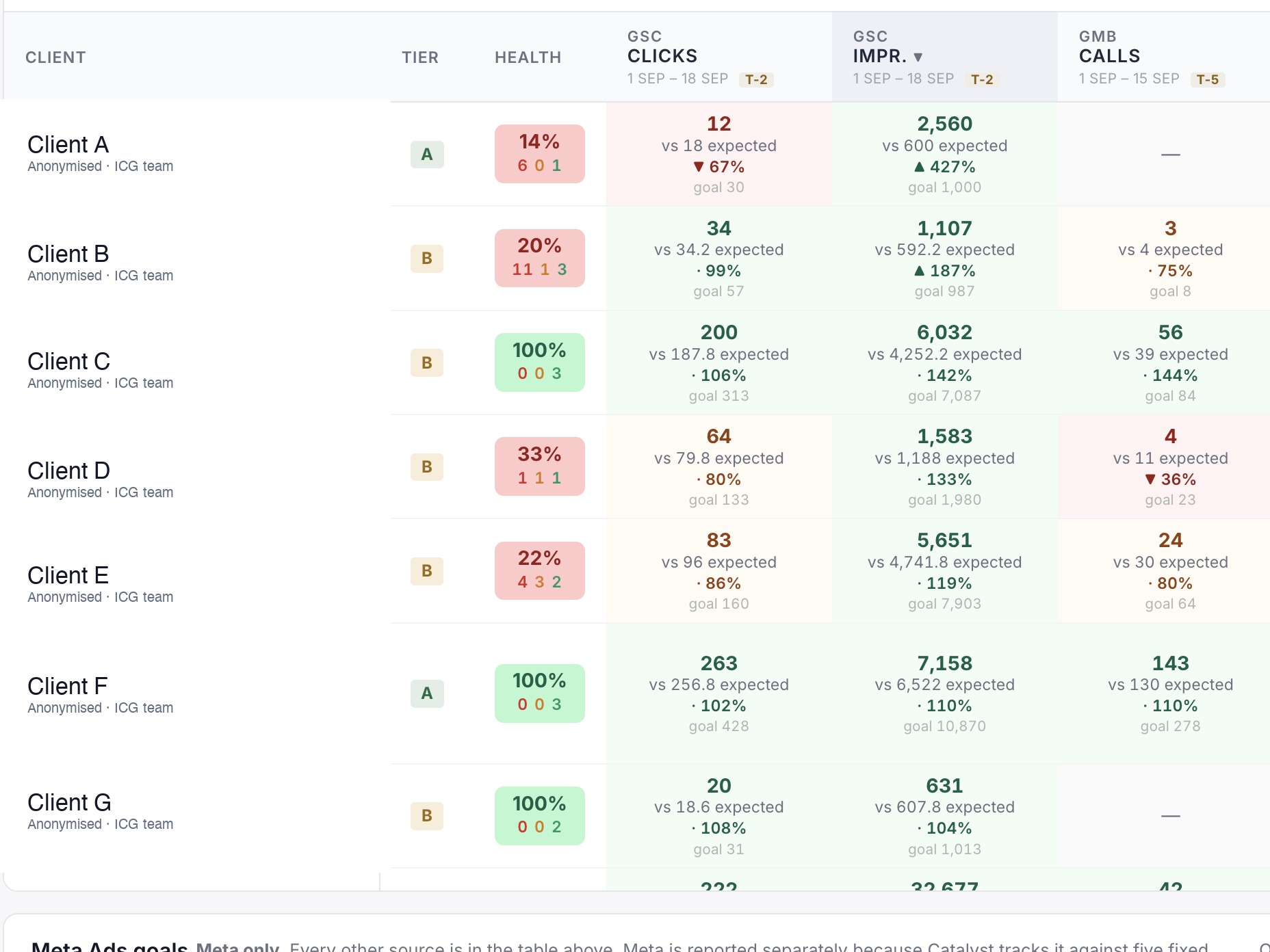
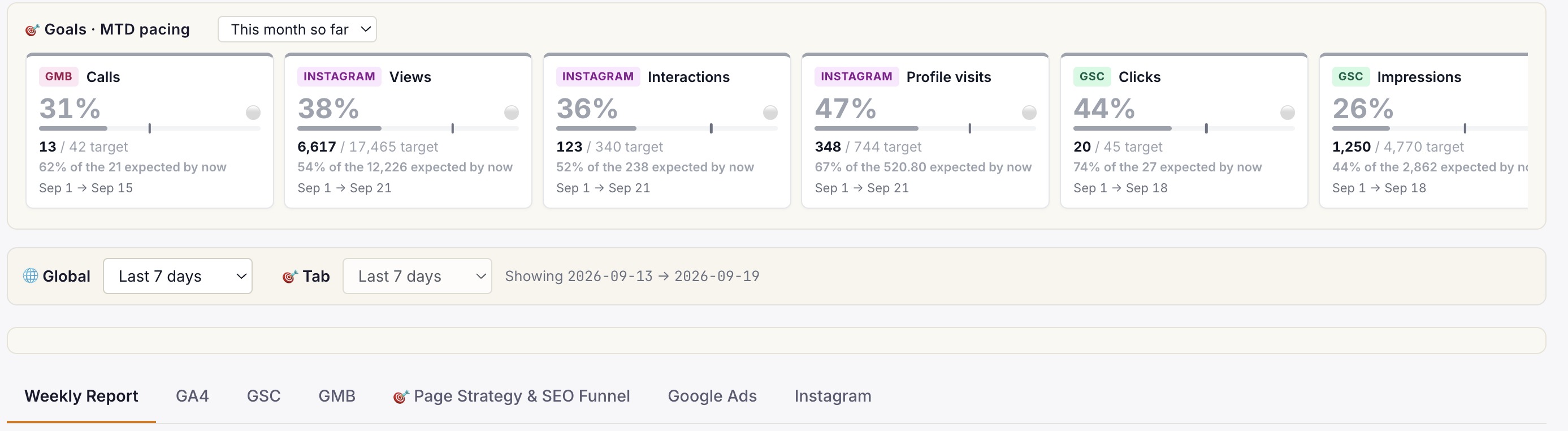
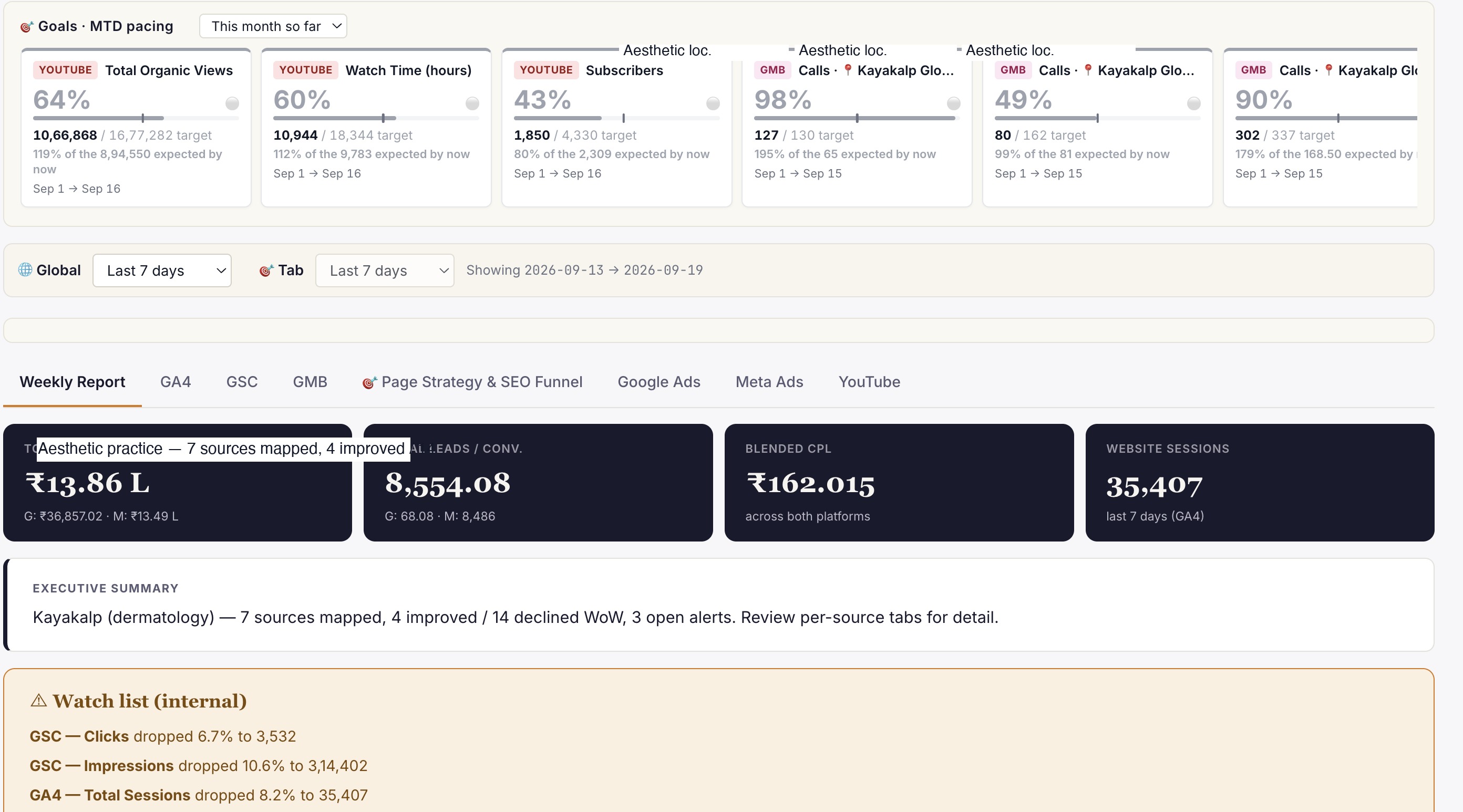
Live client dashboard. GSC, GA4, Google Ads, Meta Ads, IVR calls in one view. Login anytime, not monthly.
Phoenix
Clinic revenue intelligence over your PMS. Daily action queue: Prevent Loss, Maintain & Engage, Grow Revenue. Multi-centre rollout.
Or book a free 30-min audit to see all three in action on your account.
Healthcare brands
that already run on ICG.
A representative slice of the 150+ healthcare brands ICG has delivered for across India. Most engagements remain under NDA.


What ICG clients say · on video.
"Mental health marketing requires a different sensitivity. ICG built compliance-aware campaigns that respect both patients and our..."
"Bariatric surgery patients need a long consideration cycle. ICG built a content + paid system that respects that timeline."
"Working with ICG felt like working with an in-house growth team that happens to specialise in healthcare."
Need help operationalising this?
Every ICG service is healthcare-only, NMC + DPDP-aware, and built around the patient-research patterns that drive Indian healthcare growth in 2026.
Every practice welcome — packages from ₹20,000/mo.
Goals-Driven engagements · Performance-Linked Payout Models available
More from
ICG.
Five trends shaping Indian healthcare marketing through 2027: AI-first patient research, Conversions API adoption, ABDM discovery, the AEO w...
Healthcare AIO is the discipline of getting your clinic or hospital cited inside Google AI Overviews, ChatGPT and Perplexity answers — not j...
Conversational-search advertising places brand messages inside AI chat answers — ChatGPT, Perplexity, Copilot — rather than beside a results...
Stop guessing.
Book a Diagnostic.
30 minutes. Free. With the AI-powered healthcare-only marketing agency 150+ brands already run on. No slides, no pitch, no hard close.


