


Healthcare Meta Ads: Agency vs In-House in India (2026) — Real Cost, Scale Threshold, Compliance Gap
Should you hire an in-house Meta ads person or work with a healthcare specialist agency? Real total-cost comparison, the ad-spend scale threshold, the compliance-specialism gap, creative velocity gap, tooling stack, when hybrid wins, the 90-day trial model, and what to steal from an agency when you outgrow one.
No pitch. Written root-cause diagnosis. AI-powered, healthcare only.
Direct answer
Should you hire an in-house Meta ads person or work with a healthcare specialist agency? Real total-cost comparison, the ad-spend scale threshold, the compliance-specialism gap, creative velocity gap, tooling stack, when hybrid wins, the 90-day trial model, and what to steal from...
TL;DR
Almost every founder we talk to asks the same question in month three: "should we just hire an in-house Meta ads person and stop paying an agency?" The answer is usually "not yet, and probably not for two more years." But the reasoning matters more than the answer. This is a 2026 comparison — real total cost, the ad-spend threshold where in-house genuinely wins, the healthcare compliance gap that trips 6 in 10 generalist hires, the creative velocity gap that hurts every clinic that goes in-house too early, and the hybrid model that beats both when it is set up correctly.
The real cost of an in-house Meta ads hire in India (2026)
Everyone underprices in-house. Founders anchor on the CTC — say ₹8L/year for a mid-level performance marketer — and forget the eight line items that come with it.
- Base CTC. A competent mid-level performance marketer with 3-5 years, some healthcare exposure: ₹6-15L/year in Delhi/Bengaluru/Mumbai. Add 20% for a senior with real ownership.
- Tooling. Meta Ads Manager is free, but Supermetrics, a decent creative library, an analytics warehouse, and a lead-scoring dashboard run ₹1.5-3L/year.
- Creative production. One in-house marketer cannot design 15 creatives a week. Either you hire a designer (₹5-8L) or you buy creative from a studio (₹1-3L/year).
- Landing page + dev. Add a part-time developer or agency retainer for LP work: ₹2-4L/year.
- Compliance and legal review. If you take healthcare seriously — NMC, ASCI, DPDP, PC-PNDT — expect ₹1-2L/year in external legal reviews plus training.
- Training and course subscriptions. One good performance marketer wants ₹50,000-₹1L/year of upskilling. If you don't fund it, they leave.
- Backfill risk. Attrition on in-house performance marketing runs 18-24 months. Recruitment plus 90-day ramp = ₹2-4L of soft cost per replacement.
- Manager time. The founder or CMO spends 4-6 hours a week on Meta strategy. Cost it at ₹5,000/hour — that's another ₹10-15L annualised.
Add it up and a "₹8L in-house hire" is really ₹18-28L/year all in — before you have shipped a single working creative.
What an agency retainer actually replaces
An ICG Growth retainer at ₹50,000-₹1,00,000/month is ₹6-12L/year. What it delivers is closer to the ₹22L in-house figure above, except the healthcare specialism is built in on day one. You get a media buyer, a creative lead, a strategist, compliance sign-off, Meta Catalyst IQ, PrismSpy, LP dev slots, WhatsApp CAPI, weekly reporting. The one thing an agency does not replace is your ownership of strategy — you still need one person internally who owns the number and the roadmap. That person can be your marketing manager, your COO, or a founder. It is not a full FTE.
The scale threshold — when in-house actually wins
In-house wins on three conditions, all three, not any two.
- Monthly Meta ad spend above ₹15,00,000. Below that, in-house economics don't work — the fixed cost of a real team is higher than the retainer for equivalent output. At ₹15L+ monthly spend (~₹1.8Cr/year), 8-12% goes to management. That is enough to fund a real 3-person in-house pod.
- Multi-brand or multi-vertical mandate. If you are running Meta for one clinic, one specialty, you don't need in-house. If you are running Meta for a hospital group with 8 specialties and 4 brands, the coordination overhead of an agency starts to hurt.
- Willingness to build a creative team. This is where most in-house moves die. A performance marketer without a designer, a video editor, and a copywriter within reach ships 3-4 creatives a week. That won't beat a Growth-tier ICG pod shipping 12-20.
Miss any one of these and in-house looks cheaper on the pay-slip but underperforms on CPQL. We've watched three groups make this move too early in the last 18 months. All three are back on a retainer.
The healthcare specialism gap
A generalist Meta buyer without deep NMC, ASCI, DPDP, and PC-PNDT training will trigger a violation inside six months. This is not an opinion — we see it every audit. The typical failure sequence: creative promises "guaranteed" outcomes (NMC breach), an IVF ad references gender selection (PC-PNDT breach), a lead form collects PAN or Aadhaar without a purpose specification (DPDP breach). Any one of these can be a ₹2-10L penalty plus reputational damage. A specialist agency has a compliance reviewer on every creative because we have 40+ active healthcare accounts absorbing the cost. An in-house hire will not have that cushion — and asking them to become an amateur lawyer in month one is unfair. Read the NMC Ethics Code once and you will see the exposure clearly.
Creative velocity — 12-20 a week vs 3-4
The single biggest reason in-house Meta ads underperform in healthcare is creative starvation. Meta's algorithm rewards fresh creative — a healthy account tests 12-20 new creatives every week and retires the losers. An in-house solo marketer can ship 3-4. They cannot brief, design, review, upload, and monitor 15 creatives while also handling media buying, LP work, WhatsApp integration, and reporting. Founders discover this at day 60 when performance flattens. By day 90 they hire a designer. By day 180 they need a video editor. By day 365 they have built a 3-person pod that costs ₹28L/year and still gets outperformed by a specialist agency because they have one client — themselves — while a specialist has 40 accounts of cross-pollinated creative learning.
The tooling stack an in-house team cannot rebuild
A serious healthcare Meta operation runs on more than Ads Manager. The stack at ICG:
- Meta Catalyst IQ — hygiene + naming + creative scoring + money-wastage layer above Ads Manager. Two years to build.
- PrismSpy — 75+ brands, 2,150+ ads, ₹50Cr+ visibility/month. Daily refresh across 30+ specialties.
- Beacon — server-side attribution and CAPI enrichment for WhatsApp and form-fill leads.
- CPQL calculator — plug in your CPL and consult conversion rate and see the number that actually matters.
- Portfolio benchmarks — IVF ₹632 CPL, dermatology ₹520-1,180, dental ₹620-1,800, aesthetic ₹400-900, hospital cardiac ₹3,200. A single-clinic in-house team has no benchmark other than their own account.
No in-house team of any Indian healthcare group has rebuilt this stack. A few have tried. All have parked the effort inside 12 months because the ROI on tooling only pencils out across 40+ accounts.

When hybrid actually works
The strongest structure we see in healthcare groups above ₹15L monthly spend is a hybrid — an in-house strategist plus an agency execution pod. The in-house strategist owns the funnel, the KPI, the LP roadmap, and the WhatsApp playbook. The agency owns creative volume, media buying, compliance sign-off, and tooling. The strategist earns their salary by being able to challenge the agency on numbers, catch drift early, and align Meta output to broader marketing. This model costs ₹15-25L/year (in-house strategist ₹8-14L + agency ₹6-12L) and consistently beats either extreme. Every hospital group we work with above ₹20L monthly spend uses this pattern.
Two setup details make or break the hybrid. First, the in-house strategist must be senior enough to push back on the agency without needing the founder in every conversation — that means someone with 6+ years, ideally with agency experience, ideally with healthcare exposure. A junior manager cannot govern an agency; they will get out-talked in every review. Second, the RACI must be documented on day one — the strategist is accountable for KPI and the roadmap, the agency is responsible for weekly execution, both are consulted on creative direction, the founder or CMO is informed on monthly numbers. Without this document, both sides duplicate work and both sides quietly stop reading each other's Slack messages by month four.
The two risks in-house teams don't plan for
Beyond cost and velocity, two structural risks hit in-house healthcare Meta teams that agencies absorb. The first is single-point failure. When your one Meta buyer takes a two-week holiday, your account either freezes or gets touched by a junior with no context. Creative approvals stall, competitor bids eat your placements, CPL drifts up 20-30% by week two. Recovery takes 30-45 days. An agency pod covers itself — if the primary buyer is on leave, the second buyer runs the account, the strategist backstops both. The second risk is capability decay. Meta's ad platform ships meaningful changes every 8-12 weeks — Advantage+ shopping evolves, iOS attribution shifts, WhatsApp CAPI adds fields, Reels placement rules change. A solo in-house buyer struggles to stay ahead. An agency runs 40 accounts on the same platform and sees each change six weeks before a single-account team would notice — because the tests happen across the portfolio, not on your ad budget.
The 90-day agency trial
Never sign a 12-month agency retainer as your first move. Never. The correct entry is a 90-day trial — a defined scope, a defined budget, a defined lead volume target, and an explicit off-ramp. At ICG we structure it as ₹60,000-₹1,50,000 total for 90 days, delivering: Catalyst IQ diagnostic on day 1, week-1 creative sprint of 15 assets, WhatsApp integration by week 2, LP variant by week 3, CPL benchmark against portfolio by week 6, executive review at day 90. If the CPQL doesn't move meaningfully in 90 days, you exit clean. If it moves 20-40% (typical), you convert to Growth. This structure kills the biggest fear founders have with agencies — that they lock in and can't leave. Book the trial diagnostic here.
What to steal from an agency when you eventually outgrow one
Assume you cross ₹15L monthly spend and decide to bring Meta ads in-house. Do not fire the agency and start from scratch. Instead, do the following in the last 60 days of the engagement:
- Take the naming convention. Ad set + creative naming is the least glamorous, most valuable artefact. Copy it into your account structure exactly.
- Take the compliance checklist. ASCI + NMC + DPDP + PC-PNDT sign-off template — the agency's legal filter, in your Google Doc.
- Take the CPL benchmarks. Portfolio numbers you couldn't generate alone. Use them as your KPI floor for 12 months.
- Take the LP CRO learnings. Which headlines converted, which forms converted, which WhatsApp scripts converted. This is 40 accounts of testing in one document.
- Take the creative library. Copyright is usually yours. Insist on it in the exit clause.
- Retain the agency on a compliance-only retainer. ₹15,000-₹25,000/month for weekly creative review and quarterly account audit. Your in-house team still avoids the ASCI trap.
FAQ: Agency vs in-house Meta ads for healthcare in India
What monthly ad spend justifies an in-house hire?
₹15,00,000/month minimum, and only if you also run multi-brand and can fund a designer and video editor. Below that, an ICG Growth retainer at ₹50K-₹1L outperforms.
Can one in-house person handle Meta plus Google plus WhatsApp?
No. That is a three-person job across performance marketing, LP work, and WhatsApp lead ops. Anyone who says otherwise has never run a healthcare account past 60 days.
What is the biggest hidden cost of going in-house?
Attrition. 18-24 month tenure is normal. Every replacement costs ₹2-4L in recruitment plus 90 days of ramp-down performance. Two turnovers wipe out the retainer savings for four years.
Can we run in-house Meta with a freelancer for creative?
You can, and many do for the first 12 months. Watch for the day the freelancer cannot ship past 6 assets a week. That is your signal to hire creative in-house or move to an agency.
What's the fastest way to test agency fit without commitment?
A 90-day trial at ₹60,000-₹1,50,000. ICG structures the exit clause explicitly. If CPQL doesn't move 20-40%, you walk. Start with the 48-hour diagnostic.
Do we lose ad account ownership if we use an agency?
Only if you sign a bad contract. The correct clause: your clinic entity owns the Ad Account and the Business Manager, the agency is granted admin access, access is revocable in 24 hours. Never transfer ownership.
Powered by Meta Catalyst IQ — the decision engine behind every Meta ad ICG runs
ICG built Meta Catalyst IQ because most Indian healthcare brands running Meta ads waste 30-50% of budget without knowing it. It is the diagnosis and decision layer above Ads Manager — Hygiene Factors 12-point checklist, Naming Intelligence (surfaces conflicts costing ₹50K-₹2L per account per month), Creative Scoring Matrix (Core Performer, Scalable, Getting Started, Review), 2-Day Comparative, SLC Framework, Money Wastage column in ₹.


- Master Dashboard — 23+ accounts, ₹9.1Cr+ spend/month optimised, ₹1,581 blended CPL vs ~₹3,200 market benchmark.
- Diagnose → Optimise → Grow — daily hygiene checks, weekly creative scoring, monthly money wastage cleanup.
- CPQL Engine — cost per qualified lead (not just cost per lead) at ad-set level. Try the interactive CPQL calculator.
- Portfolio benchmarks — IVF ₹632, derm ₹520-1,180, dental ₹620-1,800, aesthetic ₹400-900, hospital cardiac ₹3,200.
Included free with every ICG Meta ads or Performance Marketing engagement (Starter ₹20,000/-/month tier and above). Not sold standalone. Book a free 48-hour Meta ad diagnostic or WhatsApp us.

Powered by PrismSpy — every competitor Meta ad, watched daily
ICG built PrismSpy because Indian healthcare Meta ad competition is invisible without it. 75+ Indian healthcare brands tracked, 2,150+ active ads catalogued, ₹50Cr+ aggregate ad spend visibility per month. Every competitor ad — creative, offer, hook, run-length — refreshed daily. It runs underneath every Meta ads and performance marketing engagement at ICG.
- Watchlist Dashboard — 30-75 competitors per specialty cluster (IVF / dermatology / dental / hair transplant / aesthetic / hospital), daily refresh.
- Comparative Insights — highest-quality ads, longest-running creatives (proven converters), top hooks, emerging offers.
- Offers Intelligence — 1,197 offers tracked, discount intensity by brand, value tier distribution.
- Service Cluster + Inspirations — 419 services tracked, 4,697 searchable ad inspirations by hook / language / format.
Standalone from ₹4,999/- per specialty vertical, or bundled free inside HealthApex OS (₹14,999/- flat, 9 tools). Book a 30-min PrismSpy walkthrough on WhatsApp — Rohit + Hanuman walk you through your specialty's competitive landscape.
 angryturtle/01-listing-overview.png" alt="Angryturtle Listing Overview — GBP watchlist with per-listing status, category, sub-scores, action count for 143+ managed Indian healthcare listings" loading="lazy" decoding="async" style="width:100%;height:auto;display:block;">


Related reading
- Healthcare Meta ads agency pricing in India — the full 2026 breakdown
- How to reduce Meta ads CPL for a healthcare account
- Creative testing framework for healthcare Meta ads
- Healthcare Meta ads agency — India service page
- Healthcare performance marketing agency
- CPQL calculator
Book the free 48-hour Meta ad diagnostic, or WhatsApp Abhash or Rohit on 918130226224. We will map your ad spend, team size, and specialty against the model that actually fits — even if that model isn't ICG.
Book a free Meta ads account audit.
Raman Soni's team pulls your account, checks CAPI/EMQ, reviews creative for NMC compliance, and shows where CPQL is leaking. 45 minutes, actionable output.
The three platforms
behind every ICG engagement.
Beacon
CAPI middleware that fixes Event Match Quality, translates CRM statuses to Meta-standard events, dedups across channels.
Agency OS
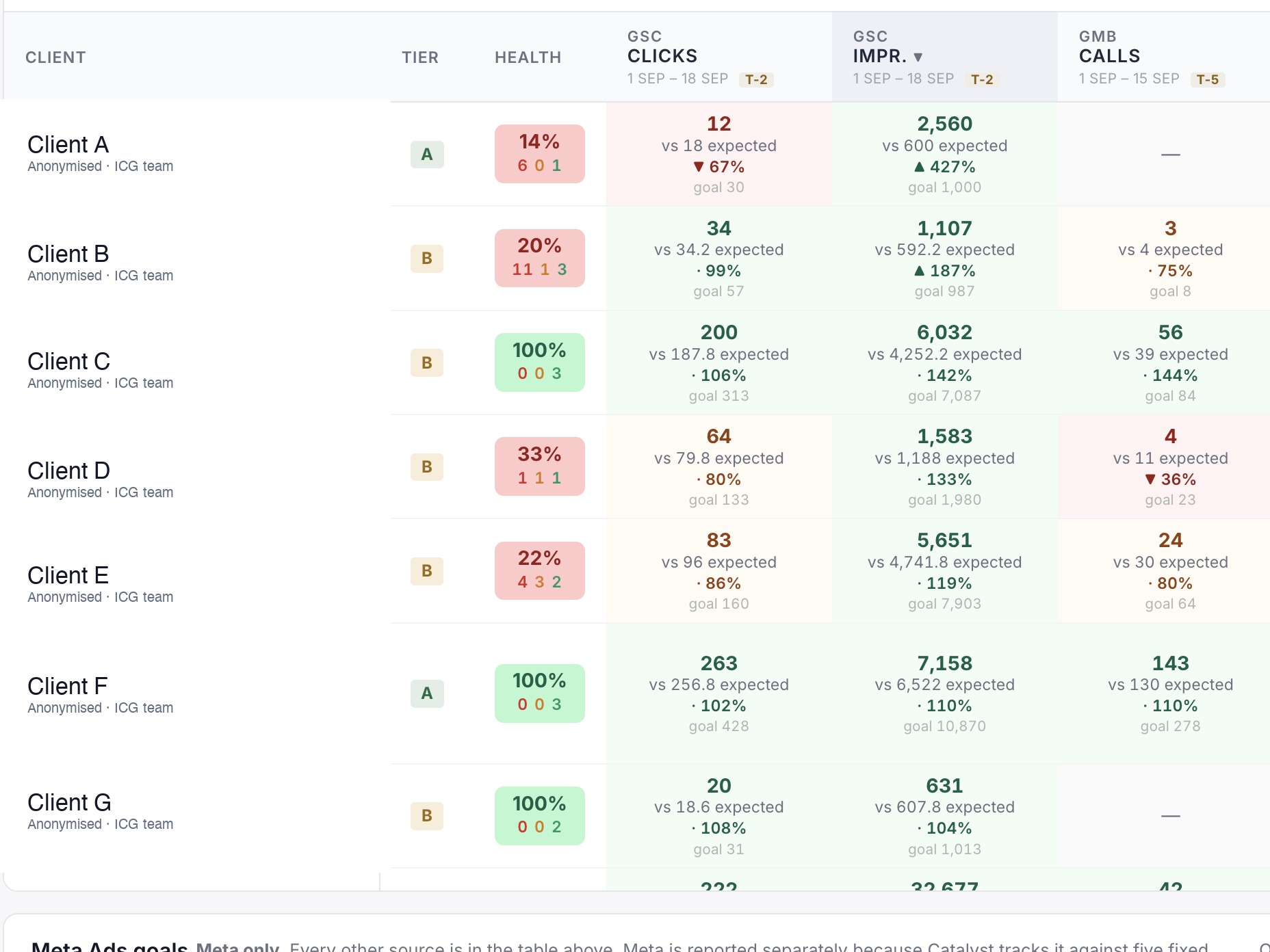
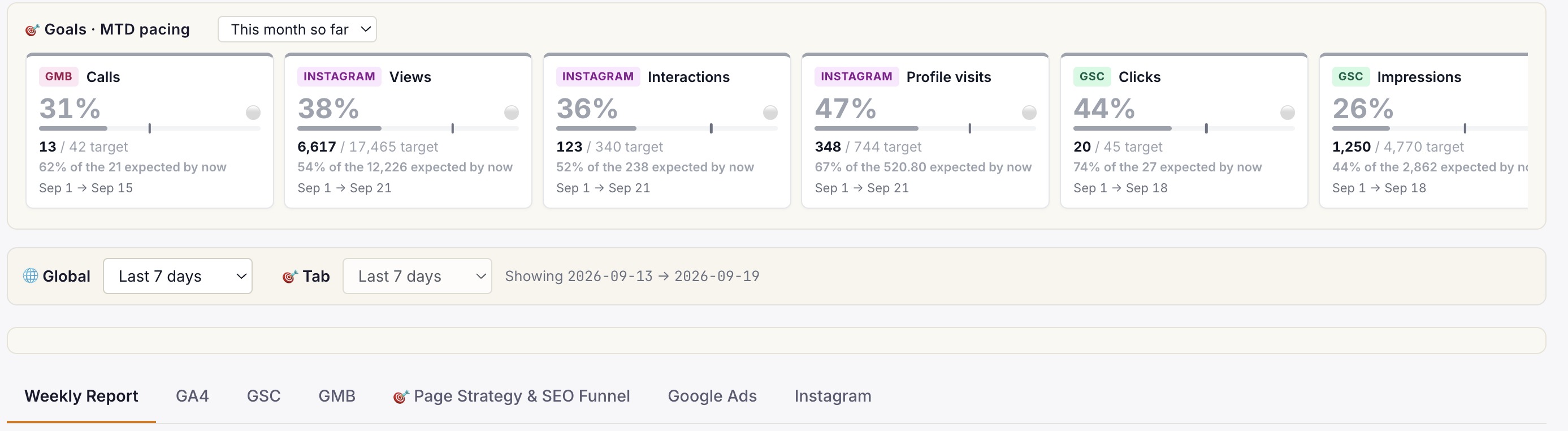
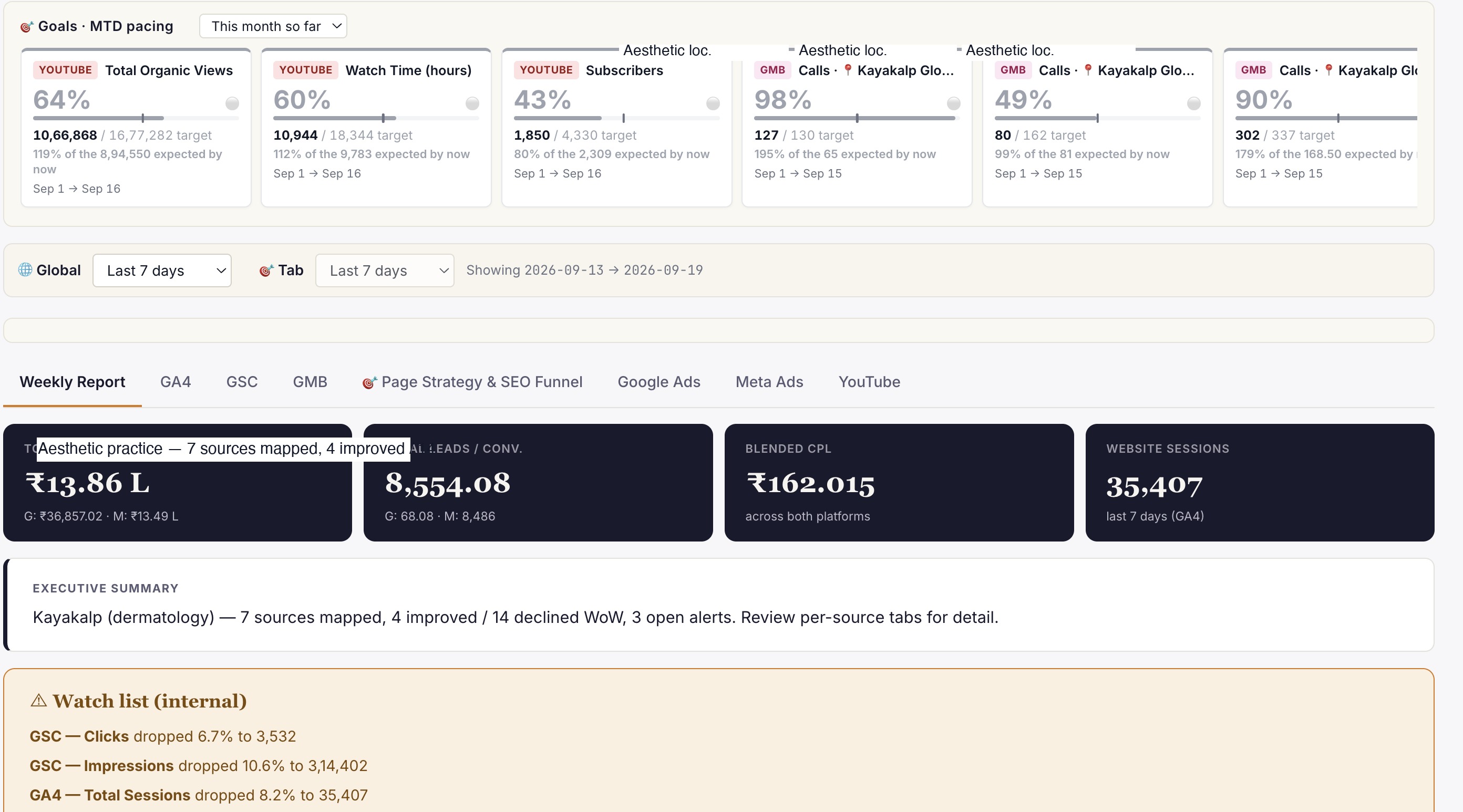
Live client dashboard. GSC, GA4, Google Ads, Meta Ads, IVR calls in one view. Login anytime, not monthly.
Phoenix
Clinic revenue intelligence over your PMS. Daily action queue: Prevent Loss, Maintain & Engage, Grow Revenue. Multi-centre rollout.
Or book a free 30-min audit to see all three in action on your account.
Healthcare brands
that already run on ICG.
A representative slice of the 150+ healthcare brands ICG has delivered for across India. Most engagements remain under NDA.


What ICG clients say · on video.
"Scale up of organic channels and business consulting. ICG has absolute domain authority in their field."
"Working with ICG transformed how we acquire IVF patients in Gurgaon. They understand the fertility journey from inquiry to consult..."
"What Ichelon accomplished — they got all my ideas and worked over 3-4 months to create an amazing, super-customised website."
Need help operationalising this?
Every ICG service is healthcare-only, NMC + DPDP-aware, and built around the patient-research patterns that drive Indian healthcare growth in 2026.
Every practice welcome — packages from ₹20,000/mo.
Goals-Driven engagements · Performance-Linked Payout Models available
More from
ICG.
Five trends shaping Indian healthcare marketing through 2027: AI-first patient research, Conversions API adoption, ABDM discovery, the AEO w...
Healthcare AIO is the discipline of getting your clinic or hospital cited inside Google AI Overviews, ChatGPT and Perplexity answers — not j...
Conversational-search advertising places brand messages inside AI chat answers — ChatGPT, Perplexity, Copilot — rather than beside a results...
Stop guessing.
Book a Diagnostic.
30 minutes. Free. With the AI-powered healthcare-only marketing agency 150+ brands already run on. No slides, no pitch, no hard close.


