


Doctor Indemnity Insurance India 2026: Premiums, Cover & Claims
Doctor indemnity insurance India 2026 — real premiums by specialty (₹5K–₹85K/yr), what's covered, exclusion traps to avoid, and how to file a claim.
No pitch. Written root-cause diagnosis. AI-powered, healthcare only.
Direct answer
Doctor indemnity insurance India 2026 — real premiums by specialty (₹5K–₹85K/yr), what's covered, exclusion traps to avoid, and how to file a claim.
TL;DR
Professional indemnity insurance is the most under-purchased protection in Indian medical practice. Doctors who operate without it — and face a consumer forum claim, civil suit, or NMC complaint — discover the gap at the worst possible moment.
This guide covers what professional indemnity is, what it costs, what it covers, and what most policies leave out.
What professional indemnity insurance is
Professional indemnity insurance (also called medical malpractice insurance or professional liability insurance) covers a registered medical practitioner against financial claims arising from alleged professional negligence, errors, or omissions in clinical practice.
If a patient files a complaint with the consumer forum alleging medical negligence, initiates a civil suit for damages, or brings an NMC disciplinary proceeding, your indemnity policy covers:
- Legal defence costs (even for frivolous claims — the legal defence alone can cost ₹5-20 lakh)
- Expert witness fees
- Court-awarded damages up to the policy limit
- Out-of-court settlement amounts up to the policy limit
Premium ranges (Q2 2026)
Premiums depend on three factors: specialty (surgical and procedural specialties pay more), annual clinical income declared, and the coverage limit selected.
| Specialty | ₹5 lakh coverage/year | ₹25 lakh coverage/year | ₹1 crore coverage/year |
|---|---|---|---|
| GP / Family physician | ₹4,000-12,000 | ₹12,000-30,000 | ₹35,000-80,000 |
| Dermatology | ₹6,000-15,000 | ₹15,000-40,000 | ₹45,000-1,00,000 |
| Ophthalmology | ₹8,000-20,000 | ₹20,000-50,000 | ₹55,000-1,20,000 |
| Gynaecology + obstetrics | ₹15,000-35,000 | ₹35,000-80,000 | ₹90,000-2,00,000 |
| IVF / Fertility | ₹15,000-40,000 | ₹40,000-1,00,000 | ₹1,00,000-2,50,000 |
| Orthopaedic surgery | ₹20,000-50,000 | ₹50,000-1,20,000 | ₹1,20,000-2,80,000 |
| Plastic surgery | ₹25,000-60,000 | ₹60,000-1,50,000 | ₹1,50,000-3,50,000 |
| Cardiac surgery | ₹30,000-70,000 | ₹70,000-1,80,000 | ₹1,80,000-4,00,000 |
| Oncology | ₹20,000-60,000 | ₹60,000-1,50,000 | ₹1,50,000-3,50,000 |
| Neurosurgery | ₹30,000-80,000 | ₹80,000-2,00,000 | ₹2,00,000-4,50,000 |
Top providers in India: New India Assurance, Oriental Insurance, United India Insurance, ICICI Lombard (Healthcare Professional Liability Policy), Star Health (Allied Health series).
What is covered
Covered under a standard policy:
- Claims arising from professional acts, errors, or omissions in clinical practice
- Legal defence costs — even if the claim is ultimately dismissed
- Consumer Protection Act proceedings (National Consumer Disputes Redressal Commission, State CDRCs, District Forums)
- Civil court proceedings for damages
- Out-of-court settlements up to the policy limit (with insurer approval)
- Some policies extend to disciplinary proceedings before NMC or state medical councils — check terms
Not covered under a standard policy:
- Criminal proceedings — indemnity covers civil/consumer liability, not criminal negligence
- Intentional harm to a patient
- Procedures performed under the influence of substances
- Claims arising from practice outside your registered specialisation
- Liability of your employees or nurses (these require a separate employers' liability or medical establishment policy)
- Cosmetic procedures — many standard policies exclude aesthetic/cosmetic procedures. If you perform aesthetic procedures, you need an explicit policy extension or a specialist cosmetic surgery rider.
The coverage gap problem
Consumer Protection Act claims in healthcare now routinely reach ₹50 lakh to ₹3 crore in court awards at the National Consumer Disputes Redressal Commission. A ₹25 lakh coverage limit is inadequate for high-risk specialties.
Recommended minimum coverage by specialty:
- GP, paediatrics, general OPD: ₹25 lakh
- Dermatology, ophthalmology: ₹50 lakh
- Gynaecology, orthopaedics, ENT, IVF: ₹1 crore
- Cardiac surgery, neurosurgery, oncology, plastic surgery: ₹2-3 crore
The premium difference between ₹25 lakh and ₹1 crore coverage is typically ₹30,000-80,000/year for most specialties. The cost of a single uninsured settlement at NCDRC level: ₹20 lakh to ₹2 crore. The value of adequate coverage is not actuarial — it is existential.
Hospital employment vs independent practice
A doctor employed by a hospital typically has some coverage through the hospital's institutional indemnity policy. However:
- The hospital's policy protects the hospital's interests, not yours personally
- In cases where the hospital's policy doesn't cover you fully (disputed liability, policy limits exceeded), your personal liability is uncovered
- If you perform any private consultations or procedures outside the hospital, you are not covered by the hospital's policy
Recommendation for hospital-employed specialists: Carry personal indemnity even if the hospital says its policy covers you. The incremental cost (₹10,000-40,000/year) against the protection is strongly justified.
Making an indemnity claim
Step 1: Immediately notify your insurer when you become aware of a claim or complaint — even if you are not yet served with formal notice. Most policies require notification within 30-90 days of becoming aware of a claim. Missing this window can void coverage.
Step 2: Do not discuss the case or make any statements to the patient, their family, or the media without your insurer's approval and your lawyer's guidance.
Step 3: Gather all clinical documentation: case notes, consent forms, prescriptions, discharge summaries, investigation reports. The quality of your documentation is the primary determinant of your case strength.
Step 4: Work with your insurer's appointed legal counsel — or engage your own (the insurer typically contributes to legal costs up to the policy limit).
Read next on ICG
Red flags in indemnity policy fine print — what to check before you sign
Most doctors renew the same policy on autopilot. Then a claim lands and the exclusions show up. Here are the seven fine-print traps we see repeatedly when we audit indemnity paperwork for founder-led clinics inside the Client Elevation Programme.
- Retroactive date reset on renewal. If your insurer quietly resets the retro date each year, incidents from earlier years stop being covered — even if you had continuous cover.
- Sub-limits per claim vs annual aggregate. A ₹50L policy that caps a single claim at ₹10L is not a ₹50L policy in the way it matters.
- Consent-form exclusions. Some policies deny cover if the written consent was not on the insurer's prescribed format. Ask for the format in writing.
- Cosmetic-outcome carve-outs. Aesthetic, dental cosmetic and hair-transplant work is often either excluded or loaded 3–5x. Read the schedule, not the brochure.
- Off-label prescription clauses. Any drug used outside its licensed indication may fall outside cover unless specifically endorsed.
- Telemedicine gap. Post-2020 policies added telemed cover, but many pre-2022 renewals were never updated. Confirm in writing.
- Defence-cost erosion. Legal defence is sometimes paid from the sum insured, not on top of it. A drawn-out case can burn through cover before verdict.
If you run a group practice or hospital, cross-check this list with your NABH documentation and staff-privileging file — the two systems must line up. Our note on NABH accreditation covers where the two intersect, and clinic setup cost benchmarks shows where indemnity sits in the wider practice P&L.
Book a free 30-minute Brand & Growth Diagnostic.
It's a working session, not a sales pitch — you leave with a written root-cause analysis you can act on, whether or not you engage ICG.
Questions readers ask
about this topic.
The three platforms
behind every ICG engagement.
Beacon
CAPI middleware that fixes Event Match Quality, translates CRM statuses to Meta-standard events, dedups across channels.
Agency OS
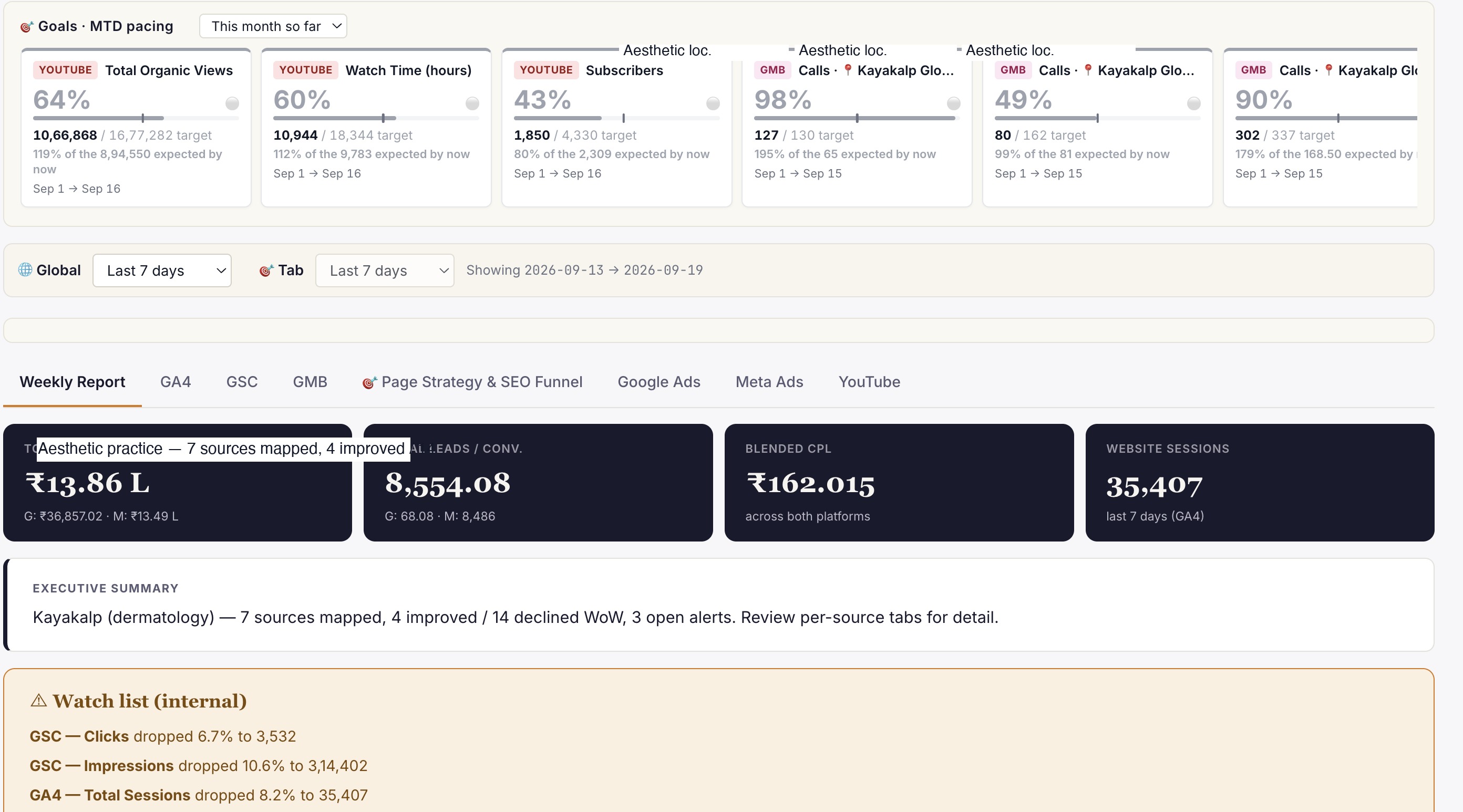
Live client dashboard. GSC, GA4, Google Ads, Meta Ads, IVR calls in one view. Login anytime, not monthly.
Phoenix
Clinic revenue intelligence over your PMS. Daily action queue: Prevent Loss, Maintain & Engage, Grow Revenue. Multi-centre rollout.
Or book a free 30-min audit to see all three in action on your account.
Healthcare brands
that already run on ICG.
A representative slice of the 150+ healthcare brands ICG has delivered for across India. Most engagements remain under NDA.


What ICG clients say · on video.
"Scale up of organic channels and business consulting. ICG has absolute domain authority in their field."
"Working with ICG transformed how we acquire IVF patients in Gurgaon. They understand the fertility journey from inquiry to consult..."
"What Ichelon accomplished — they got all my ideas and worked over 3-4 months to create an amazing, super-customised website."
Need help operationalising this?
Every ICG service is healthcare-only, NMC + DPDP-aware, and built around the patient-research patterns that drive Indian healthcare growth in 2026.
Every practice welcome — packages from ₹20,000/mo.
Goals-Driven engagements · Performance-Linked Payout Models available


More from
ICG.
Five trends shaping Indian healthcare marketing through 2027: AI-first patient research, Conversions API adoption, ABDM discovery, the AEO w...
Healthcare AIO is the discipline of getting your clinic or hospital cited inside Google AI Overviews, ChatGPT and Perplexity answers — not j...
Conversational-search advertising places brand messages inside AI chat answers — ChatGPT, Perplexity, Copilot — rather than beside a results...
Stop guessing.
Book a Diagnostic.
30 minutes. Free. With the AI-powered healthcare-only marketing agency 150+ brands already run on. No slides, no pitch, no hard close.


