


Dermatology Marketing in India 2026: The Master Guide for Clinics, Chains & Hospital Brands
A 5,000-word operating guide to dermatology marketing in India for 2026: NMC and DPDP compliance, AI Overview discovery, Google Business Profile, Meta and Google ad frameworks, YouTube, lead ops, four buyer archetypes and a quarter-by-quarter roadmap.
No pitch. Written root-cause diagnosis. AI-powered, healthcare only.
Direct answer
A 5,000-word operating guide to dermatology marketing in India for 2026: NMC and DPDP compliance, AI Overview discovery, Google Business Profile, Meta and Google ad frameworks, YouTube, lead ops, four buyer archetypes and a quarter-by-quarter roadmap.
TL;DR
TL;DR: Dermatology marketing in India 2026 in seven bullets
- Indian dermatology demand now splits cleanly into three buckets — medical (acne, alopecia, eczema), aesthetic (laser, botox, fillers, HIFU) and cosmeceutical (product-led routines). One marketing plan across all three no longer works, and this pillar treats them separately throughout.
- Google search still drives roughly 55-70% of new-patient discovery for derm clinics in ICG's 150-clinic portfolio, but AI Overviews and answer engines (ChatGPT, Perplexity, Gemini, Claude) are eating 15-25% of that top-of-funnel already, and they demand different content shapes than classical SEO.
- NMC's tightened advertising code and the DPDP Act 2023 have hardened the compliance ceiling. No superlative claims, no before/after imagery without documented marketing-purpose consent, and no unsolicited WhatsApp broadcasts to lists you can't prove opted-in.
- Local dominance runs through Google Business Profile, not just the website. For chains past three branches, a purpose-built GBP operating system like ICG's Angryturtle handles review velocity, post cadence and photo geo-tagging across every branch on one calendar.
- Paid media works when creative, offer and landing page are built for a specific treatment intent. Meta wins for aesthetics, Google Search wins for medical intent, YouTube (doctor-led) wins for trust and AI Overview citation.
- Lead-to-consult conversion in derm typically sits at 18-32%, driven by WhatsApp response speed, front-desk scripting and CRM discipline. Anything under 15% is a lead-ops problem, not a lead-volume problem.
- The 70-30 engagement model — 70% predictable retainer, 30% variable performance — has become the sane structure for derm chains scaling past three branches. ICG's Foundation (Rs 49,999/mo), Growth (Rs 74,999/mo) and Scale (Rs 99,999/mo) tiers all sit on this frame.
Table of contents
- Why this pillar matters for Indian dermatology in 2026
- The Indian dermatology market: shape, demand, split
- Regulatory guardrails: NMC, DPDP Act, ABDM
- The AI-first discovery stack for derm
- Local search and Google Business Profile
- Content and SEO strategy for dermatology
- Paid media playbook: Meta and Google
- Video and YouTube for derm brands
- Lead operations: WhatsApp, CRM, RCM
- Buyer archetypes and tailored recommendations
- Common mistakes we see in ICG audits
- The 70-30 pricing model, explained
- A 12-month execution roadmap
- Key takeaways
- Frequently asked questions
Why this pillar matters for Indian dermatology in 2026
Indian dermatology has never had more demand. Every quarter, our team runs Search Console and Meta ads audits across our 150-clinic portfolio, and the volume for queries like "hair transplant near me," "acne treatment Bangalore," "laser hair removal cost Mumbai" and "dermatologist HSR Layout" is climbing at double-digit rates. Aesthetic services are pulling tier-2 city buyers into metros, and metro buyers into flagship medical destinations.
Three structural shifts have made 2026 an inflection year for how derm brands market themselves.
First, AI answer engines are inserting themselves between the searcher and the clinic. When someone asks ChatGPT for a shortlist of hair transplant clinics in Delhi doing FUE, or asks Perplexity what PRP costs in Chennai, the answer surfaces a small set — and if your website, GBP and blogs don't feed those engines the right shapes of content, you are invisible to a fast-growing chunk of high-intent demand.
Second, NMC's tightened advertising code and the DPDP Act 2023 have made "growth-hacky" marketing legally expensive. Before/after reels without proper consent, aggressive WhatsApp broadcasts to scraped lists, and superlative claims like "India's best dermatologist" now sit inside enforcement territory rather than grey territory.
Third, the economics have shifted. Cost per qualified lead for derm has climbed 30-60% in metros over the last eighteen months on Meta and Google. The clinics winning are not outspending. They are building organic and AI-Overview presence that compounds while paid channels get more expensive.
This pillar is the operating guide we would hand a marketing director walking into a dermatology brand on day one. It covers the market, the rules, the channels, the numbers and the sequence. It is opinionated, and it reflects what has worked and failed across the derm brands we have worked with — solo doctors in Nagpur, chains with 22 branches across south India, medspas in Gurgaon and cosmetic-surgery hospital brands running full-funnel campaigns.
The Indian dermatology market: shape, demand, split
Three overlapping buckets
Strategy fails the moment a team treats "dermatology" as one category. In practice, three distinct businesses live under the same roof.
Medical dermatology. Acne, eczema, psoriasis, alopecia, vitiligo, fungal infections, pigmentation. These patients search for relief. They are often price-sensitive, comparison-shop across three to five clinics before booking, and are heavily influenced by proximity and doctor credentials. Search intent is high. Social scroll intent is low. Meta ads underperform here. Google Search and organic SEO dominate.
Aesthetic dermatology. Laser hair reduction, chemical peels, HydraFacial-class treatments, botox, fillers, HIFU, RF-based skin tightening, body contouring, PRP for hair. This is where Meta ads earn their keep. The buyer scrolls, gets nudged into consideration by high-quality creative, and books on WhatsApp. Repeat purchase across multi-session packages is where LTV really shows up. Compliance discipline matters most here because before/after content is the default creative language.
Cosmeceutical and long-tail product. Doctor-formulated skincare, in-clinic peels sold as take-home routines, subscription vitamins. Ecommerce plays here — Meta ads to landing pages, retargeting via Instagram, fulfilment through owned D2C. Only mature derm brands do this well; most should ignore it until the first two buckets are humming.
Every clinic sits somewhere on this triangle. A skin-and-hair clinic in HSR Layout Bangalore running 60% aesthetics needs a fundamentally different plan from a medical dermatologist in Sector 62 Noida running 90% acne and alopecia. Any agency pitching a single template across both is a red flag.
Where the demand is growing fastest
In our internal quarterly demand-signal review across Search Console and Meta impressions for derm clients, the fastest-growing intent clusters over 2025-26 have been hair transplant (especially FUE and DHT-preserving variants), under-eye rejuvenation (fillers, PRP, exosomes), skin tightening (HIFU and Morpheus8-class devices), adult and hormonal acne, melasma-specific protocols, and post-partum hair loss.
Tier-2 city demand — Indore, Nagpur, Kochi, Bhubaneswar, Coimbatore, Raipur — is growing faster in percentage terms than metros for aesthetic services. Metro demand is denser but more contested. CPQL in Bangalore for "hair transplant" is typically 2.3-3.1x the same query's CPQL in Bhopal or Raipur.
The three-tier clinic reality
| Tier | Shape | Marketing priority |
|---|---|---|
| Solo or 1-2 branch | Doctor-founder led. Rs 40L-3Cr annual revenue. | GBP dominance, doctor E-E-A-T content, 15-30 leads/day steady-state. |
| Regional chain (3-15 branches) | Owned or partner-franchised. Rs 8-60Cr revenue. Marketing team of 2-6. | Multi-branch GBP operating system, programmatic city SEO, paid media at scale, CRM discipline. |
| National chain or hospital-affiliated | 25+ branches or hospital derm department. Rs 60Cr+ revenue. | Brand + performance balance, PR, doctor thought leadership, YouTube long-form. |
What patients search versus what clinics publish
Here is a truth we uncover in almost every audit. Derm clinics publish content their doctors want to write — procedure explainers, technology deep dives, science of skin — and patients search for things clinics ignore. Price. Safety. Results timeline. Comparison between two treatments. "Which doctor is best in X area." That gap is where competitors eat lunch.
We routinely see derm clinic websites with 40+ blog posts and zero mentions of pricing bands, treatment cost calculators, honest side-effect discussions or "which is better — X or Y" comparison content. That is not a content problem. That is a customer-listening problem.
Section takeaway: segment revenue by medical, aesthetic and cosmeceutical, understand which tier your operations sit at, and audit whether your published content matches actual search intent. Everything downstream flows from getting this segmentation right.
Regulatory guardrails: NMC, DPDP Act, ABDM
Every dermatology marketing decision now sits inside three regulatory frames. Marketing directors who ignore them save time this quarter and pay for it in the next.
The NMC advertising code
The National Medical Commission's Professional Conduct Regulations, in their current form, restrict Indian doctors and their establishments from using superlative or comparative claims ("India's #1," "leading," "top-rated") without demonstrable, auditable evidence; publishing patient testimonials that make treatment-outcome claims; sharing before/after imagery without documented, informed patient consent that specifically covers marketing use; guaranteeing outcomes; and using deceptive imagery like heavily filtered results or stock imagery passed off as clinic work.
For dermatology specifically — where before/after is the industry's default creative language — this is the tightest constraint. The workaround is not to hide results. It is to document consent properly, watermark responsibly, use anonymised imagery where consent is partial, and shift creative weight from "look at this result" to "here is how the treatment works and who it is right for." Process-led creative outperforms outcome-led creative in the long run anyway, because it filters for informed buyers who convert.
The DPDP Act 2023
The Digital Personal Data Protection Act 2023 has real teeth for healthcare marketers.
- Every collected lead needs a granular consent record. "I agree to be contacted" is thin. Better: "I consent to be contacted via phone, WhatsApp and email regarding my dermatology enquiry."
- WhatsApp broadcasts to purchased or scraped lists are non-compliant, and enforcement is tightening at the platform level too.
- CRM and EHR systems must maintain audit logs of who accessed what data, when and why.
- Data breaches trigger mandatory disclosure. Third-party marketing agencies hosting clinic lead data on shared Google Sheets or unsecured CRMs create direct legal exposure for the clinic they serve.
Clinics working with us typically move CRM operations onto Nexus CRM at Rs 14,999/mo, or a comparable healthcare-grade stack — not because features are unique, but because consent capture, audit logs and data-residency handling are built for Indian regulation. For hospital-affiliated derm departments, HealthPro 360 at Rs 14,999/mo overlays RCM and EHR flows and does the parallel job.
ABDM, HPR and discoverability
The Ayushman Bharat Digital Mission has quietly become relevant to marketing discoverability. Doctors registered on the Healthcare Professionals Registry with verified ABHA-linked identity are getting preferential display in some Google Health-related surfaces, and increasingly in AI answer engines that cross-check credentials. Clinics registered on the Health Facility Registry get similar treatment.
Beyond compliance, HPR and HFR registration is now a discoverability signal. Large language models cross-checking doctor credentials before recommending clinics increasingly weight registered, verifiable identities higher than uncredentialed ones. Registration takes a few hours. The compounding benefit is real.
Section takeaway: build your marketing stack assuming DPDP-grade consent, NMC-safe creative and ABDM-registered identity. It is cheaper to build compliant from day one than to unwind non-compliant campaigns after a notice.
The AI-first discovery stack for derm
Roughly one in four commercial dermatology searches now hits an AI Overview or an answer engine before it lands on a traditional Google result. If your marketing plan does not account for AI-first discovery, you are leaving the fastest-growing acquisition surface unclaimed.
How AI Overviews surface dermatology results
Google's AI Overviews stitch together short answers from multiple sources for queries the engine judges to be answerable. For dermatology, this triggers frequently on questions like "what is the average cost of X," "how does X treatment work," "is X safe for Y skin type," "what is the recovery time for X," and "best dermatologist for X in [city]."
Clinics winning AIO citations are not always the ones ranking #1 traditionally. They are the ones with clear, extractable answers in the first two to three sentences of a section; numbered lists and tables (LLMs love structured extraction); clean H2 and H3 hierarchy; doctor byline schema with Person and medicalSpecialty; and FAQ sections marked up with FAQPage schema. We have seen mid-tier derm chains double their AIO citation volume within 90 days by restructuring existing content — same words, better shapes.
ChatGPT, Perplexity, Gemini, Claude
Separate from Google AIO, direct answer engines are being used for shortlisting by an increasingly savvy audience. Someone researching hair transplants in Hyderabad may ask ChatGPT for a shortlist, cross-check on Perplexity for citations, then hit Google Maps to compare reviews before choosing.
To surface here, clinics need a canonical About page with founder and doctor bios, credentials and specialties in prose (not just images); treatment pages with clear structured content covering procedure, candidates, cost bands and recovery; third-party validation via media mentions and credible healthcare citations; and a YouTube presence, because LLMs are increasingly citing video transcripts in their answers.
Preparing your site for LLM extraction
At ICG we run an extraction test on every client site. We ask four or five answer engines the questions a patient would ask, and see whether the clinic surfaces. If it does not, we work backward. Is the content indexable? Is it structured? Is there enough distinct signal? Are there external citations?
The fixes we apply almost universally are practical. Add a proper FAQ section at the bottom of every treatment page, with eight to twelve questions. Add pricing bands — a range, not a single number — because patients search cost and LLMs surface cost. Add doctor bylines to treatment pages, not just to blog posts. Add JSON-LD schema covering MedicalClinic, Physician, MedicalProcedure and FAQPage. Publish comparison content — "HIFU vs Ultherapy," "FUE vs DHT," "Chemical peel vs microneedling" — because these queries are almost always cited by answer engines.
YouTube as an answer surface
YouTube is now a first-class answer surface. LLMs cite video transcripts. Google shows video results high on the SERP. Patients trust doctor-on-camera more than doctor-on-page. ICG's YODA (our YouTube AI-native operating system) exists because doing YouTube well for a derm brand requires more than uploading. It needs shorts and long-form calendar discipline, keyword-anchored titles, transcript optimisation, thumbnail testing and — critically — the AIO Lab layer that verifies which videos are being cited by which answer engines.
Section takeaway: treat AIO and answer engines as a separate channel, not a byproduct of SEO. Audit your extraction-worthiness quarterly. Publish comparison and cost content that LLMs cite naturally.
Local search and Google Business Profile

For any derm clinic below the five-branch mark, Google Business Profile is the single highest-leverage acquisition channel. Below the fifteen-branch mark, it is still in the top three.
Why GBP dominates dermatology discovery
Dermatology is fundamentally local. Even for a hair transplant, which people will travel 500 km for, the shortlist begins with "hair transplant near me" or "hair transplant [city]." Google Maps and the local pack dominate that first click. In our audits, clinics ranking in the local pack for three to five core treatment keywords in their city receive 40-70% of their new-patient volume from GBP alone. Clinics that do not, get essentially zero.
What actually moves GBP rankings
Twelve years of pattern observation across our 150-clinic portfolio suggests the ranking movers, in rough order of impact:
- Review velocity — new reviews per month, not lifetime count
- Review reply rate and quality (Google's algorithm reads reply content)
- Photo velocity — fresh geo-tagged photos monthly
- Post cadence — GBP posts published weekly
- Q&A coverage — seeded answers to common patient queries
- Complete service and product listings
- Booking link integration
- Website NAP and schema consistency
- Proximity to searcher (unchangeable but relevant)
- Primary and secondary category accuracy
Most derm clinics do two or three of these consistently. Winners do eight to ten.
Multi-branch operations
Once a chain crosses three or four branches, doing GBP manually breaks. Someone at branch four forgets to post for six weeks; branch seven's photos are all clinic exteriors and no treatment rooms; branch twelve's reviews sit unanswered for a month.
Angryturtle exists for exactly this. It is a GBP operating system, priced at Rs 999/- for the solo tier and Rs 3,499+/- for the agency tier that runs multi-branch operations. It handles review response, post scheduling, photo cadence, Q&A seeding and reporting across every branch on a single calendar. For chains, it collapses what used to be a 15-hour weekly manual grind into a monitored dashboard.
Reviews: velocity, quality, response
The single most under-appreciated GBP lever is review reply. Not just replying, but replying with treatment-specific keywords in a natural, human tone. "Thank you for choosing us for your laser hair reduction — glad Dr. Sharma made you feel comfortable" is far more useful than "Thank you for the review." For velocity, the honest playbook is: automate the ask via a post-visit WhatsApp with a one-tap GBP link, remove friction, and personalise the ask by treatment. Clinics that ask every satisfied patient hit 4-8 new reviews per branch per month comfortably.
Section takeaway: GBP is not a "set and forget" listing. It is a weekly-cadence operating discipline. Solo clinics can run it manually with a good template. Chains need an operating system before it collapses under branch count.
Content and SEO strategy for dermatology
Treatment pillars are your money pages
Every derm clinic should have a distinct, deep, doctor-authored page for each of its top 15-20 revenue treatments. Not a paragraph. A page. Structured content covering what the treatment is, who it is for, how it works, expected results, recovery timeline, cost band, safety, side effects and FAQs.
These are your money pages. They rank for commercial-intent queries like "laser hair reduction cost Mumbai" or "PRP for hair loss Bangalore," they convert directly to consult bookings, and they get cited by AI Overviews. Most derm clinic websites we audit have thin treatment pages — 300-500 words, generic, no doctor voice, no pricing, no FAQ. Competitors ranking above them have 1,500-2,500 word pages with photos, videos, doctor bylines, FAQs and schema. The math is not subtle.
E-E-A-T for medical content
Google's medical E-E-A-T requirements are stricter for YMYL content, which dermatology squarely is. The signals that move rankings are named doctor authors on every treatment page and blog; doctor bio pages with credentials, specialties, NMC registration numbers and years of experience; Person schema with medicalSpecialty; external credential validation via hospital affiliations, published papers, media mentions; and regular content updates, because pages last updated three years ago lose trust signals.
For clients scaling content, we insist on doctor bylines on every published piece. Ghost-written is fine and normal. Anonymous is not.
Programmatic city and treatment pages
For chains operating in 5-40 cities, programmatic SEO — high-quality, differentiated pages generated for [treatment] + [city] combinations — is a compounding growth channel. Done well, it adds 60-150 new organic pages each ranking for local commercial intent. Done badly, it is thin doorway content and Google penalises it.
The line between "great programmatic" and "spam" is real per-page differentiation: unique doctor quotes, city-specific data, local Google reviews, city-specific pricing bands. Our programmatic SEO stack for derm chains typically generates 60-120 city-plus-treatment pages per branch expansion, and in internal tracking those pages hit page one for their target queries inside 90-180 days when execution holds.
Blog strategy: what to publish, what to skip
Derm blogs should serve three intents. Educational (how does X work, what causes Y), for top-of-funnel and AI Overview citation. Comparative (X versus Y, best treatment for Z), for consideration-stage buyers. Local (treatment X in [city], best derm for Y in [area]), for commercial local intent. Skip generic listicles that do not tie to services, skip syndicated content, and skip PR-style clinic announcements dressed up as blog posts.
For a mid-tier chain, eight to twelve blogs per month across the three intents is a working rhythm. Solo clinics can survive on four to six monthly if quality is high.
Doctor-authored is the moat
The single moat in derm content that no competitor can copy is your doctors' names, voices, credentials and clinical experience. Content ghost-written from generic templates and slapped with a doctor byline reads as such. Content built from interview transcripts of your actual doctors reads as human, authoritative and unique — and LLMs disproportionately cite content with clear author identity. Our writers spend 30-45 minutes interviewing each derm before publishing on their behalf. That is the difference between content that ranks and content that sits.
Section takeaway: deep treatment pages, doctor-authored voice, a three-intent blog rhythm, and programmatic city pages for multi-branch chains. Skip generic listicles.
Paid media playbook: Meta and Google
Paid media is where budgets get burned in derm marketing, and where, done properly, CPQL drops 30-50% over a 90-day optimisation window.
Meta ads for dermatology
Meta (Facebook and Instagram) is the winning paid channel for aesthetic dermatology. The buyer scrolls, sees creative that speaks to a specific insecurity or aspiration, and books via WhatsApp in three to five taps. It does not work as well for medical dermatology, because patients aren't scrolling looking for acne solutions — they are actively searching for them.
The Meta framework we run for derm clients is creative-first (four to eight fresh ad concepts monthly, treatment-specific), offer-first (consultation-priced offers, package offers, seasonal), landing pages built per treatment (never generic homepage), Click-to-WhatsApp with a pre-filled greeting as the primary CTA, and 15-30% of budget on retargeting warm audiences.
Meta Catalyst IQ, ICG's Meta ads intelligence layer, tracks creative fatigue, audience saturation and cost-per-conversion at the ad-set level daily. For derm clients spending Rs 1L-15L per month on Meta, this layer typically surfaces Rs 20K-2L per month of measurable waste. Prism Spy handles competitor ads intelligence, revealing which creative concepts are working for other derm chains — not to copy them, but to understand market positioning. Prism Pulse handles Instagram analytics for owned social channels.
Google Ads for dermatology
Google Search wins for high-intent, high-value treatments — hair transplant, cosmetic surgery, medical dermatology with pain or urgency. The buyer types the query with commercial intent, you show up, they click.
The account structure we run: separate campaigns per treatment (not per branch), location targeting at city or PIN-code level, dedicated landing pages per treatment, manual bidding for the top five treatments and Performance Max for long-tail, and aggressive negative keyword management (a hair transplant clinic does not want "hair transplant salary" traffic).
CPQL for derm on Google Search varies wildly. In our portfolio: Rs 300-800 for medical derm treatments in tier-2 cities, Rs 800-2,500 for aesthetic treatments in metros, Rs 2,000-5,000 for hair transplant and cosmetic surgery in metros. Performance Max works but requires strong first-party audience feeds (existing patient list, high-intent site visitors) and a mature analytics setup. Without those, Pmax burns budget on brand-adjacent traffic.
Creative discipline under NMC
Given NMC's advertising code, derm ads have to walk a specific line. No superlatives — no "India's best," "top-rated," "leading." Before/after content only with documented consent, and safer creative shifts weight to procedure and doctor-talking-to-camera rather than pure outcome. No guaranteed outcomes — replace "guaranteed hair regrowth" with "clinically-managed hair regrowth protocol." Doctor-on-camera creative outperforms model-driven creative, because patients want to see the specialist they will actually meet. Testimonials framed as experience, not outcome claims — "comfortable experience with Dr. X" is fine, "complete cure in 8 weeks" is not.
Budget allocation
For a Rs 5L per month paid media budget at a 3-branch derm chain, we typically allocate 45-55% Meta (mostly aesthetic-treatment creative, WhatsApp lead capture), 30-40% Google Search (top medical and aesthetic treatments), 5-10% YouTube (doctor thought leadership and remarketing) and 5-10% experimental. For a solo doctor spending Rs 30K-1L per month, the shape shifts: 60-70% Meta if aesthetic-heavy, 60% Google if medical-heavy.
Section takeaway: match channel to intent — Meta for aesthetic, Google for medical, YouTube for trust-building. Creative discipline is non-negotiable under NMC. Track CPQL relentlessly and let the numbers redirect budget monthly.
Video and YouTube for derm brands
 Meta Catalyst IQ 2-day comparative snapshot showing yesterday vs day-before performance with delta pills for a Meta Ads campaign" width="1200" height="675" loading="lazy" decoding="async" style="width:100%;height:auto;display:block;">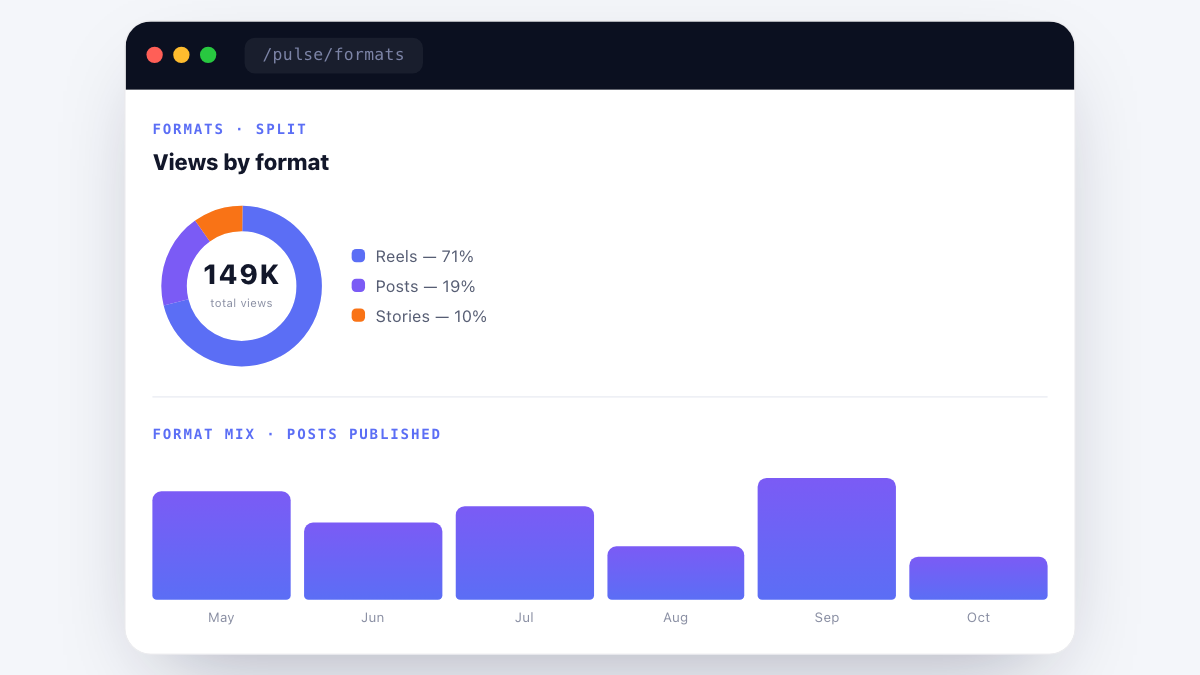

YouTube deserves its own section because it works differently than any other channel for dermatology.
The three rank races
We think of YouTube ranking as three parallel races. Search rank — showing up for queries like "how does hair transplant work" or "acne treatment for oily skin." Suggested rank — showing up in the sidebar when a viewer watches a competitor or an educational video. AIO Lab rank — being cited by ChatGPT, Perplexity, Gemini and Claude via video transcript. Most clinic YouTube channels optimise (poorly) for the first. The third is the fastest-growing surface and the least contested.
Doctor-led shorts versus long-form
The winning YouTube format for derm in 2026 is a blend. Doctor-led shorts (30-60 seconds), high volume, hook-driven, treatment-specific — 8-15 monthly per clinic. Long-form (5-12 minutes), deep treatment explainers, patient journey (with consent), Q&A — 2-4 monthly. Shorts drive discovery and channel subscribers. Long-form drives conversion and AIO citation, because transcripts are richer and structurally quotable.
The talent that works is the actual doctor — not a hired presenter. Patients trust the specialist they would see in the chair. That means investing two to three hours per month per doctor in filming and prep, protected on the calendar.
Video for AI Overviews
YouTube transcripts are being cited by AI answer engines increasingly aggressively. A long-form video titled "Everything you need to know before your hair transplant" with a well-structured transcript, honest chapters, clear terms and open cost discussion will get cited by LLMs faster than most blog posts on the same topic. YODA handles the shorts and long-form calendar, keyword-optimised metadata, transcript enrichment and the AIO Lab layer that verifies which videos are being cited by which engines.
Practical minimums for a derm channel
One channel per brand (not per doctor unless the brand is doctor-personal). Two to four long-form videos monthly. Eight to fifteen shorts monthly. Keyword-anchored titles. Chapters on every long-form video. Descriptions with structured info (procedure, cost band, doctor, clinic link). Active community tab for engagement.
Section takeaway: doctor-on-camera is the moat. Shorts drive discovery, long-form drives trust and AIO citation. Consistency beats production polish, every time.
Lead operations: WhatsApp, CRM, RCM
Marketing gets the credit, but lead ops decides revenue. Getting a lead to book, show up, buy and return is where operational discipline actually shows.
WhatsApp-first intake
Indian derm patients now expect WhatsApp as the default channel. Not email, not phone-first. Every ad, every landing page, every GBP profile should have a Click-to-WhatsApp CTA with a pre-filled greeting. The response-time benchmark is under 5 minutes during working hours, under 30 minutes outside. In our internal tracking, every additional 15 minutes of response delay drops booking probability by 8-15%.
Automations to layer: auto-greet with a menu (Book consult, Ask about treatment, Pricing, Location), session-based routing to the right consultant or branch, post-consult follow-up at 48 hours and 7 days, pre-visit reminder at 24 hours and 2 hours, and post-visit review request routed cleanly to GBP.
CRM discipline
Every incoming lead needs to land in a healthcare-grade CRM within seconds. Not a Google Sheet. Not "the front desk will note it down." The CRM should capture source (ad, GBP, organic, referral), treatment interest, city or branch preference, first-touch timestamp, response timestamp, booking status, show-up status, treatment status, LTV and referral count.
Nexus CRM at Rs 14,999/mo is ICG's healthcare-purpose-built CRM handling this stack for derm clinics — consent capture built in, WhatsApp API integrated, branch-level routing, DPDP-compliant audit logs. For hospital-affiliated derm departments where CRM has to overlay RCM (Revenue Cycle Management) and EHR (Electronic Health Records), HealthPro 360 at Rs 14,999/mo does the parallel job. The point is not the specific tool. It is that raw leads without CRM discipline lose 40-70% of pipeline value silently.
Consult conversion is the last mile
Once a lead books a consult, the marketing agency's job does not end. The front desk becomes the last mile of the funnel. The bottlenecks we see: no pre-visit prep (patient arrives, waits 45 minutes, leaves); no treatment package presented (doctor explains, patient says "I'll think about it," no follow-up); no financial counselling (sticker shock kills conversions on Rs 60K-2L procedures); no follow-up cadence (patients who don't book at the visit go silent).
Clinics installing a structured consult flow — front-desk script, pricing framework, financial-counselling handoff, three-touch follow-up over 14 days — see consult-to-conversion move from 18-22% to 32-45%. That single lift often outperforms 3-6 months of paid media optimisation on the same budget.
Post-visit revenue
Derm has spectacular LTV economics — a patient who books one HydraFacial often buys 6-12 more sessions, plus retail products, plus adjacent treatments. Clinics that maximise this run post-treatment satisfaction surveys at 48 hours, in-clinic package upsell before the patient leaves, membership programs (monthly derm subscription at Rs 2,000-6,000 per month), retail product attachment, referral programs (Rs 500-1,500 credit per referral) and quarterly dormant-patient reactivation.
RCM for hospital-affiliated derm
For derm departments inside hospital brands, marketing conversion has to interface with the hospital's RCM stack — insurance authorisations, package pricing, TPA workflows, follow-up billing. Marketing that does not hand off cleanly into RCM leaks 20-40% of potential revenue between "consult booked" and "invoice paid." HealthPro 360 was built specifically for this handoff.
Section takeaway: lead ops is where marketing budget converts to revenue. WhatsApp-first, healthcare-grade CRM, structured consult flow, post-visit retention. Any of the four broken and CPQL becomes irrelevant.
Buyer archetypes and tailored recommendations
Different derm brands need different plans. Here are the four we see most, and the shape that works for each.
Archetype 1: The solo doctor, 1-2 branches
Profile: Doctor-founder, Rs 40L-3Cr annual revenue, marketing budget Rs 30K-1.5L per month, one part-time marketing person or agency.
What works: GBP dominance via Angryturtle solo tier, four to six doctor-authored blogs per month, Meta ads for aesthetic focus at Rs 20K-60K per month, Google Search for medical focus, WhatsApp with basic automations, one doctor-led YouTube video per week, ICG Foundation tier at Rs 49,999 per month.
What to skip: programmatic SEO at scale, complex CRM implementations, PR campaigns, brand advertising.
Archetype 2: The regional chain, 3-15 branches
Profile: Owned or partner-franchised, Rs 8-60Cr revenue, marketing team of 2-6, marketing budget Rs 2-15L per month.
What works: multi-branch GBP OS (Angryturtle agency tier), programmatic SEO across city-plus-treatment pages, Meta ads at scale with Meta Catalyst IQ and Prism Spy for competitor intel, doctor-authored content across all branches, YODA for structured YouTube growth, Nexus CRM for branch-level lead routing, ICG Growth tier at Rs 74,999 per month or Scale at Rs 99,999 per month depending on complexity.
This is the sweet spot for compounding investments.
Archetype 3: The medspa or aesthetic-only clinic
Profile: One to four branches, aesthetics-heavy (80%+ of revenue from lasers, injectables, HIFU, HydraFacial), heavy Meta ad spend, high dependence on package renewals.
What works: aggressive Meta creative rotation with Meta Catalyst IQ, Instagram content on cadence with Prism Pulse tracking, aesthetic-specific landing pages, package pricing prominent, membership and subscription plays, carefully compliance-guarded influencer partnerships.
What to skip: heavy medical-derm content, YouTube long-form (shorts work better for this audience).
Archetype 4: The cosmetic surgery hospital brand
Profile: Hospital-affiliated derm and cosmetic surgery department, 25+ branches or 1-3 flagship hospitals, high AOV (Rs 60K-5L per case), enterprise sales cycle including insurance and international patients.
What works: brand and performance balance, doctor thought leadership (YouTube long-form, LinkedIn, PR), programmatic SEO across city and treatment, Google Search dominance for high-value treatments, HealthPro 360 for RCM/EHR/marketing handoff, international SEO if serving medical tourism, and custom engagement structures above ICG's Scale tier.
Section takeaway: match your marketing plan to your archetype. Solo doctors don't need enterprise stacks. Hospital chains can't run on agency-tier tools. The 70-30 pricing model scales because it lets brands pick the tier that fits their operational reality.
Common mistakes we see in ICG audits
Across 150+ derm audits, eight mistakes show up in nearly every non-performing account.
- Treating GBP as a listing, not a channel. Photos from three years ago, no posts, unanswered reviews, empty Q&A. This alone kills 40-60% of otherwise winnable local traffic.
- Homepage as the paid landing page. Every ad — Meta, Google, YouTube — dumping traffic onto the homepage. Treatment-specific landing pages convert 3-5x better, without exception.
- Ghost-written content with no doctor voice. Blog after blog of generic dermatology content, no interview basis, no doctor personality. Google's E-E-A-T sniffs it out. LLMs don't cite it.
- Ignoring WhatsApp response time. Ads generate leads at 11 PM; someone replies at 11 AM the next day. 60% of those leads have already booked with a competitor. Automation isn't optional.
- No CRM, or a CRM that is actually a spreadsheet. Lead source unknown, LTV untracked, consent not captured, DPDP-noncompliant. When something breaks — and it will — there is no data to fix it.
- Advertising claims that trip NMC and Meta both. "India's #1," "guaranteed results," "100% cure rate" trigger Meta ad rejections and NMC scrutiny simultaneously. It is not risk-taking; it is compounding future cost.
- Programmatic content without differentiation. Ten identical "Hair Transplant in [City]" pages with the same 800 words, city name swapped. Google sees it, penalises the whole domain. Real programmatic requires real per-page differentiation.
- Confusing brand campaigns with performance campaigns. Running full-page magazine ads and expecting CPQL to improve. Brand builds equity; performance drives leads. Both matter, but budget and KPIs should be planned separately.
Section takeaway: none of these are exotic. All are common. Clinics winning in derm marketing are, on average, avoiding six or seven of these consistently. That is essentially the entire moat.
The 70-30 pricing model, explained
Every derm chain we work with past the three-branch mark eventually asks the same question. How do we structure agency engagement so incentives actually align? Our answer, refined over multi-year engagements: the 70-30 model.
How it works
70% predictable retainer. Covers the ongoing operating discipline — content, GBP management, SEO, technical maintenance, campaign management, reporting, strategy. Not tied to lead volume; tied to keeping the marketing engine running professionally, month after month.
30% variable performance. Tied to specific, measurable outcomes. Could be CPQL below threshold, could be lead volume above baseline, could be organic traffic growth month-over-month, could be booked-consult volume, could be a blend.
The 70% ensures the agency is not gambling on lead flow to survive (which incentivises short-term tactics that damage the brand). The 30% ensures the agency has skin in the game beyond retainer collection.
The three ICG tiers
- Foundation — Rs 49,999 per month. Solo doctors and 1-2 branch clinics. Full marketing operating base.
- Growth — Rs 74,999 per month. Three to eight branch chains scaling city and treatment presence. Adds programmatic SEO, deeper YouTube, more paid media discipline.
- Scale — Rs 99,999 per month. Eight to fifteen branch chains and enterprise brands. Full-stack with dedicated senior team, more compliance work, executive reporting cadence.
Above Scale, engagement moves to custom quotes — typically for hospital brands, national chains at 25+ branches, or brands running Rs 15L+ monthly ad spend. Ads spend, YouTube production and specialised project work sit outside the retainer.
Section takeaway: predictable base plus skin-in-the-game variable. That is the sane way to structure derm marketing engagement past a certain scale.
A 12-month execution roadmap
A quarter-by-quarter execution plan for a mid-tier derm brand entering serious marketing.
Quarter 1: Foundation (Months 1-3)
Goal: fix the base. Get the plumbing right.
- Audit GBP, website, existing content, existing ad accounts and CRM state end-to-end.
- Layer DPDP-grade consent capture on every lead form; run an NMC audit of existing creative and content.
- Bring all branches onto the GBP operating system (Angryturtle); launch review-velocity campaign; get photo and post cadence live.
- Depth-up top 10 treatment pages; publish doctor bio pages; add schema markup; ship FAQ sections on every treatment page.
- Move to healthcare-grade CRM (Nexus CRM or HealthPro 360); integrate the WhatsApp API.
- Launch baseline Meta and Google campaigns per treatment; build landing pages; benchmark CPQL.
Expected outcome: leaks plugged, baseline metrics established, compliance secured.
Quarter 2: Discovery expansion (Months 4-6)
Goal: expand organic footprint. Grow AIO citations.
- Ship 20-30 new doctor-authored blogs; 15-25 city-plus-treatment programmatic pages per active city; prioritise comparison content for AIO.
- Get YouTube channel operational via YODA; publish 6-10 long-form videos and 24-45 shorts in the quarter.
- Establish a creative refresh cycle on paid; activate CPQL optimisation; run Prism Spy weekly on competitor intel.
- Audit consult conversion; deploy front-desk script; install financial-counselling flow.
- Monthly Search Console plus AIO citation reports; monthly ads performance reviews.
Expected outcome: 40-70% organic traffic lift, measurable AIO citation growth, CPQL down 20-30%.
Quarter 3: Scale (Months 7-9)
Goal: compound. Push the fastest-growing channels.
- Continued content cadence; deep expansion into comparison and cost content.
- 12+ long-form, 40+ shorts on YouTube; AIO Lab tracking video citations.
- Scale paid winners; kill losers; test two or three new channels experimentally.
- Membership programs live; retail attachment installed; dormant-patient reactivation campaigns running.
- Referral programs, corporate wellness pitches and ecosystem partnerships in motion.
Expected outcome: revenue growth 25-60% over baseline; LTV metrics visible cleanly for the first time.
Quarter 4: Optimise and plan (Months 10-12)
Goal: consolidate, plan next-year expansion.
- Full-funnel attribution live; branch-level P&L visibility to the marketing team.
- Audit and refresh top-performing content; sunset underperformers.
- Apply the marketing playbook to new expansion locations.
- Assess marketing team maturity; rebalance agency-to-in-house if applicable.
- Build next-year budget with data-backed allocation, not last year's habits.
Expected outcome: profitable growth engine, next-year plan grounded in data.
Section takeaway: Q1 fix the base. Q2 expand discovery. Q3 scale winners. Q4 consolidate and plan.
Key takeaways
- Segment your derm revenue by medical, aesthetic and cosmeceutical — the channel plan differs radically across the three.
- Build every marketing asset assuming DPDP-grade consent, NMC-safe creative and ABDM-registered identity from day one.
- Treat AI Overviews and answer engines as a separate acquisition channel — audit quarterly for extraction-worthiness.
- Google Business Profile is the highest-leverage local channel below the 15-branch mark; use an operating system past three branches.
- Deep treatment pages with doctor bylines, structured content and FAQs are your money pages — invest accordingly.
- Match channel to intent: Meta wins aesthetic, Google wins medical, YouTube wins trust and AIO citation.
- Lead ops decides revenue: WhatsApp under five minutes, healthcare-grade CRM, structured consult flow, post-visit retention.
- Use the 70-30 engagement model past three branches — predictable retainer plus performance-tied variable.
Frequently asked questions
What is the average cost of running dermatology marketing in India for a solo clinic?
In our portfolio, a solo derm clinic in a metro or good tier-2 city typically spends Rs 80K-2.5L per month all-in — retainer, ad spend, tools and content production combined. For a purely medical-derm solo clinic, the number sits at the lower end because paid media weight is lower; for an aesthetics-heavy clinic, it sits at the upper end because Meta spend and creative production drive costs. ICG's Foundation tier at Rs 49,999 per month sits inside that band as the agency retainer component.
How long does dermatology SEO typically take to show results in India?
For a new derm site or a site with weak baseline authority, meaningful organic traffic movement takes 90-180 days for treatment-page pillars, 60-120 days for local queries once GBP is dialled in, and 30-60 days for AI Overview citations once content is restructured. Programmatic city pages typically hit page one for their target queries inside 90-180 days when execution holds.
Do we still need a website if we have a strong Google Business Profile?
Yes, and the website matters more, not less, in an AI-first discovery world. GBP surfaces you in local pack results, but AI answer engines and Google's own AIO increasingly cite website content directly. A weak website with a strong GBP caps your ceiling. A strong website with a strong GBP compounds.
Can we run Meta ads for medical dermatology treatments in India?
You can, but ROI is typically lower than for aesthetic treatments because medical-derm buyers are searching, not scrolling. Better to keep medical treatments on Google Search and reserve Meta budget for aesthetic-treatment creative where scroll-based discovery genuinely works. Retargeting website visitors on Meta for medical treatments still makes sense — new-audience Meta prospecting for medical derm typically does not.
How do we handle before/after content in derm marketing under NMC?
Two things. First, document consent specifically for marketing use in writing, not verbally, and store the consent record with your CRM data. Second, shift creative weight from pure before/after to process-led content — doctor explaining the treatment, clinic tour, patient experience described without outcome claims. It performs better anyway because it filters for informed buyers who convert.
What is the ideal marketing team structure for a 5-branch derm chain?
In our experience, a 5-branch derm chain needs a marketing head (in-house), a content coordinator (in-house or full-time contract), a performance marketing lead (in-house or agency), and an agency partner handling SEO, GBP, YouTube and creative production at scale. Total in-house cost typically Rs 3-6L per month; agency retainer typically Rs 75K-1.5L per month; ad spend layered on top based on branch and treatment mix.
Should we invest in influencer marketing for dermatology in India?
Selectively. Micro-influencers (10K-100K followers) with genuine derm-adjacent authority can drive real awareness for aesthetic treatments, particularly among younger buyers in metros. But compliance is fragile — the influencer's claims become your claims under NMC, and disclosures under ASCI guidelines are strict. Nano and micro partnerships with tight briefing outperform macro celebrity partnerships in almost every case we have run.
How do AI Overviews change SEO for dermatology specifically?
Three shifts. Content shape matters more (structured content, clear H2/H3, extractable answers). Cost and comparison content gets disproportionately cited, because those are the queries AIO triggers on. And author identity — doctor bylines with proper schema — becomes a ranking and citation signal, not just a trust signal. Content built for AIO also tends to perform well in classical SEO, so there is no trade-off.
What is the difference between Nexus CRM and HealthPro 360?
Nexus CRM at Rs 14,999 per month is built for marketing-led lead management — consent capture, WhatsApp integration, branch-level routing, source attribution, DPDP audit logs. HealthPro 360 at Rs 14,999 per month is built for hospital-affiliated operations where marketing has to interface with RCM (billing, insurance, TPA workflows) and EHR (medical records, treatment plans). Solo clinics and standalone chains typically need Nexus. Hospital brands and multi-specialty derm departments typically need HealthPro 360.
How do we measure ROI on YouTube for a derm brand?
YouTube ROI shows up on three surfaces, not just YouTube analytics. Direct — subscribers, watch time, YouTube-to-website traffic. Indirect — branded search volume increase after a video runs (visible in Search Console). AI — LLM citations of your videos when patients ask answer engines derm questions, measurable via extraction testing. Any YouTube ROI measurement that only tracks the first surface understates value by 50-70%.
Is Google Ads Performance Max worth it for dermatology clinics?
Only after a mature analytics setup and strong first-party audience feeds are in place. Without those, Pmax's algorithm burns budget on brand-adjacent traffic that doesn't convert to consults. With them — clean conversion tracking, populated customer lists, high-intent site-visitor feeds — Pmax can extend reach into long-tail treatment queries efficiently. Rule of thumb: get manual bidding on top five treatments working first, then layer Pmax for expansion.
How do we protect derm patient data under DPDP while running marketing campaigns?
Four practical steps. Granular consent at capture — specify each channel (phone, WhatsApp, email) explicitly. Healthcare-grade CRM with audit logs, not spreadsheets. Written data-processing agreements with every marketing vendor touching patient data. Regular audits of who has access to what, and revocation processes when staff or agencies change. The clinics that do this properly find it protects them, not slows them down, when scrutiny arrives.
Book a free 30-minute Brand & Growth Diagnostic.
It's a working session, not a sales pitch — you leave with a written root-cause analysis you can act on, whether or not you engage ICG.
Questions readers ask
about this topic.
The three platforms
behind every ICG engagement.
Beacon
CAPI middleware that fixes Event Match Quality, translates CRM statuses to Meta-standard events, dedups across channels.
Agency OS
Live client dashboard. GSC, GA4, Google Ads, Meta Ads, IVR calls in one view. Login anytime, not monthly.
Phoenix
Clinic revenue intelligence over your PMS. Daily action queue: Prevent Loss, Maintain & Engage, Grow Revenue. 46-centre rollout.
Or book a free 30-min audit to see all three in action on your account.
Healthcare brands
that already run on ICG.
A representative slice of the 150+ healthcare brands ICG has delivered for across India. Most engagements remain under NDA.


What ICG clients say · on video.
"Scale up of organic channels and business consulting. ICG has absolute domain authority in their field."
"What Ichelon accomplished — they got all my ideas and worked over 3-4 months to create an amazing, super-customised website."
"Working with ICG felt like working with an in-house growth team that happens to specialise in healthcare."
Need help operationalising this?
Every ICG service is healthcare-only, NMC + DPDP-aware, and built around the patient-research patterns that drive Indian healthcare growth in 2026.
More from
ICG.
Healthcare AIO is the discipline of getting your clinic or hospital cited inside Google AI Overviews, ChatGPT and Perplexity answers — not j...
Conversational-search advertising places brand messages inside AI chat answers — ChatGPT, Perplexity, Copilot — rather than beside a results...
NABH digital compliance means every claim, image and testimonial your hospital publishes online matches what an accreditation surveyor can v...
Stop guessing.
Book a Diagnostic.
30 minutes. Free. With the AI-powered healthcare-only marketing agency 150+ brands already run on. No slides, no pitch, no hard close.


