


Hair loss treatment ChatGPT Ads India — capture the specific sub-specialty intent that ChatGPT Ads surfaces
GFC, PRP and mesotherapy are researched conversationally, months before a transplant is ever considered. ICG runs a dedicated ChatGPT Ads bucket set for non-surgical hair loss treatment inside its broader dermatology ChatGPT Ads practice, splitting early-thinning, procedure-specific, comparison and pre-transplant intent so each converts on its own logic.
Conversational-search behaviour specific to hair loss treatment
Hair loss carries a distinctive conversational pattern: it starts as a quiet, private worry — noticing more hair on the pillow, a widening parting, a receding hairline in a photo — long before it becomes a search query typed anywhere public. Users take this worry to an AI assistant precisely because it feels lower-stakes and less permanent than calling a clinic or searching visibly, and the conversation tends to move through a predictable arc: is this normal, is it genetics or something else, what can I do without surgery, and only much later, is a transplant something I should consider.
The GFC-versus-PRP-versus-mesotherapy comparison is the single most distinctive behaviour inside this category, and it happens almost entirely inside the conversational interface rather than on a results page. A user rarely asks "PRP hair treatment" as a first query; more often they've already encountered the term somewhere and are now asking an AI assistant to explain it, compare it to alternatives, and tell them which one fits their specific pattern of thinning. This comparison stage is where a hair loss treatment provider's positioning gets encoded into the shortlist a user eventually acts on, which is why ICG treats early presence in this comparison conversation as a strategic asset rather than a late-funnel nice-to-have.
A second behavioural layer specific to this category is the slow drift toward pre-transplant intent. Many users start the conversation looking for a non-surgical fix and, over the course of several sessions spread across weeks, arrive at the conclusion that non-surgical treatment alone won't be enough — at which point the conversation shifts to transplant candidacy, cost and clinic selection. ICG treats this drift as a funnel in itself: a provider who captured the user during early GFC/PRP research has a real advantage when that same user later asks about transplants, especially if the provider offers both non-surgical treatment and a transplant referral or in-house programme.
Because the category carries real embarrassment for many users — hair loss is one of the more emotionally loaded appearance concerns people research — conversations also tend to be unusually candid about age, family history and anxiety level in ways a typed search query never would be. ICG's ad copy and landing pages for this category are written to match that candour without exploiting it, acknowledging the concern directly rather than defaulting to purely clinical language.
Intent bucket map for hair loss treatment
ICG runs hair loss treatment accounts across five stages, moving from early symptom concern through procedure-specific research, direct comparison, cost/booking-ready queries, and finally pre-transplant intent. A dedicated hair loss treatment provider typically runs all five; a general dermatology clinic adding a hair loss line usually starts with the first three.
| Stage | Example query | Typical CPC band (₹) |
|---|---|---|
| 1. Early symptom concern | "is losing this much hair normal or should I worry" | 15–40 |
| 2. Procedure-specific research | "what is GFC treatment for hair loss and how does it work" | 30–65 |
| 3. Direct comparison | "GFC vs PRP for hair thinning, which gives better results" | 45–95 |
| 4. Cost and booking-ready | "PRP hair treatment cost per session in India" | 90–190 |
| 5. Pre-transplant intent | "will PRP be enough or do I need a hair transplant" | 110–240 |
Stage 3, direct comparison between GFC, PRP and mesotherapy, is where most Indian hair loss providers have no organised presence at all, which keeps CPCs reasonable relative to conversion quality — a user actively comparing procedures by name is meaningfully closer to booking than one still asking whether their hair loss is normal. ICG writes distinct ad copy for each procedure pairing (GFC vs PRP, PRP vs mesotherapy, GFC vs mesotherapy) rather than one generic comparison ad, because the questions users bring to each pairing differ.
Stage 5, pre-transplant intent, carries the highest CPC band in this bucket map because it sits closest to a high-value conversion and overlaps with demand from the dedicated hair transplant channel. ICG prices and messages this bucket to serve providers who offer both non-surgical treatment and transplant services (or a referral partnership), positioning non-surgical treatment as a legitimate step rather than a delay tactic, since users researching this stage are sensitive to language that feels like it's steering them away from a transplant they may genuinely need.
ICG's default spend allocation for a full-scope hair loss treatment account weights roughly 15% early symptom concern, 20% procedure-specific research, 25% direct comparison, 25% cost/booking-ready, and 15% pre-transplant intent, rebalanced monthly against conversation-completion data. Tier-2 city buckets across all five stages start meaningfully cheaper than metro buckets, since organised paid presence for non-surgical hair loss treatment specifically remains concentrated in a handful of cities.
Compliance overlays for hair loss treatment advertising
Hair loss advertising sits inside the same NMC Section 6, ASCI Chapter III and DPDP 2023 framework ICG applies across every dermatology ChatGPT Ads account, with regrowth-claim discipline as the category's defining compliance concern.
NMC Section 6 prohibits guaranteed-outcome and result-timeframe language ("full regrowth in 6 months," "guaranteed results"). This is the single hardest line to hold in hair loss advertising because regrowth-percentage and timeframe claims are the default marketing vocabulary across the category informally — ICG's ad copy templates strip percentage and timeframe claims entirely, since regrowth response varies significantly by individual and by cause of hair loss.
ASCI Chapter III requires sponsored-content disclosure and prohibits misleading efficacy claims, applying with particular force to before/after regrowth imagery and comparative claims against other providers or procedures — a recurring ASCI enforcement category in the hair restoration space specifically.
DPDP 2023 governs every lead form a hair loss campaign points to, requiring explicit consent language before collecting hair-loss-pattern, family-history or scalp-condition data, all of which are commonly requested on intake forms for GFC, PRP and mesotherapy consultations.
ICG's category-specific rule: no ad copy states or implies a specific regrowth percentage or density outcome without clinical substantiation on file, and no ad copy positions any non-surgical treatment as a guaranteed alternative to a transplant for advanced hair loss patterns, since implying that PRP or GFC can substitute for a transplant in cases where it clinically cannot is both an NMC Section 6 risk and a genuine disservice to the patient. Every hair loss campaign ICG runs is compliance-logged monthly alongside performance data.
Landing-page pattern for hair loss treatment
A user arriving from a hair loss ChatGPT Ads click has usually already compared procedures in conversation — they need confirmation this specific provider can deliver the procedure they've settled on, not a general hair-care-services page. ICG builds hair loss landing pages short, factual and machine-scannable, both because that converts a partway-decided user and because ChatGPT's citation mechanics favour pages it can parse and quote accurately for follow-up questions later in the session.
The pattern keeps five elements above the fold: the specific procedure the page addresses (a dedicated GFC page, a dedicated PRP page — never one page covering all three), the treating dermatologist or trichologist's name and credentials, a plain-language course structure (typical session count and typical interval between sessions), a per-session or per-course pricing range, and one clear next action. Course structure and cumulative pricing sit unusually high on these pages specifically, because GFC, PRP and mesotherapy are all multi-session commitments and users consistently want to understand total sessions and total cost before booking a first consultation, not partway through a course.
For the pre-transplant bucket specifically, ICG adds a distinct landing-page variant that addresses transplant candidacy directly rather than routing the user to a general non-surgical treatment page — this variant links clearly to the provider's transplant programme or referral pathway where relevant, since a user at this stage is actively deciding between paths and a page that avoids the transplant question entirely reads as evasive.
The single next action stays narrow — one form and one WhatsApp option. Hair loss landing pages carrying multiple competing CTAs lose qualified conversation-attributed traffic to indecision, consistent with the pattern ICG sees across the wider dermatology ChatGPT Ads practice. Because attribution runs on conversation-completion rather than click-through, the page must answer the exact question the originating conversation was circling — a comparison-stage query needs the comparison answer restated in the first two lines, not a general practice introduction.
Pricing
Retainers from ₹20,000/month · Custom-scoped per engagement.
90-day expected outcomes
Weeks one and two are compliance and setup — intent buckets defined against the provider's actual procedure mix (GFC, PRP, mesotherapy and, where relevant, transplant referral), ad copy drafted and cleared against NMC Section 6 and ASCI Chapter III with regrowth-claim discipline applied throughout, DPDP-compliant landing pages built per bucket, and the AI Assistant channel wired correctly in GA4 so conversation-completions are captured from day one.
Weeks three through six are where the first qualified, conversation-attributed leads typically arrive, usually from the cost/booking-ready and procedure-specific buckets first since those carry the clearest purchase intent, with comparison and pre-transplant leads following as recall builds across longer, multi-session conversations. Cost-per-conversation is volatile through this window and shouldn't be judged against a steady-state figure yet.
By week eight to twelve, bucket-level data has matured enough for ICG to rebalance spend toward whichever buckets are actually converting at an acceptable cost, and the provider gets a first full-cycle report showing cost-per-appointment by stage. This is also where ICG makes a tier recommendation based on real numbers, and where the case for building out the pre-transplant handoff pathway more fully gets made against actual conversation data rather than assumption.

Get your hair loss treatment practice into the ChatGPT Ads whitespace before it closes
Almost no hair loss treatment provider in India runs a dedicated, compliance-checked ChatGPT Ads bucket set yet. ICG does, inside its broader dermatology practice, and the first-mover window is already narrowing.
ICG's healthcare ChatGPT Ads practice operates within NMC Section 6, ASCI Chapter III and DPDP 2023 advertising norms. See the dedicated dermatology ChatGPT Ads practice, the full ChatGPT Ads for Healthcare pillar, or the ASCI Chapter III compliance overlay.
ChatGPT Ads and LLM marketing in the nine-stage patient journey
- 0Foundations
- 1Demand gen
- 2Capture
- 3Lead quality
- 4Lead mgmt
- 5Scheduling
- 6Show-up
- 7Conversion
- 8Retention
It works in demand generation, inside the AI assistants patients now ask before they search. SIE tracks the sessions and enquiries those AI engines send. Our own software runs the work, and every stage is reported against a monthly target on Ichelon Agency OS.
See all nine stages and the tool behind each one →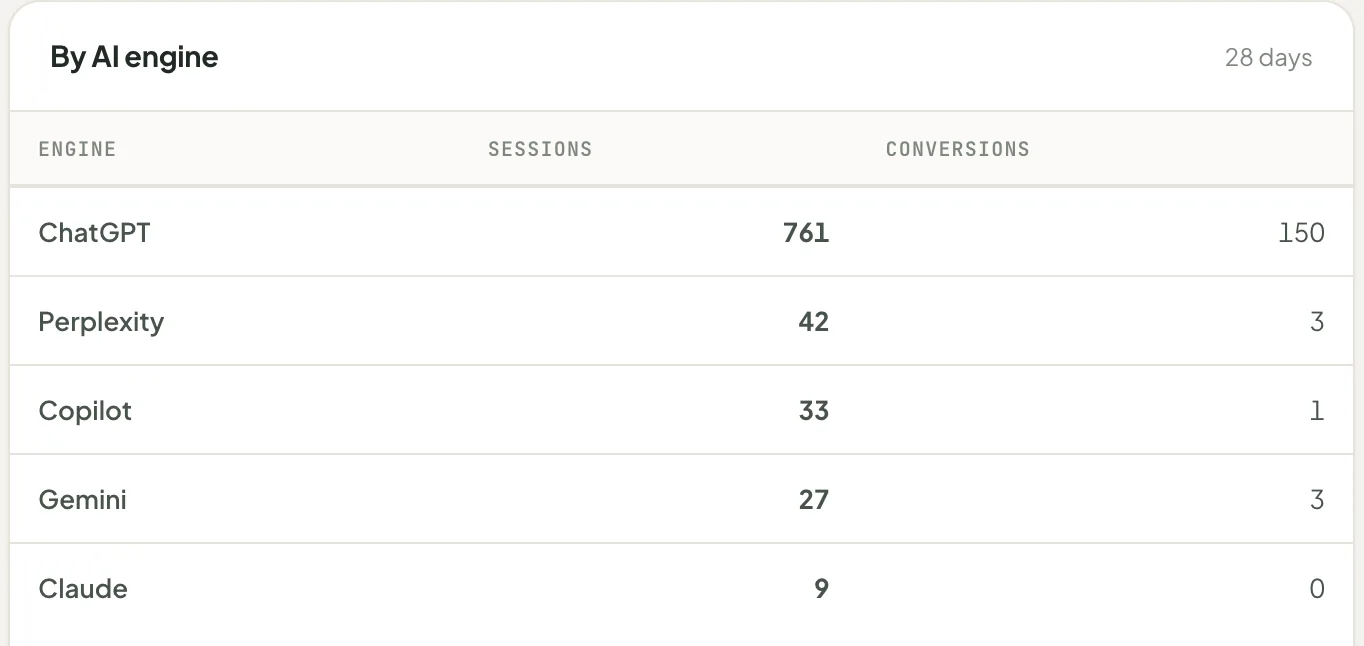
Frequently asked questions
Why does hair loss treatment need its own ChatGPT Ads bucket set instead of sitting inside a general hair transplant campaign?
Non-surgical hair loss treatment — GFC, PRP, mesotherapy, medical management — carries a different query pattern, different CPC band and a different, longer decision cycle than transplant-specific intent. A user asking about PRP for early-stage hair thinning is not yet asking about a transplant, and bidding both under one campaign blends distinct funnel stages and misprices both. ICG runs hair loss treatment as its own bucket set, feeding into rather than merging with the dedicated hair transplant ChatGPT Ads practice.
What is the difference between GFC, PRP and mesotherapy in terms of ad targeting?
All three are non-surgical hair restoration procedures researched by users trying to avoid or delay a transplant, but they surface in conversation at slightly different confidence levels — PRP is the most commonly asked-about term and carries the broadest awareness, GFC (growth factor concentrate) queries tend to come from users who have already compared it to PRP and want a more specific answer, and mesotherapy queries often come from users comparing topical versus injectable options. ICG writes separate ad copy for each term rather than treating them as interchangeable synonyms.
How much does ChatGPT Ads cost for a hair loss treatment clinic?
ICG's engagement for a single-location hair loss treatment provider begins at ₹20,000/month starting (inclusive of 18% GST), covering one to two intent buckets, compliance-reviewed ad copy, a conversational landing page and monthly conversation-attribution reporting. Ad spend is planned separately based on city, procedure mix and existing lead volume.
What compliance rules apply to GFC, PRP and mesotherapy advertising on ChatGPT Ads?
Ad copy for hair loss treatment is checked against NMC Section 6 (no guaranteed regrowth outcomes, no result-timeframe claims), ASCI Chapter III (sponsored-content disclosure, no misleading before/after implication for regrowth results), and DPDP 2023 (explicit consent on lead forms collecting hair-loss-pattern or scalp-history data). Regrowth-percentage claims specifically are treated as a high-risk claim category and are never used without clinical substantiation on file.
How does pre-transplant intent differ from general hair loss treatment intent?
Pre-transplant intent comes from users who have already accepted that non-surgical treatment alone won't fully address their hair loss and are now evaluating whether they're a transplant candidate, what a transplant costs, and which non-surgical treatment might delay or complement it. This is a distinct, later-stage bucket from general GFC/PRP research, and ICG prices and messages it separately, with a clear handoff path to the dedicated hair transplant practice for users who are transplant-ready.
How is a lead from a hair loss treatment ChatGPT Ads campaign attributed and reported?
ChatGPT Ads attributes on conversation-completion, not clicks — a lead is credited when a user completes a booking or callback-request action. In Google Analytics 4 this appears under the 'AI Assistant' channel; across ICG's healthcare accounts this channel converts at 10.49%, roughly twice organic search and seventeen times direct traffic.
Do hair loss treatment courses need session-count and pricing detail on the landing page?
Yes, and it matters more here than in most dermatology sub-categories, because GFC, PRP and mesotherapy are all multi-session courses with cumulative cost, and patients researching them conversationally consistently ask about total number of sessions and total cost before committing. ICG's landing pages for hair loss treatment carry a plain-language course structure and per-session or per-course pricing range near the top rather than a generic clinic introduction.
Is ChatGPT Ads for hair loss treatment available across India or only in metro cities?
It's available nationally. Metro-city buckets — Delhi NCR, Mumbai, Bangalore, Hyderabad — carry higher CPCs because hair transplant and hair loss chains are already active on the channel; tier-2 city buckets carry lower CPCs because organised paid presence for non-surgical hair loss treatment specifically is close to nonexistent outside the top handful of cities, which is where ICG typically recommends a new client start.
Who runs ICG's ChatGPT Ads practice for hair loss treatment providers?
ICG's hair loss treatment paid-search practice, including ChatGPT Ads, is led on the growth and business side by Rohit Gupta, alongside the dedicated hair transplant ChatGPT Ads practice. Every campaign is compliance-reviewed before it goes live and reported monthly against conversation-attribution data.
