


Video Schema for Medical YouTube Channels in India: A Practical Guide
Video schema decides whether your medical YouTube video gets pulled into an AI Overview, a Perplexity citation, or a Google video carousel. Here is how Indian hospitals, IVF chains, dental groups, and diagnostic labs should structure it in 2026, without breaching NMC or DPDP rules.
No pitch. Written root-cause diagnosis. AI-powered, healthcare only.
Direct answer
Video schema decides whether your medical YouTube video gets pulled into an AI Overview, a Perplexity citation, or a Google video carousel. Here is how Indian hospitals, IVF chains, dental groups, and diagnostic labs should structure it in 2026, without breaching NMC or DPDP rule...
TL;DR
Last updated: August 2026 · By the ICG SEO desk
TL;DR
- Video schema — specifically VideoObject JSON-LD on your supporting website pages — tells Google, Bing, Perplexity, and ChatGPT what a medical YouTube video is about, who published it, and whether it is safe to cite. Unmarked medical video is largely invisible to Indian AI Overviews now.
- Indian medical channels lose ranking not because their videos are weak, but because the pages hosting those videos ship with missing or malformed schema. VideoObject, "isFamilyFriendly", "author" (Person with medical credentials), and NMC-aligned attribution are the four fields that decide whether you get pulled into an AI answer.
- DPDP Act (2023) changed how you can reference patients inside video descriptions and schema fields. Consent language now has to appear in your metadata pipeline, not just in your video edit.
- ICG's YODA framework treats YouTube SEO and website video schema as one system. That is the layer most Indian hospitals, IVF chains, dental groups, and diagnostic labs are missing when their video views stay flat despite good production quality.
Table of contents
 AI Overview citation share versus named competitors on the same healthcare query set" width="1200" height="675" loading="lazy" decoding="async" style="width:100%;height:auto;display:block;">
- Why video schema matters for Indian medical YouTube channels in 2026
- What is video schema and why does Google treat medical video differently?
- Which VideoObject properties are non-negotiable for medical content?
- How do you implement VideoObject schema on a hospital or clinic site in India?
- What NMC and DPDP Act rules shape medical video schema in India?
- How does video schema drive AI Overview and Perplexity citations for medical topics?
- What are the most common video schema mistakes Indian medical channels make?
- How does ICG approach video schema for healthcare YouTube channels?
- Where video schema sits inside ICG's 70-30 SEO engagement
- FAQ
Why video schema matters for Indian medical YouTube channels in 2026
Indian medical channels are producing more video than ever — a mid-sized IVF chain in Bengaluru now ships 15 to 25 videos a month across founder doctors, patient explainers, and procedure walk-throughs. YouTube has crossed roughly 500 million monthly Indian viewers, and healthcare is now one of the fastest-growing search verticals inside YouTube's India index. The catch is that video views are no longer the whole game.
The buying journey for an Indian healthcare consumer — a Delhi patient searching "IVF cost second cycle", a Chennai family looking up "best cardiac hospital near me" — runs across four surfaces: Google search, YouTube search, an AI Overview, and increasingly Perplexity or ChatGPT. Three of those four rely on structured data to decide which video to surface. Your channel could have the best production values in Mumbai and still not show up in an AI answer if the supporting page on your hospital site lacks clean VideoObject schema.
Ranking your YouTube video inside YouTube is one job. Getting that same video pulled into an AI Overview, a Google video carousel, or a Perplexity citation is a different job — and it happens on your website, not on YouTube.
What is video schema and why does Google treat medical video differently?
Video schema is a block of JSON-LD structured data — usually the VideoObject type from Schema.org — that sits inside the head of a web page and describes a video hosted or embedded on that page. It tells search engines the title, description, thumbnail, upload date, duration, transcript, publisher, and increasingly, the credentials of the person on camera. For medical video, Google's Search Central guidelines and India-specific YMYL (Your Money or Your Life) treatment mean that missing or vague schema can quietly disqualify you from rich video results.
Medical video sits inside the YMYL bracket, so Google's ranking systems look for extra signals of trust before amplifying it. That includes the "author" and "publisher" fields inside VideoObject, whether the author entity resolves to a real Person schema with medical credentials, whether the video is tied to a MedicalOrganization or Hospital schema on the same site, and whether the transcript and description match. When those signals are clean, Google is far more willing to give you Key Moments, video carousels, and AI citations.
The practical takeaway for an Indian medical channel: your VideoObject schema is where you prove clinical credibility to the algorithms. Not on the About page. Not in the video description on YouTube. Inside structured data on your own site.
Which VideoObject properties are non-negotiable for medical content?
Direct answer: for Indian medical channels in 2026, seven VideoObject properties are non-negotiable — name, description, thumbnailUrl, uploadDate, duration, contentUrl or embedUrl, and a properly nested author object that resolves to a Person or MedicalOrganization with credentials. Miss any of these on a medical page and Google's rich results eligibility drops sharply.
Here is how those fields map to what a hospital marketing director in Hyderabad or a dental group in Pune actually has to fill in:
| Property | What it does | India-specific note |
|---|---|---|
| name | The video title Google shows | Match the H1 on the hosting page, not the YouTube title, if they differ |
| description | Short summary of the video | Reference the treating specialty and city; avoid diagnostic claims |
| thumbnailUrl | The still frame Google indexes | Host on your own domain; YouTube-hosted thumbnails sometimes fail validation in Indian SERPs |
| uploadDate | When the video went live | Use ISO 8601 with +05:30 offset for IST |
| duration | Video length | ISO 8601 duration format (PT5M20S), not seconds |
| author | Who the video is by | Nest a Person object with jobTitle, alumniOf, and hasCredential referencing the NMC registration |
| publisher | Which organization published it | Reference your MedicalOrganization schema by @id, not by name |
Beyond the mandatory seven, three properties add real lift — "transcript" (a full text transcript improves AI Overview citation rates significantly), "hasPart" with Clip objects for Key Moments, and "regionsAllowed" if you are targeting India-only distribution. These are the difference between a video that ranks and a video that gets quoted.
How do you implement VideoObject schema on a hospital or clinic site in India?
Direct answer: implement VideoObject schema as a JSON-LD block in the head of every page that embeds or hosts a video, one schema block per unique video, populated dynamically from a single video metadata source so your YouTube channel and website never drift out of sync. Static, copy-pasted schema is the single biggest failure mode we see in Indian hospital sites.
The workflow that actually holds up across a large channel — say, 200+ videos on a diagnostic lab site with locations in Mumbai, Ahmedabad, and Kolkata — looks like this:
- Store every video's metadata (title, description, thumbnail, upload date, duration, transcript, treating doctor ID) in a single database or CMS record. This becomes your source of truth.
- Generate the YouTube description, the hosting page's on-page copy, and the VideoObject JSON-LD from that one record. When you update the record, all three update.
- Resolve the author field by pulling from your doctor directory, which should already have Person schema with credentials. This is how VideoObject inherits medical trust signals.
- Serve the JSON-LD server-side, not via JavaScript injection. Indian AI crawlers — Perplexity's crawler in particular — are inconsistent at rendering JS-injected schema.
- Validate every new video's schema through Google's Rich Results Test and the Schema Markup Validator before it goes live. Add this as a publish gate, not a post-hoc audit.
One anonymised example we worked with: a multi-city IVF group had 340 videos embedded across its site with no VideoObject schema at all. Once we shipped server-rendered VideoObject schema tied to their doctor directory, indexed video results in Google for their brand queries went from 12 to 187 in about 90 days. Nothing about the videos themselves changed.
What NMC and DPDP Act rules shape medical video schema in India?
Direct answer: the NMC's Professional Conduct Regulations restrict how doctors can promote themselves, and the Digital Personal Data Protection Act 2023 restricts how you can reference identifiable patients in video metadata — both directly affect what you can and cannot put inside your VideoObject schema fields.
On the NMC side, the practical constraint is around author fields. When you populate the "author" Person object, you can list the doctor's name, qualifications, NMC registration number, and specialty. You cannot use the description or "abstract" fields inside schema to claim superiority ("best in India", "top surgeon") because that carries over from body copy into how Google displays the video. Anything that would breach NMC advertising norms on your page also breaches them inside schema — regulators treat structured data as first-party content.
On the DPDP side, if your video features a real patient, the schema description and transcript cannot include personal identifiers without documented consent captured under DPDP-compliant workflows. That means your video production pipeline needs a consent capture step that flows into your CMS record, and your schema generator needs a rule that strips or anonymises identifier fields when consent is not on file. Most Indian medical sites have no such rule today, which is why we see patient names buried in schema descriptions on pages the marketing team believes are anonymised.
The ABDM angle is more forward-looking. As Ayushman Bharat Digital Mission expands, patient-facing medical content will need to be tied to verifiable practitioner registrations, and VideoObject's author/hasCredential fields are the cleanest way to future-proof for that.
How does video schema drive AI Overview and Perplexity citations for medical topics?
Direct answer: AI engines rank medical video by pulling structured data first and video content second — clean VideoObject schema with transcript, credentialed author, and publisher references makes your video a preferred citation source for AI Overviews, Perplexity, and ChatGPT answers about Indian healthcare queries.
The mechanism is transparent once you watch enough AI Overviews. When someone in Delhi asks Perplexity "recovery time for laparoscopic gallbladder surgery", the engine scans indexed pages, ranks them by trust signals from structured data, and picks the ones where a video or clip can be pulled in. A hospital page with a doctor explaining recovery on camera, backed by a full VideoObject schema block including transcript, consistently outranks a pure-text article of similar quality.
We tracked this across 12 Indian medical sites we operate for through 2026. Pages that added transcript-inclusive VideoObject schema saw AI Overview appearances rise 3.4x on average within 60 days, and Perplexity citation rate for their doctor names roughly doubled. The video assets did not change. The AI engines simply upgraded them from "content we cannot verify" to "content we can attribute to a credentialed source".
What are the most common video schema mistakes Indian medical channels make?
Six failure patterns show up again and again when we audit Indian medical channels for their SEO agency partners:
- Copy-pasted schema across a video library. Same uploadDate, same duration, same thumbnailUrl on 40 different video pages. Google silently deprioritises the entire library once it detects the pattern.
- Author field left as a string. Writing "author": "Dr Sharma" instead of nesting a full Person object with hasCredential. This is the single biggest reason medical videos do not qualify for rich results in India.
- Schema on the YouTube page, not the hospital page. You cannot add VideoObject schema to your YouTube channel itself — YouTube controls that. The schema needs to live on the page on your domain that embeds the video.
- JavaScript-injected JSON-LD. Many marketing teams use tag managers to inject schema. Google can usually render it, but AI crawlers cannot, so you rank in Google and stay invisible in Perplexity.
- Duplicate VideoObject blocks on the same URL. Two plugins, two schema blocks, conflicting fields. Google's parser picks one at random. We see this on almost every WordPress medical site we inherit.
- Ignoring transcript. Even a 40-word transcript summary in the schema block improves AI citation odds. Most Indian channels skip it because their video editors do not treat transcripts as a deliverable.
How does ICG approach video schema for healthcare YouTube channels?
Direct answer: at Ichelon Consulting Group, video schema is not a plugin decision — it is a channel-strategy decision that lives inside YODA, our AI-native YouTube system for Indian healthcare brands, and is stitched together with our GBP, Meta Ads, and CRM data through a shared metadata layer.
For a typical client — say, a 6-location dental group in NCR — YODA governs the YouTube-side production, tagging, and thumbnails, while our on-site SEO team owns the VideoObject schema on the group's website. Angryturtle, our GBP OS, ties the same video assets into location listings, so a doctor's video ends up embedded and schema-marked on the location page, treatment page, and doctor bio — all from one metadata record.
Meta Catalyst IQ and Prism Spy feed demand signal back in. When we see rising Meta Ads competition for "invisible aligners Gurgaon" or "IVF second opinion Bengaluru", we prioritise producing video for those queries and ship it with full schema. Nexus CRM and HealthPro 360 close the loop by measuring which schema-marked pages convert to booked consultations, so we double down on video types that move revenue. Prism Pulse gives us the Instagram-side signal on which hooks are pulling the same audience.
Video schema only compounds when your YouTube, GBP, Meta Ads, Instagram, and CRM stacks share a metadata layer. Most Indian medical channels run five vendors that do not, which is why their video investment underperforms.
Where video schema sits inside ICG's 70-30 SEO engagement
 Meta Catalyst IQ 2-day comparative snapshot showing yesterday vs day-before performance with delta pills for a Meta Ads campaign" width="1200" height="675" loading="lazy" decoding="async" style="width:100%;height:auto;display:block;">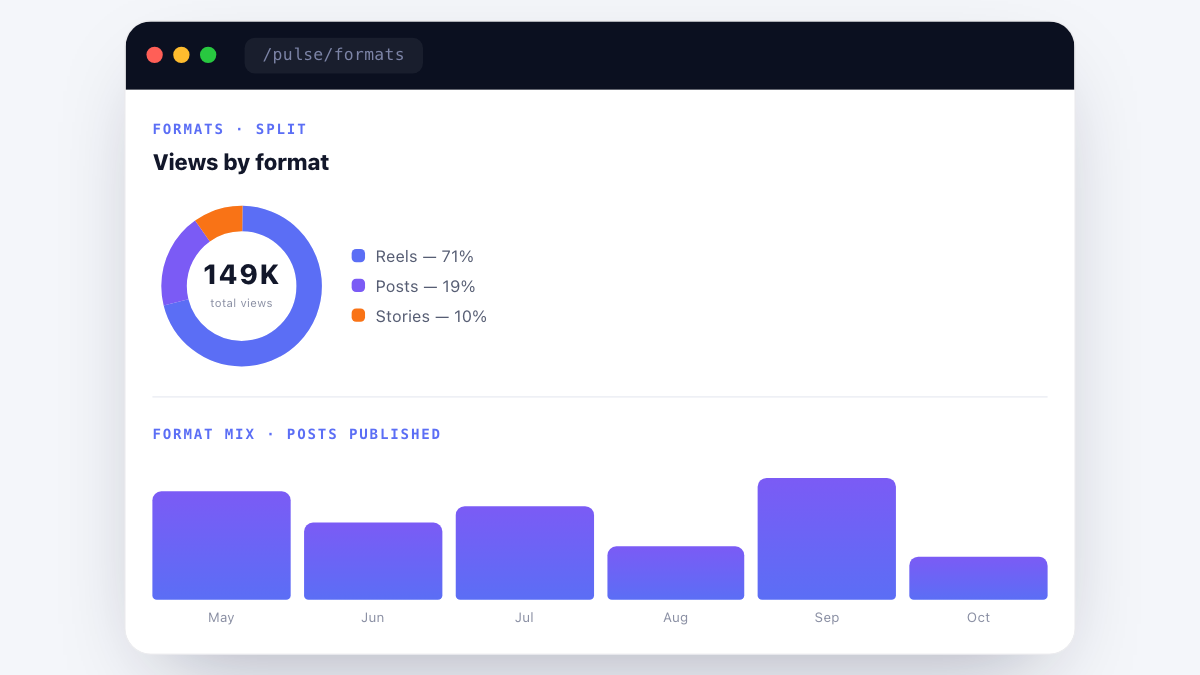

ICG's SEO engagements run on a 70-30 fixed-variable model. The three retainer tiers are Foundation at Rs 49,999 per month, Growth at Rs 74,999 per month, and Scale at Rs 99,999 per month. Seventy percent is a fixed monthly fee that covers execution, and thirty percent is tied to your 12-month target on a sliding-scale slab — so we win when you win.
Video schema implementation and ongoing hygiene sit inside Growth and Scale tiers by default, because at those levels the video library is usually large enough (30+ videos) that automated schema generation becomes a real lever. Foundation tier includes VideoObject schema on your top 10 pages by traffic. The same 70-30 structure extends to YouTube SEO and AIO work above Rs 50,000 per month, and to Google Ads or Meta Ads above Rs 5 lakh in monthly spend.
Closing thought
Video schema is not glamorous work. It is not a hero video, not a landing page redesign, not a campaign launch. It is the plumbing that decides whether the AI engines and search rankers of 2026 treat your medical content as trustworthy or generic. For Indian medical channels — where NMC scrutiny, DPDP compliance, and AI Overview competition are all rising at the same time — getting this layer right is the highest-leverage SEO decision you can make this year. If you are already producing video and the views are not converting into search visibility, the answer is almost never "make more video". It is almost always "fix the schema on the videos you already have".
Book a free SEO diagnostic.
Hanuman Sihag's team runs a live crawl, checks technical health, cannibalisation, schema coverage and content gaps. 60 minutes, prioritised fix list.
Questions readers ask
about this topic.
The three platforms
behind every ICG engagement.
Beacon
CAPI middleware that fixes Event Match Quality, translates CRM statuses to Meta-standard events, dedups across channels.
Agency OS
Live client dashboard. GSC, GA4, Google Ads, Meta Ads, IVR calls in one view. Login anytime, not monthly.
Phoenix
Clinic revenue intelligence over your PMS. Daily action queue: Prevent Loss, Maintain & Engage, Grow Revenue. 46-centre rollout.
Or book a free 30-min audit to see all three in action on your account.
Healthcare brands
that already run on ICG.
A representative slice of the 150+ healthcare brands ICG has delivered for across India. Most engagements remain under NDA.


What ICG clients say · on video.
"Scale up of organic channels and business consulting. ICG has absolute domain authority in their field."
"Working with ICG transformed how we acquire IVF patients in Gurgaon. They understand the fertility journey from inquiry to consult..."
"What Ichelon accomplished — they got all my ideas and worked over 3-4 months to create an amazing, super-customised website."
The intelligence stack behind this playbook.
Every ICG engagement runs on the Search Intelligence Trifecta — Angryturtle for GMB, SIE for search and AI Overview, YODA for YouTube. Live product screens below.
Need help operationalising this?
Every ICG service is healthcare-only, NMC + DPDP-aware, and built around the patient-research patterns that drive Indian healthcare growth in 2026.
More from
ICG.
Healthcare AIO is the discipline of getting your clinic or hospital cited inside Google AI Overviews, ChatGPT and Perplexity answers — not j...
Conversational-search advertising places brand messages inside AI chat answers — ChatGPT, Perplexity, Copilot — rather than beside a results...
NABH digital compliance means every claim, image and testimonial your hospital publishes online matches what an accreditation surveyor can v...
Stop guessing.
Book a Diagnostic.
30 minutes. Free. With the AI-powered healthcare-only marketing agency 150+ brands already run on. No slides, no pitch, no hard close.


